
Ch 1 SUPERVISORY MANAGEMENT ROLES AND CHALLENGES I



- Slides: 13
Ch. 1 SUPERVISORY MANAGEMENT ROLES AND CHALLENGES
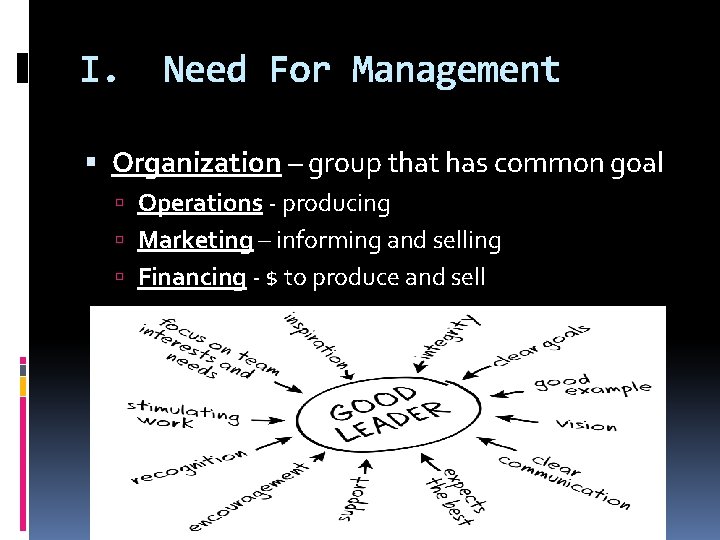
I. Need For Management Organization – group that has common goal Operations - producing Marketing – informing and selling Financing - $ to produce and sell
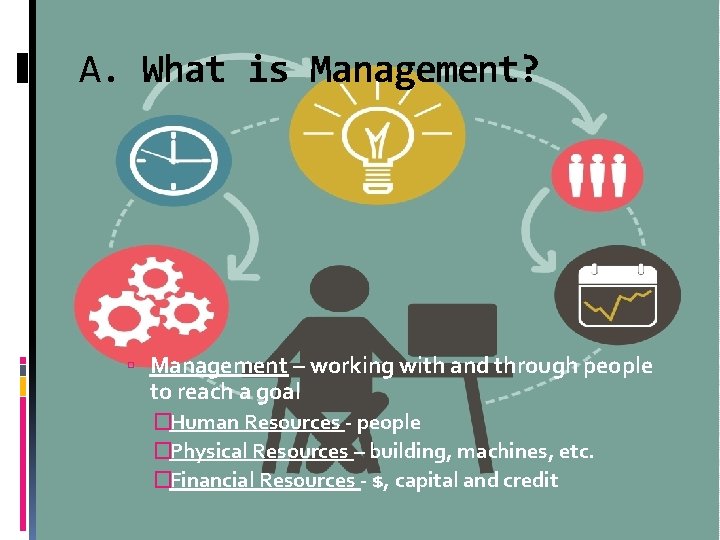
A. What is Management? Management – working with and through people to reach a goal �Human Resources - people �Physical Resources – building, machines, etc. �Financial Resources - $, capital and credit
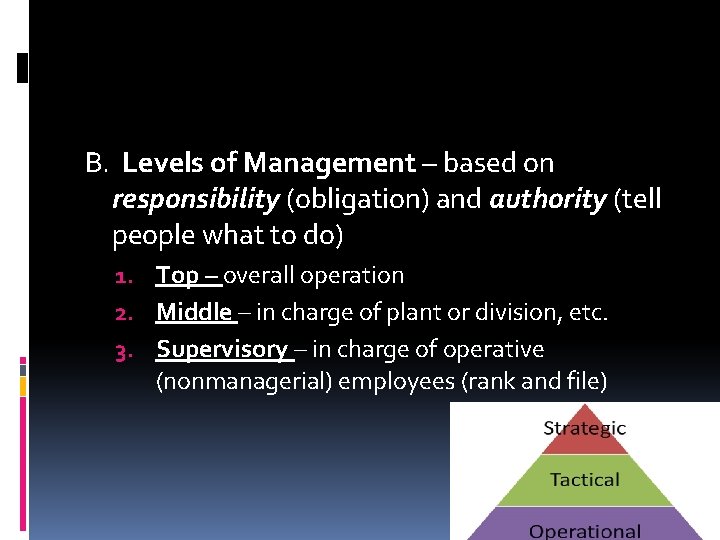
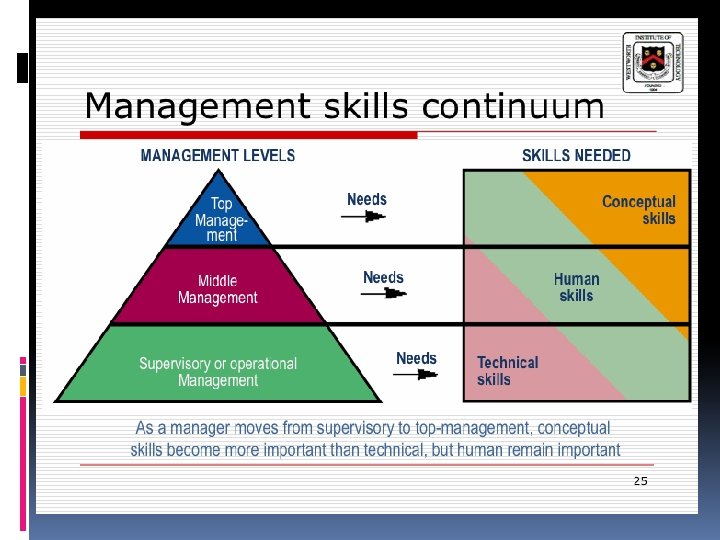
B. Levels of Management – based on responsibility (obligation) and authority (tell people what to do) 1. Top – overall operation 2. Middle – in charge of plant or division, etc. 3. Supervisory – in charge of operative (nonmanagerial) employees (rank and file)
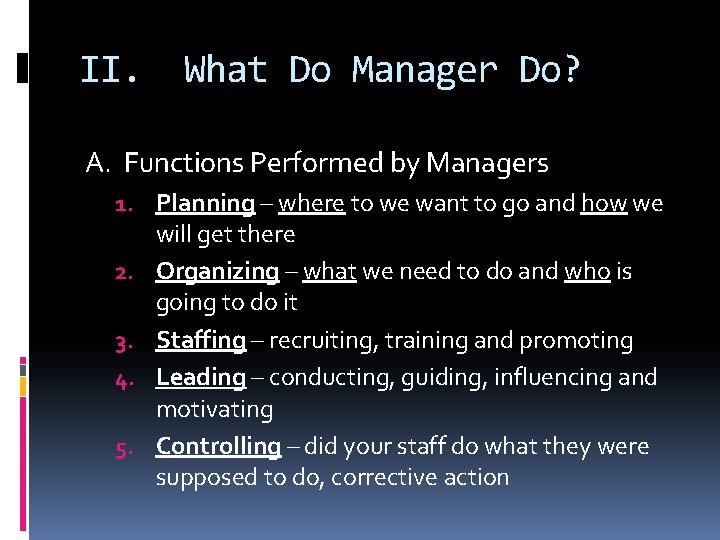
II. What Do Manager Do? A. Functions Performed by Managers 1. Planning – where to we want to go and how we 2. 3. 4. 5. will get there Organizing – what we need to do and who is going to do it Staffing – recruiting, training and promoting Leading – conducting, guiding, influencing and motivating Controlling – did your staff do what they were supposed to do, corrective action
B. How are the functions related? everybody does them, when appropriate
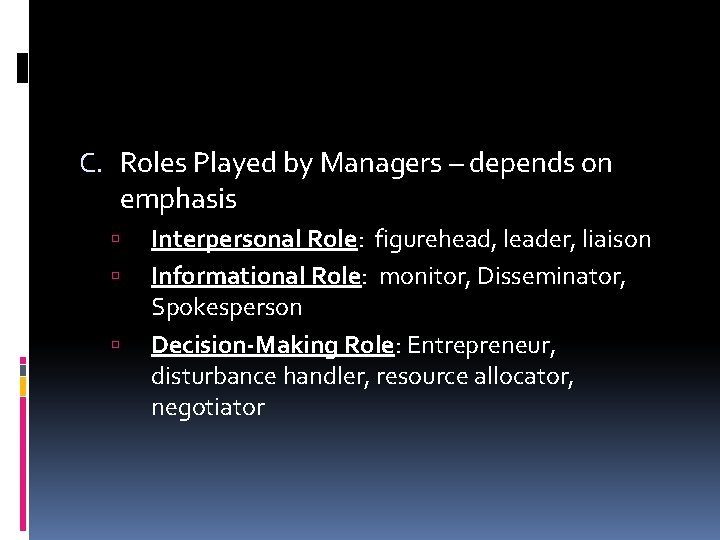
C. Roles Played by Managers – depends on emphasis Interpersonal Role: figurehead, leader, liaison Informational Role: monitor, Disseminator, Spokesperson Decision-Making Role: Entrepreneur, disturbance handler, resource allocator, negotiator
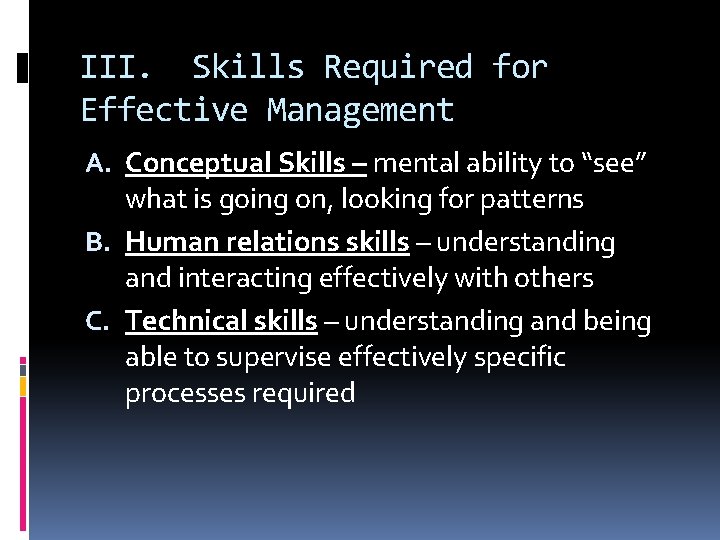
III. Skills Required for Effective Management A. Conceptual Skills – mental ability to “see” what is going on, looking for patterns B. Human relations skills – understanding and interacting effectively with others C. Technical skills – understanding and being able to supervise effectively specific processes required
D. Administrative skills – procedures and paperwork
IV. The Transition: Where Supervisors come from Promoting from within The good Understands culture and organization Knows requirements and personnel Offers incentive for others The bad Take the best present performer – may not have the skiils Inadequately training
V. Supervisory Relationships A. Personal Relationships – what additionally comes to work B. Organizational Relationships 1. Supervisor-to-Employee relationships 2. Relationships with peer supervisors and union steward 3. Supervisor-manager relationships C. External Relationships Owners, customers, suppliers, government, etc.
VI. The Emerging Position of Supervisory Managers My way or the high way vs Supportive, facilitating, leaner organizations, helping employees to grow and develop