
CH 1 MEASUREMENT II Using Measurements I II
- Slides: 13
CH. 1 - MEASUREMENT II. Using Measurements I II III
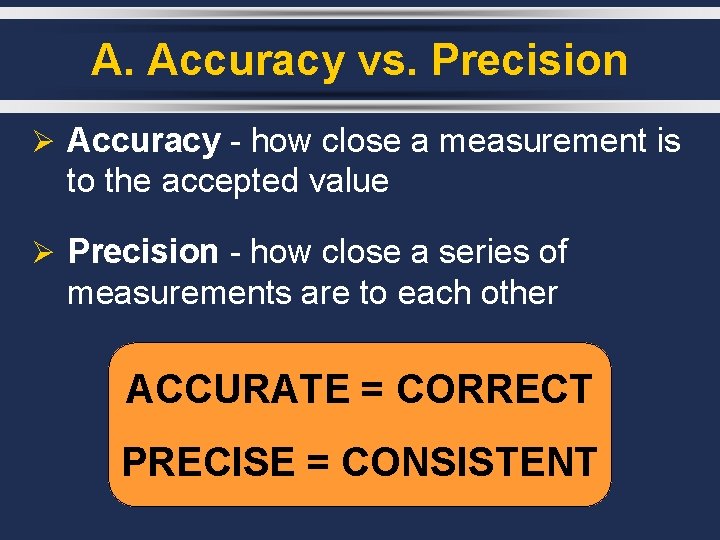
A. Accuracy vs. Precision Accuracy - how close a measurement is to the accepted value Precision - how close a series of measurements are to each other ACCURATE = CORRECT PRECISE = CONSISTENT
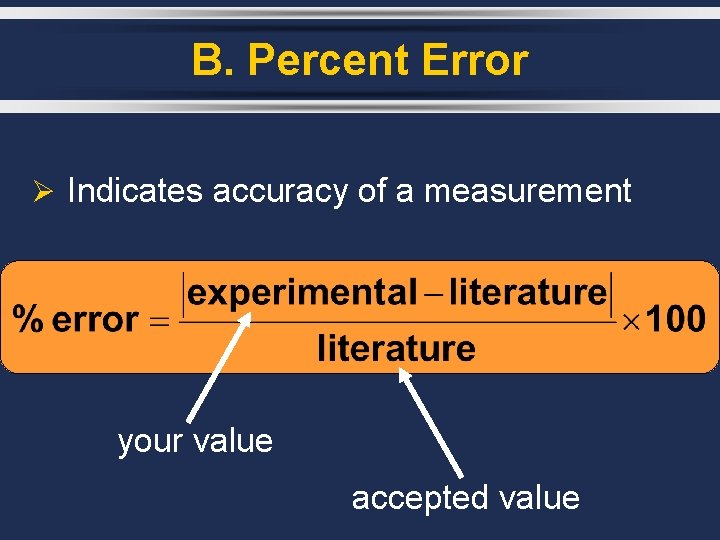
B. Percent Error Indicates accuracy of a measurement your value accepted value
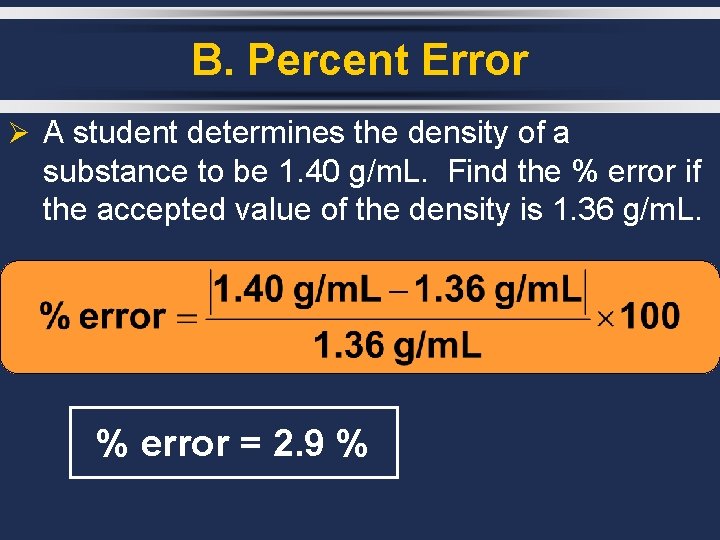
B. Percent Error A student determines the density of a substance to be 1. 40 g/m. L. Find the % error if the accepted value of the density is 1. 36 g/m. L. % error = 2. 9 %
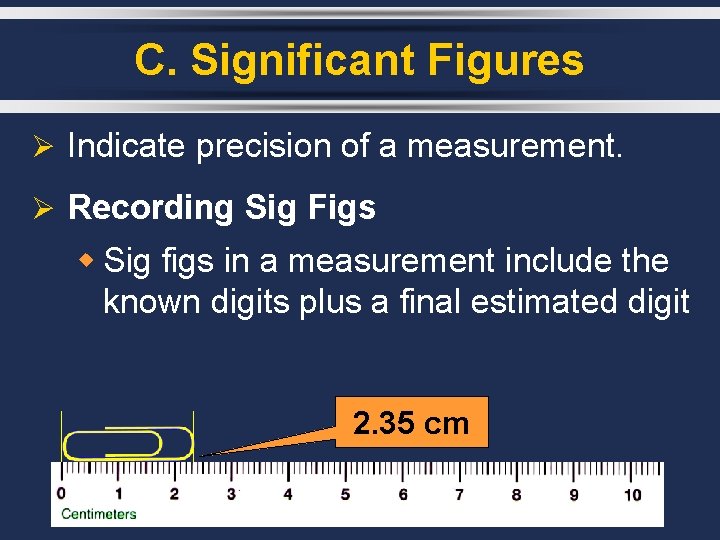
C. Significant Figures Indicate precision of a measurement. Recording Sig Figs Sig figs in a measurement include the known digits plus a final estimated digit 2. 35 cm C. Johannesson
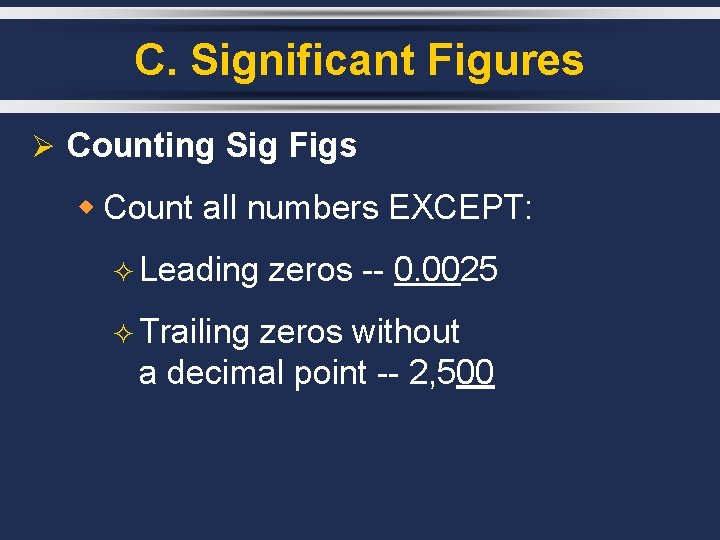
C. Significant Figures Counting Sig Figs Count all numbers EXCEPT: Leading Trailing zeros -- 0. 0025 zeros without a decimal point -- 2, 500
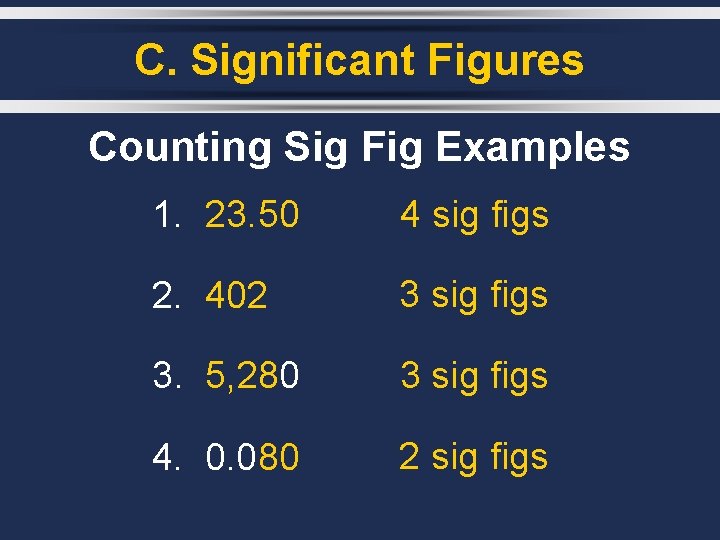
C. Significant Figures Counting Sig Fig Examples 1. 23. 50 4 sig figs 2. 402 3 sig figs 3. 5, 280 3 sig figs 4. 0. 080 2 sig figs
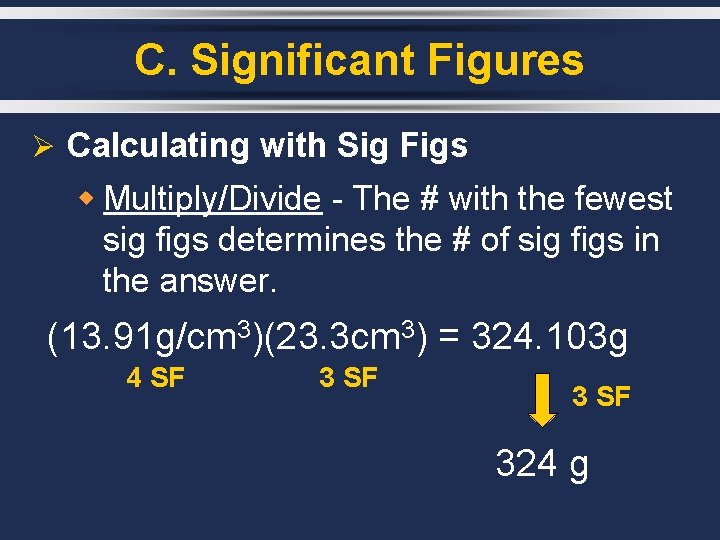
C. Significant Figures Calculating with Sig Figs Multiply/Divide - The # with the fewest sig figs determines the # of sig figs in the answer. (13. 91 g/cm 3)(23. 3 cm 3) = 324. 103 g 4 SF 324 g
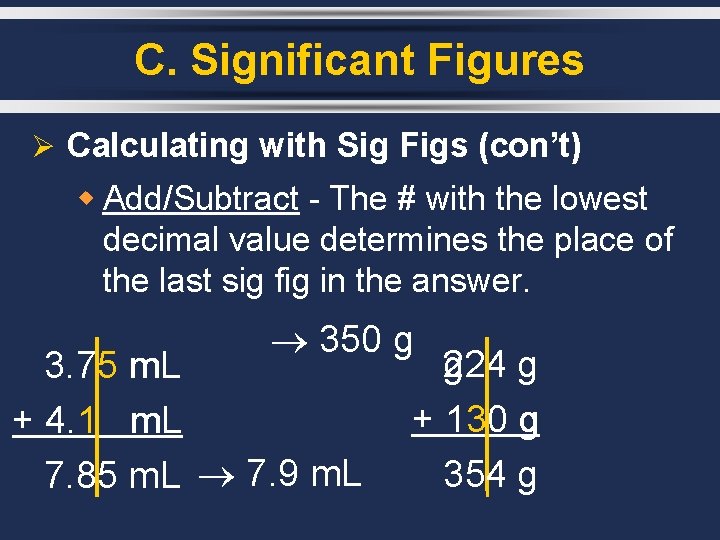
C. Significant Figures Calculating with Sig Figs (con’t) Add/Subtract - The # with the lowest decimal value determines the place of the last sig fig in the answer. 350 g 3. 75 m. L + 4. 1 m. L 7. 85 m. L 7. 9 m. L g g 224 + 130 g 354 g
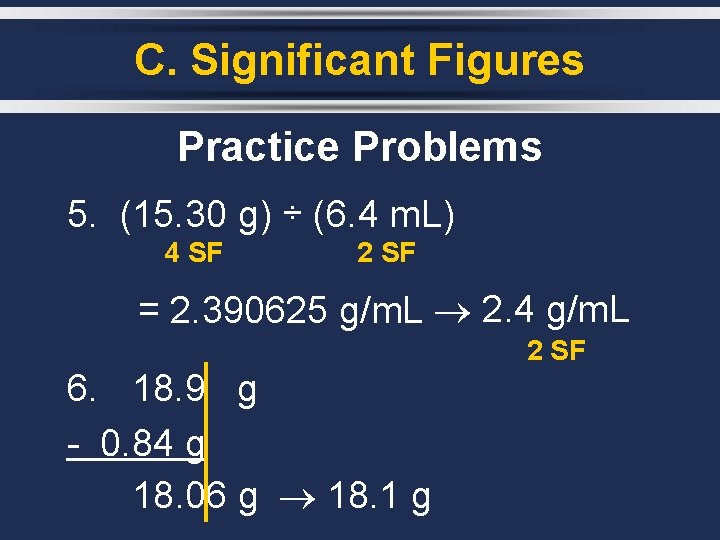
C. Significant Figures Practice Problems 5. (15. 30 g) ÷ (6. 4 m. L) 4 SF 2 SF = 2. 390625 g/m. L 2. 4 g/m. L 2 SF 6. 18. 9 g - 0. 84 g 18. 06 g 18. 1 g
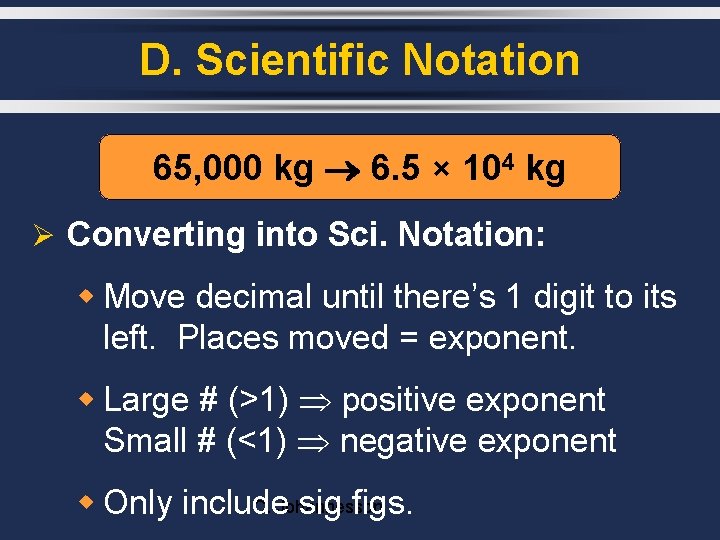
D. Scientific Notation 65, 000 kg 6. 5 × 10⁴ kg Converting into Sci. Notation: Move decimal until there’s 1 digit to its left. Places moved = exponent. Large # (>1) positive exponent Small # (<1) negative exponent C. Johannesson Only include sig figs.
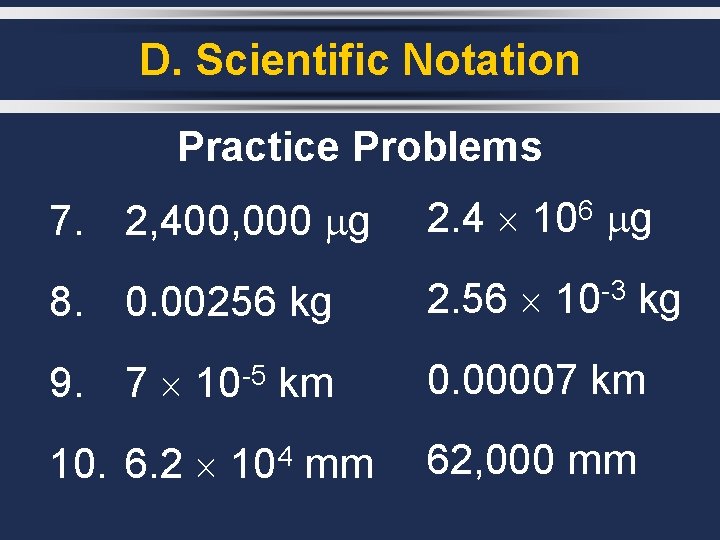
D. Scientific Notation Practice Problems 7. 2, 400, 000 g 2. 4 8. 0. 00256 kg 2. 56 9. 7 10 -5 km 0. 00007 km 10. 6. 2 104 mm 62, 000 mm 6 10 g -3 10 kg
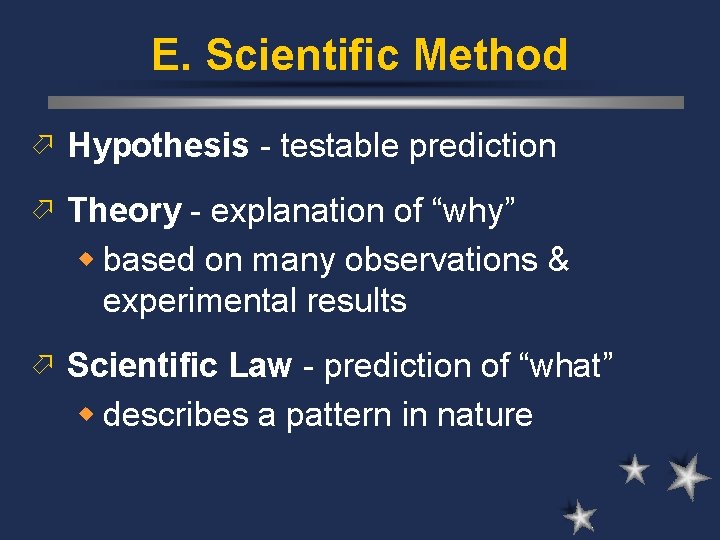
E. Scientific Method ö Hypothesis - testable prediction ö Theory - explanation of “why” based on many observations & experimental results ö Scientific Law - prediction of “what” describes a pattern in nature