
Ch 1 Matter III Properties Changes in Matter
- Slides: 9
Ch. 1 - Matter III. Properties & Changes in Matter (p. 11 -14) w Extensive vs. Intensive w Physical vs. Chemical
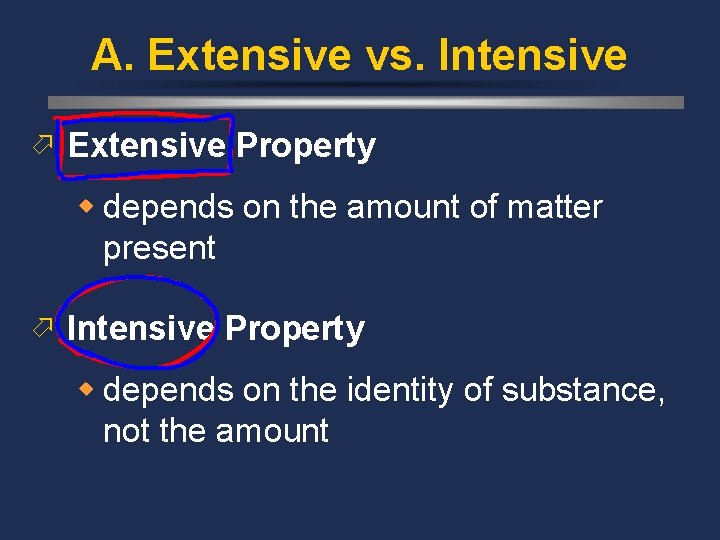
A. Extensive vs. Intensive ö Extensive Property w depends on the amount of matter present ö Intensive Property w depends on the identity of substance, not the amount
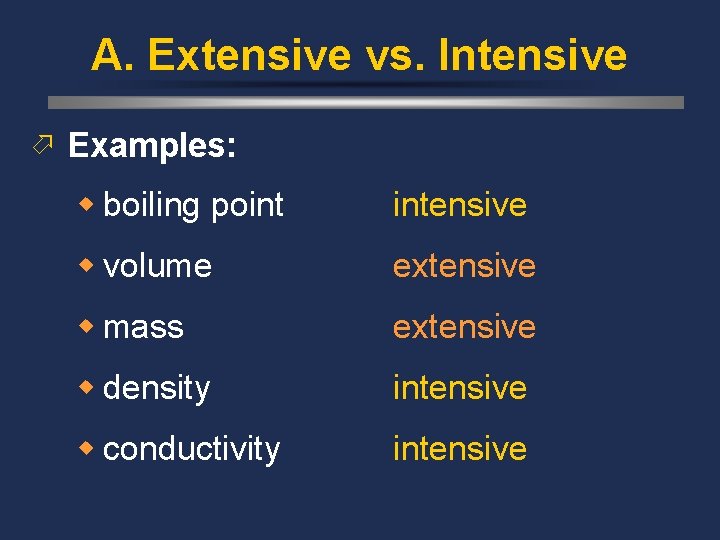
A. Extensive vs. Intensive ö Examples: w boiling point intensive w volume extensive w mass extensive w density intensive w conductivity intensive
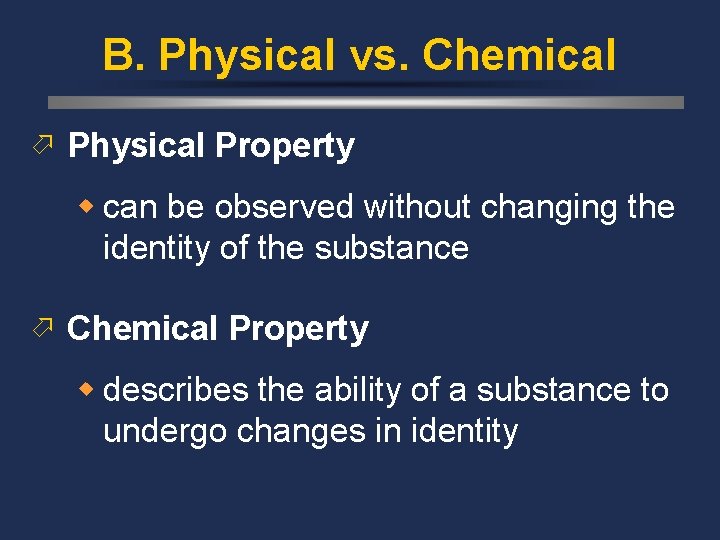
B. Physical vs. Chemical ö Physical Property w can be observed without changing the identity of the substance ö Chemical Property w describes the ability of a substance to undergo changes in identity
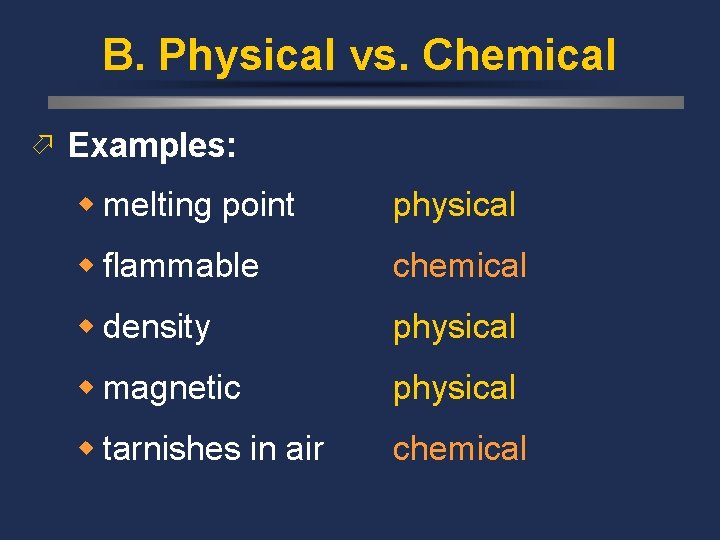
B. Physical vs. Chemical ö Examples: w melting point physical w flammable chemical w density physical w magnetic physical w tarnishes in air chemical
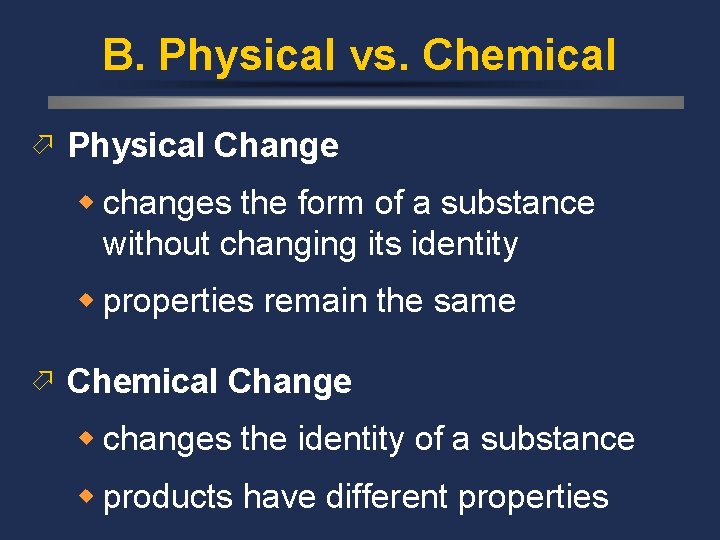
B. Physical vs. Chemical ö Physical Change w changes the form of a substance without changing its identity w properties remain the same ö Chemical Change w changes the identity of a substance w products have different properties
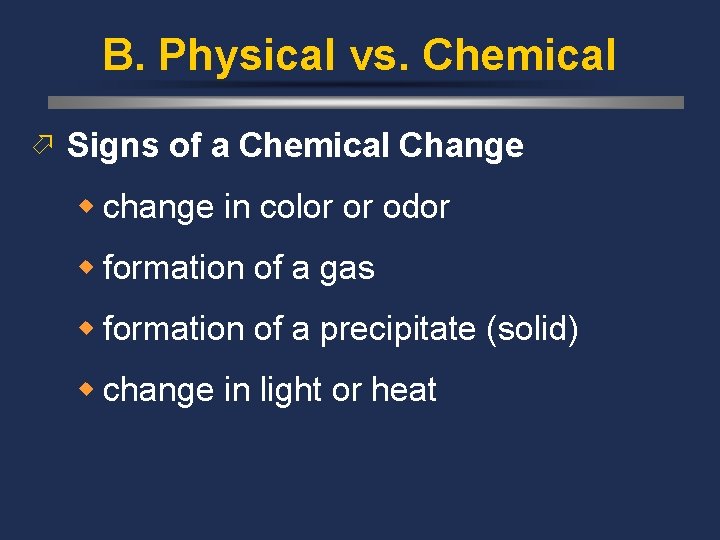
B. Physical vs. Chemical ö Signs of a Chemical Change w change in color or odor w formation of a gas w formation of a precipitate (solid) w change in light or heat
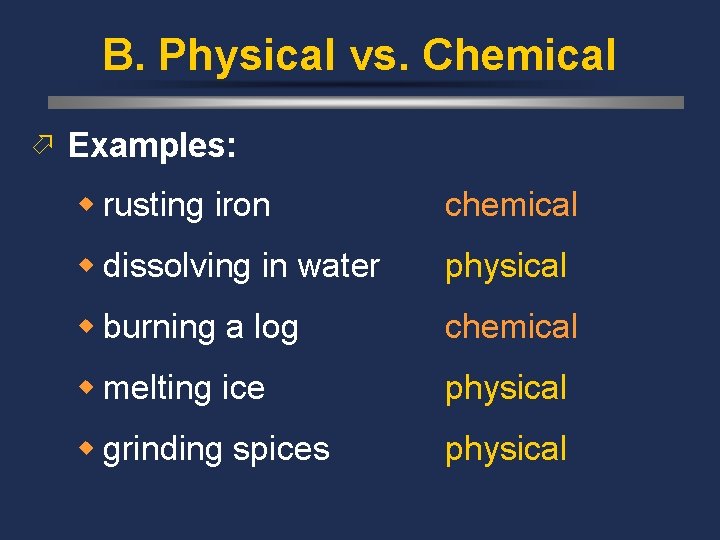
B. Physical vs. Chemical ö Examples: w rusting iron chemical w dissolving in water physical w burning a log chemical w melting ice physical w grinding spices physical
In your packet… ö Sort the cards under the appropriate categories ö Lets check it! ö Circle the INTENSIVE properties ö Put a square around the EXTENSIVE properties