
Ch 1 Introduction to the human body pp
Ch. 1 Introduction to the human body (pp. 3 -10) Study of human body n Anatomy: study of body structure n Physiology: study of body function
Anatomy “cutting up” n n n Location, what it looks like Gross anatomy: study of body structures visible to the naked eye Microanatomy: needs microscope. Histology is the study of tissues which is a type of microanatomy n n Systemic anatomy: studies body structures with in a given organ system like the digestive, muscular or skeletal systems Regional anatomy: studies all structures with in a given region of the body like the head or leg.
Physiology “study of nature” n n How does it work The way the body obtains energy and manages its use in order to maintain stability
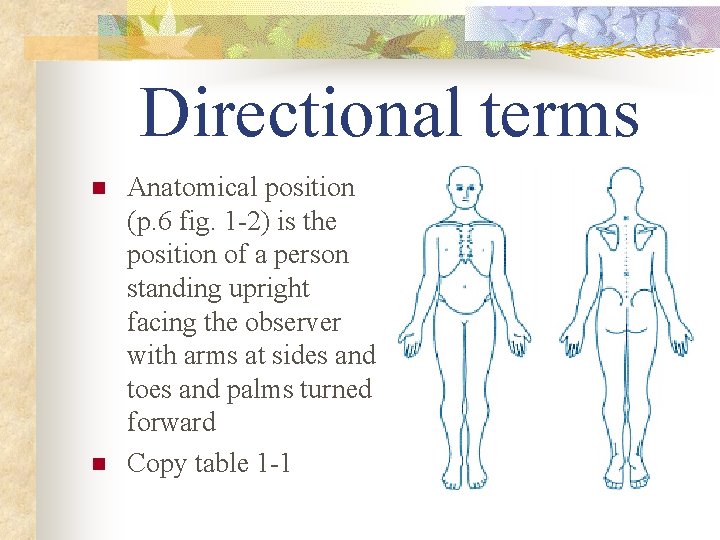
Directional terms n n Anatomical position (p. 6 fig. 1 -2) is the position of a person standing upright facing the observer with arms at sides and toes and palms turned forward Copy table 1 -1
Directional terms n n n Superior (cranial): towards head Inferior (caudal): away from head Anterior (ventral): towards the front or belly side Posterior (dorsal): towards the back side Medial: towards midline of body Lateral: away from midline n n Superficial (external): towards surface of body Deep (internal): inward from surface Proximal: towards structure’s origin to trunk Distal: away from structure’s origin to trunk
Directional terms n EX. Look at wrist and elbow, the elbow is proximal with respect to the wrist because it is closer to the point of attachment to the trunk. n http: //www. whitman. edu/biology/vpd/anar ef. html
Body planes Imaginary flat surfaces Sagittal n Frontal n Horizontal n
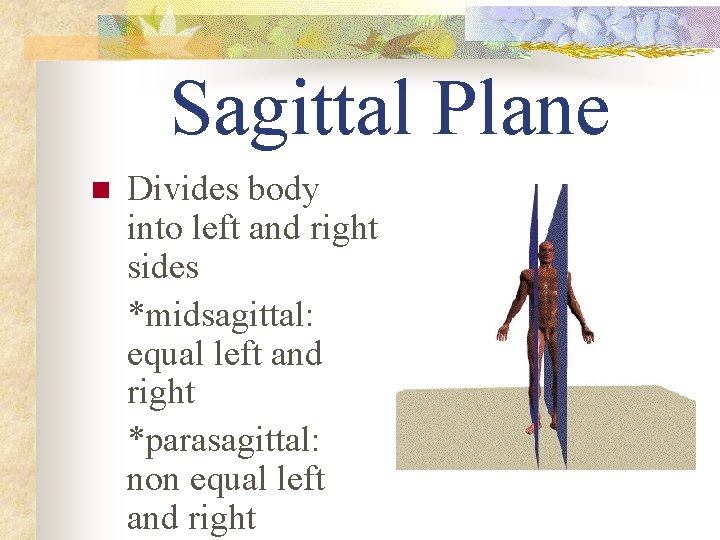
Sagittal Plane n Divides body into left and right sides *midsagittal: equal left and right *parasagittal: non equal left and right
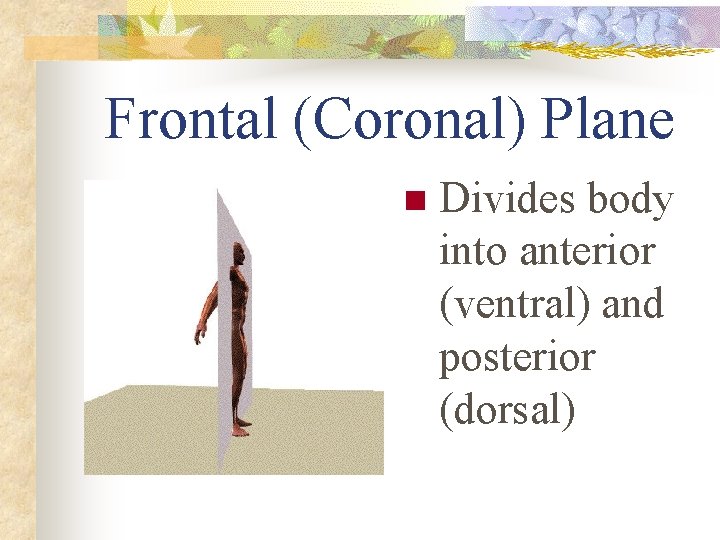
Frontal (Coronal) Plane n Divides body into anterior (ventral) and posterior (dorsal)
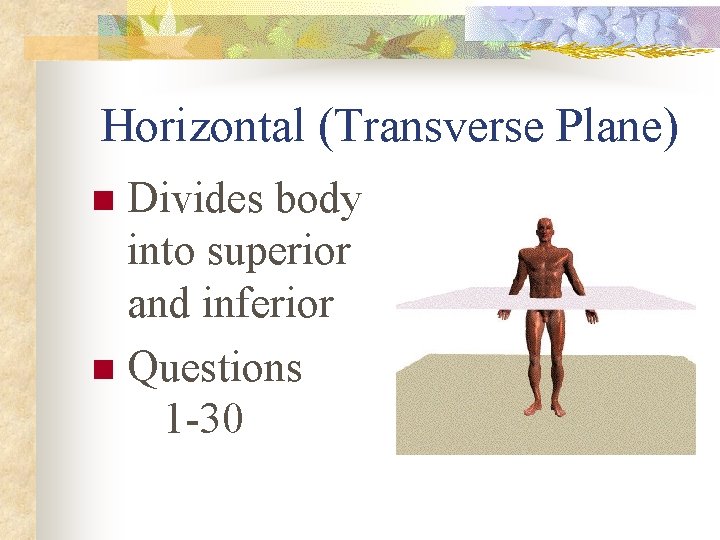
Horizontal (Transverse Plane) Divides body into superior and inferior n Questions 1 -30 n
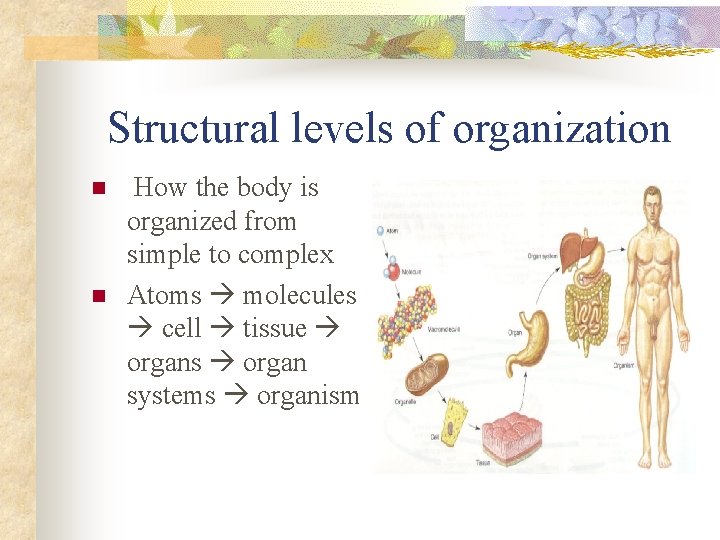
Structural levels of organization n n How the body is organized from simple to complex Atoms molecules cell tissue organs organ systems organism
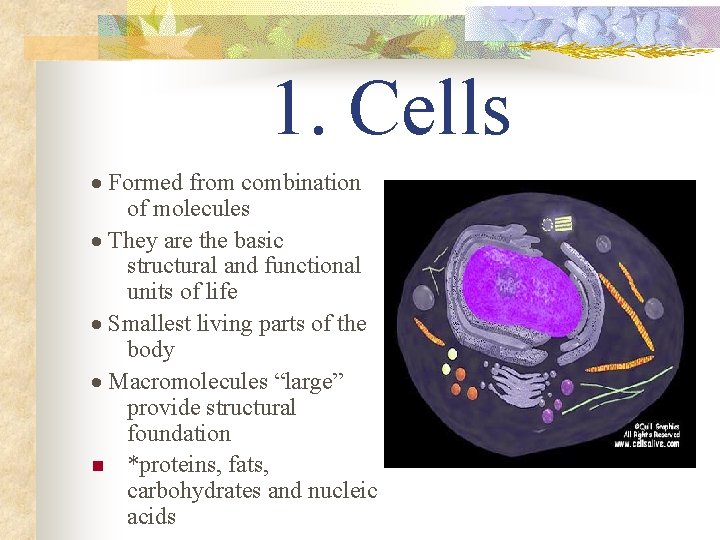
1. Cells · Formed from combination of molecules · They are the basic structural and functional units of life · Smallest living parts of the body · Macromolecules “large” provide structural foundation n *proteins, fats, carbohydrates and nucleic acids
2. Tissue · group of similar cells combined to perform a common function. There are 4 types: A. epithelial: close arrangement of cells with little intercellular material. Covers body surface, lines inside of organs and body cavities, forms glands. B. connective: abundance of extracellular material with few cells. Function in support and binding of body structures C. muscle: specialization to contract D. nervous: sends nervous signals
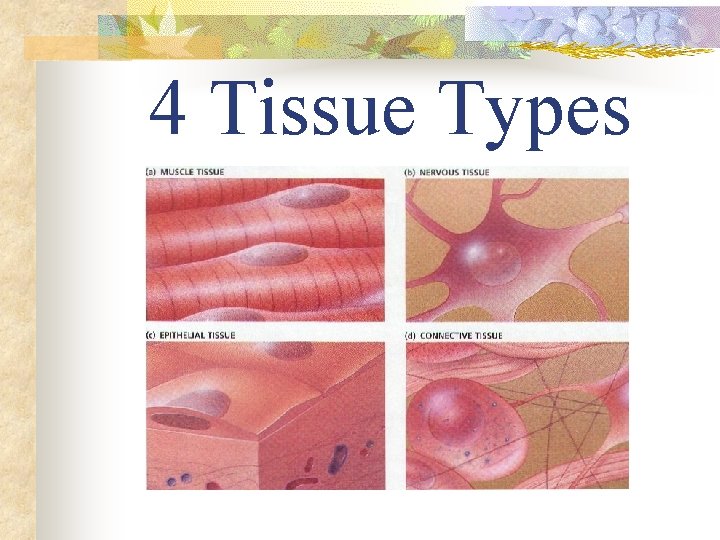
4 Tissue Types
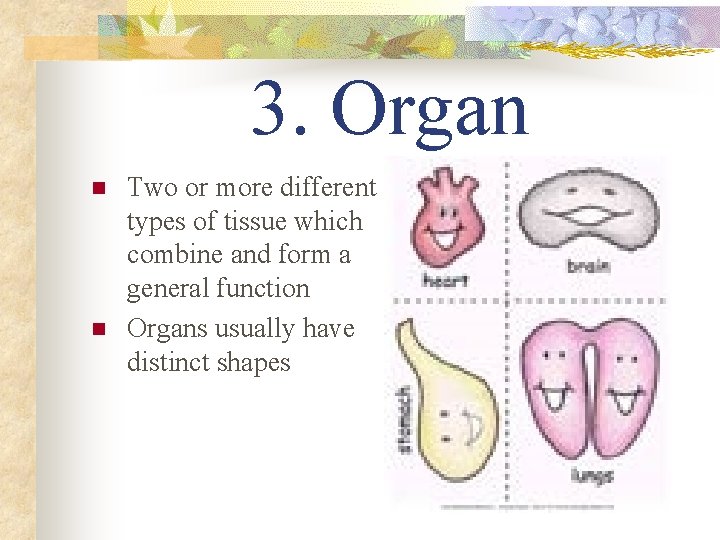
3. Organ n n Two or more different types of tissue which combine and form a general function Organs usually have distinct shapes
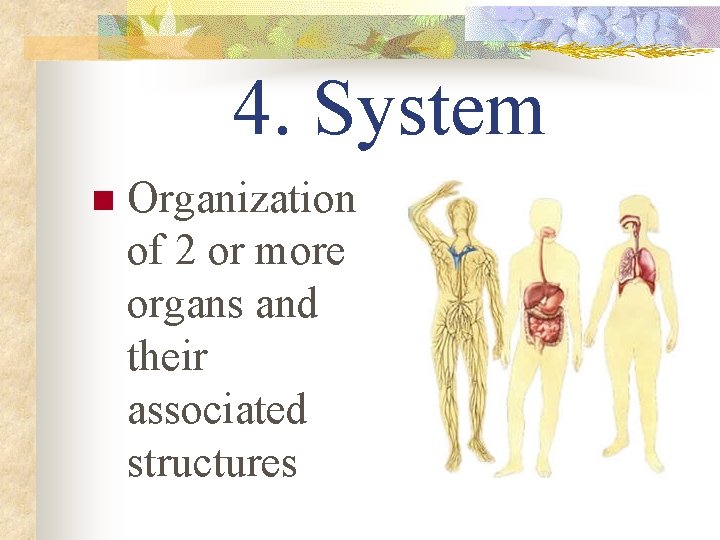
4. System n Organization of 2 or more organs and their associated structures
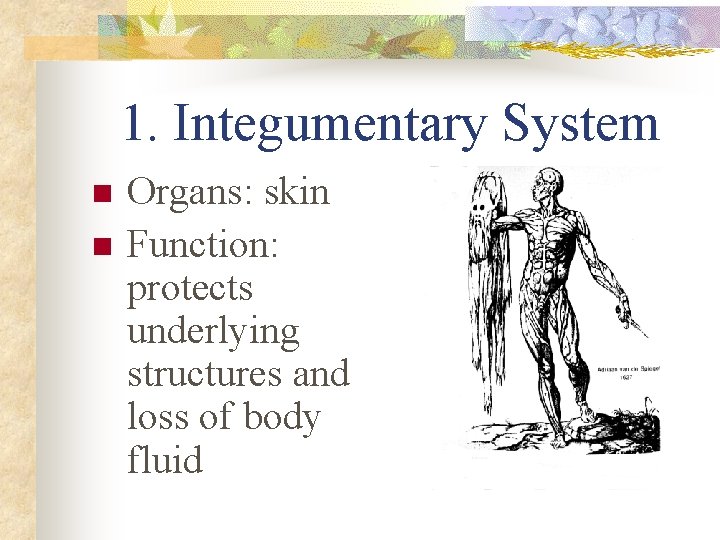
1. Integumentary System n n Organs: skin Function: protects underlying structures and loss of body fluid
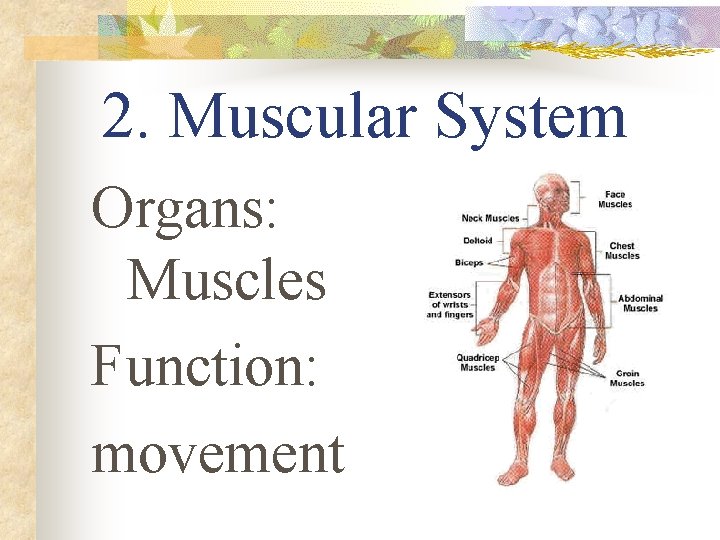
2. Muscular System Organs: Muscles Function: movement
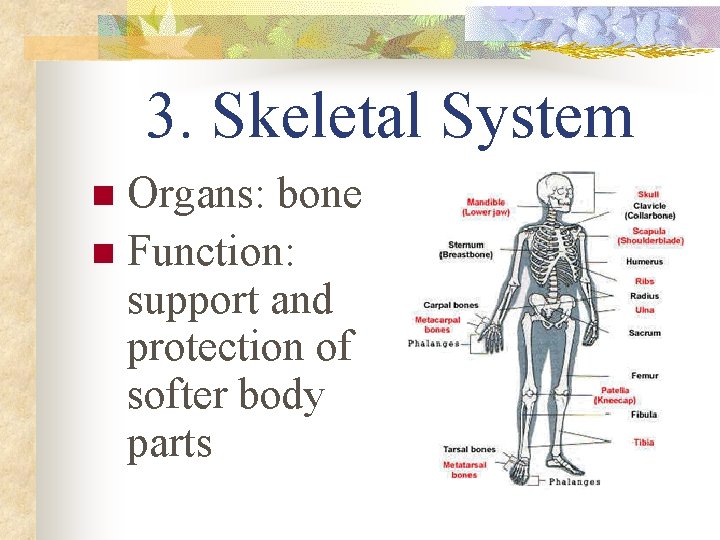
3. Skeletal System Organs: bone n Function: support and protection of softer body parts n
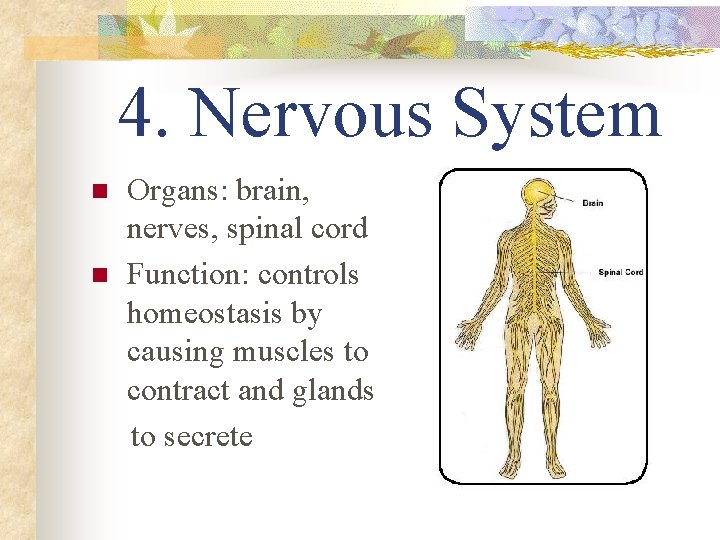
4. Nervous System n n Organs: brain, nerves, spinal cord Function: controls homeostasis by causing muscles to contract and glands to secrete
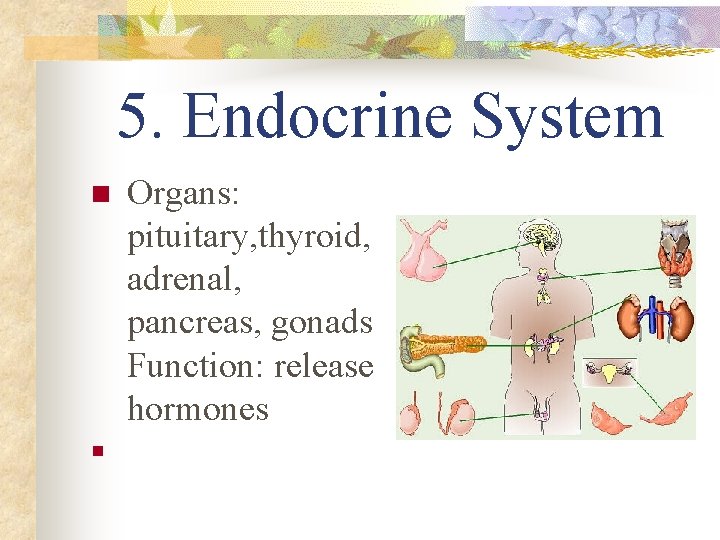
5. Endocrine System n n Organs: pituitary, thyroid, adrenal, pancreas, gonads Function: release hormones
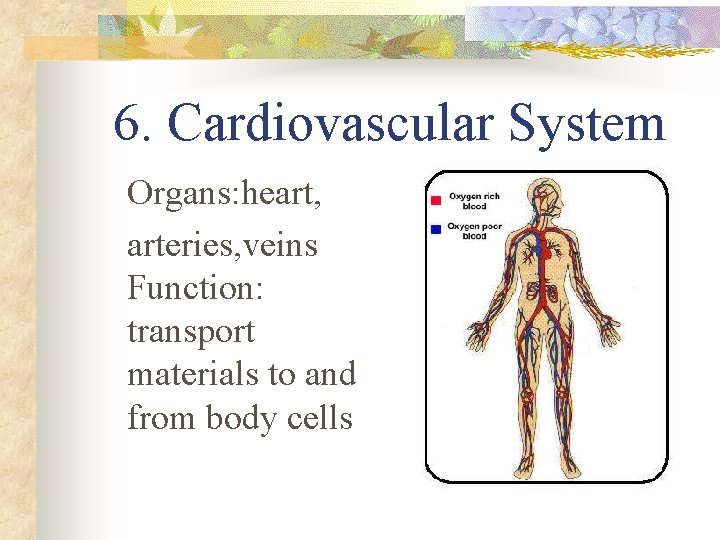
6. Cardiovascular System Organs: heart, arteries, veins Function: transport materials to and from body cells
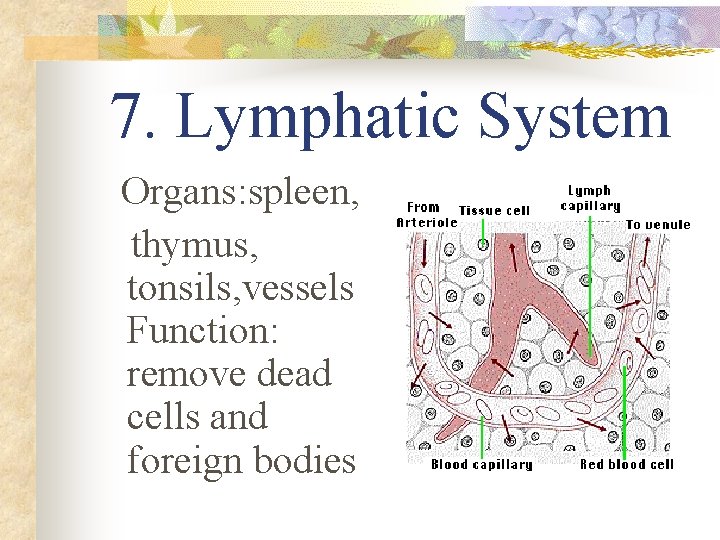
7. Lymphatic System Organs: spleen, thymus, tonsils, vessels Function: remove dead cells and foreign bodies
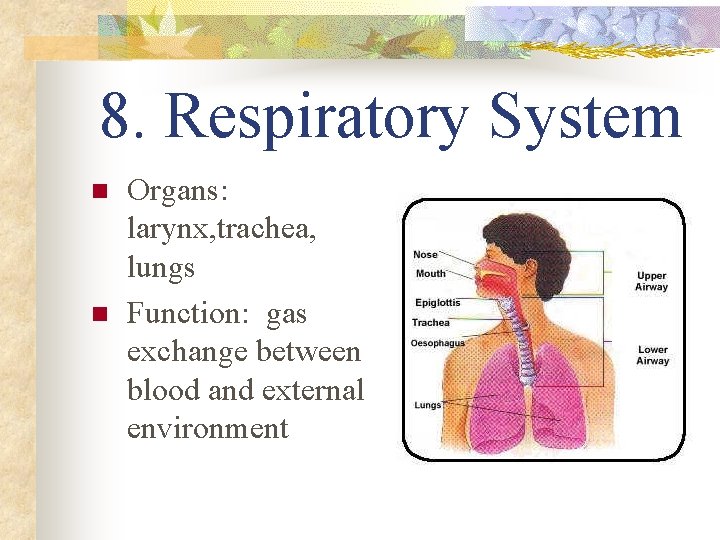
8. Respiratory System n n Organs: larynx, trachea, lungs Function: gas exchange between blood and external environment
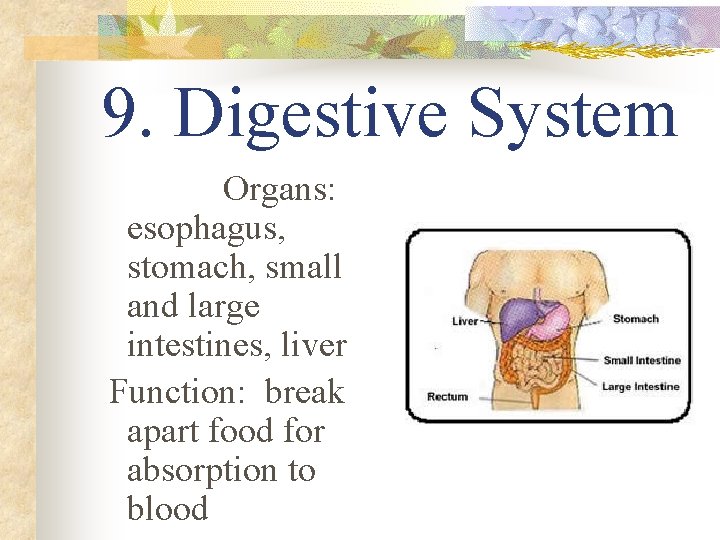
9. Digestive System Organs: esophagus, stomach, small and large intestines, liver Function: break apart food for absorption to blood
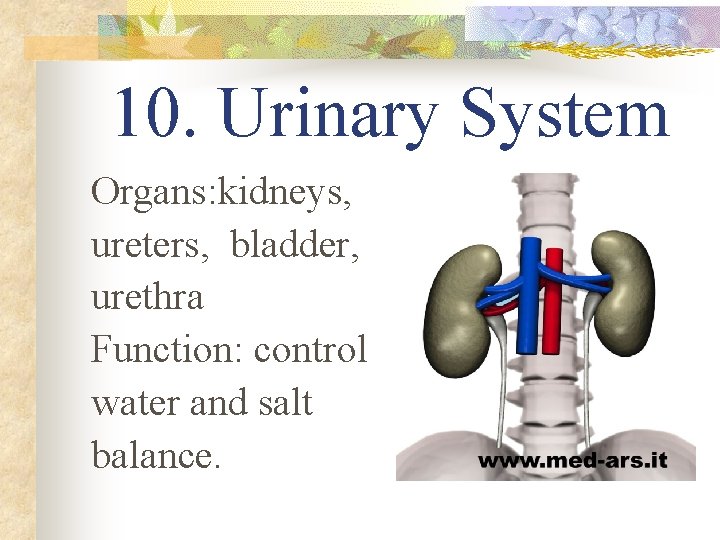
10. Urinary System Organs: kidneys, ureters, bladder, urethra Function: control water and salt balance.
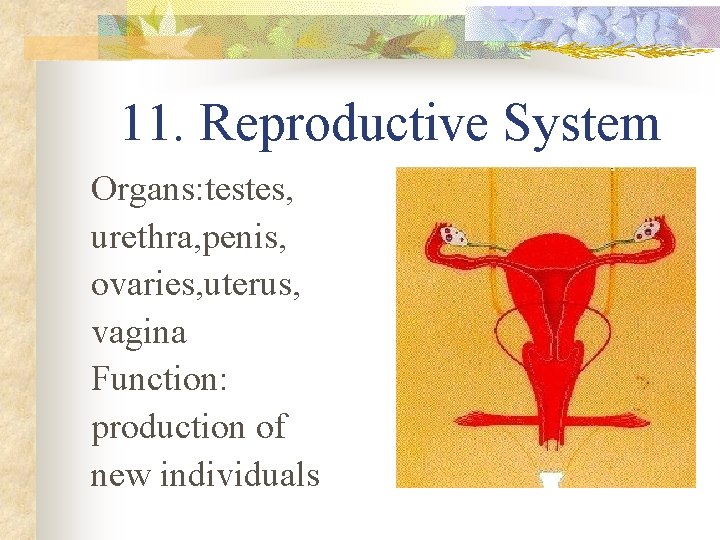
11. Reproductive System Organs: testes, urethra, penis, ovaries, uterus, vagina Function: production of new individuals
5. Complete Organism n n Composed of many systems, which depend on one another to perform. Survival and reproduction are the goals of the body’s internal activities. Questions 31 -59
- Slides: 28