
Ch 1 Characteristics of Life Organization of the
- Slides: 21
Ch. 1 – Characteristics of Life & Organization of the Human Body
What is the difference between Anatomy and Physiology?
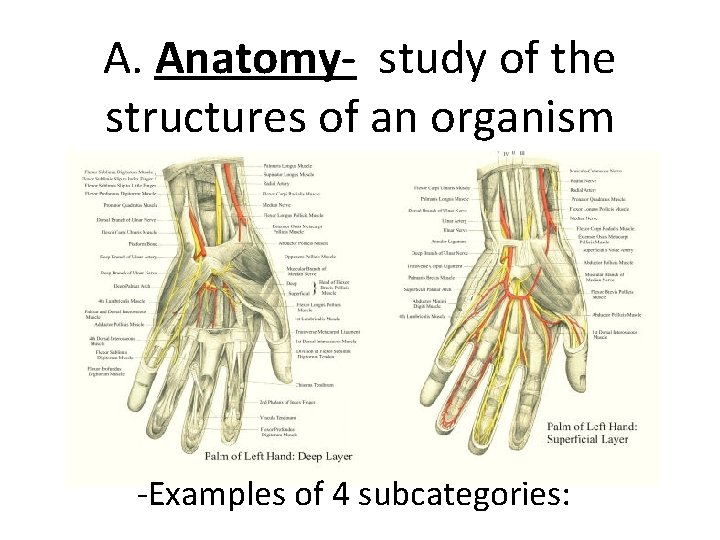
A. Anatomy- study of the structures of an organism -Examples of 4 subcategories:
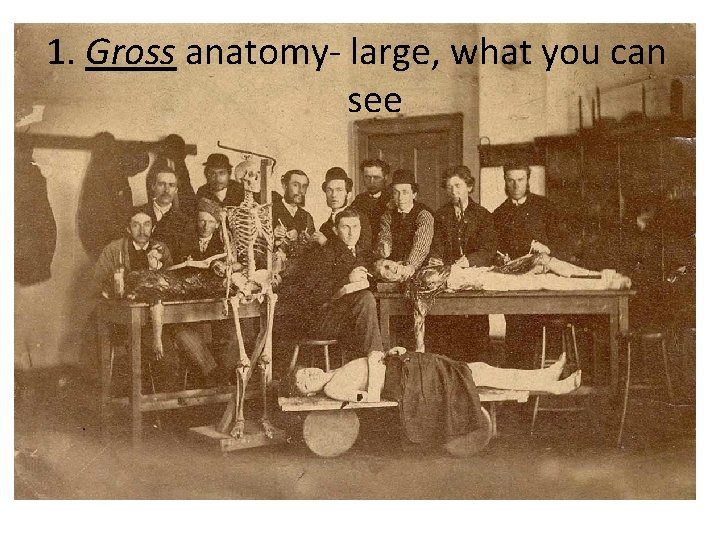
1. Gross anatomy- large, what you can see
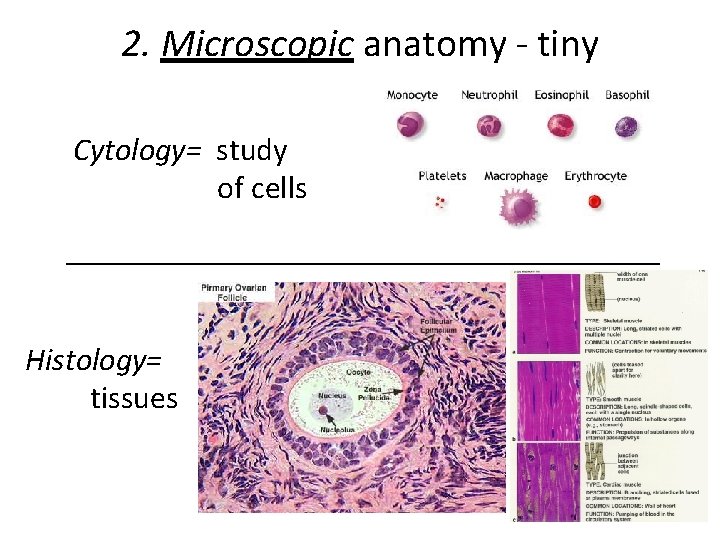
2. Microscopic anatomy - tiny Cytology= study of cells Histology= tissues
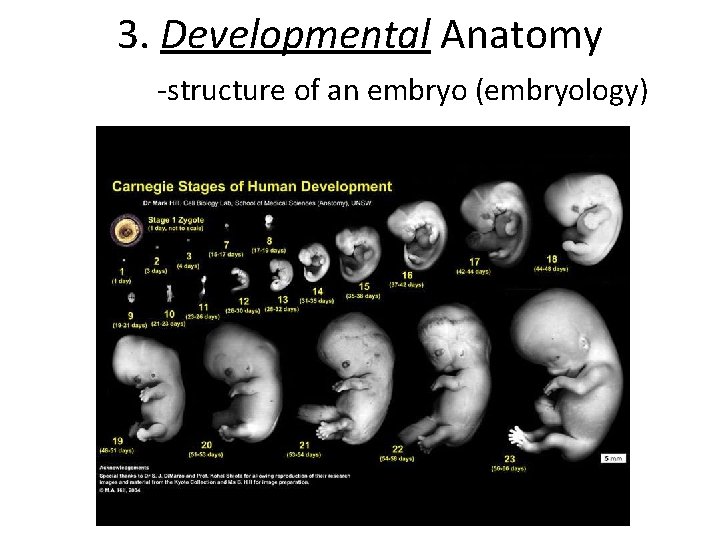
3. Developmental Anatomy -structure of an embryo (embryology)
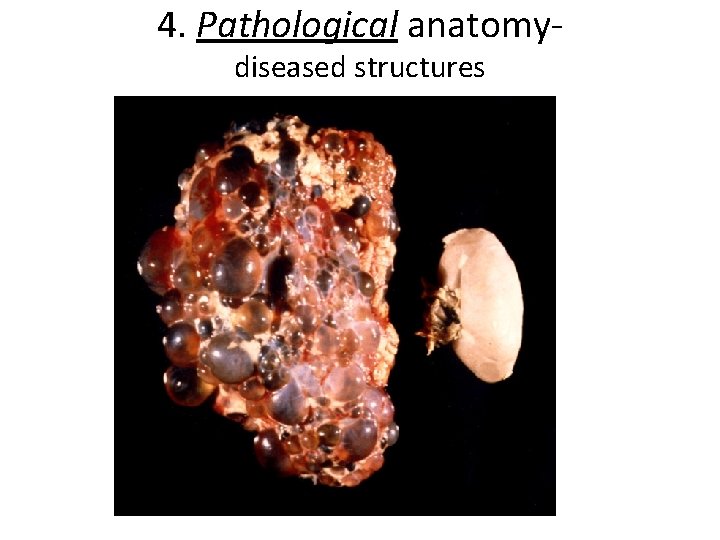
4. Pathological anatomydiseased structures
B. Physiology- study of the functions of an organism
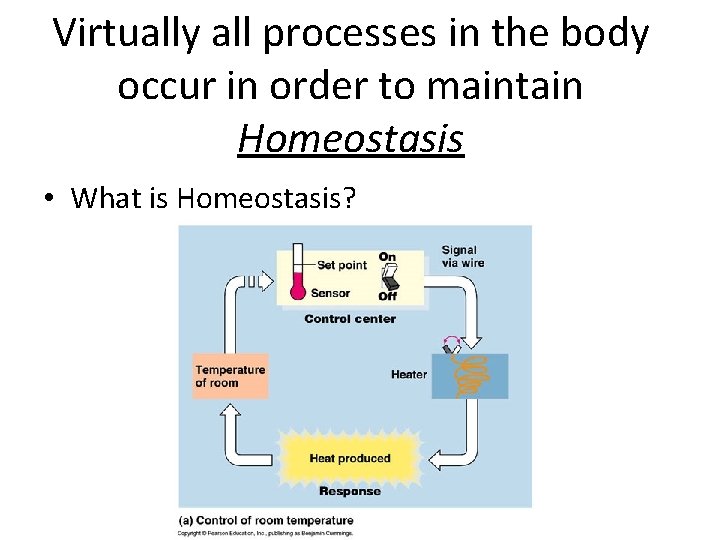
Virtually all processes in the body occur in order to maintain Homeostasis • What is Homeostasis?
Homeostasis- an organism’s maintenance of a relatively constant internal state within set ranges. Examples: Temp. = ~ 98. 6 °F b. p. = ~ 120/80 mm. Hg glucose= ~ 90 -130 mg/dl Blood p. H= 7. 4 hydration= ~60% H 2 O MANY, MANY more!
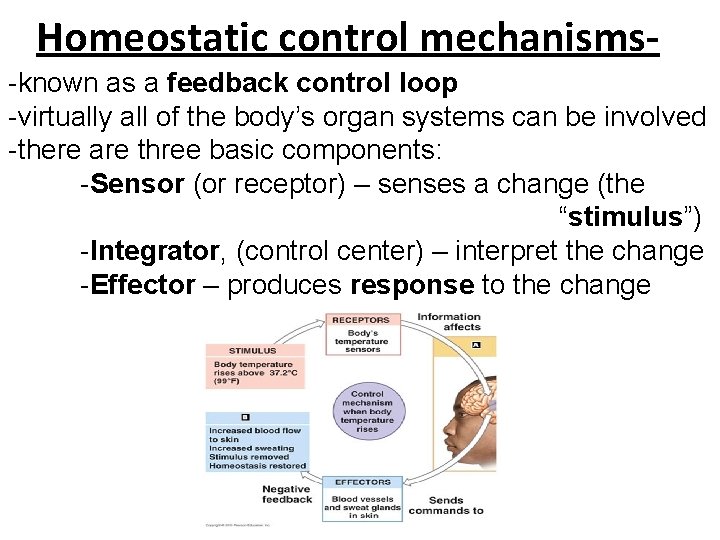
Homeostatic control mechanisms-known as a feedback control loop -virtually all of the body’s organ systems can be involved -there are three basic components: -Sensor (or receptor) – senses a change (the “stimulus”) -Integrator, (control center) – interpret the change -Effector – produces response to the change
Example: SENSOR: pressure sensor in the walls of the heart and major arteries senses low blood pressure (stimulus) and sends a signal to the brain. INTEGRATOR: Medulla oblongata in the brain determines degree in which b. p. must be corrected and send a signal back to the heart. EFFECTOR: the heart begins to beat faster thereby increasing pressure (response).
NEGATIVE feedback loop-creates a response that opposes the initial stimulus or change. (reverses the change) -works to stabilize physiological variables -are responsible for maintaining homeostasis
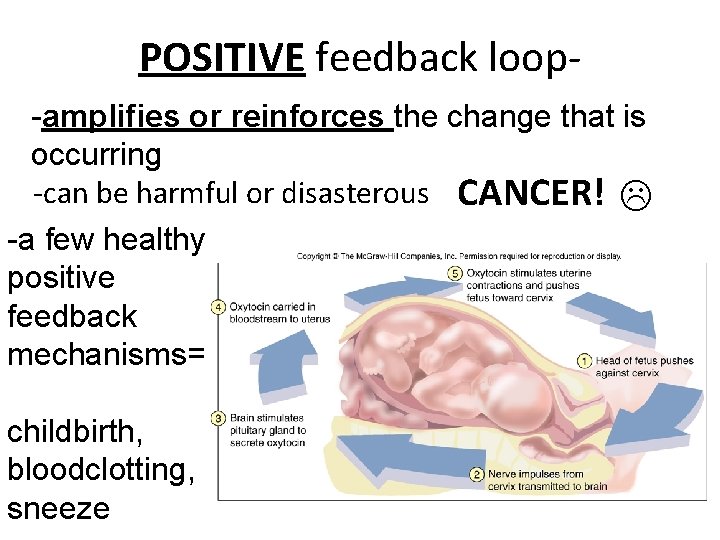
POSITIVE feedback loop-amplifies or reinforces the change that is occurring -can be harmful or disasterous CANCER! -a few healthy positive feedback mechanisms= childbirth, bloodclotting, sneeze
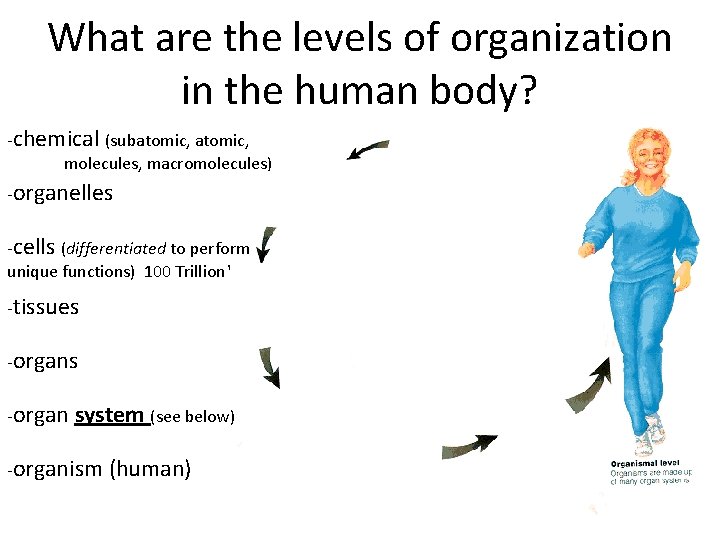
What are the levels of organization in the human body? -chemical (subatomic, molecules, macromolecules) -organelles -cells (differentiated to perform unique functions) 100 Trillion! -tissues -organ system (see below) -organism (human)
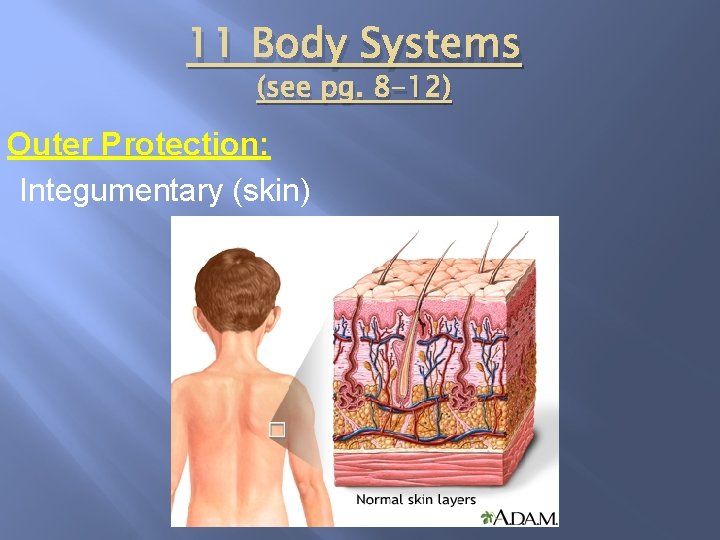
11 Body Systems (see pg. 8 -12) Outer Protection: Integumentary (skin)
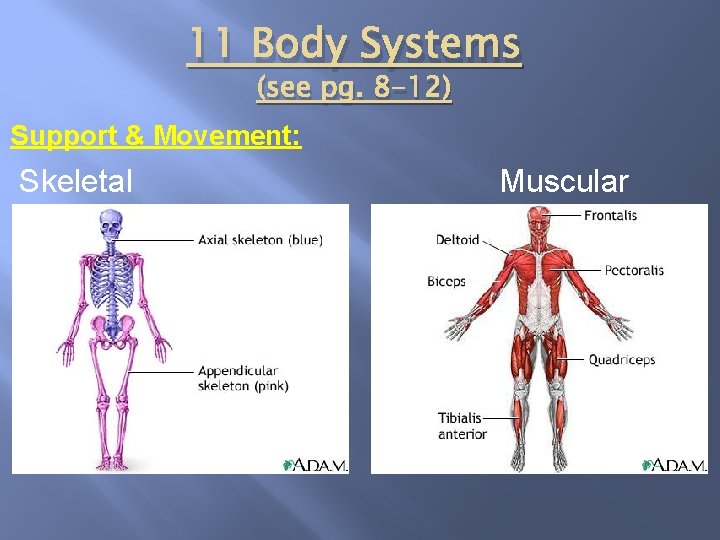
11 Body Systems (see pg. 8 -12) Support & Movement: Skeletal Muscular
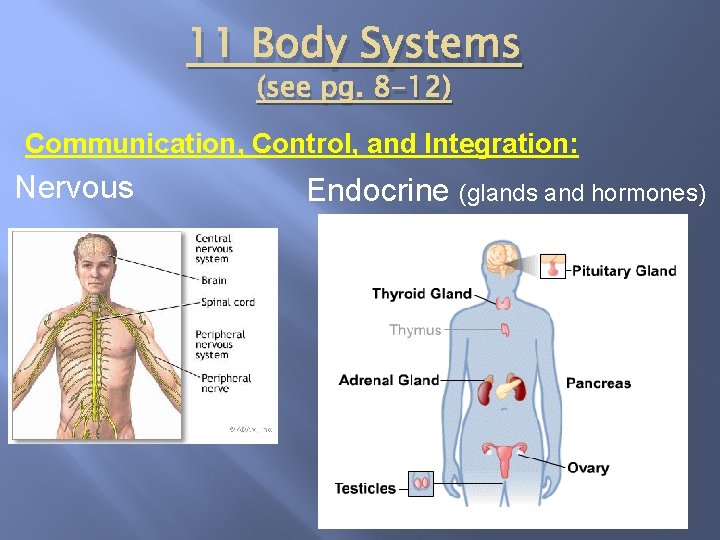
11 Body Systems (see pg. 8 -12) Communication, Control, and Integration: Nervous Endocrine (glands and hormones)
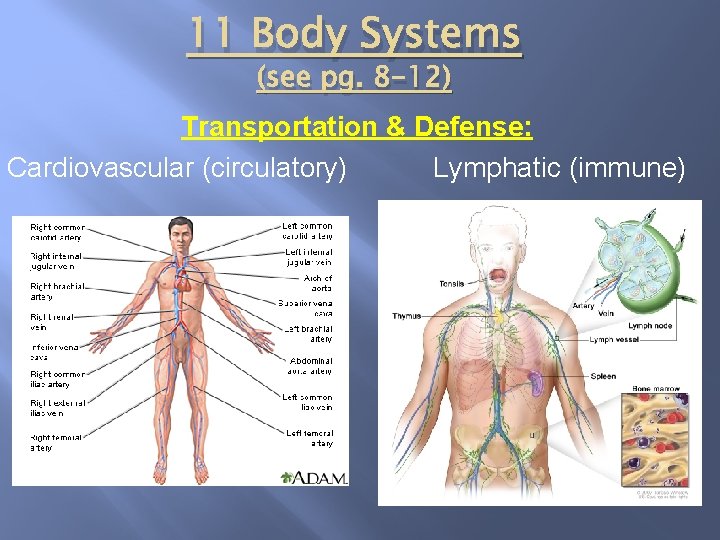
11 Body Systems (see pg. 8 -12) Transportation & Defense: Cardiovascular (circulatory) Lymphatic (immune)
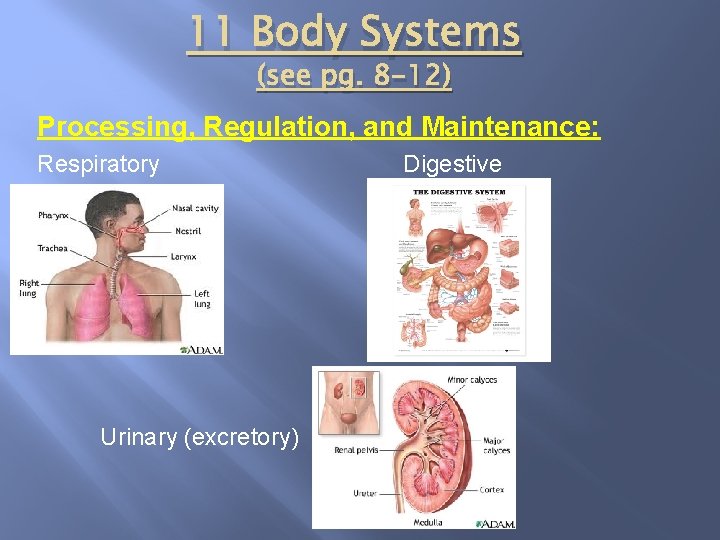
11 Body Systems (see pg. 8 -12) Processing, Regulation, and Maintenance: Respiratory Urinary (excretory) Digestive
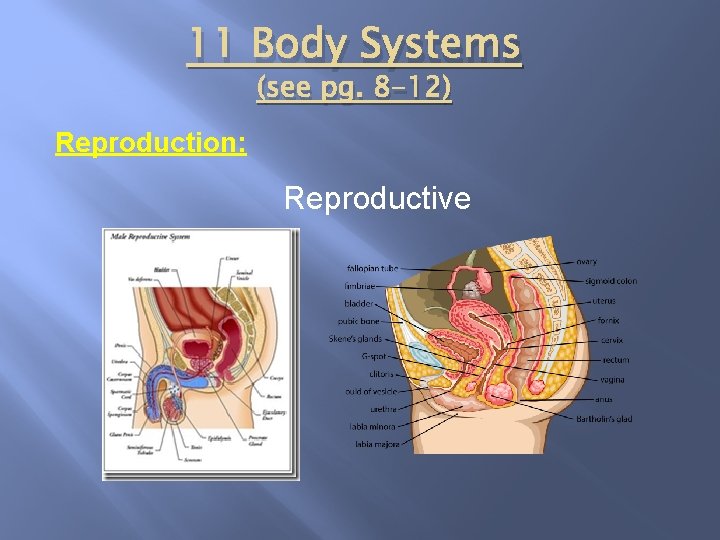
11 Body Systems (see pg. 8 -12) Reproduction: Reproductive