
CFD Analysis of Inlet and Outlet Regions of
- Slides: 43
“CFD Analysis of Inlet and Outlet Regions of Coolant Channels in an Advanced Hydrocarbon Engine Nozzle” Dr. Kevin R. Anderson Associate Professor California State Polytechnic University at Pomona Department of Mechanical Engineering Thermal/Fluids Engineer, Swales Aerospace Faculty Part Time T&FSE, NASA-JPL TFAWS 2004 Thermal & Fluids Analysis Workshop Aerothermal / CFD Paper 109 -A 0019 JPL Pasadena, CA August 30 – September 3, 2004 Pasadena Center, Pasadena, CA 1
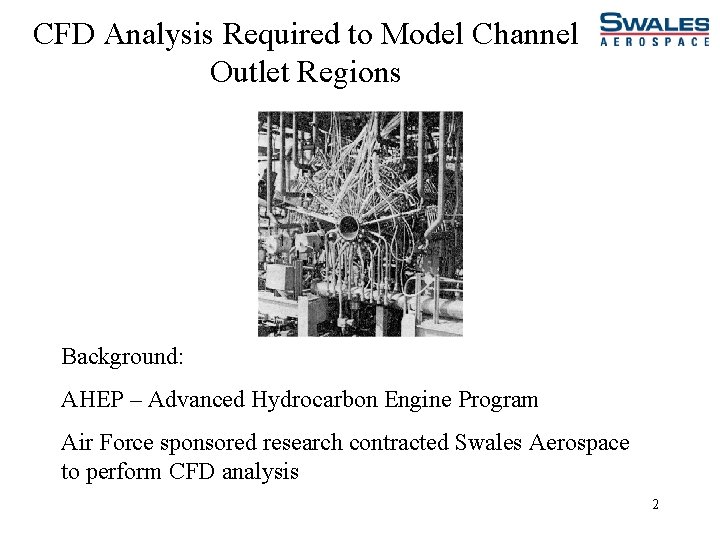
CFD Analysis Required to Model Channel Outlet Regions Background: AHEP – Advanced Hydrocarbon Engine Program Air Force sponsored research contracted Swales Aerospace to perform CFD analysis 2
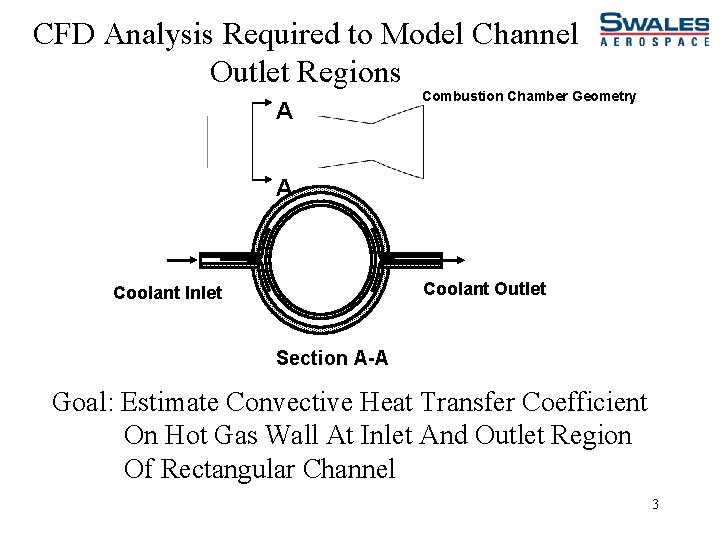
CFD Analysis Required to Model Channel Outlet Regions A Combustion Chamber Geometry A Coolant Outlet Coolant Inlet Section A-A Goal: Estimate Convective Heat Transfer Coefficient On Hot Gas Wall At Inlet And Outlet Region Of Rectangular Channel 3
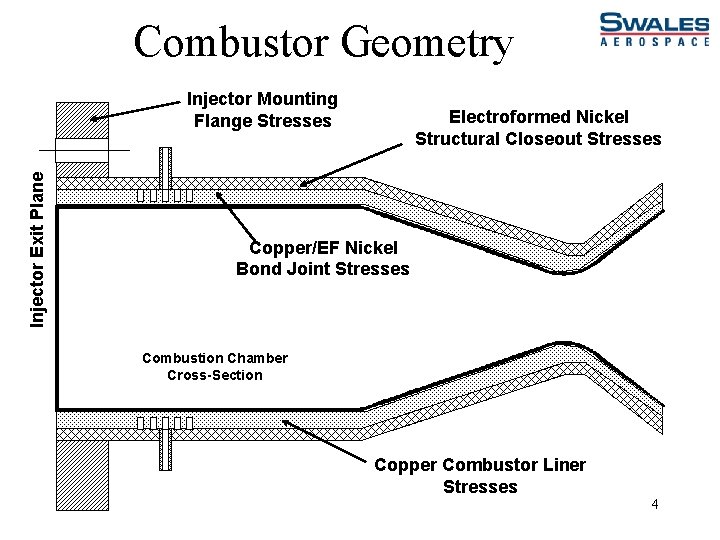
Combustor Geometry Injector Exit Plane Injector Mounting Flange Stresses Electroformed Nickel Structural Closeout Stresses Copper/EF Nickel Bond Joint Stresses Combustion Chamber Cross-Section Copper Combustor Liner Stresses 4
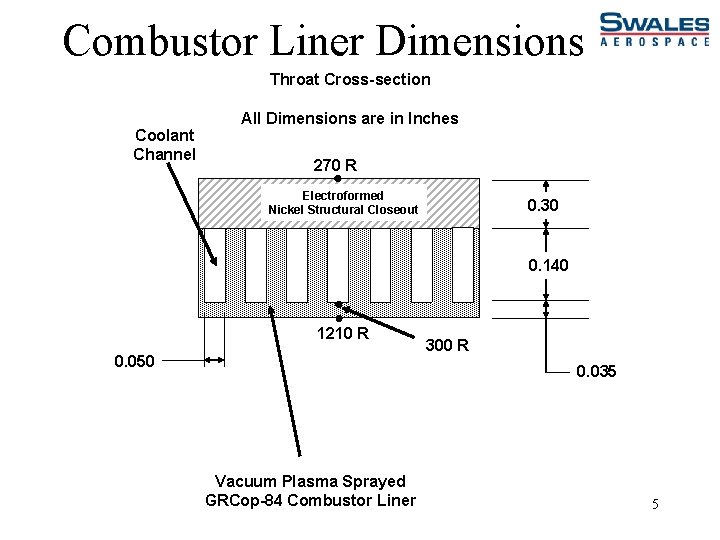
Combustor Liner Dimensions Throat Cross-section Coolant Channel All Dimensions are in Inches 270 R Electroformed Nickel Structural Closeout 0. 30 0. 140 1210 R 0. 050 300 R 0. 035 Vacuum Plasma Sprayed GRCop-84 Combustor Liner 5
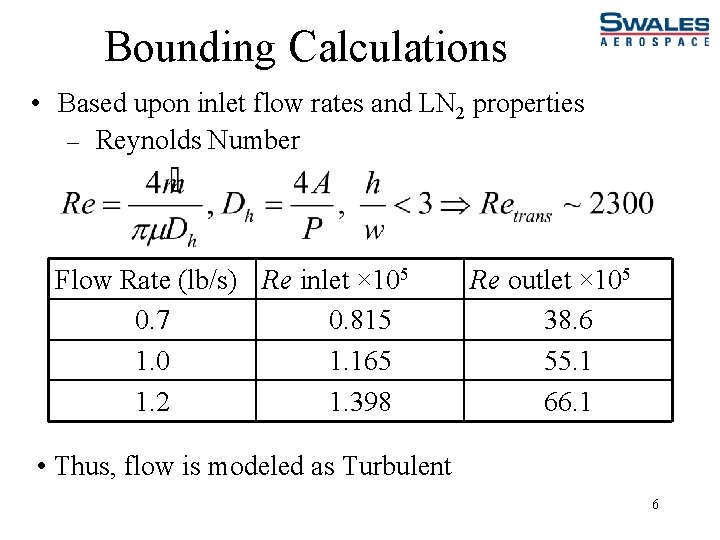
Bounding Calculations • Based upon inlet flow rates and LN 2 properties – Reynolds Number Flow Rate (lb/s) Re inlet × 105 0. 7 0. 815 1. 0 1. 165 1. 2 1. 398 Re outlet × 105 38. 6 55. 1 66. 1 • Thus, flow is modeled as Turbulent 6
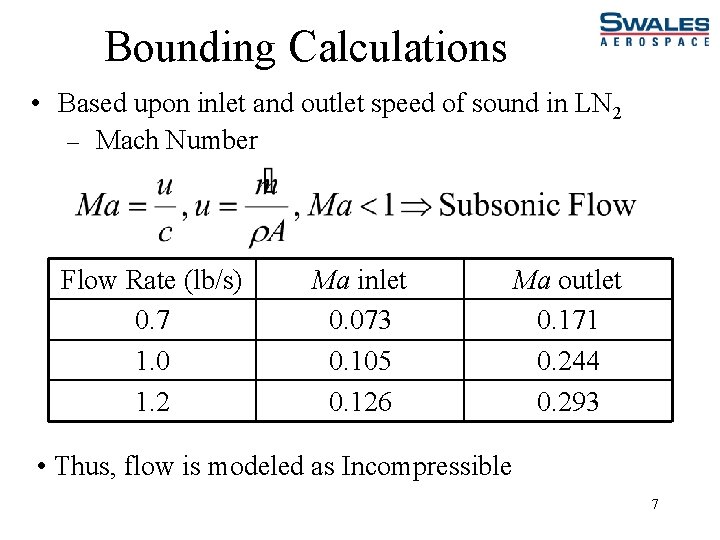
Bounding Calculations • Based upon inlet and outlet speed of sound in LN 2 – Mach Number Flow Rate (lb/s) 0. 7 1. 0 1. 2 Ma inlet 0. 073 0. 105 0. 126 Ma outlet 0. 171 0. 244 0. 293 • Thus, flow is modeled as Incompressible 7
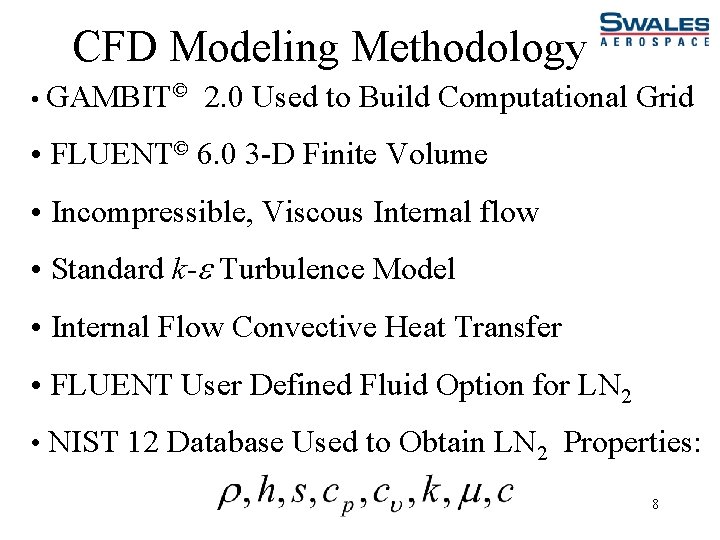
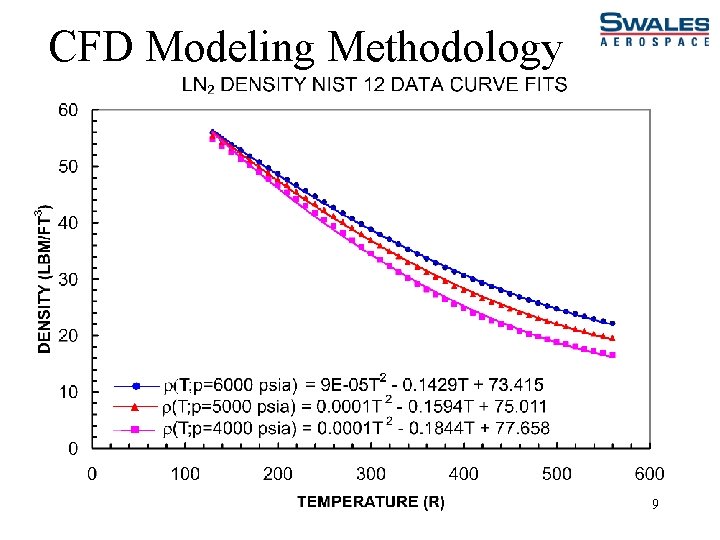
CFD Modeling Methodology • GAMBIT© 2. 0 Used to Build Computational Grid • FLUENT© 6. 0 3 -D Finite Volume • Incompressible, Viscous Internal flow • Standard k- Turbulence Model • Internal Flow Convective Heat Transfer • FLUENT User Defined Fluid Option for LN 2 • NIST 12 Database Used to Obtain LN 2 Properties: 8
CFD Modeling Methodology 9
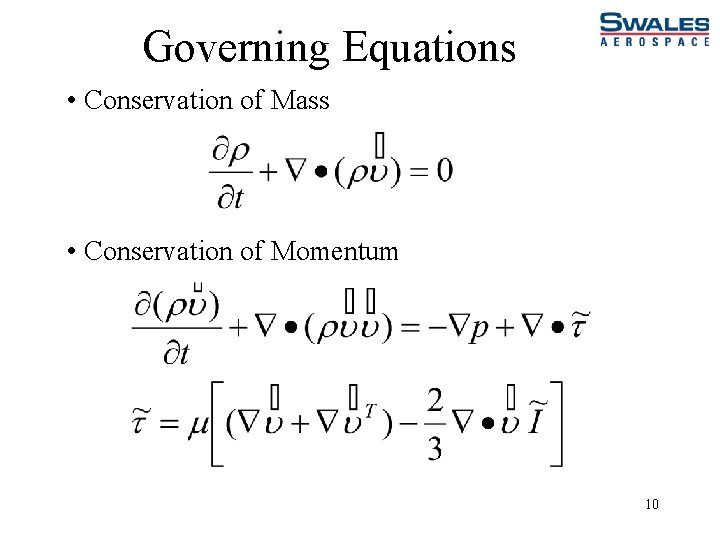
Governing Equations • Conservation of Mass • Conservation of Momentum 10
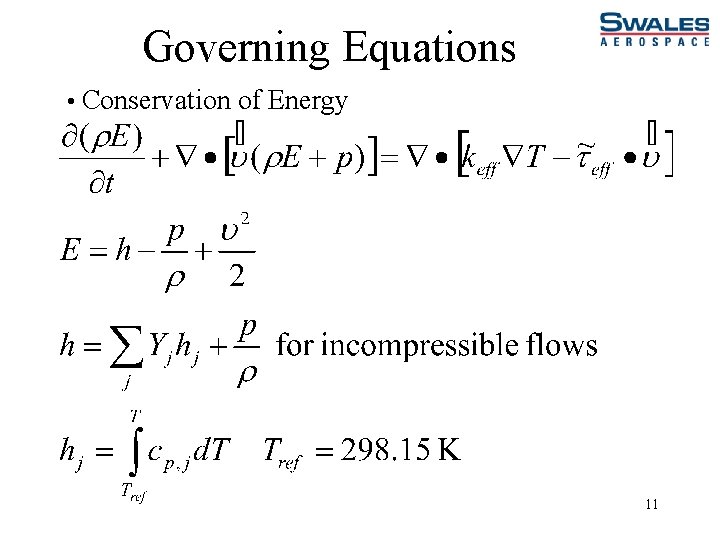
Governing Equations • Conservation of Energy 11
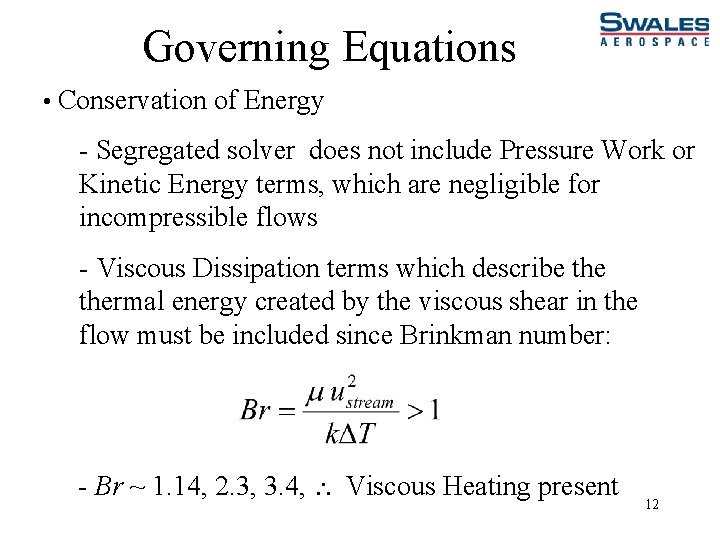
Governing Equations • Conservation of Energy - Segregated solver does not include Pressure Work or Kinetic Energy terms, which are negligible for incompressible flows - Viscous Dissipation terms which describe thermal energy created by the viscous shear in the flow must be included since Brinkman number: - Br ~ 1. 14, 2. 3, 3. 4, Viscous Heating present 12
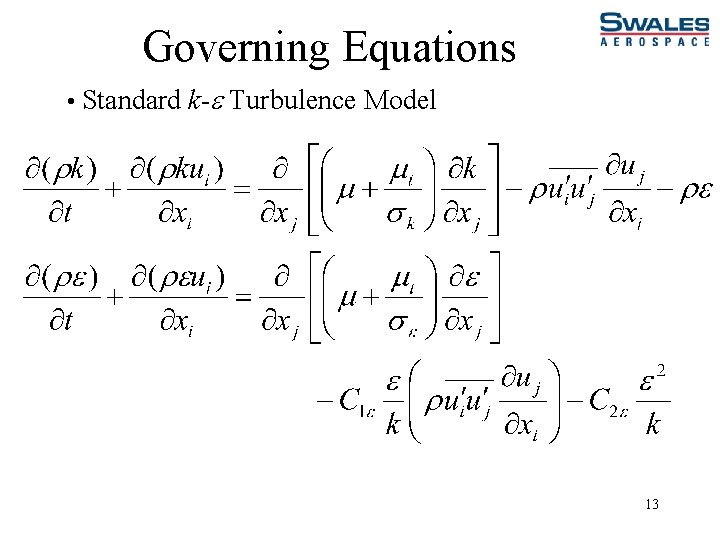
Governing Equations • Standard k- Turbulence Model 13
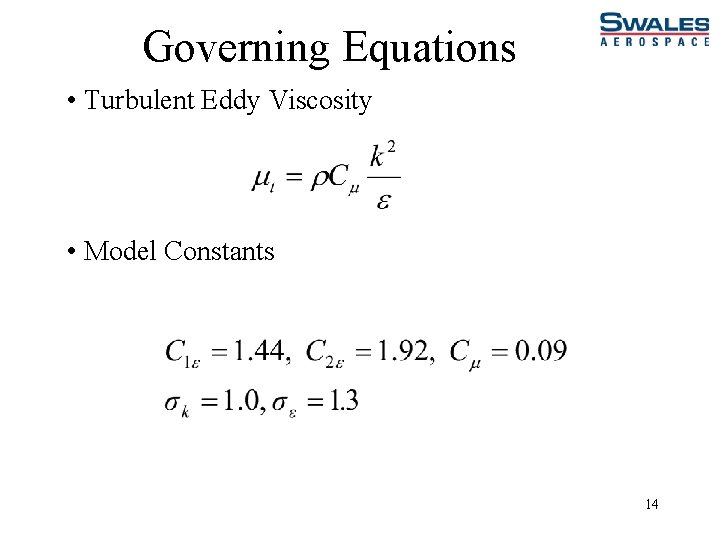
Governing Equations • Turbulent Eddy Viscosity • Model Constants 14
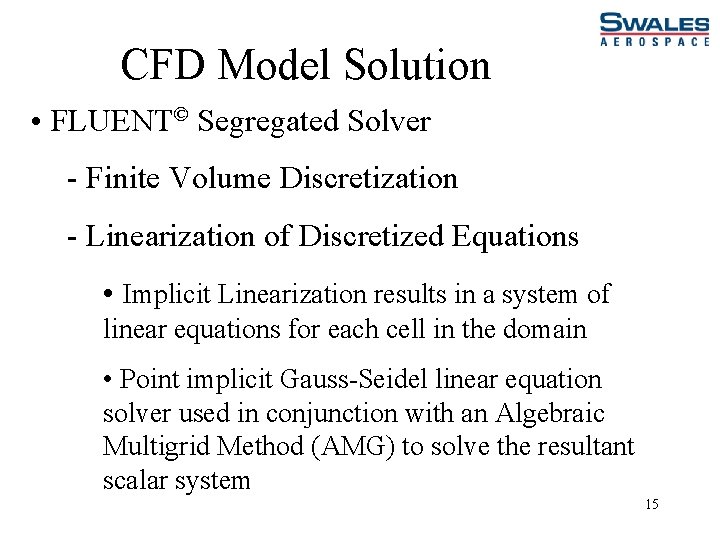
CFD Model Solution • FLUENT© Segregated Solver - Finite Volume Discretization - Linearization of Discretized Equations • Implicit Linearization results in a system of linear equations for each cell in the domain • Point implicit Gauss-Seidel linear equation solver used in conjunction with an Algebraic Multigrid Method (AMG) to solve the resultant scalar system 15
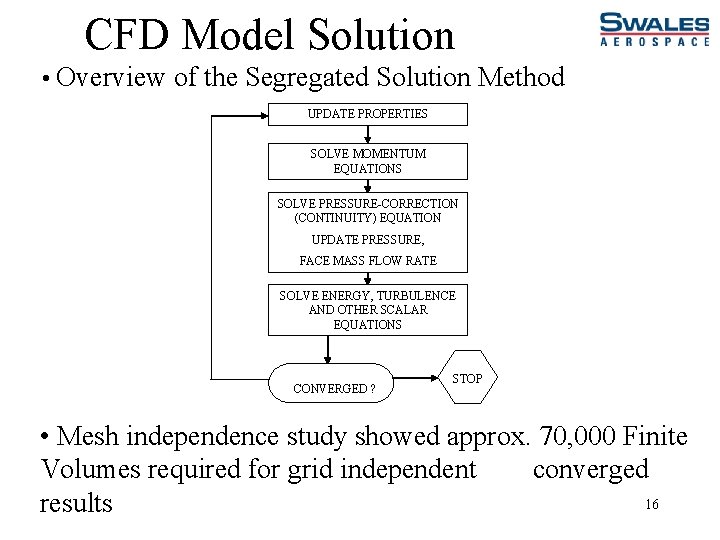
CFD Model Solution • Overview of the Segregated Solution Method UPDATE PROPERTIES SOLVE MOMENTUM EQUATIONS SOLVE PRESSURE-CORRECTION (CONTINUITY) EQUATION UPDATE PRESSURE, FACE MASS FLOW RATE SOLVE ENERGY, TURBULENCE AND OTHER SCALAR EQUATIONS CONVERGED ? STOP • Mesh independence study showed approx. 70, 000 Finite Volumes required for grid independent converged 16 results
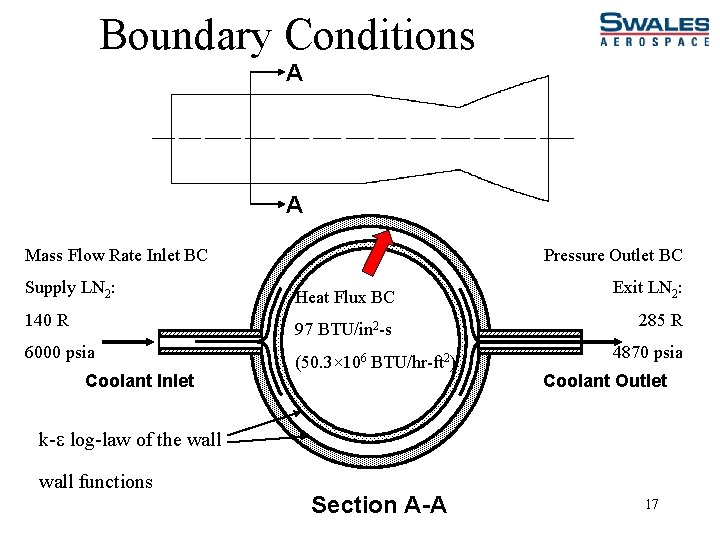
Boundary Conditions A A Mass Flow Rate Inlet BC Supply LN 2: 140 R Pressure Outlet BC Heat Flux BC 97 BTU/in 2 -s 6000 psia Coolant Inlet (50. 3× 10⁶ BTU/hr-ft 2) Exit LN 2: 285 R 4870 psia Coolant Outlet k-e log-law of the wall functions Section A-A 17
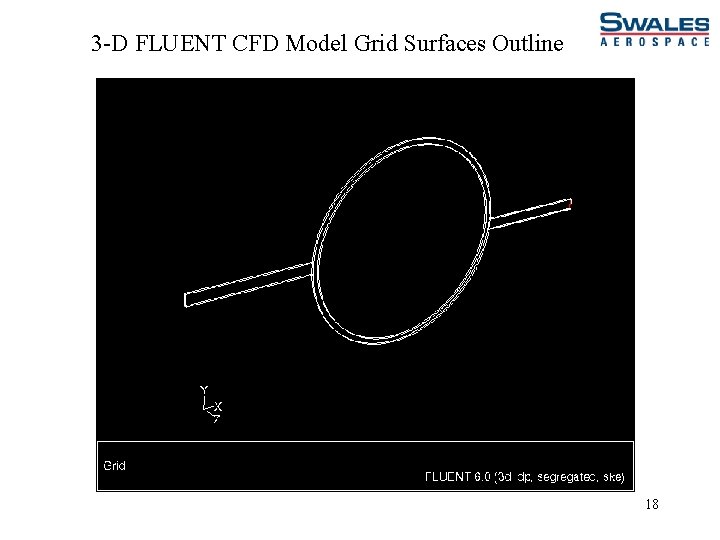
3 -D FLUENT CFD Model Grid Surfaces Outline 18
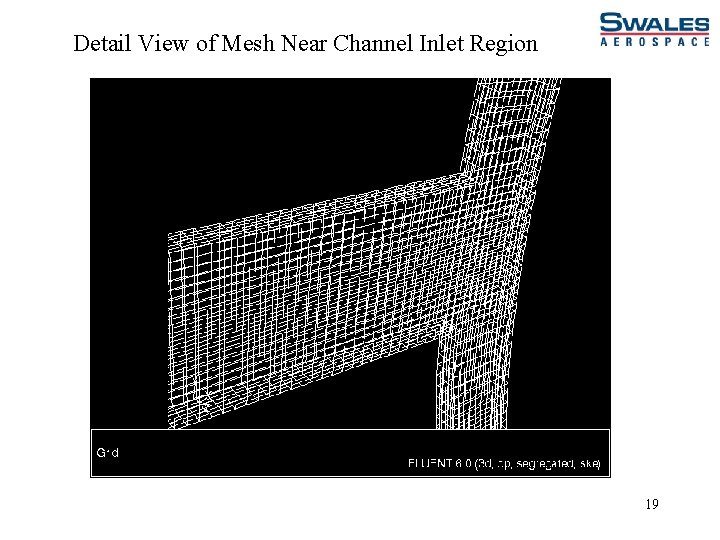
Detail View of Mesh Near Channel Inlet Region 19
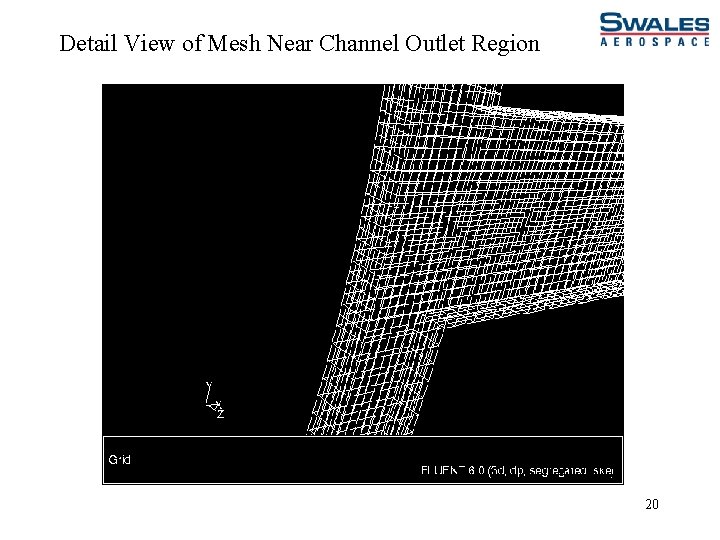
Detail View of Mesh Near Channel Outlet Region 20
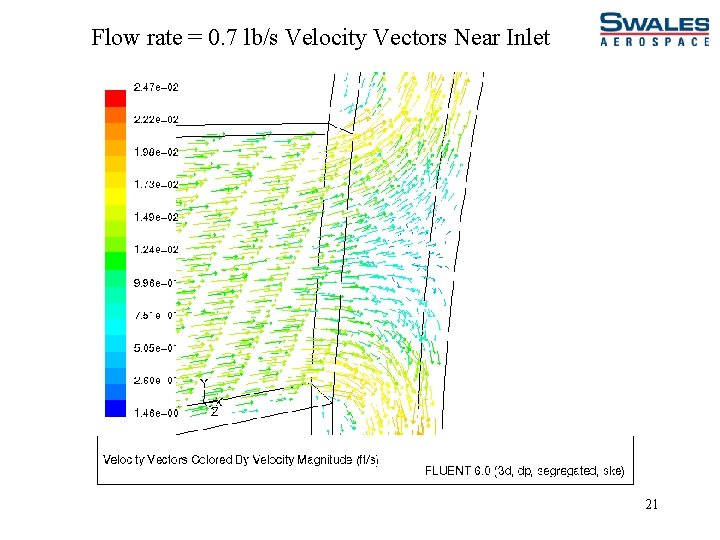
Flow rate = 0. 7 lb/s Velocity Vectors Near Inlet 21
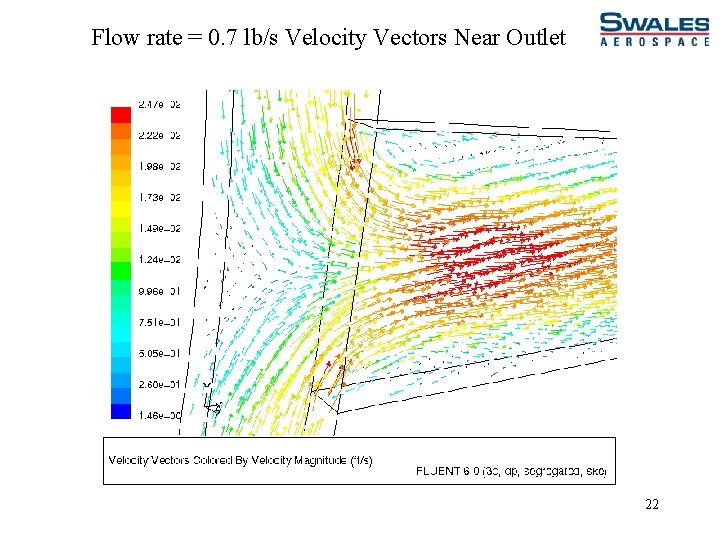
Flow rate = 0. 7 lb/s Velocity Vectors Near Outlet 22
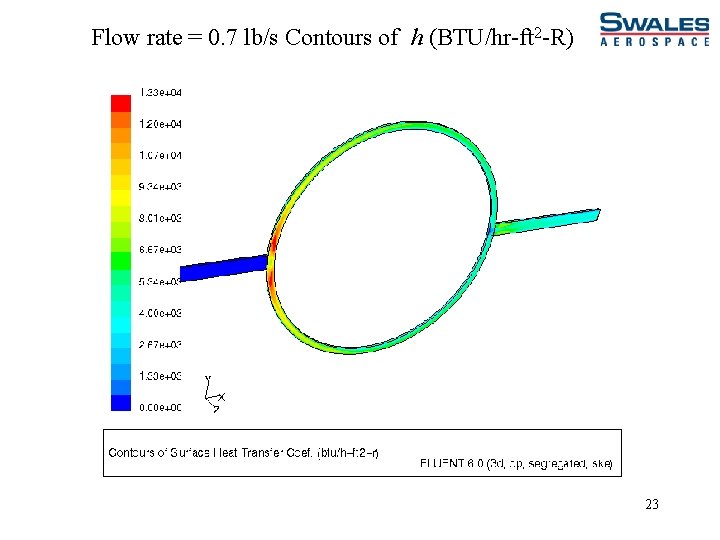
Flow rate = 0. 7 lb/s Contours of h (BTU/hr-ft 2 -R) 23
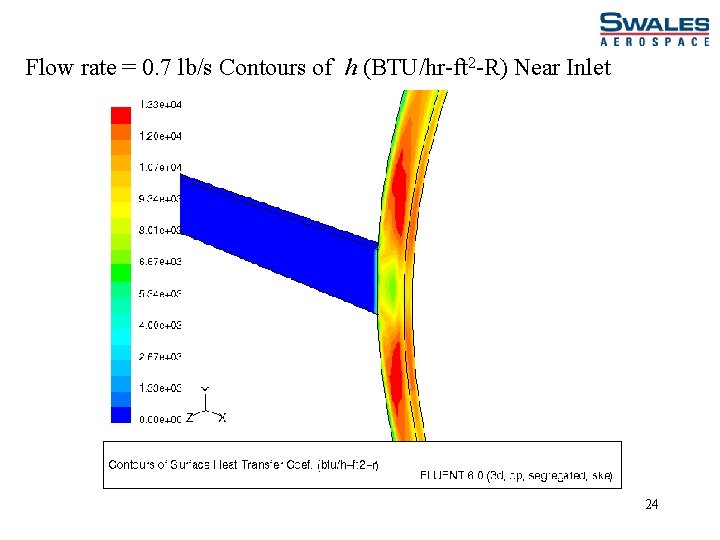
Flow rate = 0. 7 lb/s Contours of h (BTU/hr-ft 2 -R) Near Inlet 24
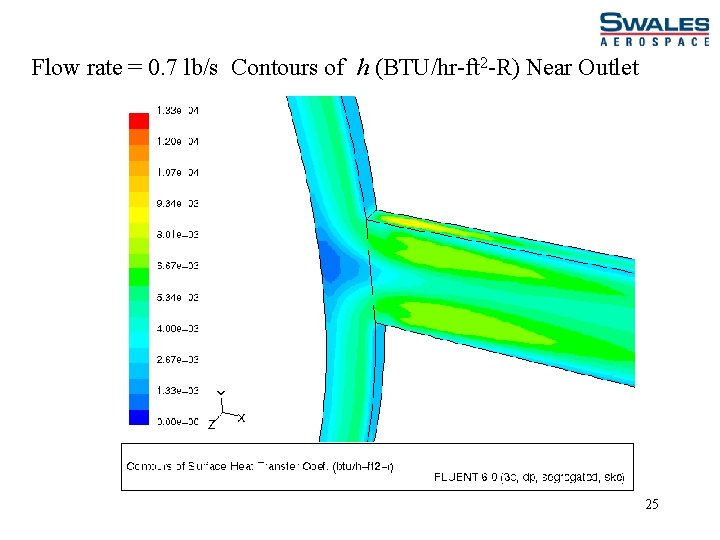
Flow rate = 0. 7 lb/s Contours of h (BTU/hr-ft 2 -R) Near Outlet 25
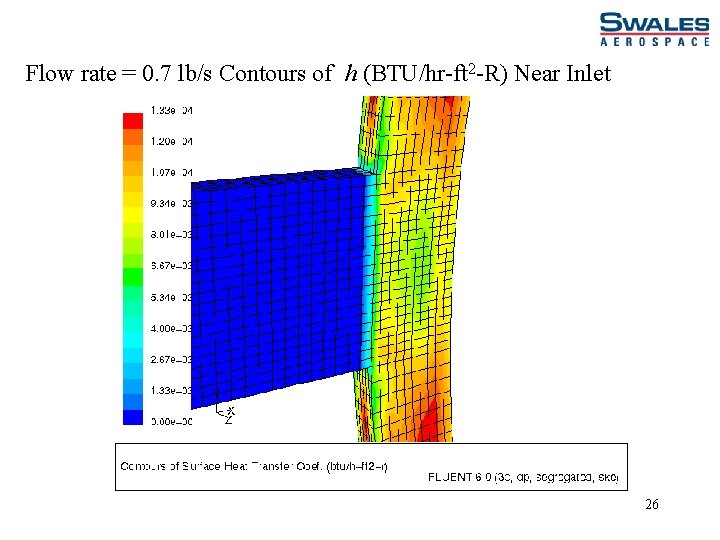
Flow rate = 0. 7 lb/s Contours of h (BTU/hr-ft 2 -R) Near Inlet 26
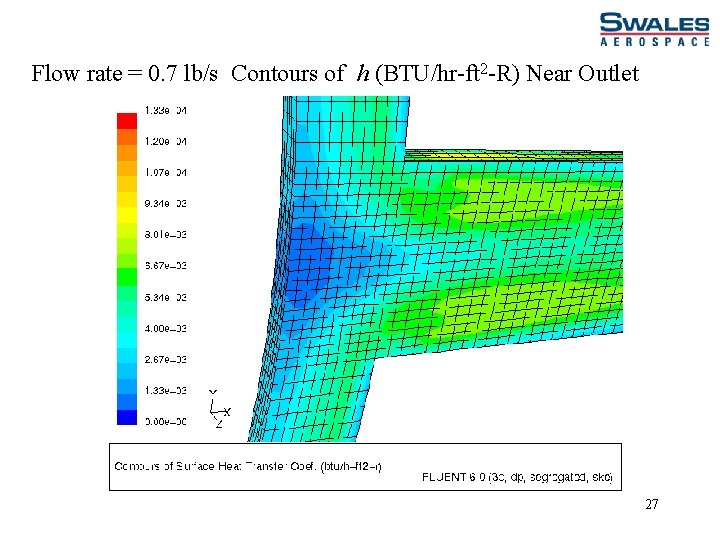
Flow rate = 0. 7 lb/s Contours of h (BTU/hr-ft 2 -R) Near Outlet 27
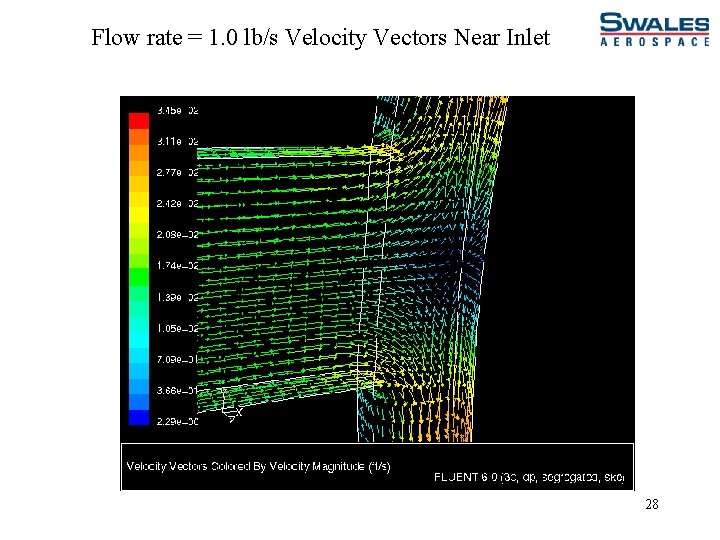
Flow rate = 1. 0 lb/s Velocity Vectors Near Inlet 28
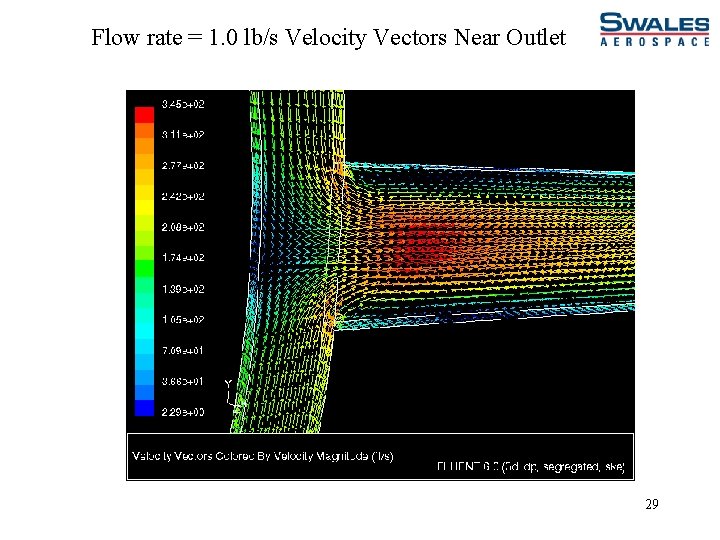
Flow rate = 1. 0 lb/s Velocity Vectors Near Outlet 29
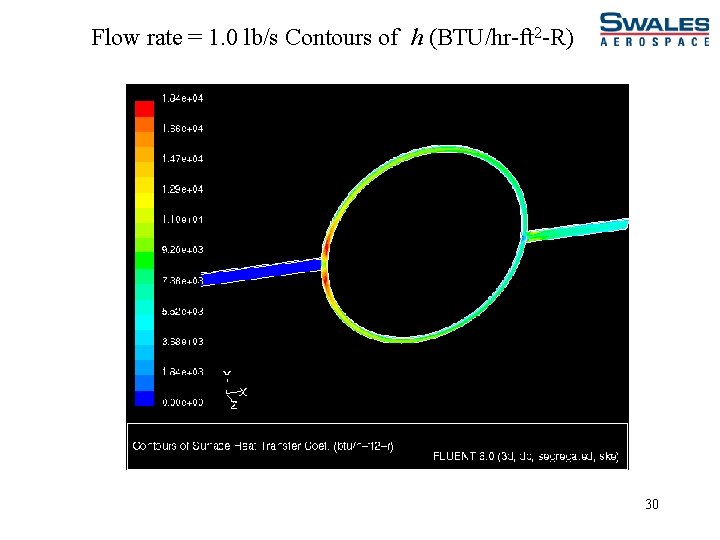
Flow rate = 1. 0 lb/s Contours of h (BTU/hr-ft 2 -R) 30
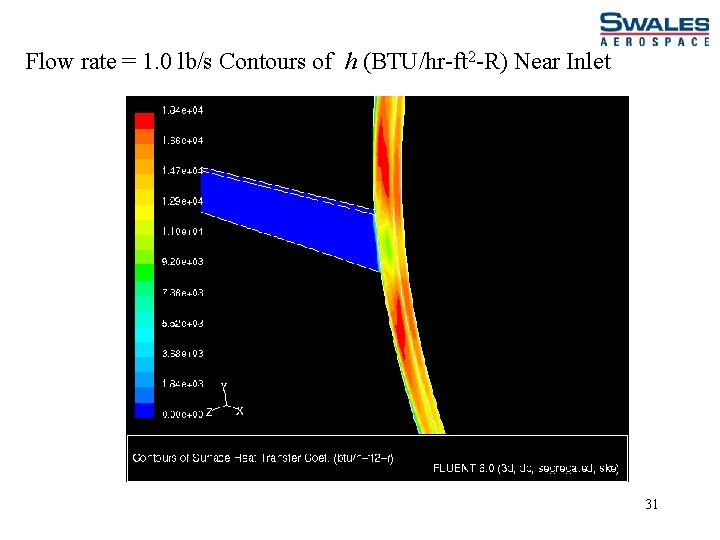
Flow rate = 1. 0 lb/s Contours of h (BTU/hr-ft 2 -R) Near Inlet 31
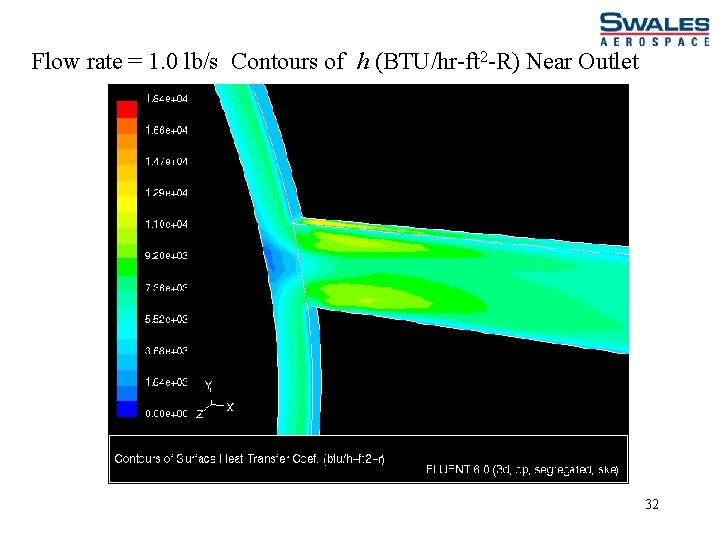
Flow rate = 1. 0 lb/s Contours of h (BTU/hr-ft 2 -R) Near Outlet 32
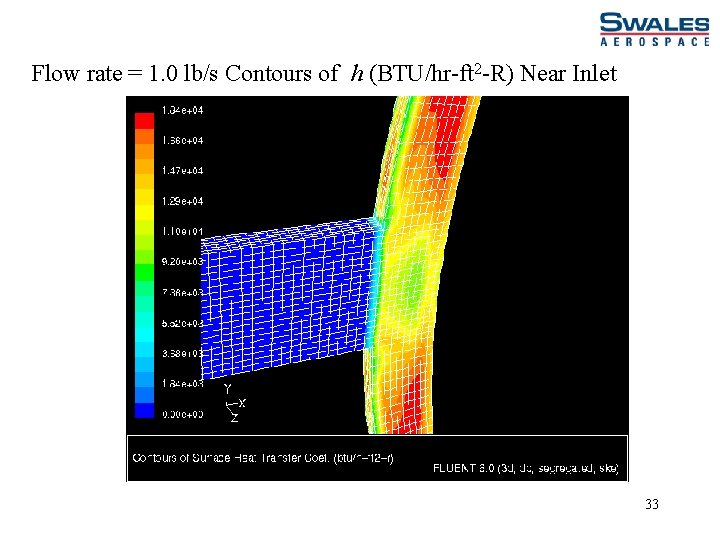
Flow rate = 1. 0 lb/s Contours of h (BTU/hr-ft 2 -R) Near Inlet 33
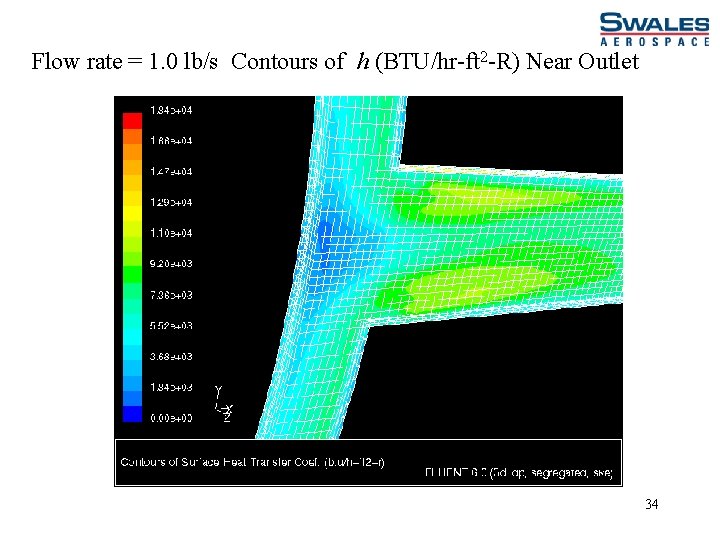
Flow rate = 1. 0 lb/s Contours of h (BTU/hr-ft 2 -R) Near Outlet 34
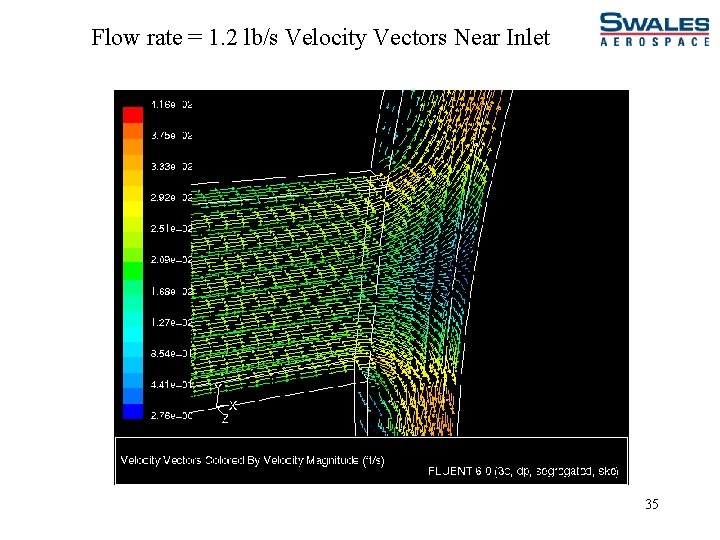
Flow rate = 1. 2 lb/s Velocity Vectors Near Inlet 35
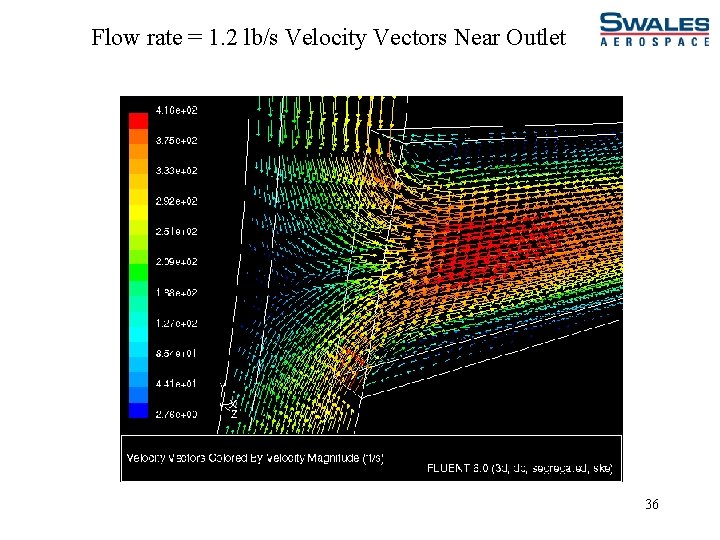
Flow rate = 1. 2 lb/s Velocity Vectors Near Outlet 36
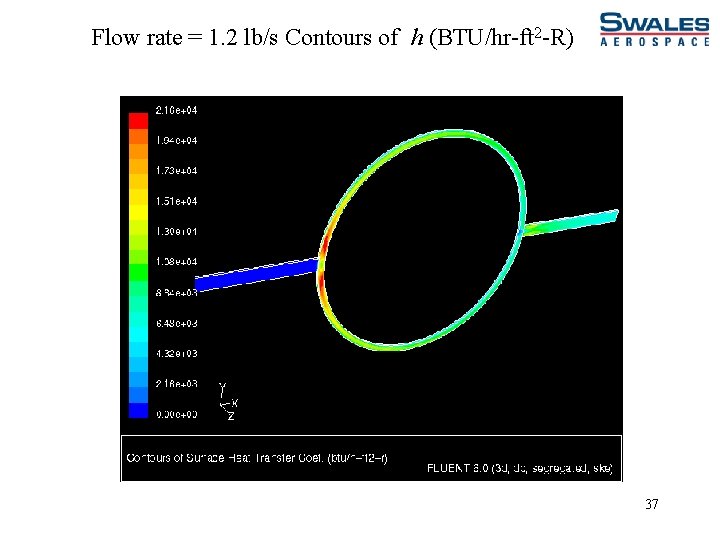
Flow rate = 1. 2 lb/s Contours of h (BTU/hr-ft 2 -R) 37
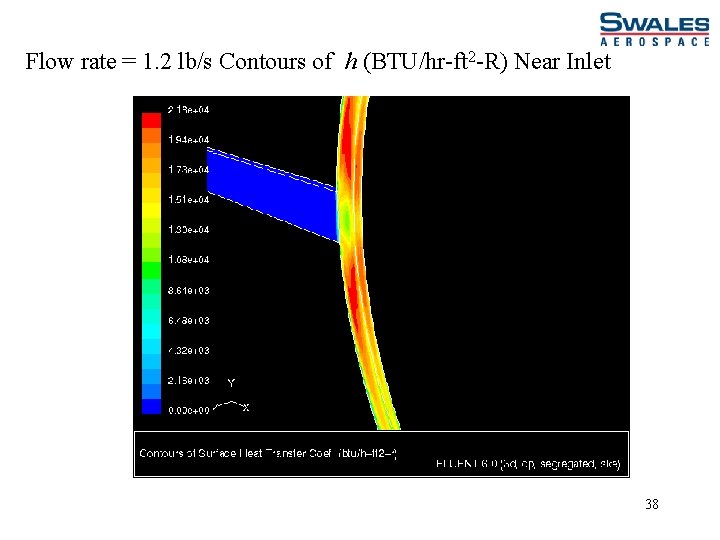
Flow rate = 1. 2 lb/s Contours of h (BTU/hr-ft 2 -R) Near Inlet 38
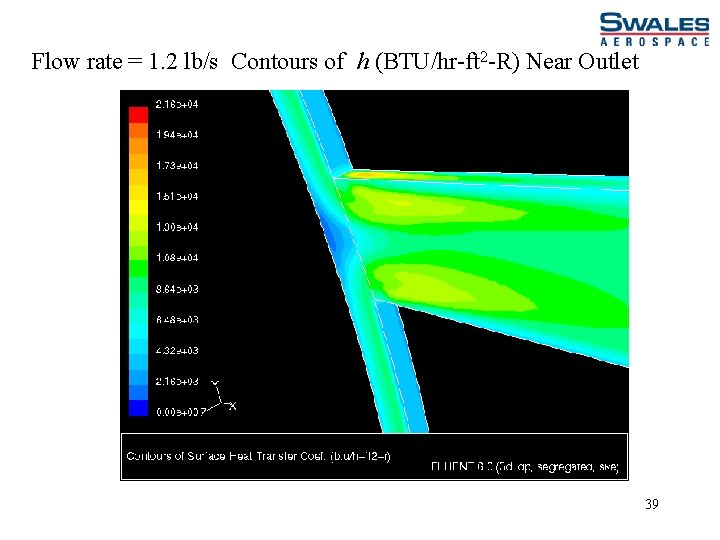
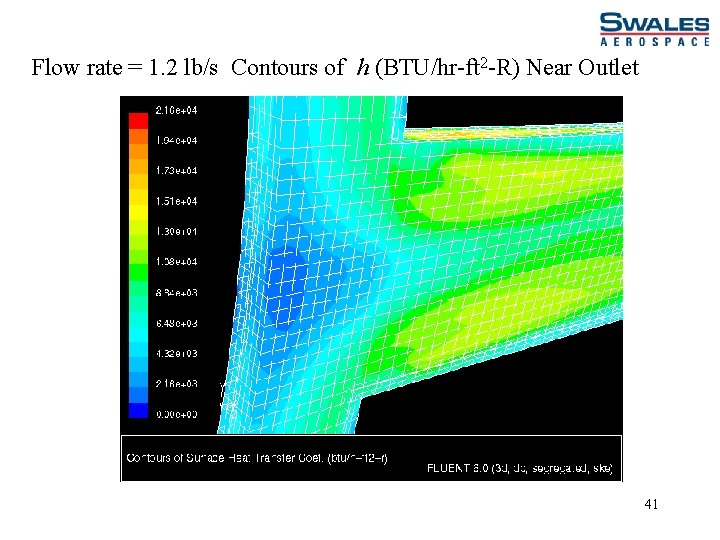
Flow rate = 1. 2 lb/s Contours of h (BTU/hr-ft 2 -R) Near Outlet 39
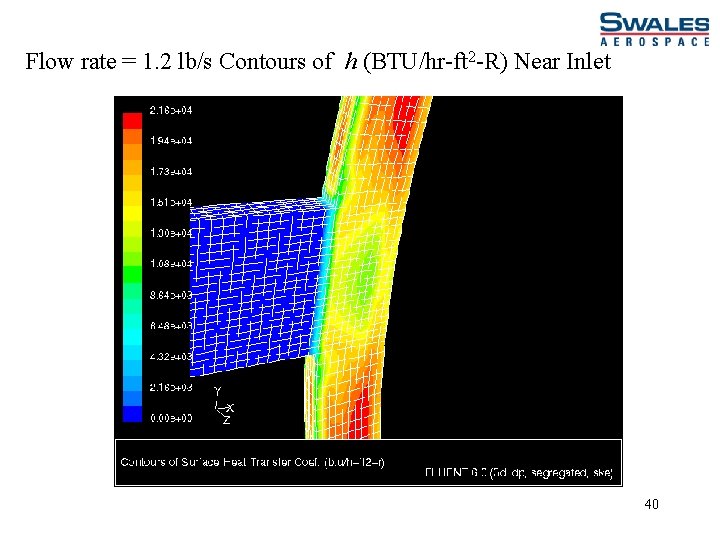
Flow rate = 1. 2 lb/s Contours of h (BTU/hr-ft 2 -R) Near Inlet 40
Flow rate = 1. 2 lb/s Contours of h (BTU/hr-ft 2 -R) Near Outlet 41
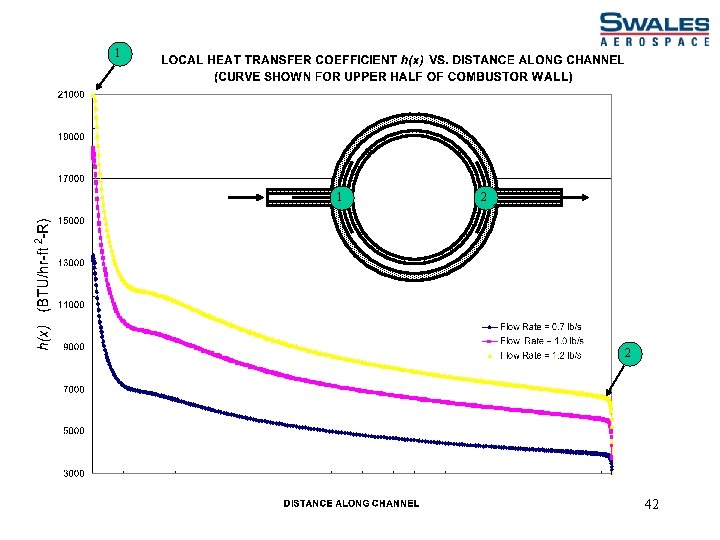
1 1 2 2 2 42
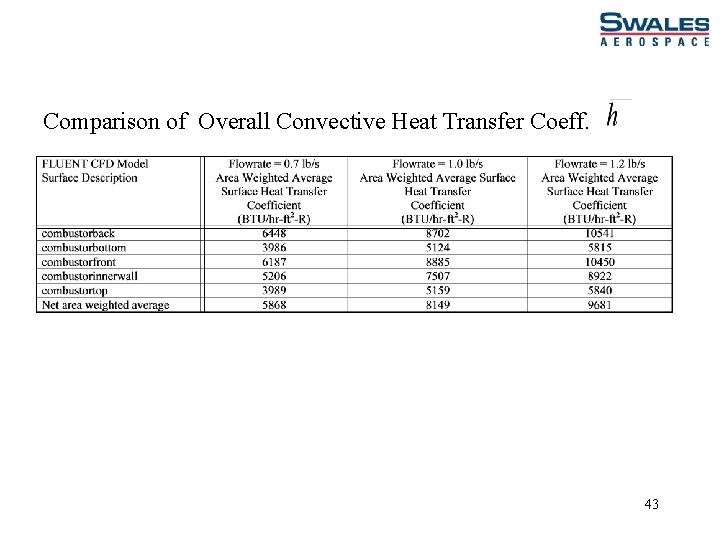
Comparison of Overall Convective Heat Transfer Coeff. 43