
CET 3510 Microcomputer Systems Technology Lecture 1 Dr
- Slides: 17
CET 3510 - Microcomputer Systems Technology Lecture 1 Dr. José M. Reyes Álamo 1
Syllabus � Course website http: //openlab. citytech. cuny. edu/cet 3510 f 13 � Syllabus posted there � Both Open. Lab and Blackboard will be used to post material and submissions 2
Outline � Computer Architecture � Quick Review of Operating System Concepts � Introduction to High-Level Assembly 3
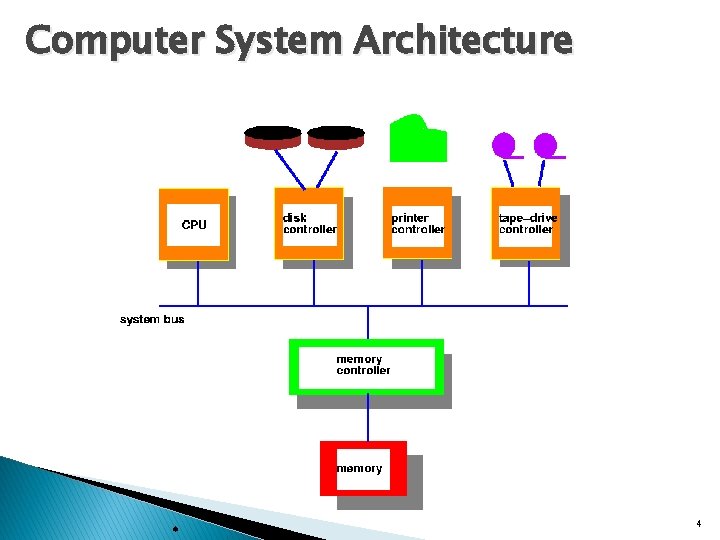
Computer System Architecture 4
What is an Operating System? � An Operating System (OS) is a program that acts as an intermediary between the user and the hardware � Software accounts for the major cost of general purpose computing � OS simplifies the complexity of running applications efficiently 5
What is an Operating System? � The OS manages resources and allocates them to programs and users. � Thanks to the management of the OS, a programmer does not have to deal with difficult hardware issues. � The OS provides services for: ◦ ◦ ◦ Processor Management Memory Management File Management Device Management Concurrency Control 6
Computer System Components � Hardware ◦ Provides the actual computing resources (CPU, memory, I/O devices). � Operating System ◦ Controls and coordinates the use of hardware among applications and programs. � Applications and Programs ◦ Solve computing problems of users (compilers, word processing, games, business applications). � Users ◦ People, devices, and other computers 7
Goals of an Operating System � Simplify the execution of programs and problem solving � Efficient use of the computer hardware ◦ Makes sharing hardware and software possible � Allows portability of software � Provides isolation, security, and protection for programs and hardware � Improves system reliability �Error detection, fault tolerance, reconfiguration. 8
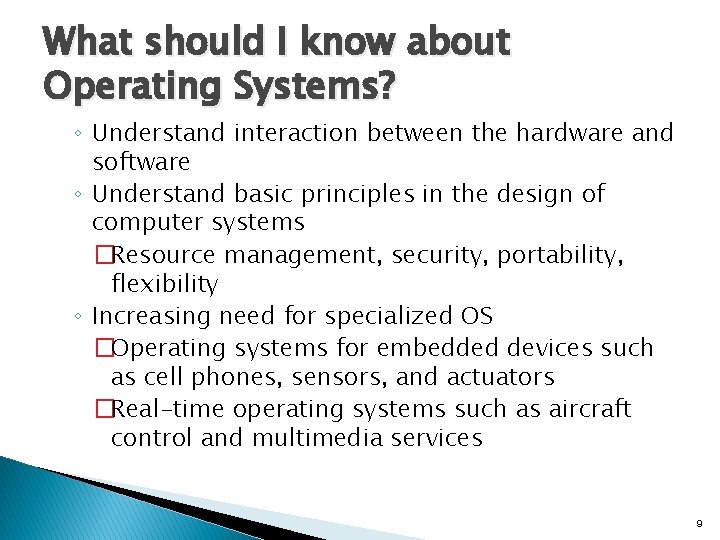
What should I know about Operating Systems? ◦ Understand interaction between the hardware and software ◦ Understand basic principles in the design of computer systems �Resource management, security, portability, flexibility ◦ Increasing need for specialized OS �Operating systems for embedded devices such as cell phones, sensors, and actuators �Real-time operating systems such as aircraft control and multimedia services 9
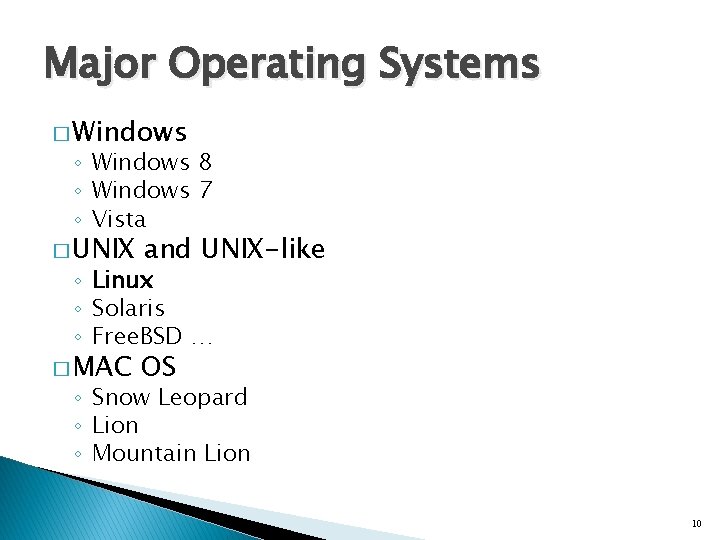
Major Operating Systems � Windows ◦ Windows 8 ◦ Windows 7 ◦ Vista � UNIX and UNIX-like � MAC OS ◦ Linux ◦ Solaris ◦ Free. BSD … ◦ Snow Leopard ◦ Lion ◦ Mountain Lion 10
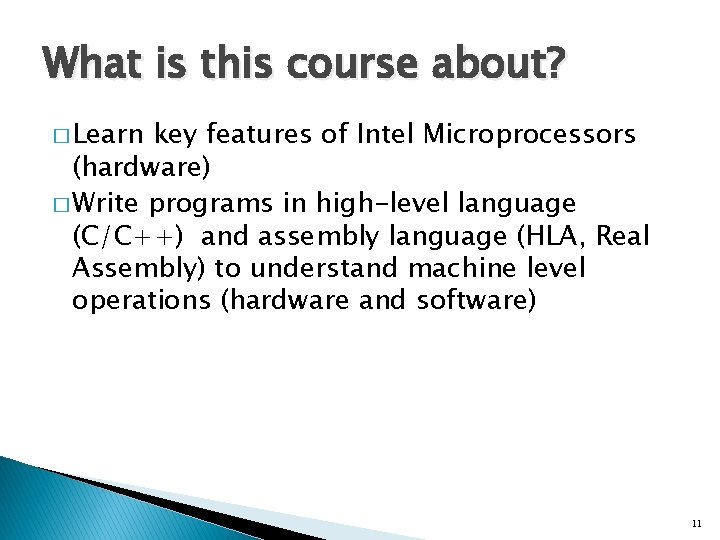
What is this course about? � Learn key features of Intel Microprocessors (hardware) � Write programs in high-level language (C/C++) and assembly language (HLA, Real Assembly) to understand machine level operations (hardware and software) 11
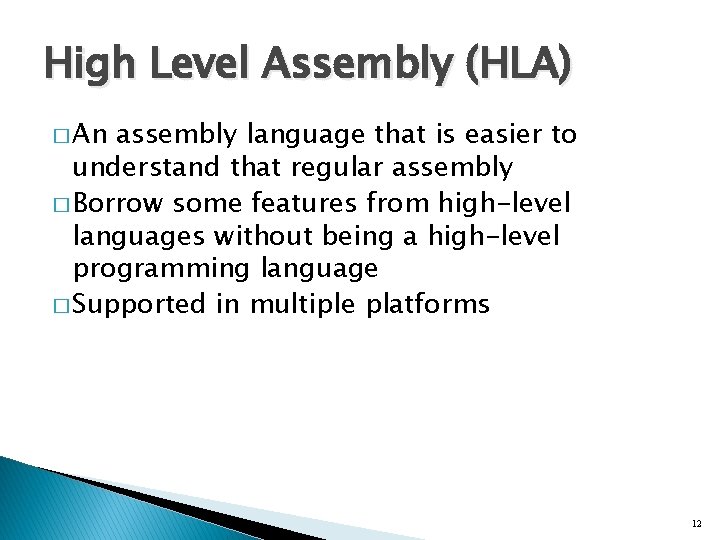
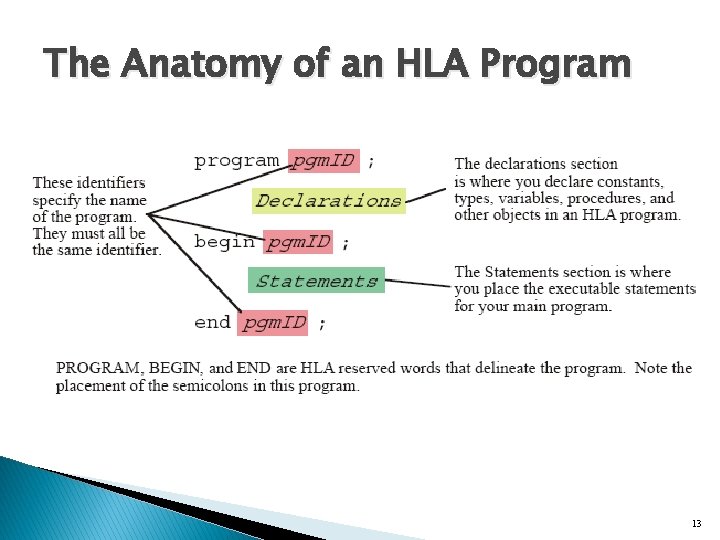
High Level Assembly (HLA) � An assembly language that is easier to understand that regular assembly � Borrow some features from high-level languages without being a high-level programming language � Supported in multiple platforms 12
The Anatomy of an HLA Program 13
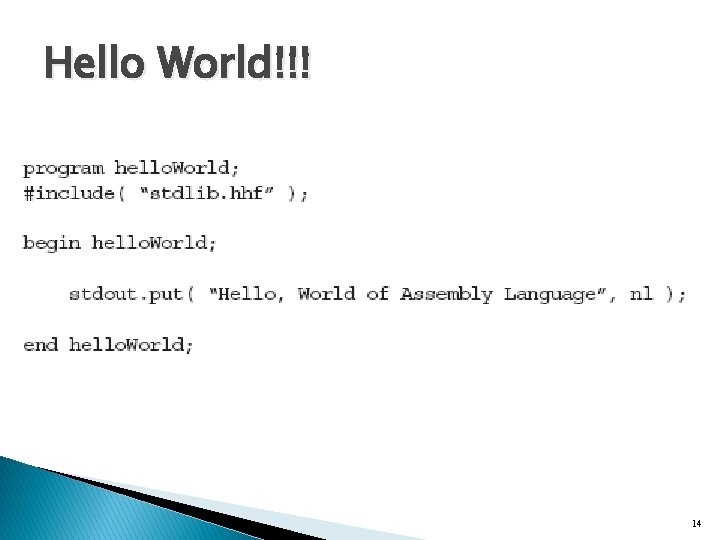
Hello World!!! 14
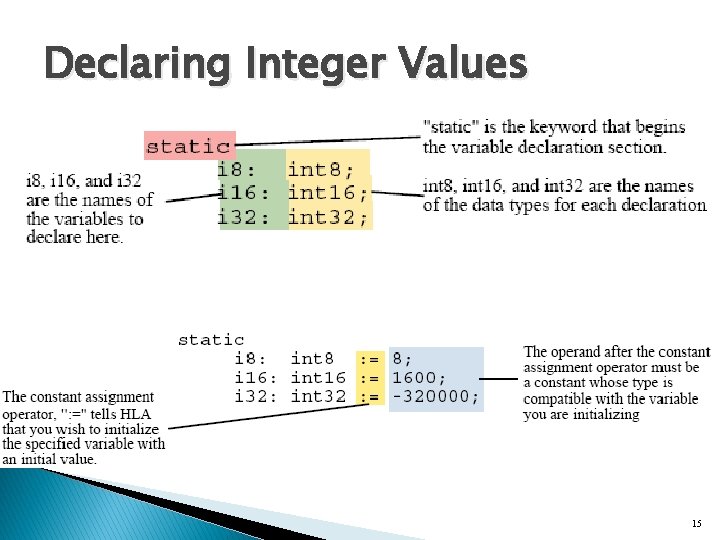
Declaring Integer Values 15
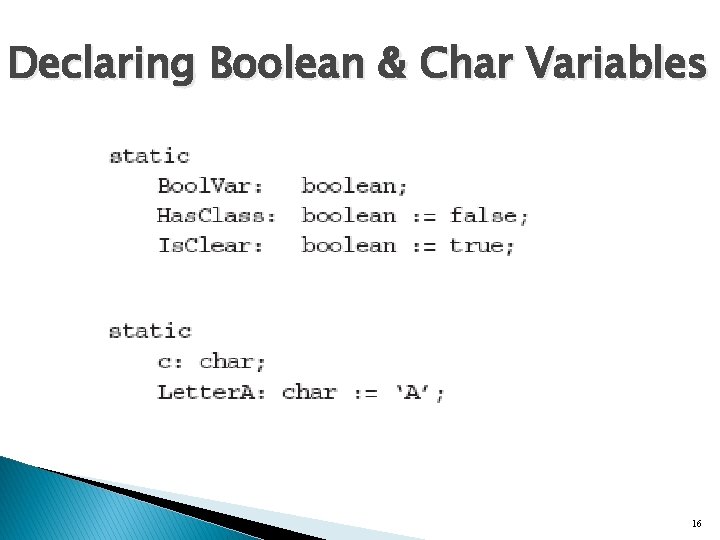
Declaring Boolean & Char Variables 16
References � Introduction to Operating Systems slides www. cs. pitt. edu/~mosse/cs 1550/Slides/amer -intro. ppt � ICS-143 Introduction to Operating Systems www. ics. uci. edu/~ics 143/lectures/oslecture 1. ppt � Virtual Box Website www. virtualbox. com � HLA Assembly website http: //homepage. mac. com/randyhyde/webst er. cs. ucr. edu/index. html 17