
Cestode of Poultry Family Davaineidae Davainea proglottina Raillietina


- Slides: 61
Cestode of Poultry • Family Davaineidae • Davainea proglottina • Raillietina spp.
• Family Dilepididae • Amoebotaenia • Choanotaenia • Family Hymenolepis • Hymenolepis
Family Davaineidae • Rostella hooks: hammer like • sucker: hooks • reproductive organ: 1 set • egg: egg capsule, par-uterine organ
Davainea proglottina • Host: ������� • organ: duodenum • adult: 4 -9 segments (0. 5 -3 mm( • rostella hooks = 80 -94 hooks
Davainea proglottina • Sucker: 4 rows of hooks • genital pore: alternative opening • egg: in parenchyma • size = 28 -40 micron
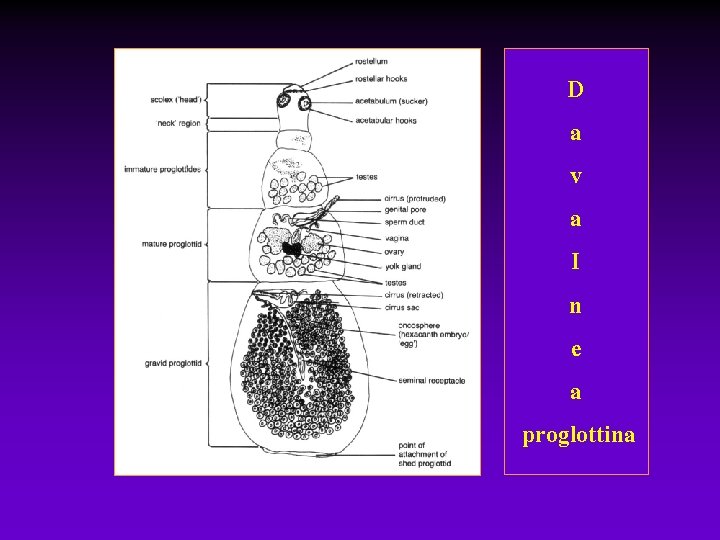
D a v a I n e a proglottina
Life Cycle • Intermediate host: slug (Limax, Avian, Cepoea, Agriolimax( • Onchosphere • Cysticercoid
Raillietina tetragona • host: ������� • adult: 25 cm • scolex: small • rostella hooks = 100 hooks (1 -2 rows(
Raillietina tetragona • sucker: oval, hooks (8 -10 rows( • genital pore: lateral (only one side( • egg: egg capsule (6 -12 eggs( • intermediate host: �� (Tetramprium, Pheidole(
Raillietina echinobothrida • host: ������ • organ: intestine • rostella hooks = 200 hooks (2 rows( • sucker: round, hooks (8 -10 rows(
Raillietina echinobothrida • Genital pore: unilateral • intermediate host: Tetramorium, Pheidole
Raillietina cesticillus • Host: ���� • organ: intestine • adult: 4 -15 cm. • Scolex: large
Raillietina cesticillus • Rostellum: broad, hooks (400 -500( • sucker: small, no hooks • intermediate host: ������
Amoebotaenia cuneata • Host: ��� • organ: intestine • adult: 1 x 4 mm, triangle shape • proglottids: 20 segments
Amoebotaenia cuneata • Rostella hooks: 12 -14 hooks • genital pore: bilateral • testes: 12 testes • row: end of each segment • uterus: sac (lobule(
Life cycle • Intermediate host: ������ • Eisenia, Pheretina • Ocnerodrilus, allolobophora
Choanotaenia infundibulum • Host: ������ • organ: intestine • adult: 20 cm. • proglottid: posterior broader than ant.
Choanotaenia infundibulum • Rostella hook: 16 -20 hooks • genital pore: bilateral • testes: 25 -60 testes • egg: egg capsules • intermediate host: ������ ,
Pathogenesis • Davainea proglottina: most virulence – necrotic & haemorrhagic enteritis – chronic: low growth rate, emaciation, weakness & death
Pathogenesis • Raillietina echinobothrida – duodenum: nodule – hyperplastic enteritis
Pathogenesis • Raillietina tetragona – weight loss – low production
Diagnosis • Fecal examination • Post mortem: adult worms • Lesions: nodules
Treatment • Butynorate • Hexachlorophene • Albendazole • Mebendazole Niclosamide Praziquantel Oxfendazole Betel nut
Cestode of Man • Family Hymenolepididae • Hymenolepis nana • Hymenolepis diminuta • Family Taeniidae • Taenia saginata, Taenia solium
Hymenolepis nana • “dwarf tape worm”. . . Hymenolepidiasis • host: �� , ��� • organ: intestine • smallest tapeworm
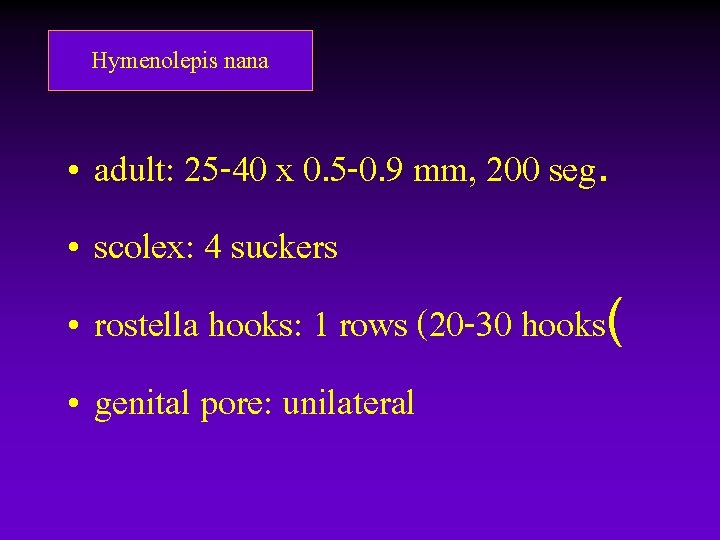
Hymenolepis nana • adult: 25 -40 x 0. 5 -0. 9 mm, 200 seg. • scolex: 4 suckers • rostella hooks: 1 rows (20 -30 hooks( • genital pore: unilateral
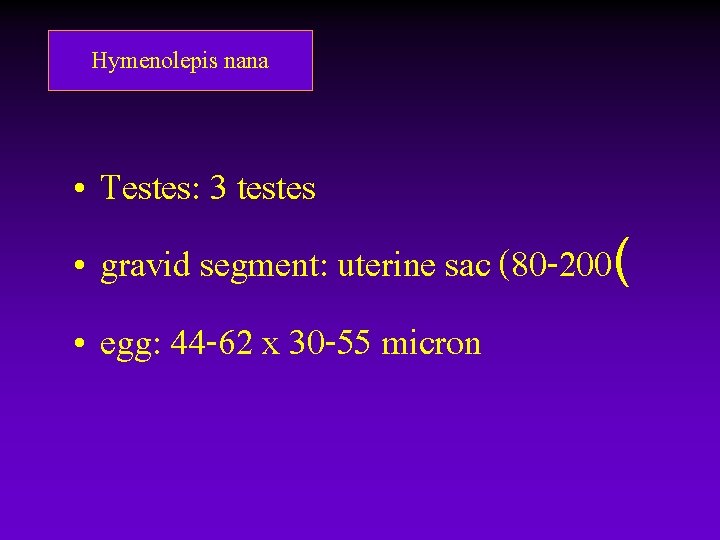
Hymenolepis nana • Testes: 3 testes • gravid segment: uterine sac (80 -200( • egg: 44 -62 x 30 -55 micron
Life Cycle • Intermediate host: flea (cysticercoid), dung beetle
Infection in Man. 1 Direct infection: children. 2 Indirect infection. 3 Autoinfection (reinfection(
Pathogenesis • number of infested worms • duration of infection • host: enteritis, stomach ache, vomiting, anemia, eosinophilia
Treatment • Niclosamide (Yomesan): 2 g • Paranomomycin: 45 mg/kg, 5 -7 d. • Praziquantel: 25 mg/kg, 10 d interval
Control & Prevention. 1 Personal hygiene -sanitation . 2 Environmental hygiene -reservoir
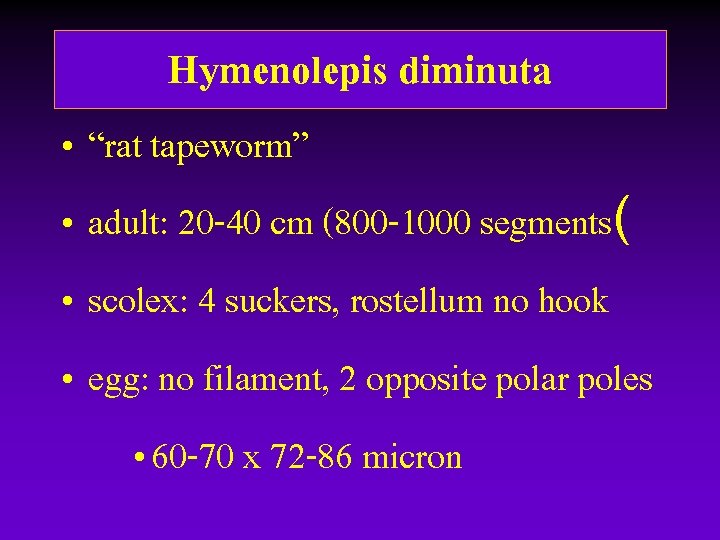
Hymenolepis diminuta • “rat tapeworm” • adult: 20 -40 cm (800 -1000 segments( • scolex: 4 suckers, rostellum no hook • egg: no filament, 2 opposite polar poles • 60 -70 x 72 -86 micron
Life Cycle • intermediate host: cysticercoid • beetle, flea, cockroach • no autoinfection
Pathogenesis • Man: stomach ache, diarrhea, anorexia, weight loss • Dx: fecal examination • Rx: same as H. nana
Control & Prevention. 1 Cooked food. 2 Eliminate intermediate host. 3 Eliminate reservoir host. 4 Deworming & sanitation
Taenia saginata • Host: man • organ: intestine (jejunum( • “������ ”…. . Taeniasis
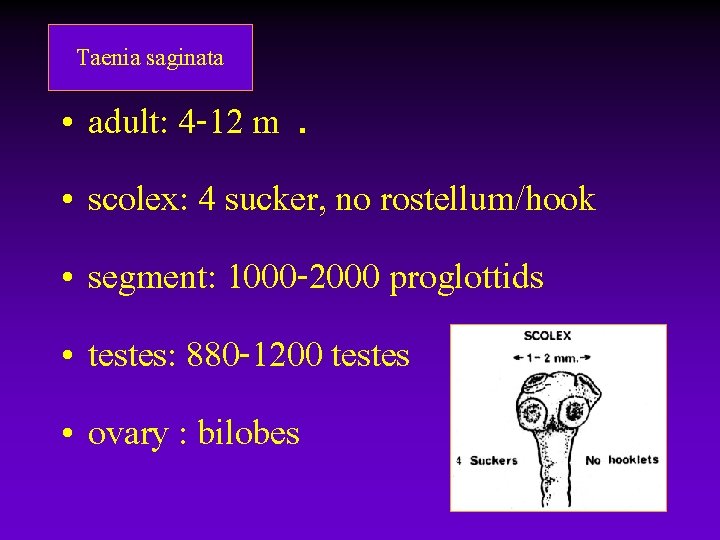
Taenia saginata • adult: 4 -12 m. • scolex: 4 sucker, no rostellum/hook • segment: 1000 -2000 proglottids • testes: 880 -1200 testes • ovary : bilobes
Taenia saginata • Genital pore: lateral • gravid proglottids: 14 -32 uterine branches • egg: thick embryophore (brownyellow)…. . radiation
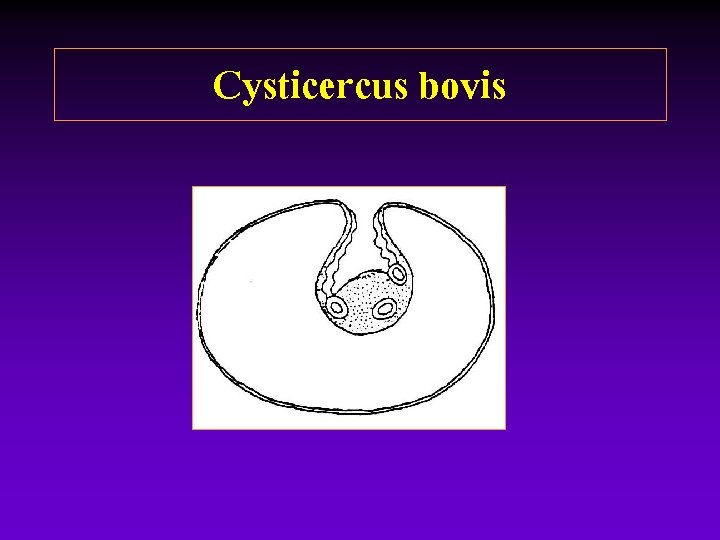
Life cycle • final host: man • intermediate host: cattle, buffalo • Cysticercus bovis (������� ( • ������������ • ����
Cysticercus bovis
Diagnosis • History: eating habit • Fecal examination • Proglottidal examination
Treatment • Niclosamide: 2 gram • Praziquantel: 5 -10 mg/kg • Quinacrine: 7 -10 mg/kg • Herb: ����
Control & Prevention. 1 Knowledge: epidemiology. 2 Sanitation. 3 Deworming program. 4 Eating habit
Control & Prevention. 5 Meat inspection. 6 Cooking processes
Taenia solium • host: man • organ: intestine • Taeniasis…. . Cysticercosis
Taenia solium • adult: 2 -7 m. (800 -1000 segments( • scolex: small square, 4 suckers • rostella hooks: 2 rows (22 -32 hooks( • gravid segment: almost square shape
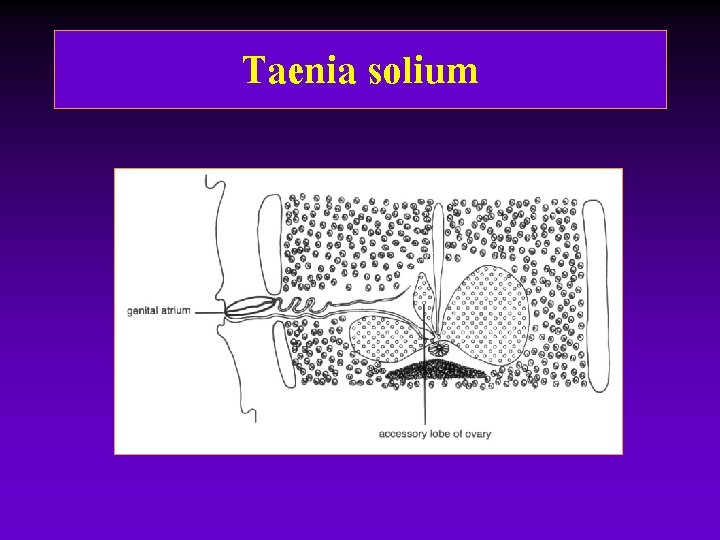
Taenia solium
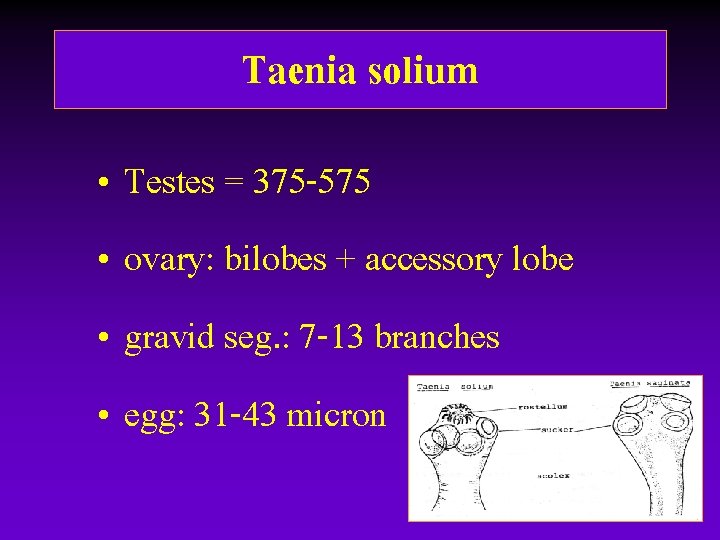
Taenia solium • Testes = 375 -575 • ovary: bilobes + accessory lobe • gravid seg. : 7 -13 branches • egg: 31 -43 micron
Life cycle • final host: man • intermediate host: pig • Cysticercus cellulosae: ������������ (10 x 20 mm(
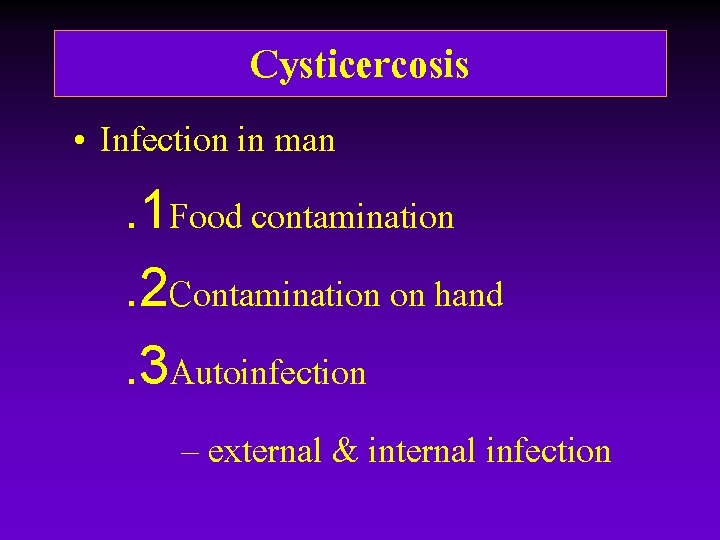
Cysticercosis • Infection in man. 1 Food contamination. 2 Contamination on hand. 3 Autoinfection – external & internal infection
• Cysticercus racemosus – abnormal (degenerated) form of C. cellulosae…. budding – grape like (tree-like growth( – organs: ventricle, choroid plexus, subarachnoid space
Pathogenesis • Cerebral cysticercosis: cortex, ventricle, meninges, cerebellum • convulsion • increase intracranial pressure • psychiatric disorder
• Ocular cysticercosis – route: retinal blood flow – ant. & vitreous chamber, subretina tissue, conjunctiva, lacrimal gl. , eyelid – retinal edema, hemorrhage, vasculitis, chorioretinitis, retinal attachment
• Muscular cysticercosis – all muscle tissue – inflammation, fibrous – calcified cyst
Diagnosis • History, clinical signs • X-ray, CT-scan • eosinophilia, biopsy • skin test, ELISA, IHA
Treatment • surical removal • medicine: • Praziquantel: 30 -50 mg/kg 10 d • Flubendazole: 40 mg/kg 10 d
Control & Prevention • cooked food • deworming program