
Cestoda Chapter 3 3 2 Learning Objectives 1
Cestoda Chapter 3
3 -2 Learning Objectives 1. State the general characteristics of the phylum Platyhelminthes. 2. Describe the general morphology of an adult cestode. 3. State the methods of diagnosis used to identify cestode infections. 4. Compare and contrast the phylum Nemathelminthes with Platyhelminthes using morphologic criteria.
3 -3 Learning Objectives 5. Define terminology specifically related to the Cestoda. 6. State the scientific and common names of cestodes that parasitize humans. 7. Describe in graphic form the general life cycle of a cestode. 8. Differentiate adult Cestoda using morphologic criteria.
3 -4 Learning Objectives 9. Differentiate larval stages of Cestoda using morphologic criteria, the required intermediate host, or both. 10. Differentiate the diagnostic stages of the Cestoda. 11. Discuss the epidemiology and medical importance of cestode zoonoses.
3 -5 Learning Objectives 12. Given illustrations or photographs, identify the diagnostic stages of Cestoda and the body specimen of choice to be used for examination of each. 13. Identify the stage in each life cycle for each cestode that can parasitize humans.

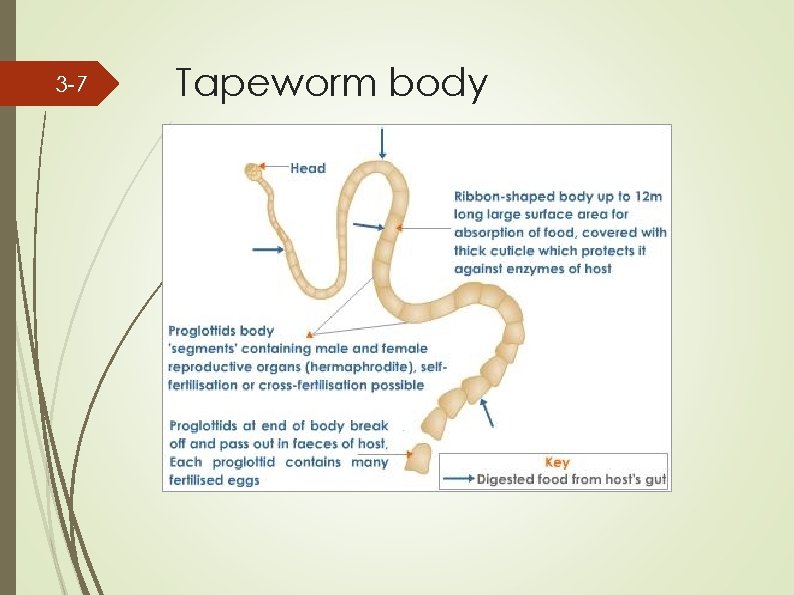
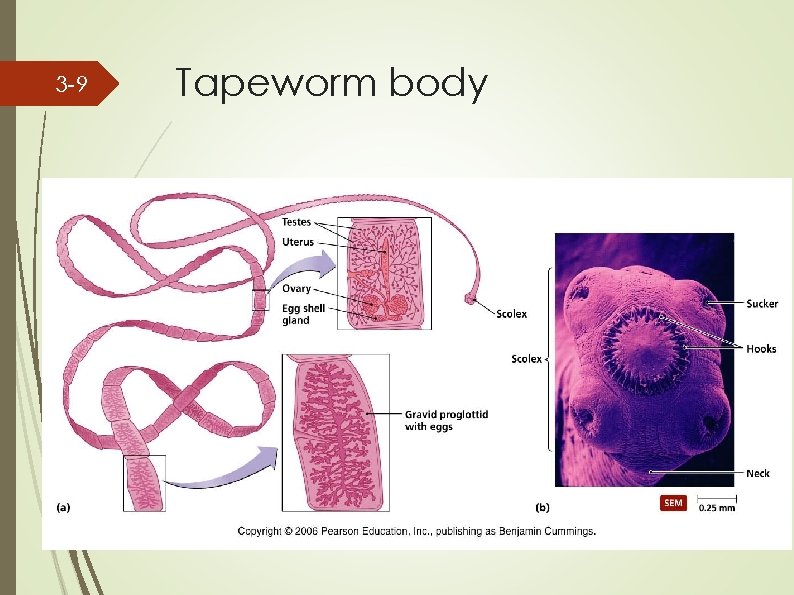
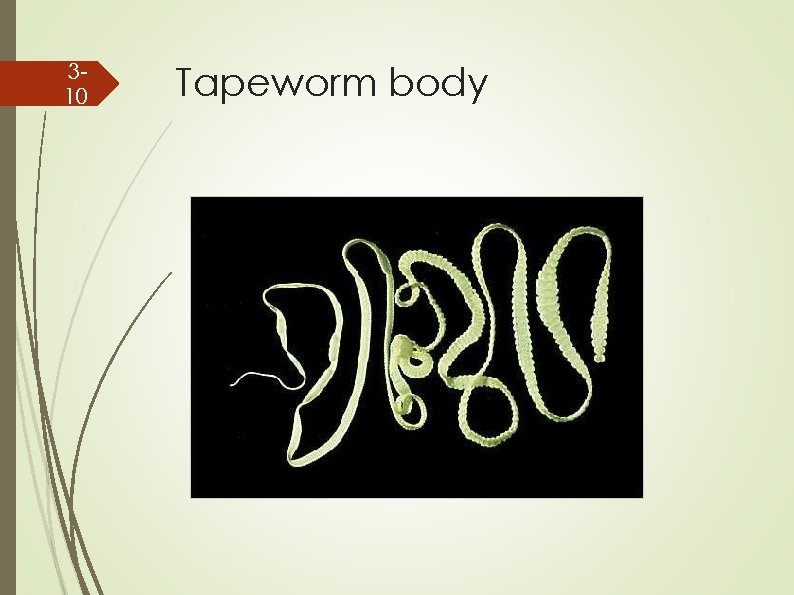
Introduction 3 -6 Classification Platyhelminthes (flatworms ) Cestodes ( tapeworms) General body structure Scolex Hooks Suckers Rostellum Neck Proglottids Immature, gravid (proglottids) Reproduction - Hermaphroditic
3 -7 Tapeworm body

3 -8 Tapeworm body
3 -9 Tapeworm body
310 Tapeworm body
311 Tapeworms infecting humans Hymenolepsis nana -- dwarf tapeworm Taenia saginata – beef tapeworm Taenia solium – pork tapeworm Diphyllobothrium latum – broad fish tapeworm Echinococcus granulosis – hydatid tapeworm
312 Hymenolepis nana (dwarf tapeworm) Method of diagnosis Diagnostic stage Disease name Major pathology and symptoms Treatment Distribution
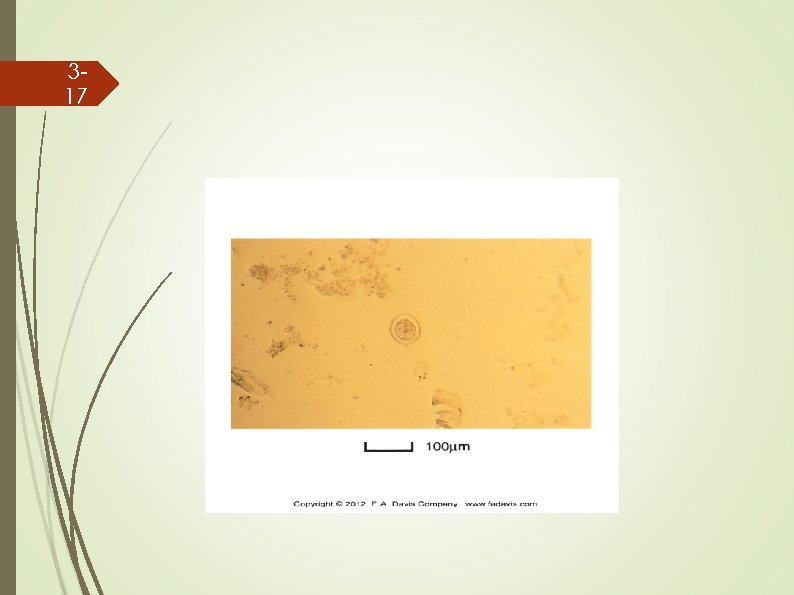
313 H. nana Tropics and sub tropics Children and institutionalized people Most common tapeworm in U. S. Requires no intermediate host Autoinfection is common Mice can be definitive host Eggs in feces – infective stage Fleas & beetles transport hosts Cysticercoid larva – infective stage
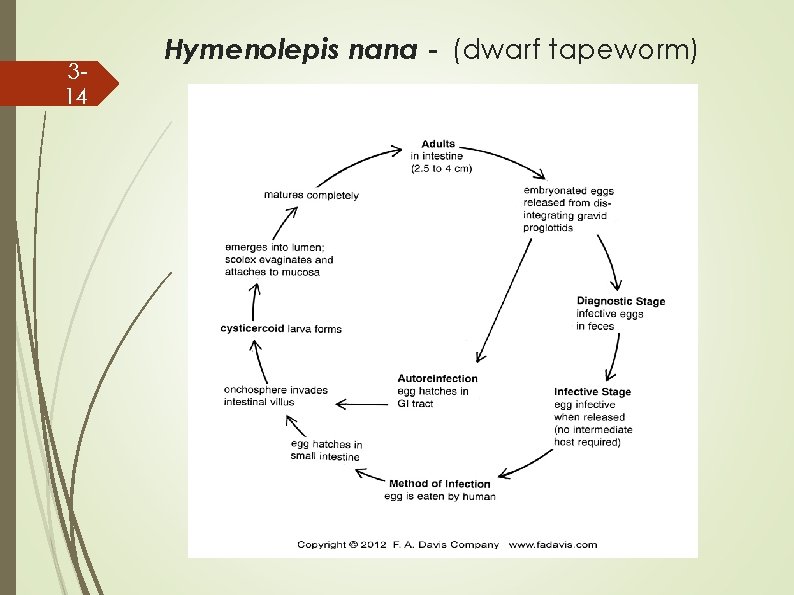
314 Hymenolepis nana - (dwarf tapeworm)
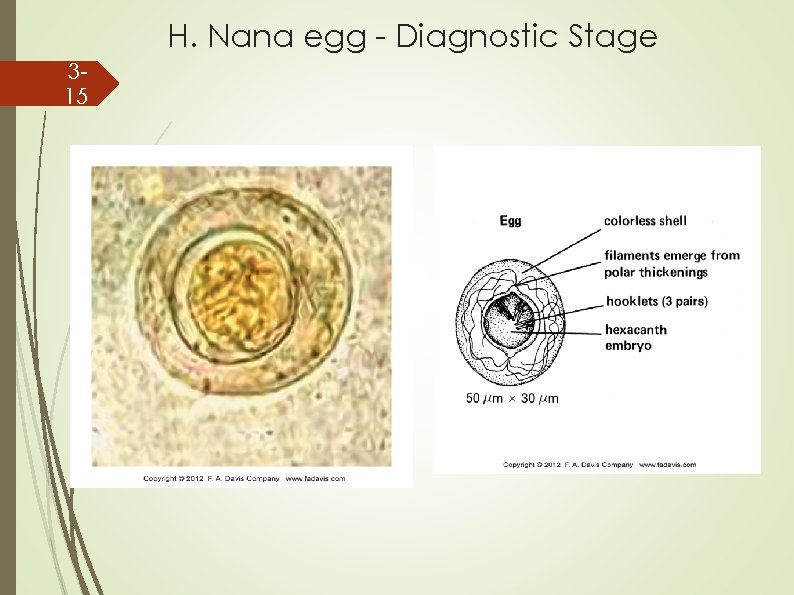
H. Nana egg - Diagnostic Stage 315
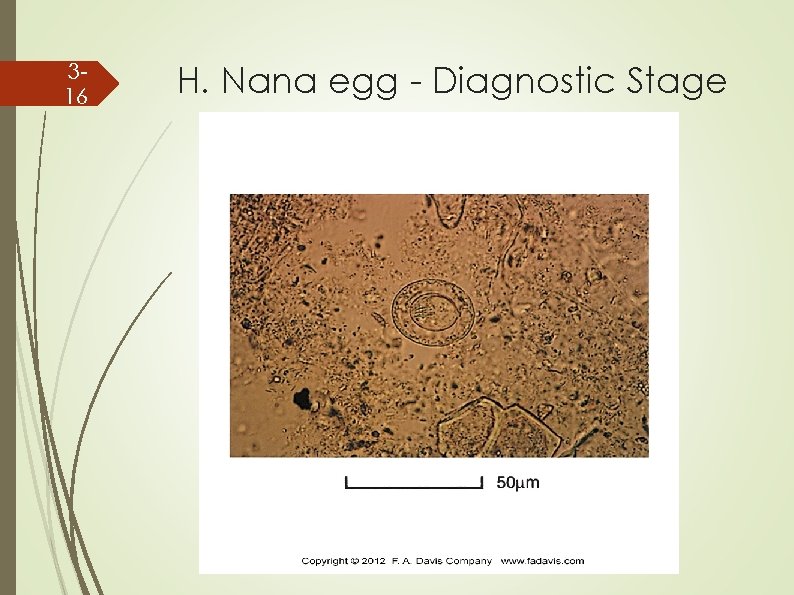
316 H. Nana egg - Diagnostic Stage
317
318
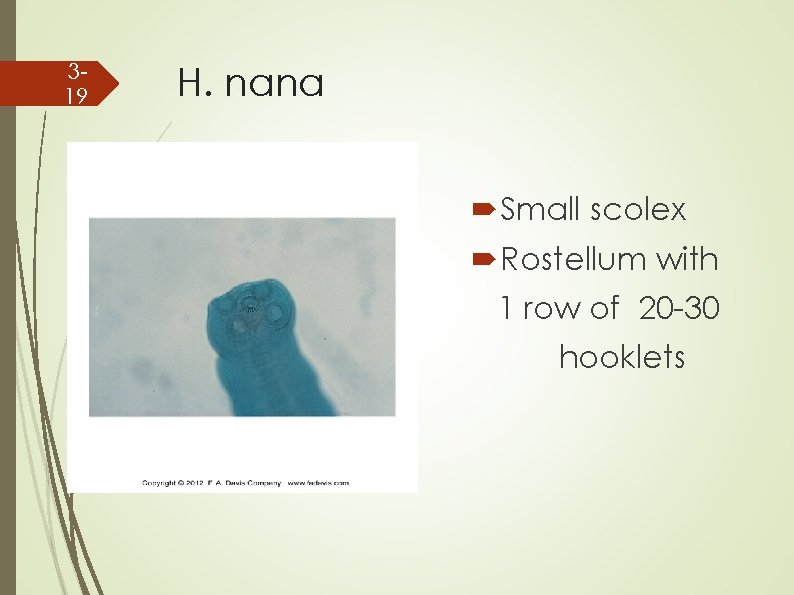
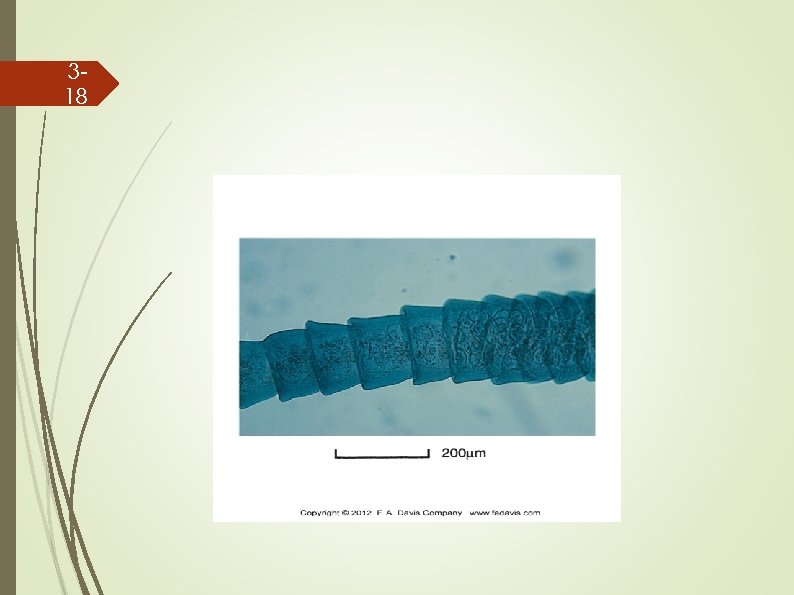
319 H. nana Small scolex Rostellum with 1 row of 20 -30 hooklets
320 Taenia saginata (beef tapeworm) and Taenia solium (pork tapeworm) Method of diagnosis Diagnostic stage Disease names Major pathology and symptoms Treatment Distribution
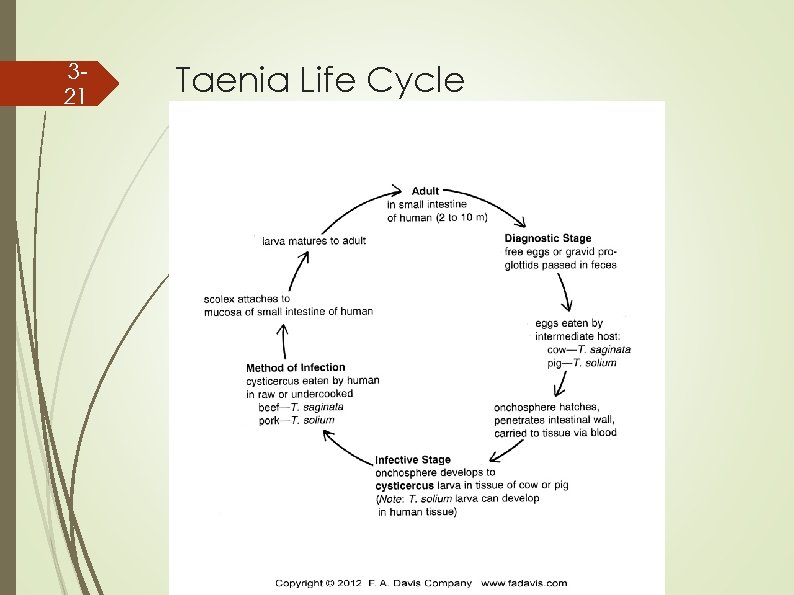
321 Taenia Life Cycle
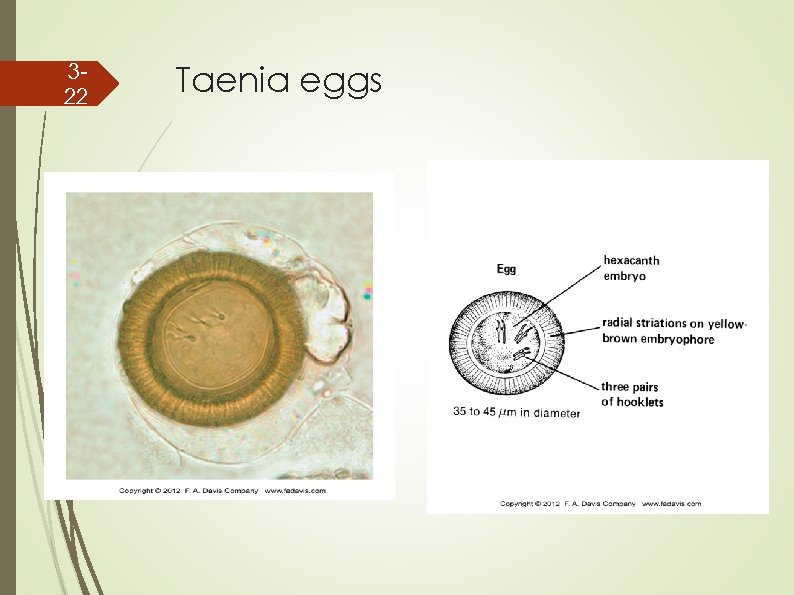
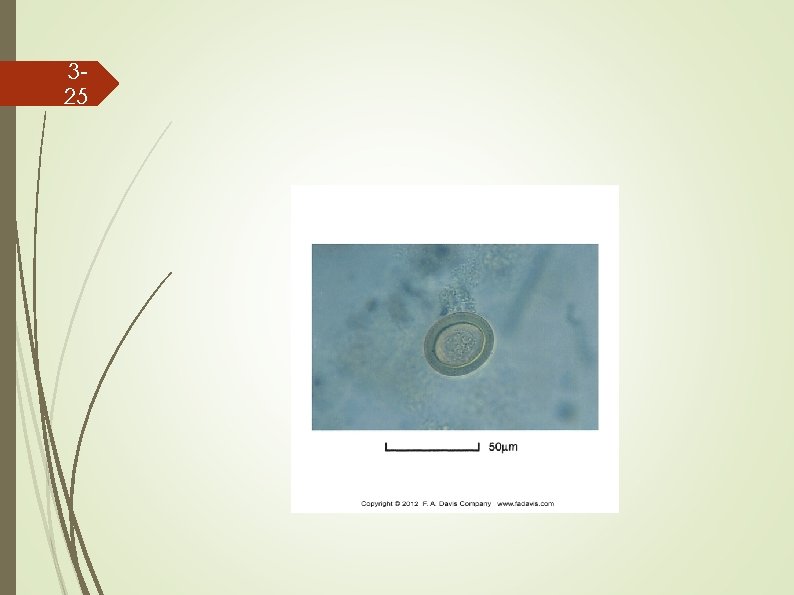
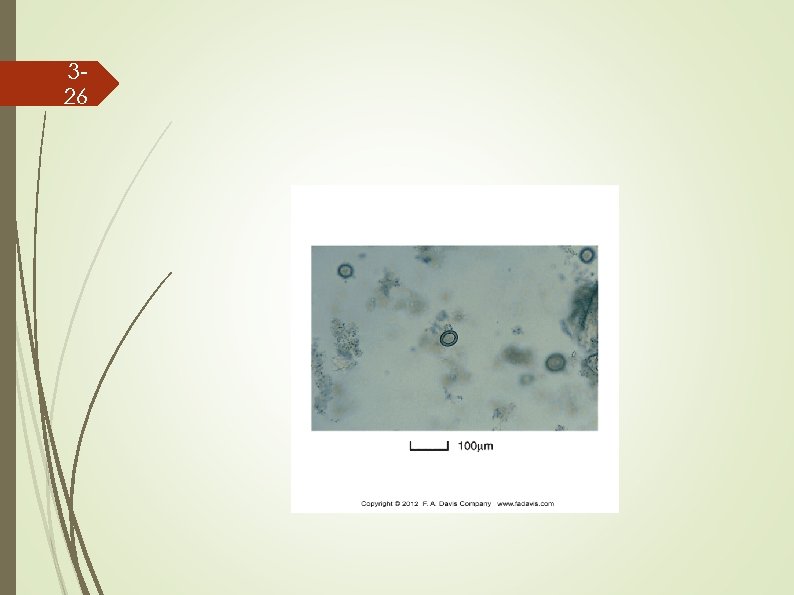
322 Taenia eggs
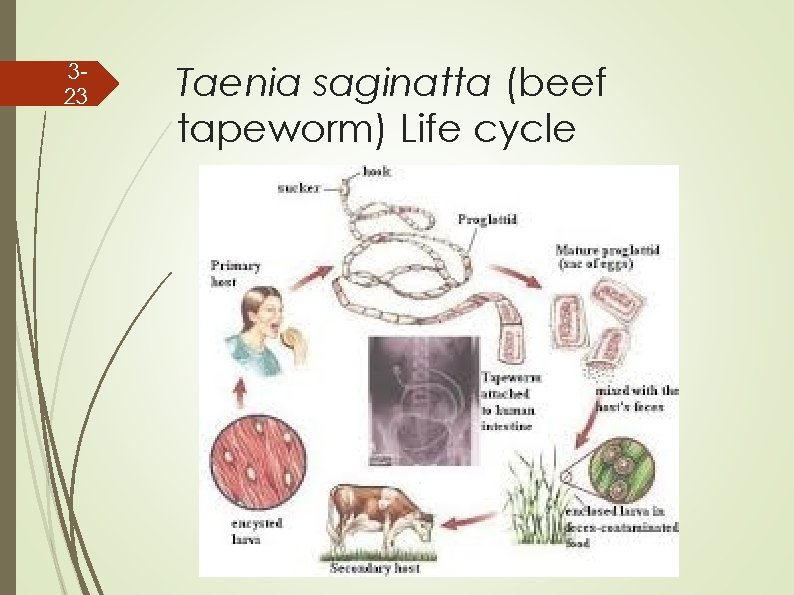
323 Taenia saginatta (beef tapeworm) Life cycle
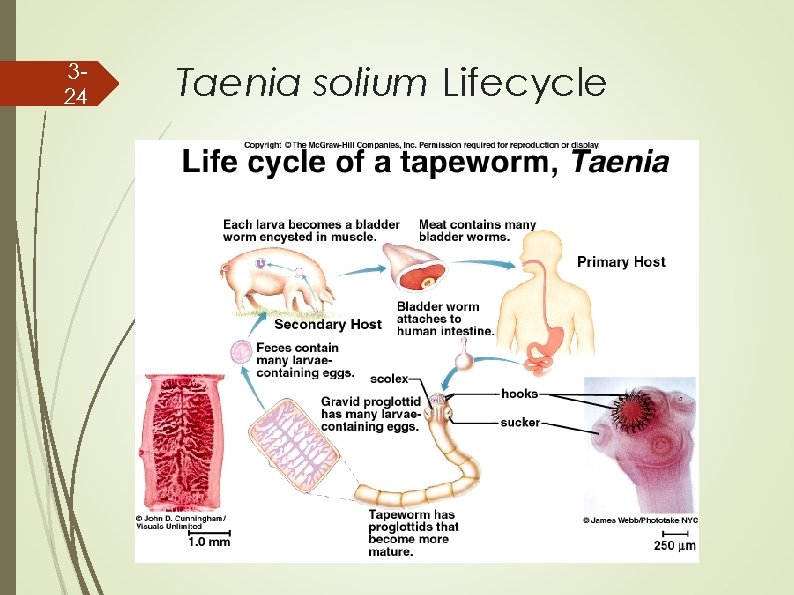
324 Taenia solium Lifecycle
325
326
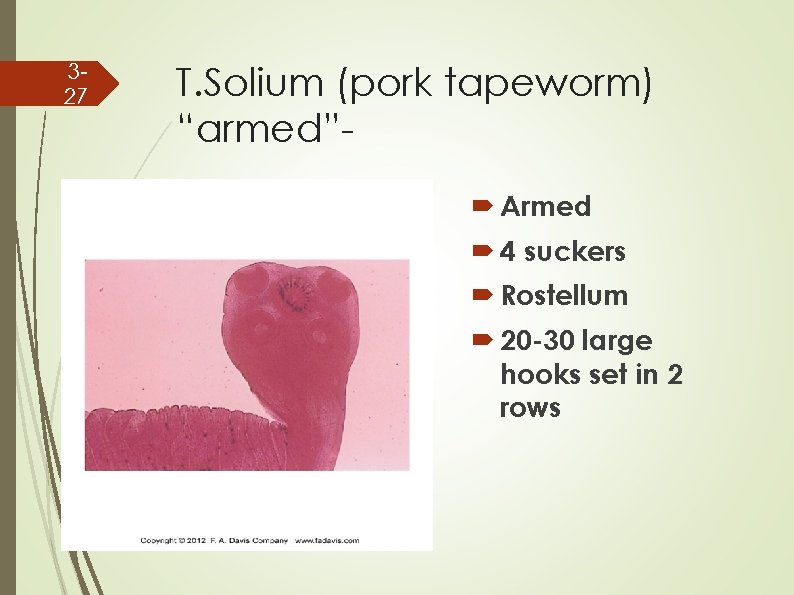
327 T. Solium (pork tapeworm) “armed” Armed 4 suckers Rostellum 20 -30 large hooks set in 2 rows
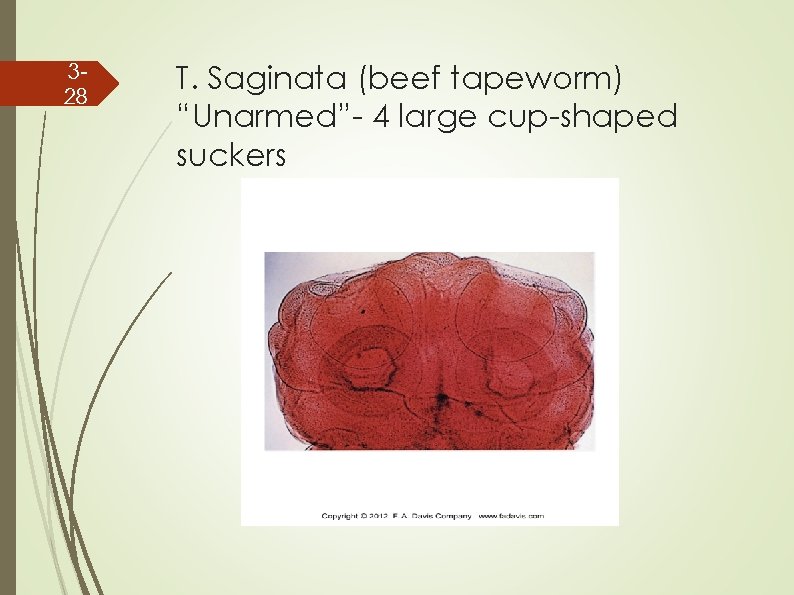
328 T. Saginata (beef tapeworm) “Unarmed”- 4 large cup-shaped suckers
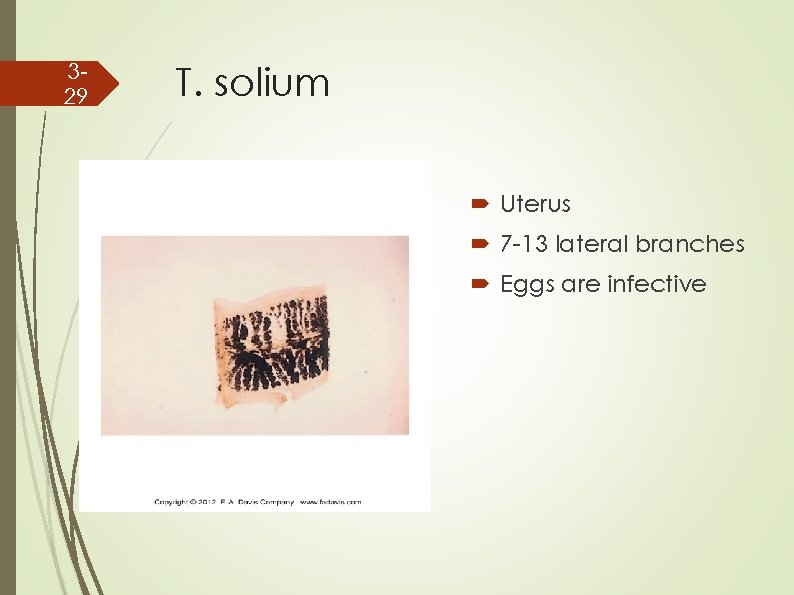
329 T. solium Uterus 7 -13 lateral branches Eggs are infective
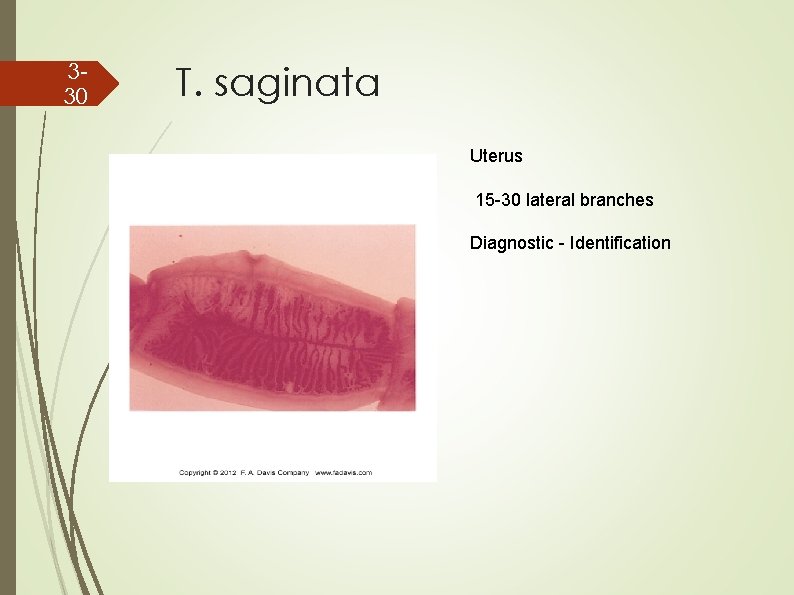
330 T. saginata Uterus 15 -30 lateral branches Diagnostic - Identification
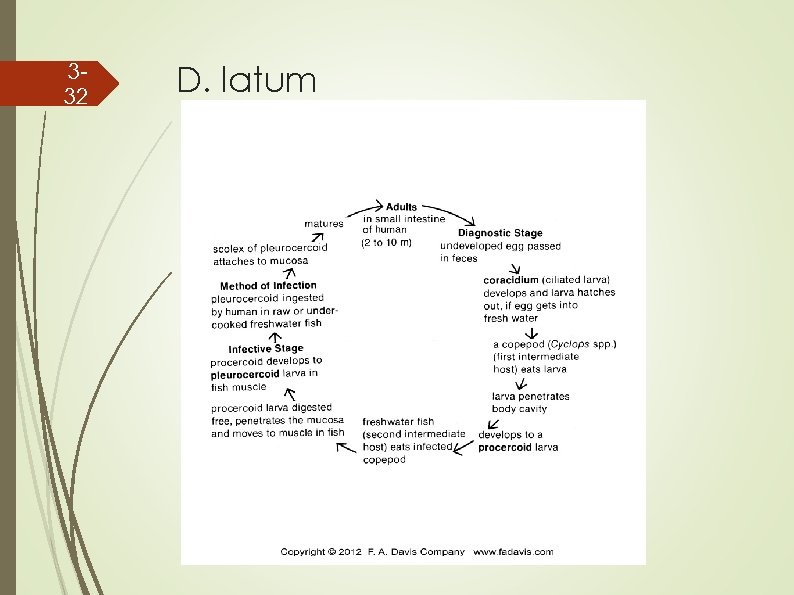
331 Diphyllobothrium latum (broadfish tapeworm) Method of diagnosis Diagnostic stage Disease names Major pathology and symptoms Treatment Distribution
332 D. latum
333 D. latum Worldwide – freshwater Florida, Great Lakes, Alaska Often asymptomatic ; vague GI disturbance Macrocytic, pernicious anemia Competes with host for Vitamin B 12
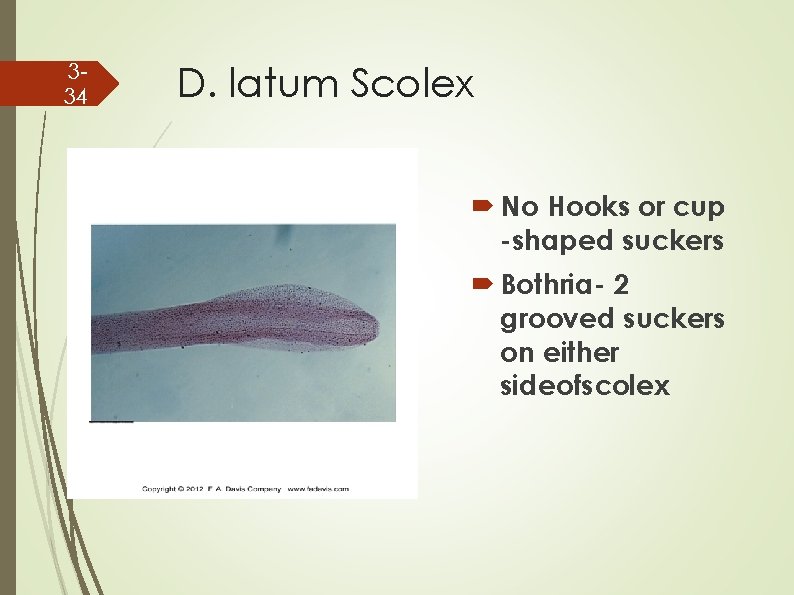
334 D. latum Scolex No Hooks or cup -shaped suckers Bothria- 2 grooved suckers on either sideofscolex

335 D. latum Operculated egg with terminal knob
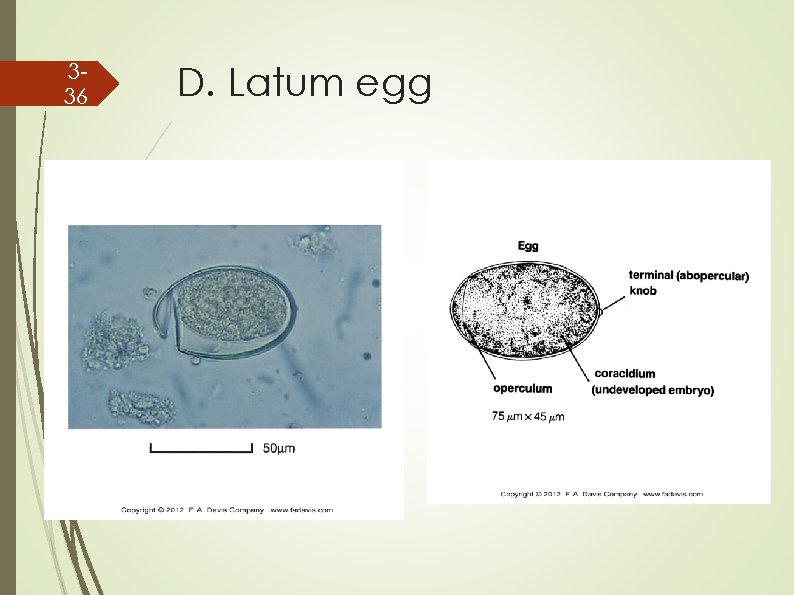
336 D. Latum egg
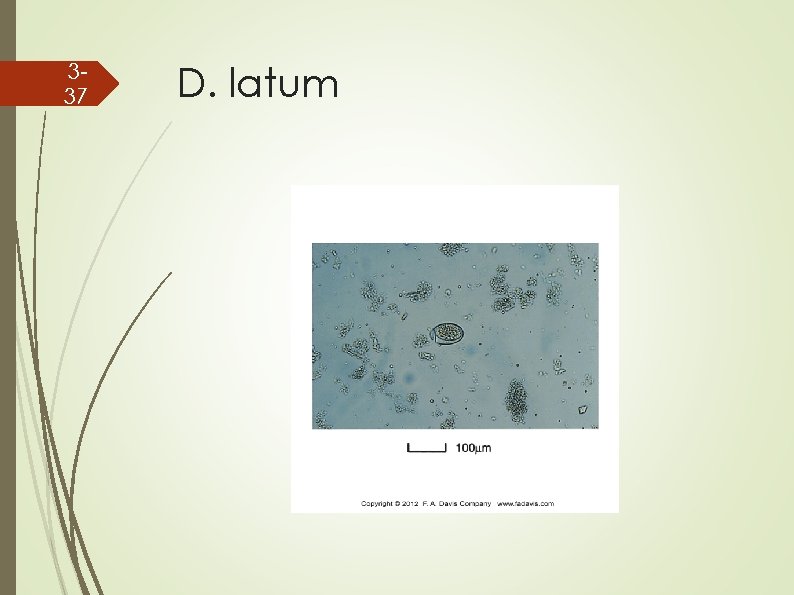
337 D. latum
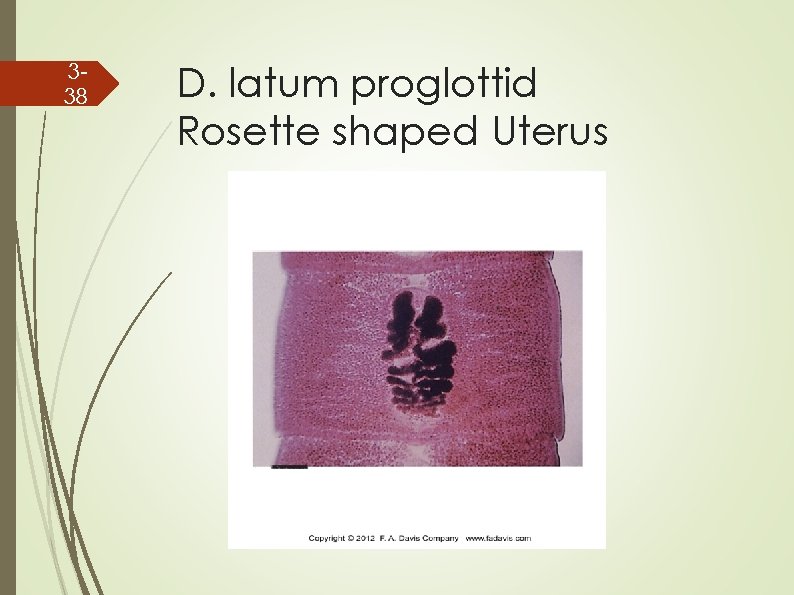
338 D. latum proglottid Rosette shaped Uterus
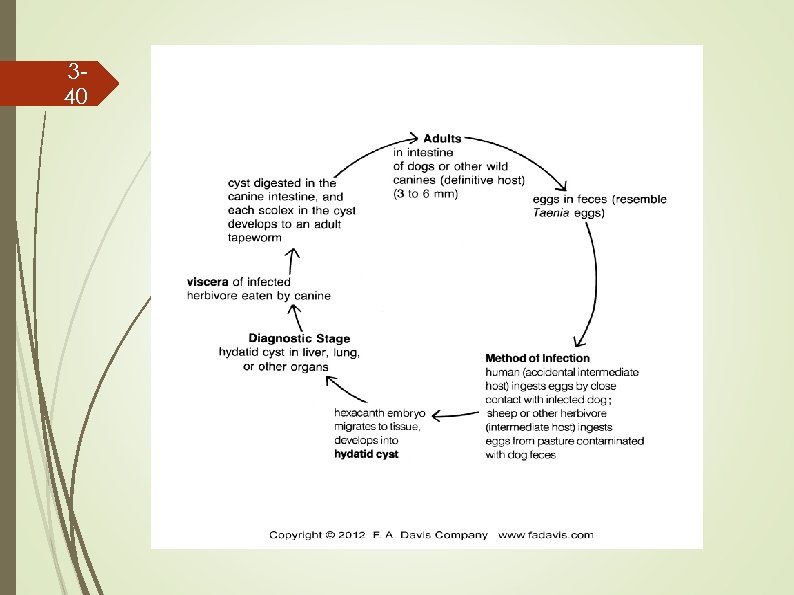
339 Echinococcus granulosus (hydatid tapeworm) (dog tapeworm) Method of diagnosis Diagnostic stage Disease names Major pathology and symptoms Treatment Distribution
340
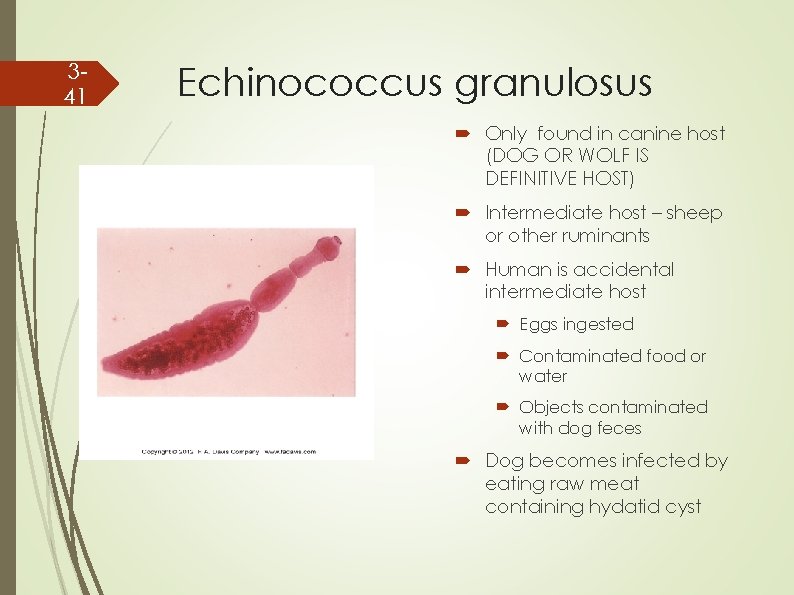
341 Echinococcus granulosus Only found in canine host (DOG OR WOLF IS DEFINITIVE HOST) Intermediate host – sheep or other ruminants Human is accidental intermediate host Eggs ingested Contaminated food or water Objects contaminated with dog feces Dog becomes infected by eating raw meat containing hydatid cyst
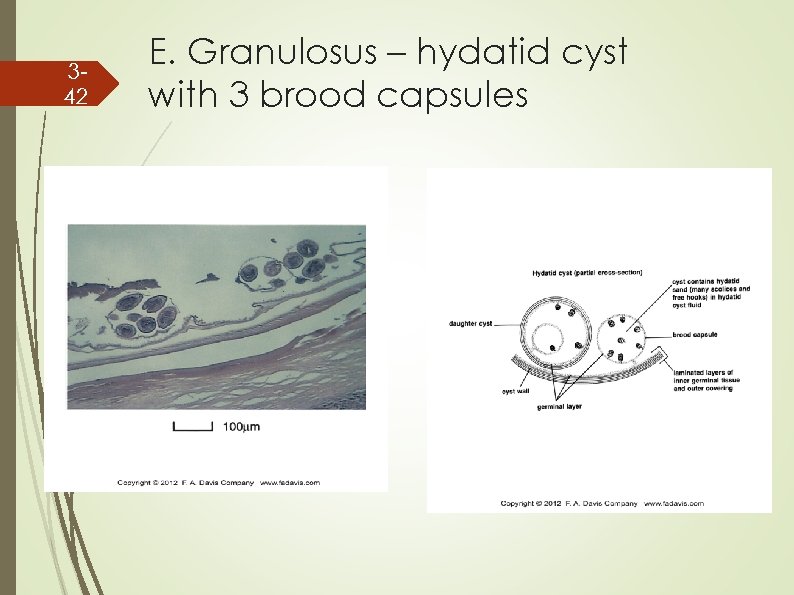
342 E. Granulosus – hydatid cyst with 3 brood capsules
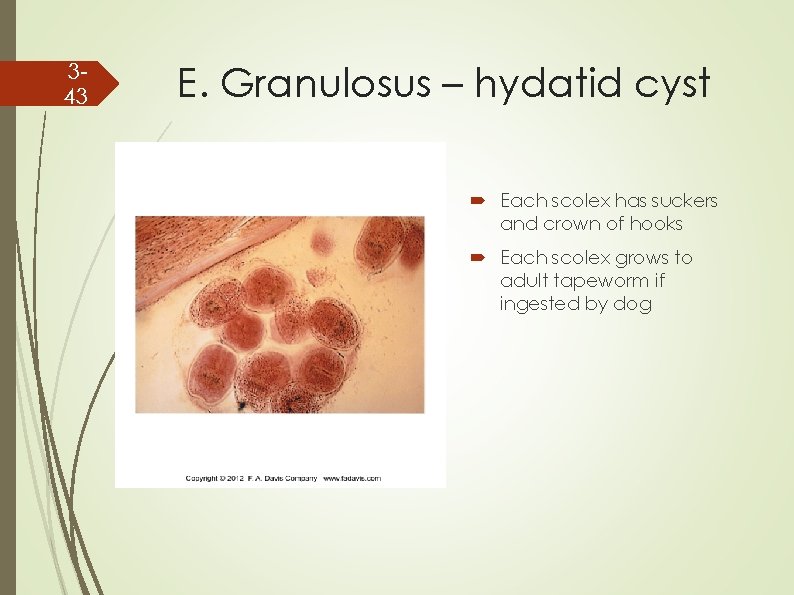
343 E. Granulosus – hydatid cyst Each scolex has suckers and crown of hooks Each scolex grows to adult tapeworm if ingested by dog
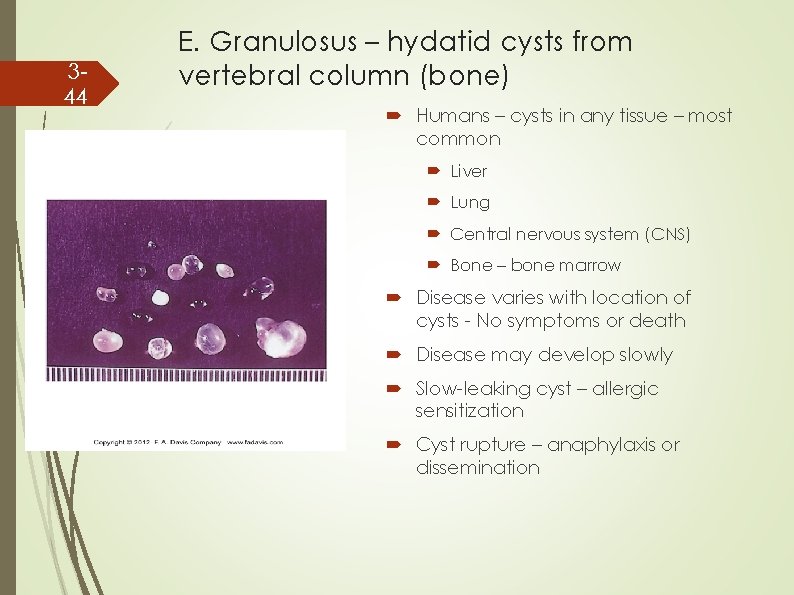
344 E. Granulosus – hydatid cysts from vertebral column (bone) Humans – cysts in any tissue – most common Liver Lung Central nervous system (CNS) Bone – bone marrow Disease varies with location of cysts - No symptoms or death Disease may develop slowly Slow-leaking cyst – allergic sensitization Cyst rupture – anaphylaxis or dissemination
345 E. Granulosus Rare in Europe or U. S. except in sheep raising areas Southwest ( Navajo) ; Utah Common in Alaska and Canada Diagnosis – history of exposure Radiology – X-ray, ultrasound, CT Immunodiagnostic skin testing Serology – indirect hemagglutination, ELISA Hooklets, scolices, , cyst membranes in histology tissue preps or body fluids Hydatid sand- granular material found in older cysts; free scolices, daughter cysts ; hooklets Biopsy dangerous – cyst leakage causes anaphyaxis
Zoonoses 346 Dipylidium caninum (dog or cat tapeworm) Human accidentally ingests larva from infected dog or cat flea (IH) Mild infection – adults in intestine; egg packets or proglottids in feces Hymenolepsis diminuta ( rat tapeworm) Human accidentally ingests larva from infected flea or grain beetle (IH) Mild symptoms; often resolves spontaneously; eggs in feces are diagnostic Cysticercosis Echinococcus granulosus
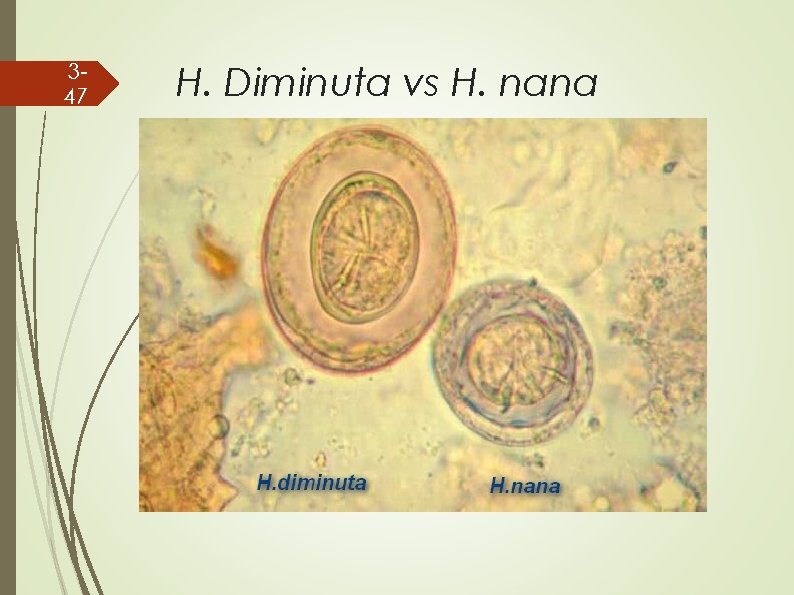
347 H. Diminuta vs H. nana
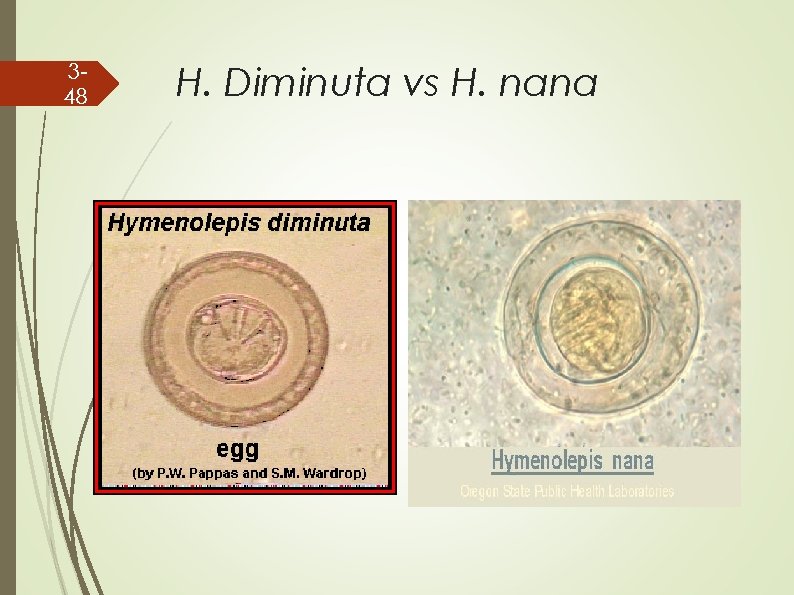
348 H. Diminuta vs H. nana
349 Zoonoses Dyphlobothrium spp. (dog or cat species) Location of parasite in humans How infection occurs Disease symptoms Diagnosis
- Slides: 49