
CERT Animal Response I Module Purpose The purpose
- Slides: 43
CERT Animal Response I
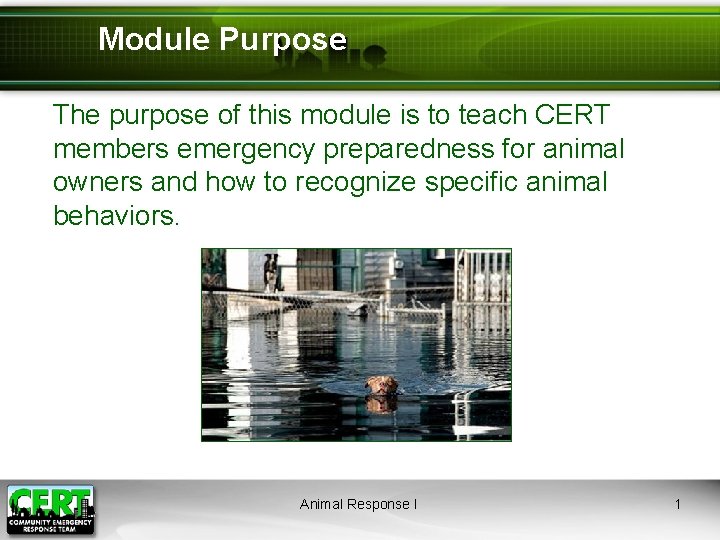
Module Purpose The purpose of this module is to teach CERT members emergency preparedness for animal owners and how to recognize specific animal behaviors. Animal Response I 1
Animal Categories • This module covers the following animal categories: § § § Household pets and domesticated animals Service animals For-profit animals Non-commercial livestock Wildlife Exotic animals CERT Animal Response II 2
What You Will Learn • Animal Issues in Emergency Management • Animal-Related Emergency Management • • • Functions Disaster Planning for Animals General Animal Behavior Preview of CERT Animal Response II Animal Response I 3
Module Objectives • Explain why animal issues are an important • • • consideration in emergency management Demonstrate knowledge of animal-related emergency management functions Explain emergency preparedness for animal owners Describe general guidelines for handling animals Animal Response I 4
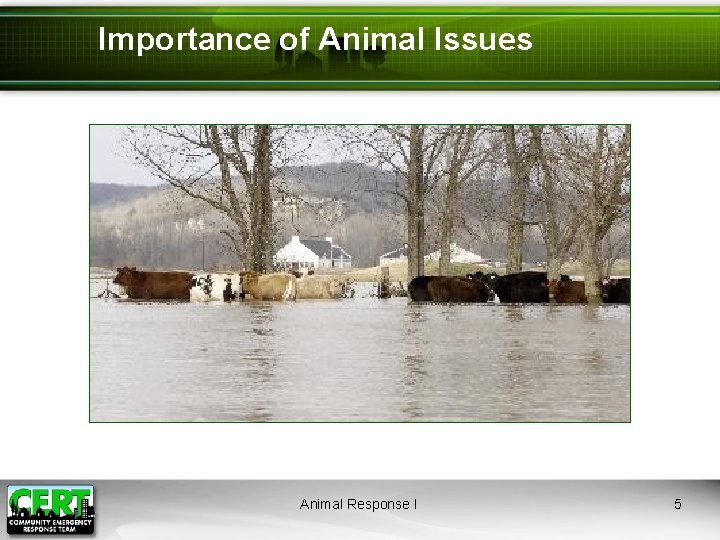
Importance of Animal Issues Animal Response I 5
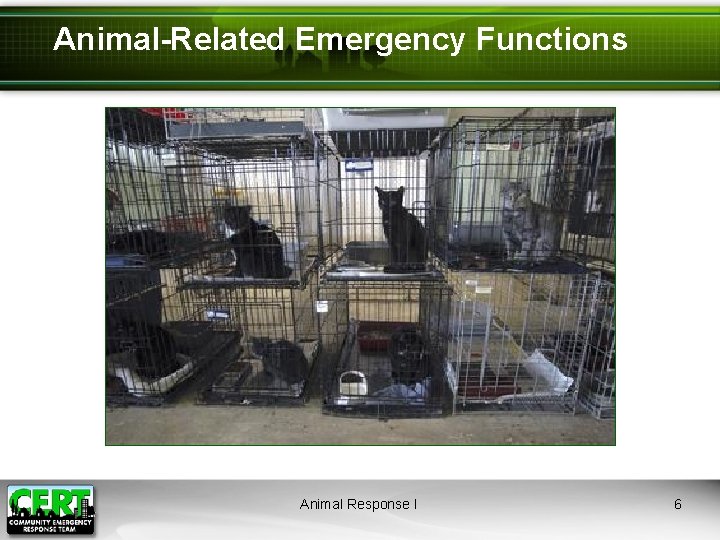
Animal-Related Emergency Functions Animal Response I 6
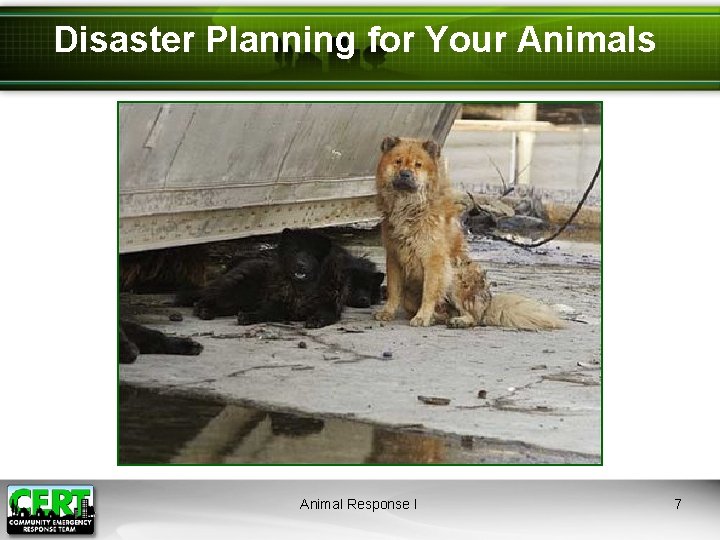
Disaster Planning for Your Animals Animal Response I 7
Preparing for a Disaster • CERTs should prepare by: § § § Identifying potential hazards Mitigating the impact of hazards Creating a disaster plan Assembling disaster supplies Participating in training and exercises Knowing your community’s disaster response plan Animal Response I 8
Identifying Potential Hazards • What types of disasters could occur in your community? § Natural § Technological § Terrorist • How could a disaster affect your animals? Animal Response I 9
Mitigating the Impact of Hazards • Reducing the impact of disasters • Making changes that protect properties or • facilities Examples: § Encourage animal facilities to relocate out of disaster -prone areas § Encourage animal facilities to have emergency plans, including evacuation plans § Encourage livestock owners to develop plans to remove animals when flooding is a threat Animal Response I 10
Creating a Disaster Plan for Animals • Preparing to Evacuate Your Pet/Service • • Animal Preparing to Stay at Home With Pets/Service Animals During a Disaster Pet/Service Animal Care After a Disaster Preparations for Livestock Special Considerations for Exotic Animals Animal Response I 11
Preparing to Evacuate Your Pet/Service Animal • Identify where you will stay if evacuated • Plan your evacuation routes • Update vaccinations and identification • • tags Gather evacuation supplies Make a plan for evacuating without your pet Animal Response I 12
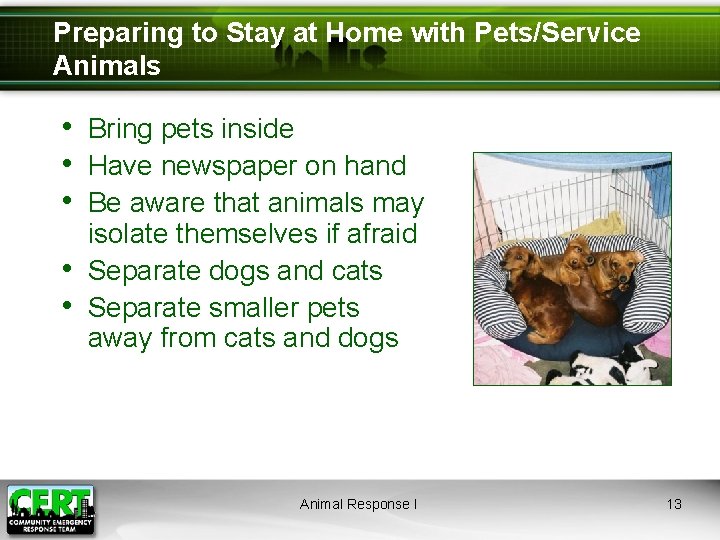
Preparing to Stay at Home with Pets/Service Animals • Bring pets inside • Have newspaper on hand • Be aware that animals may • • isolate themselves if afraid Separate dogs and cats Separate smaller pets away from cats and dogs Animal Response I 13
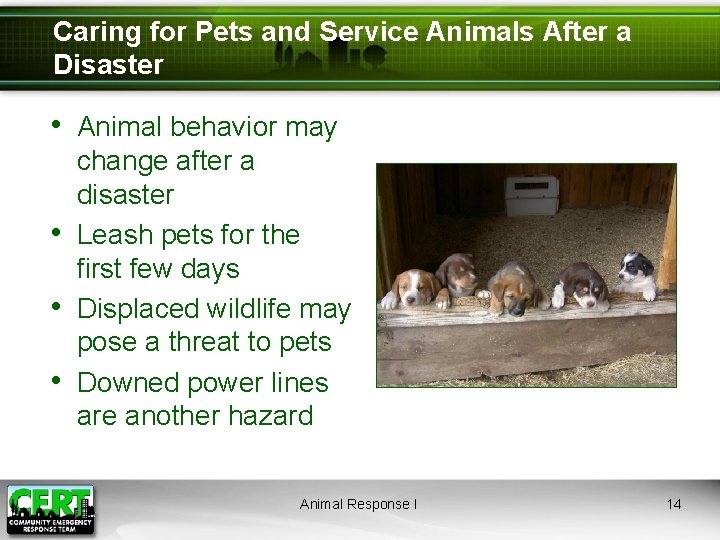
Caring for Pets and Service Animals After a Disaster • Animal behavior may • • • change after a disaster Leash pets for the first few days Displaced wildlife may pose a threat to pets Downed power lines are another hazard Animal Response I 14
Making Preparations for Livestock • Ensure all animals have identification • Have an evacuation plan § Relocate on property § Transport animals to safe site • Evacuation sites should be prepared for • • livestock If not evacuating, identify safest shelter Take precautions in severe cold weather Animal Response I 15
Special Considerations for Exotic Animals • Owners should have a plan to secure • • animals during emergencies Exotics may need to be separated from other animals Exotics may need to be registered with authorities Animal Response I 16
Assembling a Disaster Supply Kit • Evacuation Checklist § For pets/service animals § For livestock • Shelter-in-Place Checklist § For pets/service animals § For livestock • Post information for emergency personnel on your property Animal Response I 17
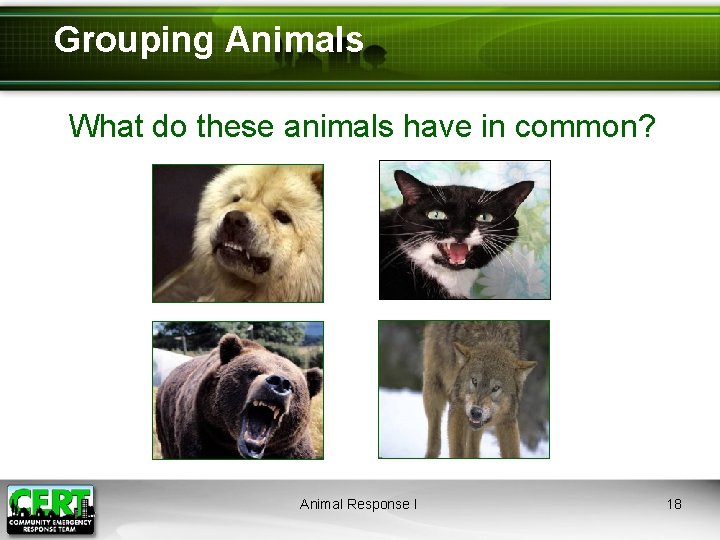
Grouping Animals What do these animals have in common? Animal Response I 18
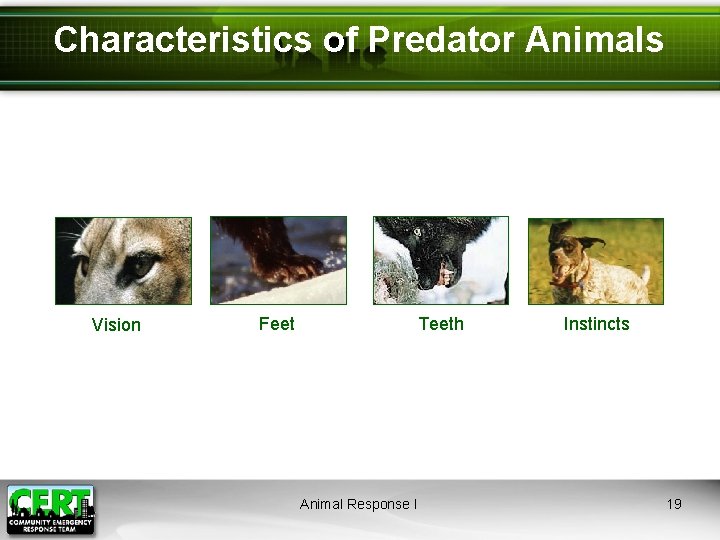
Characteristics of Predator Animals Vision Feet Teeth Animal Response I Instincts 19
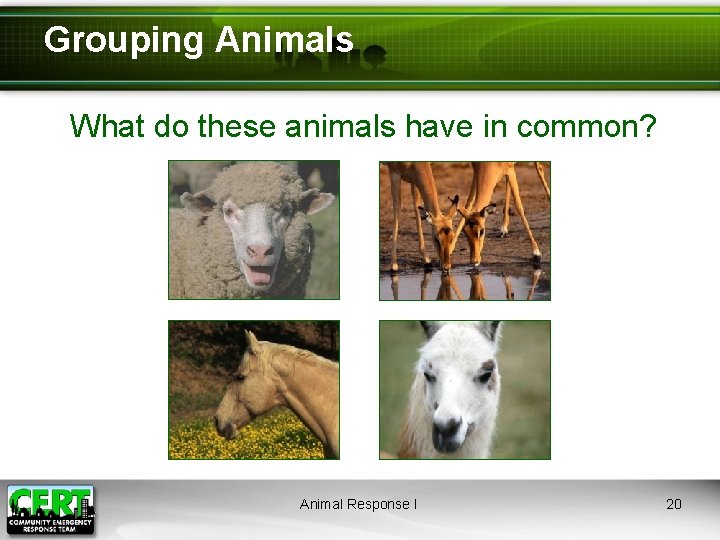
Grouping Animals What do these animals have in common? Animal Response I 20
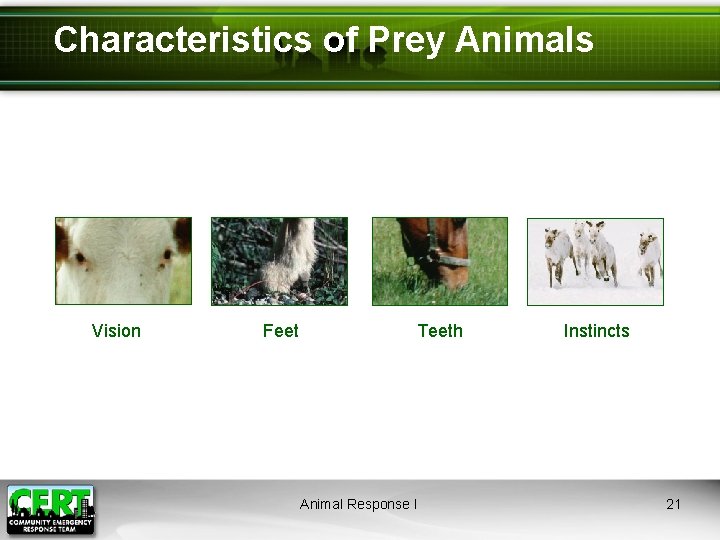
Characteristics of Prey Animals Vision Feet Teeth Animal Response I Instincts 21
Animal Domestication • Breeding species for desired • • characteristics Domesticated animal behavior Domesticated animals may revert to instinctive behavior Predator animals may chase and attack Prey animals may run or hide Animal Response I 22
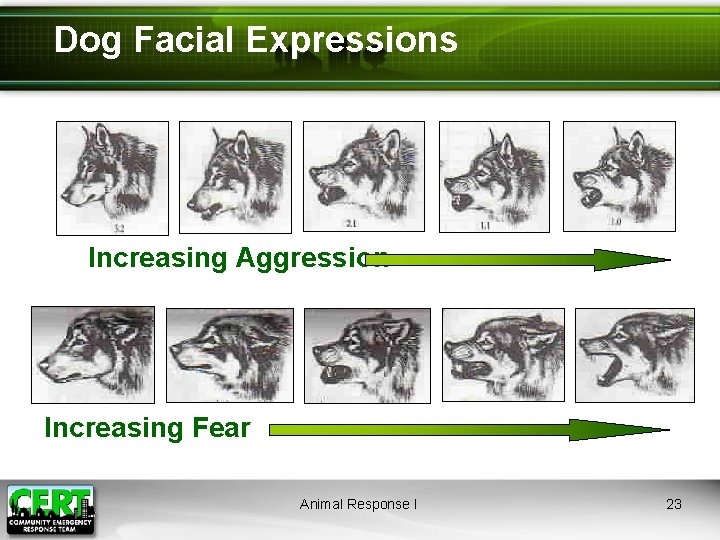
Dog Facial Expressions Increasing Aggression Increasing Fear Animal Response I 23
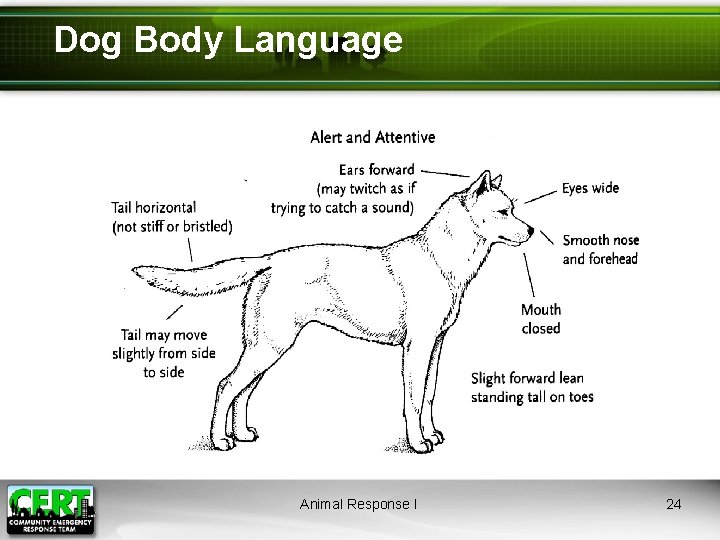
Dog Body Language Animal Response I 24
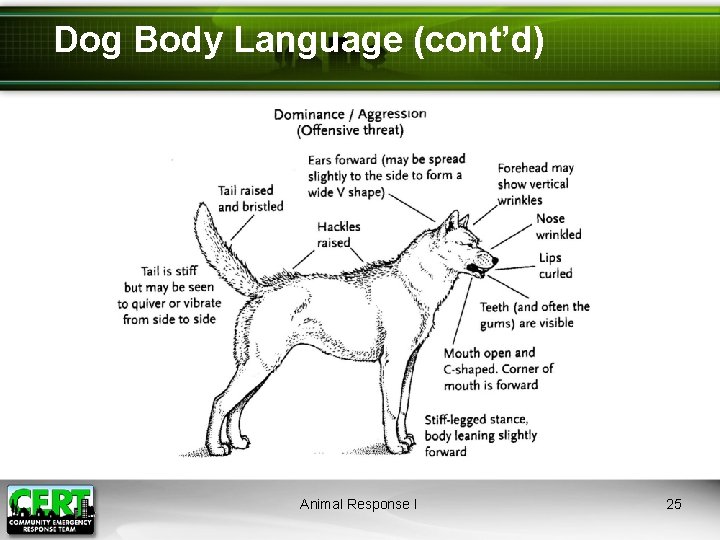
Dog Body Language (cont’d) Animal Response I 25
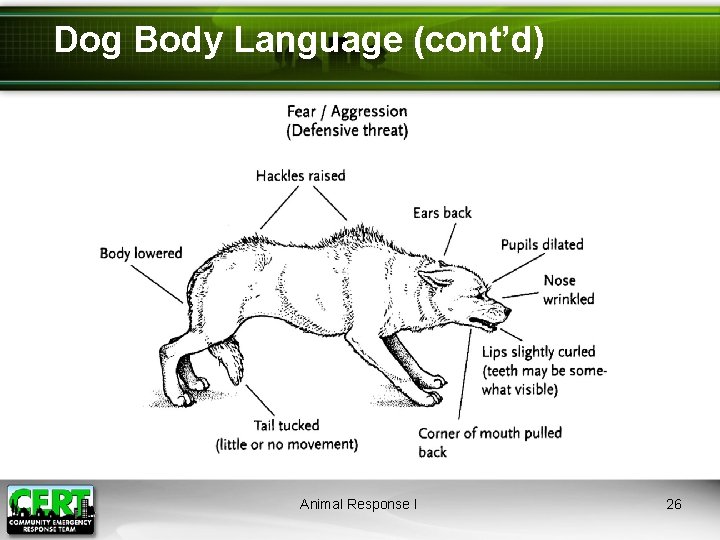
Dog Body Language (cont’d) Animal Response I 26
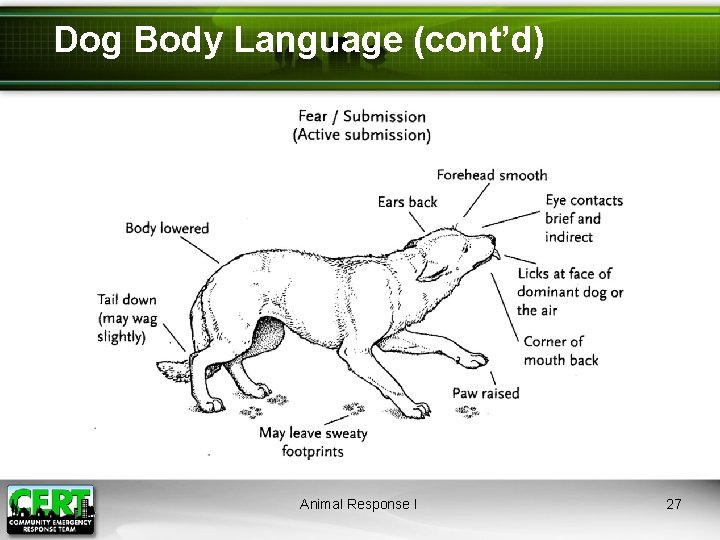
Dog Body Language (cont’d) Animal Response I 27
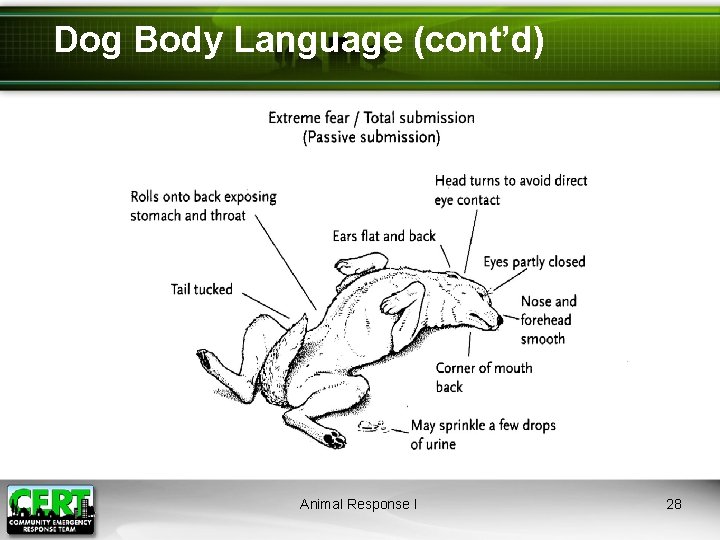
Dog Body Language (cont’d) Animal Response I 28
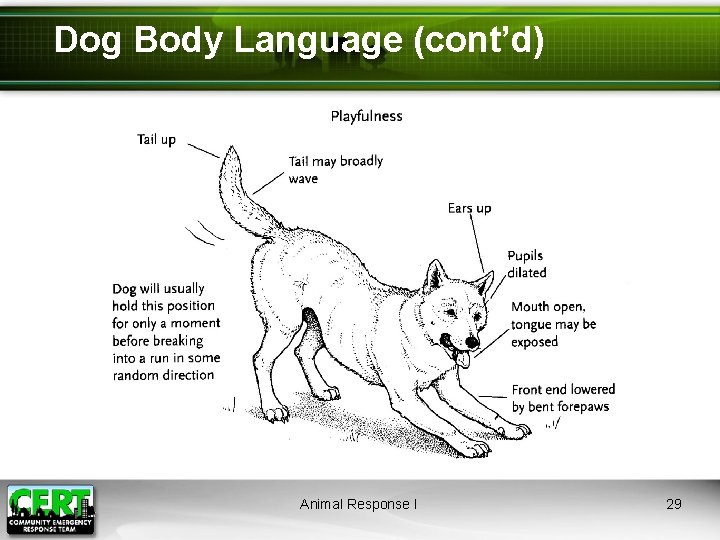
Dog Body Language (cont’d) Animal Response I 29
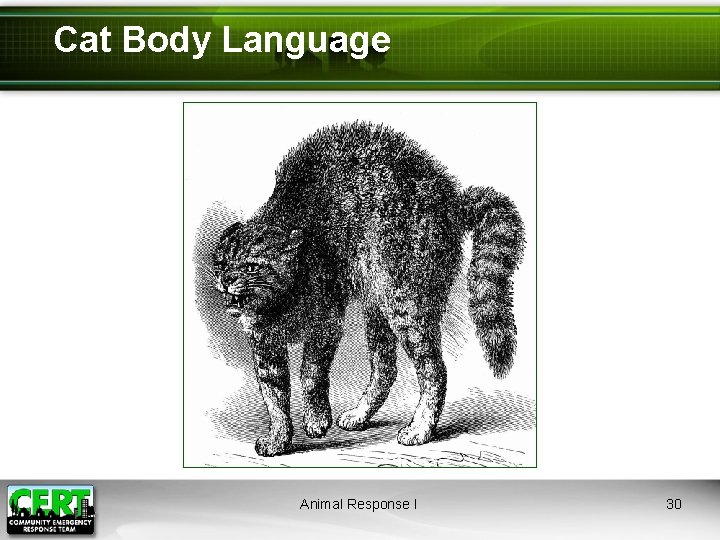
Cat Body Language Animal Response I 30
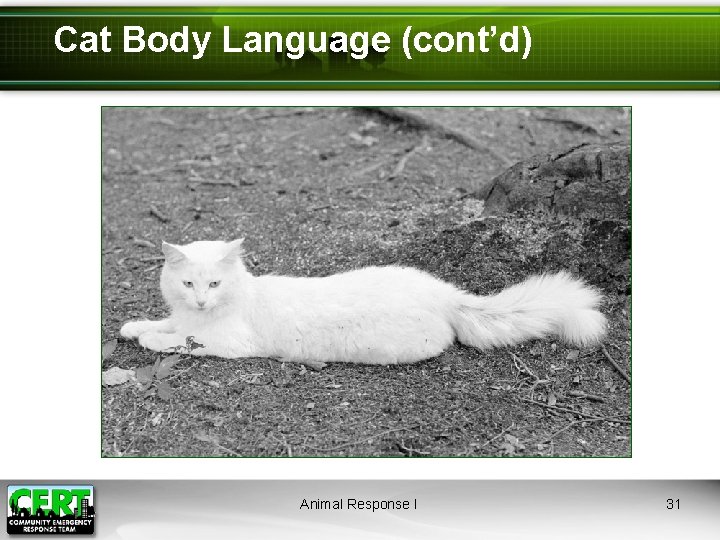
Cat Body Language (cont’d) Animal Response I 31
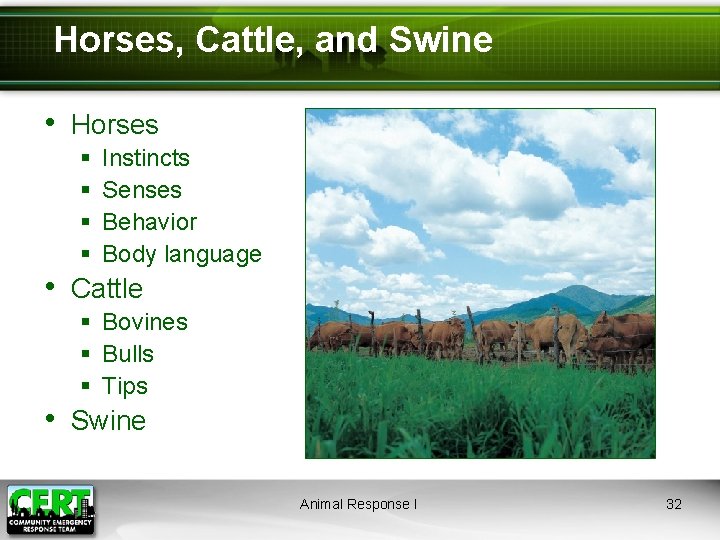
Horses, Cattle, and Swine • Horses § § Instincts Senses Behavior Body language • Cattle § Bovines § Bulls § Tips • Swine Animal Response I 32
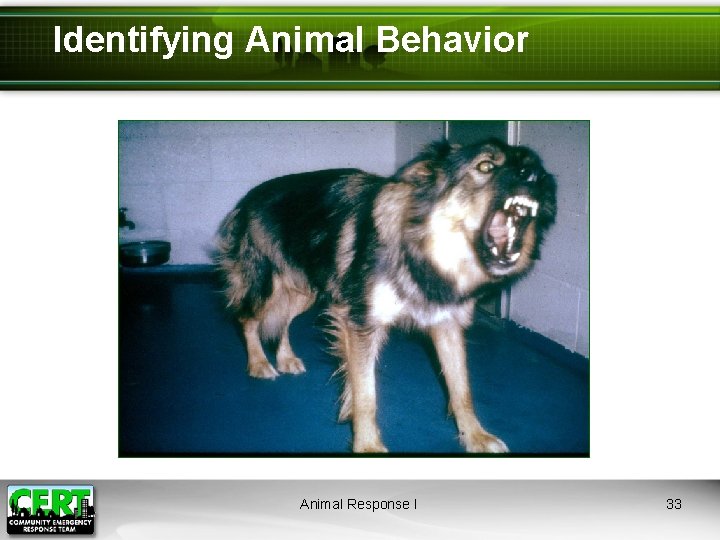
Identifying Animal Behavior Animal Response I 33
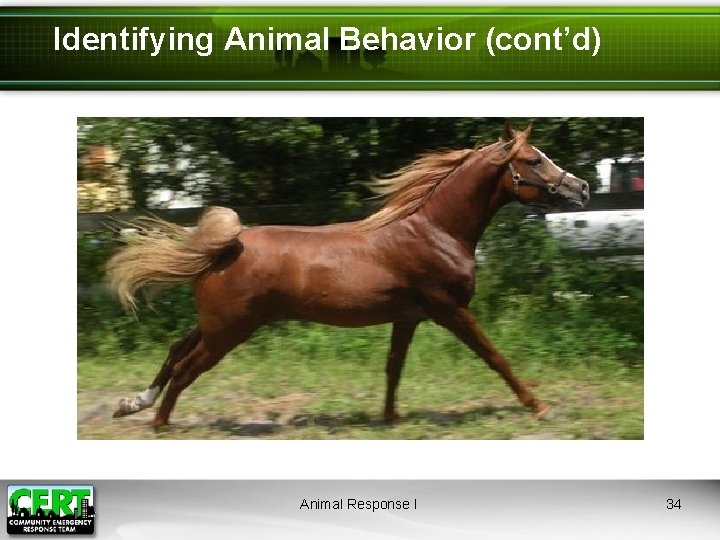
Identifying Animal Behavior (cont’d) Animal Response I 34
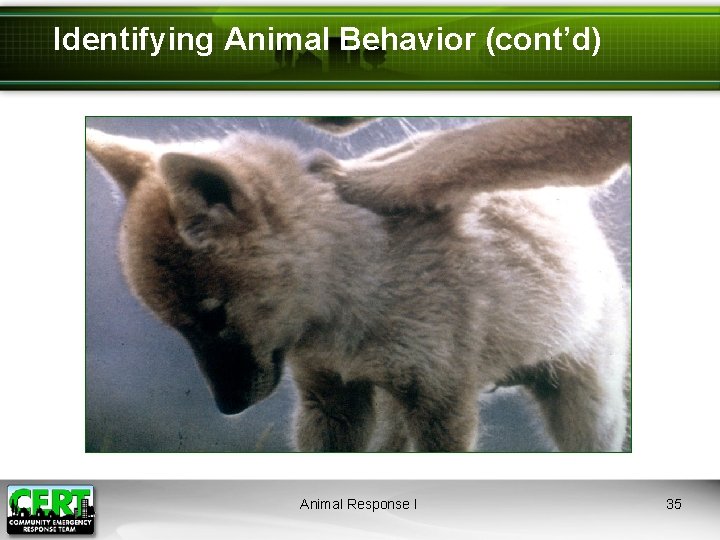
Identifying Animal Behavior (cont’d) Animal Response I 35
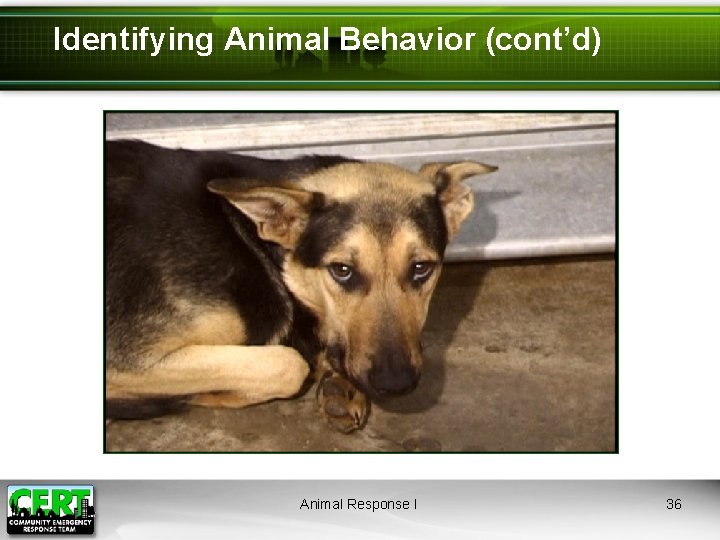
Identifying Animal Behavior (cont’d) Animal Response I 36
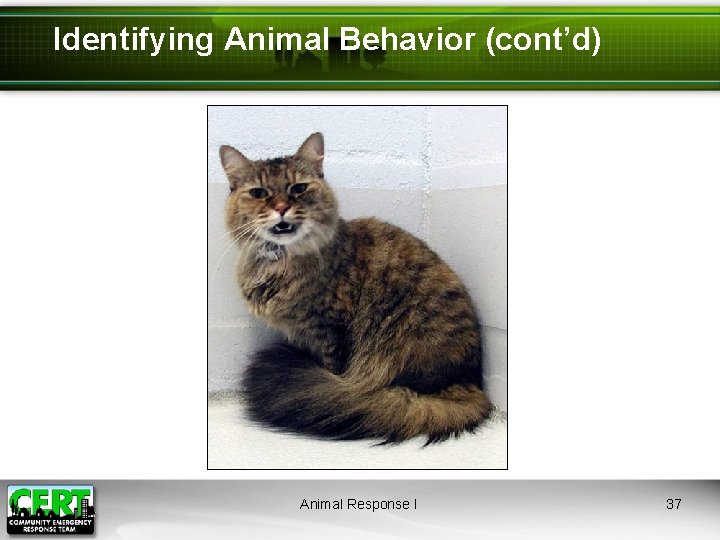
Identifying Animal Behavior (cont’d) Animal Response I 37
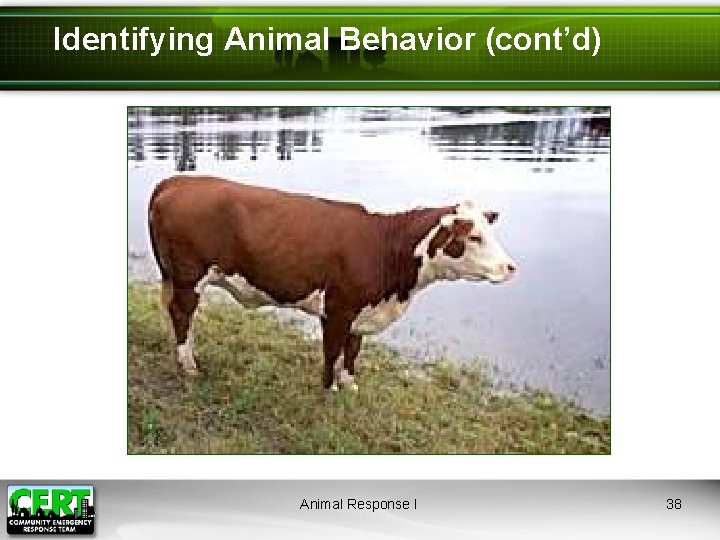
Identifying Animal Behavior (cont’d) Animal Response I 38
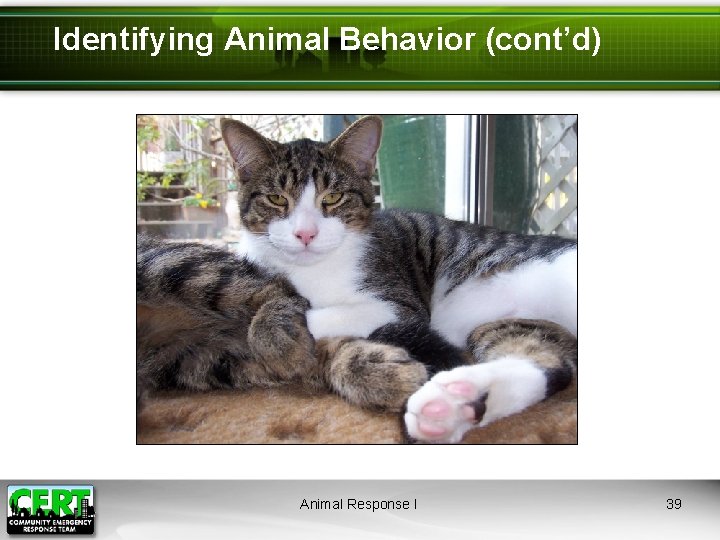
Identifying Animal Behavior (cont’d) Animal Response I 39
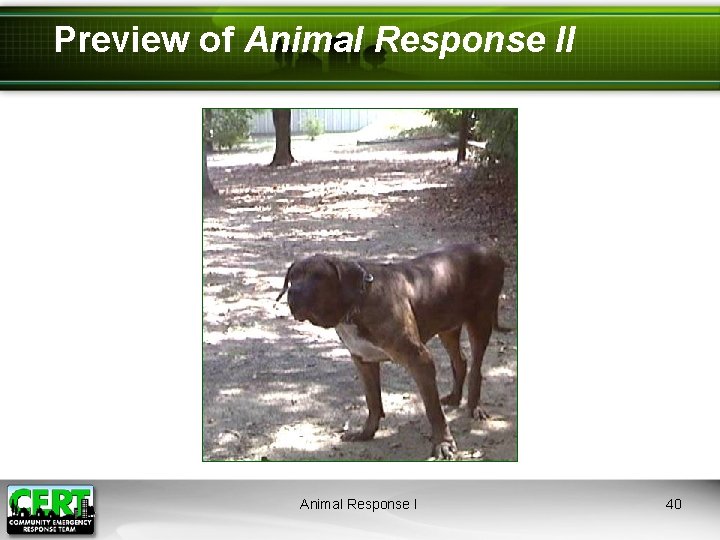
Preview of Animal Response II Animal Response I 40
Preview of Animal Response II (cont’d) • Come back for Animal Response II to learn: § Your role as a CERT member responding to animal issues § How to protect yourself during animal encounters § Knowledge and skills for CERT functions involving animals Animal Response I 41
Module Summary • In this module, we reviewed: § Animal Issues in Emergency Management § Animal-Related Emergency Management Functions § Preparedness for Your Animals § General Animal Behavior Animal Response I 42