
CERN Welcome to CERN Richard Jacobsson 1 What

CERN Welcome to CERN! Richard Jacobsson 1
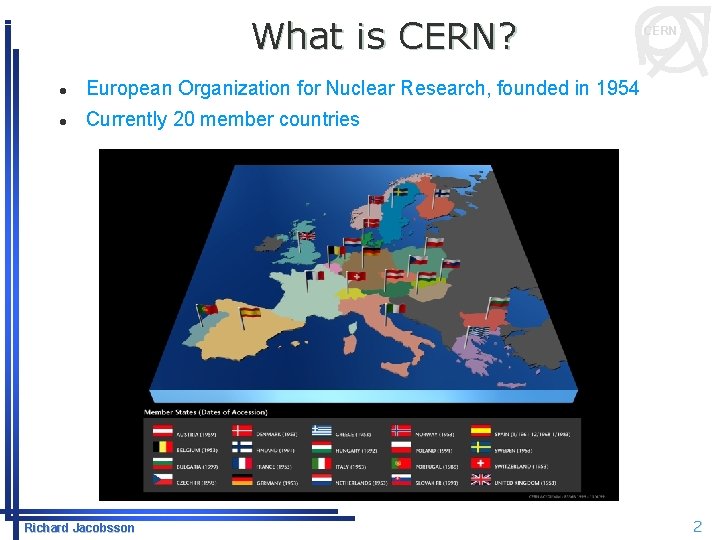
What is CERN? l European Organization for Nuclear Research, founded in 1954 l Currently 20 member countries Richard Jacobsson CERN 2
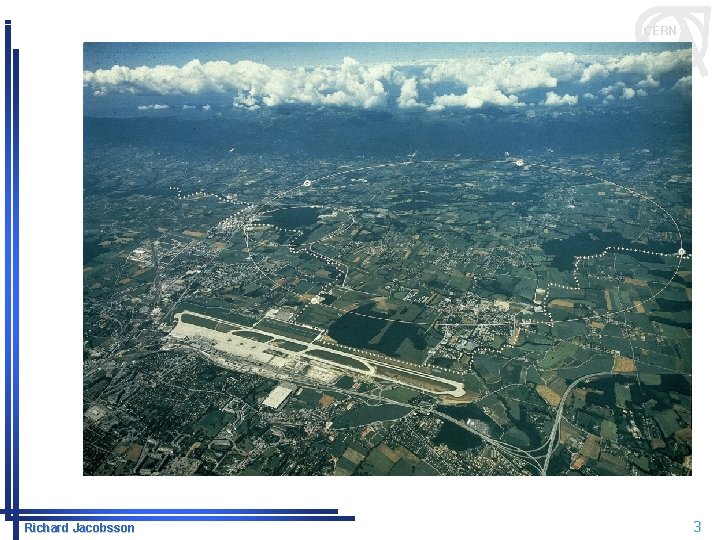
CERN Richard Jacobsson 3
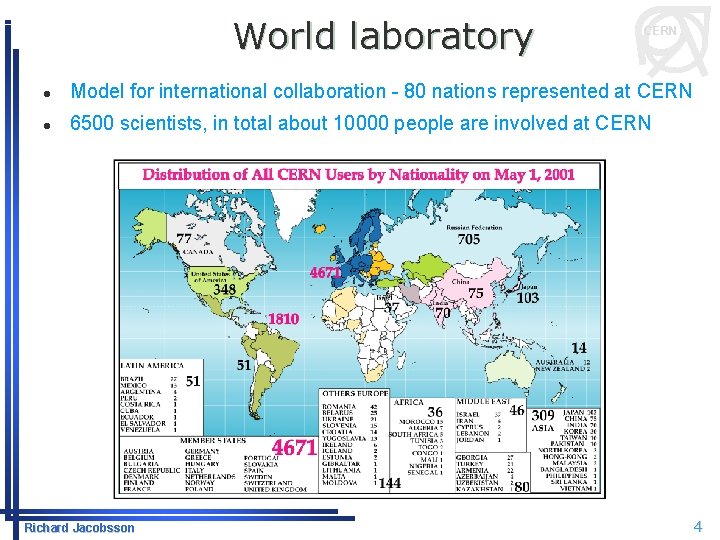
World laboratory CERN l Model for international collaboration - 80 nations represented at CERN l 6500 scientists, in total about 10000 people are involved at CERN Richard Jacobsson 4
Mission l CERN’s objective is pure basic research in particle physics l However, results and spin-offs are of four major kinds: CERN - Progress in particle physics - Developing tomorrow’s technology - Training of tomorrow’s scientists and engineers - Informing and stimulating the public Richard Jacobsson 5
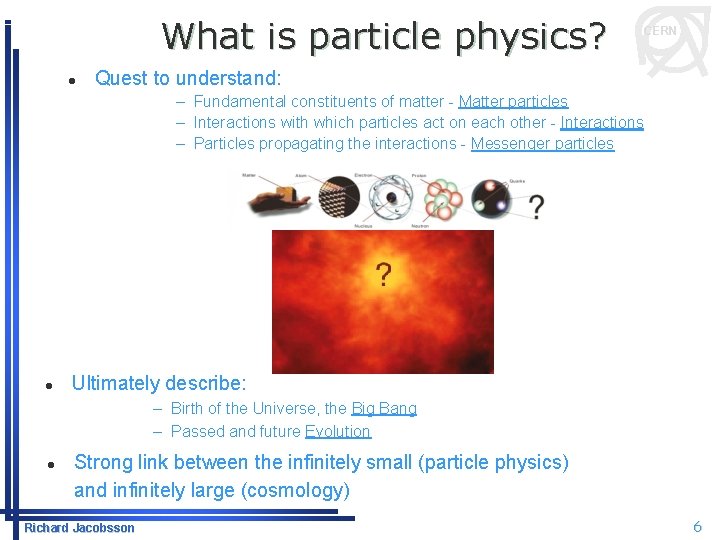
What is particle physics? l CERN Quest to understand: – Fundamental constituents of matter - Matter particles – Interactions with which particles act on each other - Interactions – Particles propagating the interactions - Messenger particles l Ultimately describe: – Birth of the Universe, the Big Bang – Passed and future Evolution l Strong link between the infinitely small (particle physics) and infinitely large (cosmology) Richard Jacobsson 6
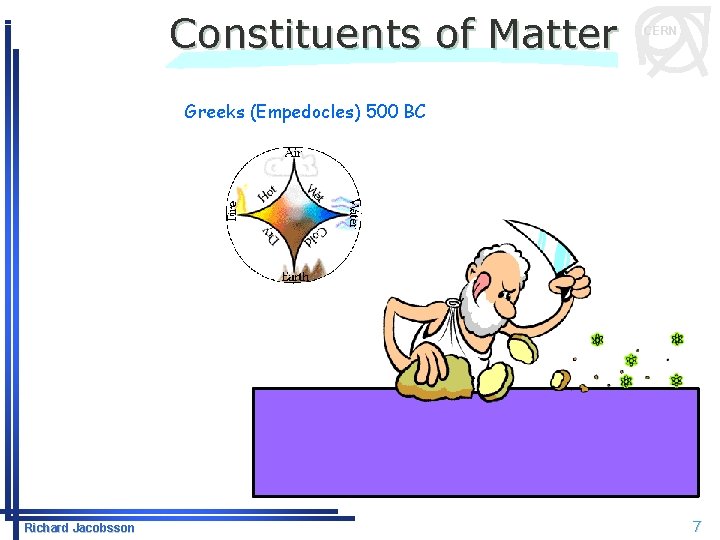
Constituents of Matter CERN Greeks (Empedocles) 500 BC Richard Jacobsson 7
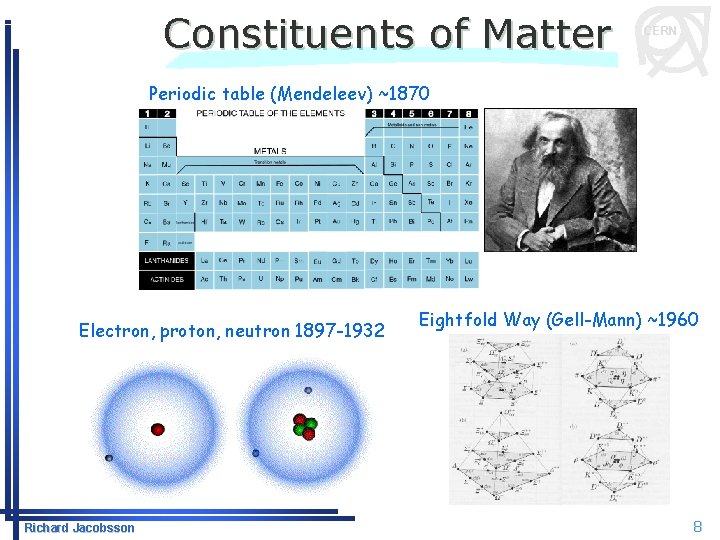
Constituents of Matter CERN Periodic table (Mendeleev) ~1870 Electron, proton, neutron 1897 -1932 Richard Jacobsson Eightfold Way (Gell-Mann) ~1960 8
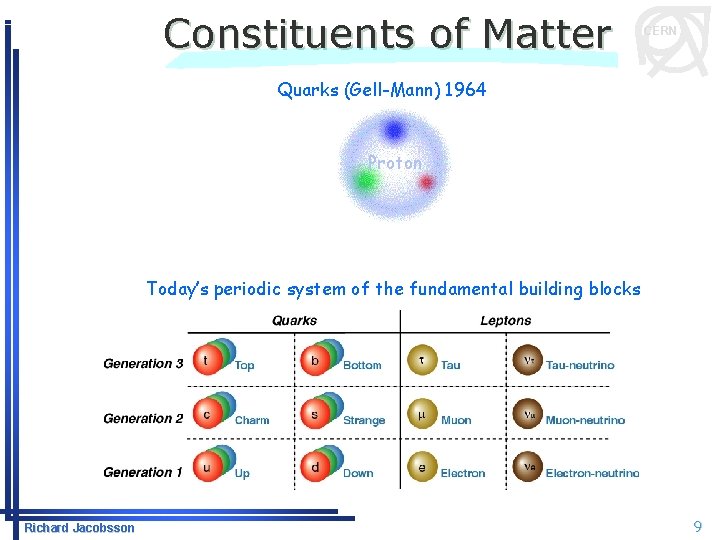
Constituents of Matter CERN Quarks (Gell-Mann) 1964 Proton Today’s periodic system of the fundamental building blocks Richard Jacobsson 9
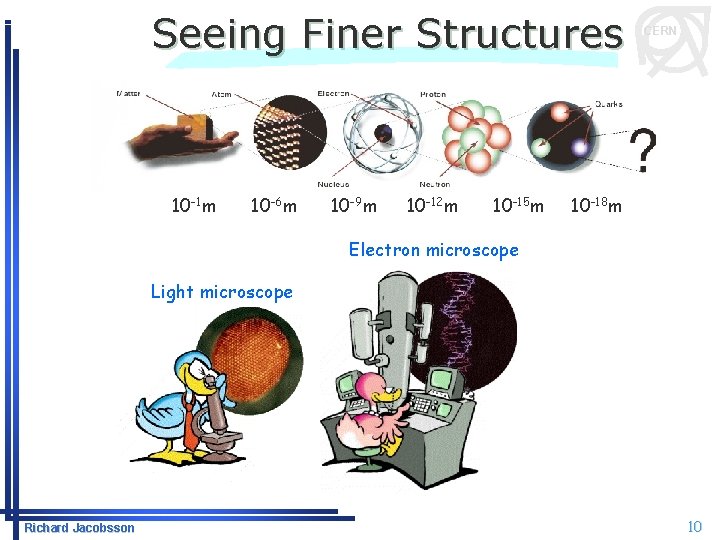
Seeing Finer Structures 10 -1 m 10 -6 m 10 -9 m 10 -12 m 10 -15 m CERN 10 -18 m Electron microscope Light microscope Richard Jacobsson 10
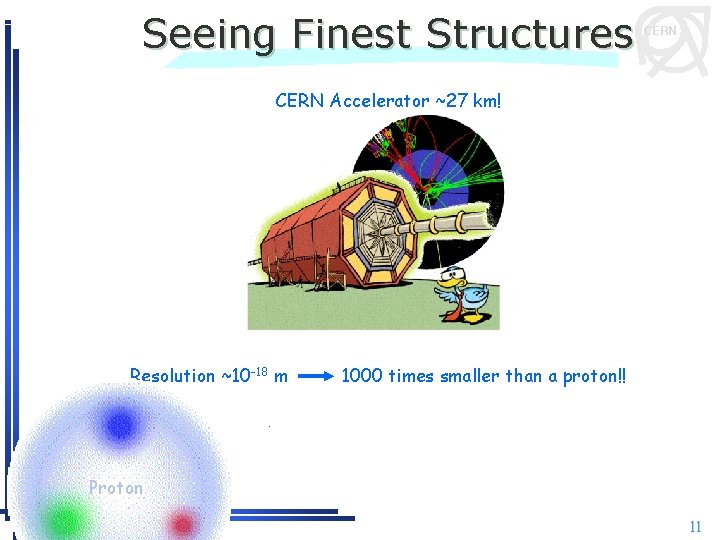
Seeing Finest Structures CERN Accelerator ~27 km! Resolution ~10 -18 m 1000 times smaller than a proton!! ? Proton Richard Jacobsson 11
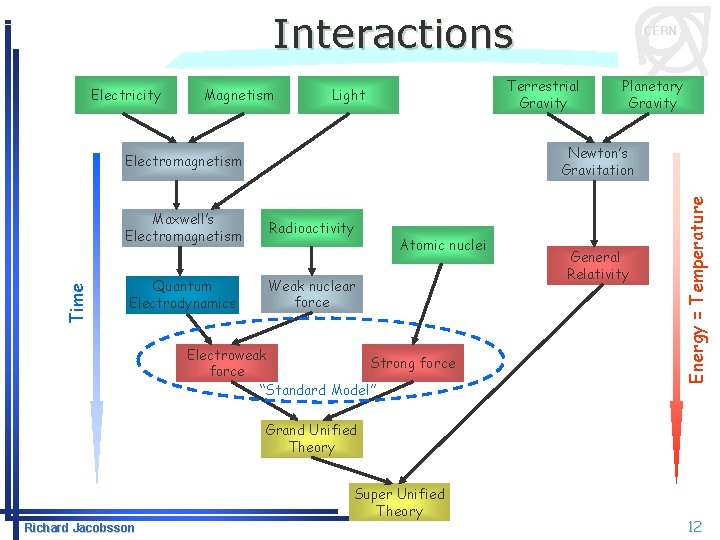
Interactions Magnetism Terrestrial Gravity Light Newton’s Gravitation Electromagnetism Time Maxwell’s Electromagnetism Quantum Electrodynamics Planetary Gravity Radioactivity Atomic nuclei Weak nuclear force Electroweak Strong force “Standard Model” General Relativity Energy = Temperature Electricity CERN Grand Unified Theory Super Unified Theory Richard Jacobsson 12
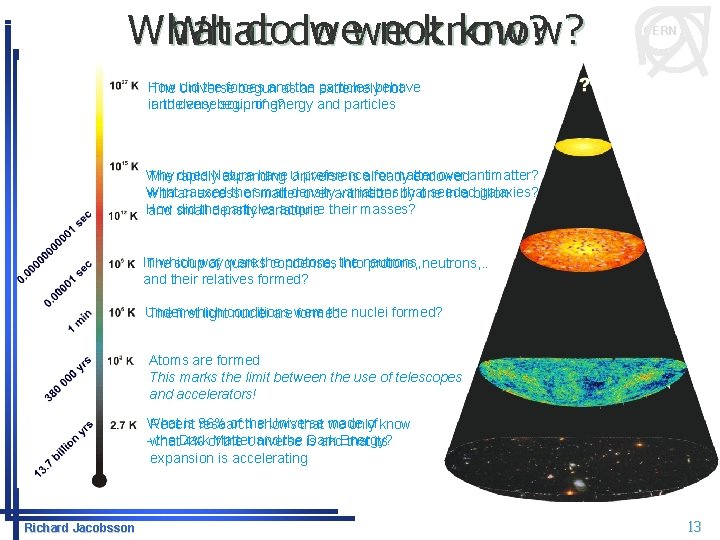
What dodo wewe not know? What know? CERN How did the forces and The Universe begun asthe an particles extremelybehave hot in thedense very beginning? and soup of energy and particles Why does Nature have Universe a preference for matter over antimatter? The rapidly expanding is already endowed What caused theofsmall density variations by that seeded galaxies? with an excess matter over antimatter one in a billion How did the particles acquire their masses? and small density variations In which were the protons, the The soupway of quarks condenses intoneutrons, protons, neutrons, . . and their relatives formed? Under which the nuclei formed? The first lightconditions nuclei are were formed Atoms are formed This marks the limit between the use of telescopes and accelerators! What is 96% of the Universe made of know Recent research shows that we only -what the Dark and the is Dark 4% of. Matter the Universe and. Energy? that its expansion is accelerating Richard Jacobsson 13
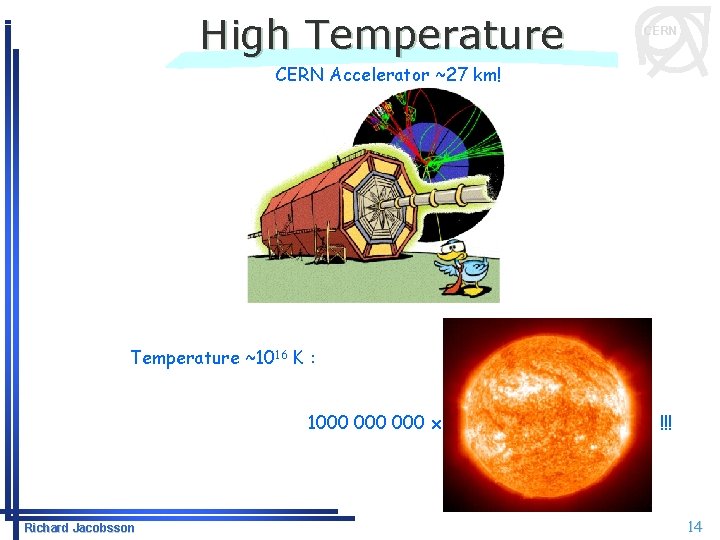
High Temperature CERN Accelerator ~27 km! Temperature ~1016 K : 1000 000 x Richard Jacobsson !!! 14
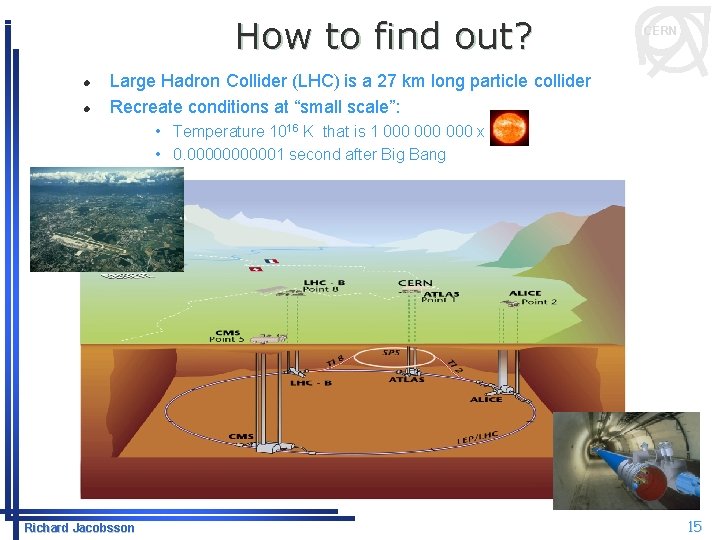
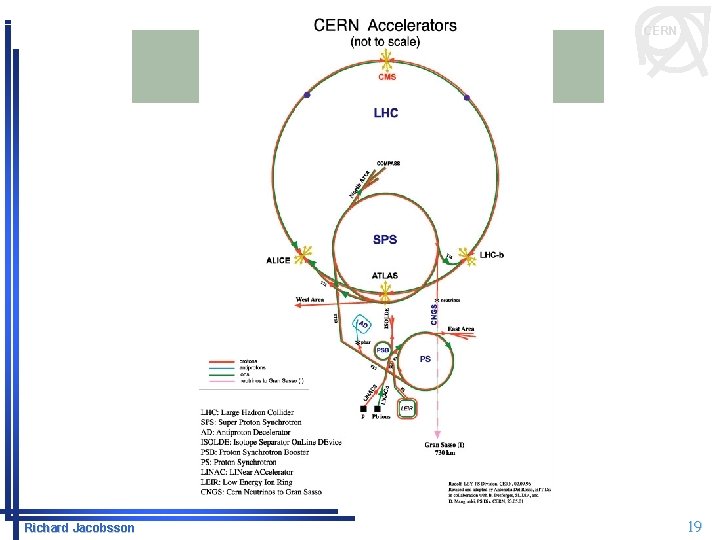
How to find out? l l CERN Large Hadron Collider (LHC) is a 27 km long particle collider Recreate conditions at “small scale”: • Temperature 1016 K that is 1 000 000 x • 0. 000001 second after Big Bang Richard Jacobsson 15
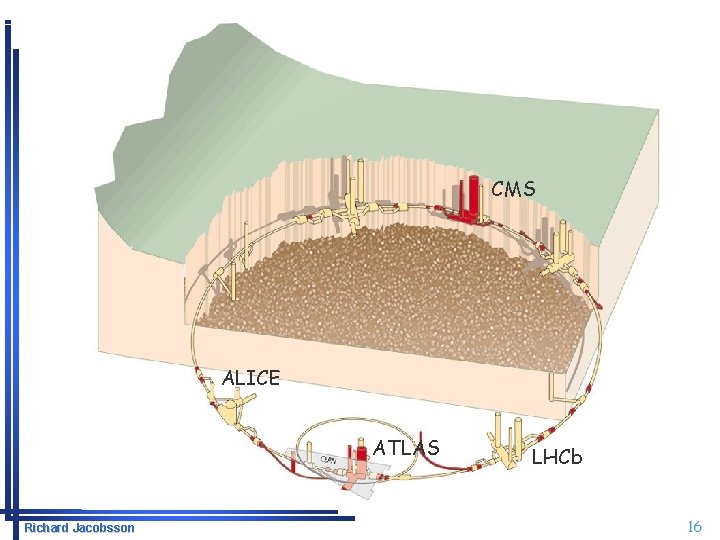
CERN CMS ALICE ATLAS Richard Jacobsson LHCb 16
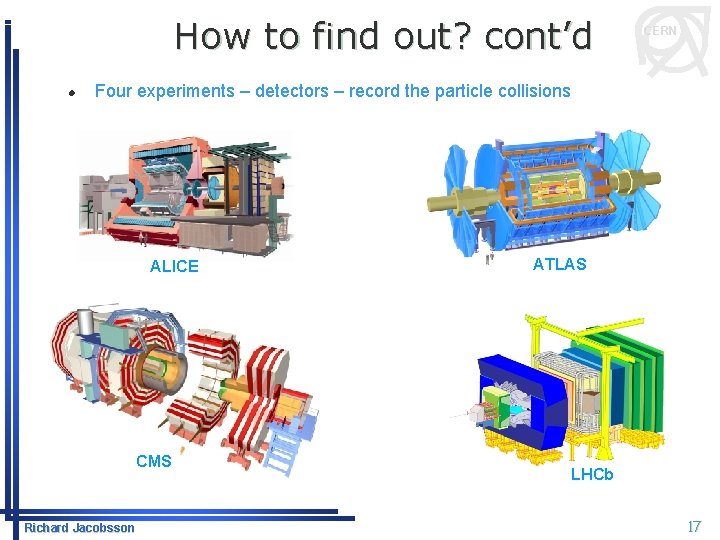
How to find out? cont’d l CERN Four experiments – detectors – record the particle collisions ALICE CMS Richard Jacobsson ATLAS LHCb 17
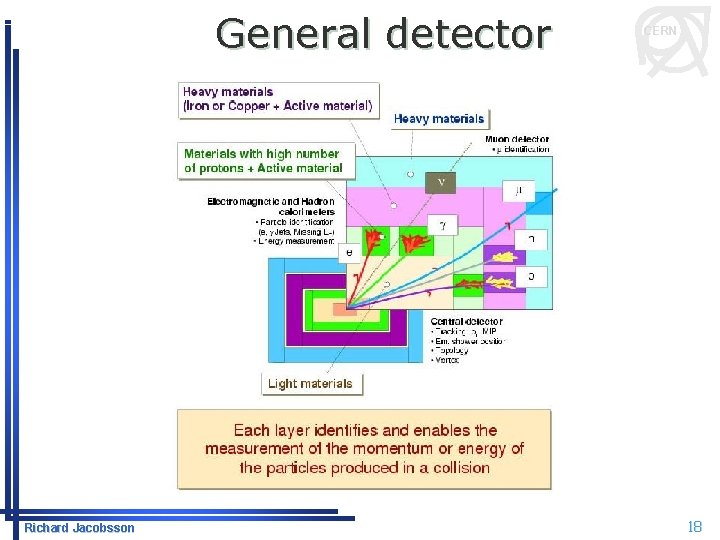
General detector Richard Jacobsson CERN 18
CERN Richard Jacobsson 19
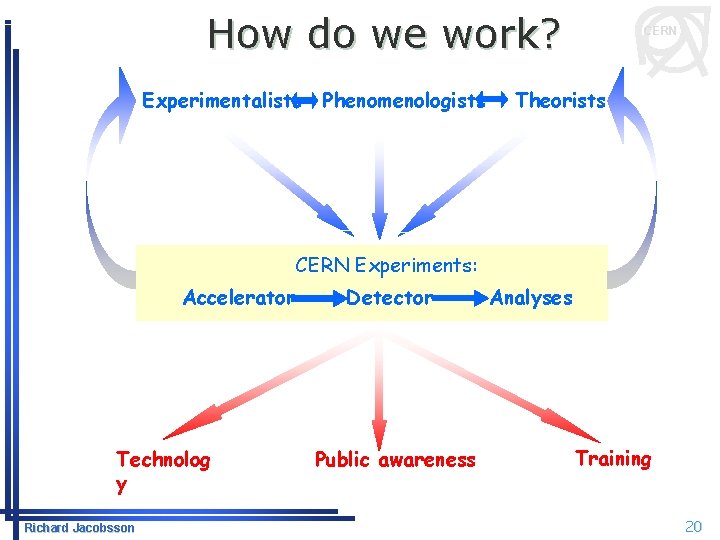
How do we work? Experimentalists Phenomenologists CERN Theorists CERN Experiments: Accelerator Technolog y Richard Jacobsson Detector Public awareness Analyses Training 20
- Slides: 20