
CERN MARP History Status A Apollonio On behalf
CERN MARP History & Status A. Apollonio On behalf of: MARP: A. Apollonio, O. Bruning, L. Serio, R. Steerenberg, B. Todd, J. Uythoven. Availability Working Group & Accelerator Fault Tracker v 1
CERN History Availability Working Group & Accelerator Fault Tracker v 1
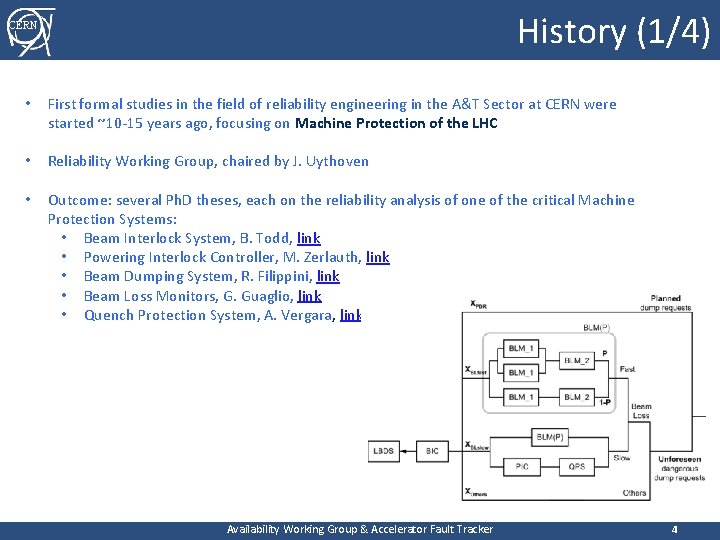
History (1/4) CERN • • • First formal studies • in the Quench field Protection of reliability. System engineering in the A&T Sector at CERN were started ~10 -15 years ago, • focusing Almoston invisible Machine to OP Protection (except ramp of the&LHC pre-cycle) • Radiation Effects to Electronics Reliability Working Group, • chaired Significantly by J. Uythoven fewer events than predicted • Cryogenic System Outcome: several Ph. D theses, • Feed each forward on theprocess reliability improved analysisinjection of one of the critical Machine Protection Systems: • Beam Interlock System, B. Todd, link • Powering Interlock M. Zerlauth, link • Two. Controller, Major categories • Beam Dumping System, R. Filippini, link (being addressed EYETS) • Mains Disturbances • Beam Loss Monitors, Guaglio, link • G. Unidentified Falling Objects (manageable) • Quench Protection System, A. Vergara, link Availability Working Group & Accelerator Fault Tracker 4
History (2/4) CERN • • • In 2012 (end of LHC 1), it. Protection became clear that going forward with LHC operations (and • Run Quench System especially towards HL-LHC lumiinvisible levelling), main way to increase the integrated • Almost to the OP (except ramp & pre-cycle) luminosity production was going to beto increasing availability • Radiation Effects Electronics • Significantly fewer events than predicted LHC Availability Working Group. System (AWG) was launched to systematically analyze LHC • Cryogenic availability • Feed forward process improved injection • Chairmen: B. Todd (TE-EPC), Laurette Ponce (BE-OP), Scientific Secretary: A. Apollonio (TE-MPE) • Two Major categories AWG recommends developing tool for fault(being tracking in the LHC (to overcome limitations • Mainsa. Disturbances addressed EYETS) with poor fault data quality) Accelerator Tracking project launched in 2014, led by C. • Unidentified Falling. Fault Objects (manageable) Roderick (BE-CO) • Since 2015 Accelerator Fault Tracker (AFT) becomes a widely accepted tool at CERN, AWG starts producing several reports per year analyzing LHC availability • Following recommendations from CERN Machine Advisory Committee, AFT extended to entire CERN injector complex in 2017 Availability Working Group & Accelerator Fault Tracker 5
History (3/4) CERN • • • In parallel to activities of AWG, several projects • Quench Protection System (LIU, HL-LHC) and studies for future machines (FCC, CLIC) require reliability andtoavailability topre-cycle) be performed • Almost invisible OP (exceptstudies ramp & • Radiation Effects to Electronics 1 Ph. D on FCC availability, Ph. D on CLICfewer availability soon) • 1 Significantly events(finishing than predicted Several studies by • technical/Ph. D students/fellows in A&T Sector for machine protection and Cryogenic System availability critical systems (BLMs, FGClite, CLIQ, …) • Feed forward process improved injection Development of tools and methods for Reliability and Availability modelling (Isograph, Avail. Sim, ELMAS, RIRE, …) • Two Major categories Since 2017, Reliability • and. Mains Availability Studies(being Working Group EYETS) (RASWG), chaired by J. Disturbances addressed Uythoven • Unidentified Falling Objects (manageable) • Provides a forum to share experience on tools and methods in the CERN community In 2017, Machine Availability and Reliability Panel (MARP) formed to have a strategic body coordinating activities and exploring synergies across departments (workshops, documentation, training, projects, …), based on the input received by other working groups • Members today: A. Apollonio (chairman), O. Bruning, L. Serio, R. Steerenberg, B. Todd, J. Uythoven. Availability Working Group & Accelerator Fault Tracker 6
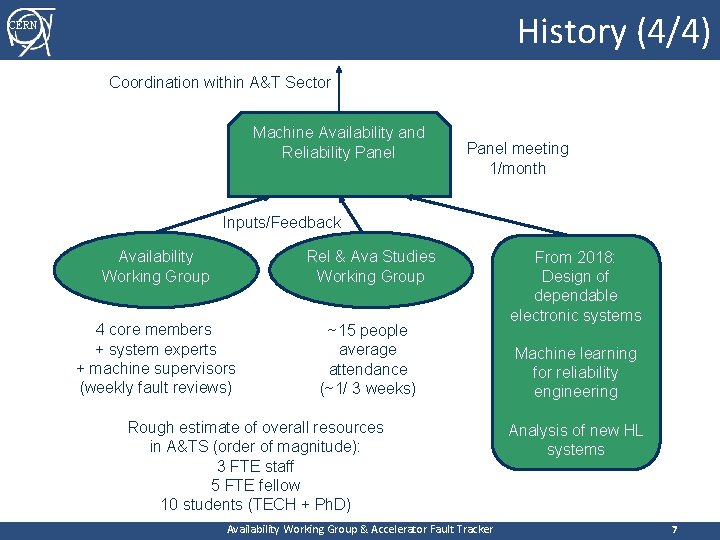
History (4/4) CERN Coordination within A&T Sector Machine Availability and Reliability Panel meeting 1/month Inputs/Feedback • Two Major categories • Mains Disturbances addressed EYETS) Availability Rel &(being Ava Studies • Unidentified Falling Objects. Group (manageable) Working Group Working 4 core members + system experts + machine supervisors (weekly fault reviews) ~15 people average attendance (~1/ 3 weeks) Rough estimate of overall resources in A&TS (order of magnitude): 3 FTE staff 5 FTE fellow 10 students (TECH + Ph. D) Availability Working Group & Accelerator Fault Tracker From 2018: Design of dependable electronic systems Machine learning for reliability engineering Analysis of new HL systems 7
Strategy CERN • • Quench The Machine Availability and. Protection Reliability. System Panel (MARP) was set-up to develop a strategic view • address Almost system invisiblereliability to OP (except ramp & pre-cycle) on how to systematically and availability, across departments in the • Radiation Effects to Electronics A&T Sector • Significantly fewer events than predicted Current status: • Cryogenic System forward process improved injection • Data and statistics • in. Feed the AFT are widely accepted at CERN, as a result of a common effort between AWG members, machine supervisors and system experts established standardized reporting on system performance • Developments on methods and tools for risk analysis and R&A analysis are actively • Two Major categories discussed in the • Reliability and Availability Studies WG (RASWG) Mains Disturbances (being addressed EYETS) • Reliability training twice. Falling per year (next(manageable) 21 -23 May, free for CERN employees • sessions Unidentified Objects and students) The mid/long term vision: • Consolidation should be (amongst others) also driven by system impact on availability • At the moment quantifying return of investment is the missing part of the analysis Availability Working Group & Accelerator Fault Tracker 8
Conclusions v 1
- Slides: 9