
CERN campus mapping of the building versus energy
CERN campus: mapping of the building versus energy consumption and an example of design and construction of a green building. Luigi Scibile CERN, General Services and Infrastructure Department Head of the Site Engineering Group Main contributors: F. Audinet, H. Burckhart, M-L. Gabassi, M. Gansser, F. Magnin, C. Martel, M. Poehler 2 nd Energy for Sustainable Science at Research Infrastructures, CERN Oct 2013 Luigi SCIBILE CERN/GS-SE group 1
2 nd Energy for Sustainable Science at Research Infrastructures, CERN Oct 2013 Luigi SCIBILE CERN/GS-SE group 2

Content • The CERN campus: situation and outlook • Mapping heating space energy consumption • Models, simulations and estimates • Example of application of energy concepts 2 nd Energy for Sustainable Science at Research Infrastructures, CERN Oct 2013 Luigi SCIBILE CERN/GS-SE group 3
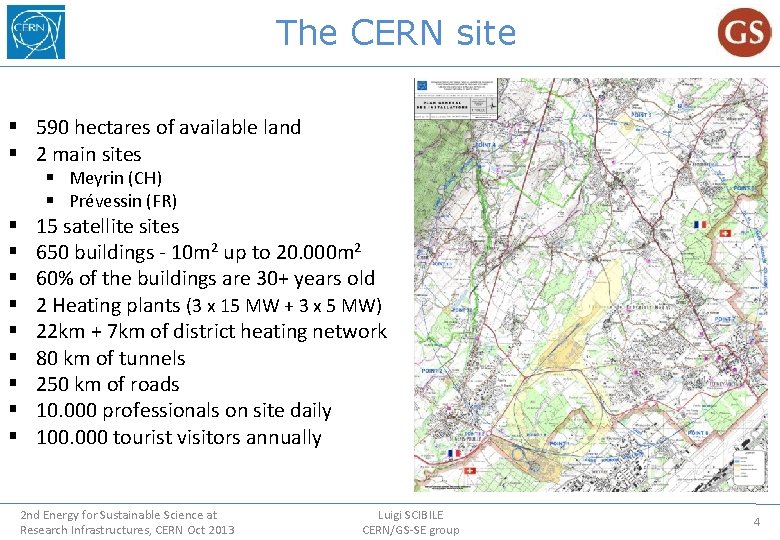
The CERN site § 590 hectares of available land § 2 main sites § Meyrin (CH) § Prévessin (FR) § § § § § 15 satellite sites 650 buildings - 10 m 2 up to 20. 000 m 2 60% of the buildings are 30+ years old 2 Heating plants (3 x 15 MW + 3 x 5 MW) 22 km + 7 km of district heating network 80 km of tunnels 250 km of roads 10. 000 professionals on site daily 100. 000 tourist visitors annually 2 nd Energy for Sustainable Science at Research Infrastructures, CERN Oct 2013 Luigi SCIBILE CERN/GS-SE group 4
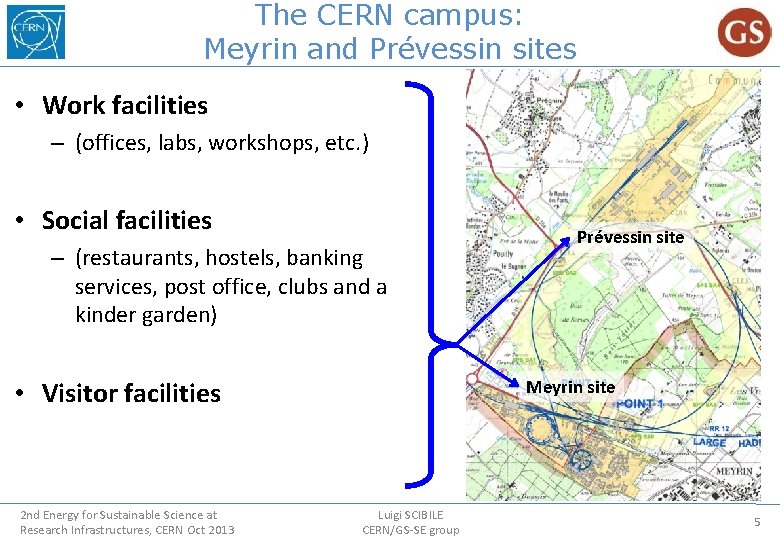
The CERN campus: Meyrin and Prévessin sites • Work facilities – (offices, labs, workshops, etc. ) • Social facilities – (restaurants, hostels, banking services, post office, clubs and a kinder garden) Meyrin site • Visitor facilities 2 nd Energy for Sustainable Science at Research Infrastructures, CERN Oct 2013 Prévessin site Luigi SCIBILE CERN/GS-SE group 5

Two sites with a history MEYRIN 1950 -60 1975 -85 1960 -75 1985 -10 PREVESSIN 1970 -80 2 nd Energy for Sustainable Science at Research Infrastructures, CERN Oct 2013 1980 -10 Luigi SCIBILE CERN/GS-SE group 6
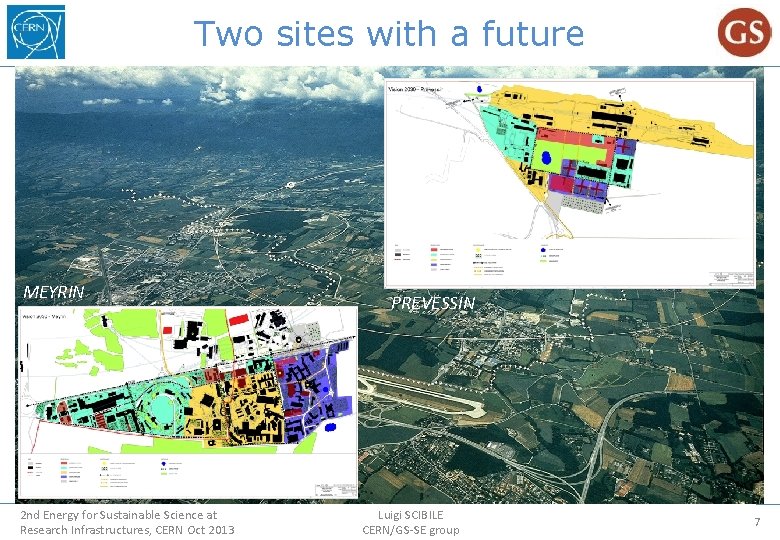
Two sites with a future MEYRIN 2 nd Energy for Sustainable Science at Research Infrastructures, CERN Oct 2013 PREVESSIN Luigi SCIBILE CERN/GS-SE group 7

The CERN campus: situation and outlook • Buildings: – Renovation of building envelop, lighting systems, HVAC systems (safety and energy efficiency). – New buildings energy concept (RT 2012, SIA 380). • Energy efficiency: – Renovation of the heating process regulation at all levels (district heating plants and local control, -gas -NOx). – Implementation of local energy measurements (today only available at high aggregation level). 2 nd Energy for Sustainable Science at Research Infrastructures, CERN Oct 2013 Luigi SCIBILE CERN/GS-SE group 8
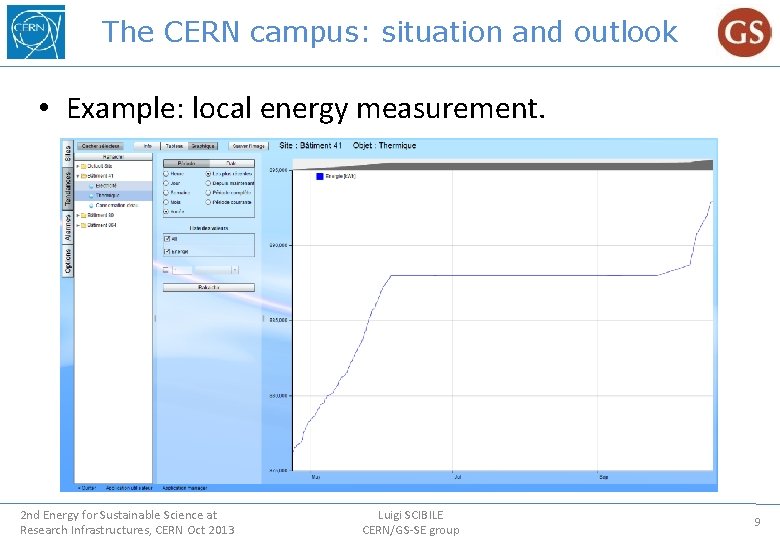
The CERN campus: situation and outlook • Example: local energy measurement. 2 nd Energy for Sustainable Science at Research Infrastructures, CERN Oct 2013 Luigi SCIBILE CERN/GS-SE group 9
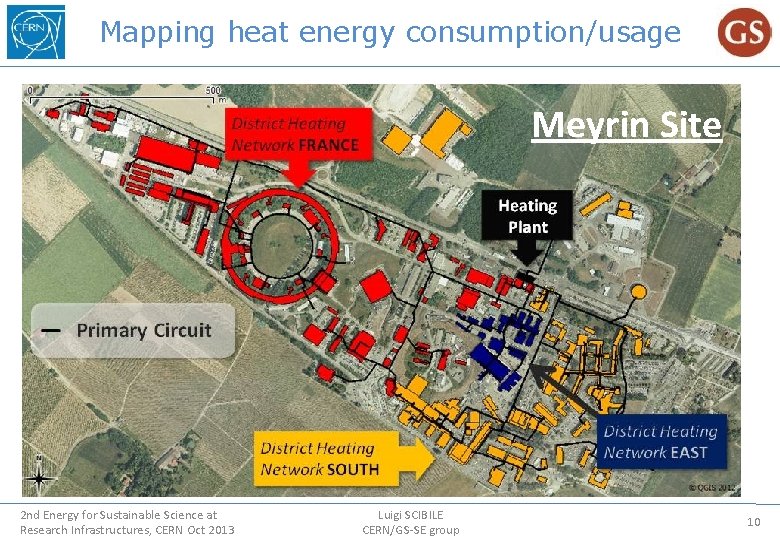
Mapping heat energy consumption/usage • Given the limitation of the energy measurements Meyrin Site 2 nd Energy for Sustainable Science at Research Infrastructures, CERN Oct 2013 Luigi SCIBILE CERN/GS-SE group 10
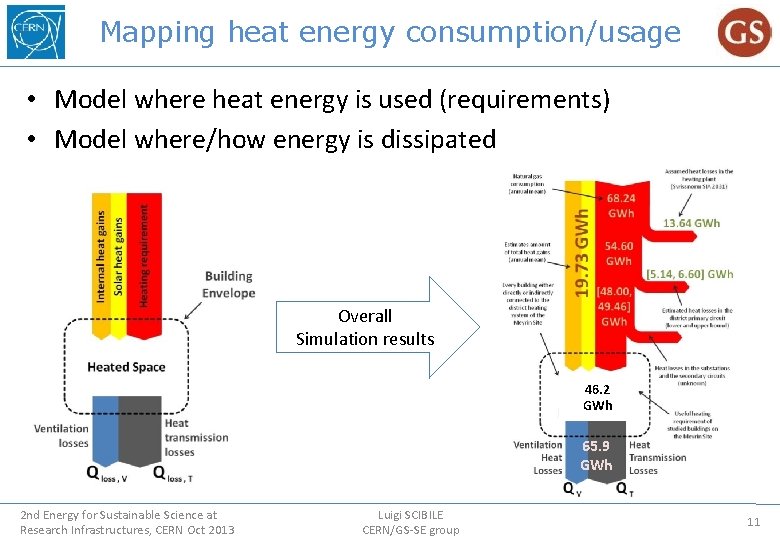
Mapping heat energy consumption/usage • Model where heat energy is used (requirements) • Model where/how energy is dissipated Overall Simulation results 46. 2 GWh 65. 9 GWh 2 nd Energy for Sustainable Science at Research Infrastructures, CERN Oct 2013 Luigi SCIBILE CERN/GS-SE group 11
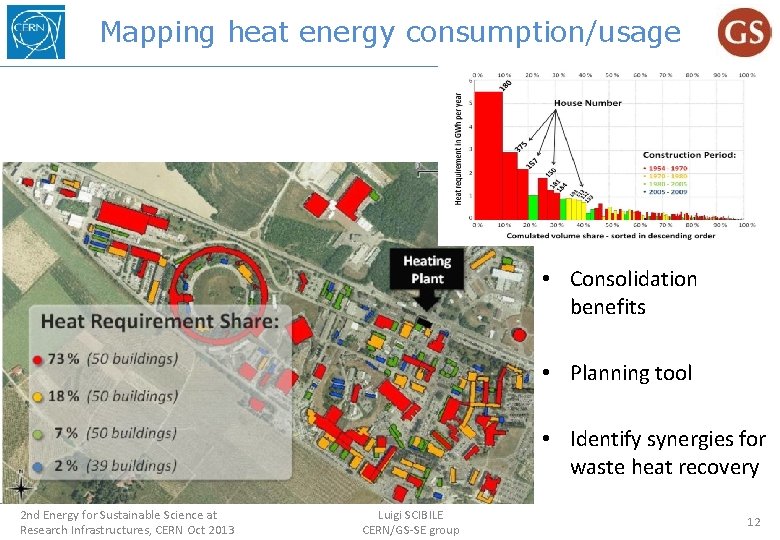
Mapping heat energy consumption/usage • Consolidation benefits • Planning tool • Identify synergies for waste heat recovery 2 nd Energy for Sustainable Science at Research Infrastructures, CERN Oct 2013 Luigi SCIBILE CERN/GS-SE group 12
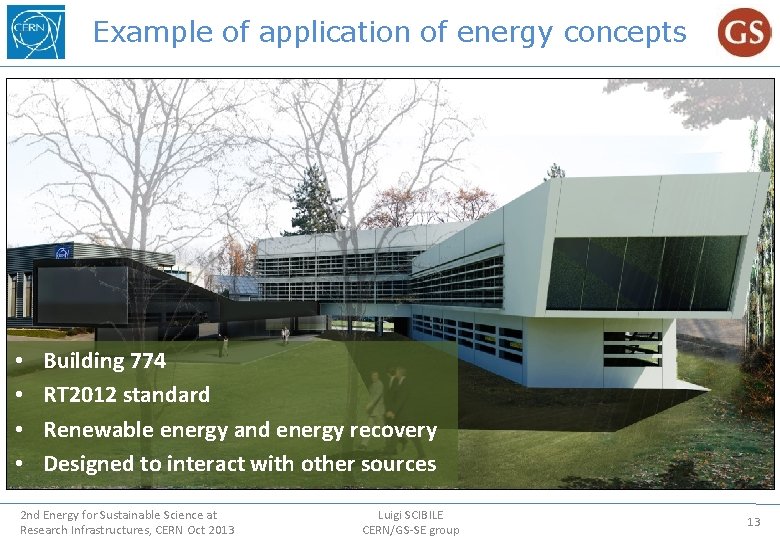
Example of application of energy concepts • • Building 774 RT 2012 standard Renewable energy and energy recovery Designed to interact with other sources 2 nd Energy for Sustainable Science at Research Infrastructures, CERN Oct 2013 Luigi SCIBILE CERN/GS-SE group 13
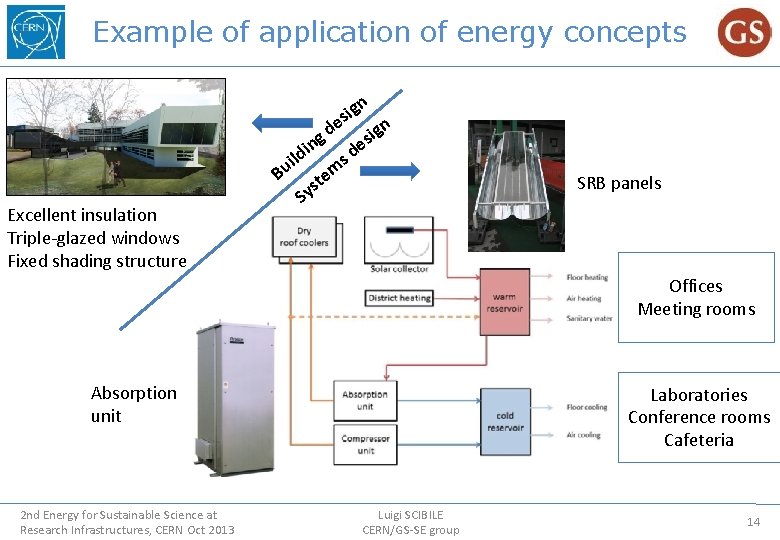
Example of application of energy concepts Excellent insulation Triple-glazed windows Fixed shading structure ign s e n d g i ng des i ild ms u B te s Sy SRB panels Offices Meeting rooms Absorption unit 2 nd Energy for Sustainable Science at Research Infrastructures, CERN Oct 2013 Laboratories Conference rooms Cafeteria Luigi SCIBILE CERN/GS-SE group 14
Conclusions and outlook • Energy is a key aspect in the renovation of old infrastructures and in new building designs. • The model of the heat consumption/usage of the sites provides us an invaluable tool to target interventions and plan for future developments and synergies (energy recuperation). • New infrastructures are designed with built-in capability to have synergies with eventual energy recuperation. 2 nd Energy for Sustainable Science at Research Infrastructures, CERN Oct 2013 Luigi SCIBILE CERN/GS-SE group 15
Questions and answers Thank you for your attention QUESTIONS? For additional material and contacts: • http: //gs-dep. web. cern. ch/en/content/gs-se 2 nd Energy for Sustainable Science at Research Infrastructures, CERN Oct 2013 Luigi SCIBILE CERN/GS-SE group 16
- Slides: 16