
Cerebrovascular Surgery Specialization certification and training Warren Selman
Cerebrovascular Surgery Specialization, certification and training Warren Selman Daniel Barrow
Subspecialization in Neurological Surgery What has been will be again, what has been done will be done again; there is nothing new under the sun.
Subspecialization in Neurological Surgery Subspecialization within neurosurgery is nothing new. It is about time we recognized these doctors for their additional training. Subspecialization is a simple way to provide neurosurgeons with the appropriate recognition for their current and focused expertise, support continuing medical education and provide the quality of care our patients deserve and demand. Marion Walker, AANS Bulletin 1999
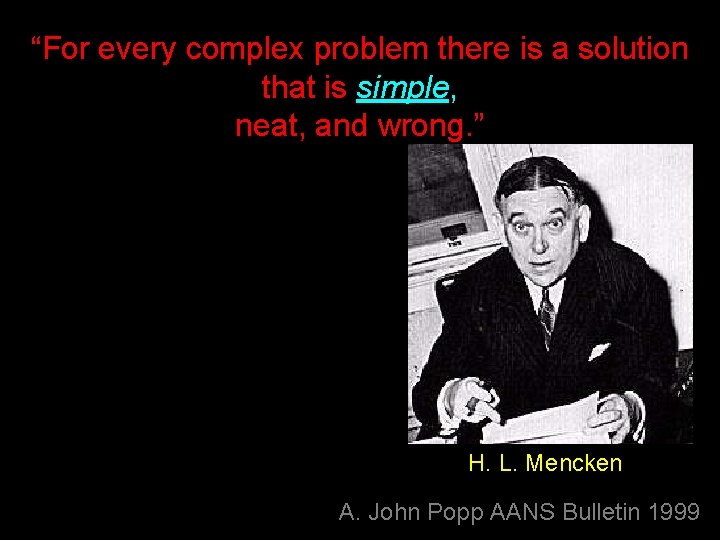
“For every complex problem there is a solution that is simple, neat, and wrong. ” H. L. Mencken A. John Popp AANS Bulletin 1999

Subspecialization in Neurological Surgery From a historical perspective it would appear that subspecialization makes sense – The specialty of neurosurgery was born out of an evolution driven by a realization that research and patient care for problems of the nervous system were quite different from other areas of surgery. When one moves to a theoretical plane, the argument becomes even more persuasive – Improved Patient Care – Advancement of the field A. John Popp AANS Bulletin 1999
Subspecialization At What Cost? The prime disadvantage is the threat of fragmentation within our specialty – Loss of a united voice – Loss of perspective or ability of individuals to contribute to organized neurosurgery as as whole An intellectual disadvantage our small specialty cannot afford Loss of versatility and inability to function as part of a group, e. g. emergency call ER Laws Jr. AANS Bulletin
Subspecialization Is there a need for subspecialization? – First Principles – Natural Evolution If there is a need for subspecialization, how is it best achieved? If there is a need and it is fullfilled, how and when should it be recognized?

“ Get your principles straight; the rest is a matter of detail” Napoleon Bonaparte
First Principles Best Interests
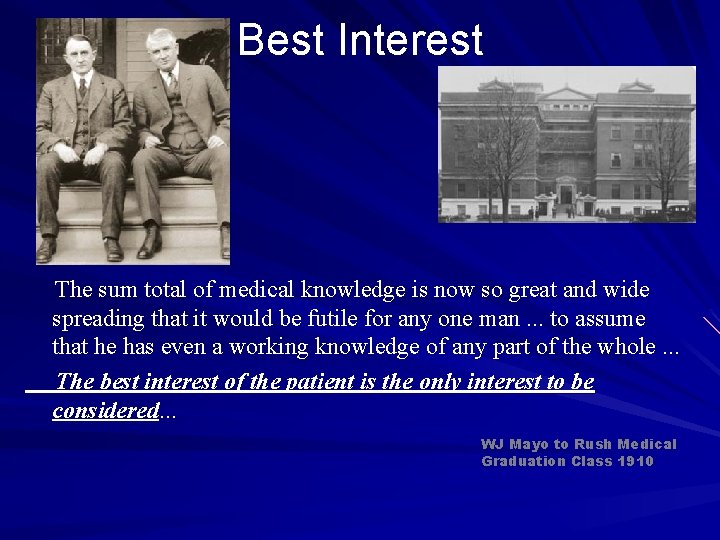
Best Interest The sum total of medical knowledge is now so great and wide spreading that it would be futile for any one man. . . to assume that he has even a working knowledge of any part of the whole. . . The best interest of the patient is the only interest to be considered. . . WJ Mayo to Rush Medical Graduation Class 1910

Second Principle Our Nature
Neurosurgery The Very Essence of Specialists It is our nature to form specialty societies as we evolved from general surgery – Society of Neurological Surgeons – Harvey Cushing Society – Neurosurgical Society of America – Academy of Neurological Surgeons – Congress of Neurological Surgeons – Joint Sections – SENS
Evolution of Organized Neurosurgery October 1919 American College of Surgeons Meeting was the formal genesis of the specialty of Neurosurgery in the United States – Group of surgeons decided that formal meetings for the exchange of pertinent information should be arranged March 19, 1920 – 11 interested surgeons met at Peter Bent Brigham Hospital and formed the Society of Neurological Surgeons
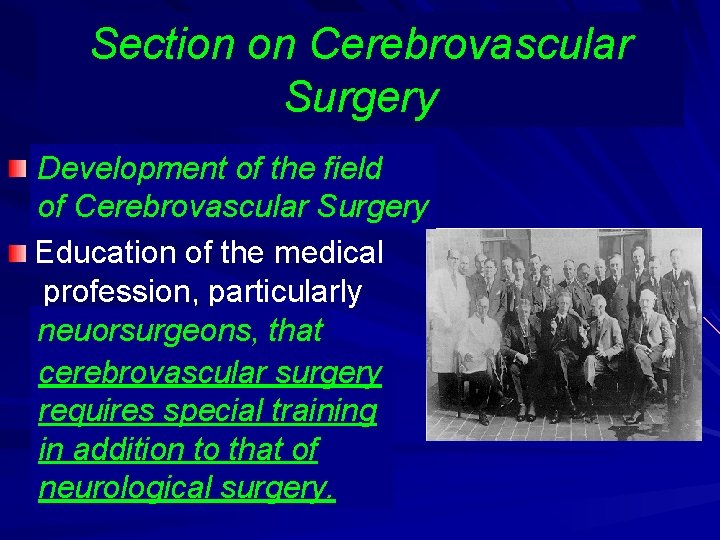
Section onof. Cerebrovascular Society Neurological Surgeons Surgery Development of the field of neurosurgery Cerebrovascular Surgery Education of the medical profession, particularly surgeons, that neuorsurgeons, neurological surgery cerebrovascular surgery requires special training in in addition to to that of of general surgery. neurological surgery.
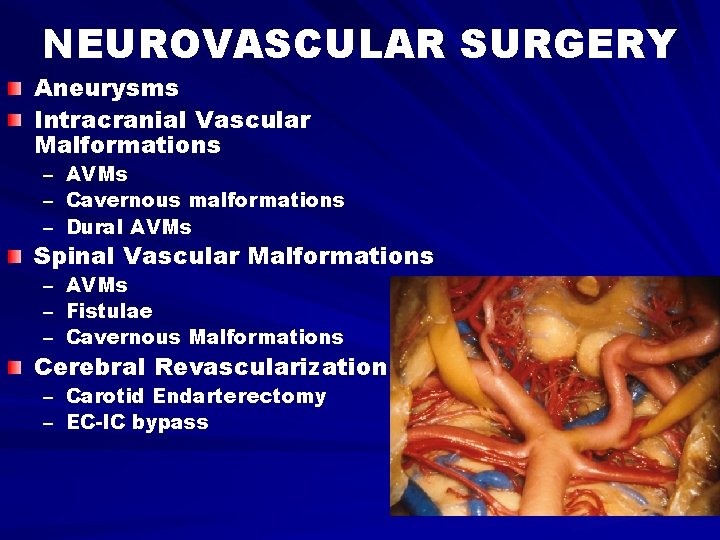
NEUROVASCULAR SURGERY Aneurysms Intracranial Vascular Malformations – – – AVMs Cavernous malformations Dural AVMs – – – AVMs Fistulae Cavernous Malformations Spinal Vascular Malformations Cerebral Revascularization – Carotid Endarterectomy – EC-IC bypass
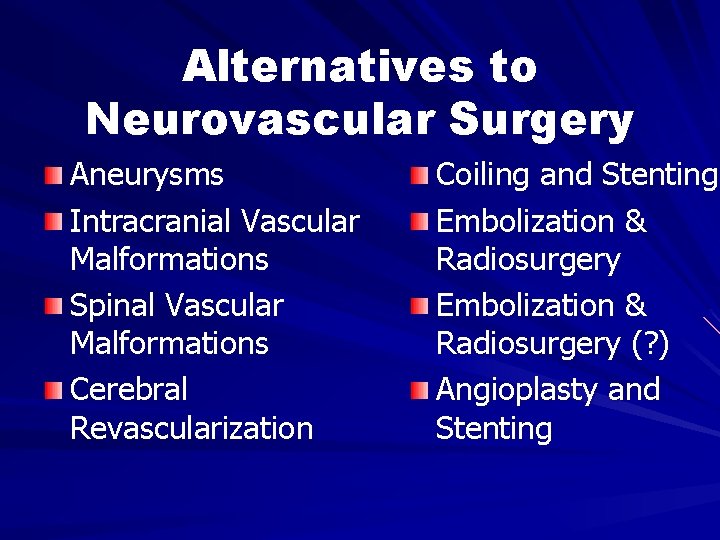
Alternatives to Neurovascular Surgery Aneurysms Intracranial Vascular Malformations Spinal Vascular Malformations Cerebral Revascularization Coiling and Stenting Embolization & Radiosurgery (? ) Angioplasty and Stenting
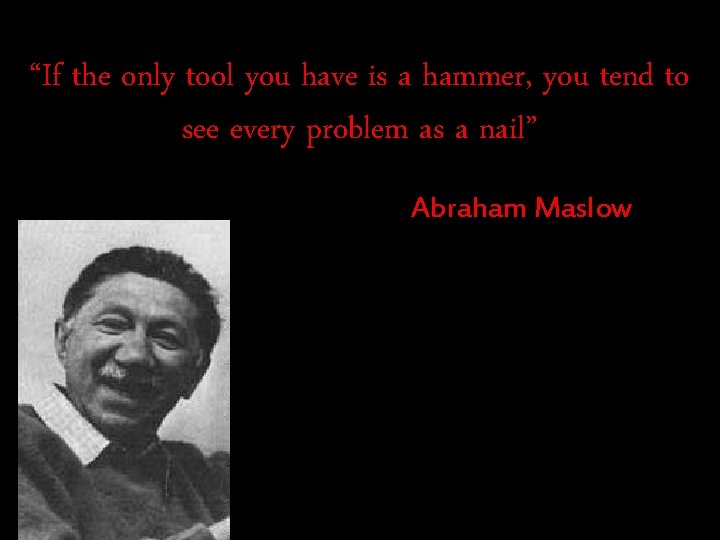
“If the only tool you have is a hammer, you tend to see every problem as a nail” Abraham Maslow

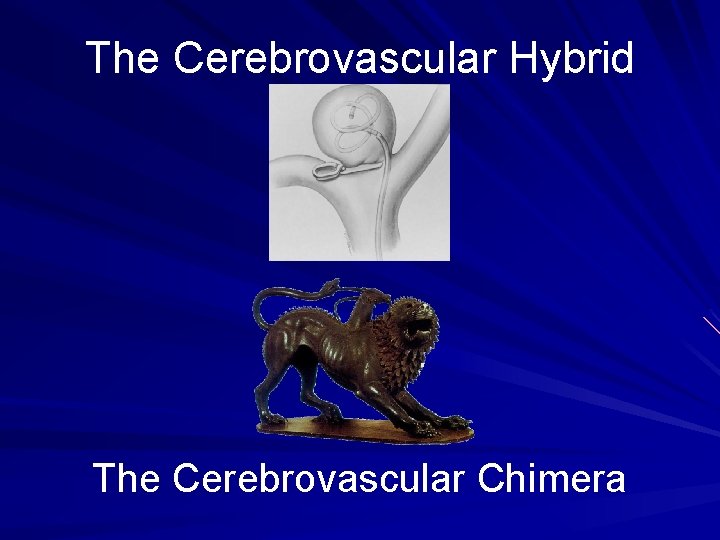
The Cerebrovascular Hybrid The Cerebrovascular Chimera
Subspecialization Is there a need for subspecialization? – First Principles – Natural Evolution If there is a need for subspecialization, how is it best achieved? If there is a need and it is fullfilled, how and when should it be recognized?
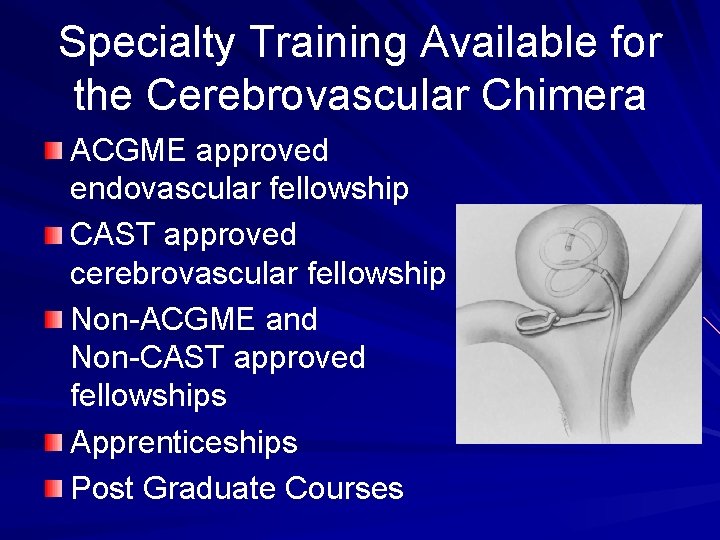
Specialty Training Available for the Cerebrovascular Chimera ACGME approved endovascular fellowship CAST approved cerebrovascular fellowship Non-ACGME and Non-CAST approved fellowships Apprenticeships Post Graduate Courses
CNS Task Force: Neuroendovascular Workforce Recommendations 1. ABNS should recognize endovascular therapy as a neurosurgical specialty and require 3 -6 months of angiography within residency (requisite >100 angios), thus credentialing ANY NS grad to perform diagnostic angiography 2. Discuss modification of INR fellowship to comprise 1 year after residency Levy EI and Cawley CM
Residency Training Exposure to endovascular techniques as part of all neurosurgical resident training programs and recognize some programs as supplying adequate training in the use of endovascular techniques. Competence to perform neuroendovascular procedures would be determined by performance criteria determined by the ABNS and Residency Review Committee for Neurosurgery Certificate of added qualification in endovascular techniques awarded at the completion of resident training for those residents who meet the criteria. Harbaugh RE and Agarwal A: Training Residents in Endovascular Neurosurgery 59: S 3 -277 -281, 2006
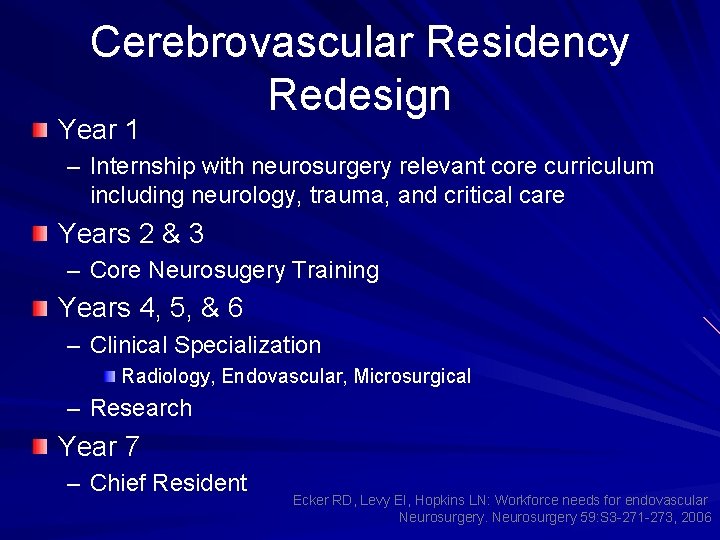
Cerebrovascular Residency Redesign Year 1 – Internship with neurosurgery relevant core curriculum including neurology, trauma, and critical care Years 2 & 3 – Core Neurosugery Training Years 4, 5, & 6 – Clinical Specialization Radiology, Endovascular, Microsurgical – Research Year 7 – Chief Resident Ecker RD, Levy EI, Hopkins LN: Workforce needs for endovascular Neurosurgery 59: S 3 -271 -273, 2006
Subspecialization Is there a need for subspecialization? – First Principles – Natural Evolution If there is a need for subspecialization, how is it best achieved? If there is a need and it is fullfilled, how and when should it be recognized?
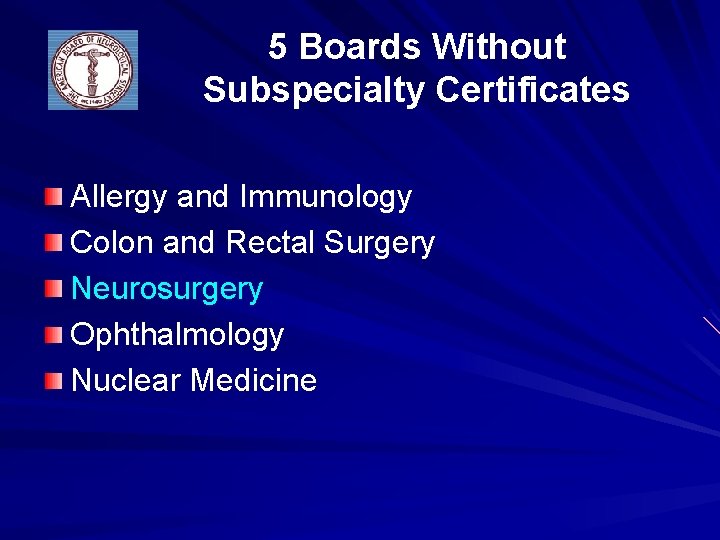
5 Boards Without Subspecialty Certificates Allergy and Immunology Colon and Rectal Surgery Neurosurgery Ophthalmology Nuclear Medicine
ABNS Certification Critical to maintain importance and integrity of certification – The right to perform a neurosurgical specialty procedure must not be reserved completely for those who acquire additional certification Access and Coverage Issues – The training of a specialist must cover the breadth of neurosurgery so that unrestricted practice is permitted through board certification
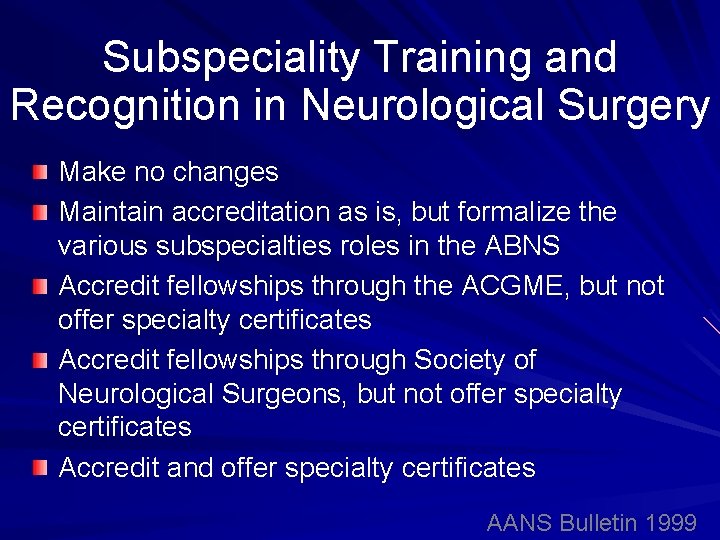
Subspeciality Training and Recognition in Neurological Surgery Make no changes Maintain accreditation as is, but formalize the various subspecialties roles in the ABNS Accredit fellowships through the ACGME, but not offer specialty certificates Accredit fellowships through Society of Neurological Surgeons, but not offer specialty certificates Accredit and offer specialty certificates AANS Bulletin 1999
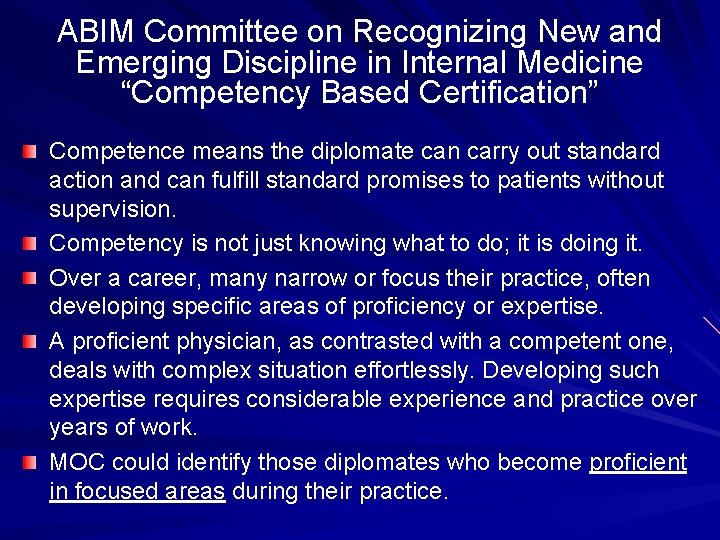
ABIM Committee on Recognizing New and Emerging Discipline in Internal Medicine “Competency Based Certification” Competence means the diplomate can carry out standard action and can fulfill standard promises to patients without supervision. Competency is not just knowing what to do; it is doing it. Over a career, many narrow or focus their practice, often developing specific areas of proficiency or expertise. A proficient physician, as contrasted with a competent one, deals with complex situation effortlessly. Developing such expertise requires considerable experience and practice over years of work. MOC could identify those diplomates who become proficient in focused areas during their practice.
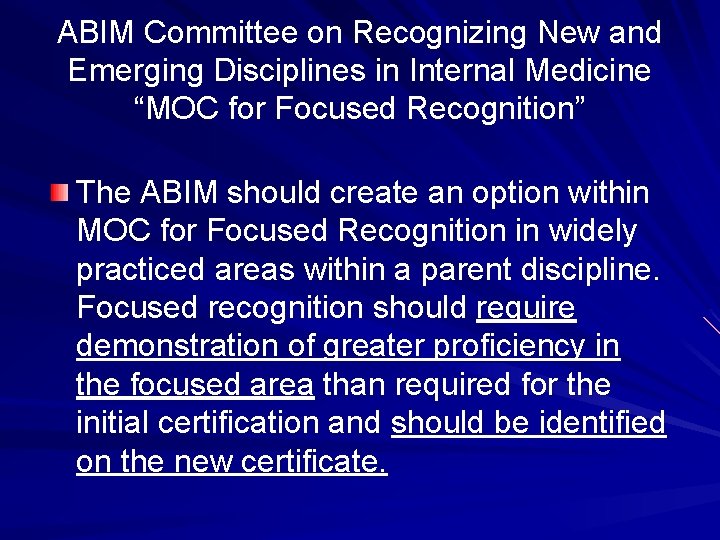
ABIM Committee on Recognizing New and Emerging Disciplines in Internal Medicine “MOC for Focused Recognition” The ABIM should create an option within MOC for Focused Recognition in widely practiced areas within a parent discipline. Focused recognition should require demonstration of greater proficiency in the focused area than required for the initial certification and should be identified on the new certificate.
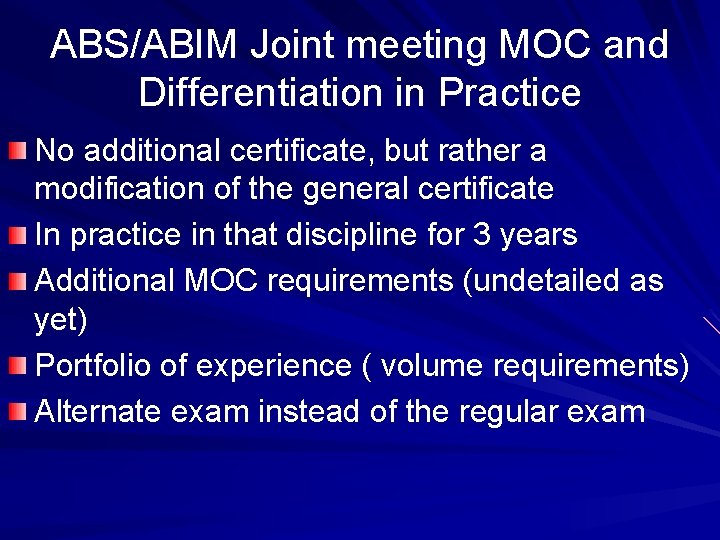
ABS/ABIM Joint meeting MOC and Differentiation in Practice No additional certificate, but rather a modification of the general certificate In practice in that discipline for 3 years Additional MOC requirements (undetailed as yet) Portfolio of experience ( volume requirements) Alternate exam instead of the regular exam
ABNS Subspecialty Recognition Specialty training will be achieved through fellowships with accreditation by the Society of Neurological Surgeons The ABNS will not pursue subspecialty certification through the ABMS, but will acknowledge the importance of subspecialization through the ABNS Maintenance of Certification process
Subspecialty Certification The old order changeth, yielding place to new… Tennyson Morte d’Arthur I. I 407
The Specialty of Neurosurgery In the 20 th century, neurosurgery was developed by the American surgeons operating on the nervous system, sparked by the meticulous operative procedures of Harvey Cushing and the technical genius of Walter Dandy. No longer a stepchild of general surgery or neurology, the neurosurgeon has forged a field for himself. A Earl Walker MD Preface to A History of Neurosurgery Greenblatt SH, Dagi TF, and Epstein MH
Specialization To Be or Not To Be

“ I don’t like to make predictions, especially about the future” Yogi Berra
Predictions The trend towards subspecialization will continue Regionalization of neurosurgical care will continue An increasing number of future neurovascular surgeons will be “hybrids” Fewer radiologists will enter the field of endovascular therapy and neurosurgeons will dominate the current market
Purpose of Certification defined by ABMS The intent of the certification process is to provide assurance to the public that a certified medical specialist has successfully completed an approved educational program, And an evaluation, including an examination process designed to assess the knowledge, experience and skills requisite to the provision of high quality patient care in that specialty.
- Slides: 39