
Cerebrovascular function with aging and in Alzheimers disease
Cerebrovascular function with aging and in Alzheimer’s disease • Alzheimer’s disease, Aβ and vascular hypotheses. • Assessment of cerebral autoregulation and brain oxygen extraction reserve. • Pilot study of cerebrovascular function with aging and in patients with early Alzheimer’s disease.
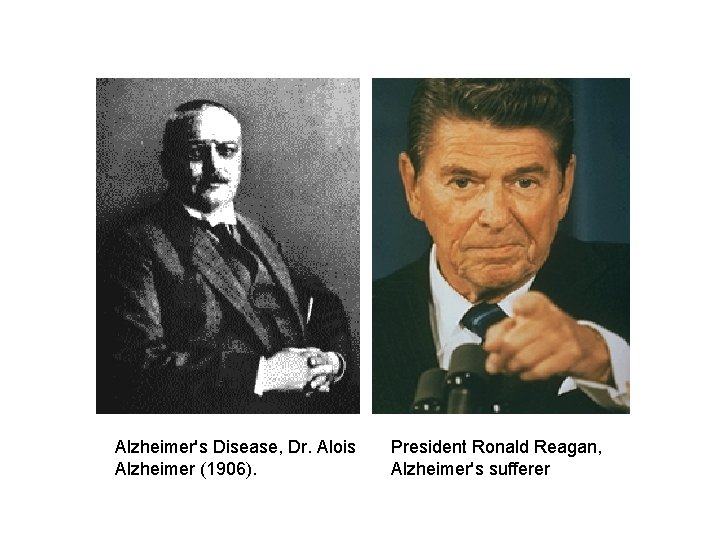
Alzheimer's Disease, Dr. Alois Alzheimer (1906). President Ronald Reagan, Alzheimer's sufferer
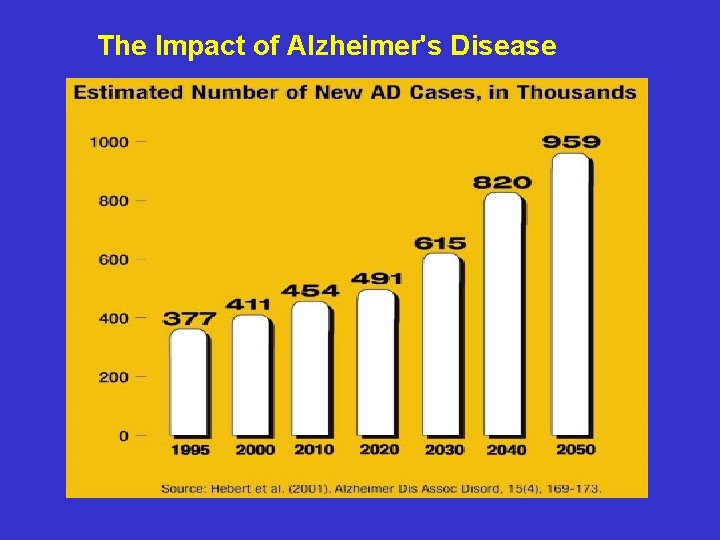
The Impact of Alzheimer's Disease
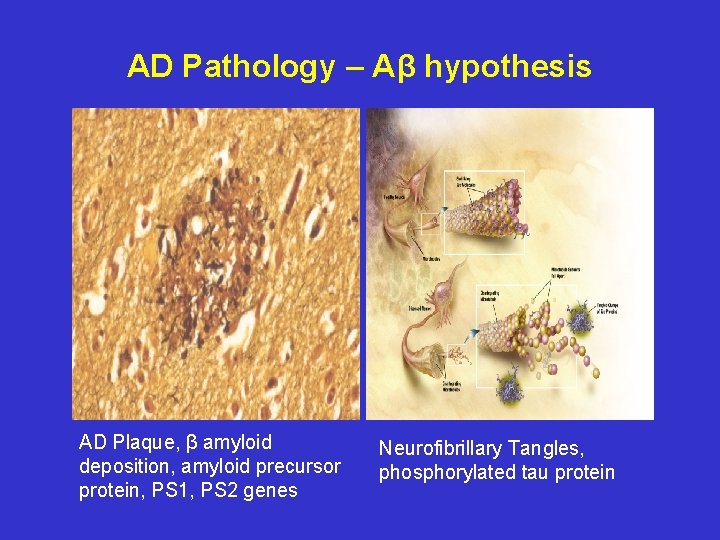
AD Pathology – Aβ hypothesis AD Plaque, β amyloid deposition, amyloid precursor protein, PS 1, PS 2 genes Neurofibrillary Tangles, phosphorylated tau protein
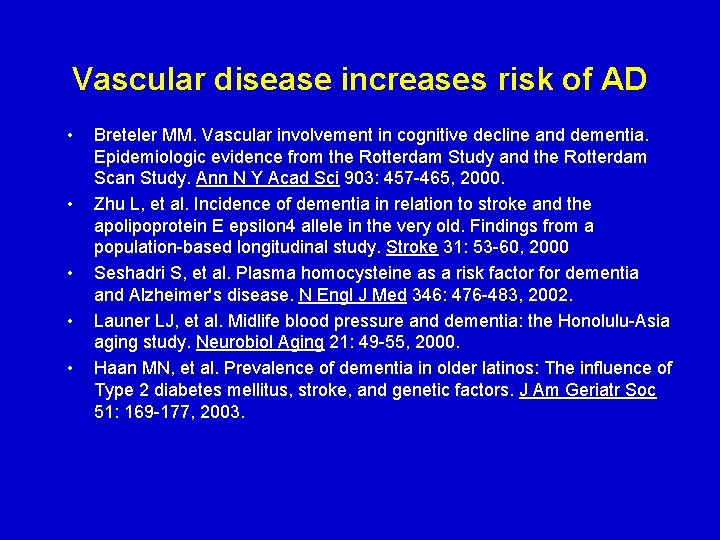
Vascular disease increases risk of AD • • • Breteler MM. Vascular involvement in cognitive decline and dementia. Epidemiologic evidence from the Rotterdam Study and the Rotterdam Scan Study. Ann N Y Acad Sci 903: 457 -465, 2000. Zhu L, et al. Incidence of dementia in relation to stroke and the apolipoprotein E epsilon 4 allele in the very old. Findings from a population-based longitudinal study. Stroke 31: 53 -60, 2000 Seshadri S, et al. Plasma homocysteine as a risk factor for dementia and Alzheimer's disease. N Engl J Med 346: 476 -483, 2002. Launer LJ, et al. Midlife blood pressure and dementia: the Honolulu-Asia aging study. Neurobiol Aging 21: 49 -55, 2000. Haan MN, et al. Prevalence of dementia in older latinos: The influence of Type 2 diabetes mellitus, stroke, and genetic factors. J Am Geriatr Soc 51: 169 -177, 2003.
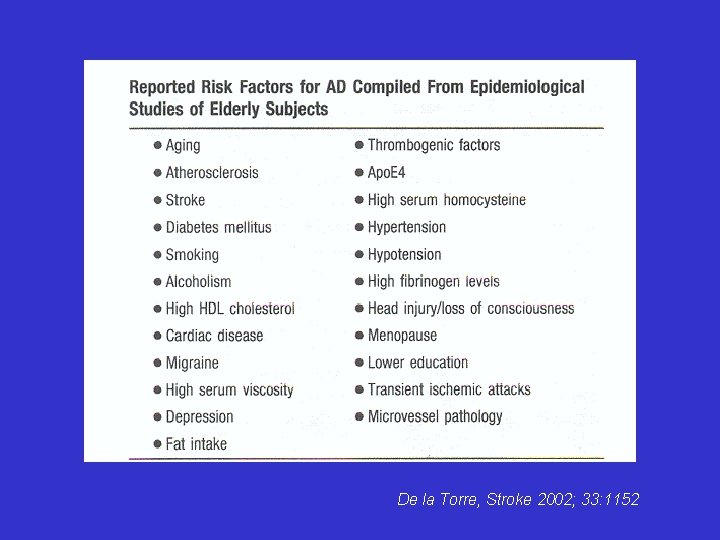
De la Torre, Stroke 2002; 33: 1152
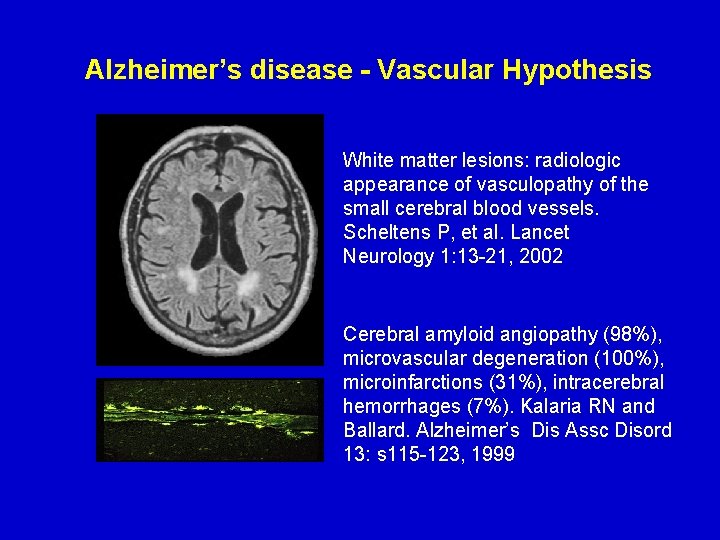
Alzheimer’s disease - Vascular Hypothesis White matter lesions: radiologic appearance of vasculopathy of the small cerebral blood vessels. Scheltens P, et al. Lancet Neurology 1: 13 -21, 2002 Cerebral amyloid angiopathy (98%), microvascular degeneration (100%), microinfarctions (31%), intracerebral hemorrhages (7%). Kalaria RN and Ballard. Alzheimer’s Dis Assc Disord 13: s 115 -123, 1999
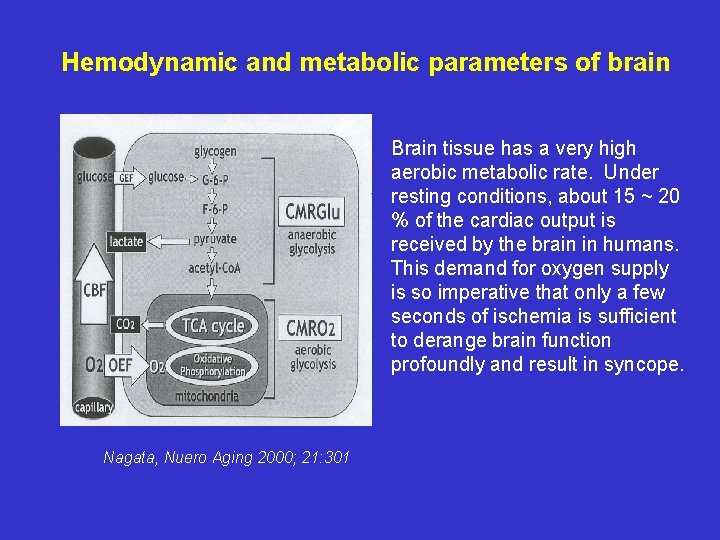
Hemodynamic and metabolic parameters of brain Brain tissue has a very high aerobic metabolic rate. Under resting conditions, about 15 ~ 20 % of the cardiac output is received by the brain in humans. This demand for oxygen supply is so imperative that only a few seconds of ischemia is sufficient to derange brain function profoundly and result in syncope. Nagata, Nuero Aging 2000; 21: 301
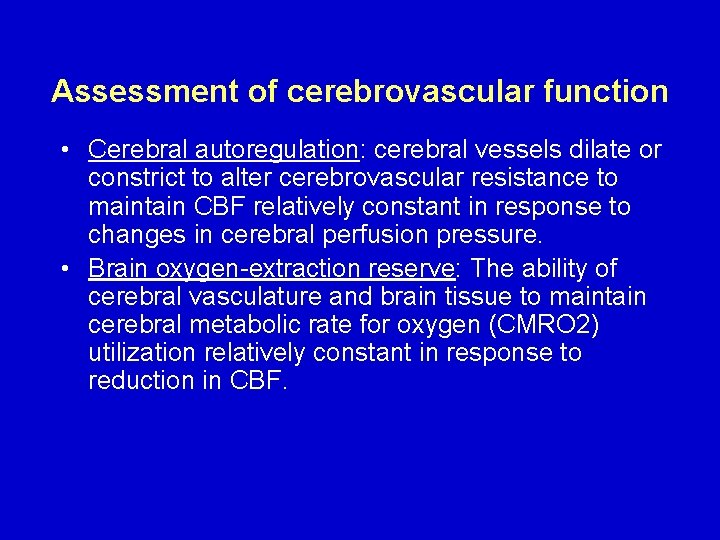
Assessment of cerebrovascular function • Cerebral autoregulation: cerebral vessels dilate or constrict to alter cerebrovascular resistance to maintain CBF relatively constant in response to changes in cerebral perfusion pressure. • Brain oxygen-extraction reserve: The ability of cerebral vasculature and brain tissue to maintain cerebral metabolic rate for oxygen (CMRO 2) utilization relatively constant in response to reduction in CBF.
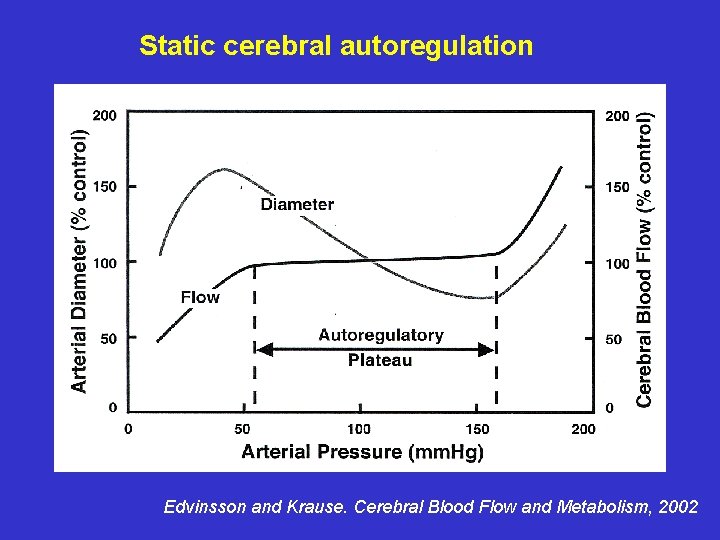
Static cerebral autoregulation Edvinsson and Krause. Cerebral Blood Flow and Metabolism, 2002
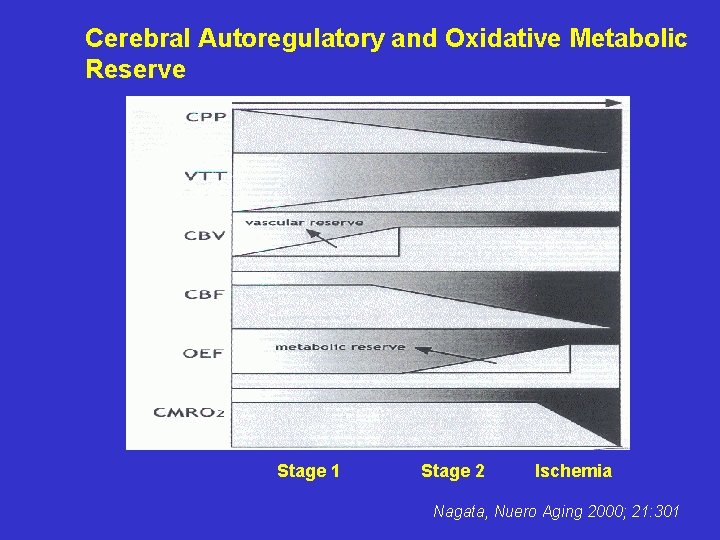
Cerebral Autoregulatory and Oxidative Metabolic Reserve Stage 1 Stage 2 Ischemia Nagata, Nuero Aging 2000; 21: 301
Is cerebrovascular function impaired in patients with Alzheimer’s disease?
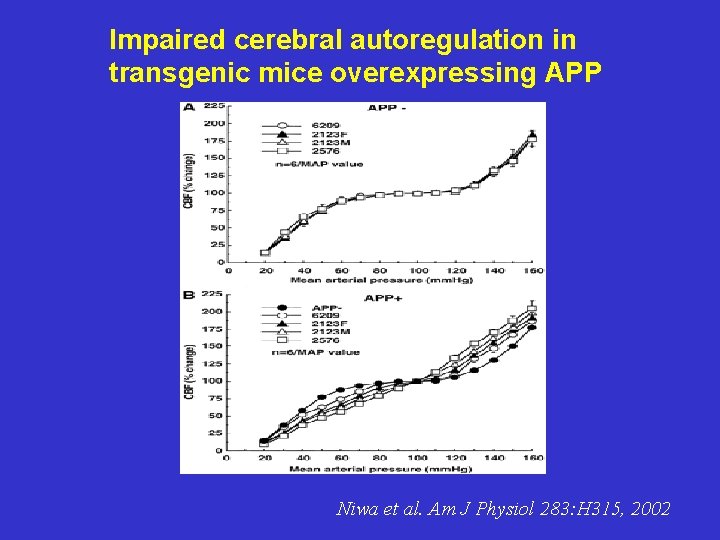
Impaired cerebral autoregulation in transgenic mice overexpressing APP Niwa et al. Am J Physiol 283: H 315, 2002
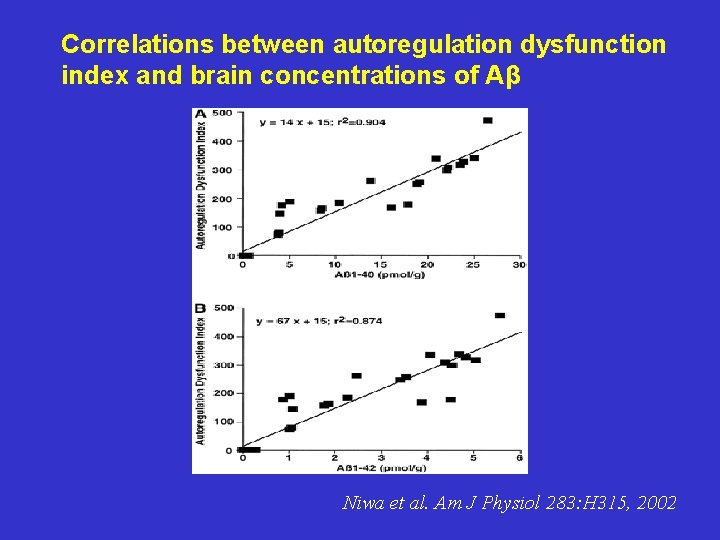
Correlations between autoregulation dysfunction index and brain concentrations of Aβ Niwa et al. Am J Physiol 283: H 315, 2002
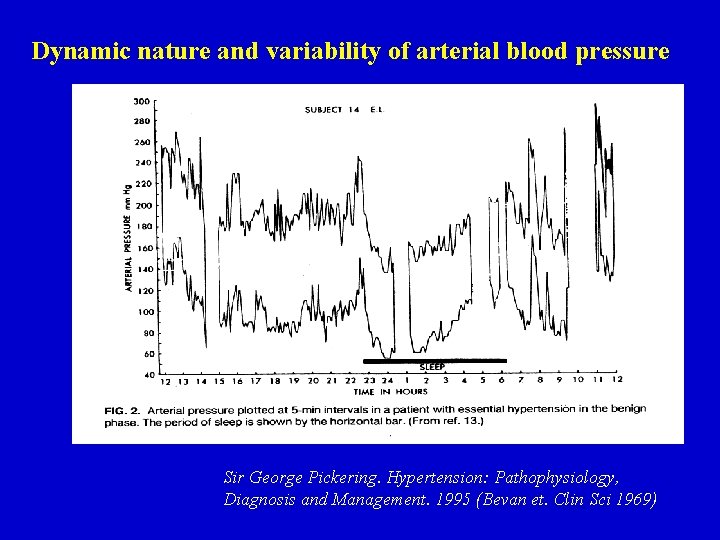
Dynamic nature and variability of arterial blood pressure Sir George Pickering. Hypertension: Pathophysiology, Diagnosis and Management. 1995 (Bevan et. Clin Sci 1969)
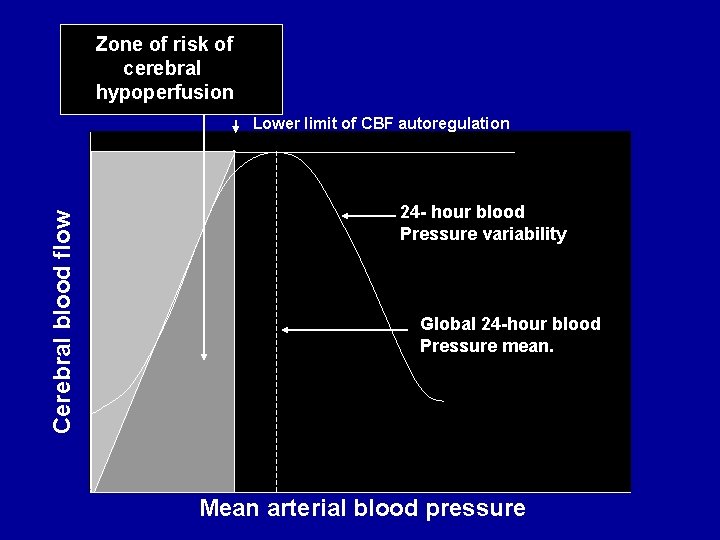
Zone of risk of cerebral hypoperfusion Cerebral blood flow Lower limit of CBF autoregulation 24 - hour blood Pressure variability Global 24 -hour blood Pressure mean. Mean arterial blood pressure
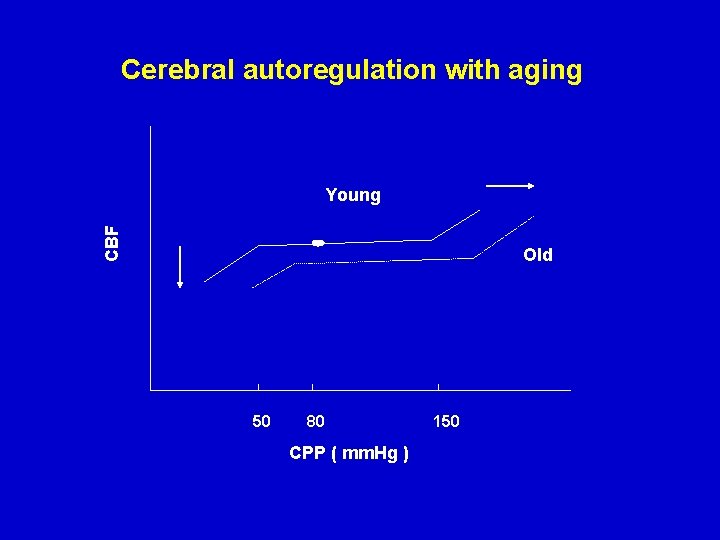
Cerebral autoregulation with aging CBF Young Old 50 80 CPP ( mm. Hg ) 150
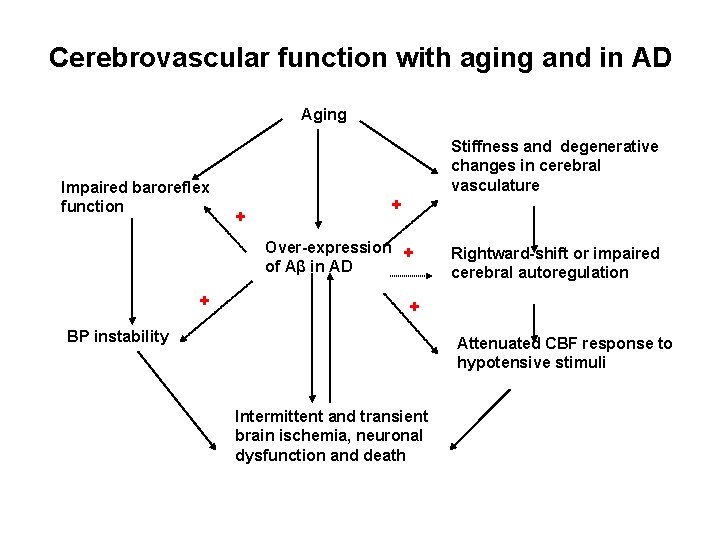
Cerebrovascular function with aging and in AD Aging Impaired baroreflex function Stiffness and degenerative changes in cerebral vasculature + + Over-expression + of Aβ in AD + Rightward-shift or impaired cerebral autoregulation + BP instability Attenuated CBF response to hypotensive stimuli Intermittent and transient brain ischemia, neuronal dysfunction and death
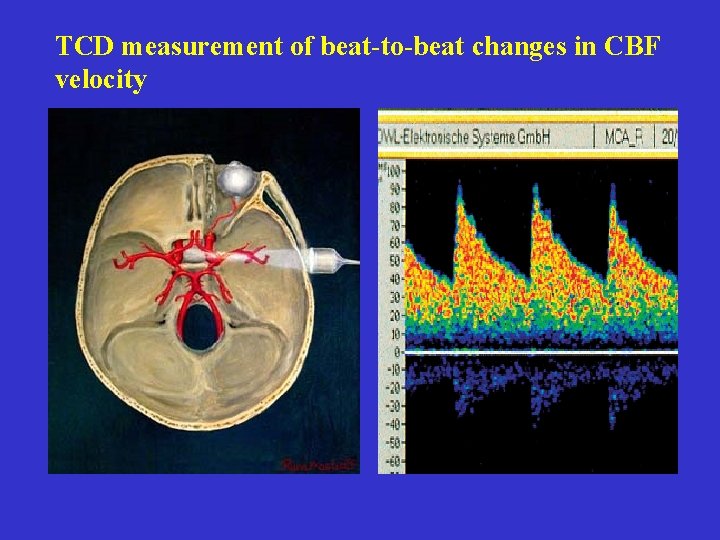
TCD measurement of beat-to-beat changes in CBF velocity

Static autoregulation with aging and in AD
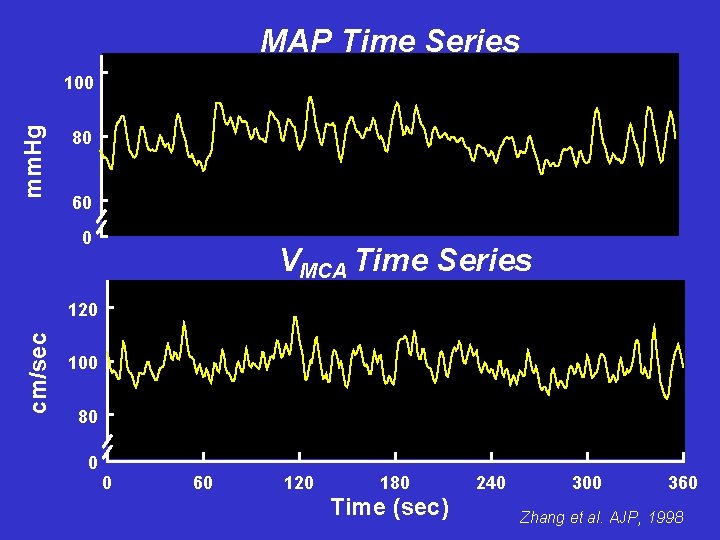
MAP Time Series mm. Hg 100 80 60 0 VMCA Time Series cm/sec 120 100 80 0 0 60 120 180 Time (sec) 240 300 360 Zhang et al. AJP, 1998
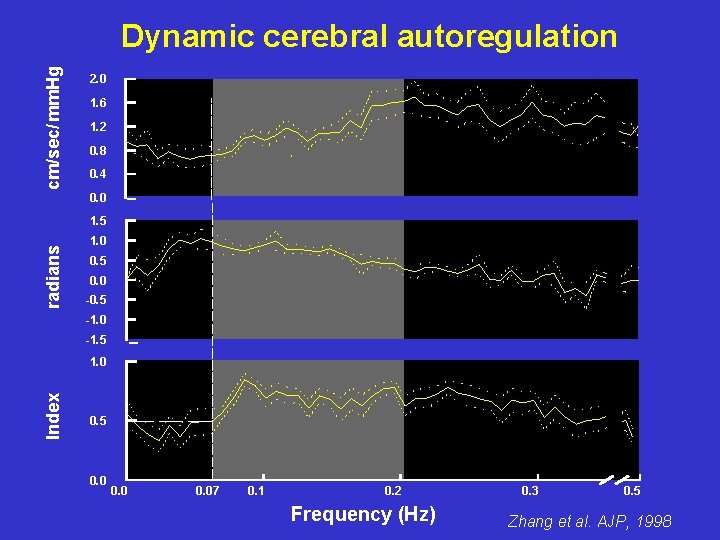
cm/sec/ mm. Hg Dynamic cerebral autoregulation 2. 0 1. 6 1. 2 0. 8 0. 4 0. 0 radians 1. 5 1. 0 0. 5 0. 0 -0. 5 -1. 0 -1. 5 Index 1. 0 0. 5 0. 07 0. 1 0. 2 Frequency (Hz) 0. 3 0. 5 Zhang et al. AJP, 1998

BP and CBFV variability with aging and in AD
Changes in systemic and cerebral hemodynamics during periodical squatting in a young subject
Changes in systemic and cerebral hemodynamics during periodical squatting in patients with early AD
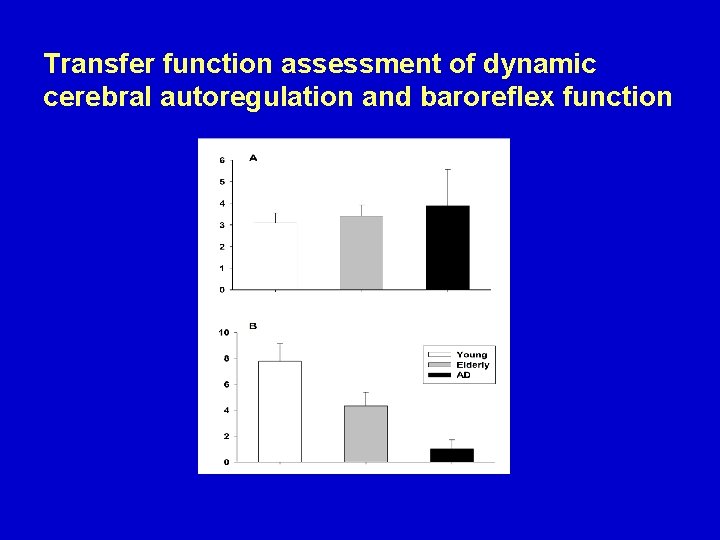
Transfer function assessment of dynamic cerebral autoregulation and baroreflex function
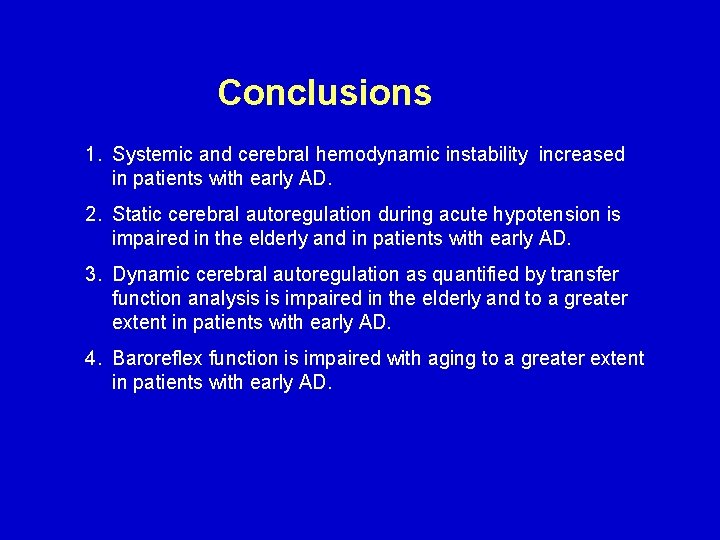
Conclusions 1. Systemic and cerebral hemodynamic instability increased in patients with early AD. 2. Static cerebral autoregulation during acute hypotension is impaired in the elderly and in patients with early AD. 3. Dynamic cerebral autoregulation as quantified by transfer function analysis is impaired in the elderly and to a greater extent in patients with early AD. 4. Baroreflex function is impaired with aging to a greater extent in patients with early AD.
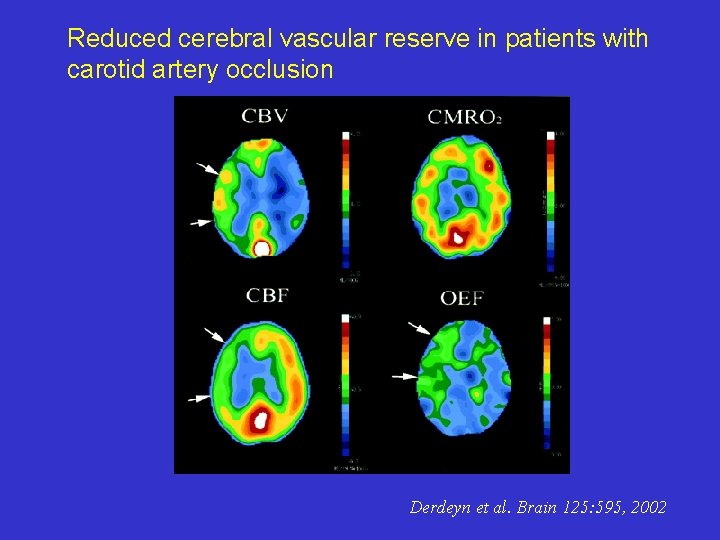
Reduced cerebral vascular reserve in patients with carotid artery occlusion Derdeyn et al. Brain 125: 595, 2002
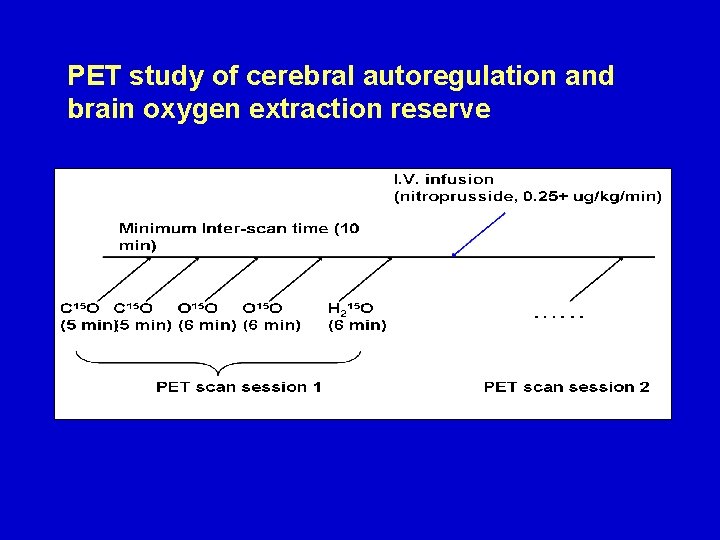
PET study of cerebral autoregulation and brain oxygen extraction reserve
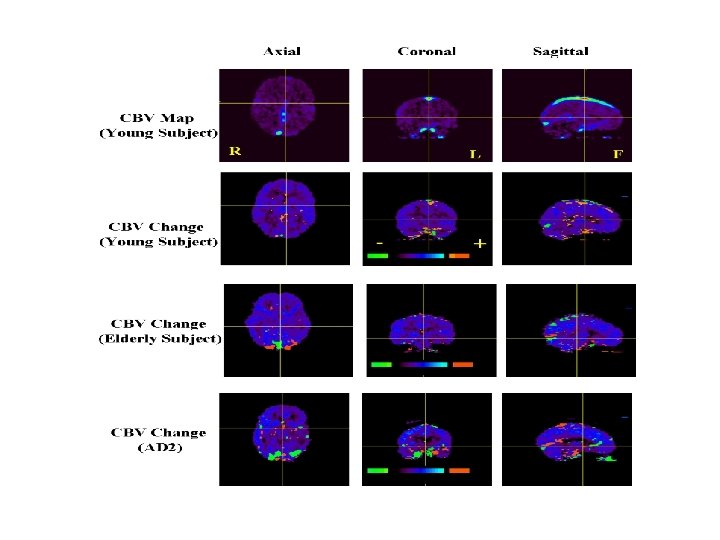
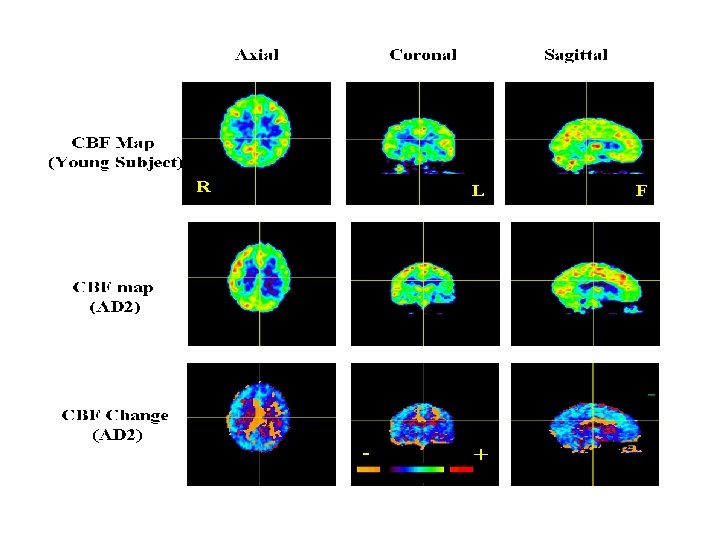
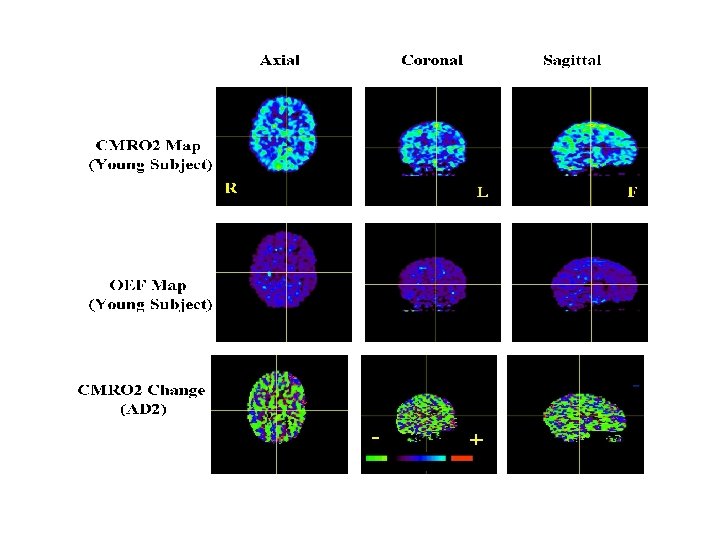
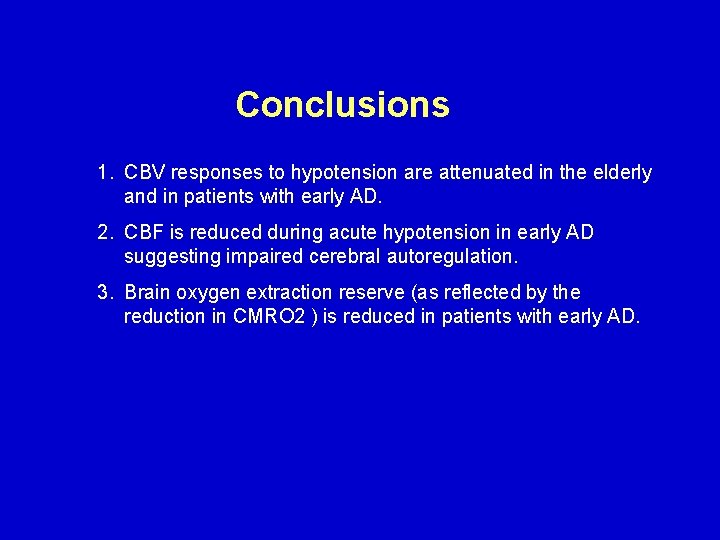
Conclusions 1. CBV responses to hypotension are attenuated in the elderly and in patients with early AD. 2. CBF is reduced during acute hypotension in early AD suggesting impaired cerebral autoregulation. 3. Brain oxygen extraction reserve (as reflected by the reduction in CMRO 2 ) is reduced in patients with early AD.
Central hypothesis Cerebrovascular dysfunction plays an important role in the pathogenesis and development of Alzheimer’s disease.
- Slides: 34