
CEREBRAL AMYLOID ANGIOPATHY Amad Khan 19118 INTRODUCTION Cerebral
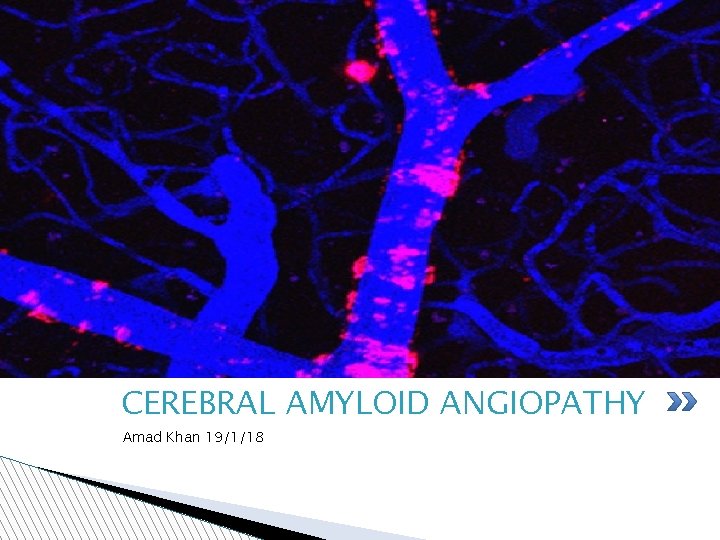
CEREBRAL AMYLOID ANGIOPATHY � Amad Khan 19/1/18
INTRODUCTION Cerebral amyloid angiopathy (CAA) is a clinicopathological condition resulting from the extracellular deposition of an amorphous eosinophilic substance (a fibrillar protein, amyloid) in the walls of small- and medium-sized arteries Not associated with systemic amyloidosis One of the important causes of spontaneous intracerebral hemorrhage

Accounts for about 10% of Primary ICH Many cases are asymptomatic It occurs as sporadic and hereditary forms Has a close molecular relationship with Alzheimer’s disease Recent improvements in imaging techniques facilitate ante mortem diagnosis
Epidemiology True prevalence and incidence are not known due to difficulty in definitive diagnosis Prevalence increases with age Rare before 55 yrs Affects both sexes equally In a large series prevalence was 36% in 6090 yrs and >60% in patients above 90 years

Responsible for ∼ 10% of all types of Primary ICH >30% of lobar ICH Causes recurrent ICH ( mean number of strokes -3) Hypertension does not predispose to CAA related ICH 40% of these stroke patients develop dementia
PATHOPHYSIOLOGY Localised deposition of amyloid in the media and adventitia of cortical and leptomeningeal vessels Thickening of basement membrane and stenosis occurs and later fragmentation of the internal elastic lamina Finally fibrinoid necrosis and micro aneurysm formation Hemorrhages are mostly lobar with an occipital predominance
Clinical features ICH and dementia most common Others are TIA Cerebral infarcts Seizures Subarachnoid hemorrhage CAA related CNS vascultis

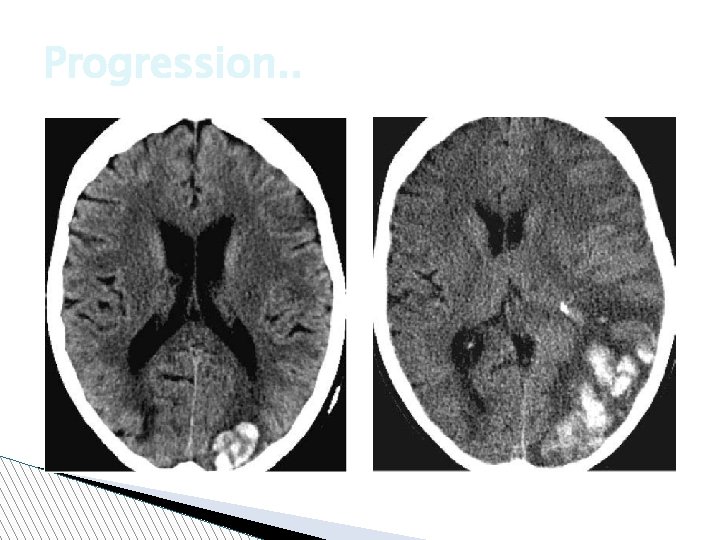
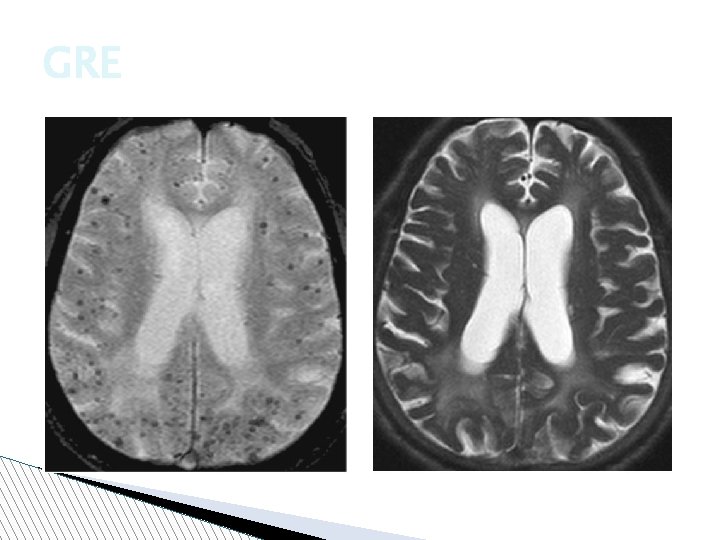
ICH Best recognised manifestationof CAA No pathognomonic feature Usually lobar hemorrhages(due to the involvement of superficial cortical and leptomeningeal vessels) Affect people over 55 years The hemorrhages are multiple and recurrent Less commonly associated with hypertension

BOSTON CRITERIA
Progression. .
GRE
- Slides: 11