
Cerebellum z More cells in cerebellum than rest

Cerebellum z More cells in cerebellum than rest of nervous system combined z Receives sensory info from somatosensory, vestibular, visual and auditory areas 1 1
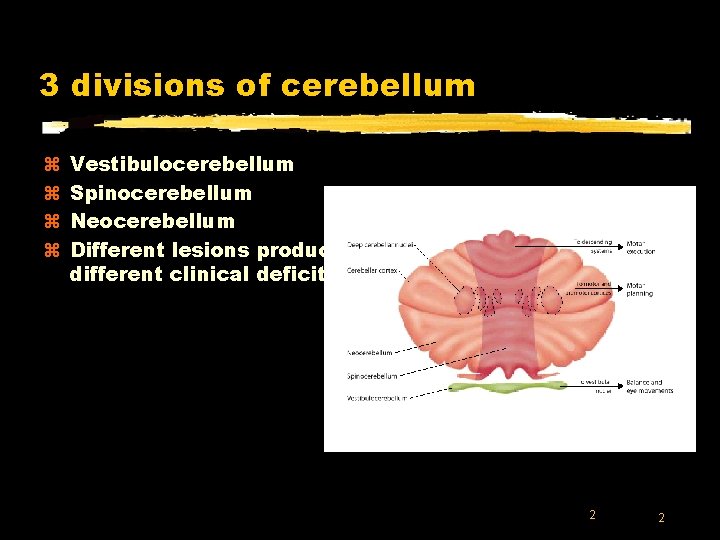
3 divisions of cerebellum z z Vestibulocerebellum Spinocerebellum Neocerebellum Different lesions produce different clinical deficits 2 2
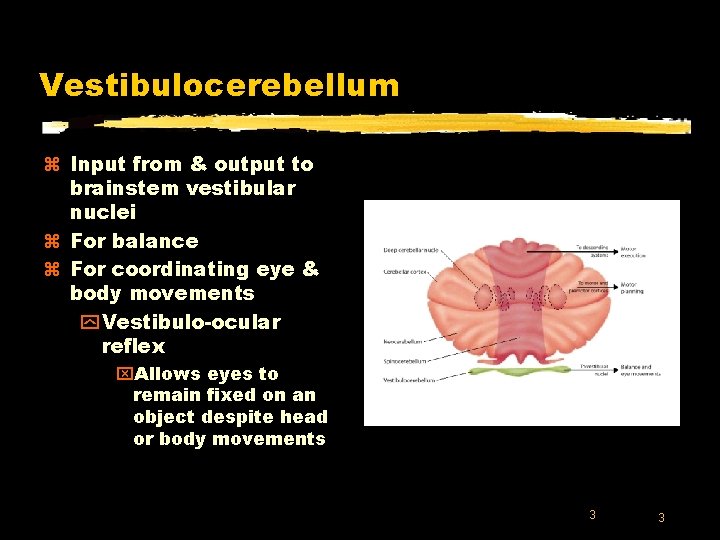
Vestibulocerebellum z Input from & output to brainstem vestibular nuclei z For balance z For coordinating eye & body movements y Vestibulo-ocular reflex x. Allows eyes to remain fixed on an object despite head or body movements 3 3
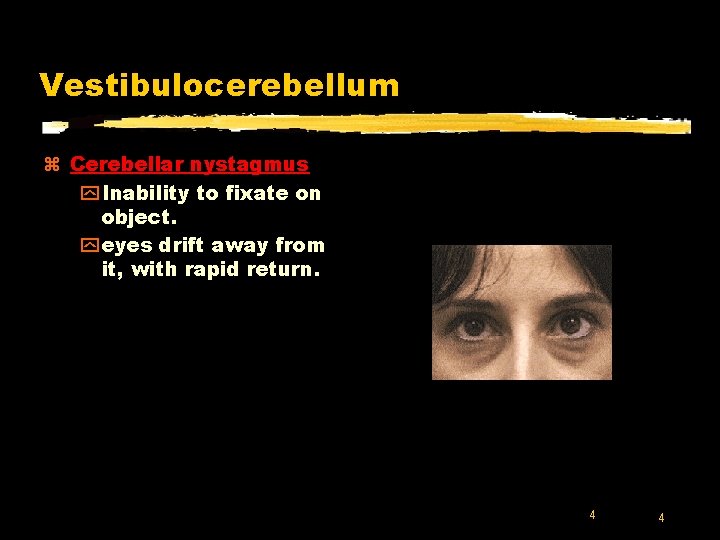
Vestibulocerebellum z Cerebellar nystagmus y Inability to fixate on object. y eyes drift away from it, with rapid return. 4 4
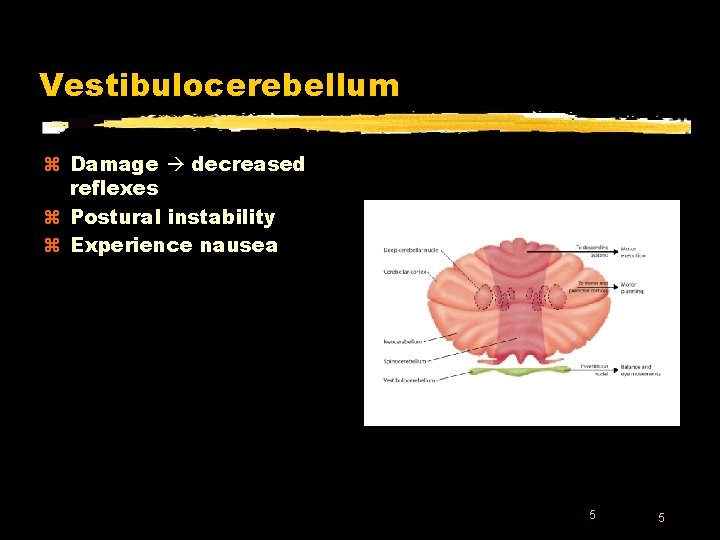
Vestibulocerebellum z Damage decreased reflexes z Postural instability z Experience nausea 5 5
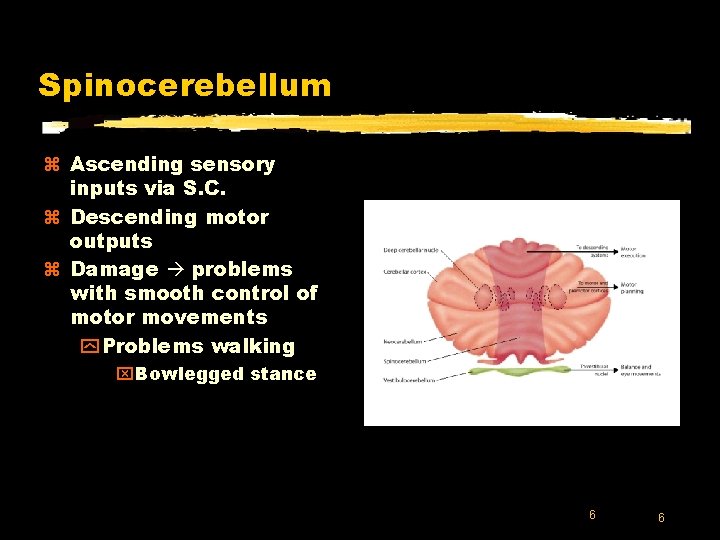
Spinocerebellum z Ascending sensory inputs via S. C. z Descending motor outputs z Damage problems with smooth control of motor movements y Problems walking x. Bowlegged stance 6 6
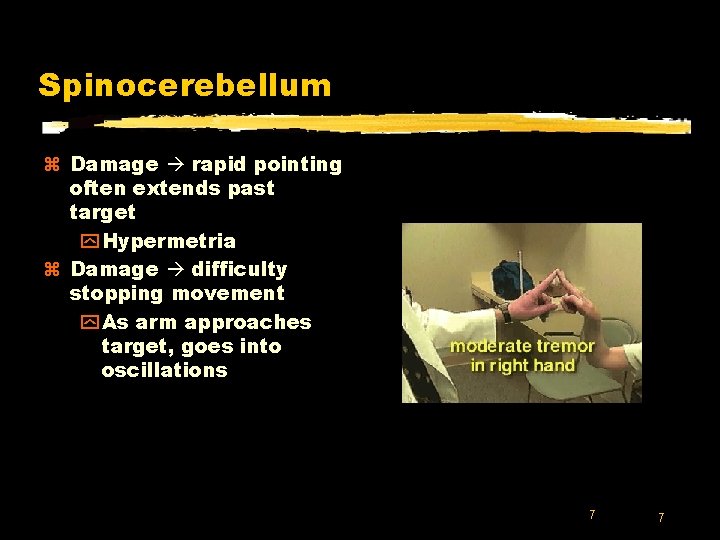
Spinocerebellum z Damage rapid pointing often extends past target y Hypermetria z Damage difficulty stopping movement y As arm approaches target, goes into oscillations 7 7
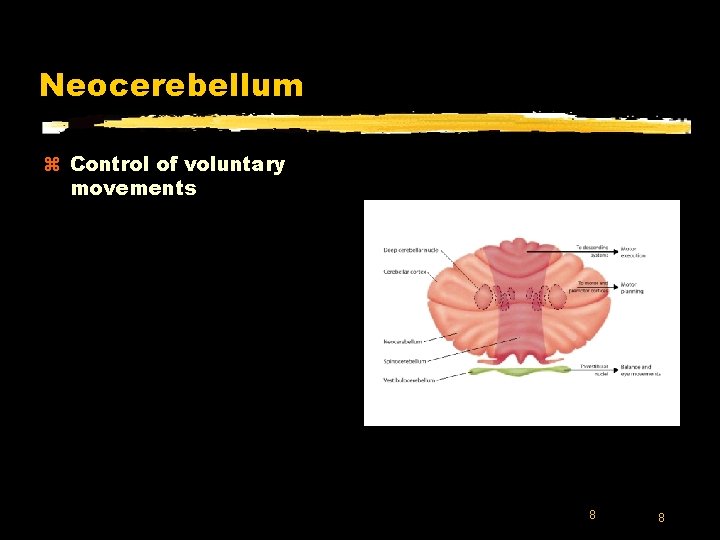
Neocerebellum z Control of voluntary movements 8 8
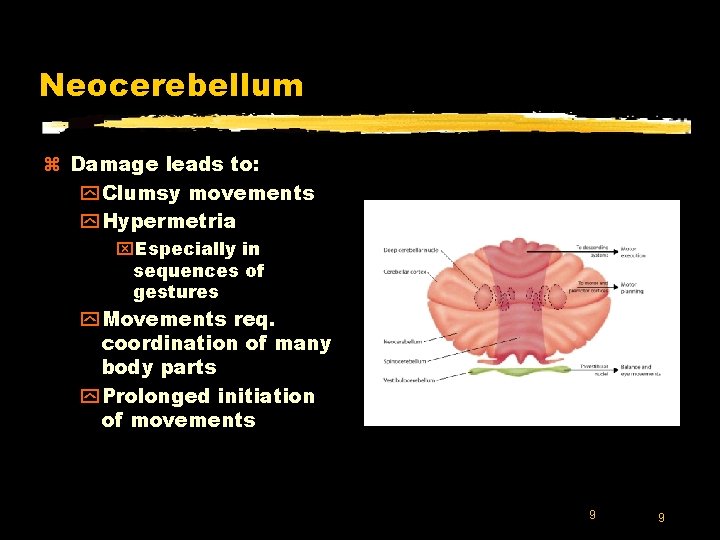
Neocerebellum z Damage leads to: y Clumsy movements y Hypermetria x. Especially in sequences of gestures y Movements req. coordination of many body parts y Prolonged initiation of movements 9 9
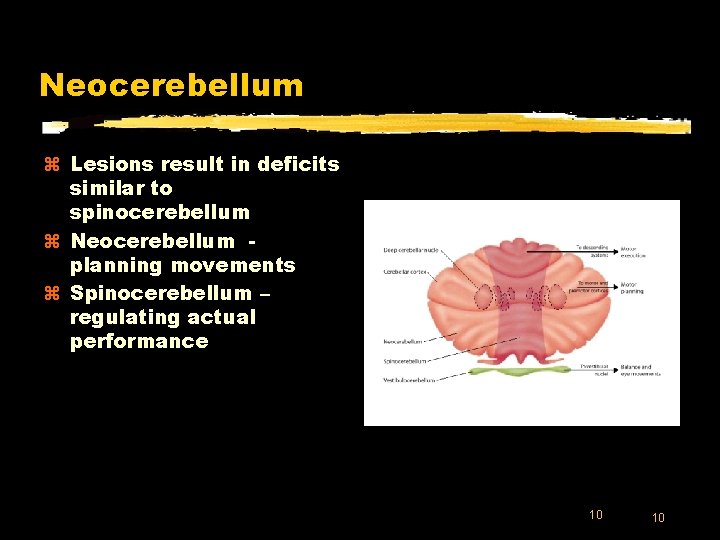
Neocerebellum z Lesions result in deficits similar to spinocerebellum z Neocerebellum planning movements z Spinocerebellum – regulating actual performance 10 10
Cerebellum z Alcohol may affect cerebellum y. Sobriety tests often assess cerebellar functioning x. Balance x. Touching finger to nose 11 11
- Slides: 11