
Cerebellum John H Martin Ph D Center for
Cerebellum John H. Martin, Ph. D. Center for Neurobiology & Behavior Columbia University
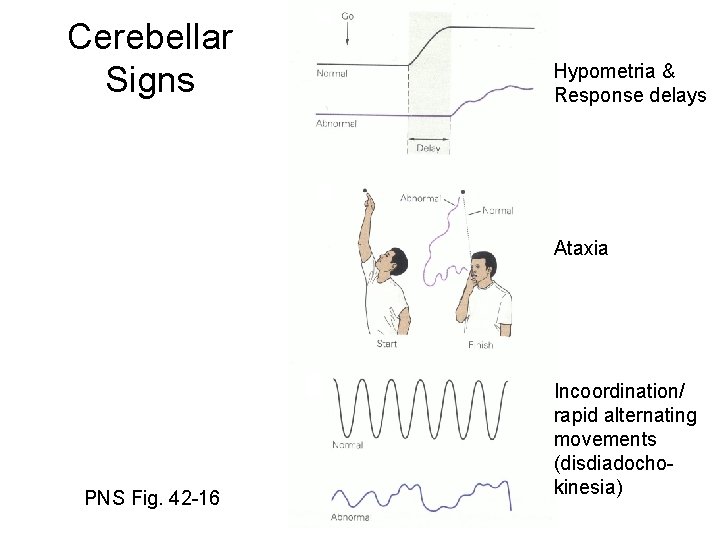
Cerebellar Signs Hypometria & Response delays Ataxia PNS Fig. 42 -16 Incoordination/ rapid alternating movements (disdiadochokinesia)
Research Points to Several Key Cerebellar Functions • Comparison of intent and action (ie. , errors) and generates corrective signals • Motor learning and adaptation • Plays a role in automating and optimizing behavior • Motor cognition and general cognition & emotions (new evidence; controversial)
Goal: Cerebellar function • Overview of motor system hierarchy • Cerebellar anatomy • Principal pathways out of the cerebellum-How the cerebellum impacts the motor pathways • Experimental approaches to reveal: – Motor learning – Mental processes underlying movement control – Role in cognition and emotions
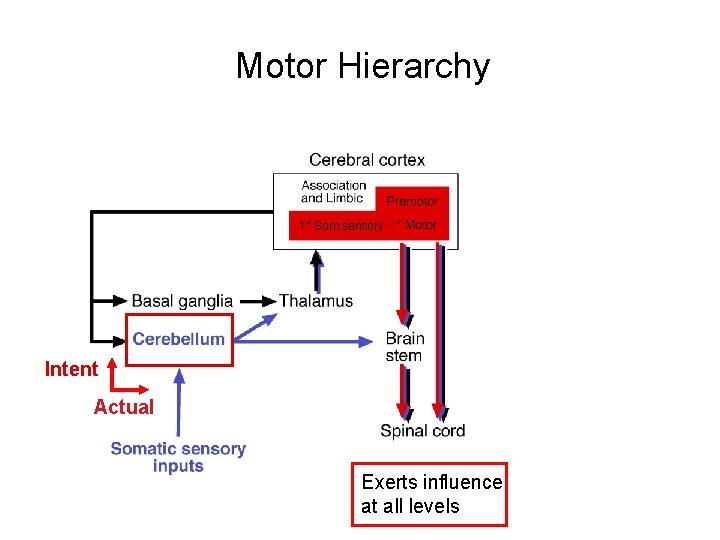
Motor Hierarchy 1° Som sensory Intent Actual Exerts influence at all levels
Cerebellar Functional Anatomy
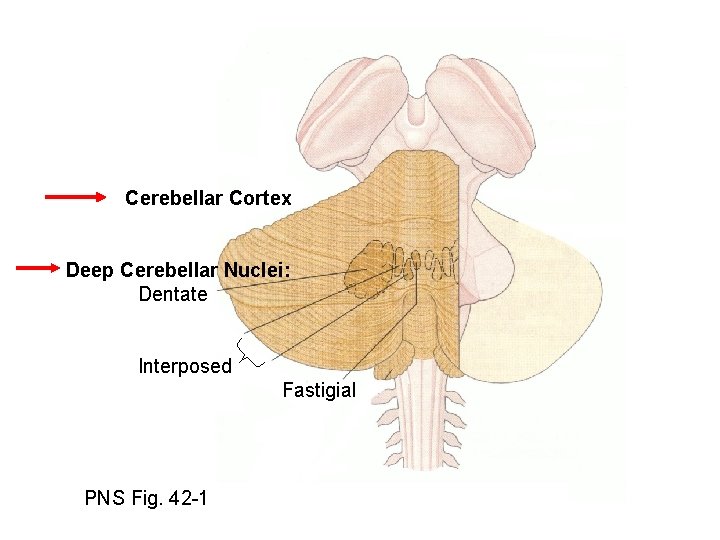
Cerebellar Cortex Deep Cerebellar Nuclei: Dentate Interposed Fastigial PNS Fig. 42 -1
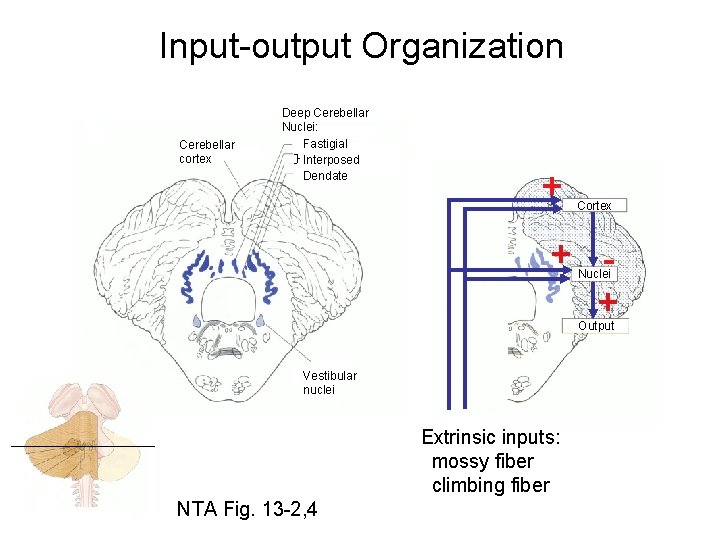
Input-output Organization Cerebellar cortex Deep Cerebellar Nuclei: Fastigial Interposed Dendate + Cortex + + Nuclei Output Vestibular nuclei Extrinsic inputs: mossy fiber climbing fiber NTA Fig. 13 -2, 4
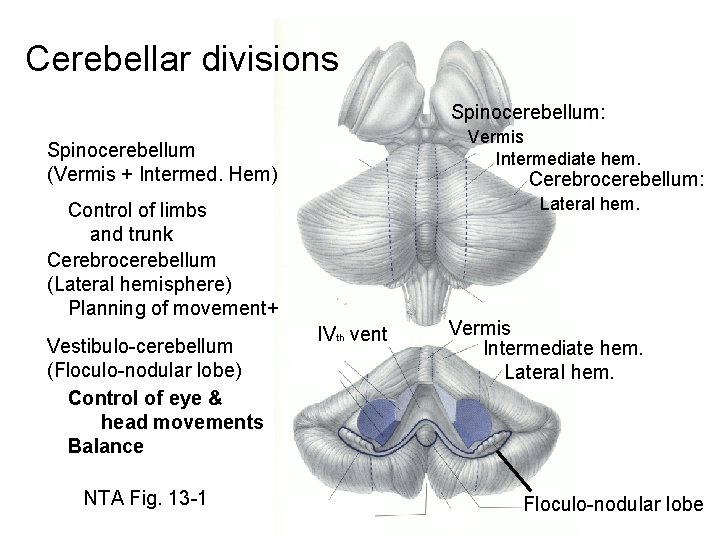
Cerebellar divisions Spinocerebellum: Vermis Intermediate hem. Spinocerebellum (Vermis + Intermed. Hem) Cerebrocerebellum: Lateral hem. Control of limbs and trunk Cerebrocerebellum (Lateral hemisphere) Planning of movement+ Vestibulo-cerebellum (Floculo-nodular lobe) Control of eye & head movements Balance NTA Fig. 13 -1 IVth vent Vermis Intermediate hem. Lateral hem. Floculo-nodular lobe
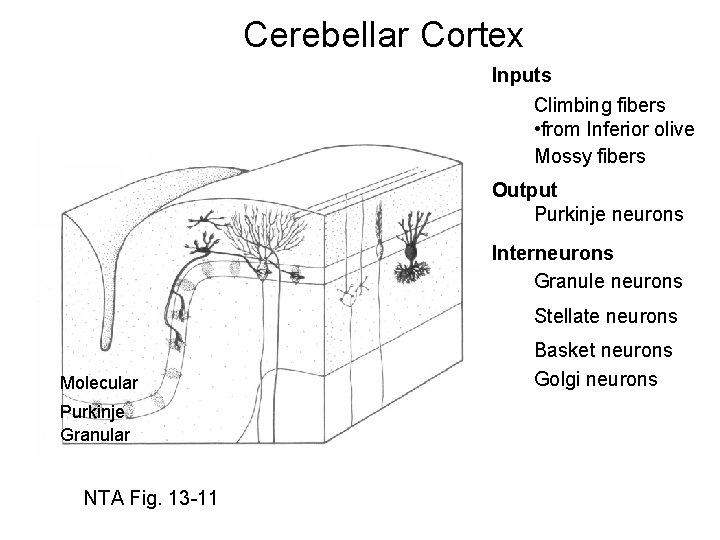
Cerebellar Cortex Inputs Climbing fibers • from Inferior olive Mossy fibers Output Purkinje neurons Interneurons Granule neurons Stellate neurons Molecular Purkinje Granular NTA Fig. 13 -11 Basket neurons Golgi neurons
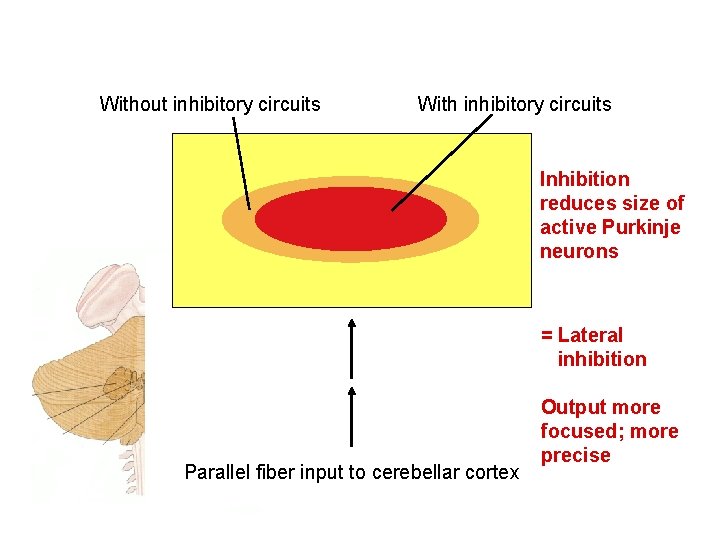
Without inhibitory circuits With inhibitory circuits Inhibition reduces size of active Purkinje neurons = Lateral inhibition Parallel fiber input to cerebellar cortex Output more focused; more precise
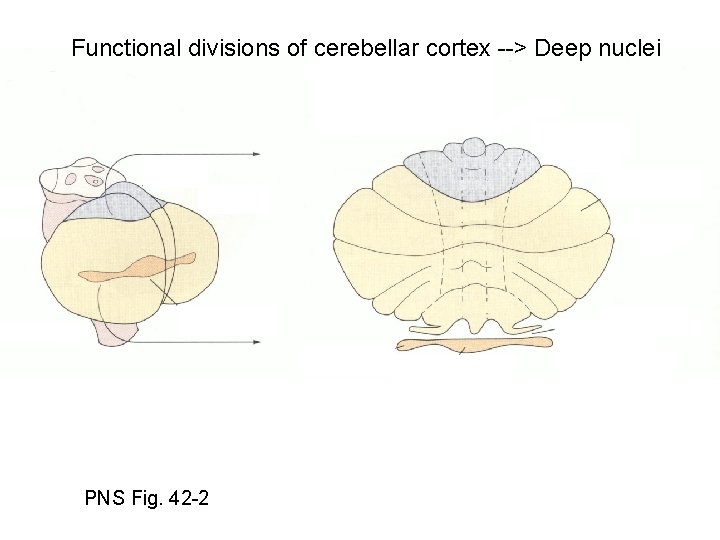
Functional divisions of cerebellar cortex --> Deep nuclei PNS Fig. 42 -2
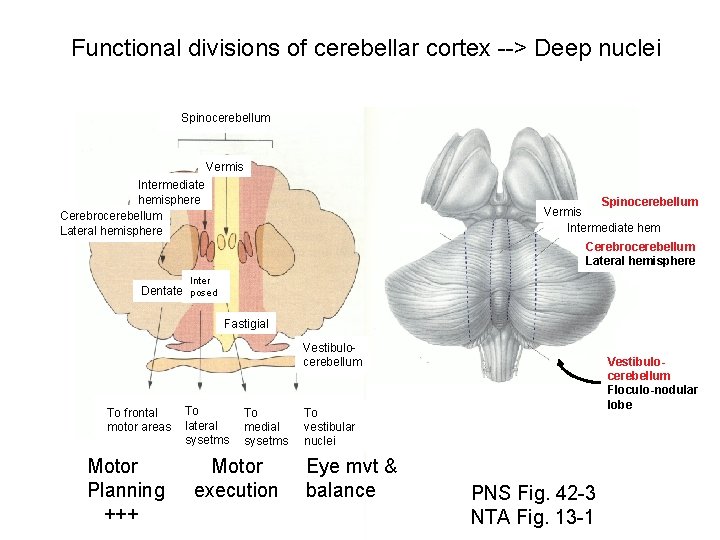
Functional divisions of cerebellar cortex --> Deep nuclei Spinocerebellum Vermis Intermediate hemisphere Cerebrocerebellum Lateral hemisphere Spinocerebellum Vermis Intermediate hem Cerebrocerebellum Lateral hemisphere Inter Dentate posed Fastigial Vestibulocerebellum To frontal motor areas Motor Planning +++ To lateral sysetms To medial sysetms Motor execution Vestibulocerebellum Floculo-nodular lobe To vestibular nuclei Eye mvt & balance PNS Fig. 42 -3 NTA Fig. 13 -1
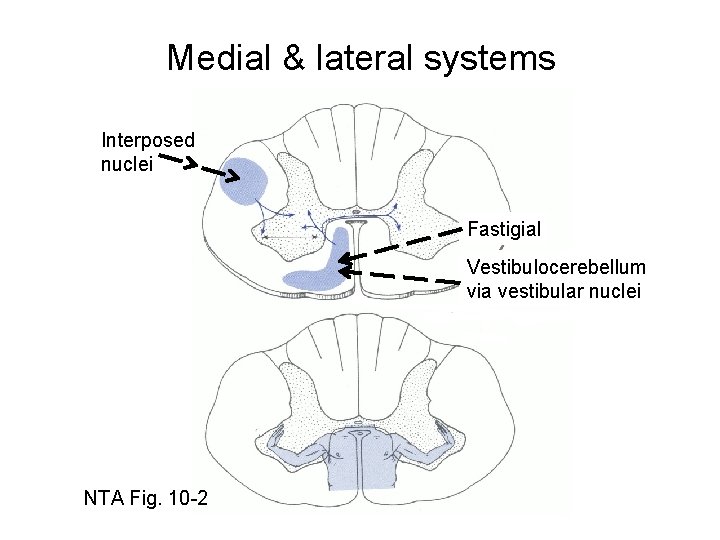
Medial & lateral systems Interposed nuclei Fastigial Vestibulocerebellum via vestibular nuclei NTA Fig. 10 -2
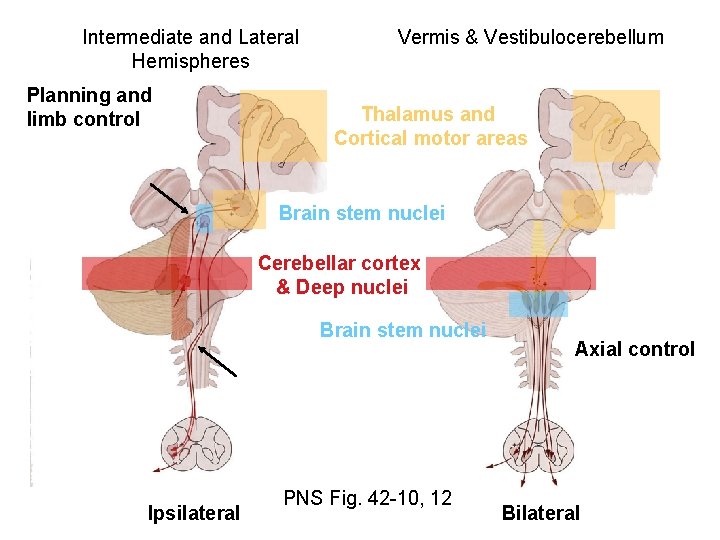
Intermediate and Lateral Hemispheres Planning and limb control Vermis & Vestibulocerebellum Thalamus and Cortical motor areas Brain stem nuclei Cerebellar cortex & Deep nuclei Brain stem nuclei Ipsilateral PNS Fig. 42 -10, 12 Axial control Bilateral
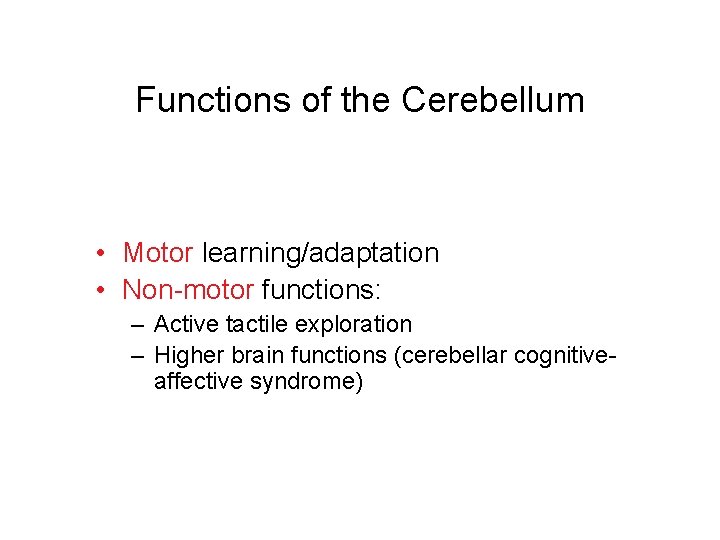
Functions of the Cerebellum • Motor learning/adaptation • Non-motor functions: – Active tactile exploration – Higher brain functions (cerebellar cognitiveaffective syndrome)
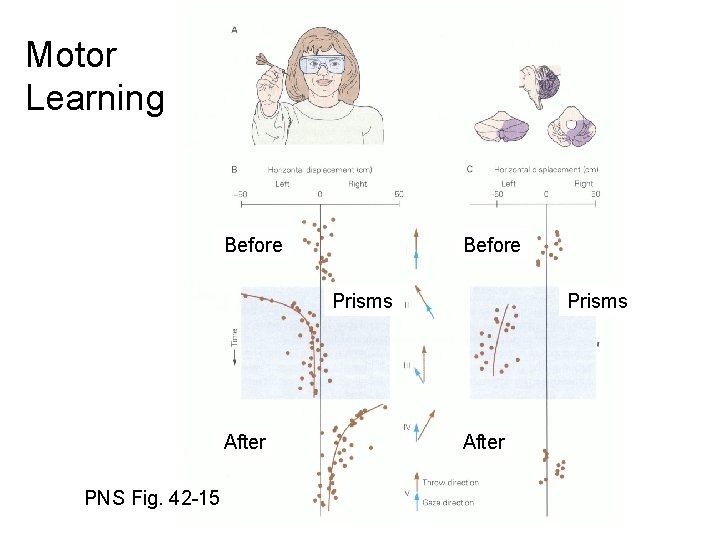
Motor Learning Before Prisms After PNS Fig. 42 -15 Prisms After
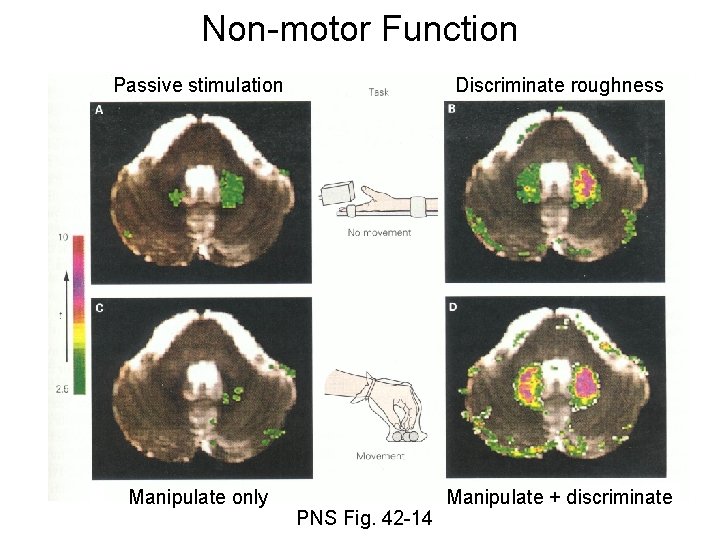
Non-motor Function Passive stimulation Discriminate roughness Manipulate only Manipulate + discriminate PNS Fig. 42 -14
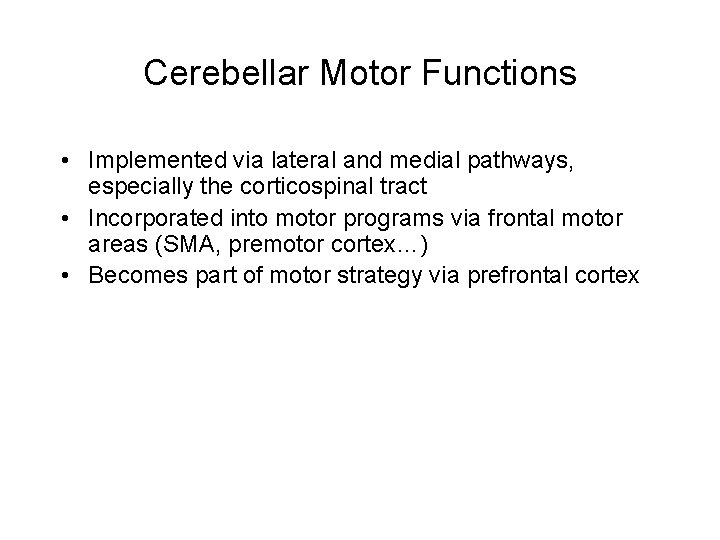
Cerebellar Motor Functions • Implemented via lateral and medial pathways, especially the corticospinal tract • Incorporated into motor programs via frontal motor areas (SMA, premotor cortex…) • Becomes part of motor strategy via prefrontal cortex
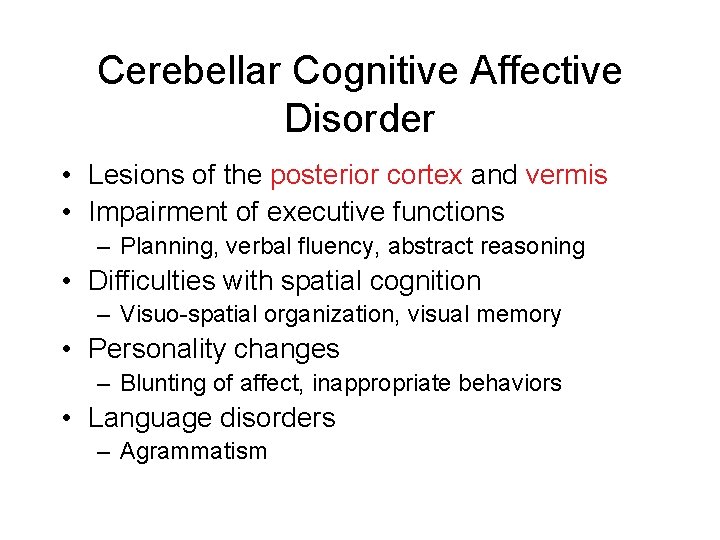
Cerebellar Cognitive Affective Disorder • Lesions of the posterior cortex and vermis • Impairment of executive functions – Planning, verbal fluency, abstract reasoning • Difficulties with spatial cognition – Visuo-spatial organization, visual memory • Personality changes – Blunting of affect, inappropriate behaviors • Language disorders – Agrammatism
Conclusions • Cerebellar lesions produce – Incoordination & errors not weakness – Lose ability to anticipate errors – Lose ability to correct • Motor learning – Requires sensory awareness – Implemented via the descending cortical and brain stem pathways • Cognitive and emotional disturbances – Anatomical connections to prefrontal and cingulate cortex (via thalamus) • No single function – Clearly mostly motor; learning, optimizes – Functions may apply to cognitive and emotional behaviors
- Slides: 21