
Cerebellar Examination By Stas Makaranka Outline Causes of
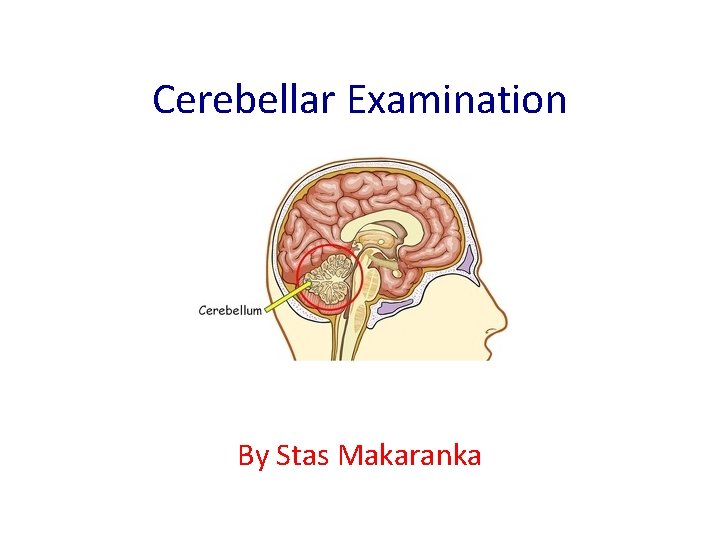
Cerebellar Examination By Stas Makaranka
Outline: • • Causes of cerebellar dysfunction Run through cerebellar examination Examination Practice Questions
Differential Diagnosis • • • Stroke/TIA Alcohol (Intoxication/Wernicke-Korsakoff) SOL - Tumour in posterior fossa/Hydrocephalus Multiple Sclerosis Drugs (e. g. Phenytoin toxicity) Endocrine (Hypothyroidism) Infections (Meningo-encephalitis, intracranial abscess) Trauma Paraneoplastic cerebellar degeneration Genetic/Congenital
DANISH • • • Dysdiadokinesia Ataxia (Romberg’s) Nystagmus (Draw H) Intention Tremor (Touch nose and pen) Slurred, Stacatto Speech Hypotonia/Heel-shin Test
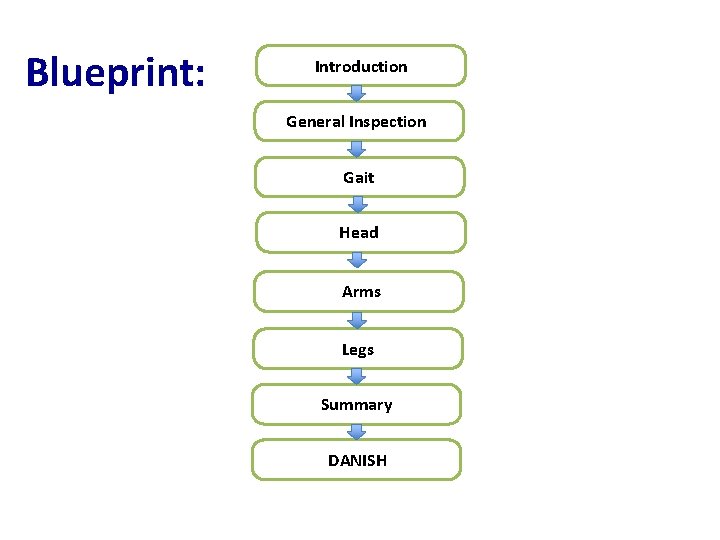
Blueprint: Introduction General Inspection Gait Head Arms Legs Summary DANISH
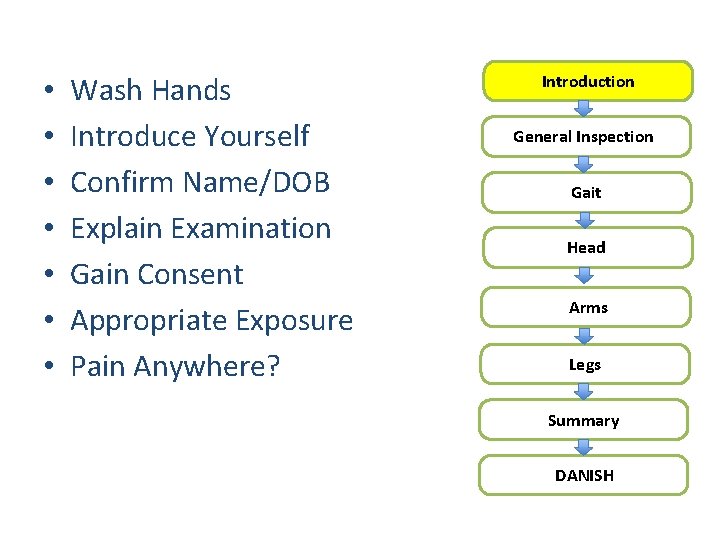
• • Wash Hands Introduce Yourself Confirm Name/DOB Explain Examination Gain Consent Appropriate Exposure Pain Anywhere? Introduction General Inspection Gait Head Arms Legs Summary DANISH
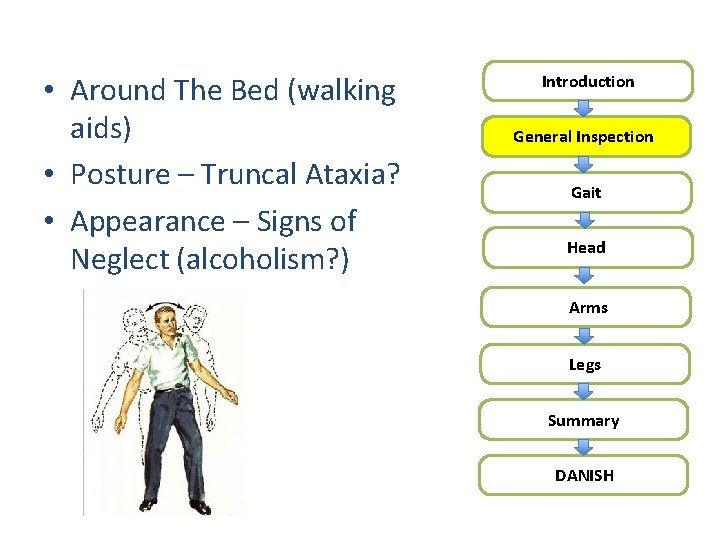
• Around The Bed (walking aids) • Posture – Truncal Ataxia? • Appearance – Signs of Neglect (alcoholism? ) Introduction General Inspection Gait Head Arms Legs Summary DANISH
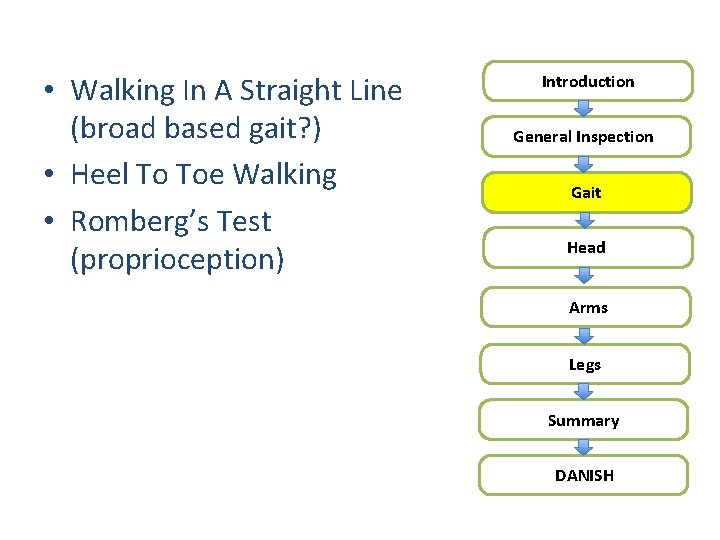
• Walking In A Straight Line (broad based gait? ) • Heel To Toe Walking • Romberg’s Test (proprioception) Introduction General Inspection Gait Head Arms Legs Summary DANISH
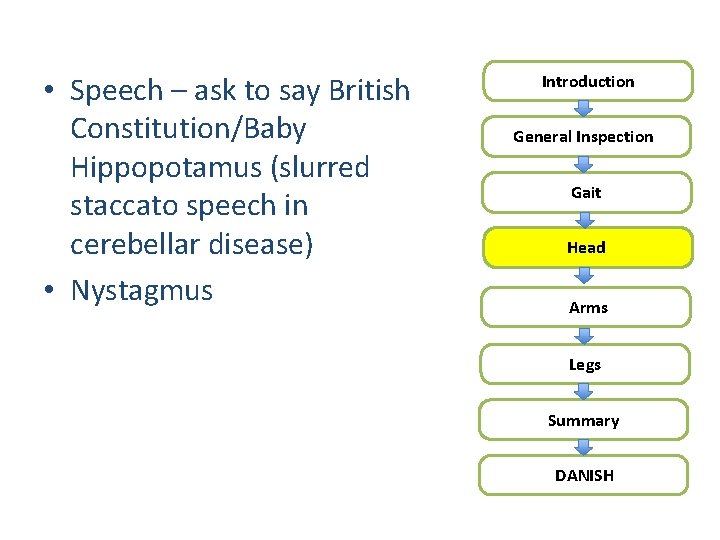
• Speech – ask to say British Constitution/Baby Hippopotamus (slurred staccato speech in cerebellar disease) • Nystagmus Introduction General Inspection Gait Head Arms Legs Summary DANISH
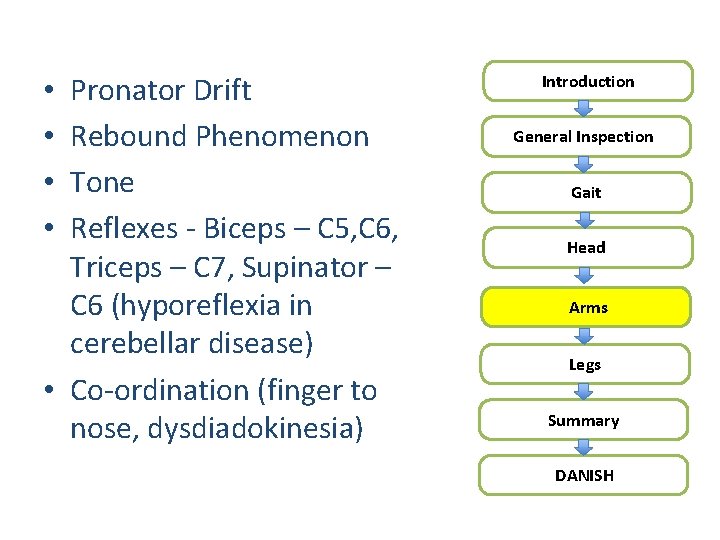
Pronator Drift Rebound Phenomenon Tone Reflexes - Biceps – C 5, C 6, Triceps – C 7, Supinator – C 6 (hyporeflexia in cerebellar disease) • Co-ordination (finger to nose, dysdiadokinesia) • • Introduction General Inspection Gait Head Arms Legs Summary DANISH
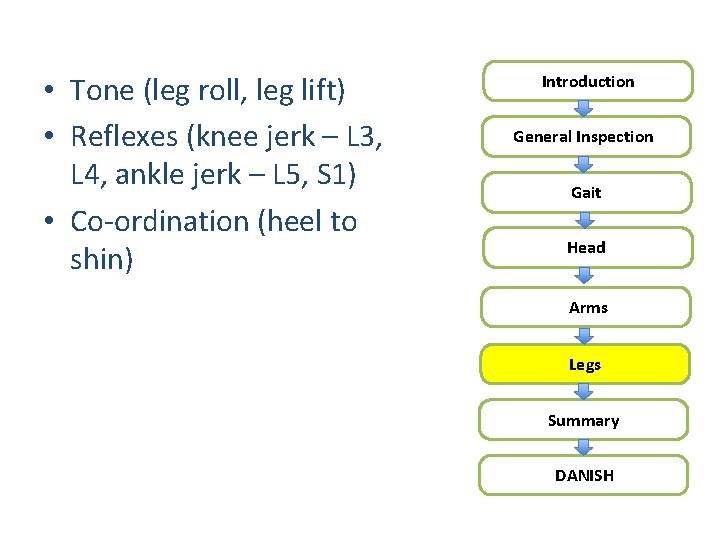
• Tone (leg roll, leg lift) • Reflexes (knee jerk – L 3, L 4, ankle jerk – L 5, S 1) • Co-ordination (heel to shin) Introduction General Inspection Gait Head Arms Legs Summary DANISH
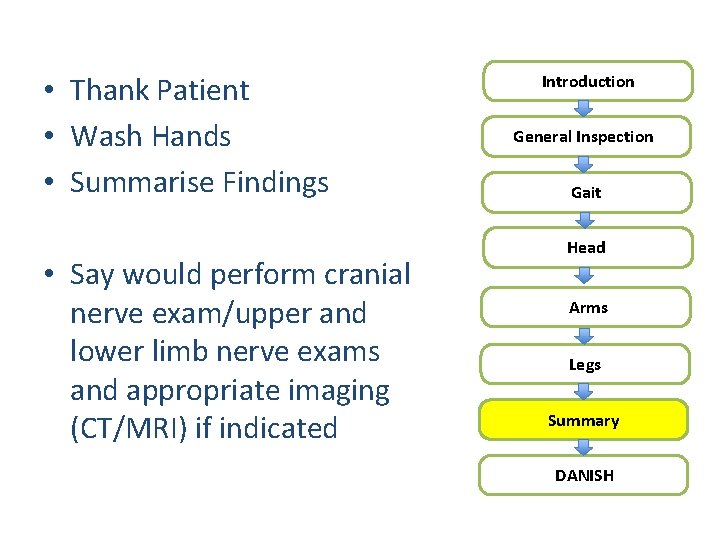
• Thank Patient • Wash Hands • Summarise Findings • Say would perform cranial nerve exam/upper and lower limb nerve exams and appropriate imaging (CT/MRI) if indicated Introduction General Inspection Gait Head Arms Legs Summary DANISH
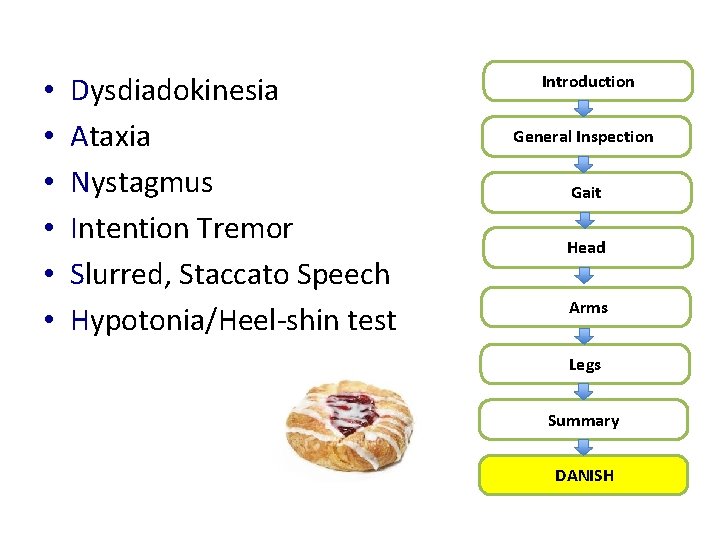
• • • Dysdiadokinesia Ataxia Nystagmus Intention Tremor Slurred, Staccato Speech Hypotonia/Heel-shin test Introduction General Inspection Gait Head Arms Legs Summary DANISH
• Questions? Introduction General Inspection Gait Head Arms Legs Summary DANISH
Practice Examination • 1 Volunteer Please
Practice Examinations • Get into pairs • One perform the complete examination on the other • Ask if you’re not sure how to do something

Practice Questions (1) • What are the features of Wernicke’s encephalopathy and what deficiency is present?
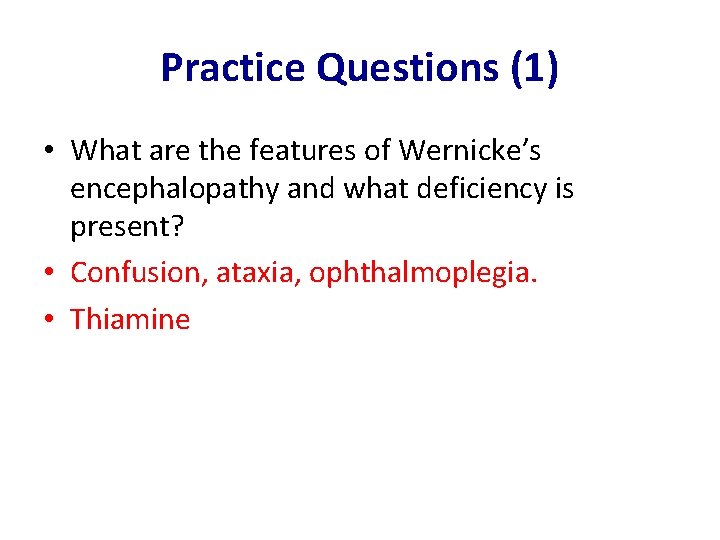
Practice Questions (1) • What are the features of Wernicke’s encephalopathy and what deficiency is present? • Confusion, ataxia, ophthalmoplegia. • Thiamine
Practice Questions (2) • A positive Romberg’s test is indicative of damage where?
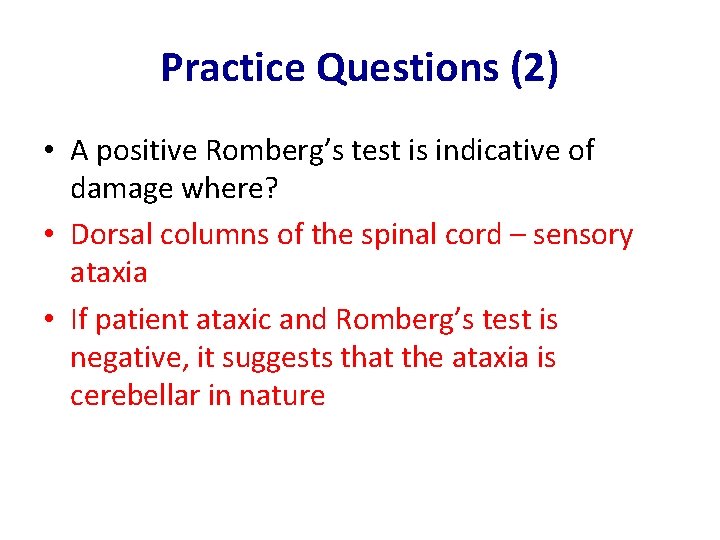
Practice Questions (2) • A positive Romberg’s test is indicative of damage where? • Dorsal columns of the spinal cord – sensory ataxia • If patient ataxic and Romberg’s test is negative, it suggests that the ataxia is cerebellar in nature
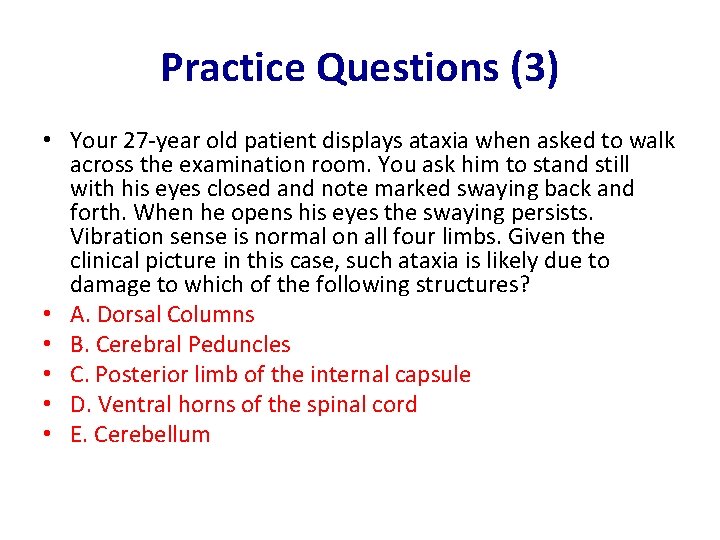
Practice Questions (3) • Your 27 -year old patient displays ataxia when asked to walk across the examination room. You ask him to stand still with his eyes closed and note marked swaying back and forth. When he opens his eyes the swaying persists. Vibration sense is normal on all four limbs. Given the clinical picture in this case, such ataxia is likely due to damage to which of the following structures? • A. Dorsal Columns • B. Cerebral Peduncles • C. Posterior limb of the internal capsule • D. Ventral horns of the spinal cord • E. Cerebellum
Practice Questions (3) • E. Cerebellum
Thanks for coming! Some helpful links: • http: //www. sotonbrainhub. co. uk/ • http: //geekymedics. com/cerebellar-examination-osce-guide/ • http: //osce-stations. blogspot. co. uk Some helpful resources: • Unofficial guide to passing OSCEs
- Slides: 23