
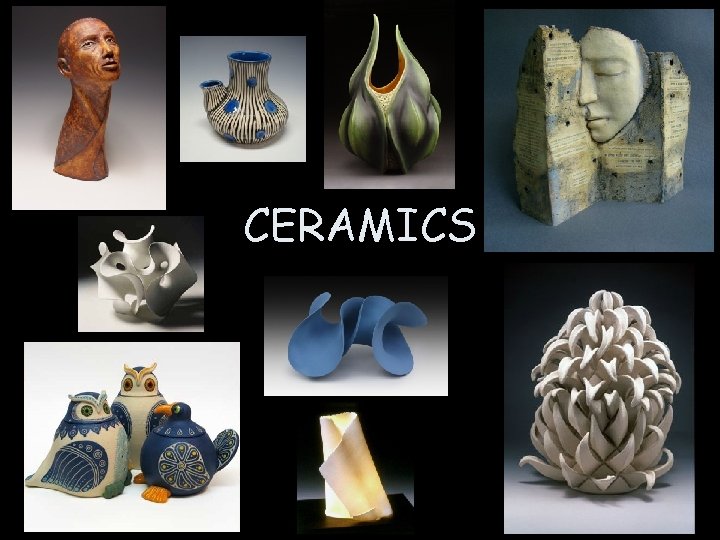
CERAMICS What is Ceramics Pottery or clay sculpture
- Slides: 30
CERAMICS
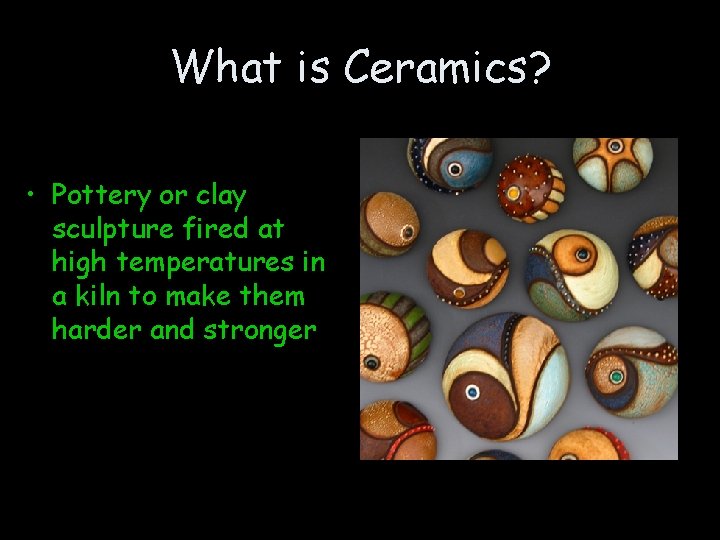
What is Ceramics? • Pottery or clay sculpture fired at high temperatures in a kiln to make them harder and stronger
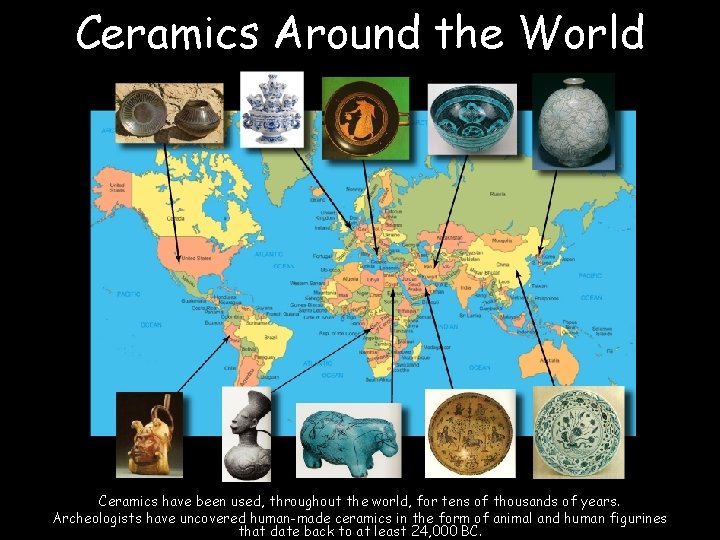
Ceramics Around the World Ceramics have been used, throughout the world, for tens of thousands of years. Archeologists have uncovered human-made ceramics in the form of animal and human figurines that date back to at least 24, 000 BC.
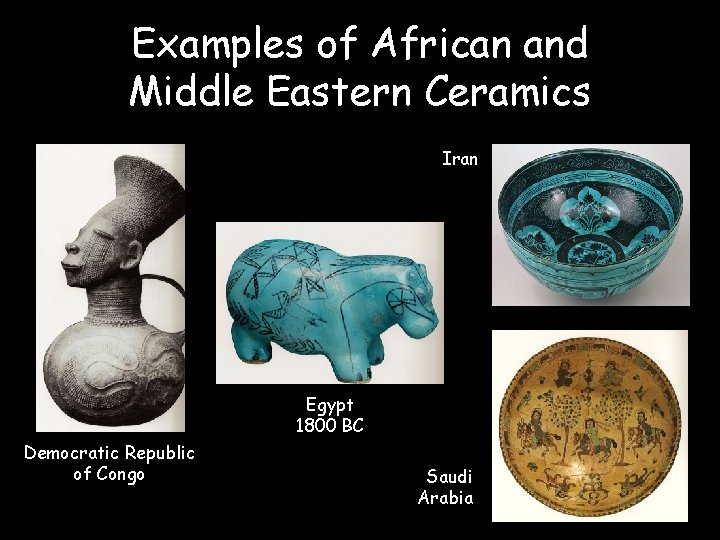
Examples of African and Middle Eastern Ceramics Iran Egypt 1800 BC Democratic Republic of Congo Saudi Arabia
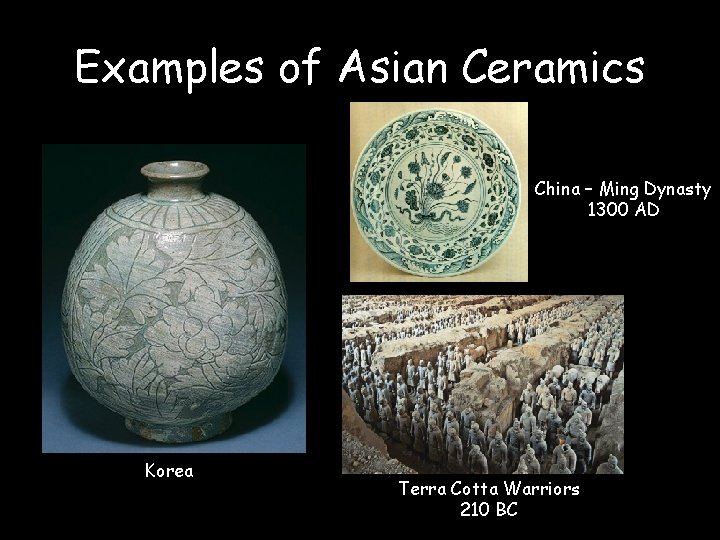
Examples of Asian Ceramics China – Ming Dynasty 1300 AD Korea Terra Cotta Warriors 210 BC
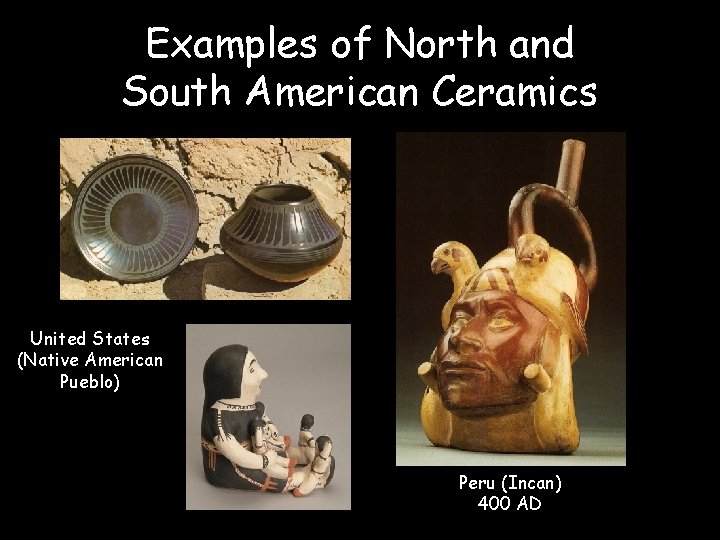
Examples of North and South American Ceramics United States (Native American Pueblo) Peru (Incan) 400 AD
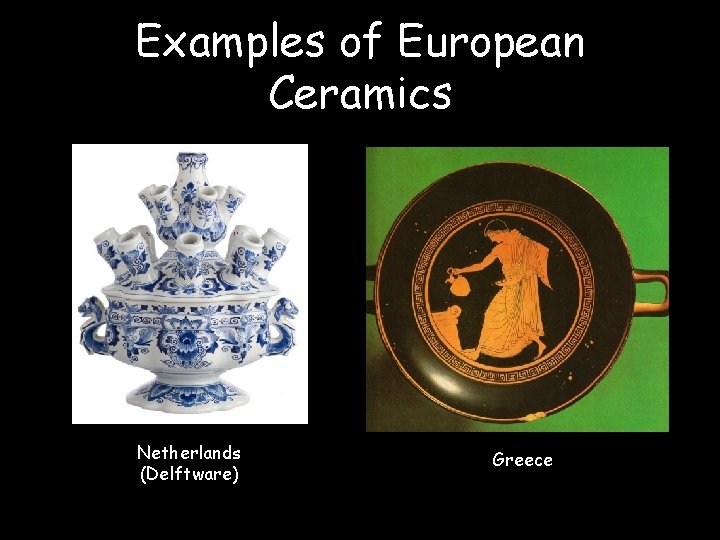
Examples of European Ceramics Netherlands (Delftware) Greece
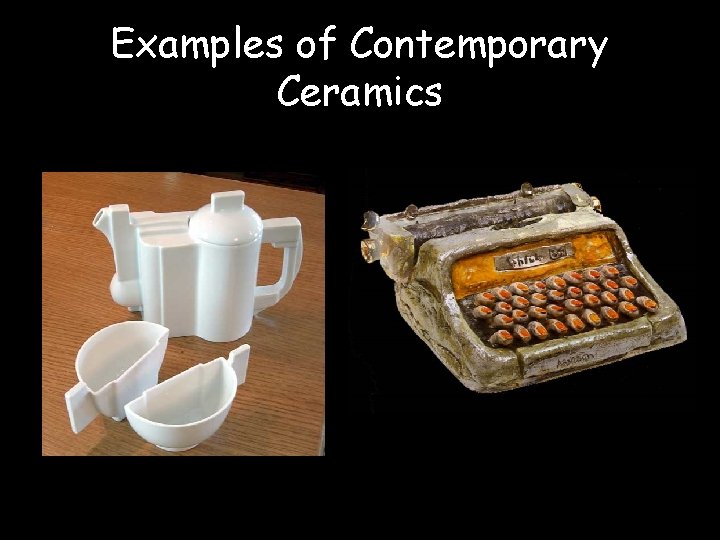
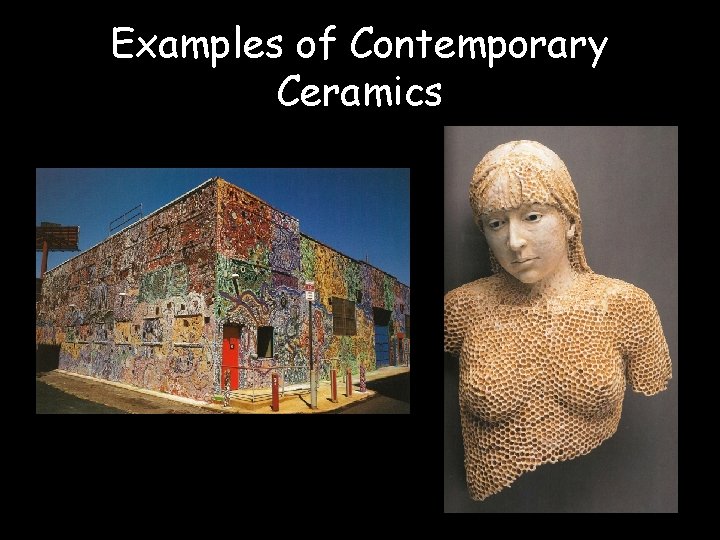
Examples of Contemporary Ceramics
Examples of Contemporary Ceramics
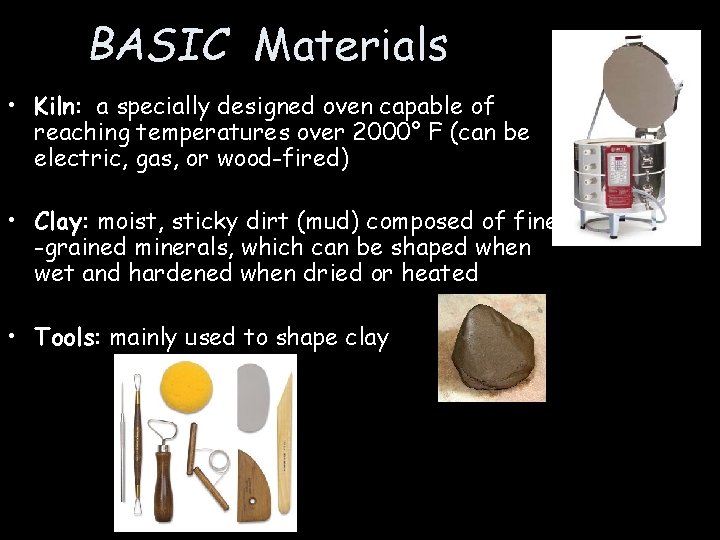
BASIC Materials • Kiln: a specially designed oven capable of reaching temperatures over 2000° F (can be electric, gas, or wood-fired) • Clay: moist, sticky dirt (mud) composed of fine -grained minerals, which can be shaped when wet and hardened when dried or heated • Tools: mainly used to shape clay
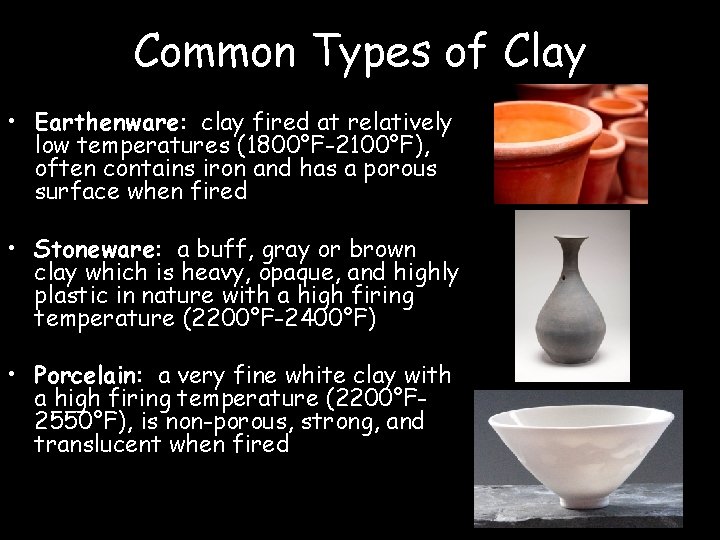
Common Types of Clay • Earthenware: clay fired at relatively low temperatures (1800°F-2100°F), often contains iron and has a porous surface when fired • Stoneware: a buff, gray or brown clay which is heavy, opaque, and highly plastic in nature with a high firing temperature (2200°F-2400°F) • Porcelain: a very fine white clay with a high firing temperature (2200°F 2550°F), is non-porous, strong, and translucent when fired
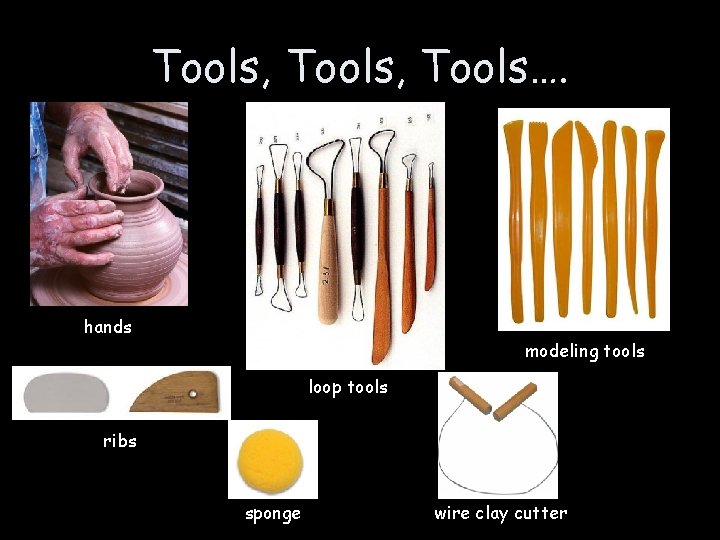
Tools, Tools…. hands modeling tools loop tools ribs sponge wire clay cutter
Clay Shaping Methods • Wheel Throwing • Slip Casting • Hand Building
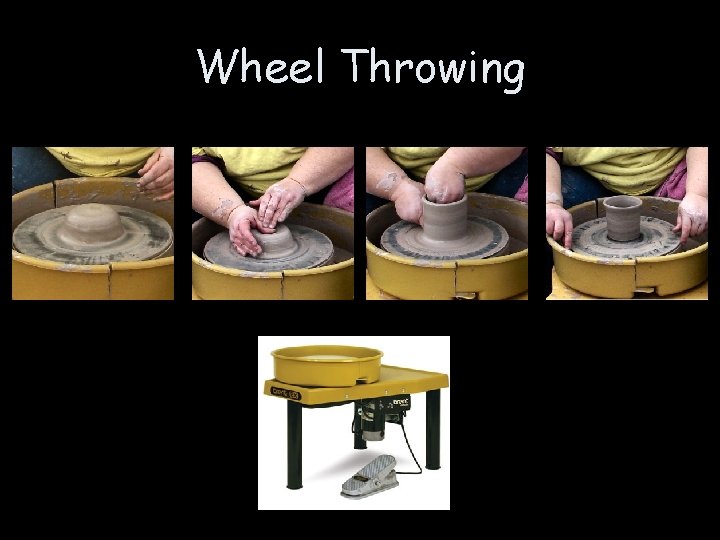
Wheel Throwing
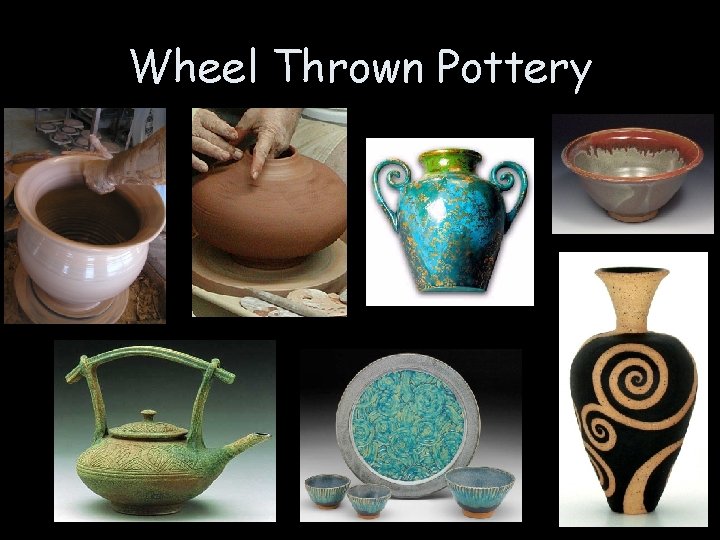
Wheel Thrown Pottery
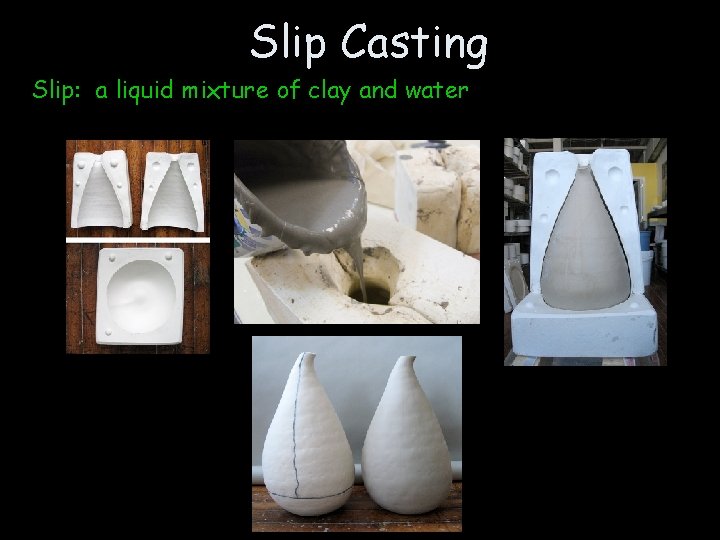
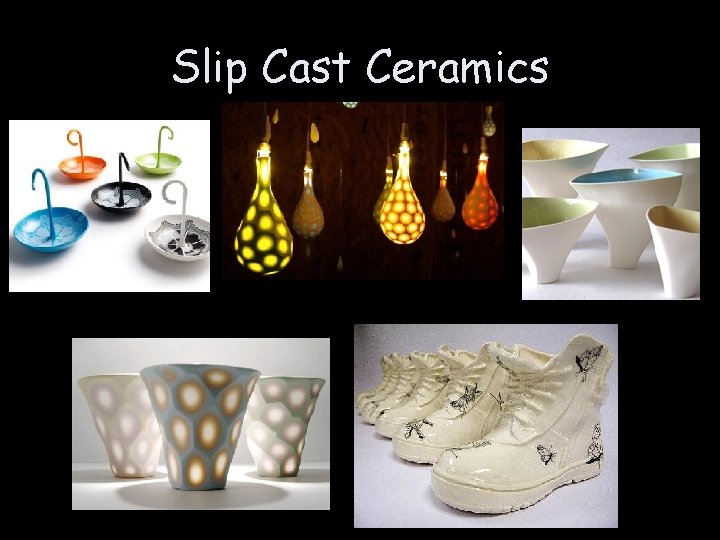
Slip Casting Slip: a liquid mixture of clay and water
Slip Cast Ceramics
Hand Building • Pinch Pot • Coil Construction • Slab Construction
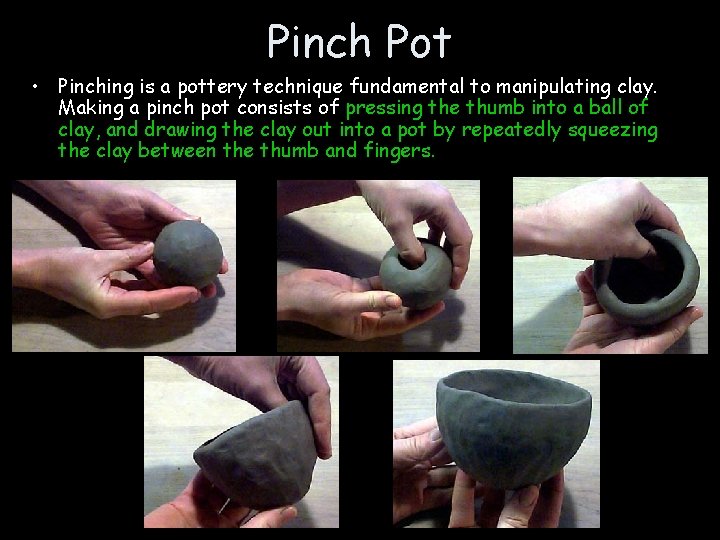
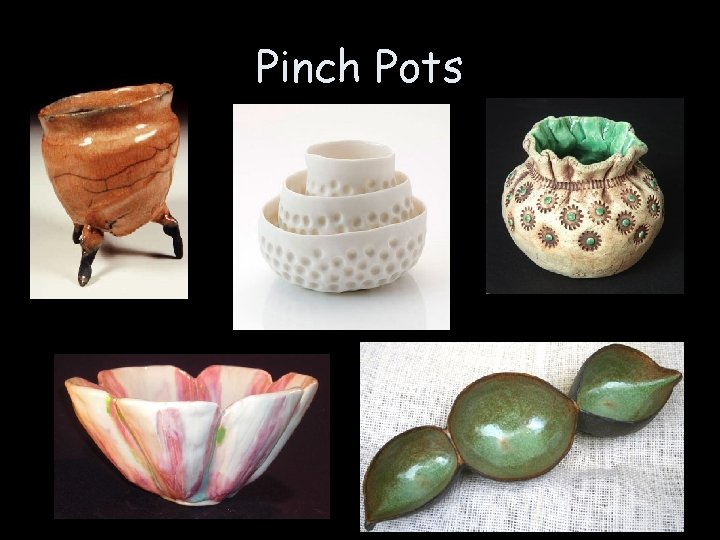
Pinch Pot • Pinching is a pottery technique fundamental to manipulating clay. Making a pinch pot consists of pressing the thumb into a ball of clay, and drawing the clay out into a pot by repeatedly squeezing the clay between the thumb and fingers.
Pinch Pots
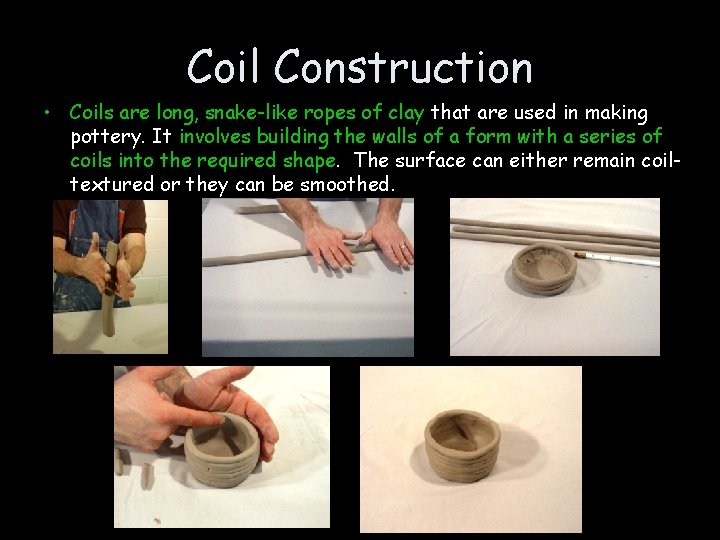
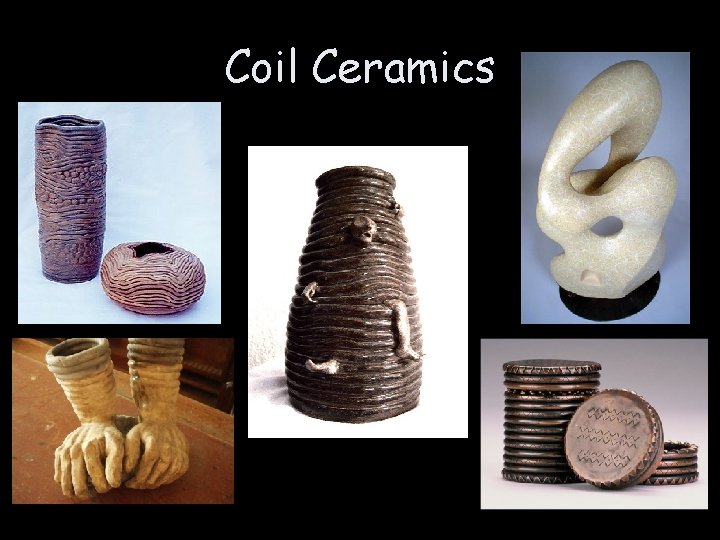
Coil Construction • Coils are long, snake-like ropes of clay that are used in making pottery. It involves building the walls of a form with a series of coils into the required shape. The surface can either remain coiltextured or they can be smoothed.
Coil Ceramics
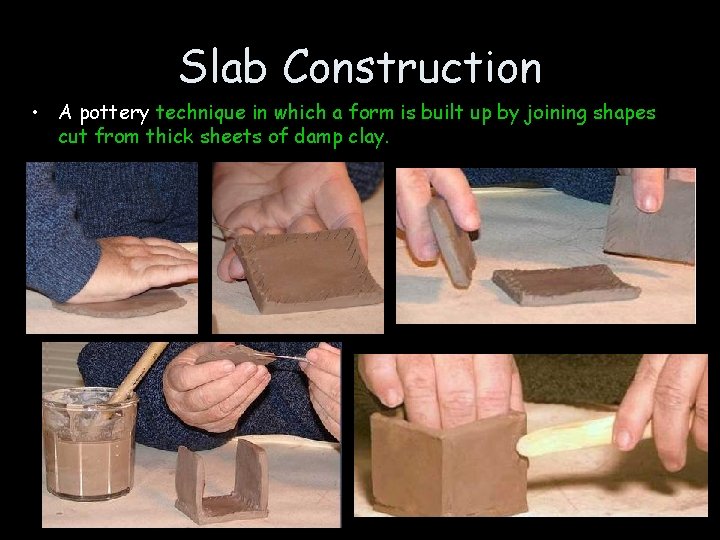
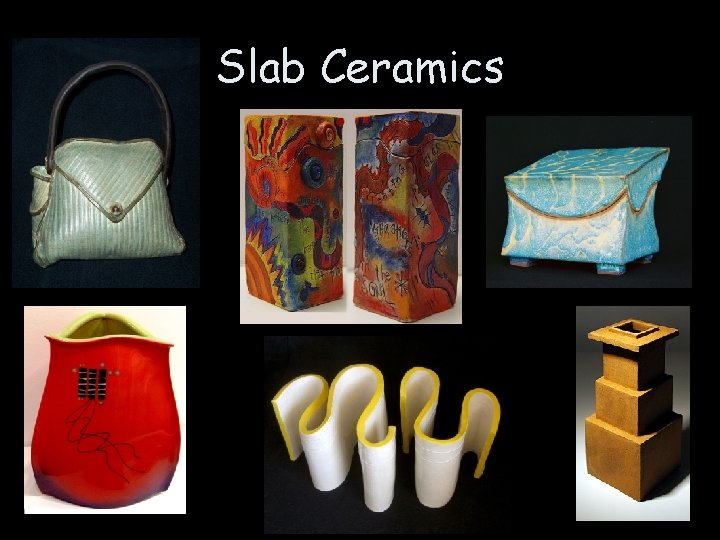
Slab Construction • A pottery technique in which a form is built up by joining shapes cut from thick sheets of damp clay.
Slab Ceramics
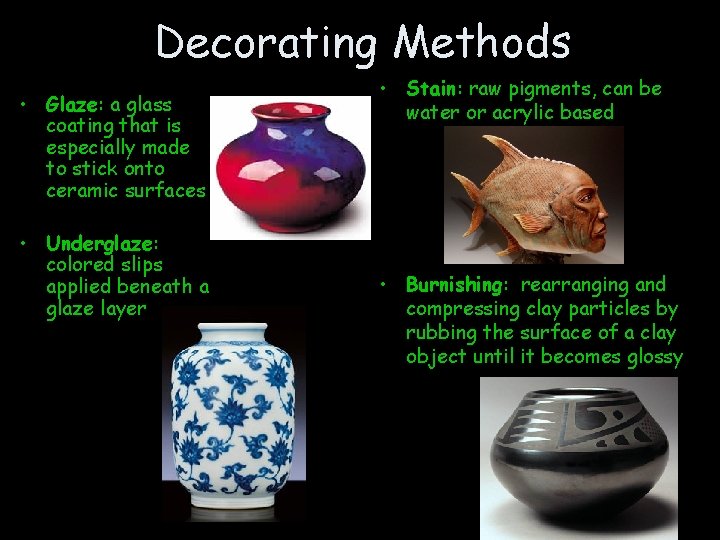
Decorating Methods • Glaze: a glass coating that is especially made to stick onto ceramic surfaces • Underglaze: colored slips applied beneath a glaze layer • Stain: raw pigments, can be water or acrylic based • Burnishing: rearranging and compressing clay particles by rubbing the surface of a clay object until it becomes glossy
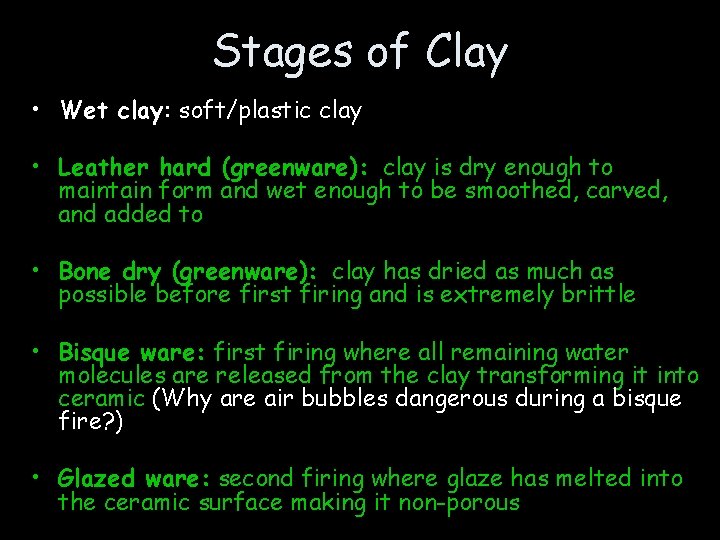
Stages of Clay • Wet clay: soft/plastic clay • Leather hard (greenware): clay is dry enough to maintain form and wet enough to be smoothed, carved, and added to • Bone dry (greenware): clay has dried as much as possible before first firing and is extremely brittle • Bisque ware: first firing where all remaining water molecules are released from the clay transforming it into ceramic (Why are air bubbles dangerous during a bisque fire? ) • Glazed ware: second firing where glaze has melted into the ceramic surface making it non-porous
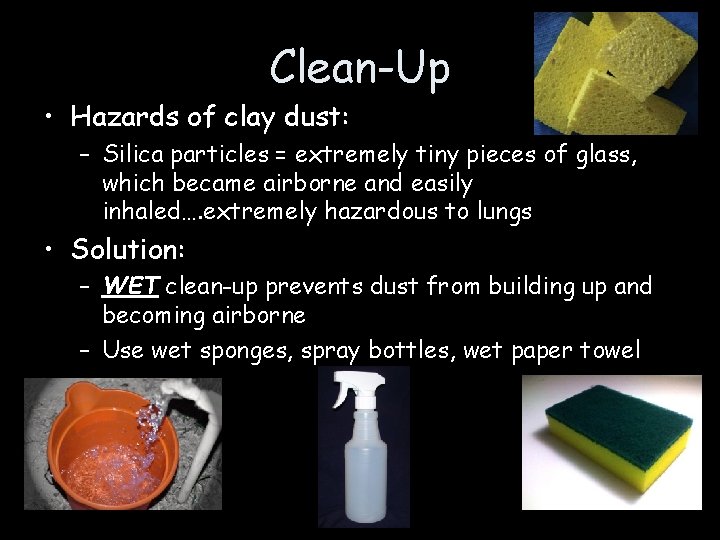
Clean-Up • Hazards of clay dust: – Silica particles = extremely tiny pieces of glass, which became airborne and easily inhaled…. extremely hazardous to lungs • Solution: – WET clean-up prevents dust from building up and becoming airborne – Use wet sponges, spray bottles, wet paper towel
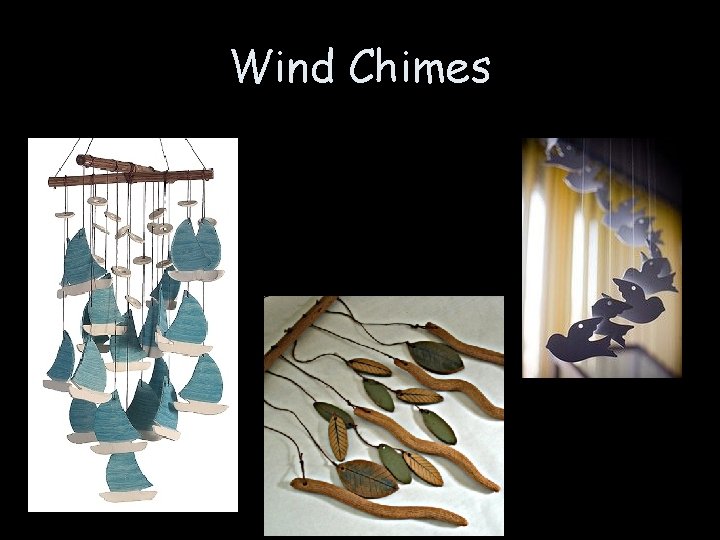
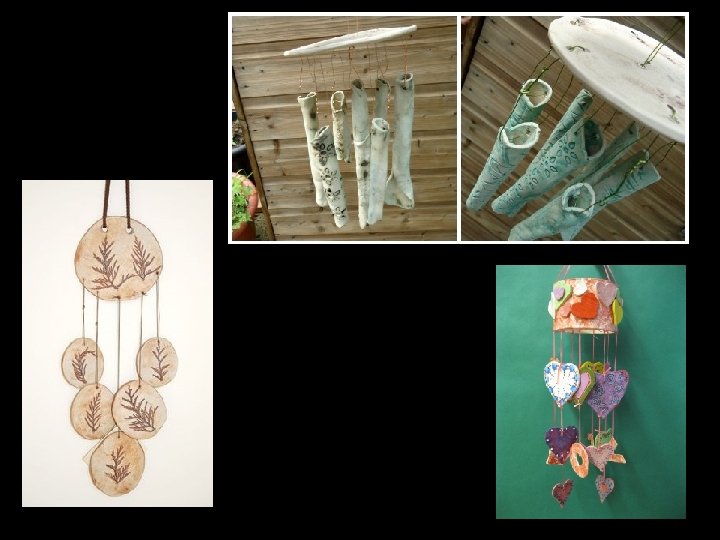
Wind Chimes
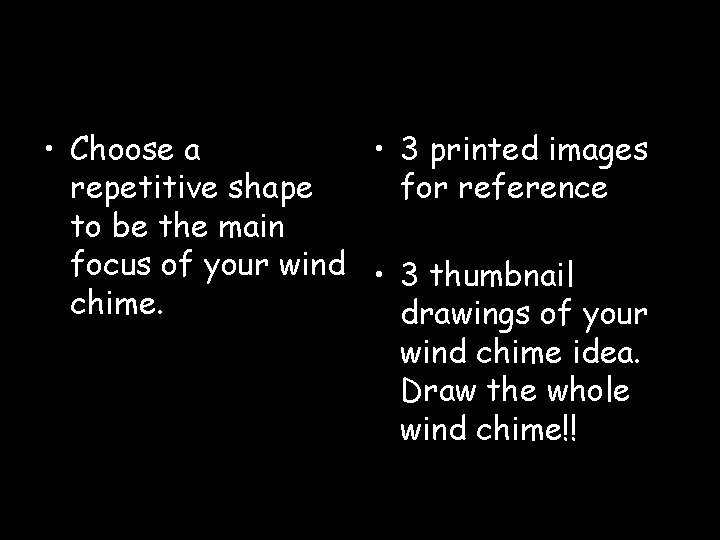
• Choose a • 3 printed images repetitive shape for reference to be the main focus of your wind • 3 thumbnail chime. drawings of your wind chime idea. Draw the whole wind chime!!