
Ceramic Technology and Analysis Clay and temper preparation
- Slides: 25
Ceramic Technology and Analysis
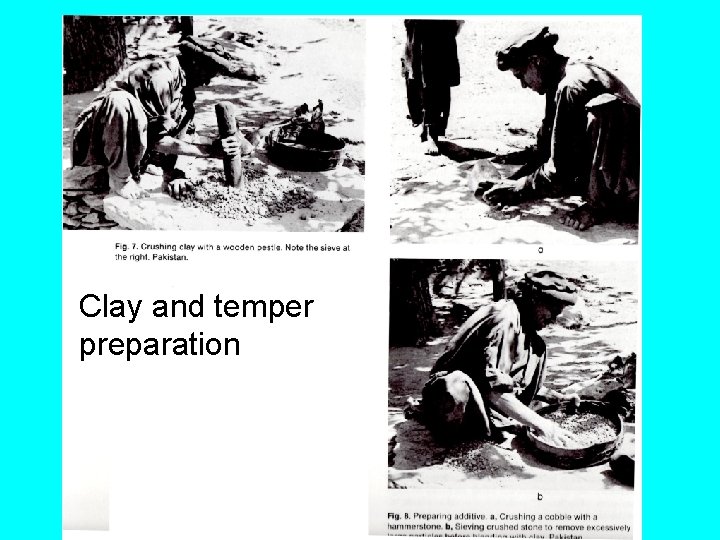
Clay and temper preparation
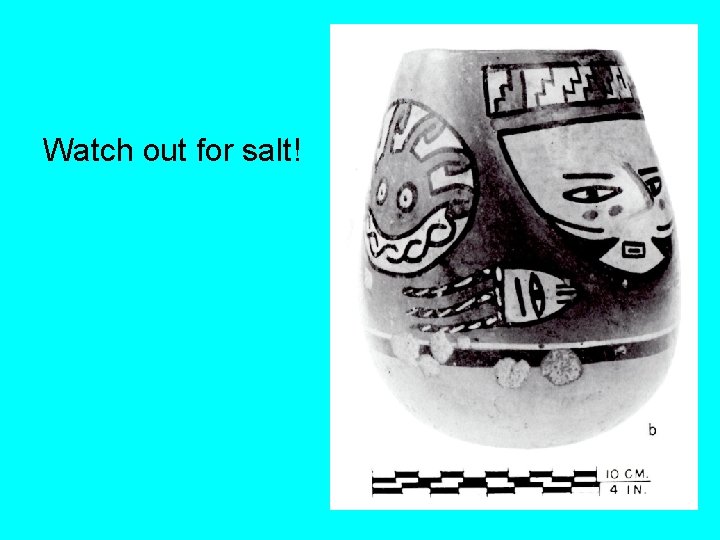
Watch out for salt!
Temper • As the clay in pottery dries, or is fired, the loss of water causes compaction of the clay platelets, which may cause cracking. • Temper is a material that is added to clay that resists shrinkage and is also refractory under the conditions of firing. It can take many forms, including grog, which is ground-up sherds.
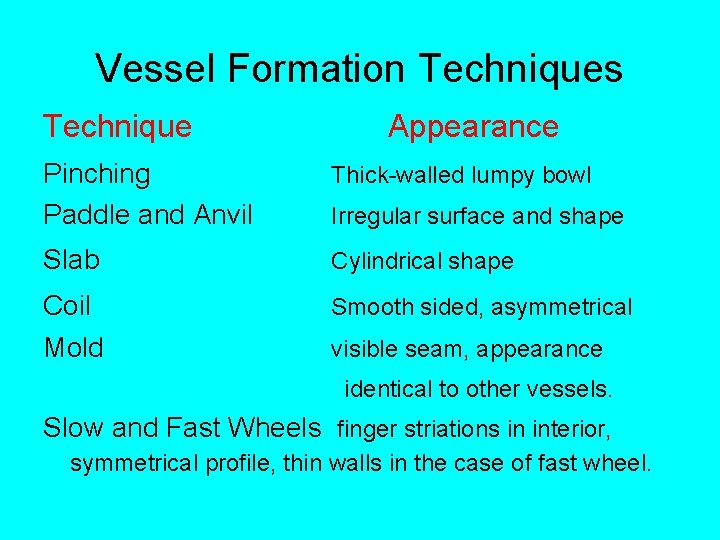
Vessel Formation Techniques Technique Appearance Pinching Paddle and Anvil Thick-walled lumpy bowl Slab Cylindrical shape Coil Mold Smooth sided, asymmetrical Irregular surface and shape visible seam, appearance identical to other vessels. Slow and Fast Wheels finger striations in interior, symmetrical profile, thin walls in the case of fast wheel.
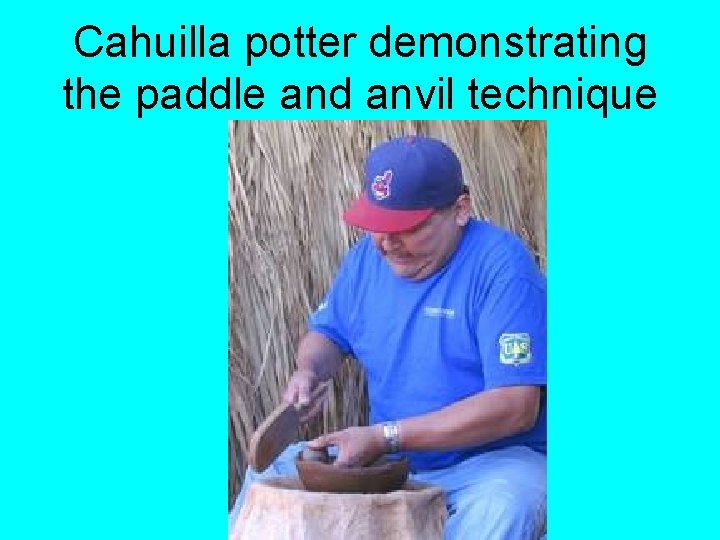
Cahuilla potter demonstrating the paddle and anvil technique
Steps in Vessel Formation 1. Digging and preparing clay, adding temper. 2. Forming the base (sometimes a mold is used, e. g. a basket). 3. Forming the walls, including scraping. 4. Applying impressed decoration while clay is still plastic. 5. Slipping pot while it is still damp.
6. Drying. 7. Burnishing, painting, and glazing (if desired).
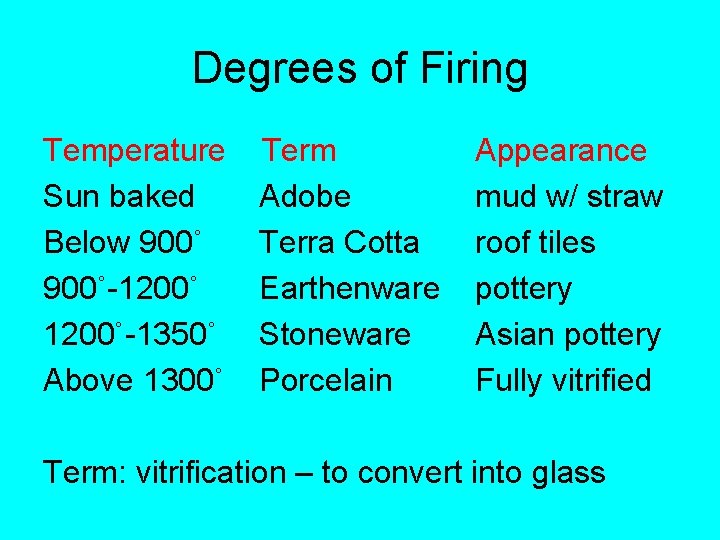
Degrees of Firing Temperature Sun baked Below 900˚-1200˚-1350˚ Above 1300˚ Term Adobe Terra Cotta Earthenware Stoneware Porcelain Appearance mud w/ straw roof tiles pottery Asian pottery Fully vitrified Term: vitrification – to convert into glass
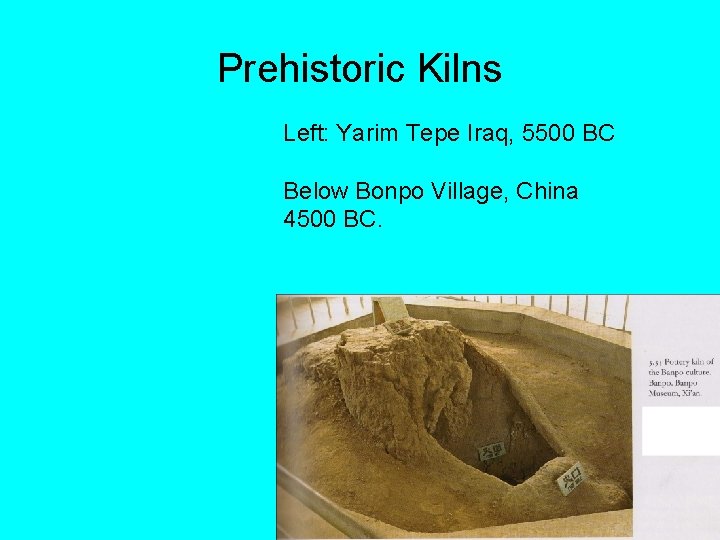
Prehistoric Kilns Left: Yarim Tepe Iraq, 5500 BC Below Bonpo Village, China 4500 BC.
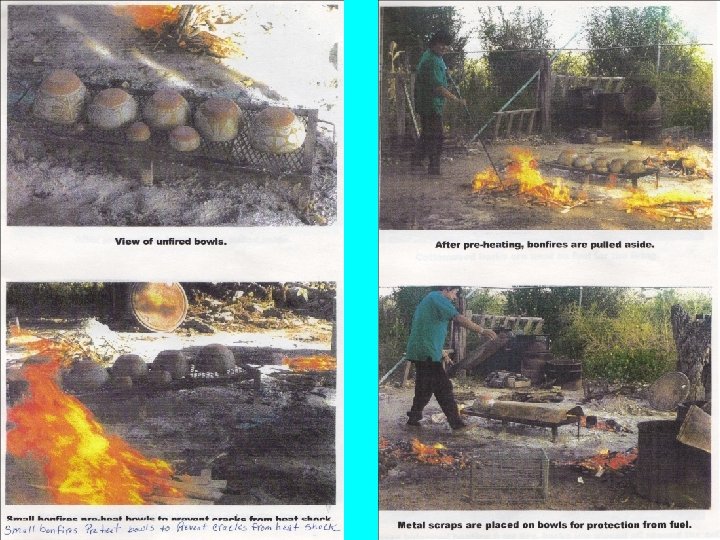
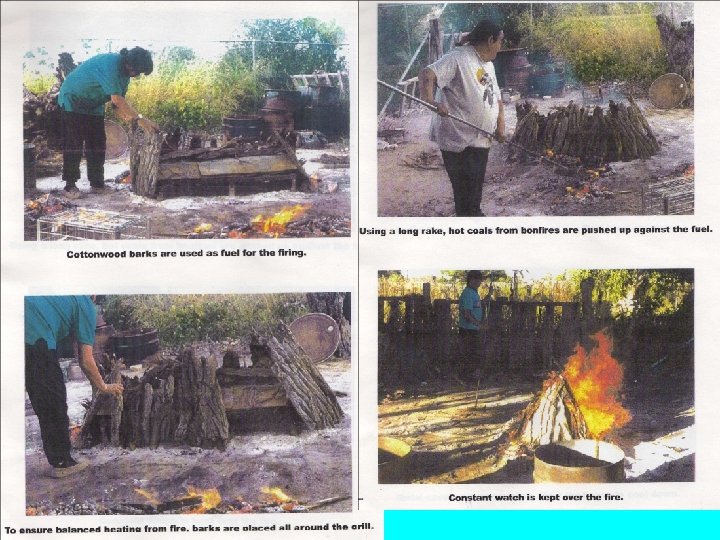
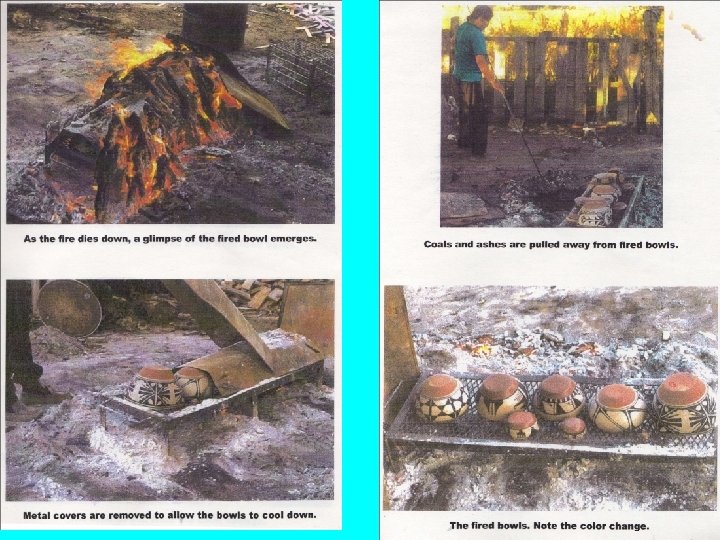
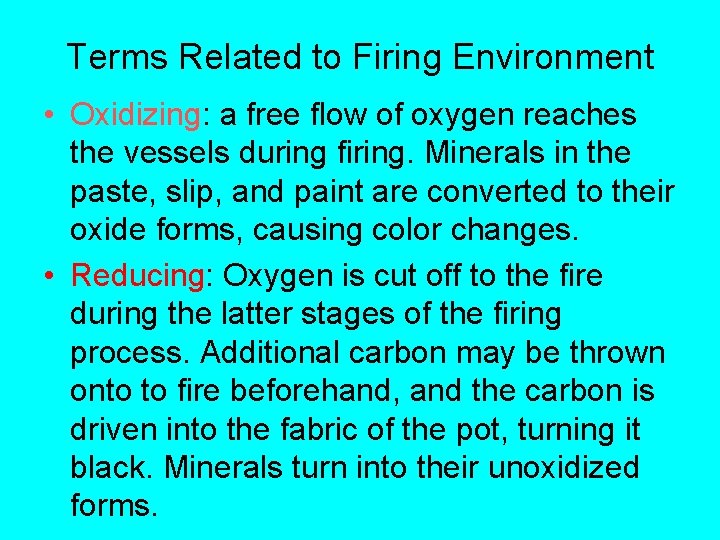
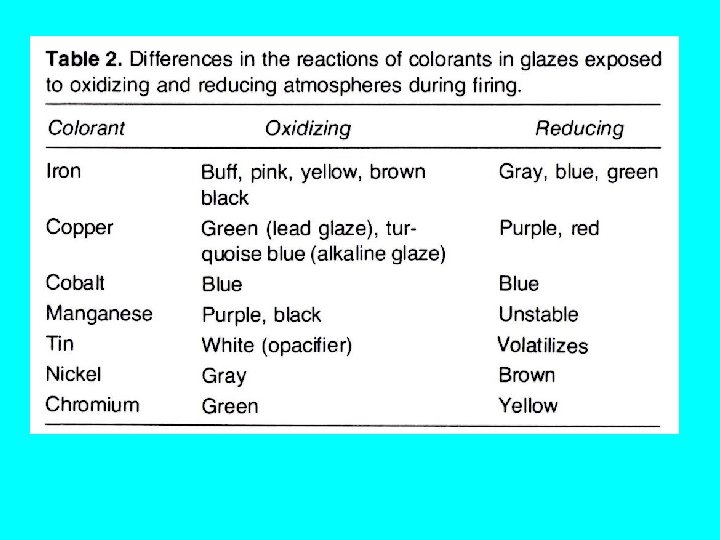
Terms Related to Firing Environment • Oxidizing: a free flow of oxygen reaches the vessels during firing. Minerals in the paste, slip, and paint are converted to their oxide forms, causing color changes. • Reducing: Oxygen is cut off to the fire during the latter stages of the firing process. Additional carbon may be thrown onto to fire beforehand, and the carbon is driven into the fabric of the pot, turning it black. Minerals turn into their unoxidized forms.
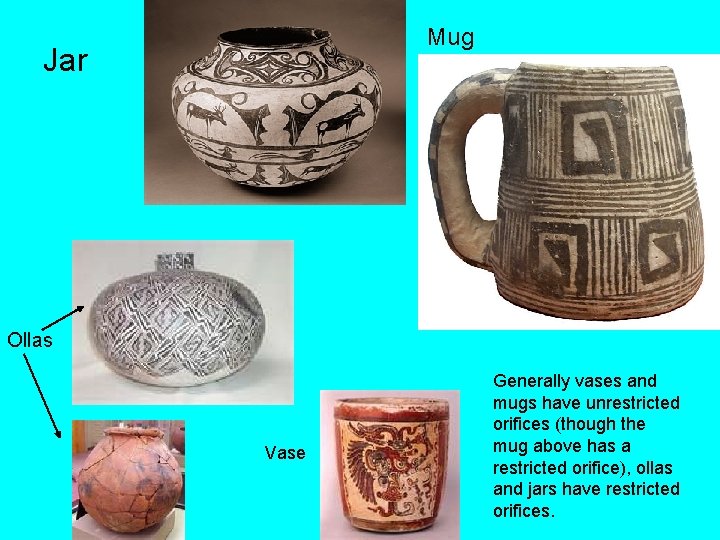
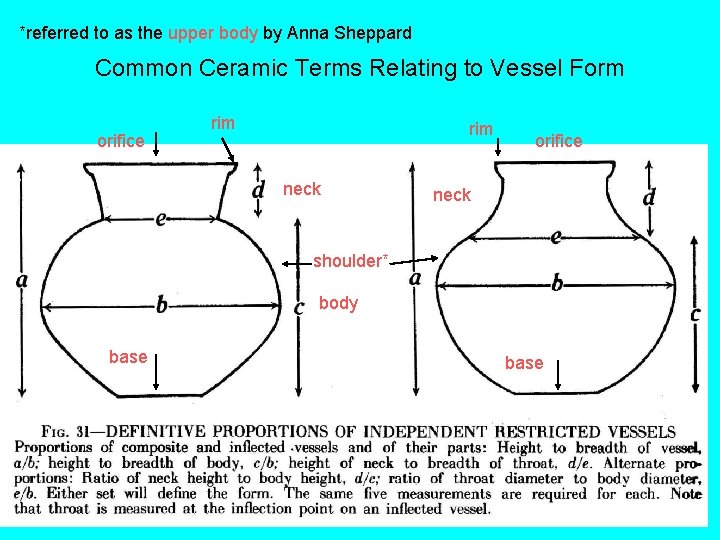
Mug Jar Ollas Vase Generally vases and mugs have unrestricted orifices (though the mug above has a restricted orifice), ollas and jars have restricted orifices.
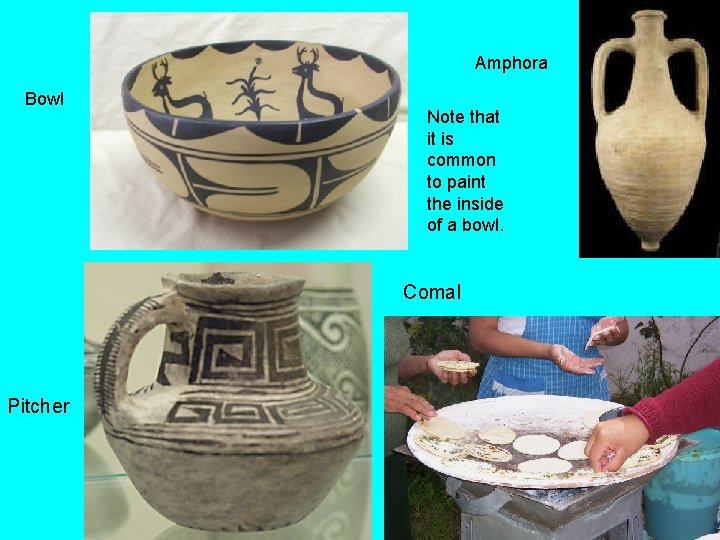
Amphora Bowl Note that it is common to paint the inside of a bowl. Comal Pitcher
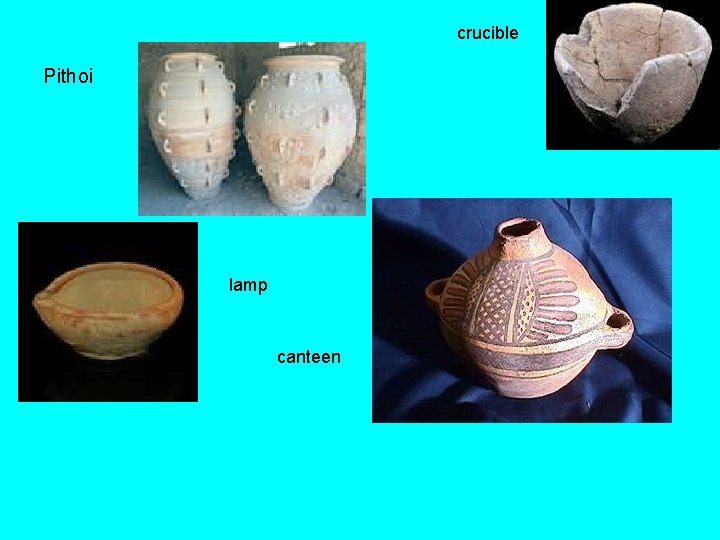
crucible Pithoi lamp canteen
*referred to as the upper body by Anna Sheppard Common Ceramic Terms Relating to Vessel Form orifice rim neck orifice neck shoulder* body base
Asian Ceramic Technology: Han Dynasty 206 BCE – 220 AD • Lead glazed pottery: low-fired pottery that uses powdered lead oxide as fluxing agent, mixed with quartz in a ratio of 3: 1. Small amounts of copper were added that turned green when oxidized, or iron which turned brownish-yellow.
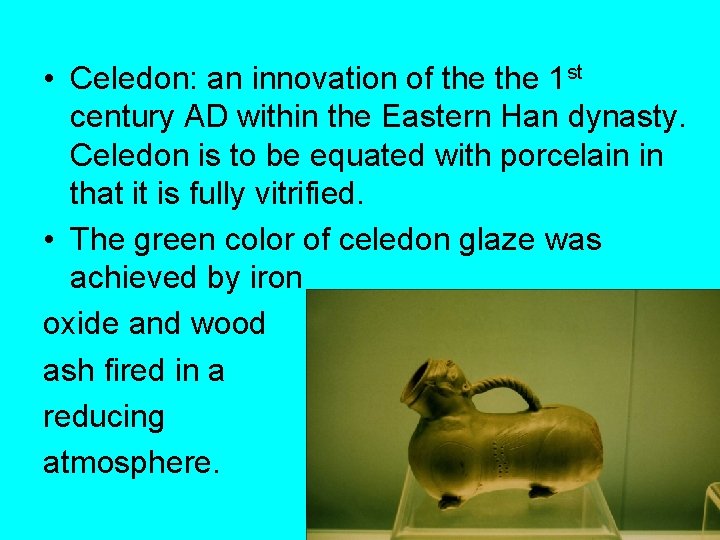
• Celedon: an innovation of the 1 st century AD within the Eastern Han dynasty. Celedon is to be equated with porcelain in that it is fully vitrified. • The green color of celedon glaze was achieved by iron oxide and wood ash fired in a reducing atmosphere.
Porcelain • Porcelain is fully vitrified pottery made from Kaolin clay. It has to be fired at between 1200 and 1400 degrees celsius.