
CEPSTRAL ANALYSIS Cepstral analysis synthesis on the mel


- Slides: 24
CEPSTRAL ANALYSIS Cepstral analysis synthesis on the mel frequency scale, and an adaptative algorithm for it. Cecilia Caruncho Llaguno
Sources l Cepstral analysis on the mel frequency scale – l Satoshi Imai - Tokio Institute of Technology, 1983 An adaptative algorithm for mel-cepstral analysis of speech – – Toshiako Fukada - Canon Inc. Kawasaki, 1992 Keeichi Tokuda, Takao Kobayasi, and Satoshi Imai - Tokio Institute of Technology, 1992
Basic Concepts l Cepstral Analysis – – l Definition Features Mel frequency scale
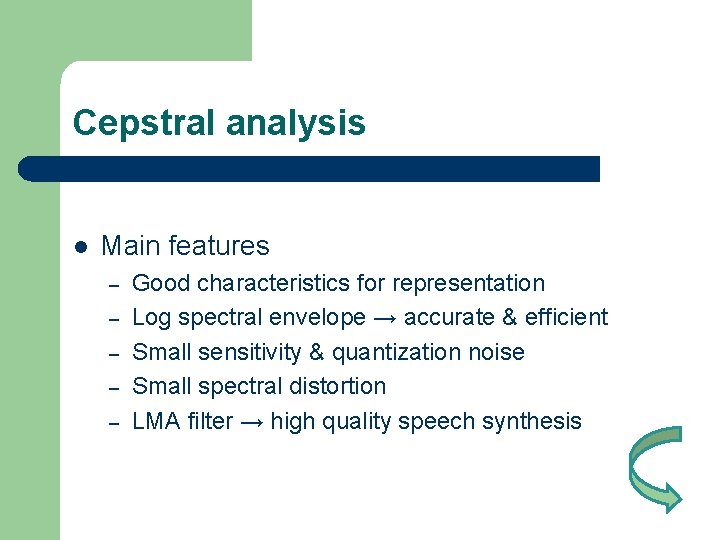
Cepstral analysis l Main features – – – Good characteristics for representation Log spectral envelope → accurate & efficient Small sensitivity & quantization noise Small spectral distortion LMA filter → high quality speech synthesis
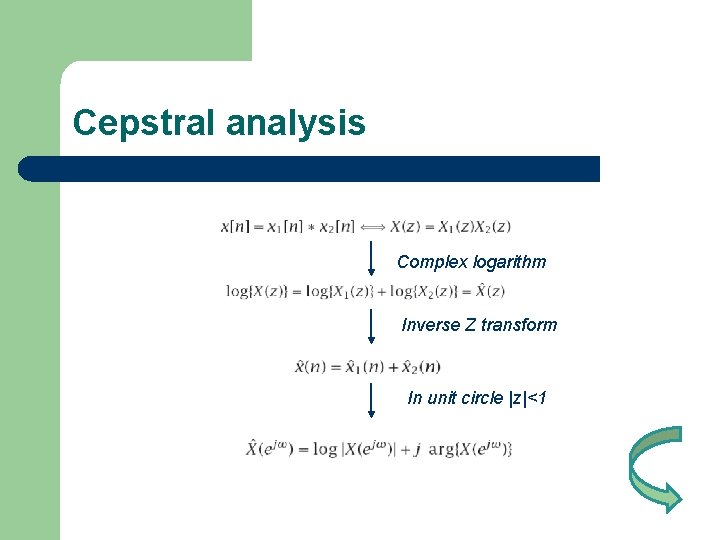
Cepstral analysis Complex logarithm Inverse Z transform In unit circle |z|<1
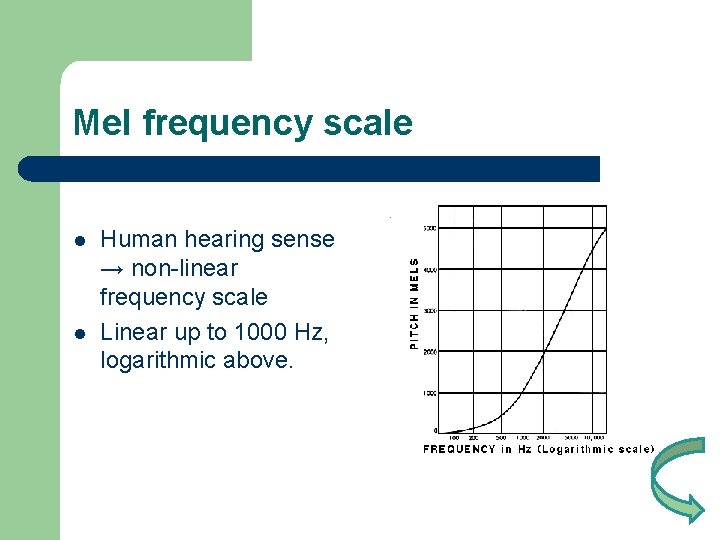
Mel frequency scale l l Human hearing sense → non-linear frequency scale Linear up to 1000 Hz, logarithmic above.
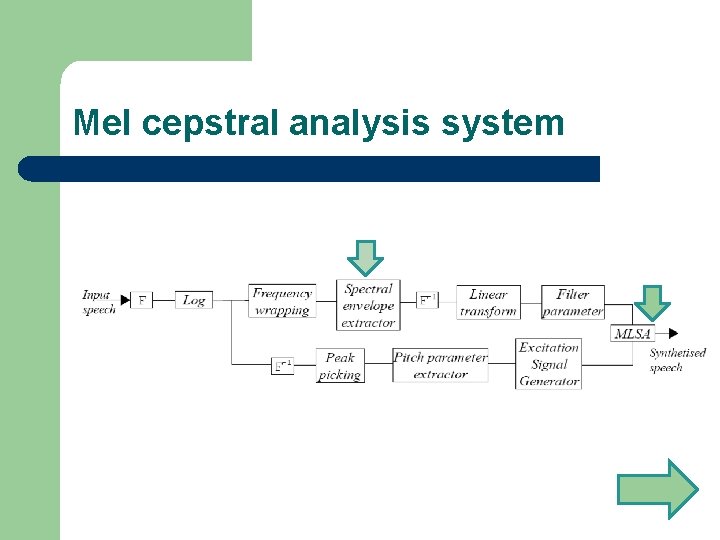
Mel cepstral analysis system
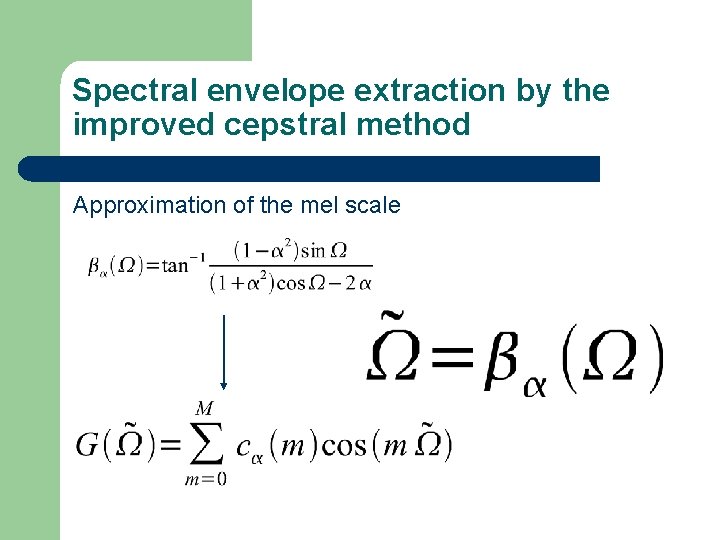
Spectral envelope extraction by the improved cepstral method Approximation of the mel scale
Spectral envelope extraction by the improved cepstral method l Former method: – l Fine structure → The spectral envelope is not suficiently separated from the pitch parameter Present method: – Can extract the envelope without being affected by the fine structure.
Mel Log Spectrum Approximation filter l Why do we use it? – – l l High quality Simple Coefficient sensitivities Quantization characteristics Transfer function Quantization of the filter parameter
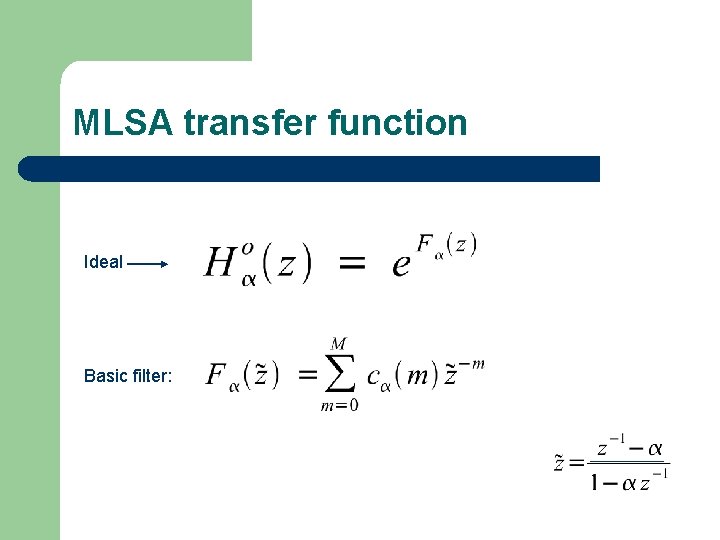
MLSA transfer function Ideal Basic filter:
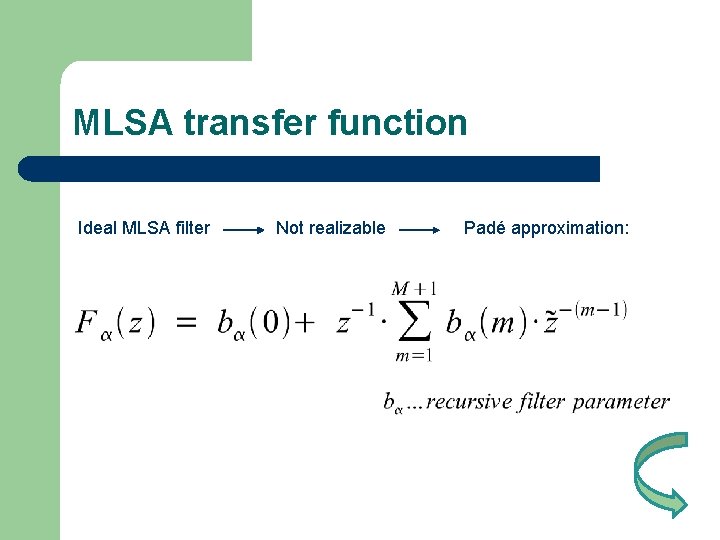
MLSA transfer function Ideal MLSA filter Not realizable Padé approximation:
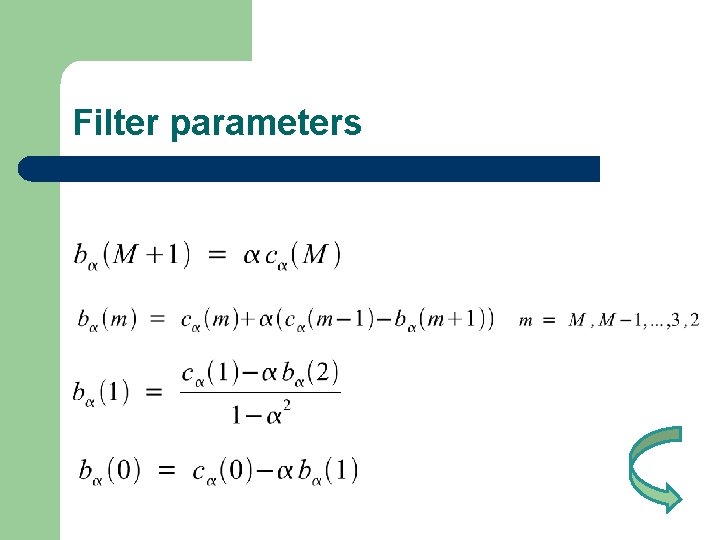
Filter parameters
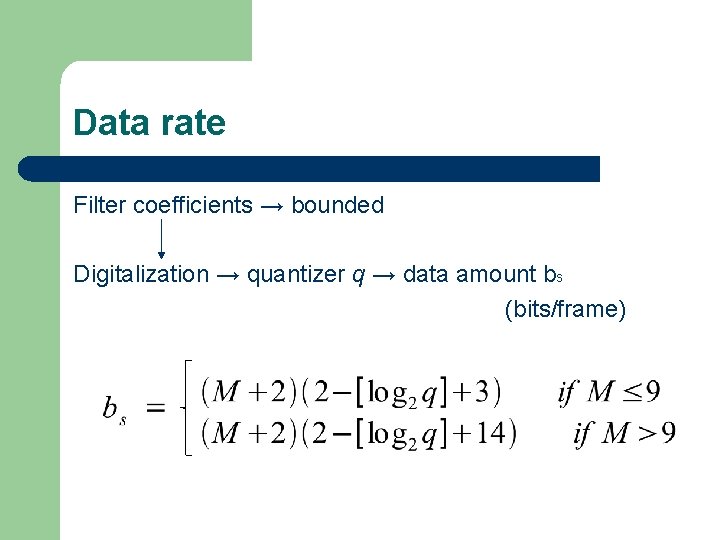
Data rate Filter coefficients → bounded Digitalization → quantizer q → data amount bs (bits/frame)
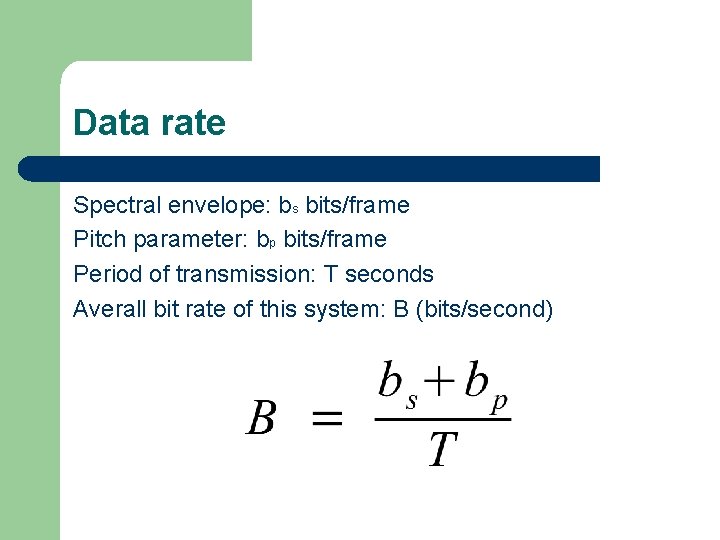
Data rate Spectral envelope: bs bits/frame Pitch parameter: bp bits/frame Period of transmission: T seconds Averall bit rate of this system: B (bits/second)
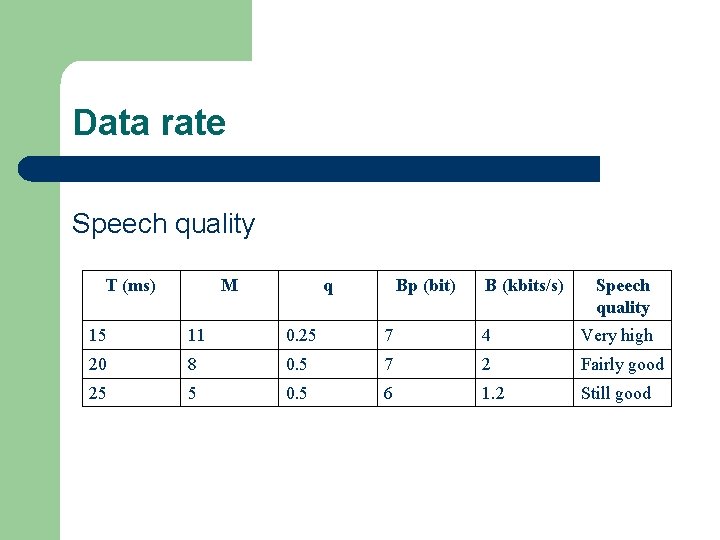
Data rate Speech quality T (ms) M q Bp (bit) B (kbits/s) Speech quality 15 11 0. 25 7 4 Very high 20 8 0. 5 7 2 Fairly good 25 5 0. 5 6 1. 2 Still good
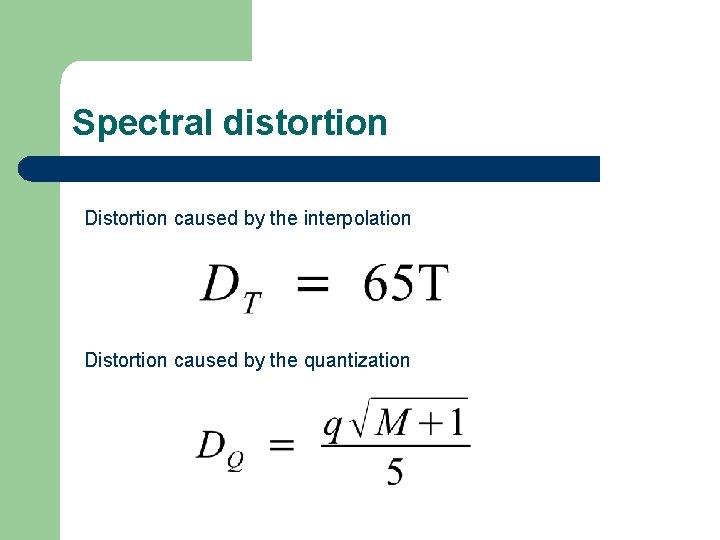
Spectral distortion Distortion caused by the interpolation Distortion caused by the quantization
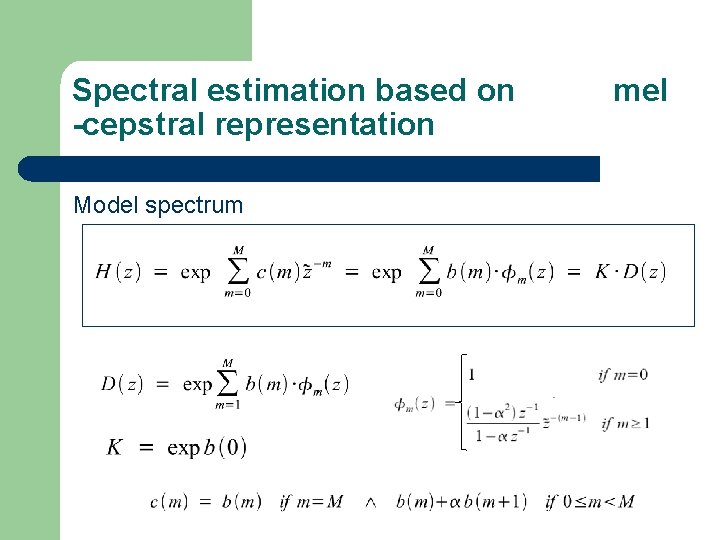
Spectral estimation based on -cepstral representation Model spectrum mel
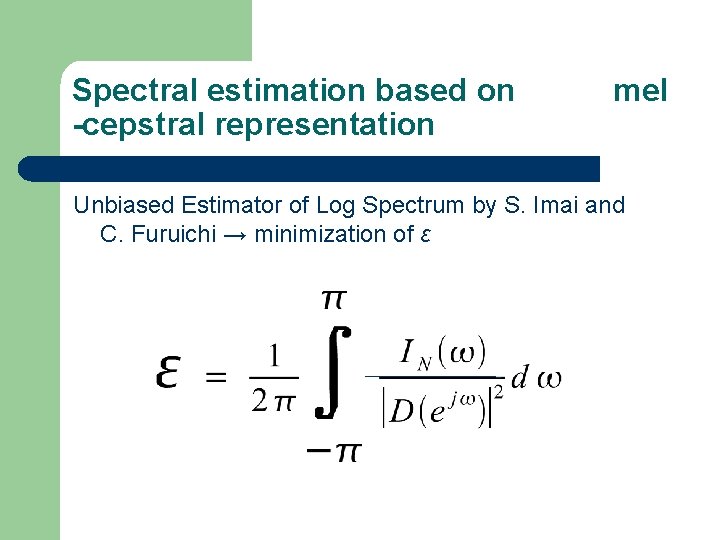
Spectral estimation based on -cepstral representation mel Unbiased Estimator of Log Spectrum by S. Imai and C. Furuichi → minimization of ε
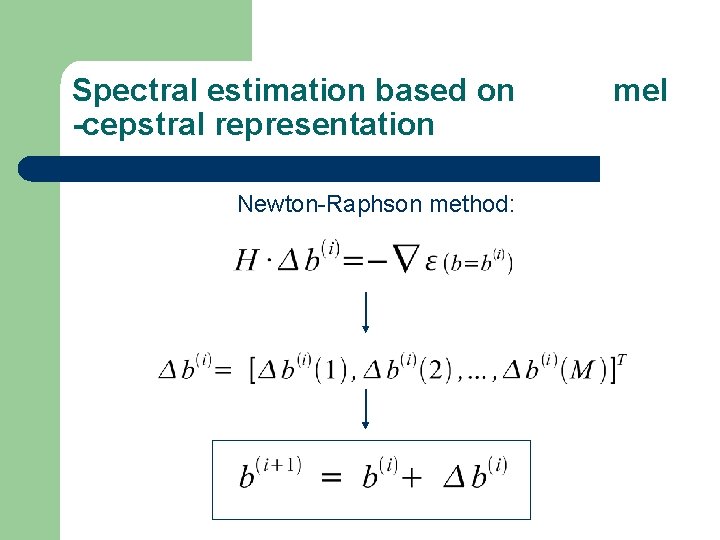
Spectral estimation based on -cepstral representation Newton-Raphson method: mel
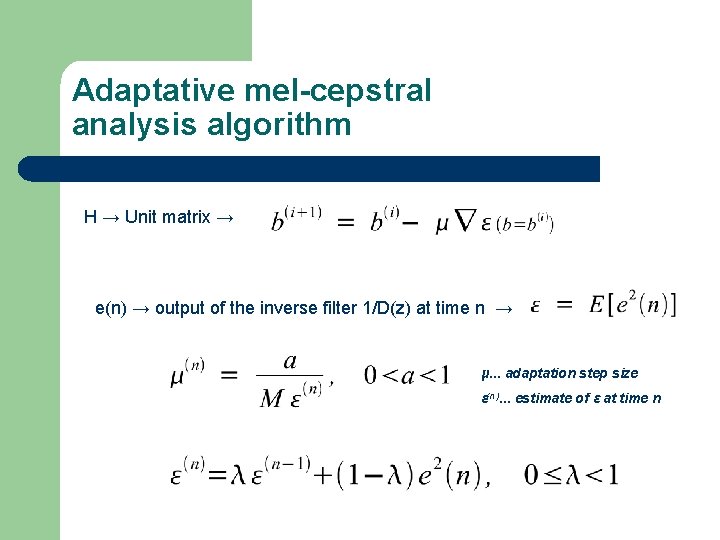
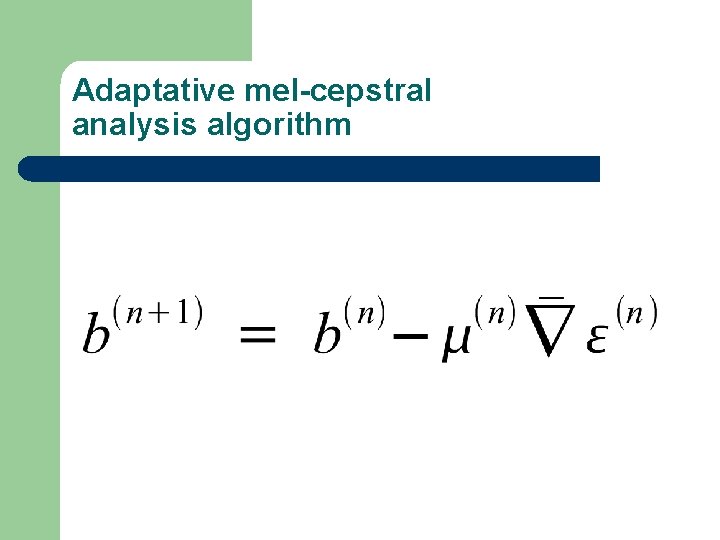
Adaptative mel-cepstral analysis algorithm H → Unit matrix → e(n) → output of the inverse filter 1/D(z) at time n → μ. . . adaptation step size ε(n). . . estimate of ε at time n
Adaptative mel-cepstral analysis algorithm
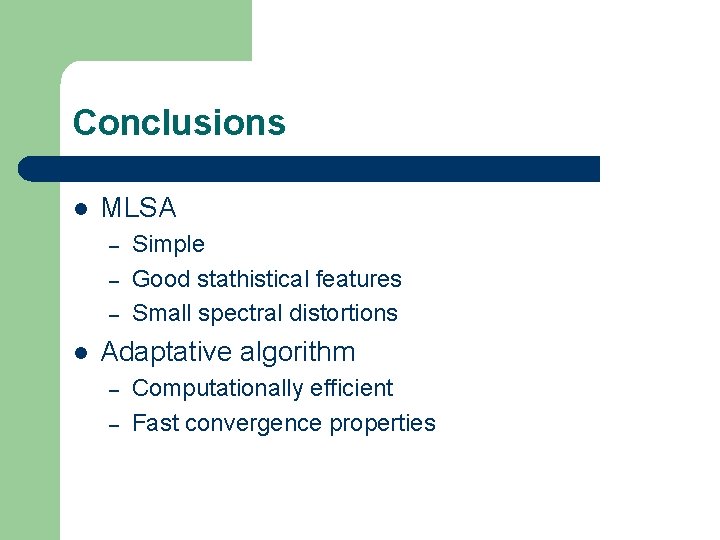
Conclusions l MLSA – – – l Simple Good stathistical features Small spectral distortions Adaptative algorithm – – Computationally efficient Fast convergence properties
Questions? Thank you for your attention Muchas gracias por su atención