
Cephalosporins First Generation Cephalosporins Second Generation Cephalosporins Third
- Slides: 26
Cephalosporins • First Generation Cephalosporins • Second Generation Cephalosporins • Third Generation Cephalosporins • Fourth Generation Cephalosporins
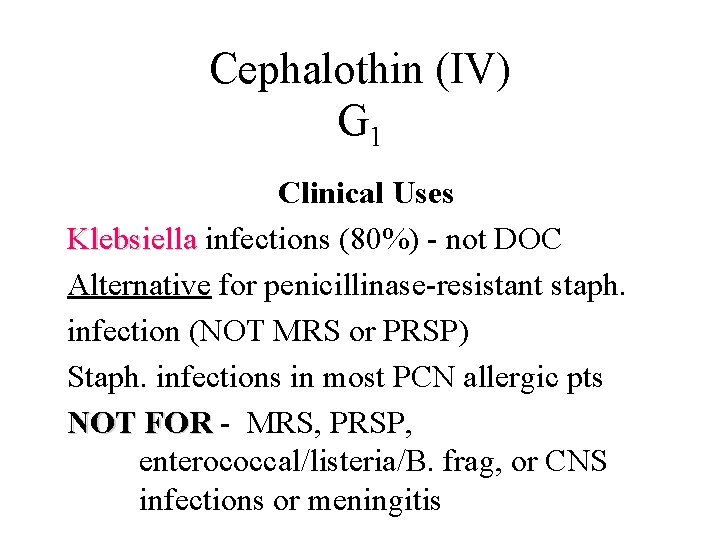
Cephalothin (IV) G 1 Spectrum Adverse Reactions Special Properties Pharmoco-kinetics Drug Clinical Reactions Uses Similar to ampicillin except effect against: Common - allergic rxn (less than PCNs); pain Klebsiella infections (80%) - not DOC Inadequate CSF penetration for meningitis Klebsiella • Klebsiella pneumoniae Klebsiella and absess at IM inj site (less with Can be used with caution in pts allergic to Alternative for penicillinase-resistant staph. Possible potentiation of nephrotoxicity • · Elimination - primarily RTS Penicillinase-producing staphylococci (not MRSA or cefazolin); NVD; + coombs test PRSP) and many gram + (proximal tubular necrosis) with concurrent PCNs but not those with immediate infection (NOT MRS or PRSP) • E. coli, P. mirabilis use of aminoglycosides, loop diuretics, or hypersensitivity rxn • Somewhat against H. influenzae Staph. infections in most PCN allergic pts probenecid • NOT for enterococci, listeria, or MRS NOT FOR - MRS, PRSP, FOR • Staphylococci (and other gram +) - cephalothin > cefazolin enterococcal/listeria/B. frag, or CNS • Gram - bacilli - cefazolin > cephalothin infections or meningitis
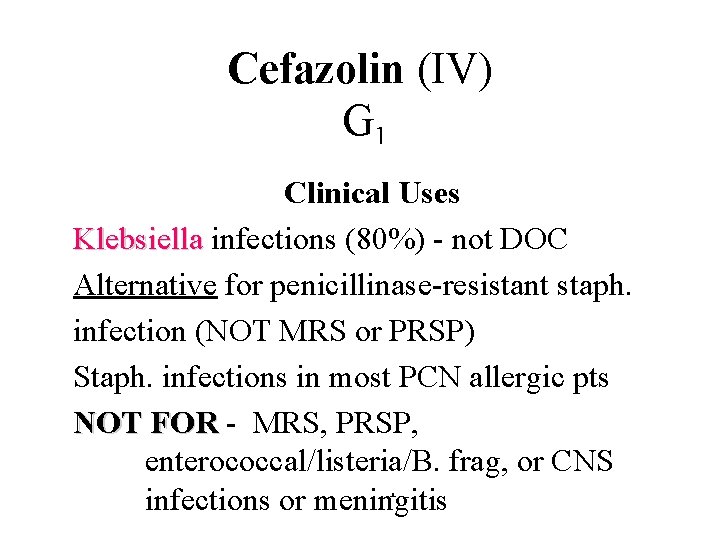
Cefazolin (IV) G 1 Adverse Drug Reactions Pharmoco-kinetics Special Properties Spectrum Clinical Uses Common - allergic rxn (less than PCNs); pain Inadequate CSF penetration for meningitis Similar to ampicillin except effect against: Klebsiella infections (80%) - not DOC Klebsiella and absess at IM inj site (less with • Klebsiella pneumoniae Possible potentiation of nephrotoxicity Klebsiella Can be used with caution in pts allergic to Alternative for penicillinase-resistant staph. cefazolin); NVD; + coombs test • (proximal tubular necrosis) with concurrent Penicillinase-producing staphylococci (not MRSA or Cefazolin - elim. GF > RTS; longer t/2 PCNs but not those with immediate PRSP) and many gram + infection (NOT MRS or PRSP) use of aminoglycosides, loop diuretics, or • E. coli, P. mirabilis hypersensitivity rxn probenecid Staph. infections in most PCN allergic pts • Somewhat against H. influenzae • NOT for enterococci, listeria, or MRS FOR - MRS, PRSP, FOR • Staphylococci (and other gram +) - cephalothin > cefazolin enterococcal/listeria/B. frag, or CNS • Gram - bacilli - cefazolin > cephalothin infections or meningitis
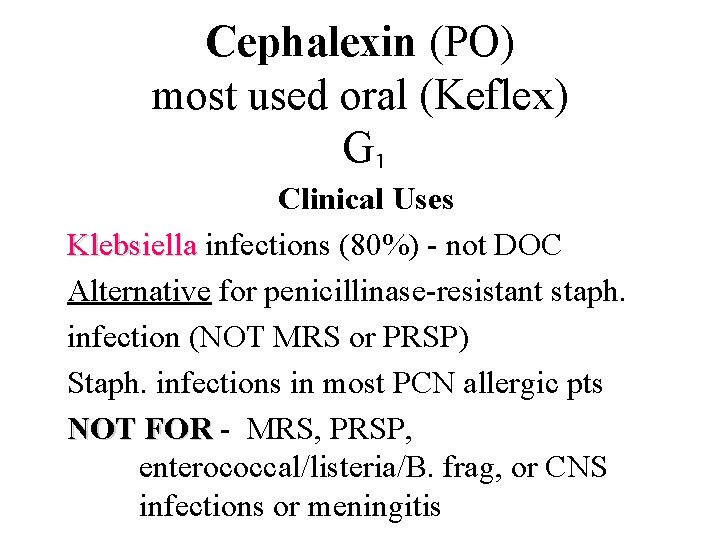
Cephalexin (PO) most used oral (Keflex) G 1 Spectrum Adverse Pharmoco-kinetics Reactions Special Drug Clinical Reactions Properties Uses Similar to ampicillin except effect against: Common - allergic rxn (less than PCNs); pain Inadequate CSF penetration for meningitis Klebsiella infections (80%) - not DOC Klebsiella • Klebsiella pneumoniae Klebsiella and absess at IM inj site (less with · Elimination - primarily RTS Can be used with caution in pts allergic to Alternative for penicillinase-resistant staph. Possible potentiation of nephrotoxicity • Penicillinase-producing staphylococci (not MRSA or cefazolin); NVD; + coombs test PRSP) and many gram + (proximal tubular necrosis) with concurrent PCNs but not those with immediate infection (NOT MRS or PRSP) • E. coli, P. mirabilis use of aminoglycosides, loop diuretics, or • Somewhat against H. influenzae hypersensitivity rxn Staph. infections in most PCN allergic pts probenecid • NOT for enterococci, listeria, or MRS NOT FOR - MRS, PRSP, FOR • Staphylococci (and other gram +) - cephalothin > cefazolin enterococcal/listeria/B. frag, or CNS • Gram - bacilli - cefazolin > cephalothin infections or meningitis
Cefadroxil (PO) G 1 Drug Reactions Special Adverse Properties Reactions Spectrum Pharmoco-kinetics Clinical Uses Similar to ampicillin except effect against: Common - allergic rxn (less than PCNs); pain Inadequate CSF penetration for meningitis Klebsiella infections (80%) - not DOC Klebsiella • Klebsiella pneumoniae Klebsiella and absess at IM inj site (less with Possible potentiation of nephrotoxicity Can be used with caution in pts allergic to · Elimination - primarily RTS Alternative for penicillinase-resistant staph. • Penicillinase-producing staphylococci (not MRSA or cefazolin); NVD; + coombs test (proximal tubular necrosis) with concurrent PCNs but not those with immediate PRSP) and many gram + Cefadroxil - longer t/2 for less frequent infection (NOT MRS or PRSP) use of aminoglycosides, loop diuretics, or • E. coli, P. mirabilis dosing hypersensitivity rxn Staph. infections in most PCN allergic pts probenecid • Somewhat against H. influenzae • NOT for enterococci, listeria, or MRS NOT FOR - MRS, PRSP, FOR • Staphylococci (and other gram +) - cephalothin > cefazolin enterococcal/listeria/B. frag, or CNS • Gram - bacilli - cefazolin > cephalothin infections or meningitis
Cefadroxil (PO) G 1 Spectrum Similar to ampicillin except effect against: • Klebsiella pneumoniae Klebsiella Pharmoco-kinetics • Inadequate CSF penetration for meningitis Penicillinase-producing staphylococci (not MRSA or Adverse Reactions PRSP) and many gram + Drug Reactions Common - allergic rxn (less than PCNs); pain • · Elimination - primarily RTS E. coli, P. mirabilis Special Properties • Somewhat against H. influenzae and absess at IM inj site (less with • NOT for enterococci, listeria, or MRS cefazolin); NVD; + coombs test Clinical Uses Possible potentiation of nephrotoxicity • Staphylococci (and other gram +) - cephalothin > cefazolin (proximal tubular necrosis) with concurrent Can be used with caution in pts allergic to Klebsiella • Klebsiella infections (80%) - not DOC Gram - bacilli - cefazolin > cephalothin use of aminoglycosides, loop diuretics, or PCNs but not those with immediate Alternative for penicillinase-resistant staph.
Second Generation Cephalosporins (Cefamandole-Like) Note some have MTT side chains
Cefamandole (IV) prototype G 2 Uses Clinical Special Properties Above the diaphragm drugs Pharmoco-kinetics Adverse Reactions Spectrum Drug Reactions st generation except: Similar to first generation cephalosporins plus: "Day Care Drugs" Similar to 1 Two to 8 X greater activity against H. influenzae Can be used with caution in pts allergic to Primarily for ampicillin-resistant · Elimination - primarily RTS Cefamandole - may cause bleeding (due to Possible potentiation of nephrotoxicity (including ampicillin resistant) PCNs but not those with immediate H. influenzae infections (sinusitis, otitis (proximal tubular necrosis) with concurrent vit. K inhibition) and disulfuram-like rxn; More active against Klebsiella, E. coli, and indole + use of aminoglycosides, loop diuretics, or hypersensitivity rxn these are due to MTT side chain at R 2 media, URIs, proteus probenecid NOT effective against enterococci, listeria, or MRS
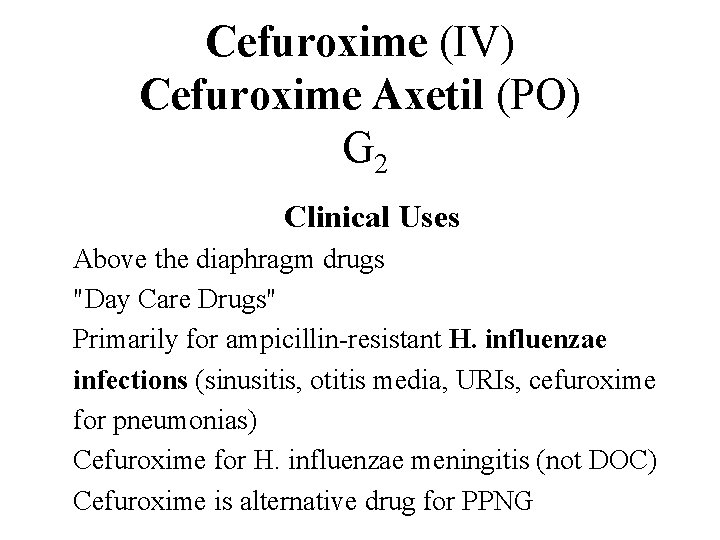
Cefuroxime (IV) Cefuroxime Axetil (PO) G 2 Spectrum Special Pharmoco-kinetics Properties Drug Adverse Reactions Clinical Uses Similar to first generation cephalosporins plus: CSF penetration for meningitis Common - allergic rxn (less than PCNs); pain Above the diaphragm drugs Two to 8 X greater activity against H. influenzae and absess at IM inj site (less with Cefuroxime - only 2 G with adequate CSF · Elimination - primarily RTS Possible potentiation of nephrotoxicity "Day Care Drugs" (including ampicillin resistant) cefazolin); NVD; + coombs test penetration; longer t/2; no MTT side chain More active against Klebsiella, E. coli, and indole + (proximal tubular necrosis) with concurrent Primarily for ampicillin-resistant H. influenzae proteus use of aminoglycosides, loop diuretics, or infections (sinusitis, otitis media, URIs, cefuroxime Cefuroxime also effective for PPNG probenecid for pneumonias) NOT effective against enterococci, listeria, or MRS Cefuroxime for H. influenzae meningitis (not DOC) Cefuroxime is alternative drug for PPNG
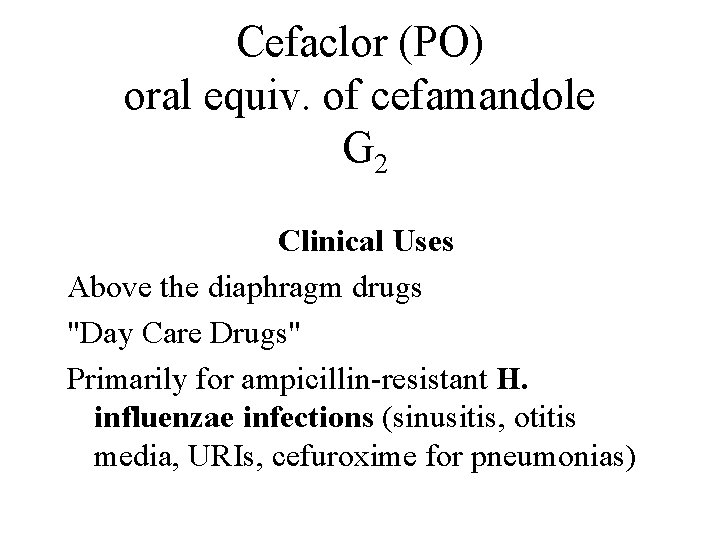
Cefaclor (PO) oral equiv. of cefamandole G 2 Adverse Reactions Drug Reactions Spectrum Pharmoco-kinetics Special Properties Clinical Uses Common - allergic rxn (less than PCNs); pain Similar to first generation cephalosporins plus: Inadequate CSF penetration for meningitis Above the diaphragm drugs and absess at IM inj site (less with Two to 8 X greater activity against H. influenzae Possible potentiation of nephrotoxicity · Elimination - primarily RTS Can be used with caution in pts allergic to "Day Care Drugs" cefazolin); NVD; + coombs test (including ampicillin resistant) (proximal tubular necrosis) with concurrent PCNs but not those with immediate Primarily for ampicillin-resistant H. More active against Klebsiella, E. coli, and indole + Klebsiella use of aminoglycosides, loop diuretics, or hypersensitivity rxn influenzae infections (sinusitis, otitis proteus probenecid media, URIs, cefuroxime for pneumonias) Cefaclor - cheapest NOT effective against enterococci, listeria, or MRS
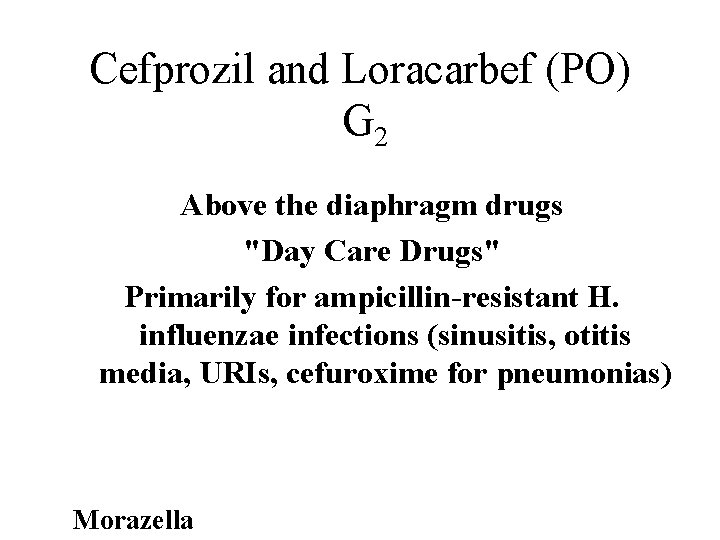
Cefprozil and Loracarbef (PO) G 2 Spectrum Drug Reactions Pharmoco-kinetics Special Properties Adverse Reactions Above the diaphragm drugs Similar to first generation cephalosporins plus: Inadequate CSF penetration for meningitis Common - allergic rxn (less than PCNs); pain "Day Care Drugs" Two to 8 X greater activity against H. influenzae Possible potentiation of nephrotoxicity and absess at IM inj site (less with · Elimination - primarily RTS Can be used with caution in pts allergic to Primarily for ampicillin-resistant H. (including ampicillin resistant) (proximal tubular necrosis) with concurrent cefazolin); NVD; + coombs test PCNs but not those with immediate Cefprozil and Loracarbef - better PO More active against Klebsiella, E. coli, and indole + influenzae infections (sinusitis, otitis use of aminoglycosides, loop diuretics, or absorption proteus media, URIs, cefuroxime for pneumonias) hypersensitivity rxn probenecid NOT effective against enterococci, listeria, or MRS Cefprozil - may be more stable against beta lactamase producing strains of staph, H. flu, and Morazella
Second Generation Cephalosporins (Cefoxitin-Like) Note some have MTT side chains
Cefoxitin (IV) prototype G 2 Spectrum Pharmoco-kinetics Adverse Reactions Special Drug Clinical Reactions Properties Uses Similar to first generation cephalosporins but with Inadequate CSF penetration for meningitis enhanced activity against: Common - allergic rxn (less than PCNs); pain Below the diaphragm drugs Bacteroides fragilis and absess at IM inj site (less with · Elimination - primarily RTS PPNG Possible potentiation of nephrotoxicity Expensive Other bacteroides species -anaerobes (cefoxitin > cefazolin); NVD; + coombs test (proximal tubular necrosis) with concurrent cefotetan) Tx of abdominal and gynecologic infections N. Gonorrhoeae (including PPNG) use of aminoglycosides, loop diuretics, or where B. fragilis is suspected Gram - enteric aerobic bacilli (Klebsiella, E. coli, probenecid some serratia) cefotetan > cefoxitin Urinary tract, lower respiratory tract, soft NOT effective against enterococci, listeria, or MRS tissue infections (cefotetan) < active against H. flu and enterobacter than cefamandole
Cefotetan (IV) G 2 Spectrum Special Drug Reactions Properties Adverse Pharmoco-kinetics Reactions Clinical Uses Similar to first generation cephalosporins but with enhanced Common - allergic rxn (less than PCNs); pain Inadequate CSF penetration for meningitis Below the diaphragm drugs activity against: Bacteroides fragilis and absess at IM inj site (less with Expensive; cefotetan may have cost advantage Possible potentiation of nephrotoxicity · Elimination - primarily RTS PPNG Other bacteroides species -anaerobes - (cefoxitin > cefotetan) cefazolin); NVD; + coombs test (proximal tubular necrosis) with concurrent since it can be administered less frequently Cefotetan - has long t/2 (4. 5 hrs) N. Gonorrhoeae (including PPNG) Tx of abdominal and gynecologic infections use of aminoglycosides, loop diuretics, or Cefotetan- may cause bleeding (due to vit. K Gram - enteric aerobic bacilli (Klebsiella, E. coli, some serratia) – where B. fragilis is suspected fragilis cefotetan > cefoxitin probenecid inhibition) and disulfuram-like rxn; these NOT effective against enterococci, listeria, or MRS Urinary tract, lower respiratory tract, soft are due to MTT side chain at R 2 Less active against H. flu and enterobacter than cefamandole tissue infections (cefotetan)
Cefmetazole (IV) G 2 Spectrum Clinical Uses Adverse Reactions Pharmoco-kinetics Special Properties Similar to first generation cephalosporins but with enhanced Below the diaphragm drugs Common - allergic rxn (less than PCNs); pain activity against: Inadequate CSF penetration for meningitis Bacteroides fragilis PPNG and absess at IM inj site (less with cefazolin); Elimination - primarily RTS Other bacteroides species -anaerobes - (cefoxitin > cefotetan) Expensive N. Gonorrhoeae (including PPNG) NVD; + coombs test Tx of abdominal and gynecologic Drug Reactions Gram - enteric aerobic bacilli (Klebsiella, E. coli, some serratia) – Cefmetazole - may cause bleeding (due to vit. cefotetan > cefoxitin infections where B. fragilis is suspected Possible potentiation of nephrotoxicity NOT effective against enterococci, listeria, or MRS K inhibition) and disulfuram-like rxn; these Less active against H. flu and enterobacter than cefamandole (proximal tubular necrosis) with concurrent Urinary tract, lower respiratory tract, soft are due to MTT side chain at R 2 use of aminoglycosides, loop diuretics, or tissue infections (cefotetan) infections or probenecid meningitis
Third Generation Cephalosporins • • Ceftriaxone (IV) - Rocephin Cefotaxime sodium (IV) Ceftizoxime sodium (IV) Ceftazidime pentahydrate (IV) Cefoperazone (IV) Moxalactam disodium (IV) Cefixime (PO)
Ceftriaxone (IV) Rocephin G 3 Spectrum Pharmoco-kinetics Adverse Clinical Reactions Uses More active against many enteric gram - aerobes; Ceftriaxone - longest t/2 of all Ceftriaxone - DOC for PPNG but does not Common - allergic rxn (less than PCNs); pain DOC for E. coli, Indole positive proteus, cephalosporins (8 hrs); excreted in bile (OK and absess at IM inj site (less with cover chlymadia; PRSP; H. ducreyi and Providencia, Serratia for CRF) cefazolin); NVD; + coombs test Generally less active against gram + organisms than Salmonella; Ampicillin-resistant H. flu st generation 1 meningitis (good CSF penetration); pts in Very effective against H. influenzae and N. renal failure gonorrhoeae (including PPNG), NOT effective against enterococci, listeria, or MRS
Cefotaxime sodium (IV) & Ceftizoxime sodium (IV G 3 Spectrum Pharmoco-kinetics Clinical Uses More active against many enteric gram - aerobes; DOC for E. better CSF penetration for meningitis Ceftriaxone - DOC for PPNG but does not coli, Indole positive proteus, Providencia, Serratia · Elimination - primarily RTS cover chlymadia; PRSP; H. ducreyi and Generally less active against gram + organisms than 1 st Salmonella; Ampicillin-resistant H. flu generation Very effective against H. influenzae and N. gonorrhoeae meningitis (good CSF penetration); pts in (including PPNG) renal failure NOT effective against enterococci, listeria, or MRS
Ceftazidime pentahydrate (IV) G 3 Ceftriaxone. Adverse -Drug DOC Reactions for Reactions PPNG but does not Spectrum cover chlymadia; PRSP; H. ducreyi and More active against many enteric gram - aerobes; Common - allergic rxn (less than PCNs); pain DOC for E. coli, Indole positive proteus, Salmonella; Ampicillin-resistant H. flu and absess at IM inj site (less with Pharmoco-kinetics Possible potentiation of nephrotoxicity Providencia, Serratia meningitis (good CSF penetration); pts in cefazolin); NVD; + coombs test (proximal tubular necrosis) with concurrent Generally less active against gram + organisms than G 1 Same as G 1 renal failure Very effective against H. influenzae and N. use of aminoglycosides, loop diuretics, or gonorrhoeae (including PPNG), NOT effective probenecid against enterococci, listeria, or MRS Ceftazidime - most active cephalosporin against P. aeruginosa (cefoperazone also good but not given alone)
Cefoperazone (IV) G 3 Pharmoco-kinetics Spectrum Adverse Reactions Clinical Uses More active against many enteric gram - aerobes; Cefoperazone - excreted in bile (OK for Cefoperazone - have MTT side chain and may Cefoperazone - Pseudomonas infection that is DOC for E. coli, Indole positive proteus, CRF); poor CNS penetration than other G 3 s have increased bleeding and disulfuram-like not in the CNS and pt has renal failure Providencia, Serratia rxn Generally less active against gram + organisms than 1 st generation Very effective against H. influenzae and N. gonorrhoeae (including PPNG), NOT effective against enterococci, listeria, or MRS
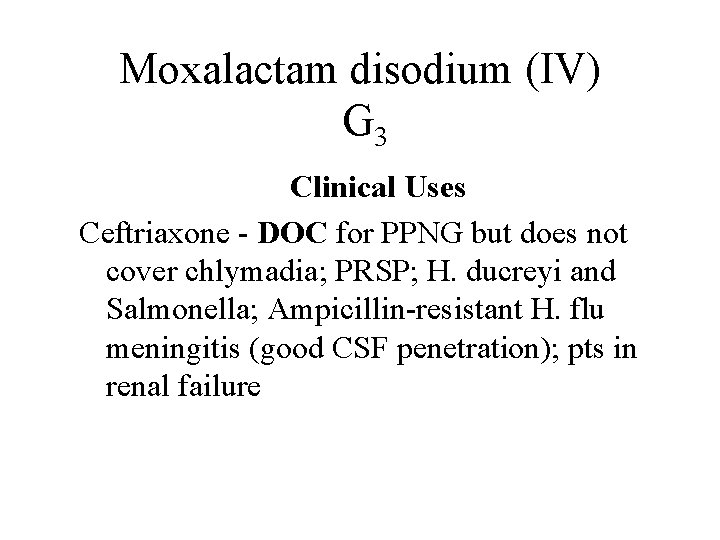
Moxalactam disodium (IV) G 3 Pharmoco-kinetics Adverse Reactions Spectrum Clinical Uses moxalactam - have MTT side chain and may have More active against many enteric gram - aerobes; Ceftriaxone - DOC for PPNG but does not DOC for E. coli, Indole positive proteus, increased bleeding and disulfuram-like rxn cover chlymadia; PRSP; H. ducreyi and · Elimination - primarily RTS Providencia, Serratia Salmonella; Ampicillin-resistant H. flu Generally less active against gram + organisms than meningitis (good CSF penetration); pts in 1 st generation renal failure Very effective against H. influenzae and N. gonorrhoeae (including PPNG), NOT effective against enterococci, listeria, or MRS
Cefixime (PO) G 3 Spectrum Adverse Reactions Pharmoco-kinetics Clinical Uses More active against many enteric gram - aerobes; Cefixime - diarrhea DOC for E. coli, Cefixime - PPNG via single oral dose Indole positive proteus, Providencia, Serratia Generally less active against gram + organisms than · Elimination - primarily RTS 1 st generation Very effective against H. influenzae and N. gonorrhoeae (including PPNG), NOT effective against enterococci, listeria, or MRS • Cefixime - poor activity against staph
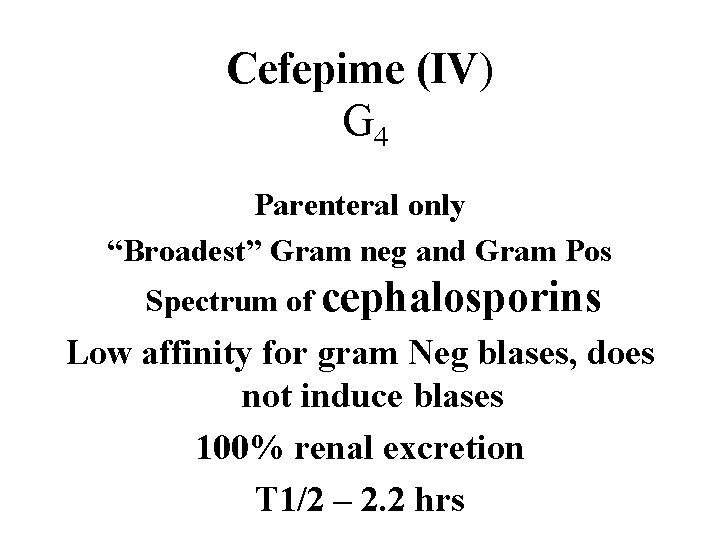
Cefepime (IV) G 4 Parenteral only “Broadest” Gram neg and Gram Pos Spectrum of cephalosporins Low affinity for gram Neg blases, does not induce blases 100% renal excretion T 1/2 – 2. 2 hrs
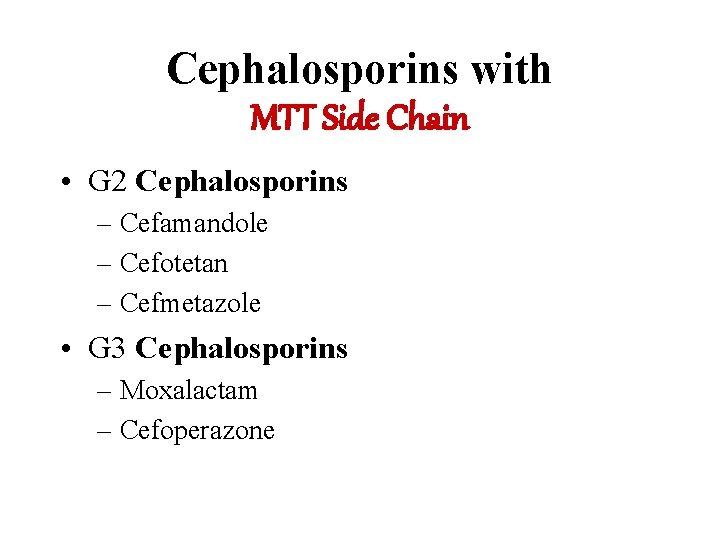
Cephalosporins with MTT Side Chain • G 2 Cephalosporins – Cefamandole – Cefotetan – Cefmetazole • G 3 Cephalosporins – Moxalactam – Cefoperazone
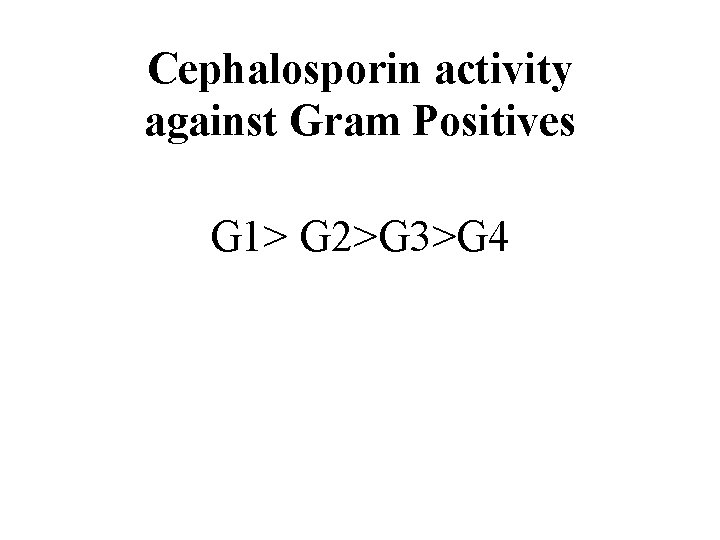
Cephalosporin activity against Gram Positives G 1> G 2>G 3>G 4
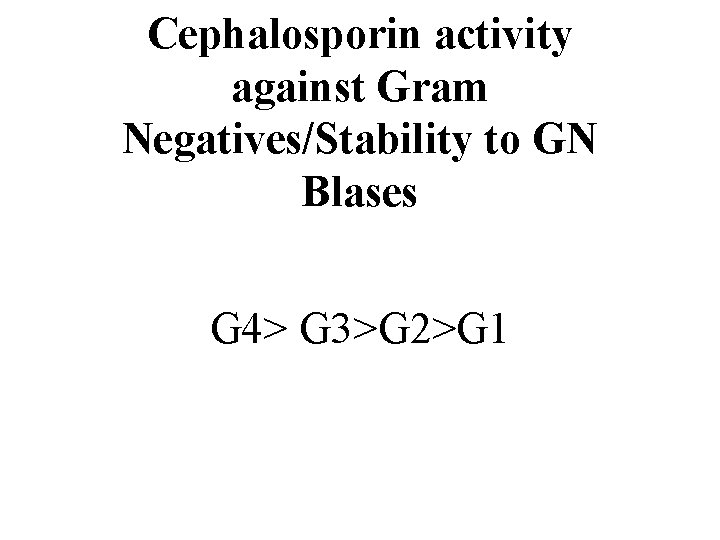
Cephalosporin activity against Gram Negatives/Stability to GN Blases G 4> G 3>G 2>G 1