
CEPHALOSPORINS 1 Introduction Antibacterial agents which inhibit bacterial
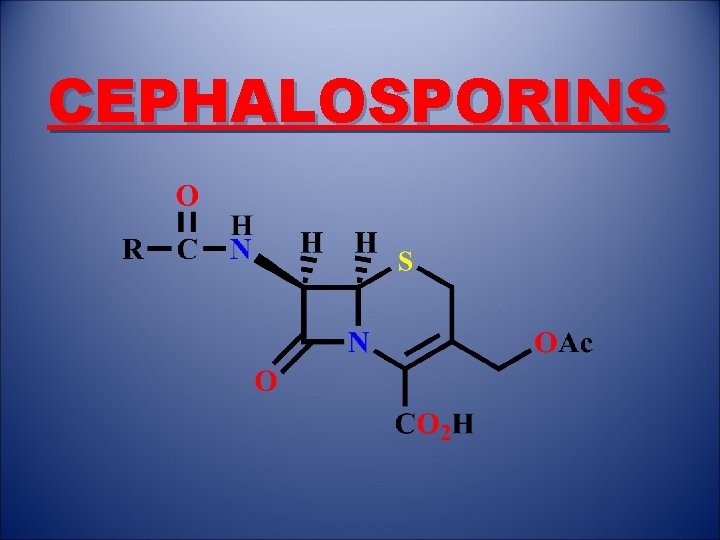
CEPHALOSPORINS
1. Introduction • Antibacterial agents which inhibit bacterial cell wall synthesis • Discovered from a fungal colony in Sardinian sewer water (1948) • Cephalosporin C identified in 1961
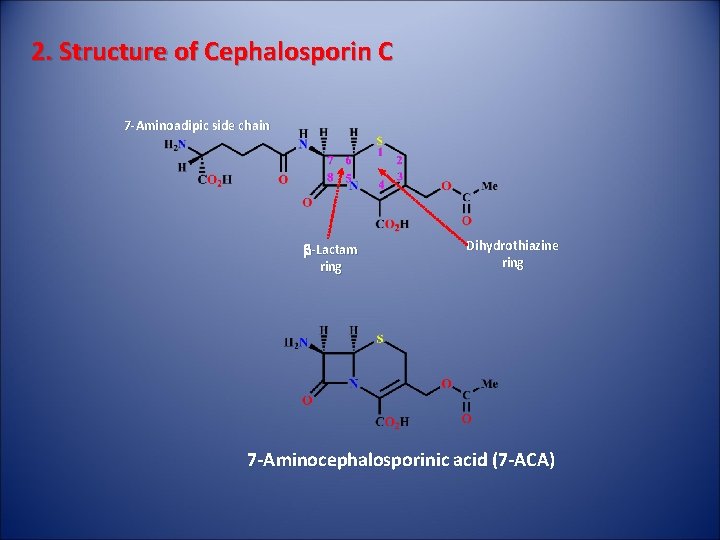
2. Structure of Cephalosporin C 7 -Aminoadipic side chain b-Lactam ring Dihydrothiazine ring 7 -Aminocephalosporinic acid (7 -ACA)
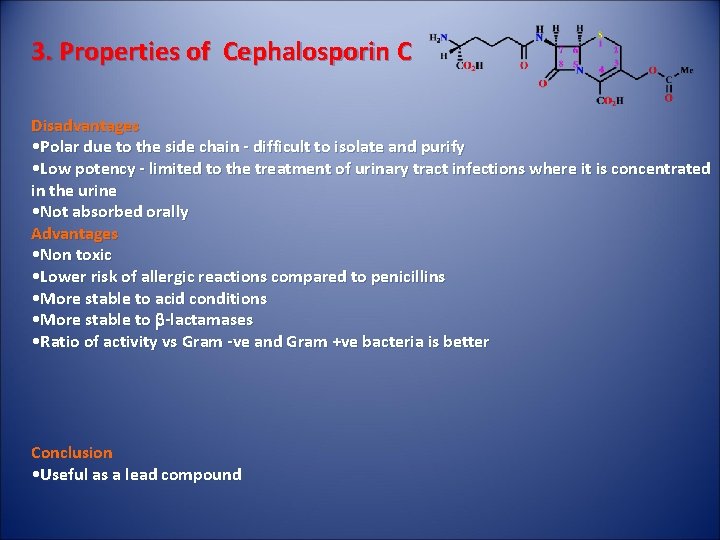
3. Properties of Cephalosporin C Disadvantages • Polar due to the side chain - difficult to isolate and purify • Low potency - limited to the treatment of urinary tract infections where it is concentrated in the urine • Not absorbed orally Advantages • Non toxic • Lower risk of allergic reactions compared to penicillins • More stable to acid conditions • More stable to b-lactamases • Ratio of activity vs Gram -ve and Gram +ve bacteria is better Conclusion • Useful as a lead compound
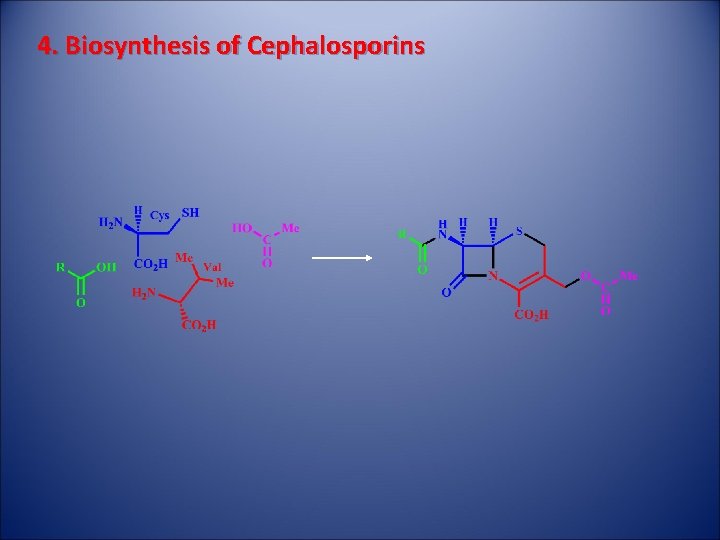
4. Biosynthesis of Cephalosporins
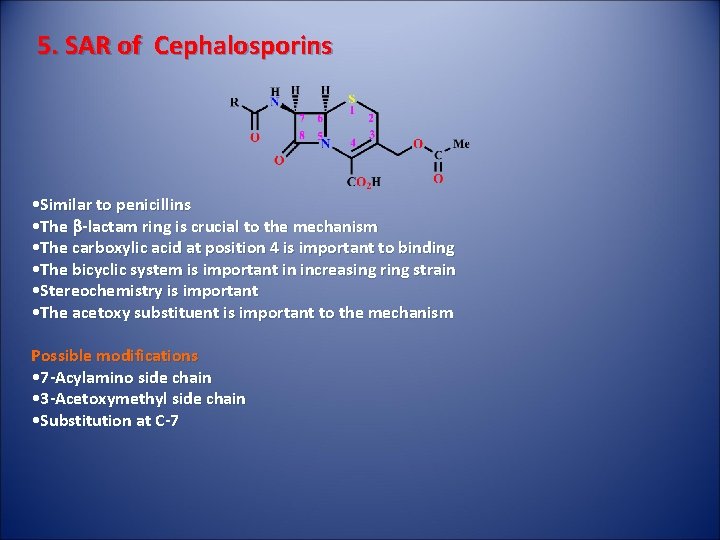
5. SAR of Cephalosporins • Similar to penicillins • The b-lactam ring is crucial to the mechanism • The carboxylic acid at position 4 is important to binding • The bicyclic system is important in increasing ring strain • Stereochemistry is important • The acetoxy substituent is important to the mechanism Possible modifications • 7 -Acylamino side chain • 3 -Acetoxymethyl side chain • Substitution at C-7
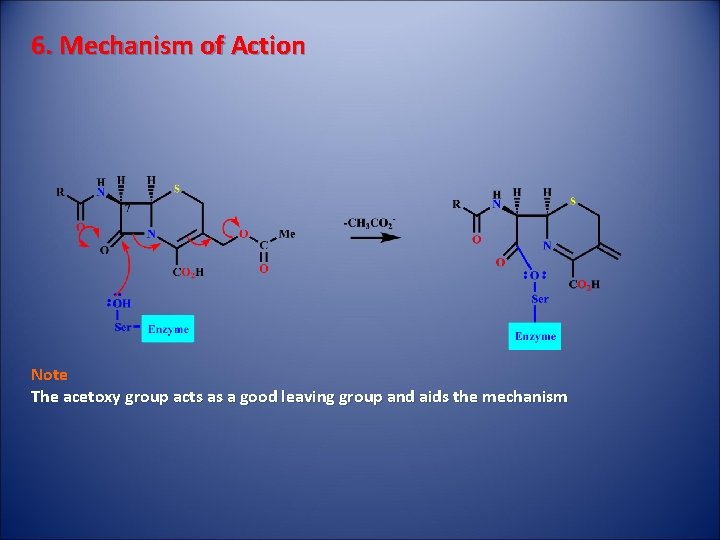
6. Mechanism of Action Note The acetoxy group acts as a good leaving group and aids the mechanism
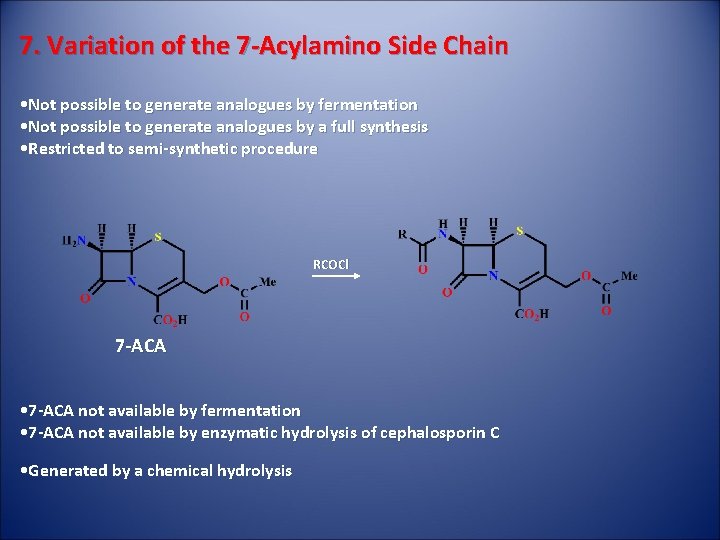
7. Variation of the 7 -Acylamino Side Chain • Not possible to generate analogues by fermentation • Not possible to generate analogues by a full synthesis • Restricted to semi-synthetic procedure RCOCl 7 -ACA • 7 -ACA not available by fermentation • 7 -ACA not available by enzymatic hydrolysis of cephalosporin C • Generated by a chemical hydrolysis
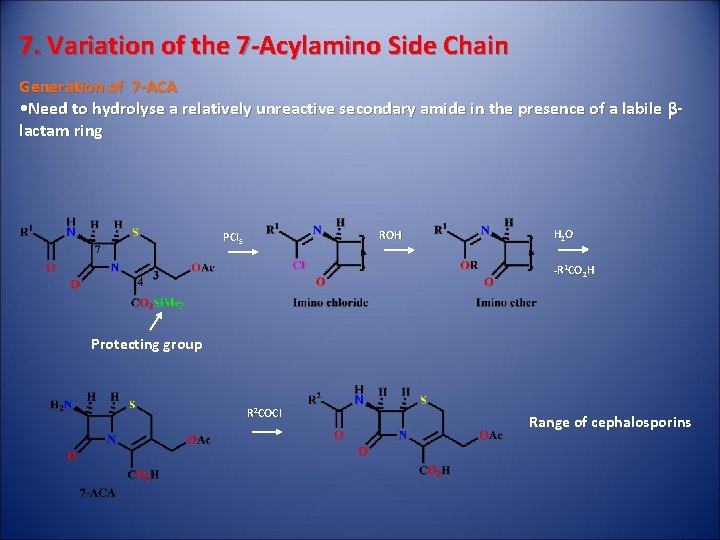
7. Variation of the 7 -Acylamino Side Chain Generation of 7 -ACA • Need to hydrolyse a relatively unreactive secondary amide in the presence of a labile blactam ring ROH PCl 5 H 2 O -R 1 CO 2 H Protecting group R 2 COCl Range of cephalosporins
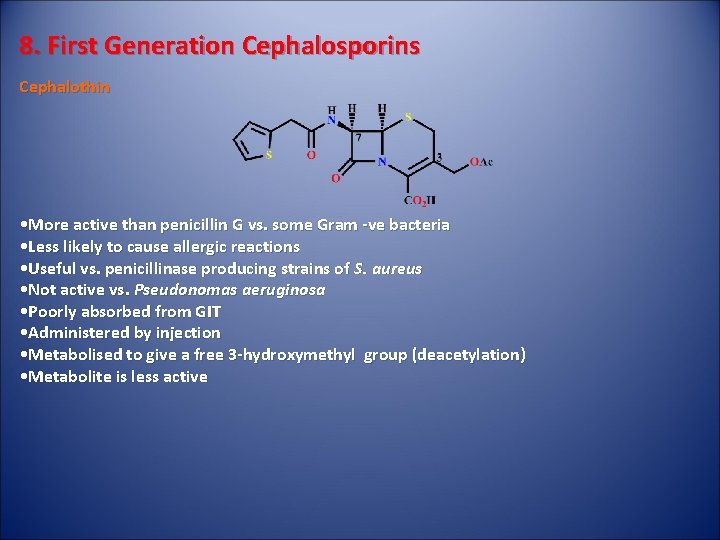
8. First Generation Cephalosporins Cephalothin • More active than penicillin G vs. some Gram -ve bacteria • Less likely to cause allergic reactions • Useful vs. penicillinase producing strains of S. aureus • Not active vs. Pseudonomas aeruginosa • Poorly absorbed from GIT • Administered by injection • Metabolised to give a free 3 -hydroxymethyl group (deacetylation) • Metabolite is less active
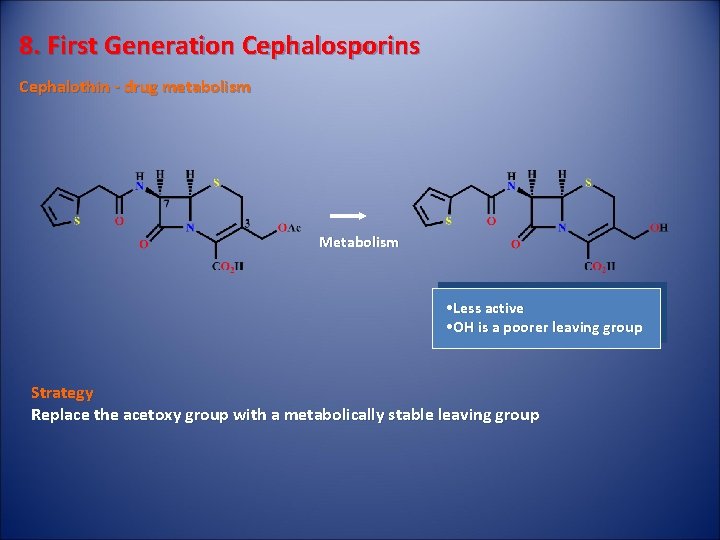
8. First Generation Cephalosporins Cephalothin - drug metabolism Metabolism • Less active • OH is a poorer leaving group Strategy Replace the acetoxy group with a metabolically stable leaving group
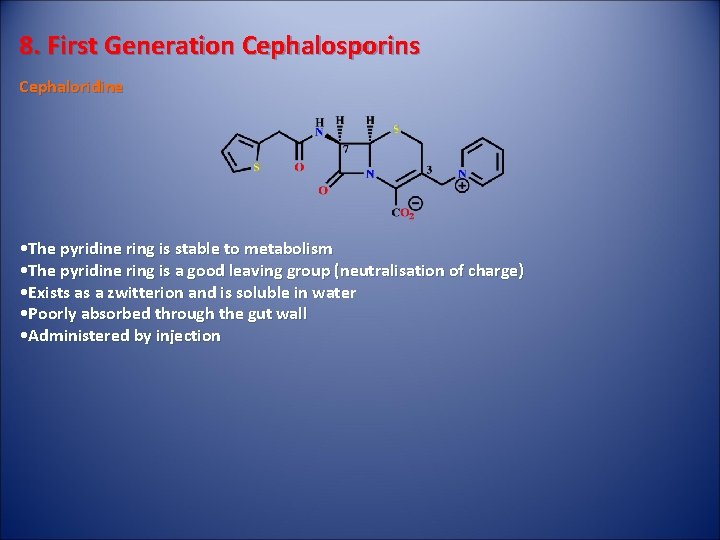
8. First Generation Cephalosporins Cephaloridine • The pyridine ring is stable to metabolism • The pyridine ring is a good leaving group (neutralisation of charge) • Exists as a zwitterion and is soluble in water • Poorly absorbed through the gut wall • Administered by injection
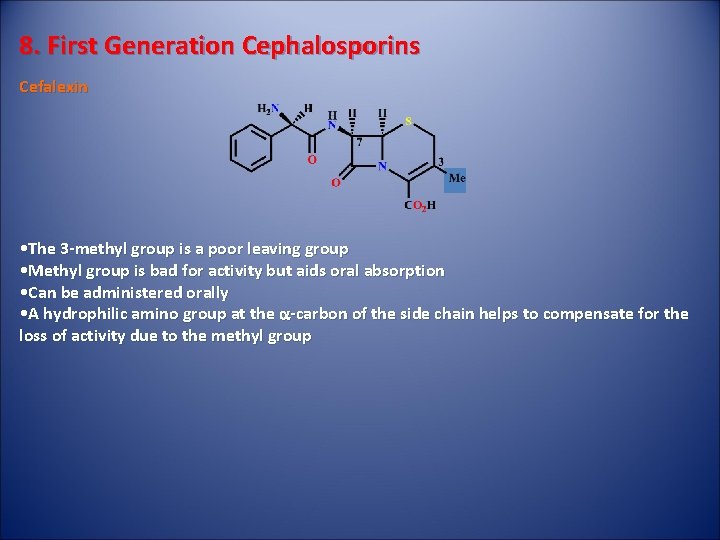
8. First Generation Cephalosporins Cefalexin • The 3 -methyl group is a poor leaving group • Methyl group is bad for activity but aids oral absorption • Can be administered orally • A hydrophilic amino group at the a-carbon of the side chain helps to compensate for the loss of activity due to the methyl group
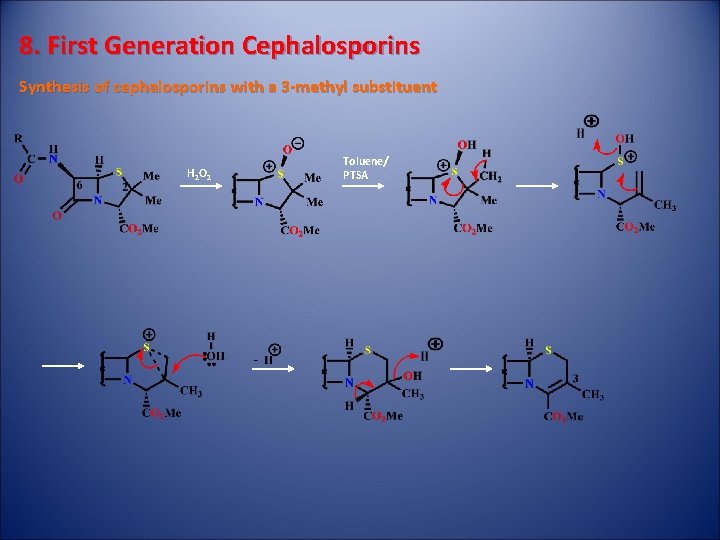
8. First Generation Cephalosporins Synthesis of cephalosporins with a 3 -methyl substituent H 2 O 2 Toluene/ PTSA
8. First Generation Cephalosporins Summary • Generally lower activity than comparable penicillins • Better range of activity than comparable penicillins • Best activity is against Gram-positive cocci • Useful against some Gram negative infections • Useful against S. aureus and streptococcal infections when penicillins have to be avoided • Poorly absorbed across the gut wall (except for 3 -methyl substituted cephalosporins) • Most are administered by injection • Resistance has appeared amongst Gram negative bacteria (presence of more effective blactamases)
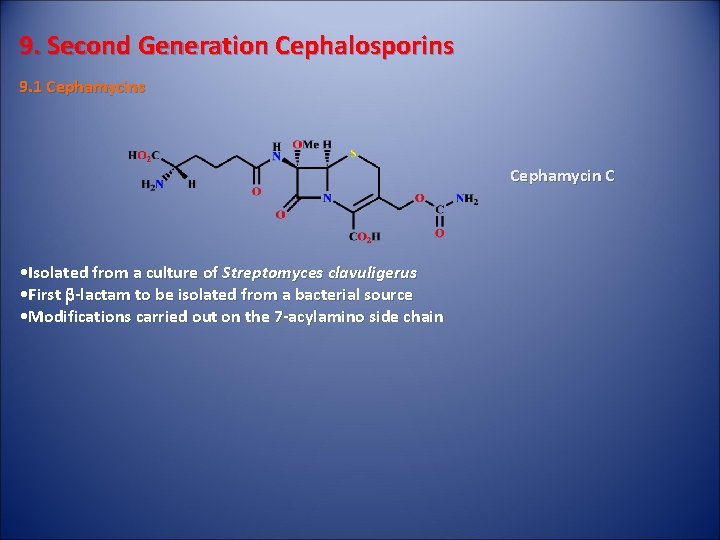
9. Second Generation Cephalosporins 9. 1 Cephamycins Cephamycin C • Isolated from a culture of Streptomyces clavuligerus • First b-lactam to be isolated from a bacterial source • Modifications carried out on the 7 -acylamino side chain
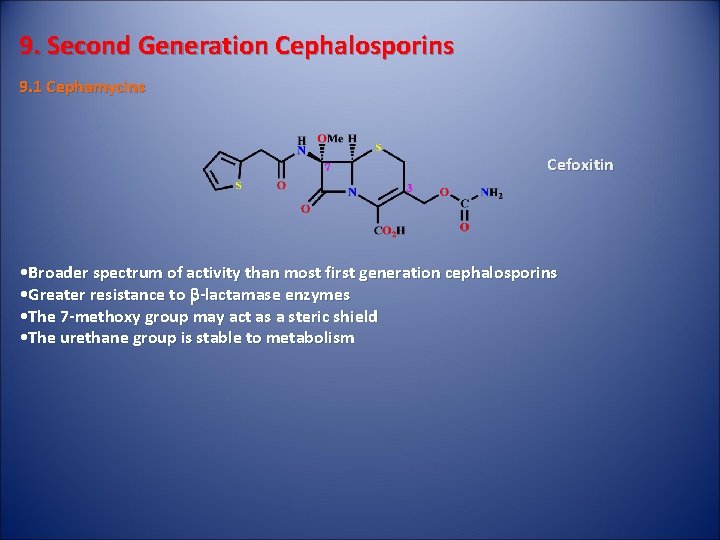
9. Second Generation Cephalosporins 9. 1 Cephamycins Cefoxitin • Broader spectrum of activity than most first generation cephalosporins • Greater resistance to b-lactamase enzymes • The 7 -methoxy group may act as a steric shield • The urethane group is stable to metabolism
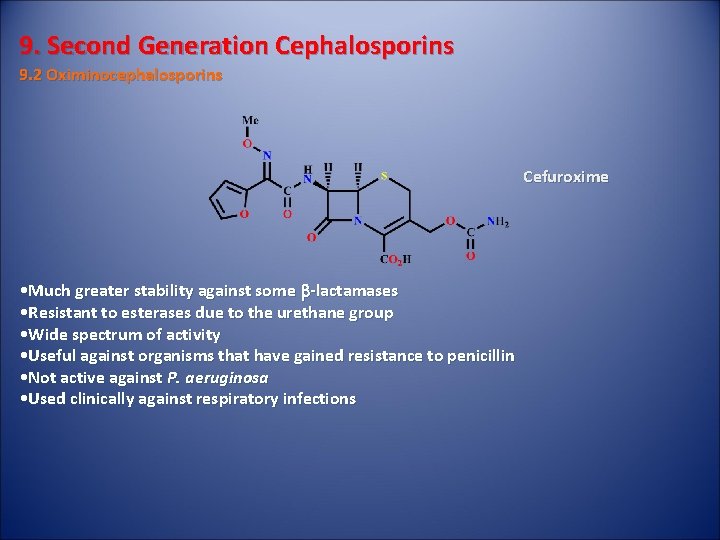
9. Second Generation Cephalosporins 9. 2 Oximinocephalosporins Cefuroxime • Much greater stability against some b-lactamases • Resistant to esterases due to the urethane group • Wide spectrum of activity • Useful against organisms that have gained resistance to penicillin • Not active against P. aeruginosa • Used clinically against respiratory infections
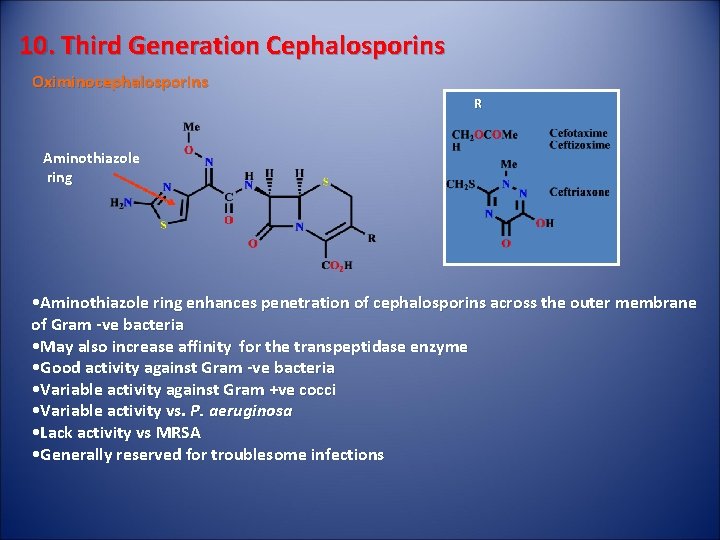
10. Third Generation Cephalosporins Oximinocephalosporins R Aminothiazole ring • Aminothiazole ring enhances penetration of cephalosporins across the outer membrane of Gram -ve bacteria • May also increase affinity for the transpeptidase enzyme • Good activity against Gram -ve bacteria • Variable activity against Gram +ve cocci • Variable activity vs. P. aeruginosa • Lack activity vs MRSA • Generally reserved for troublesome infections
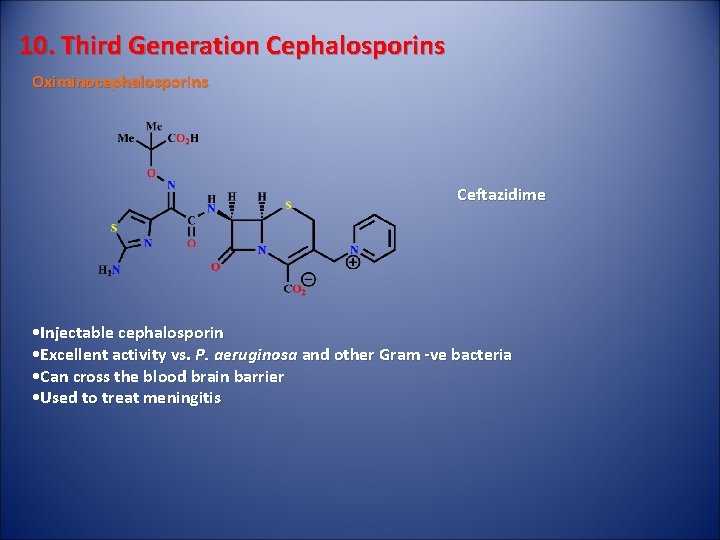
10. Third Generation Cephalosporins Oximinocephalosporins Ceftazidime • Injectable cephalosporin • Excellent activity vs. P. aeruginosa and other Gram -ve bacteria • Can cross the blood brain barrier • Used to treat meningitis
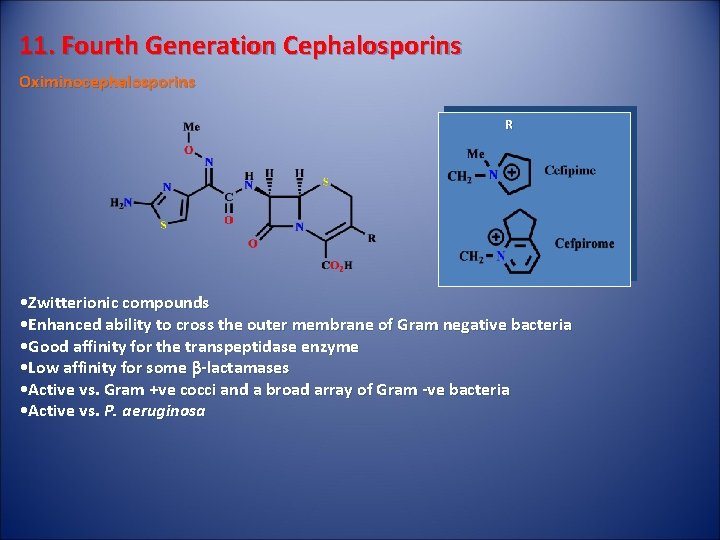
11. Fourth Generation Cephalosporins Oximinocephalosporins R • Zwitterionic compounds • Enhanced ability to cross the outer membrane of Gram negative bacteria • Good affinity for the transpeptidase enzyme • Low affinity for some b-lactamases • Active vs. Gram +ve cocci and a broad array of Gram -ve bacteria • Active vs. P. aeruginosa
COMPULSORY READING FROM TEXTBOOK – WILSON AND GISVOLD • PAGES - 278 TO 293 • EXAMPLES: ALL EXAMPLES LISTED [PAGES 286 – 293]
COMPULSORY READING FROM TEXTBOOK – PATRICK • THE ENTIRE SECTION ON CEPHALOSPORINS IN CHAPTER 19
- Slides: 23