
CENTRO PROVINCIALE ISTRUZIONE PER ADULTI C P I
- Slides: 27
CENTRO PROVINCIALE ISTRUZIONE PER ADULTI C. P. I. A. MONTAGNA - CASTEL DI CASIO (BO) Improvement of adult educators’ competence for the quality of adult learning Culture and other social categorisations: intersectionality Diversity and superdiversity Culture and power Day 2, CPIA Montagna, Castel di Casio, 10. 04. 2018 with Matilde Grünhage-Monetti
Labas rytas– Buon giorno– Good morning 2
Was is on the agenda today? Ø Investigating further the concept of culture § Cultural dimensions § Culture and other social categorisations § Activity „As in real life “ § Input „Intersectionality“ – Superdiversity § Integration – Diversity Management – Inclusion Ø Culture and power Ø Reflecting on transfer/own practice 3
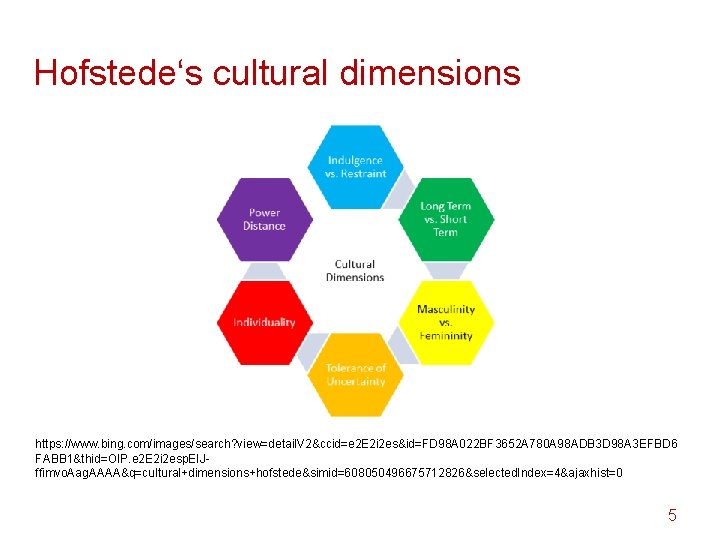
Hofstede's cultural dimensions theory is a framework for cross-cultural communication, developed by Geert Hofstede (born 1928). It describes the effects of a society's culture on the values of its members, and how these values relate to behavior, using a structure derived from factors analysis. (https: //en. wikipedia. org/wiki/Hofstede%27 s_cultural_dimensions_theorytor analysis) Still very popular, Hofstedes’s theory has been vastly critized. It may lead to stereotypes, bias, ethnicization! 4
Hofstede‘s cultural dimensions https: //www. bing. com/images/search? view=detail. V 2&ccid=e 2 E 2 i 2 es&id=FD 98 A 022 BF 3652 A 780 A 98 ADB 3 D 98 A 3 EFBD 6 FABB 1&thid=OIP. e 2 E 2 i 2 esp. EIJffimvo. Aag. AAAA&q=cultural+dimensions+hofstede&simid=608050496675712826&selected. Index=4&ajaxhist=0 5
Individualism vs. collectivism (IDV) This index explores the “degree to which people in a society are integrated into groups. ” Individualistic societies have loose ties that often only relates an individual to his/her immediate family. They emphasize the “I” versus the “we. ” Its counterpart, collectivism, describes a society in which tightly-integrated relationships tie extended families and others into ingroups. These in-groups are laced with undoubted loyalty and support each other when a conflict arises with another in-group. (ibidem) 6
Tendencies in collectivistic cultures Ø Social rules focus on promoting selflessness and putting the community needs ahead of individual needs Ø Working (i. e. also learning) as a group and supporting others is essential Ø People are encouraged to do what's best for society / own group Ø Families and communities have a central role https: //www. verywellmind. com/what-are-collectivistic-cultures-2794962 7
Tendencies in individualistic cultures Ø Individual rights take center stage Ø Independence is highly valued Ø Being dependent upon others is often considered shameful or embarrassing Ø People tend to be self-reliant Ø The rights of individuals tend to take a higher precedence https: //www. verywellmind. com/what-are-individualistic-cultures-2795273 8
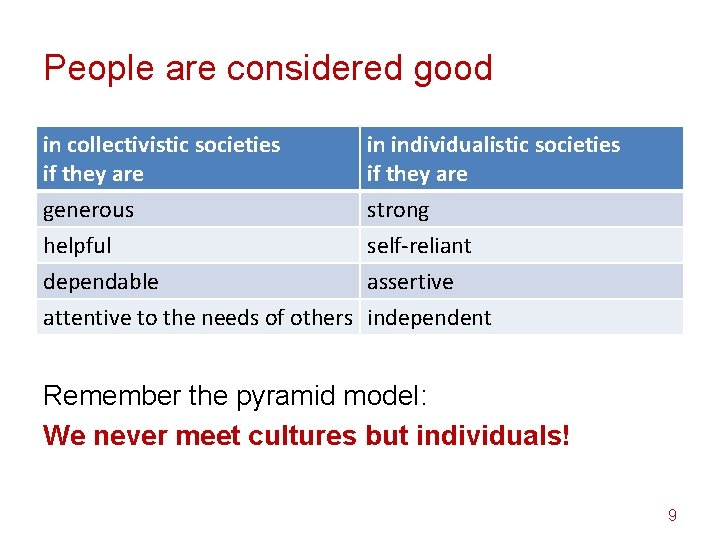
People are considered good in collectivistic societies if they are generous in individualistic societies if they are strong helpful self-reliant dependable assertive attentive to the needs of others independent Remember the pyramid model: We never meet cultures but individuals! 9
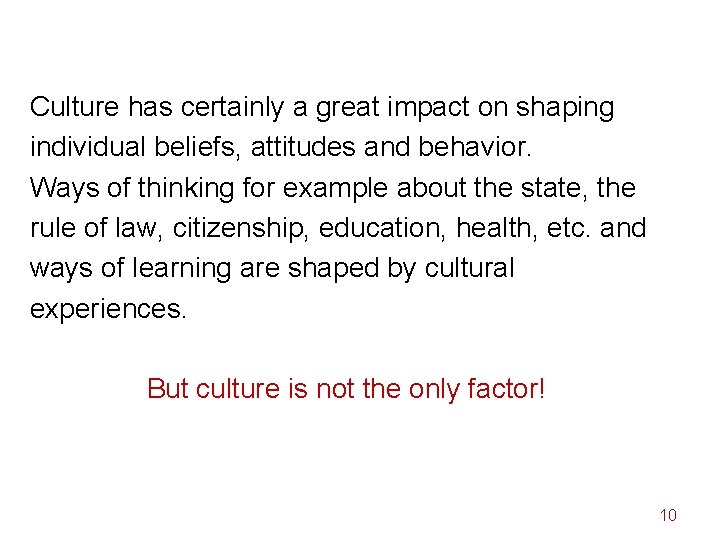
Culture has certainly a great impact on shaping individual beliefs, attitudes and behavior. Ways of thinking for example about the state, the rule of law, citizenship, education, health, etc. and ways of learning are shaped by cultural experiences. But culture is not the only factor! 10
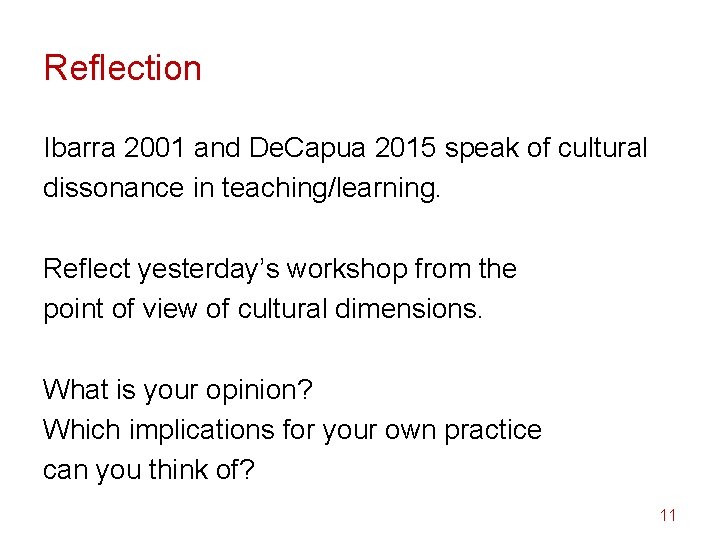
Reflection Ibarra 2001 and De. Capua 2015 speak of cultural dissonance in teaching/learning. Reflect yesterday’s workshop from the point of view of cultural dimensions. What is your opinion? Which implications for your own practice can you think of? 11
Coffee break 12
As in real life Ø An activity with some movement and even more reflection 13
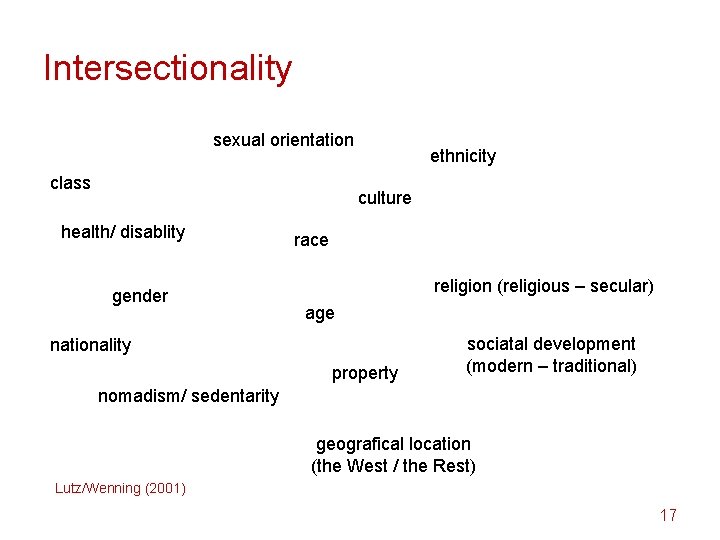
Intersectionality describes the interconnected nature of social categorisations such as race, class, and gender as they apply to a given individual or group regarded as creating overlapping and interdependent systems of discriminations and disadvantage. Through awareness of intersectionality, we can better acknowledge and ground the differences among us https: //en. oxforddictionaries. com/definition/intersectionality 14
Intersectionality Dott. Matilde Grünhage-Monetti is an analytic framework which attempts to identify how interlocking systems of power impact on those who are most marginalized in society. Intersectionality considers that the various forms of social stratification, such as class, race, sexual orientation, disability and gender, do not exist separately from each other but are complexly interwoven. https: //en. wikipedia. org/wiki/Intersectionality 15
Intersectionality captures the complex, cumulative way in which the effects of multiple forms of discrimination (such as racism, sexism, and classism) combine, overlap, or intersect especially in the experiences of marginalized individuals or groups. The legal scholar Kimberlé Crenshaw, introduced theory of intersectionality in 1989 into the debate of black feminism: When it comes to thinking about how inequalities persist, categories Like gender, race, and class are best understood as overlapping and mutually constitutive rather than isolated and distinct. https: //www. merriam-webster. com/dictionary/intersectionality 16
Intersectionality sexual orientation class ethnicity culture health/ disablity gender race religion (religious – secular) age nationality property sociatal development (modern – traditional) nomadism/ sedentarity geografical location (the West / the Rest) Lutz/Wenning (2001) 17
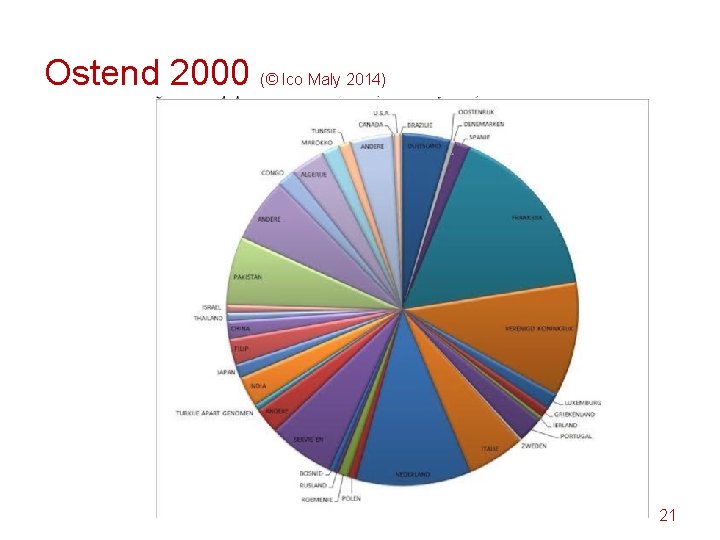
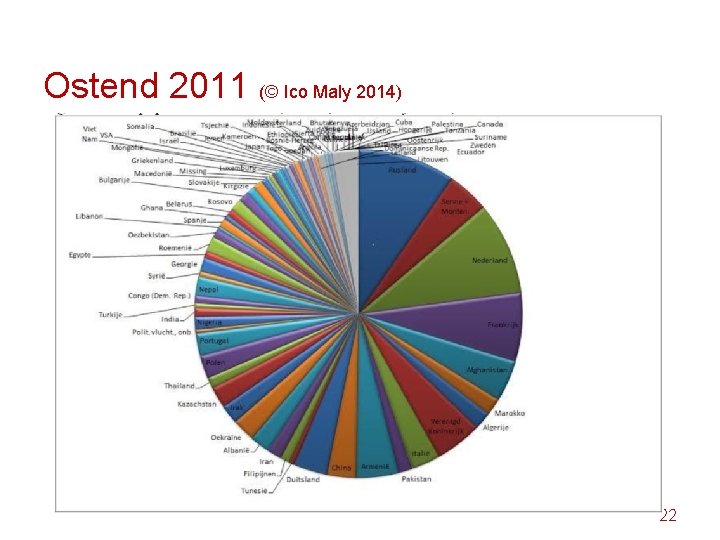
Intersectionality Modern societies are increasingly diverse and complex. If we take migration into consideration as well, further categories impacting on the chances of individuals and groups to access social resources have to be added: like social capital, legal status the person(s), immigration and labour market policies of the country of residence, attitude of majority populations, etc. A new term has been coined: superdiversity 18
Superdiversity “Superdiversity: a term intended to underline a level and kind of complexity surpassing anything… previously experienced… a dynamic interplay of variables including country of origin, … migration channel, … legal status, … migrants’ human capital (particularly educational background), access to employment, …locality… and responses by local authorities, services providers and local residents. ” (Vertovec 2007: 2 -3) 19
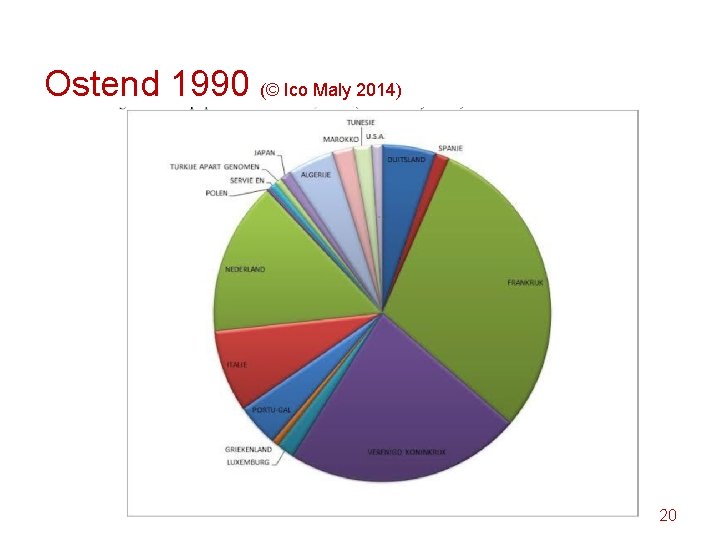
Ostend 1990 (© Ico Maly 2014) 20
Ostend 2000 (© Ico Maly 2014) 21
Ostend 2011 (© Ico Maly 2014) 22
Integration, Diversity, Inclusion As sociopolitical strategies Ø Integration focuses on the capability of individuals or groups of majority society and minorities to change and adapt (integrate) Ø Diversity stresses the « benefits » of the individuals for the whole group/society – Diversity Manangement Ø Inclusion § assumes diversity § is grounded on the basic principle of banning discrimination in democratic constitutions (e. g. article 3. 3 of the German constitution) § focuses on institutional structures, in order to abate access barriers to the sociatal ressources (adapted from Viola B. Georgi: Anmerkungen zur aktuellen Debatte in der deutschen Migrationsgesellschaft – Integration, Diversity, Inklusion, in: DIE-Magazin II/2015) 23
Inclusion as socio-political strategy focuses/builds on the transformation capability of institutionen und structures. These must « open up » and become « diversity sensitive » , to allow for participation and self-determination for everybody. (ibidem) 24
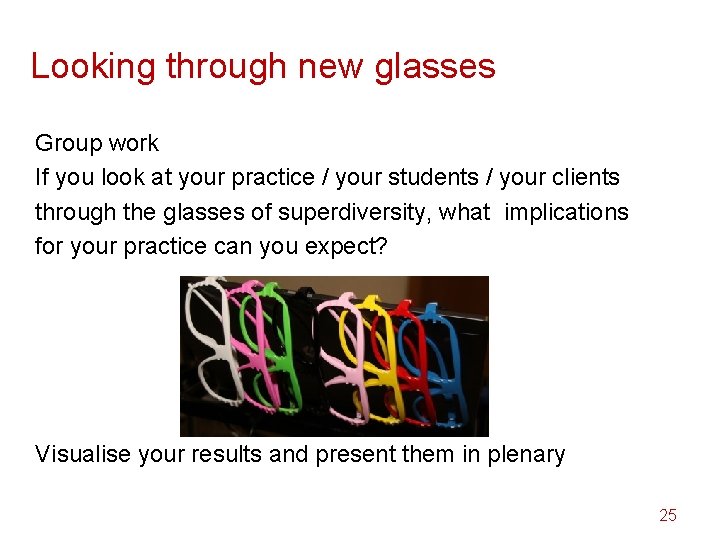
Looking through new glasses Group work If you look at your practice / your students / your clients through the glasses of superdiversity, what implications for your practice can you expect? Visualise your results and present them in plenary 25
Culturally sensitive elderly care In Germany, as in many western countries, elderly care depends heavily on migrant workforce. But migrants are not only employees, but also clients. An increasingly number of migrants who came to Germany to work in the second half of last century are now old and in need of care, either at home or in elderly homes. Another challenge will be the care of people with different sexual orientations: transgender, homosexuals, etc. Theses developments pose practical challenges ( e. g. body care, diet, etc. ). Culturally sensitive care is an answer 26
From Theory to practice Afternoon Conversation with the major and the councellor Elena Gaggioli on § local welcoming and sheltering practices § integration and inclusion policies of the council in particular re. refugees Where: City council of Alto Reno Terme, piazza della Libertà 13 (Porretta T. ) When: 15: 00 -17: 00 with break And now: Buon appetito in La Veranda 27