
CENTRE FOR EFFECTIVE DISPUTE RESOLUTION Seminar on Investment

- Slides: 15
CENTRE FOR EFFECTIVE DISPUTE RESOLUTION Seminar on Investment Mediation for Government Officials: The Conduct of Mediation James South- Mediator and Director of Training, Centre for Effective Dispute Resolution (CEDR)
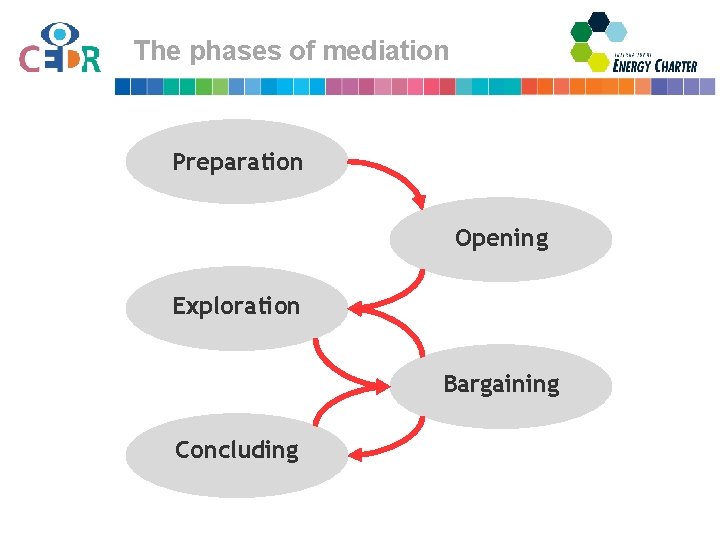
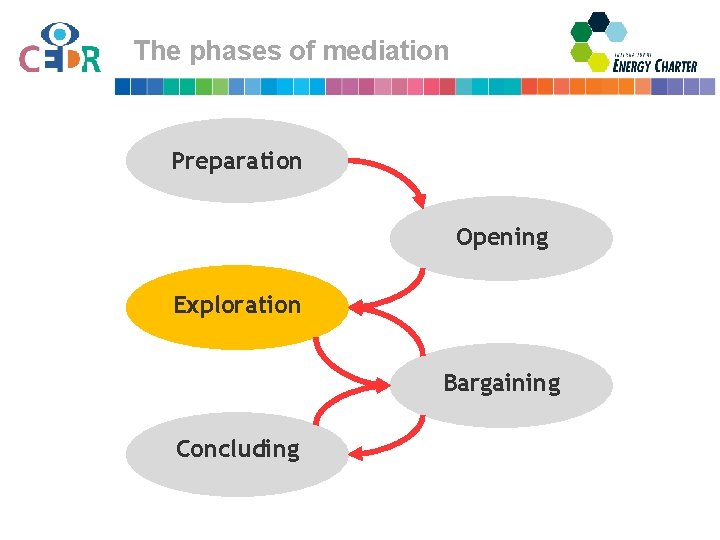
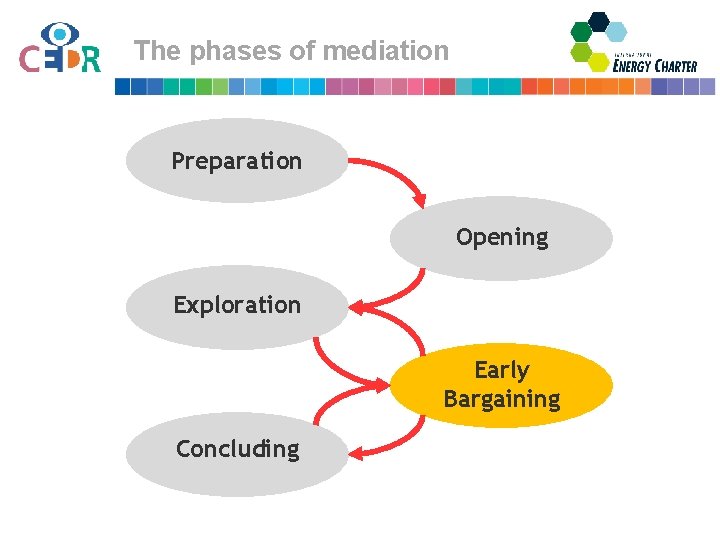
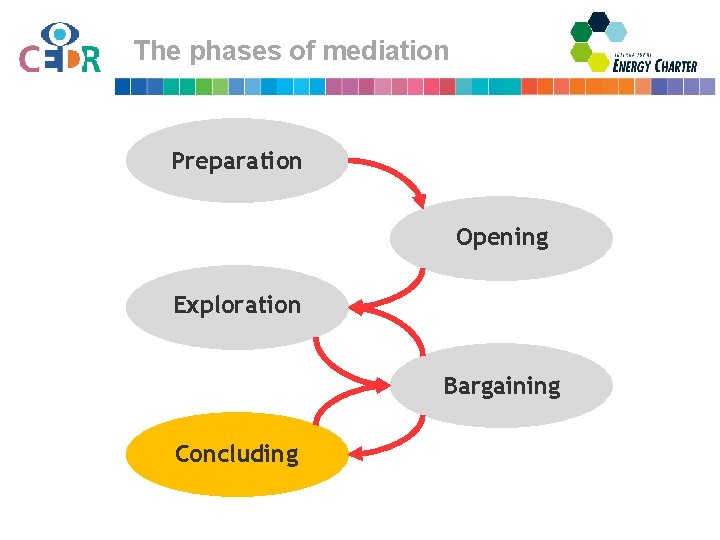
The phases of mediation Preparation Opening Exploration Bargaining Concluding
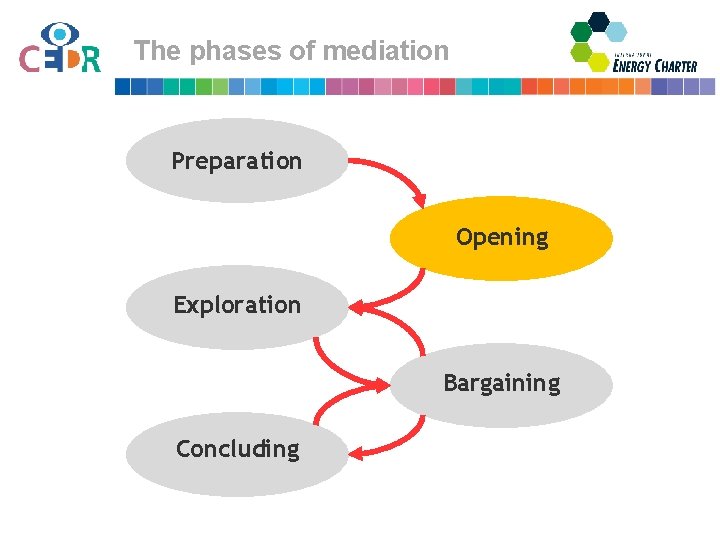
The phases of mediation Preparation Opening Exploration Bargaining Concluding
Opening • Introductions • Ground rules • Parties’ statements o Often first time to present case face to face
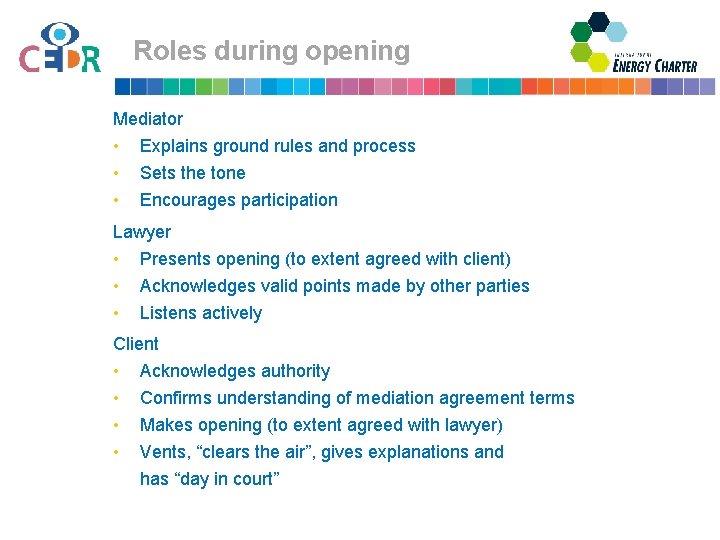
Roles during opening Mediator • • • Explains ground rules and process Sets the tone Encourages participation Lawyer • Presents opening (to extent agreed with client) • Acknowledges valid points made by other parties • Listens actively Client • Acknowledges authority • Confirms understanding of mediation agreement terms • Makes opening (to extent agreed with lawyer) • Vents, “clears the air”, gives explanations and has “day in court”
The phases of mediation Preparation Opening Exploration Bargaining Concluding
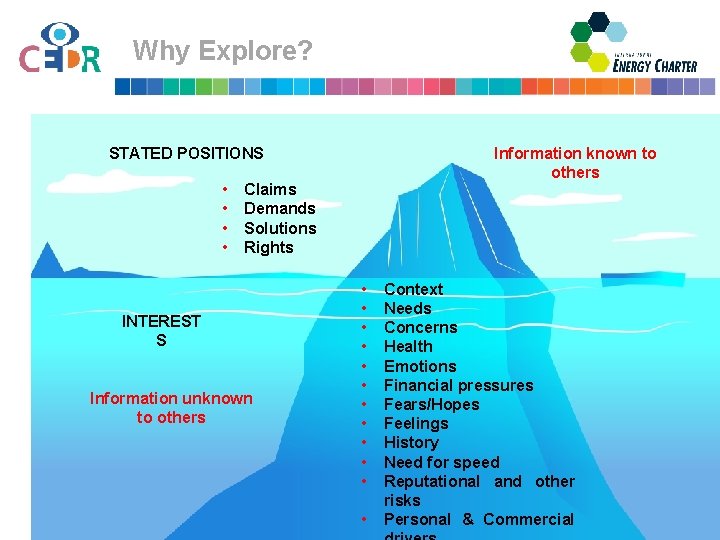
Why Explore? Information known to others STATED POSITIONS • • Claims Demands Solutions Rights INTEREST S Information unknown to others • • • Context Needs Concerns Health Emotions Financial pressures Fears/Hopes Feelings History Need for speed Reputational and other risks Personal & Commercial
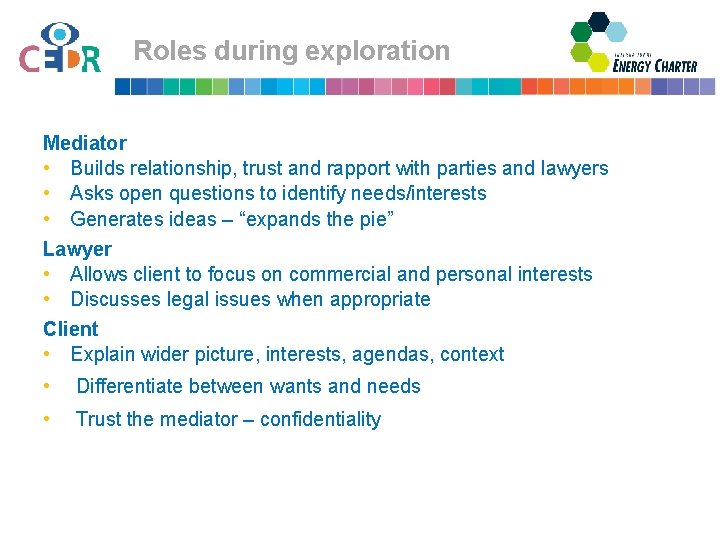
Roles during exploration Mediator • Builds relationship, trust and rapport with parties and lawyers • Asks open questions to identify needs/interests • Generates ideas – “expands the pie” Lawyer • Allows client to focus on commercial and personal interests • Discusses legal issues when appropriate Client • Explain wider picture, interests, agendas, context • Differentiate between wants and needs • Trust the mediator – confidentiality
The phases of mediation Preparation Opening Exploration Early Bargaining Concluding
The phases of mediation Mediator • Coaches parties on framing of first offers and tests how it will be received • Identifies objective criteria • Manages expectations and reactions Lawyer • Realistic assessment of strengths and weaknesses of the case • Assist client to formulate offers Client • Adjusts expectations • Makes and reviews offers • Yields to reason – open to other side’s reasoned points
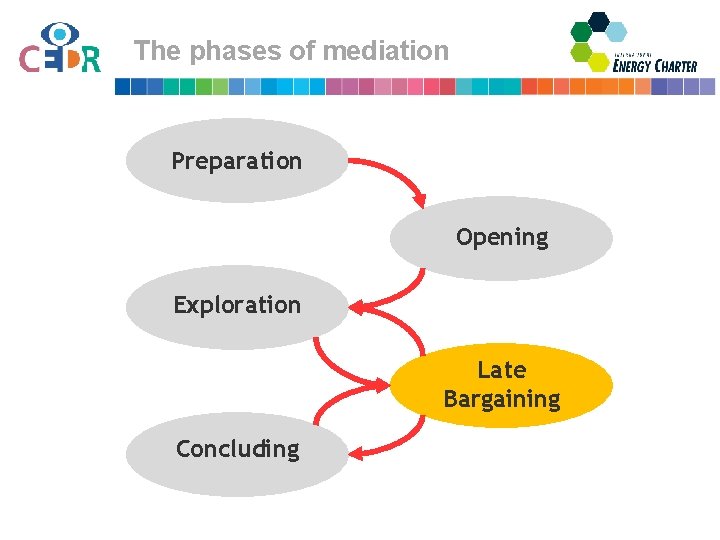
The phases of mediation Preparation Opening Exploration Late Bargaining Concluding
Roles during late bargaining - Deadlock Mediator • Reality testing- BATNA and WATNA • Risk analysis • Uses strategies to break impasse Lawyer • Realistic assessment of strengths and weaknesses of the case • Reviews BATNA • Re-assesses costs Client • Have reached the “point of despair” • Adjusts expectations based on reality testing • Makes and reviews offers
The phases of mediation Preparation Opening Exploration Bargaining Concluding
Concluding phase of mediation • The settlement must be viable and workable • Satisfy all parties • Deals with all issues in dispute • Minimise likelihood of future disputes • The best settlement is the parties’ not the mediators’ • Put settlement in writing