
Central Nervous System CNS Brain and Spinal Cord
Central Nervous System (CNS) Brain and Spinal Cord
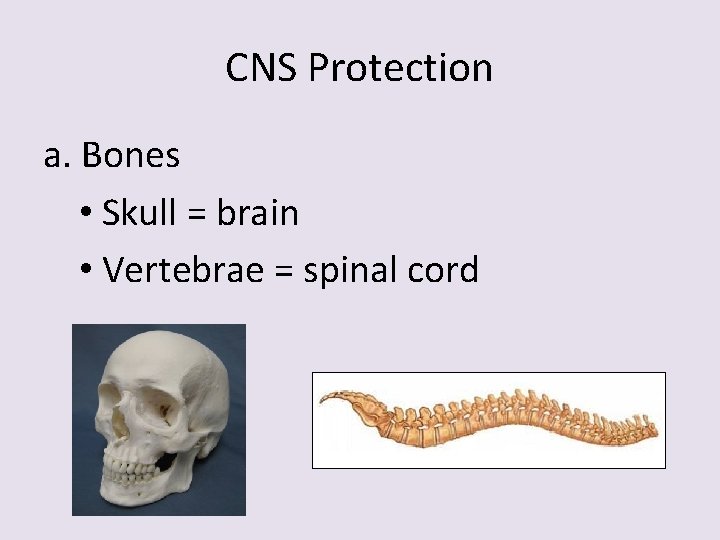
CNS Protection a. Bones • Skull = brain • Vertebrae = spinal cord
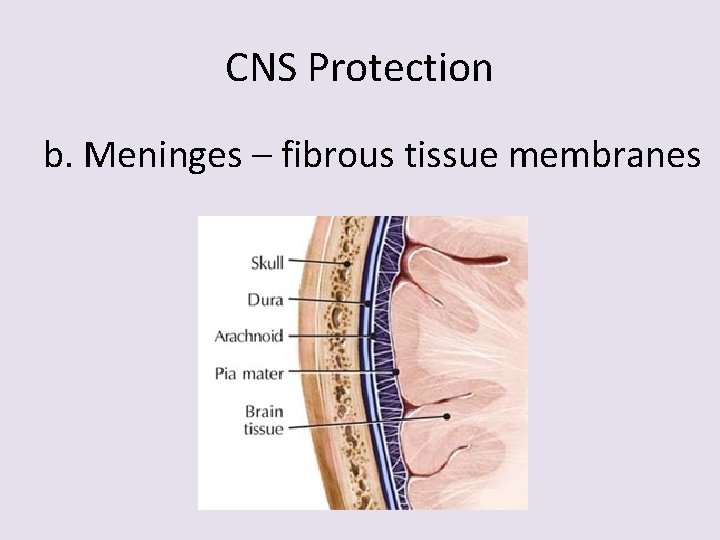
CNS Protection b. Meninges – fibrous tissue membranes
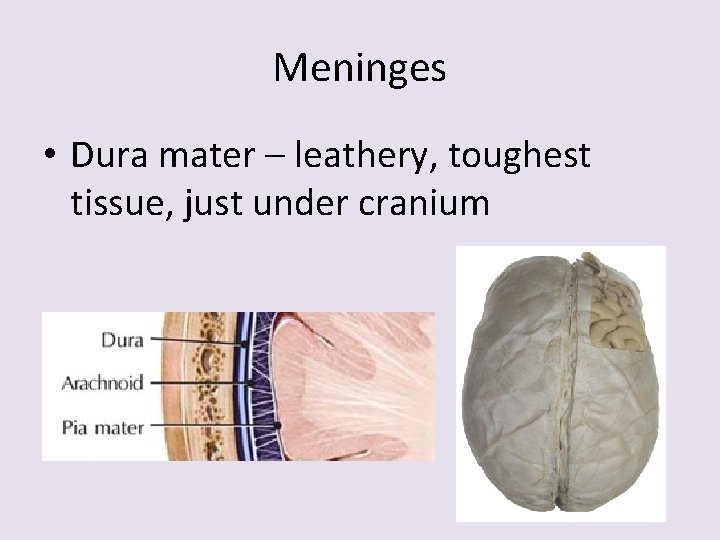
Meninges • Dura mater – leathery, toughest tissue, just under cranium
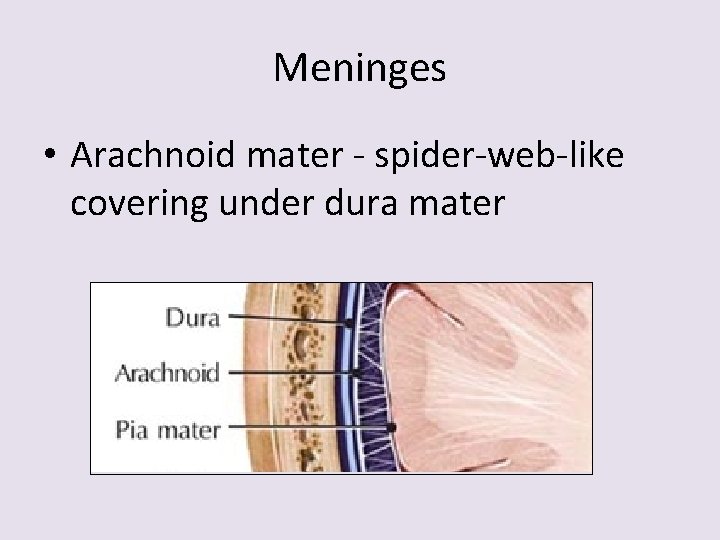
Meninges • Arachnoid mater - spider-web-like covering under dura mater
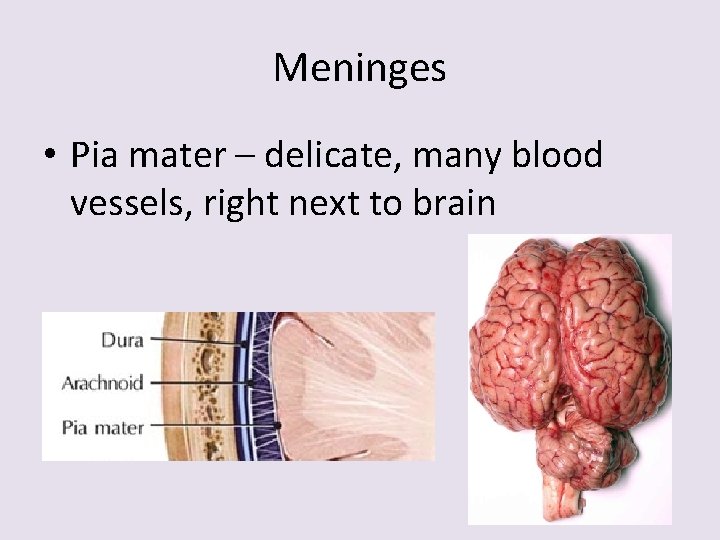
Meninges • Pia mater – delicate, many blood vessels, right next to brain
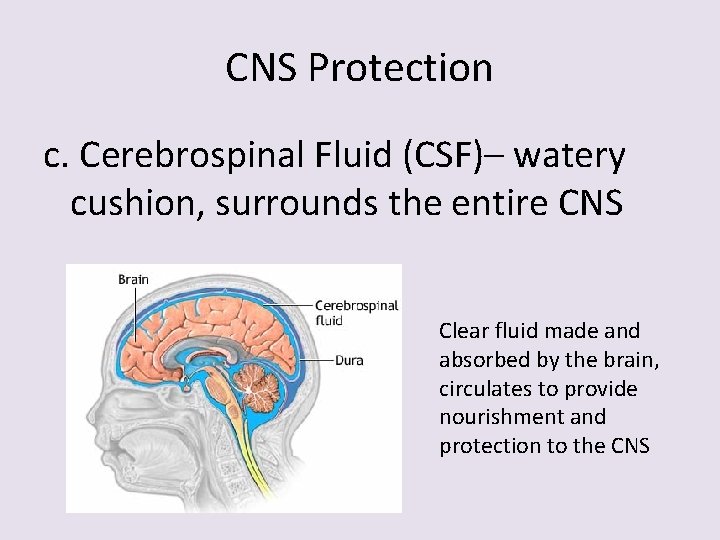
CNS Protection c. Cerebrospinal Fluid (CSF)– watery cushion, surrounds the entire CNS Clear fluid made and absorbed by the brain, circulates to provide nourishment and protection to the CNS
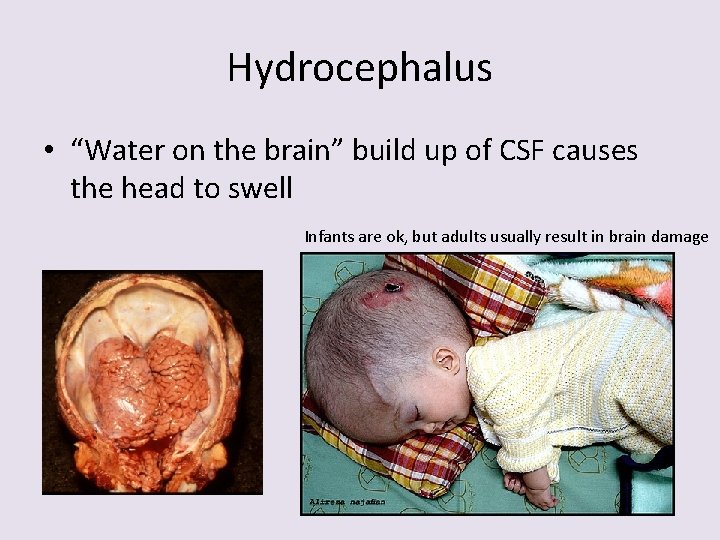
Hydrocephalus • “Water on the brain” build up of CSF causes the head to swell Infants are ok, but adults usually result in brain damage
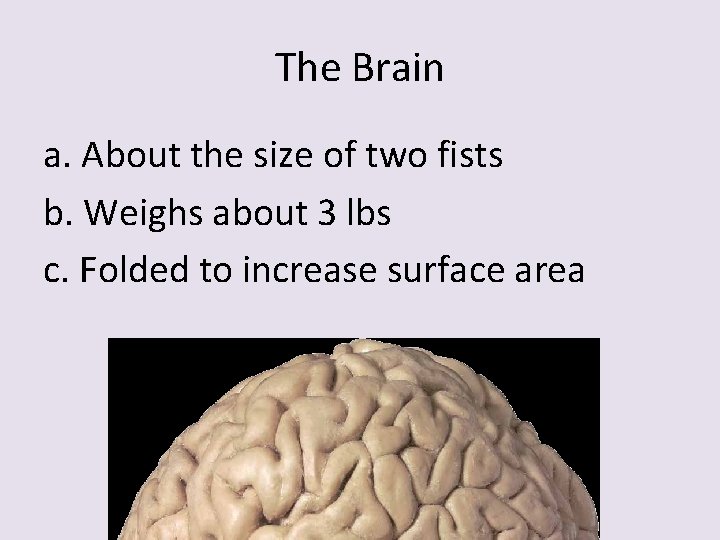
The Brain a. About the size of two fists b. Weighs about 3 lbs c. Folded to increase surface area
Divided into 4 main parts • • Cerebrum Diencephalon Cerebellum Brain Stem
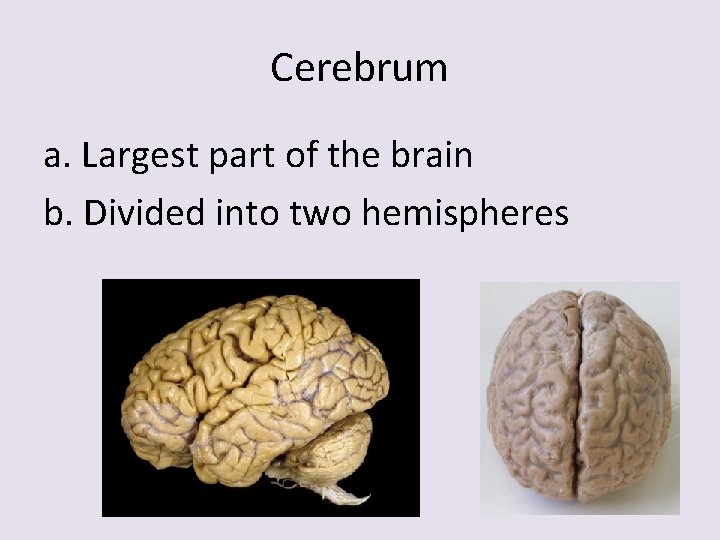
Cerebrum a. Largest part of the brain b. Divided into two hemispheres
Hemispheres • Control opposite sides of the body • Right brained – music, art, creative • Left brained – math, verbal

c. Cerebral cortex – wrinkled, outer layer, gray matter
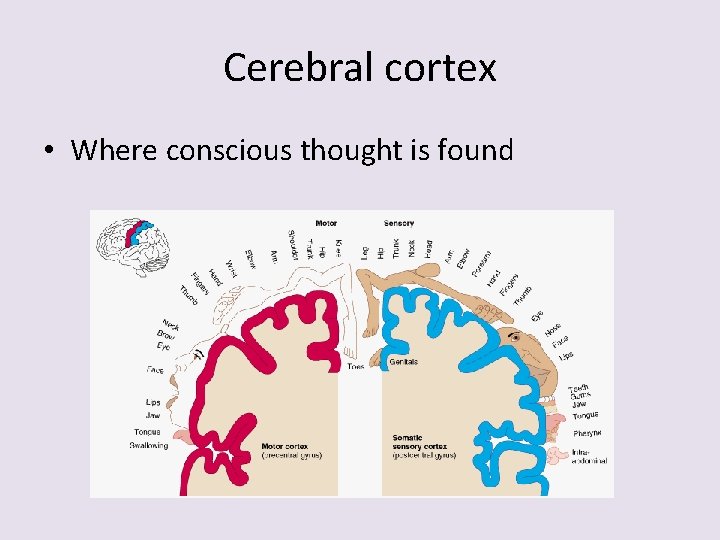
Cerebral cortex • Where conscious thought is found

Divided into 4 Lobes
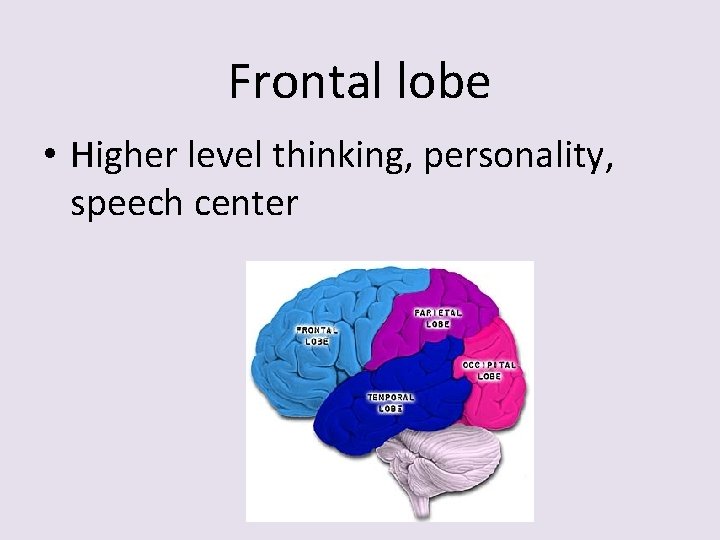
Frontal lobe • Higher level thinking, personality, speech center
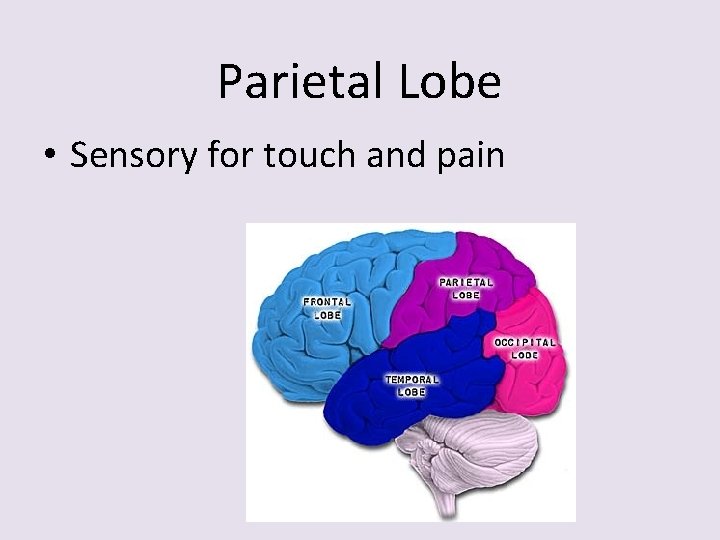
Parietal Lobe • Sensory for touch and pain
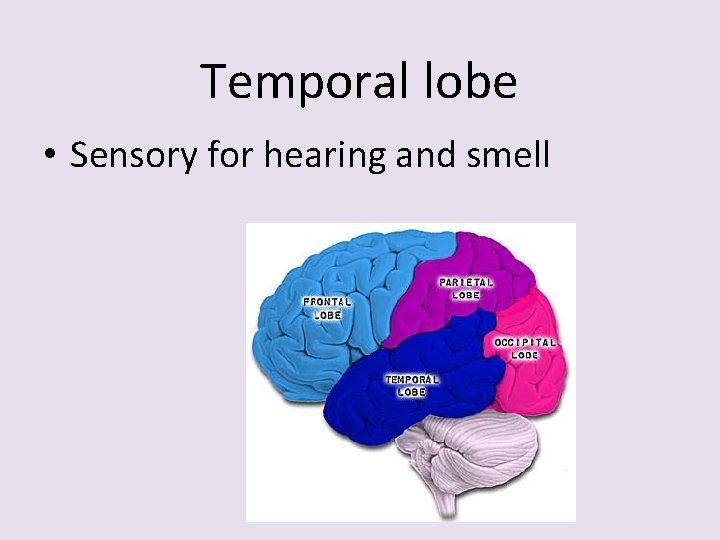
Temporal lobe • Sensory for hearing and smell
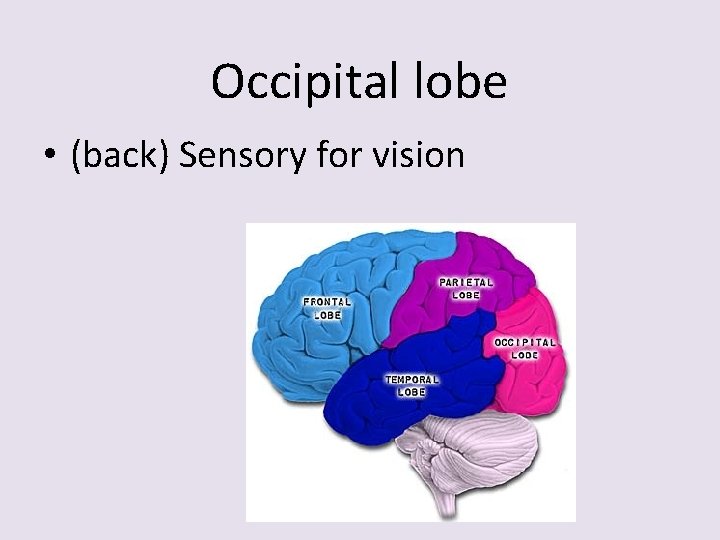
Occipital lobe • (back) Sensory for vision
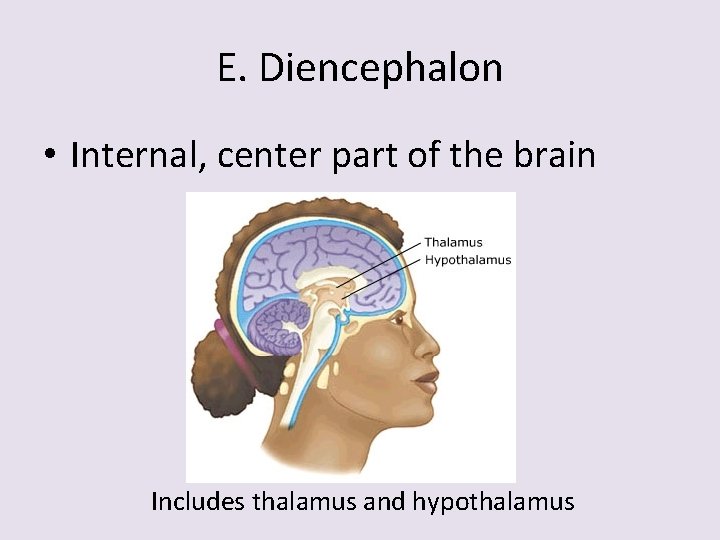
E. Diencephalon • Internal, center part of the brain Includes thalamus and hypothalamus
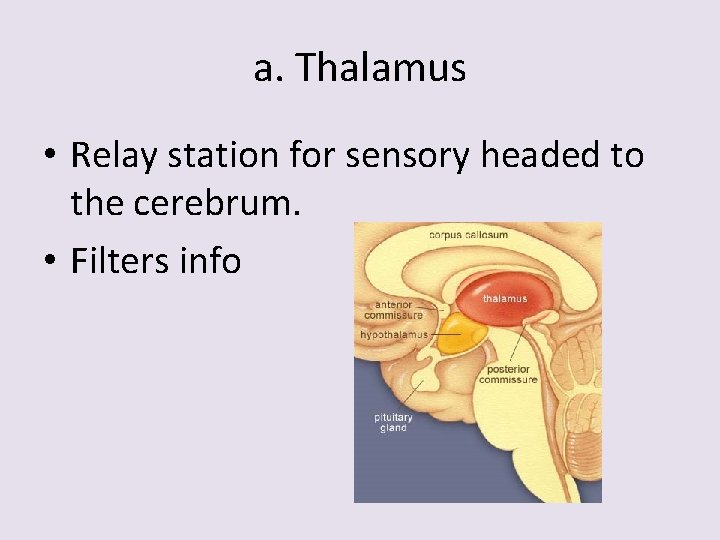
a. Thalamus • Relay station for sensory headed to the cerebrum. • Filters info
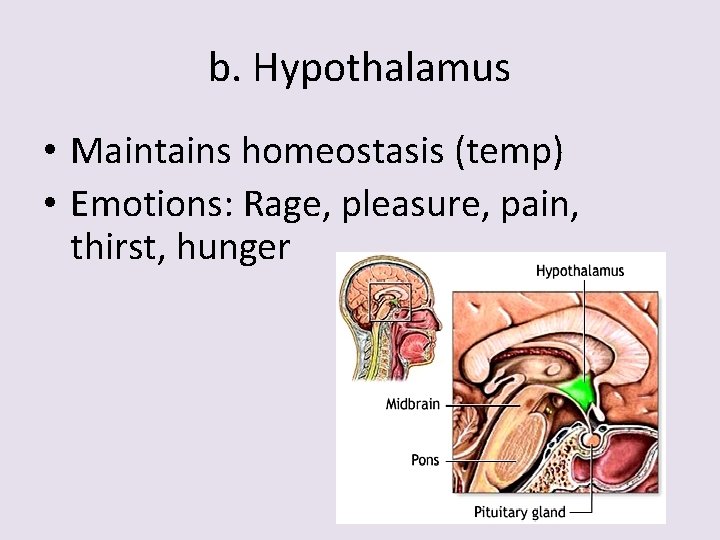
b. Hypothalamus • Maintains homeostasis (temp) • Emotions: Rage, pleasure, pain, thirst, hunger
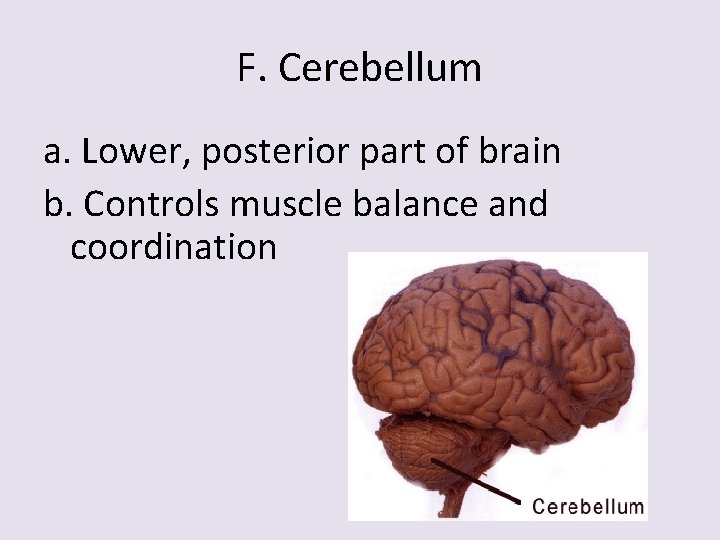
F. Cerebellum a. Lower, posterior part of brain b. Controls muscle balance and coordination
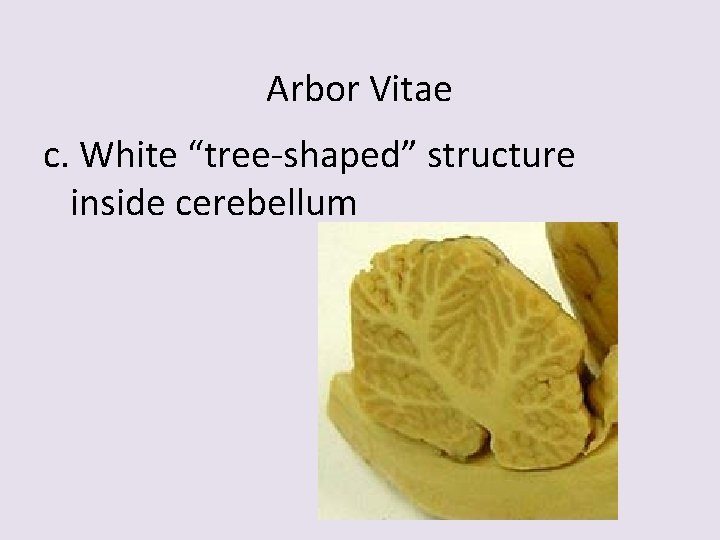
Arbor Vitae c. White “tree-shaped” structure inside cerebellum
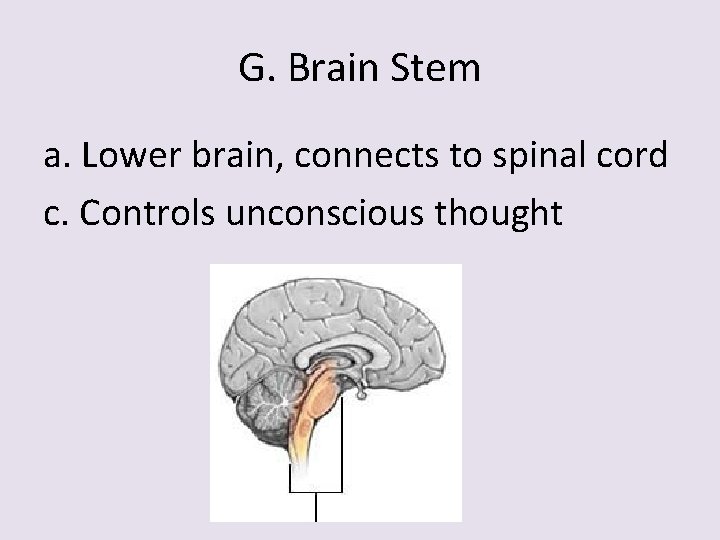
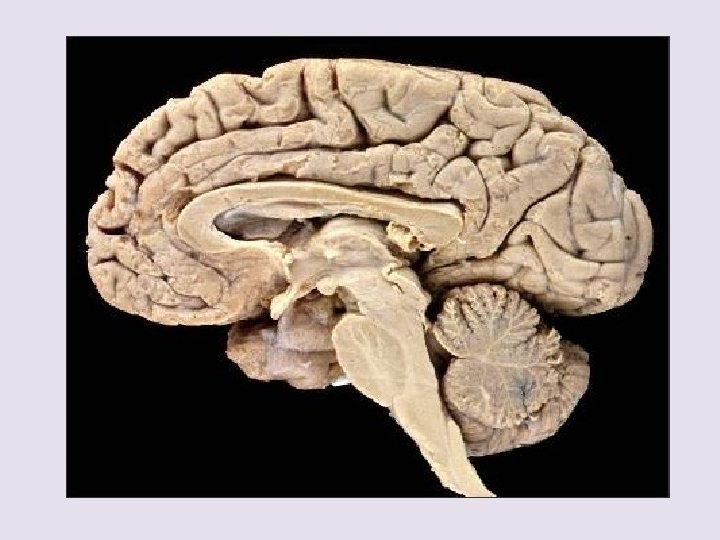
G. Brain Stem a. Lower brain, connects to spinal cord c. Controls unconscious thought
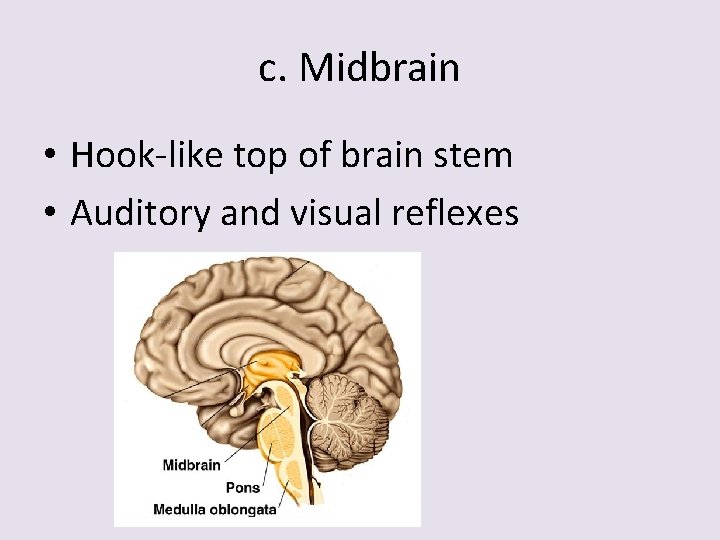
c. Midbrain • Hook-like top of brain stem • Auditory and visual reflexes
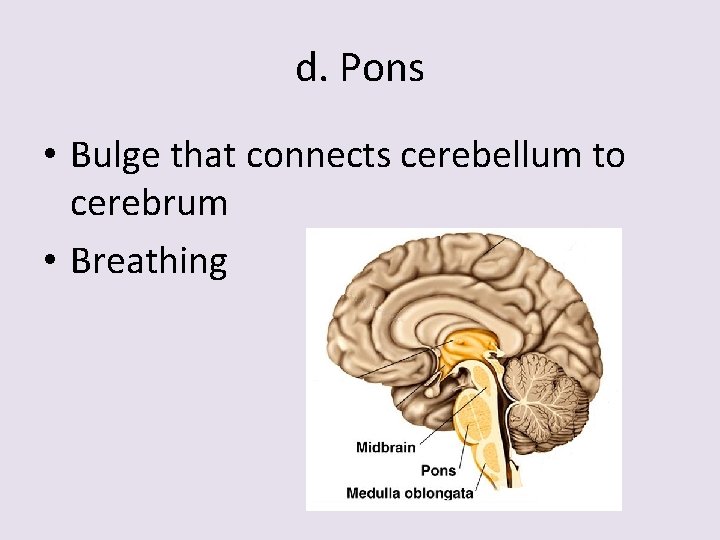
d. Pons • Bulge that connects cerebellum to cerebrum • Breathing
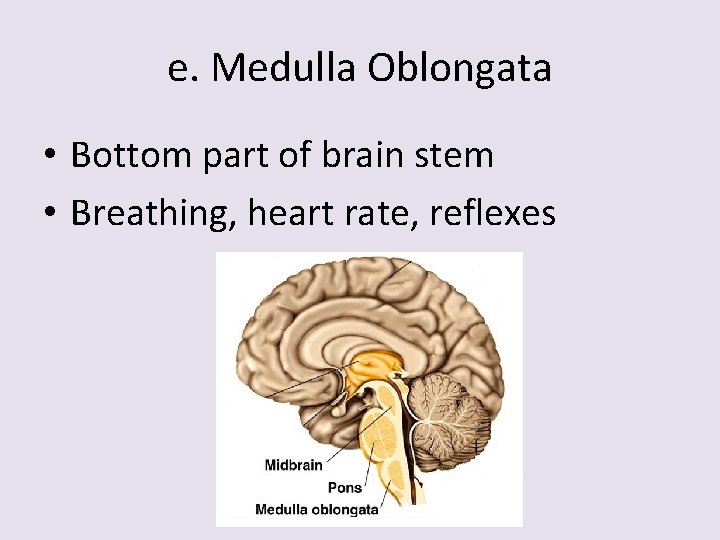
e. Medulla Oblongata • Bottom part of brain stem • Breathing, heart rate, reflexes
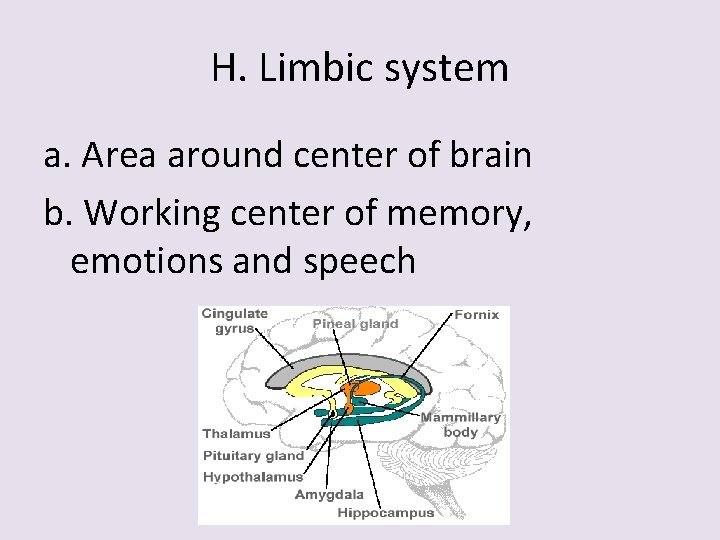
H. Limbic system a. Area around center of brain b. Working center of memory, emotions and speech
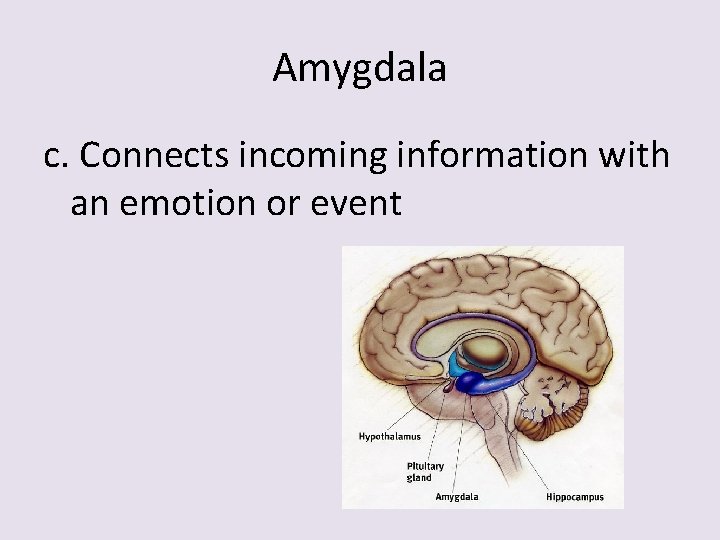
Amygdala c. Connects incoming information with an emotion or event
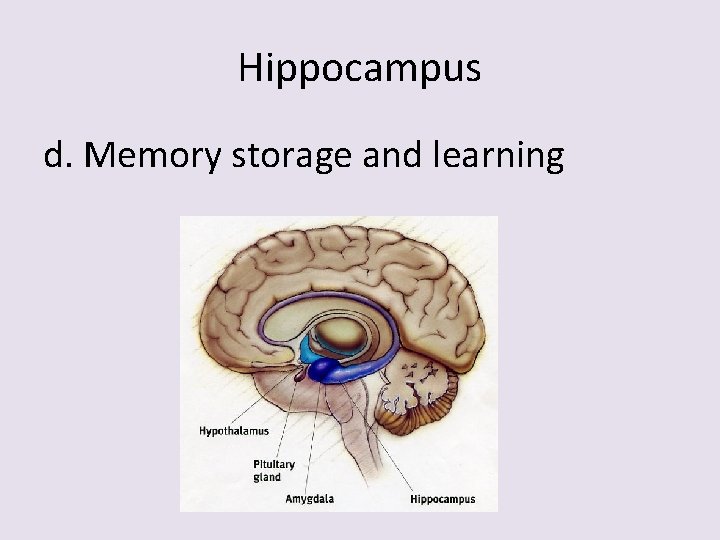
Hippocampus d. Memory storage and learning
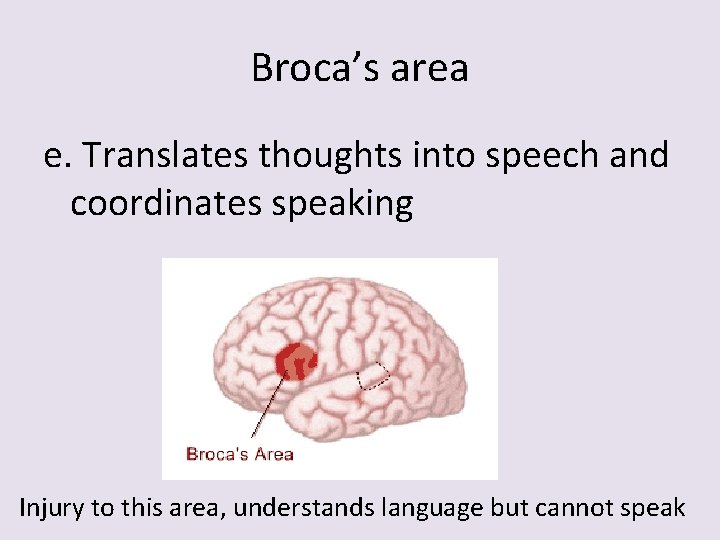
Broca’s area e. Translates thoughts into speech and coordinates speaking Injury to this area, understands language but cannot speak
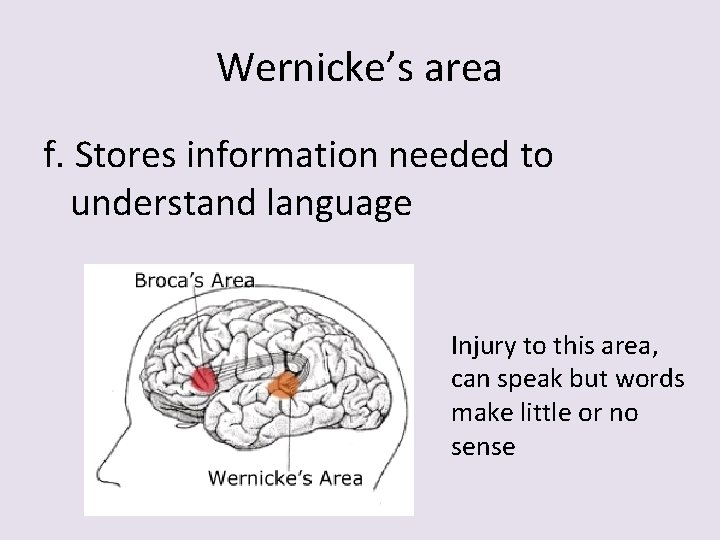
Wernicke’s area f. Stores information needed to understand language Injury to this area, can speak but words make little or no sense
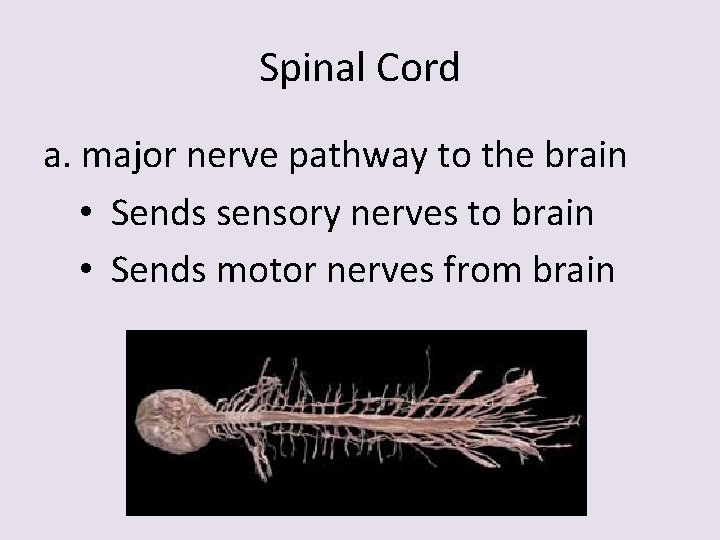
Spinal Cord a. major nerve pathway to the brain • Sends sensory nerves to brain • Sends motor nerves from brain
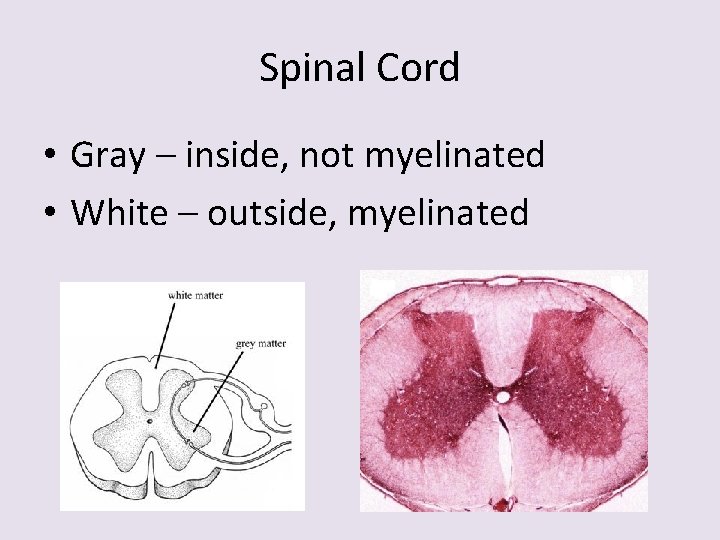
Spinal Cord • Gray – inside, not myelinated • White – outside, myelinated
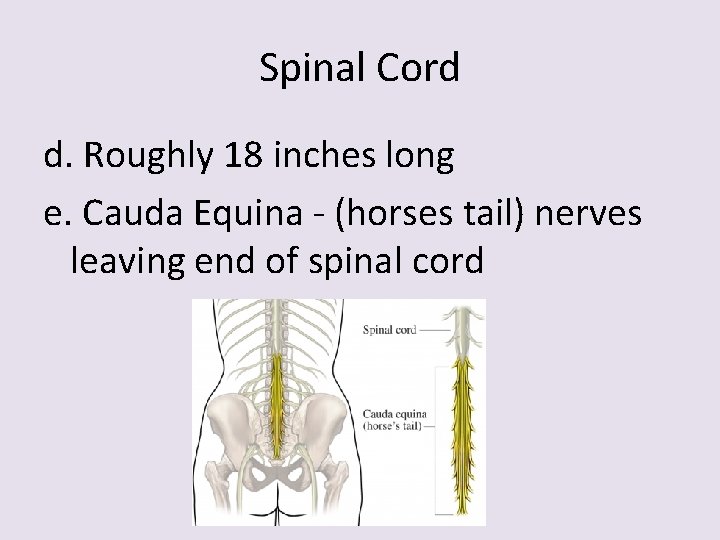
Spinal Cord d. Roughly 18 inches long e. Cauda Equina - (horses tail) nerves leaving end of spinal cord
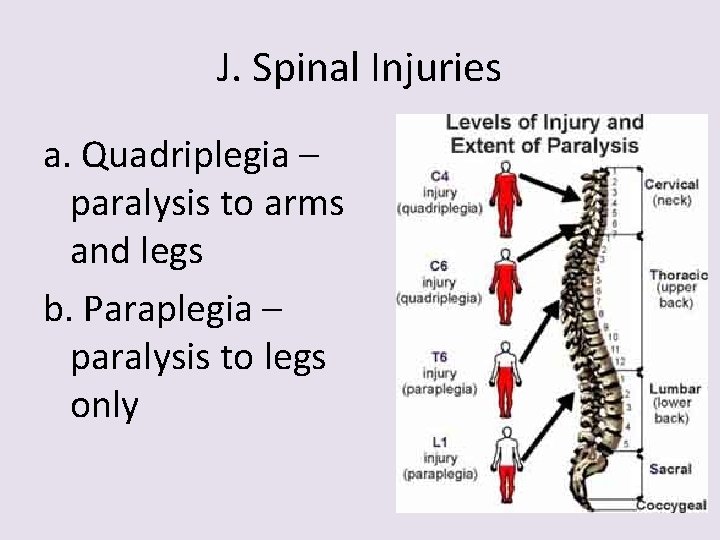
J. Spinal Injuries a. Quadriplegia – paralysis to arms and legs b. Paraplegia – paralysis to legs only
Peripheral Nervous System (PNS) Nerves throughout body
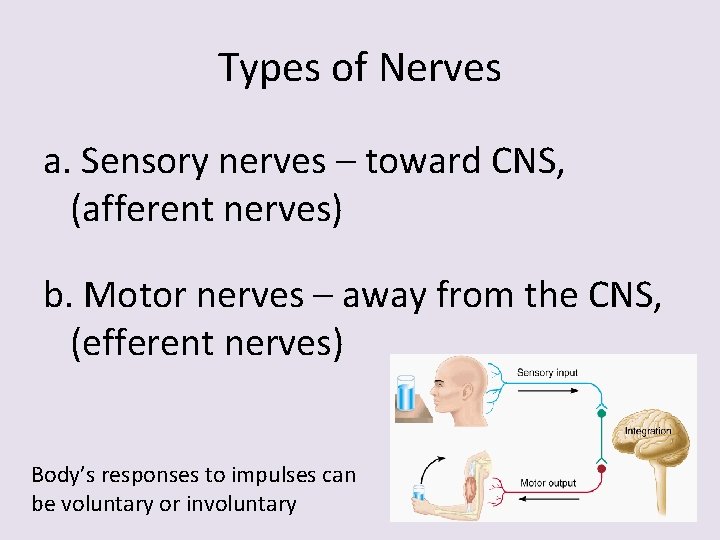
Types of Nerves a. Sensory nerves – toward CNS, (afferent nerves) b. Motor nerves – away from the CNS, (efferent nerves) Body’s responses to impulses can be voluntary or involuntary
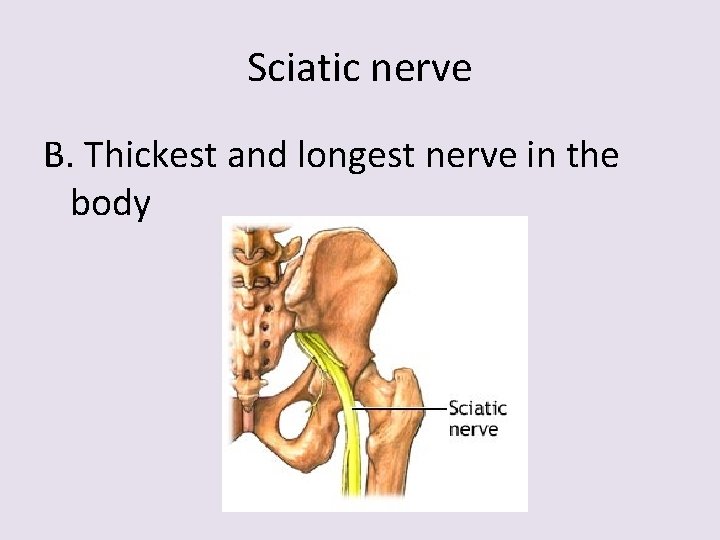
Sciatic nerve B. Thickest and longest nerve in the body
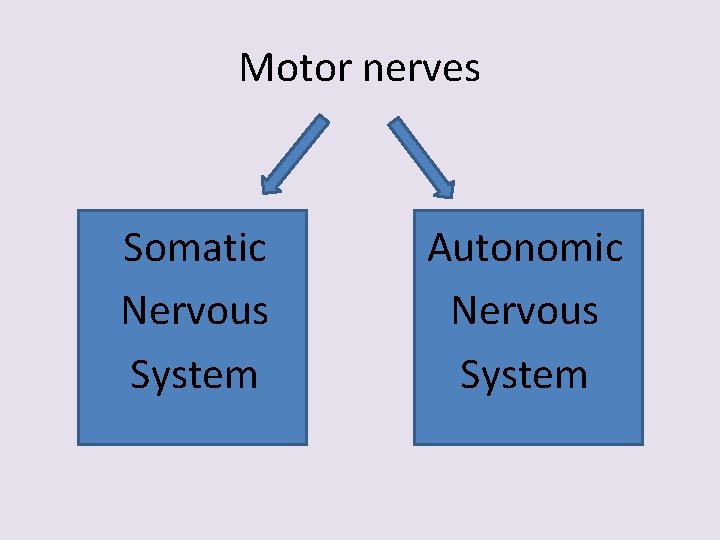
Motor nerves Somatic Nervous System Autonomic Nervous System
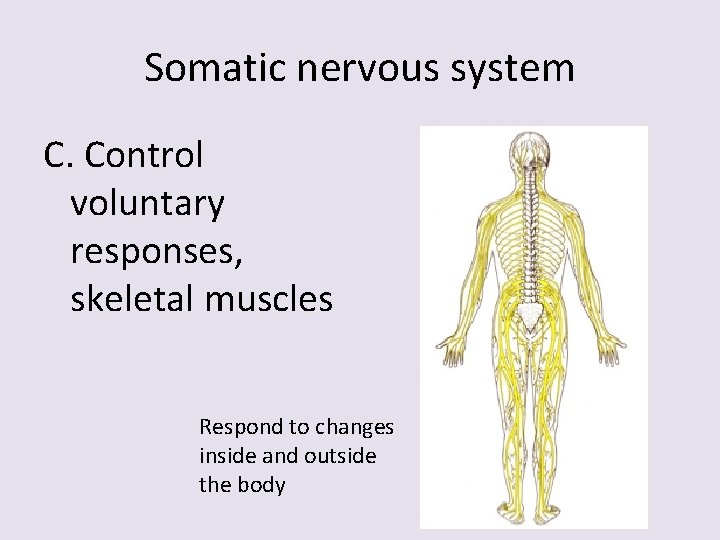
Somatic nervous system C. Control voluntary responses, skeletal muscles Respond to changes inside and outside the body
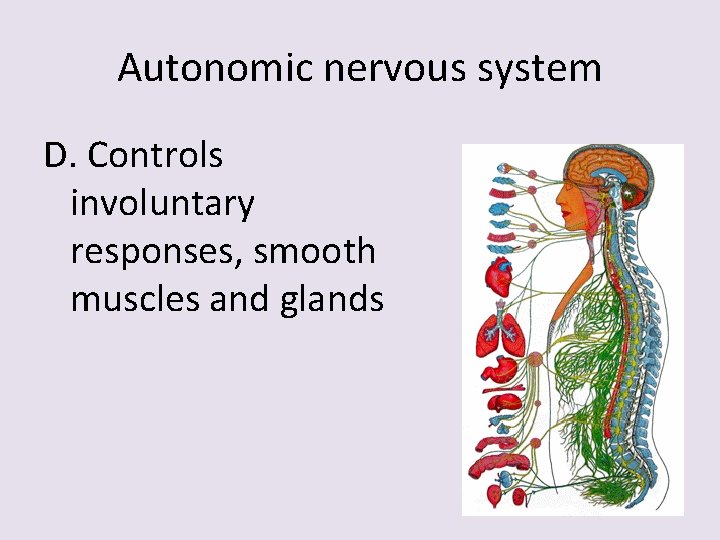
Autonomic nervous system D. Controls involuntary responses, smooth muscles and glands
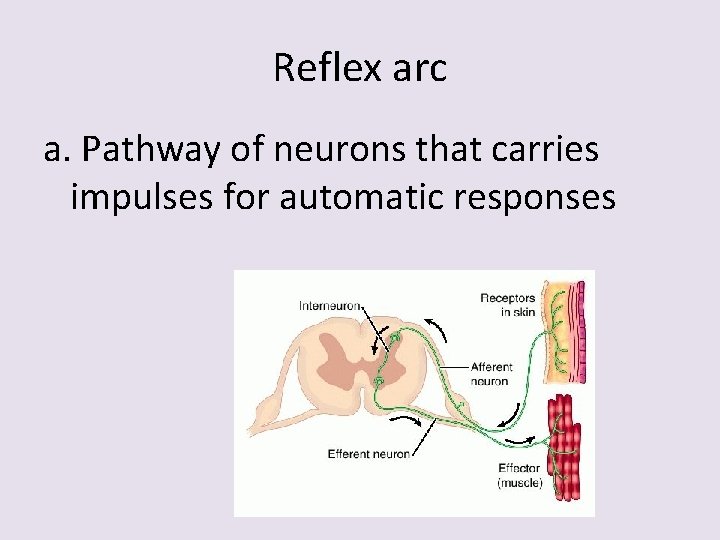
Reflex arc a. Pathway of neurons that carries impulses for automatic responses
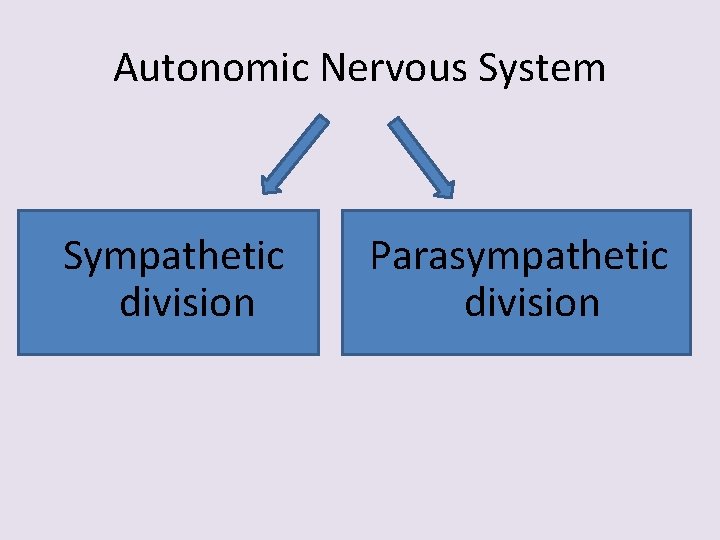
Autonomic Nervous System Sympathetic division Parasympathetic division
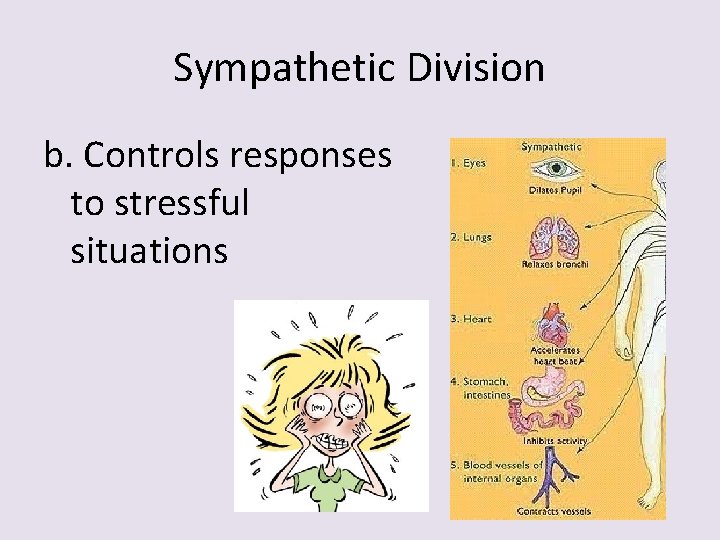
Sympathetic Division b. Controls responses to stressful situations
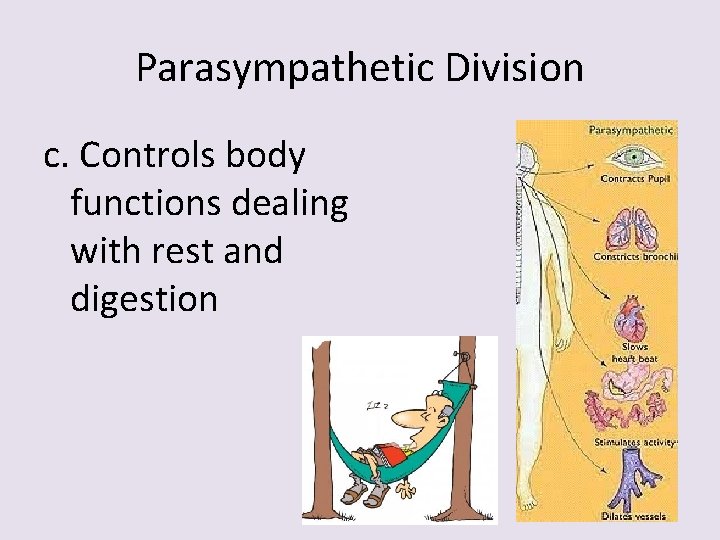
Parasympathetic Division c. Controls body functions dealing with rest and digestion
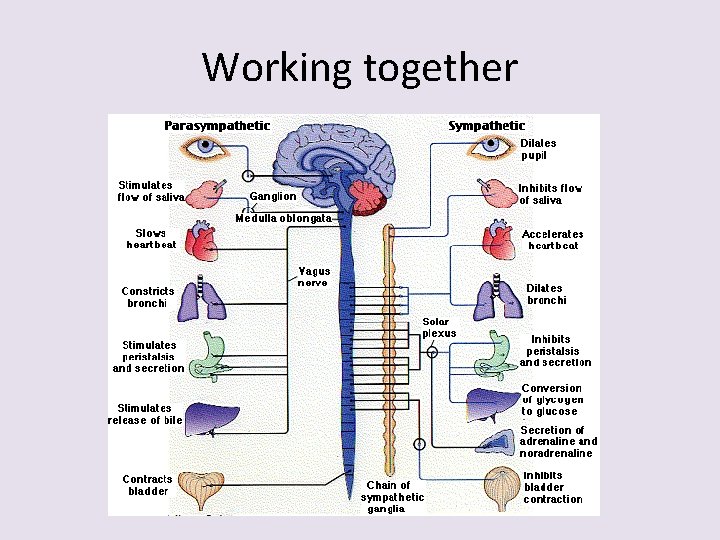
Working together
- Slides: 49