
Central Nervous System Brain Sulcus grooves or fissures
Central Nervous System: Brain
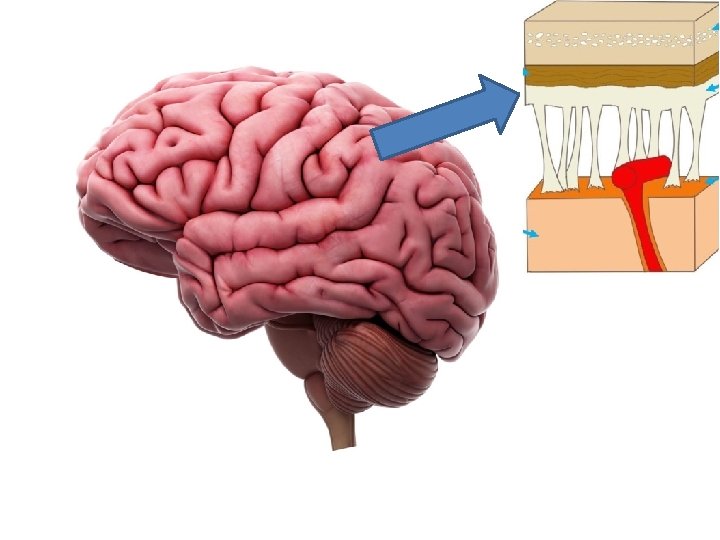
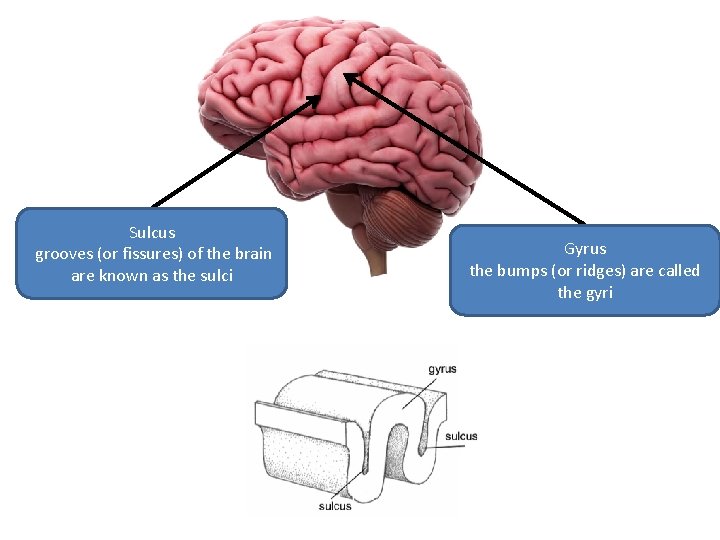
Sulcus grooves (or fissures) of the brain are known as the sulci Gyrus the bumps (or ridges) are called the gyri
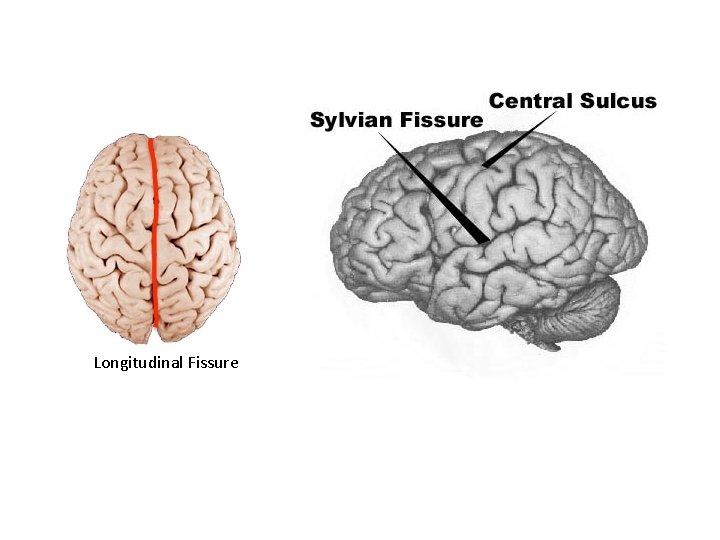
Longitudinal Fissure
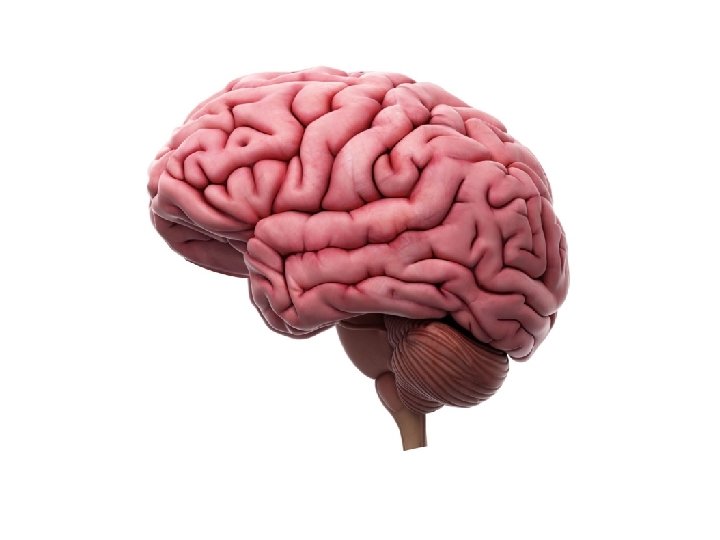
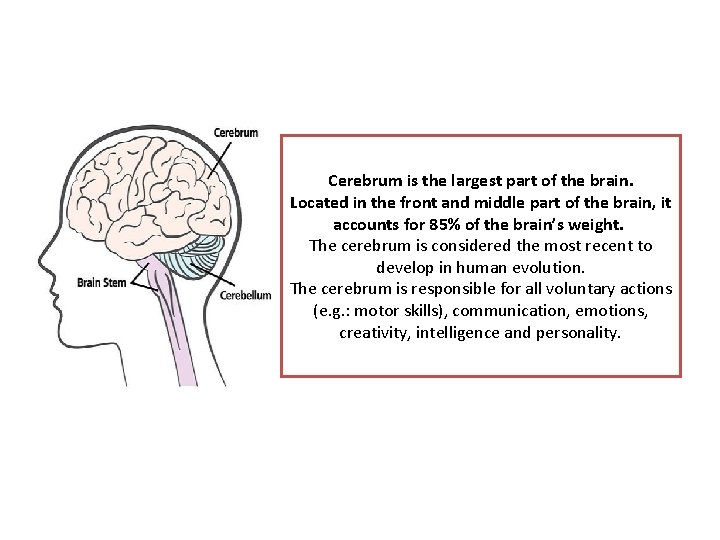
Cerebrum is the largest part of the brain. Located in the front and middle part of the brain, it accounts for 85% of the brain’s weight. The cerebrum is considered the most recent to develop in human evolution. The cerebrum is responsible for all voluntary actions (e. g. : motor skills), communication, emotions, creativity, intelligence and personality.
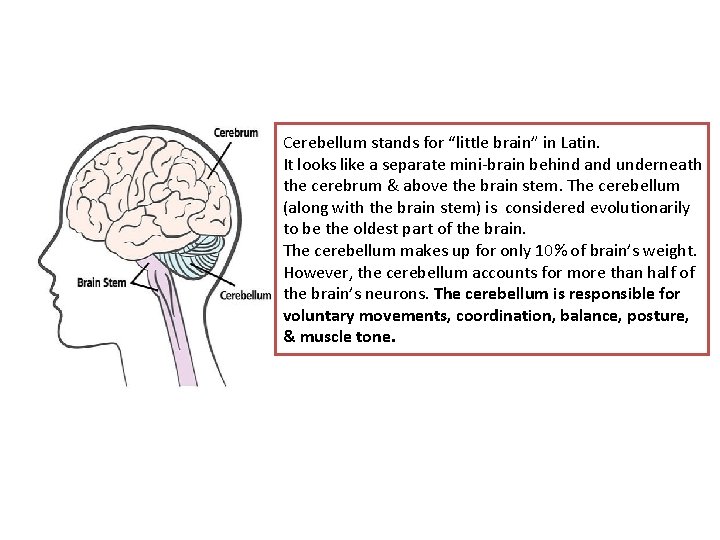
Cerebellum stands for “little brain” in Latin. It looks like a separate mini-brain behind and underneath the cerebrum & above the brain stem. The cerebellum (along with the brain stem) is considered evolutionarily to be the oldest part of the brain. The cerebellum makes up for only 10% of brain’s weight. However, the cerebellum accounts for more than half of the brain’s neurons. The cerebellum is responsible for voluntary movements, coordination, balance, posture, & muscle tone.
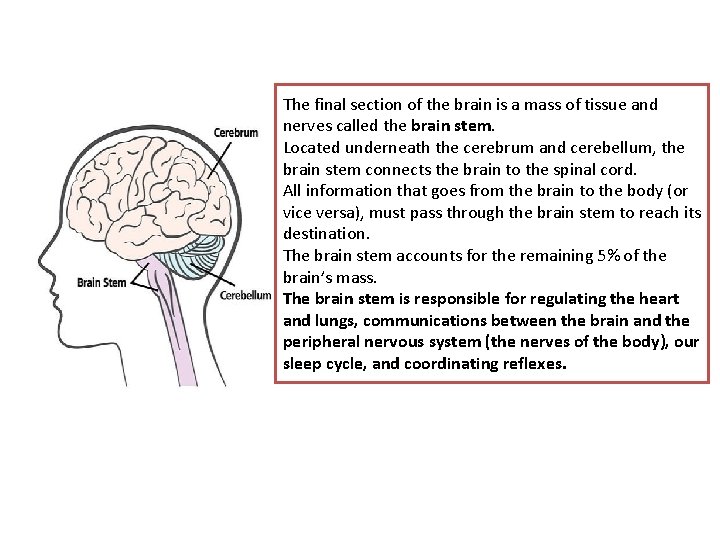
The final section of the brain is a mass of tissue and nerves called the brain stem. Located underneath the cerebrum and cerebellum, the brain stem connects the brain to the spinal cord. All information that goes from the brain to the body (or vice versa), must pass through the brain stem to reach its destination. The brain stem accounts for the remaining 5% of the brain’s mass. The brain stem is responsible for regulating the heart and lungs, communications between the brain and the peripheral nervous system (the nerves of the body), our sleep cycle, and coordinating reflexes.
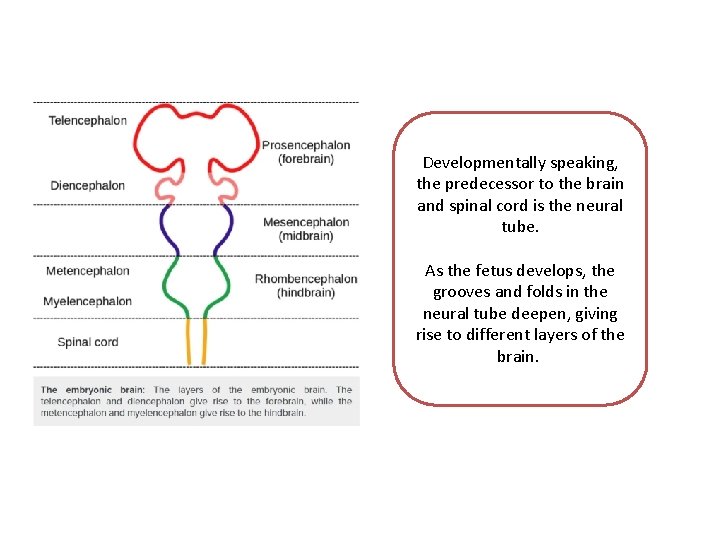
Developmentally speaking, the predecessor to the brain and spinal cord is the neural tube. As the fetus develops, the grooves and folds in the neural tube deepen, giving rise to different layers of the brain.
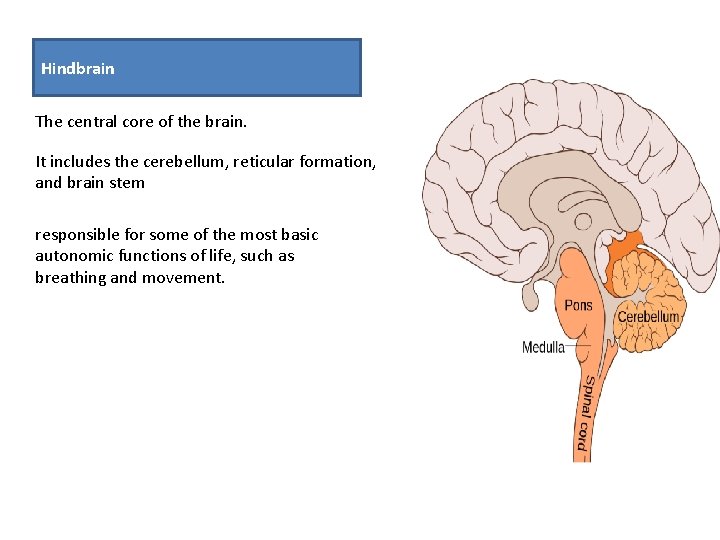
Hindbrain The central core of the brain. It includes the cerebellum, reticular formation, and brain stem responsible for some of the most basic autonomic functions of life, such as breathing and movement.
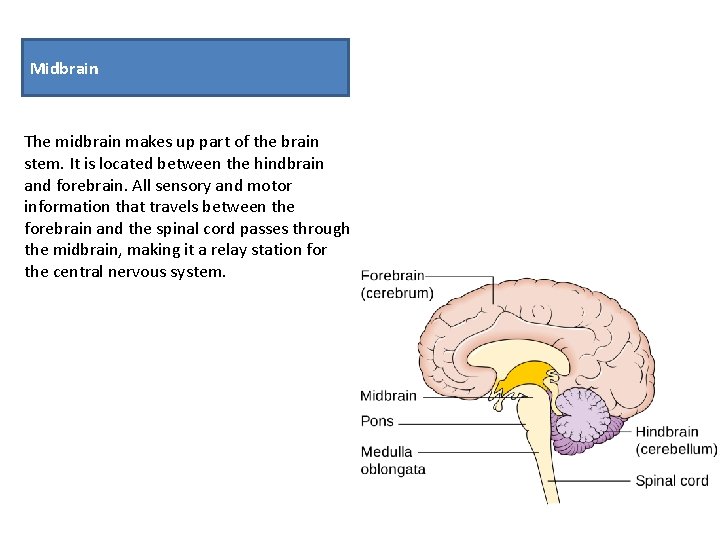
Midbrain The midbrain makes up part of the brain stem. It is located between the hindbrain and forebrain. All sensory and motor information that travels between the forebrain and the spinal cord passes through the midbrain, making it a relay station for the central nervous system.
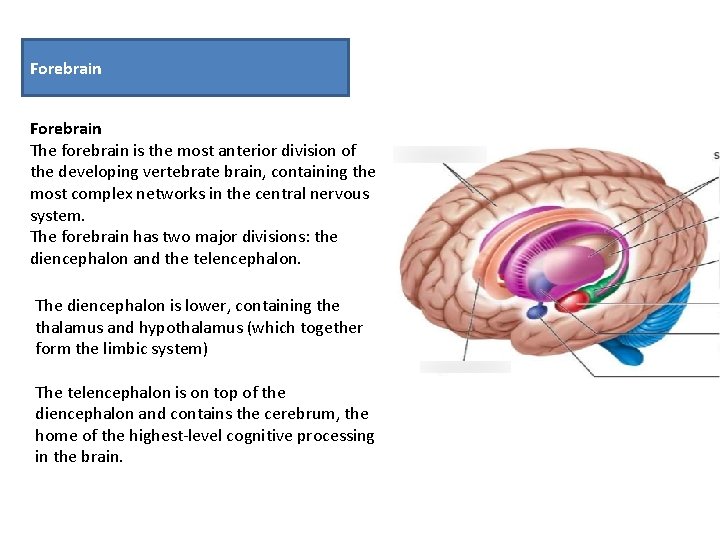
Forebrain The forebrain is the most anterior division of the developing vertebrate brain, containing the most complex networks in the central nervous system. The forebrain has two major divisions: the diencephalon and the telencephalon. The diencephalon is lower, containing the thalamus and hypothalamus (which together form the limbic system) The telencephalon is on top of the diencephalon and contains the cerebrum, the home of the highest-level cognitive processing in the brain.
- Slides: 13