
Central Interlock System CIS v 0 Luis Fernandez
- Slides: 30
Central Interlock System CIS v 0 Luis Fernandez ITER – Interlocks December 2014
Why CIS v 0? CERN Objectives ü Assessment of the methodology ü Validation of technical solutions ü Definition of strategy for • Operation from Interlock Desk • Non-Critical interface with CODAC • Timestamp and Archiving PLC Workshop – ITER IO 4 -5 December 2014 2
CERN Slow Interlock Prototype Before the CIS v 0 there was the Slow Interlock Prototype, our first test platform. PLC Workshop – ITER IO 4 -5 December 2014 3
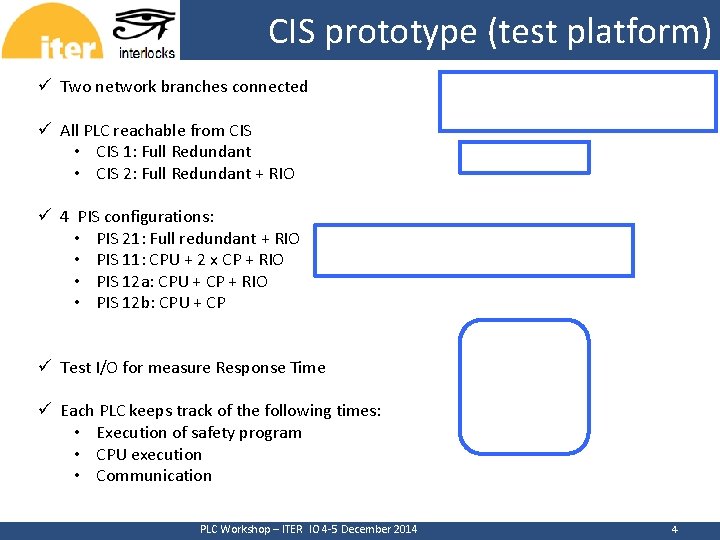
CERN CIS prototype (test platform) ü Two network branches connected ü All PLC reachable from CIS • CIS 1: Full Redundant • CIS 2: Full Redundant + RIO ü 4 PIS configurations: • PIS 21: Full redundant + RIO • PIS 11: CPU + 2 x CP + RIO • PIS 12 a: CPU + CP + RIO • PIS 12 b: CPU + CP ü Test I/O for measure Response Time ü Each PLC keeps track of the following times: • Execution of safety program • CPU execution • Communication PLC Workshop – ITER IO 4 -5 December 2014 4
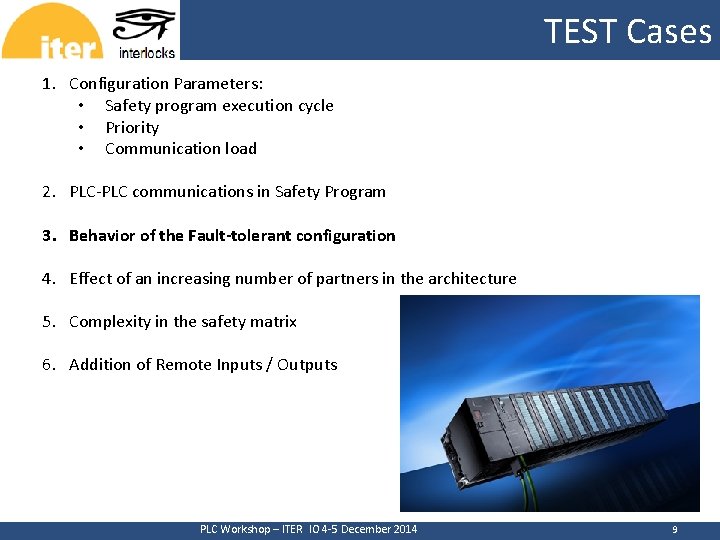
TEST Cases CERN 1. Configuration Parameters: • Safety program execution cycle • Priority • Communication load 2. PLC-PLC communications in Safety Program PLC Workshop – ITER IO 4 -5 December 2014 5
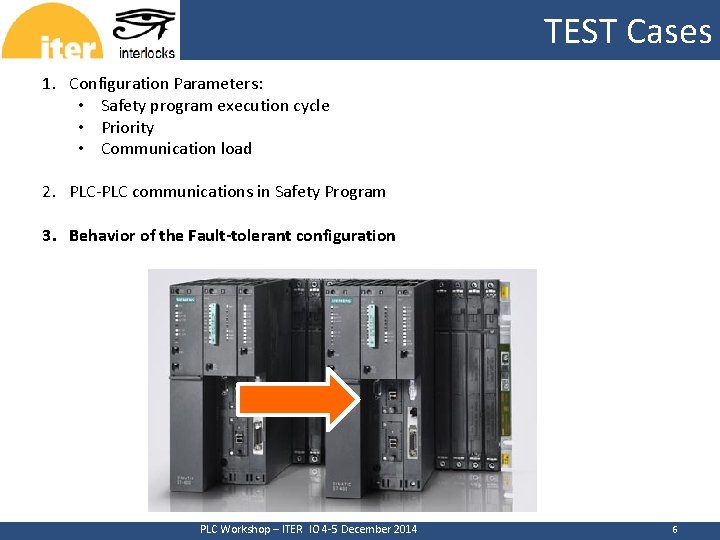
TEST Cases CERN 1. Configuration Parameters: • Safety program execution cycle • Priority • Communication load 2. PLC-PLC communications in Safety Program 3. Behavior of the Fault-tolerant configuration PLC Workshop – ITER IO 4 -5 December 2014 6
TEST Cases CERN 1. Configuration Parameters: • Safety program execution cycle • Priority • Communication load 2. PLC-PLC communications in Safety Program 3. Behavior of the Fault-tolerant configuration 4. Effect of an increasing number of partners in the architecture PLC Workshop – ITER IO 4 -5 December 2014 7
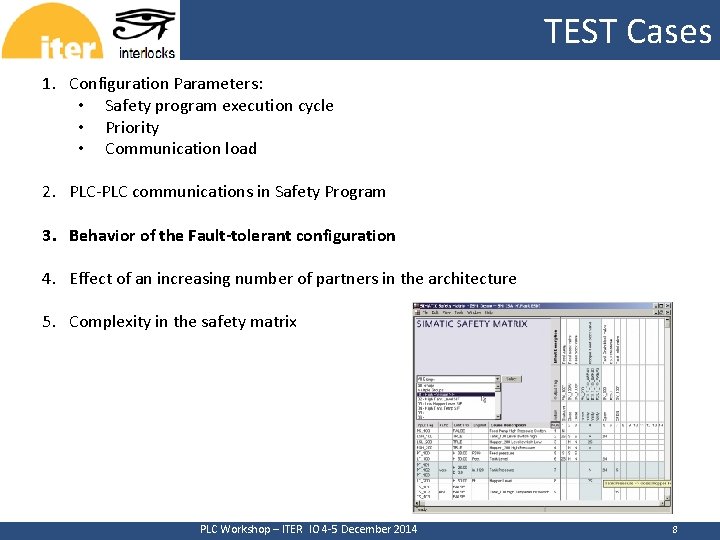
TEST Cases CERN 1. Configuration Parameters: • Safety program execution cycle • Priority • Communication load 2. PLC-PLC communications in Safety Program 3. Behavior of the Fault-tolerant configuration 4. Effect of an increasing number of partners in the architecture 5. Complexity in the safety matrix PLC Workshop – ITER IO 4 -5 December 2014 8
TEST Cases CERN 1. Configuration Parameters: • Safety program execution cycle • Priority • Communication load 2. PLC-PLC communications in Safety Program 3. Behavior of the Fault-tolerant configuration 4. Effect of an increasing number of partners in the architecture 5. Complexity in the safety matrix 6. Addition of Remote Inputs / Outputs PLC Workshop – ITER IO 4 -5 December 2014 9
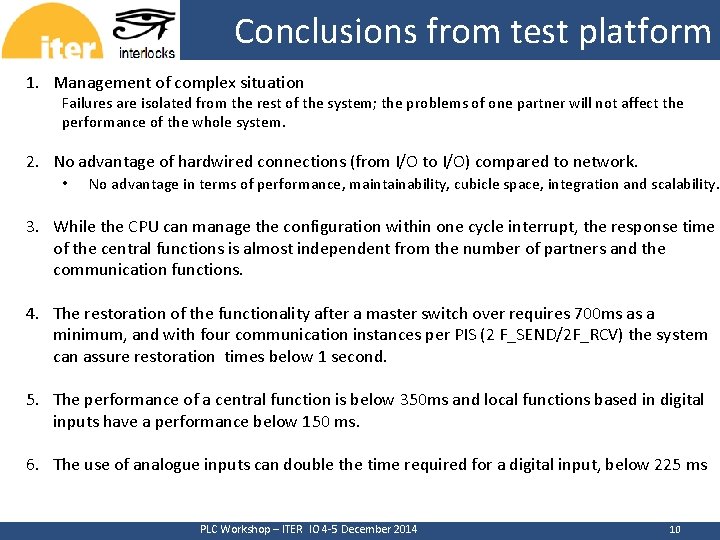
Conclusions from test platform CERN 1. Management of complex situation Failures are isolated from the rest of the system; the problems of one partner will not affect the performance of the whole system. 2. No advantage of hardwired connections (from I/O to I/O) compared to network. • No advantage in terms of performance, maintainability, cubicle space, integration and scalability. 3. While the CPU can manage the configuration within one cycle interrupt, the response time of the central functions is almost independent from the number of partners and the communication functions. 4. The restoration of the functionality after a master switch over requires 700 ms as a minimum, and with four communication instances per PIS (2 F_SEND/2 F_RCV) the system can assure restoration times below 1 second. 5. The performance of a central function is below 350 ms and local functions based in digital inputs have a performance below 150 ms. 6. The use of analogue inputs can double the time required for a digital input, below 225 ms [11] PLC Workshop – ITER IO 4 -5 December 2014 10
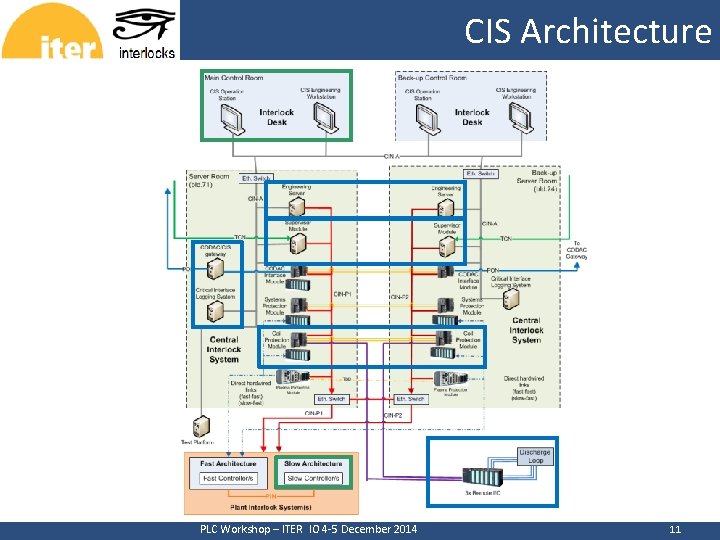
CIS Architecture CERN PLC Workshop – ITER IO 4 -5 December 2014 11
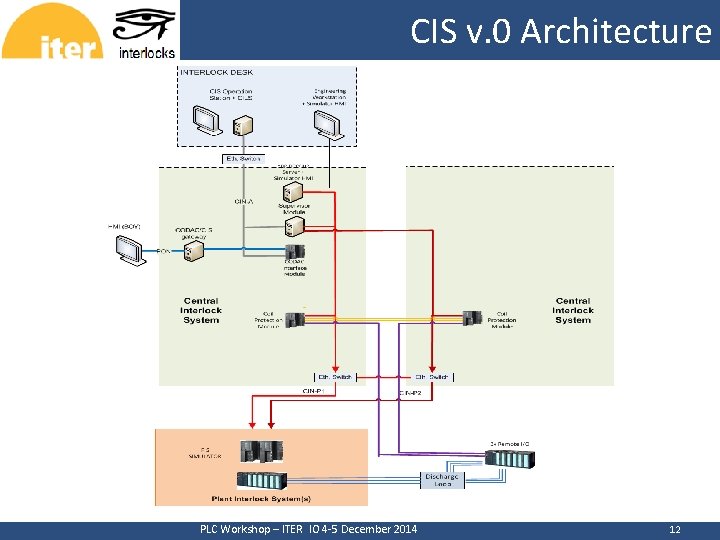
CERN CIS v. 0 Architecture PLC Workshop – ITER IO 4 -5 December 2014 12
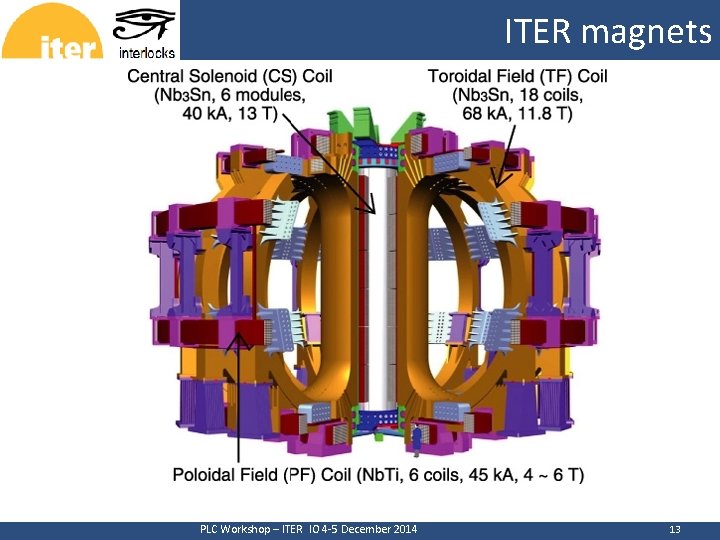
ITER magnets CERN PLC Workshop – ITER IO 4 -5 December 2014 13
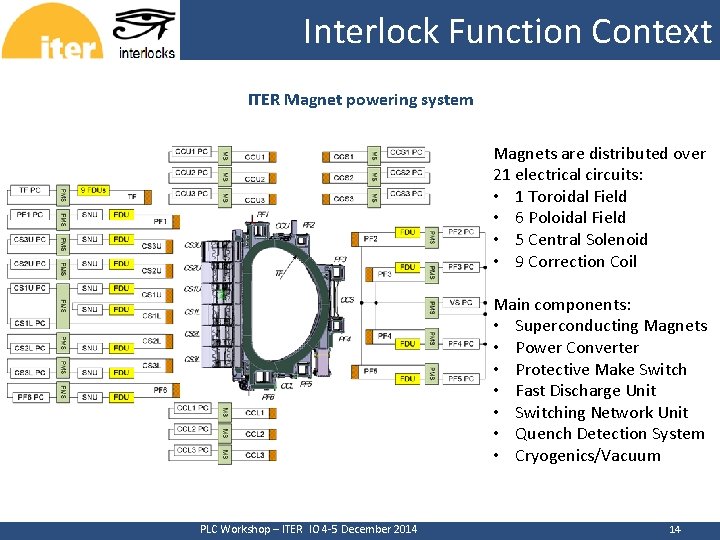
CERN Interlock Function Context ITER Magnet powering system Magnets are distributed over 21 electrical circuits: • 1 Toroidal Field • 6 Poloidal Field • 5 Central Solenoid • 9 Correction Coil Main components: • Superconducting Magnets • Power Converter • Protective Make Switch • Fast Discharge Unit • Switching Network Unit • Quench Detection System • Cryogenics/Vacuum PLC Workshop – ITER IO 4 -5 December 2014 14
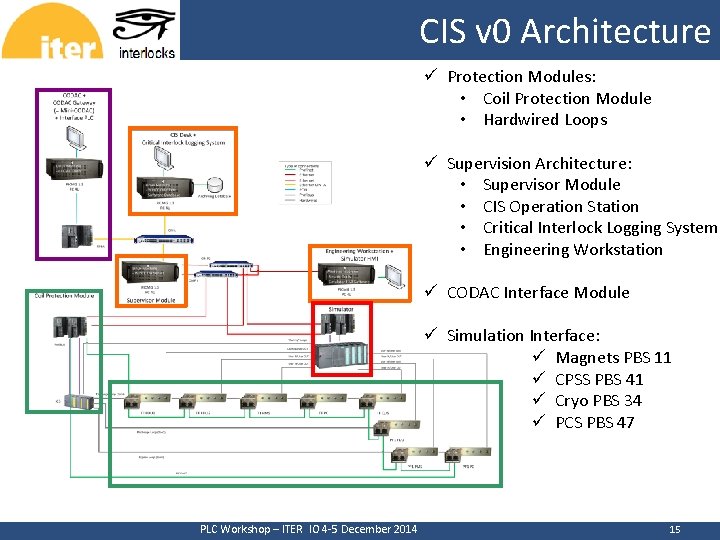
CIS v 0 Architecture CERN ü Protection Modules: • Coil Protection Module • Hardwired Loops ü Supervision Architecture: • Supervisor Module • CIS Operation Station • Critical Interlock Logging System • Engineering Workstation ü CODAC Interface Module ü Simulation Interface: ü Magnets PBS 11 ü CPSS PBS 41 ü Cryo PBS 34 ü PCS PBS 47 PLC Workshop – ITER IO 4 -5 December 2014 15
CPM functions CERN PLC Workshop – ITER IO 4 -5 December 2014 16
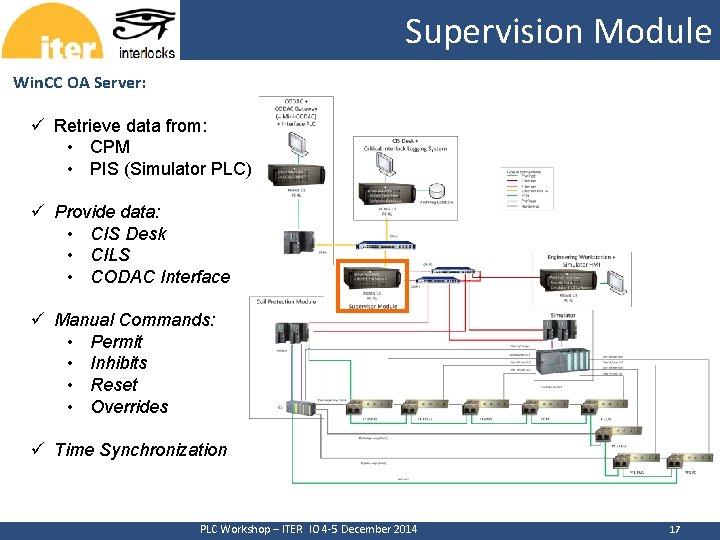
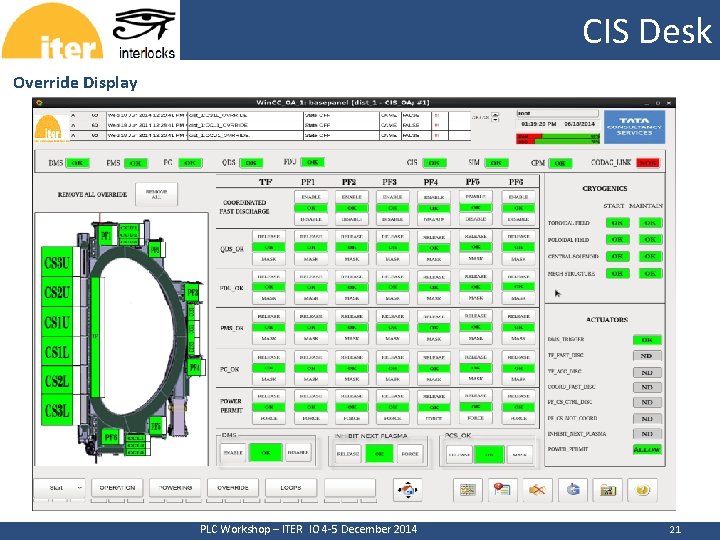
Supervision Module CERN Win. CC OA Server: ü Retrieve data from: • CPM • PIS (Simulator PLC) ü Provide data: • CIS Desk • CILS • CODAC Interface ü Manual Commands: • Permit • Inhibits • Reset • Overrides ü Time Synchronization PLC Workshop – ITER IO 4 -5 December 2014 17
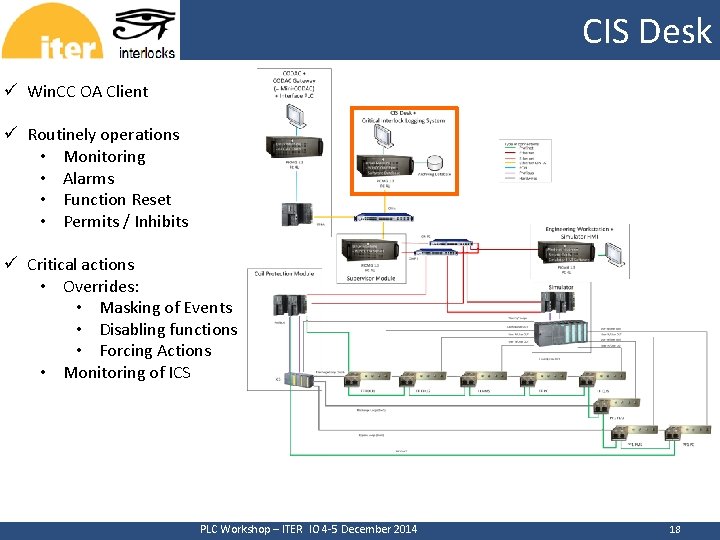
CIS Desk CERN ü Win. CC OA Client ü Routinely operations • Monitoring • Alarms • Function Reset • Permits / Inhibits ü Critical actions • Overrides: • Masking of Events • Disabling functions • Forcing Actions • Monitoring of ICS PLC Workshop – ITER IO 4 -5 December 2014 18
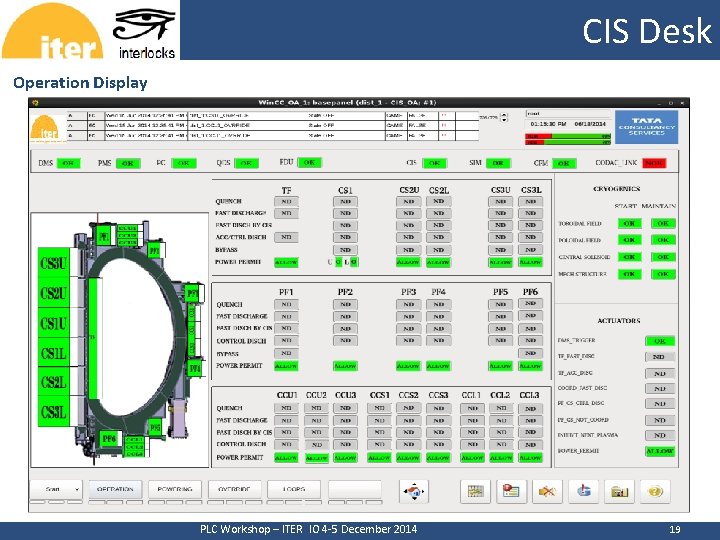
CIS Desk CERN Operation Display PLC Workshop – ITER IO 4 -5 December 2014 19
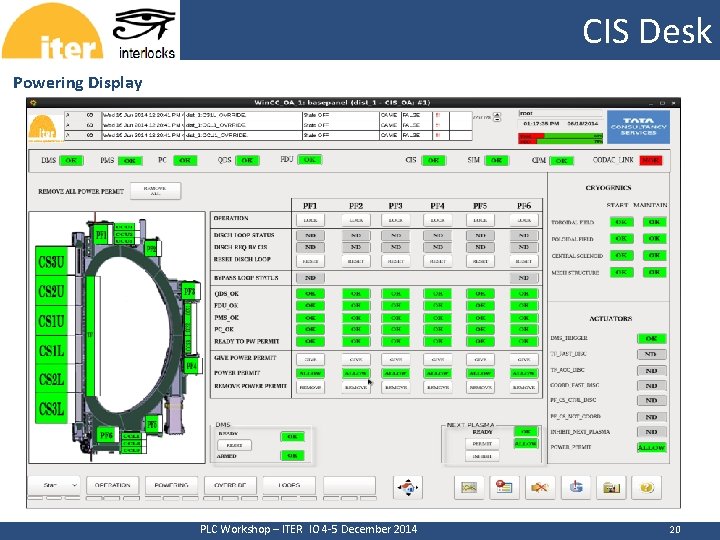
CIS Desk CERN Powering Display PLC Workshop – ITER IO 4 -5 December 2014 20
CIS Desk CERN Override Display PLC Workshop – ITER IO 4 -5 December 2014 21
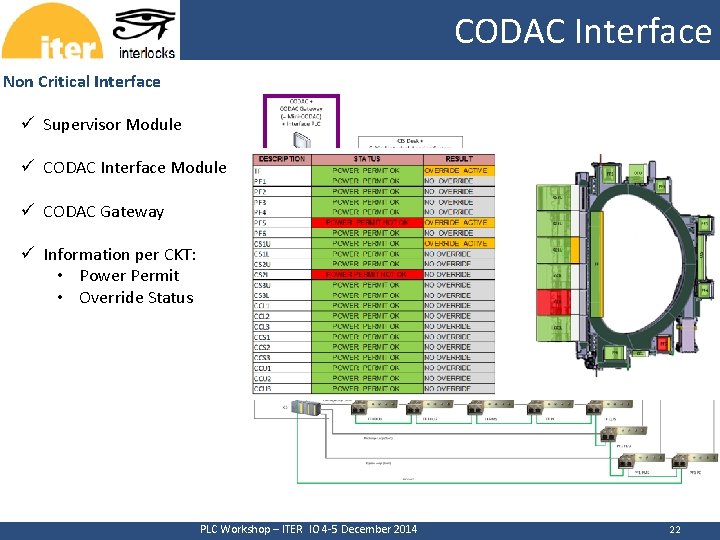
CODAC Interface CERN Non Critical Interface ü Supervisor Module ü CODAC Interface Module ü CODAC Gateway ü Information per CKT: • Power Permit • Override Status PLC Workshop – ITER IO 4 -5 December 2014 22
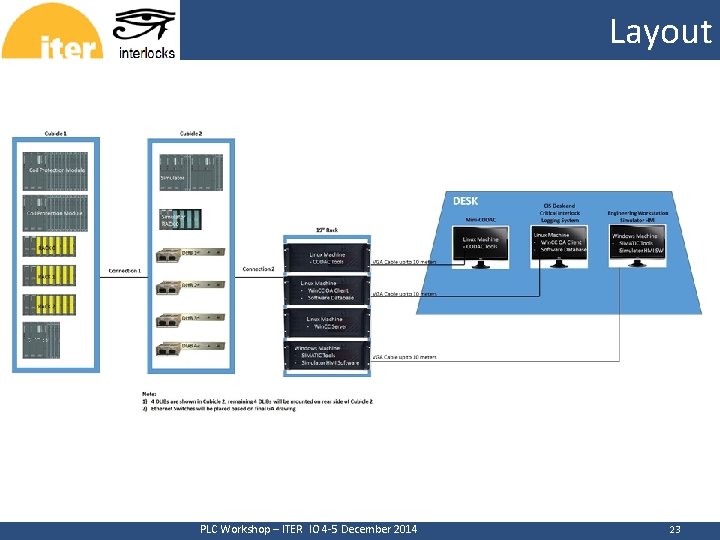
Layout CERN PLC Workshop – ITER IO 4 -5 December 2014 23
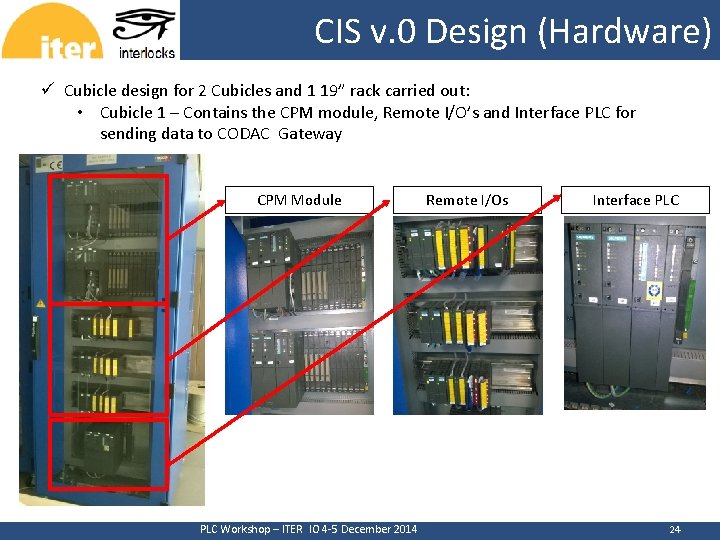
CERN CIS v. 0 Design (Hardware) ü Cubicle design for 2 Cubicles and 1 19” rack carried out: • Cubicle 1 – Contains the CPM module, Remote I/O’s and Interface PLC for sending data to CODAC Gateway CPM Module PLC Workshop – ITER IO 4 -5 December 2014 Remote I/Os Interface PLC 24
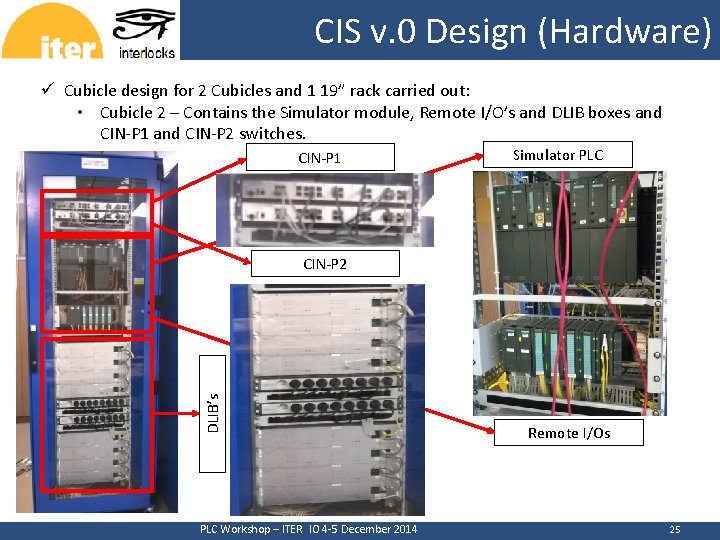
CIS v. 0 Design (Hardware) CERN ü Cubicle design for 2 Cubicles and 1 19” rack carried out: • Cubicle 2 – Contains the Simulator module, Remote I/O’s and DLIB boxes and CIN-P 1 and CIN-P 2 switches. CIN-P 1 Simulator PLC DLIB’s CIN-P 2 PLC Workshop – ITER IO 4 -5 December 2014 Remote I/Os 25
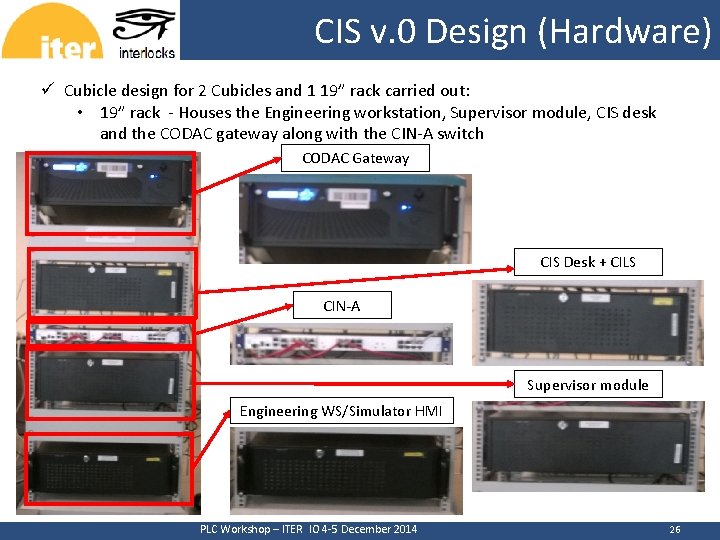
CERN CIS v. 0 Design (Hardware) ü Cubicle design for 2 Cubicles and 1 19” rack carried out: • 19” rack - Houses the Engineering workstation, Supervisor module, CIS desk and the CODAC gateway along with the CIN-A switch CODAC Gateway CIS Desk + CILS CIN-A Supervisor module Engineering WS/Simulator HMI PLC Workshop – ITER IO 4 -5 December 2014 26
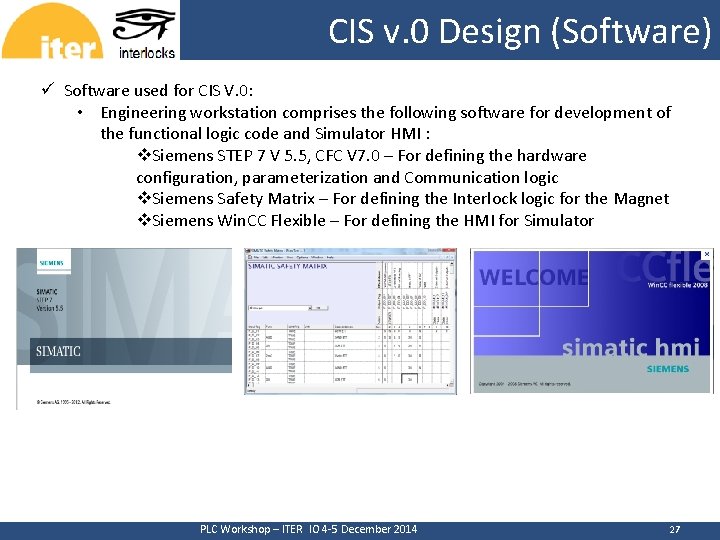
CERN CIS v. 0 Design (Software) ü Software used for CIS V. 0: • Engineering workstation comprises the following software for development of the functional logic code and Simulator HMI : v. Siemens STEP 7 V 5. 5, CFC V 7. 0 – For defining the hardware configuration, parameterization and Communication logic v. Siemens Safety Matrix – For defining the Interlock logic for the Magnet v. Siemens Win. CC Flexible – For defining the HMI for Simulator PLC Workshop – ITER IO 4 -5 December 2014 27
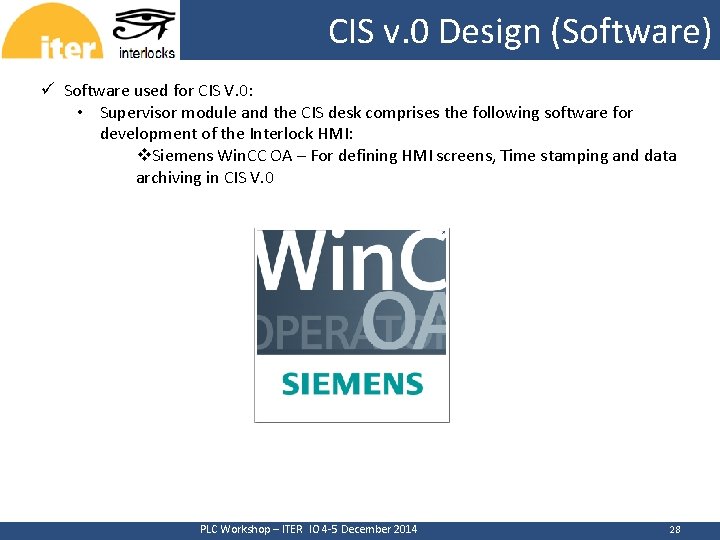
CERN CIS v. 0 Design (Software) ü Software used for CIS V. 0: • Supervisor module and the CIS desk comprises the following software for development of the Interlock HMI: v. Siemens Win. CC OA – For defining HMI screens, Time stamping and data archiving in CIS V. 0 PLC Workshop – ITER IO 4 -5 December 2014 28
CIS V. 0 Next steps CERN ü Carry out the endurance tests for the Interface boxes and capture the results ü Information from the Interface boxes to be read via Profinet and data to be interpreted for diagnostic purpose ü Achieve the time stamping for the events in the CIS desk ü Carry out performance tests on the CIS V. 0 similar to tests carried out in the Slow Interlock Prototype ü Use the CIS V. 0 as a platform to demonstrate all the proposed processes for integrating, upgrading and maintaining the ICS. ü Use the CIS V. 0 as a platform to help in developing and improving the CIS V. 1 ü The CIS V 0 shall be shipped to Korea in December 2014 to facilitate study for CIS V. 1 PLC Workshop – ITER IO 4 -5 December 2014 29
Thanks CERN PLC Workshop – ITER IO 4 -5 December 2014 30