
Center for Smart Agriculture Bio fertilizer and Bio
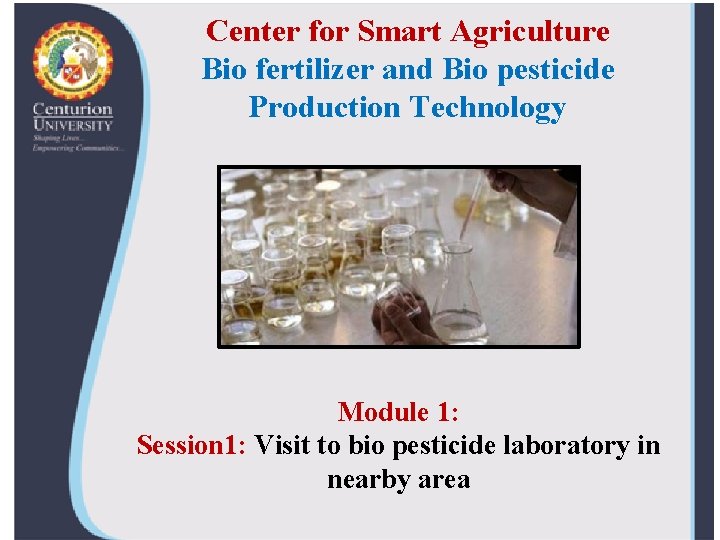
Center for Smart Agriculture Bio fertilizer and Bio pesticide Production Technology Module 1: Session 1: Visit to bio pesticide laboratory in nearby area
A bio pesticide laboratory should be established with the following objectives: 1. To carry out the necessary research and development leading to the marketing of the most promising bio pesticides. 2. To make laboratory studies necessary for the mass production, understanding of product mode of action and the product compatibility. 3. Comparison the effectiveness of bio pesticides with conventional systems.
A functioning bio pesticide laboratory should have: 1. Sterilization room 2. Media preparation room 3. Inoculation room 4. Growth chamber room 5. Mixing room 6. Insect rearing room 7. NPV room 8. Washing room
1. Sterilization room Use of this room is for sterilization by the help of Autoclave and hot air oven. The room should be well ventilated by fitting exhaust fan. In this room, there should be autoclave (horizontal or vertical) and Hot air oven. Autoclave is a machine that provides a physical method of sterilization by killing bacteria, viruses, and even spores present in the material. It sterilizes the materials by heating them up to a particular temperature for a specific period of time. 121°C for 15 minutes
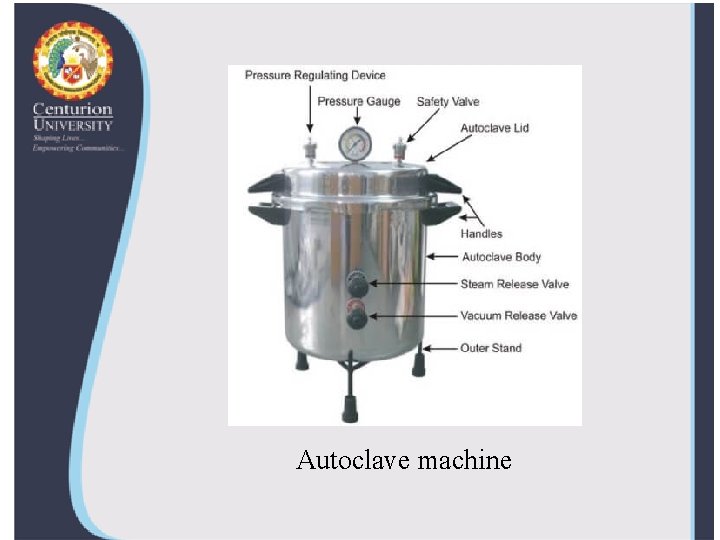
Autoclave machine
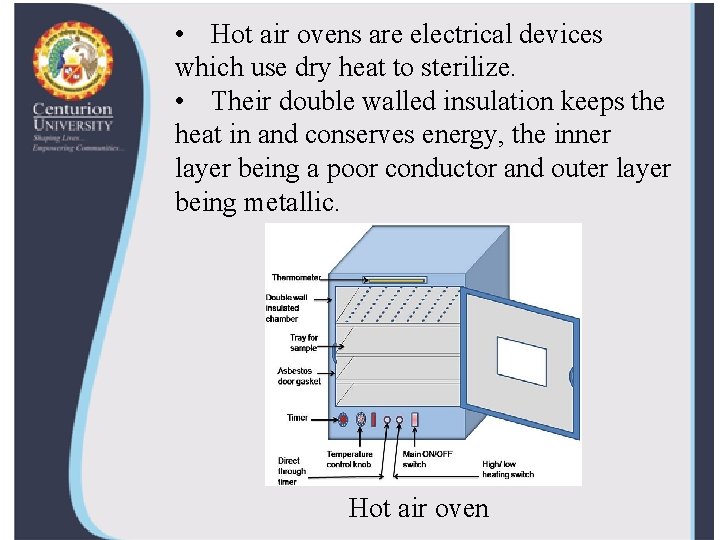
• Hot air ovens are electrical devices which use dry heat to sterilize. • Their double walled insulation keeps the heat in and conserves energy, the inner layer being a poor conductor and outer layer being metallic. Hot air oven
Media Preparation room: This room should get a sufficient and continuous supply of single and double-distillation unit water, pressure cooker and exhaust fan. Inoculation room: In this room, the inoculation cabinet laminar air flow should be kept. The floor of this room should be covered with tiles to facilitate proper cleaning. The atmosphere in this room should be free from contaminants and air-conditioned for good aircirculation.
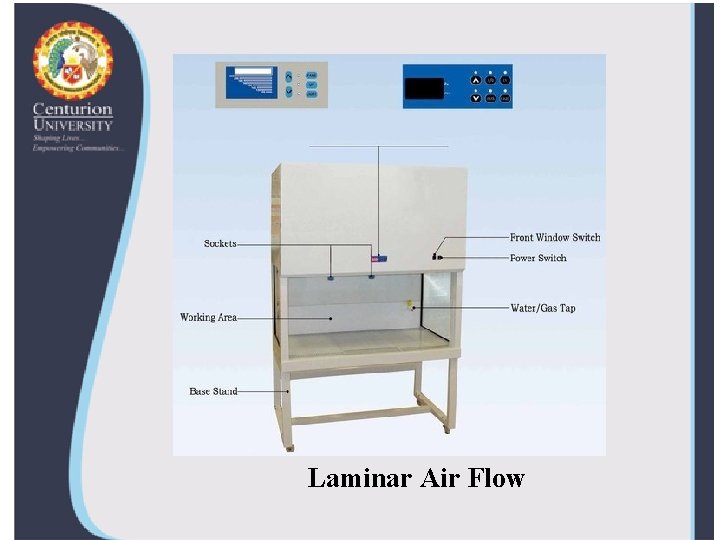
Laminar Air Flow
4. Growth chamber room: In this room, all inoculated samples along with spores are kept for their growth. This room should be in sterile condition (free from pathogens). Air condition should be there to control temperature. 5. Mixing room: Mixing of different fungus like Trichoderma, Verticilium, Beauveria, Metarhizium etc. are done in this room. Mixing the mycelium culture or bacterial broth with talcum powder for mass culture formulation.

Thank you…
- Slides: 10