
Center for Hybrid and Embedded Software Systems College
Center for Hybrid and Embedded Software Systems College of Engineering, University of California at Berkeley Presented by: Edward A. Lee, EECS, UC Berkeley Citris Founding Corporate Members Meeting, Feb. 27, 2003 Davis, California Board of Directors Tom Henzinger, tah@eecs. berkeley. edu Edward A. Lee, eal@eecs. berkeley. edu Alberto Sangiovanni-Vincentelli, alberto@eecs. berkeley. edu Shankar Sastry, sastry@eecs. berkeley. edu Other key faculty Alex Aiken, aiken@eecs. berkeley. edu Dave Auslander, dma@me. berkeley. edu Ruzena Bajcsy, ruzena@eecs. berkeley. edu Karl Hedrick, khedrick@me. berkeley. edu Kurt Keutzer, keutzer@eecs. berkeley. edu George Necula, necula@eecs. berkeley. edu Masayoshi Tomizuka, tomizuka@me. berkeley. edu Pravin Varaiya, varaiya@eecs. berkeley. edu
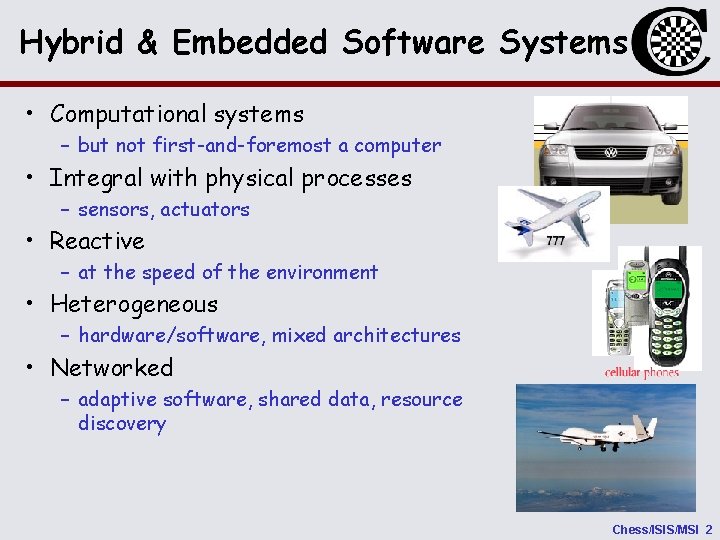
Hybrid & Embedded Software Systems • Computational systems – but not first-and-foremost a computer • Integral with physical processes – sensors, actuators • Reactive – at the speed of the environment • Heterogeneous – hardware/software, mixed architectures • Networked – adaptive software, shared data, resource discovery Chess/ISIS/MSI 2
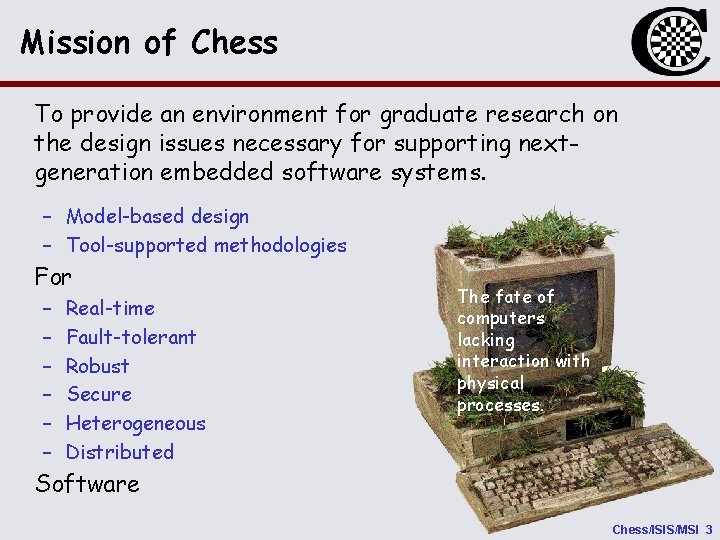
Mission of Chess To provide an environment for graduate research on the design issues necessary for supporting nextgeneration embedded software systems. – Model-based design – Tool-supported methodologies For – – – Real-time Fault-tolerant Robust Secure Heterogeneous Distributed The fate of computers lacking interaction with physical processes. Software Chess/ISIS/MSI 3
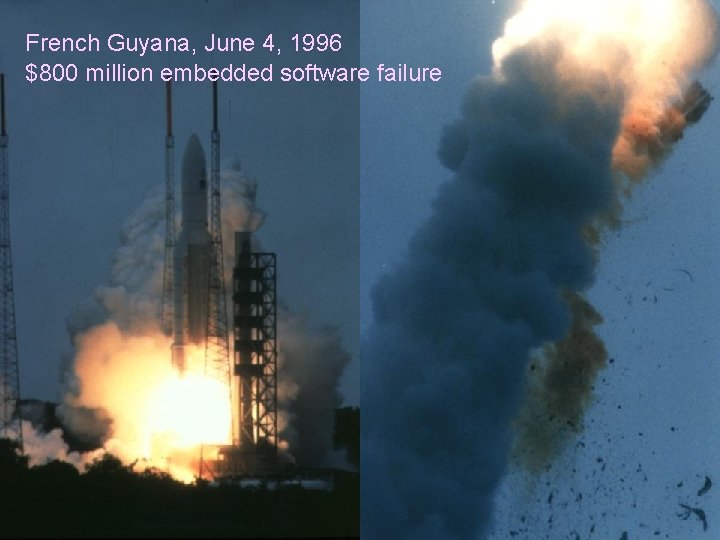
French Guyana, June 4, 1996 $800 million embedded software failure Chess/ISIS/MSI 4
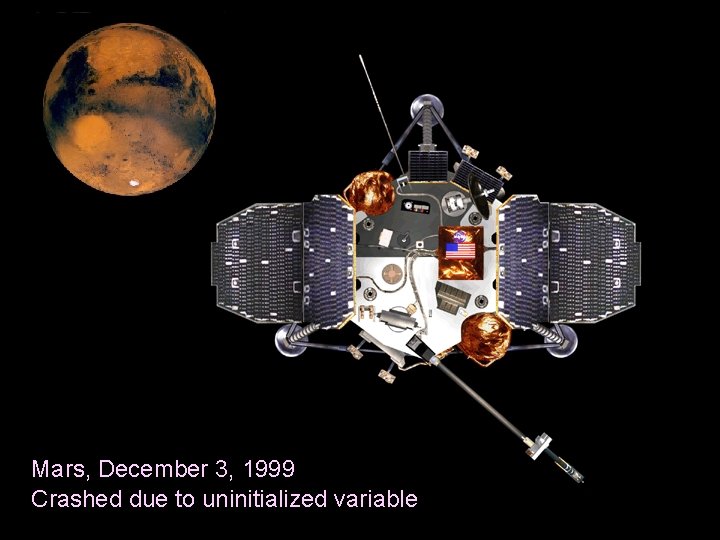
Mars, December 3, 1999 Crashed due to uninitialized variable Chess/ISIS/MSI 5
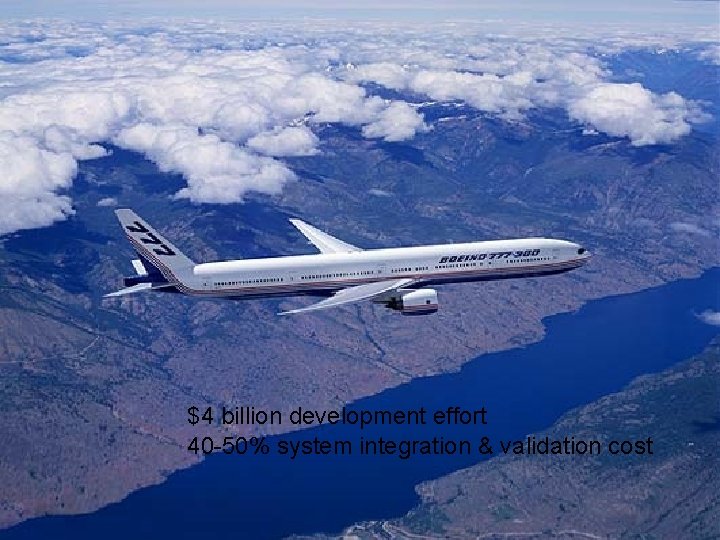
$4 billion development effort 40 -50% system integration & validation cost Chess/ISIS/MSI 6
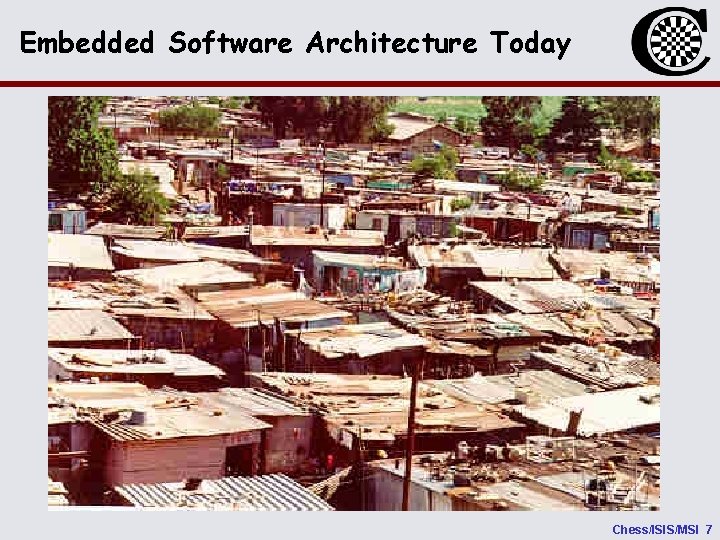
Embedded Software Architecture Today Chess/ISIS/MSI 7
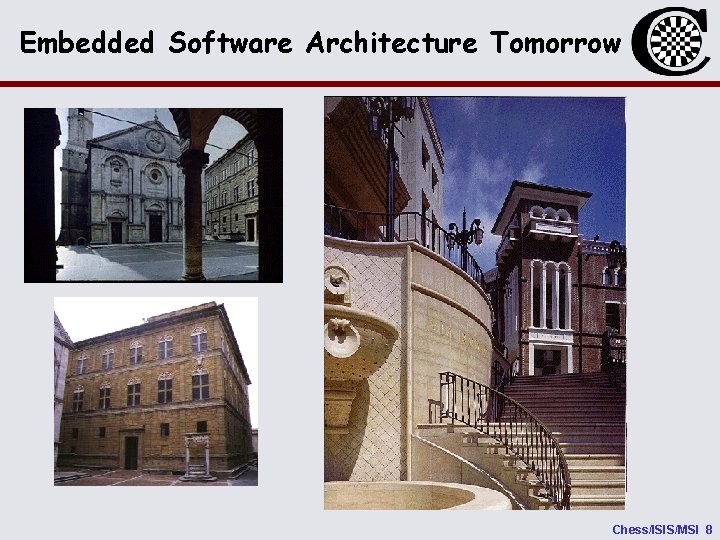
Embedded Software Architecture Tomorrow Chess/ISIS/MSI 8
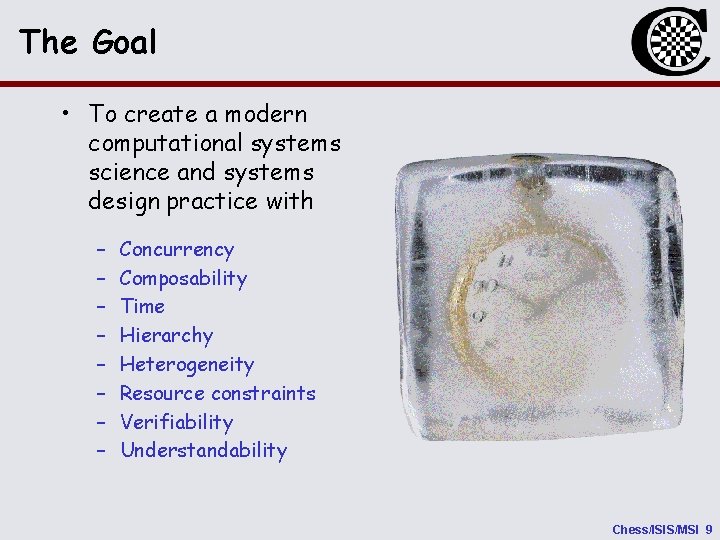
The Goal • To create a modern computational systems science and systems design practice with – – – – Concurrency Composability Time Hierarchy Heterogeneity Resource constraints Verifiability Understandability Chess/ISIS/MSI 9
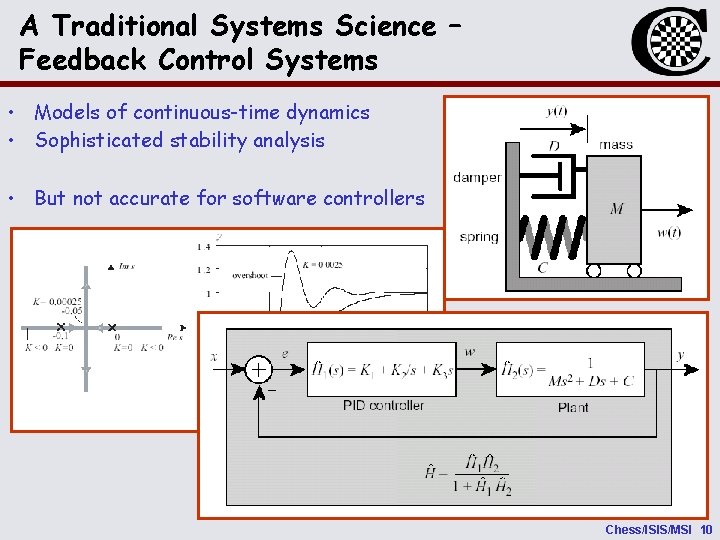
A Traditional Systems Science – Feedback Control Systems • Models of continuous-time dynamics • Sophisticated stability analysis • But not accurate for software controllers Chess/ISIS/MSI 10
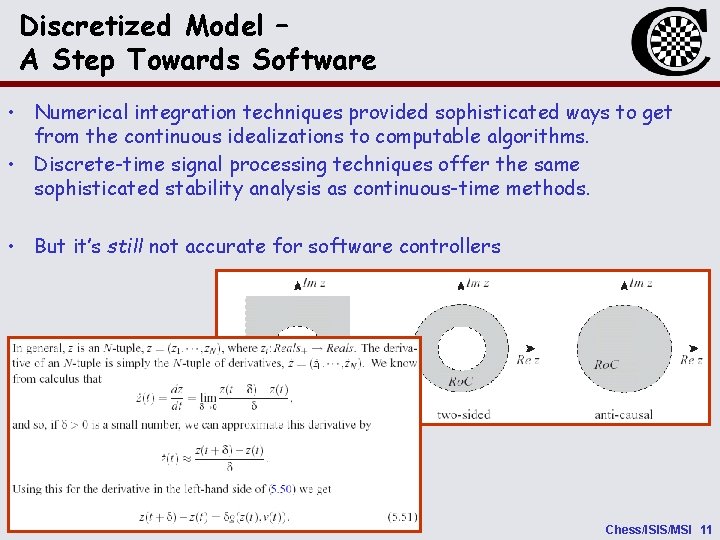
Discretized Model – A Step Towards Software • Numerical integration techniques provided sophisticated ways to get from the continuous idealizations to computable algorithms. • Discrete-time signal processing techniques offer the same sophisticated stability analysis as continuous-time methods. • But it’s still not accurate for software controllers Chess/ISIS/MSI 11
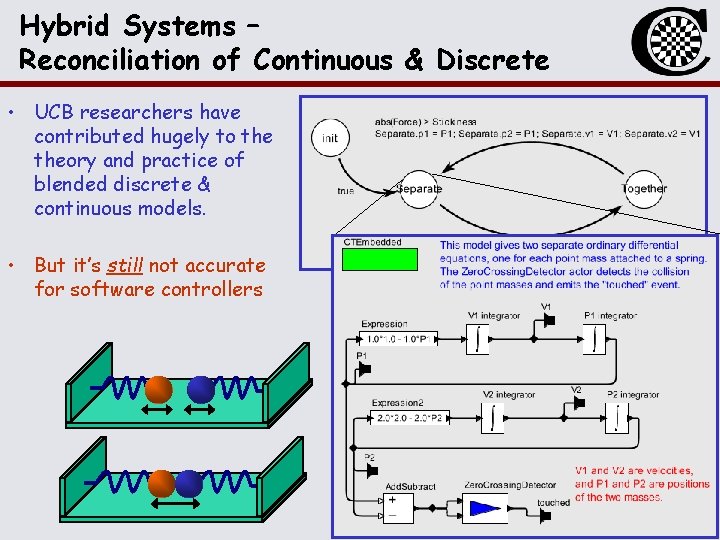
Hybrid Systems – Reconciliation of Continuous & Discrete • UCB researchers have contributed hugely to theory and practice of blended discrete & continuous models. • But it’s still not accurate for software controllers Chess/ISIS/MSI 12
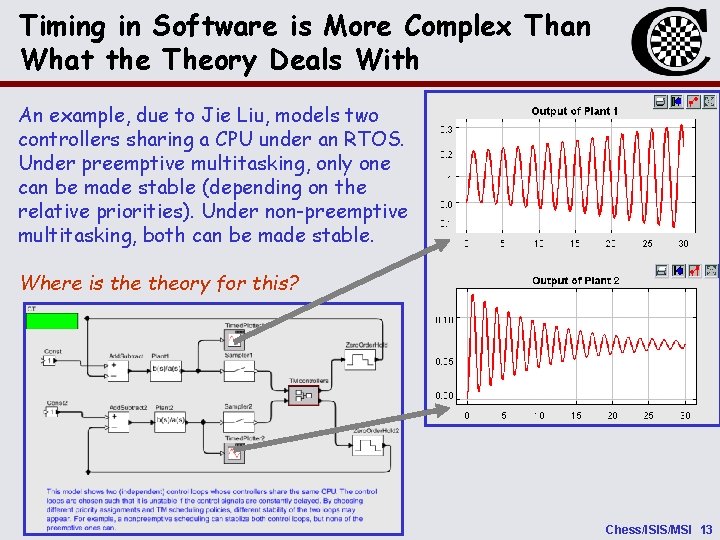
Timing in Software is More Complex Than What the Theory Deals With An example, due to Jie Liu, models two controllers sharing a CPU under an RTOS. Under preemptive multitasking, only one can be made stable (depending on the relative priorities). Under non-preemptive multitasking, both can be made stable. Where is theory for this? Chess/ISIS/MSI 13
How Safe is Our Real-Time Software? Chess/ISIS/MSI 14
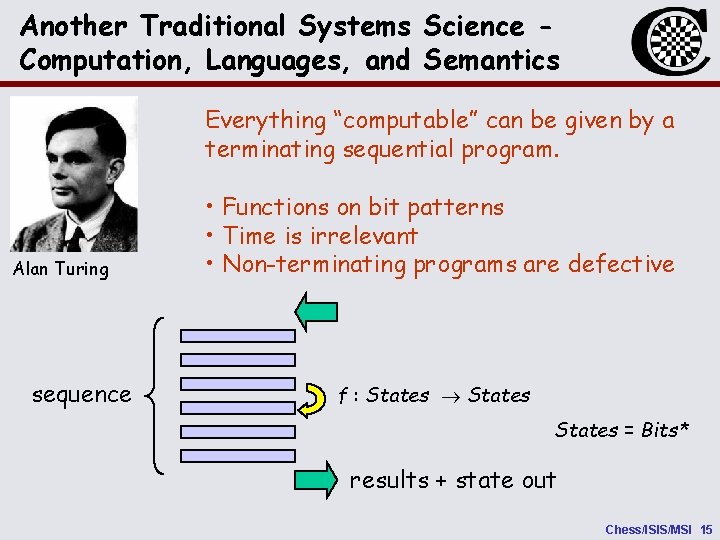
Another Traditional Systems Science Computation, Languages, and Semantics Everything “computable” can be given by a terminating sequential program. Alan Turing sequence • Functions on bit patterns • Time is irrelevant • Non-terminating programs are defective f : States = Bits* results + state out Chess/ISIS/MSI 15
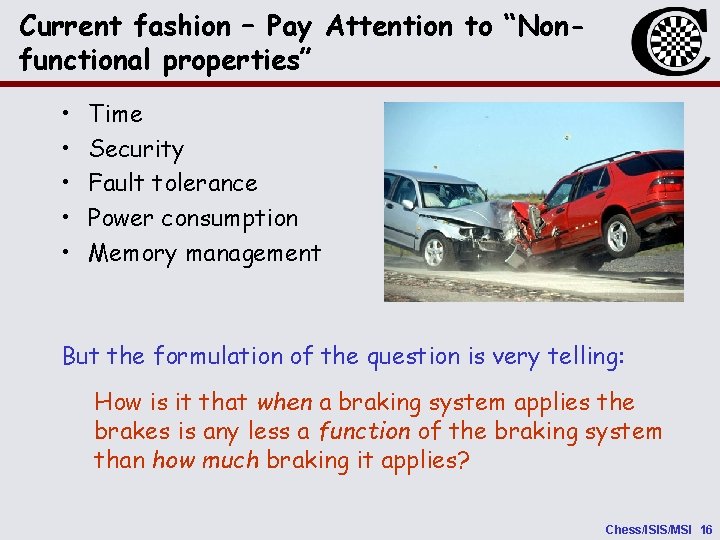
Current fashion – Pay Attention to “Nonfunctional properties” • • • Time Security Fault tolerance Power consumption Memory management But the formulation of the question is very telling: How is it that when a braking system applies the brakes is any less a function of the braking system than how much braking it applies? Chess/ISIS/MSI 16
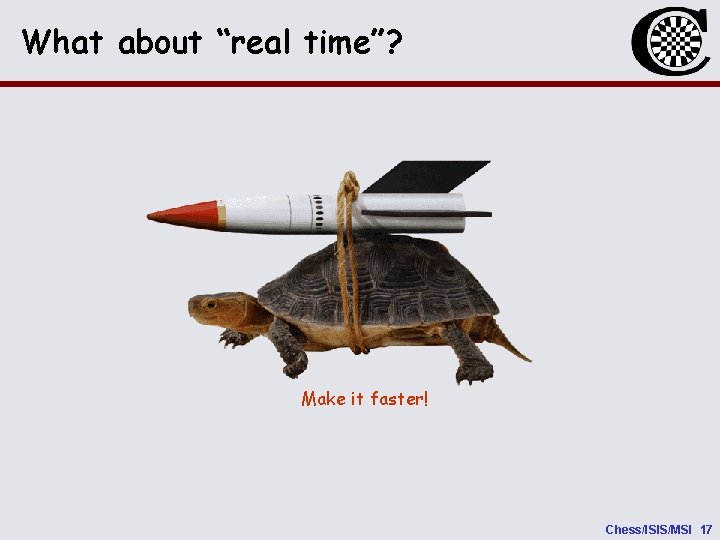
What about “real time”? Make it faster! Chess/ISIS/MSI 17
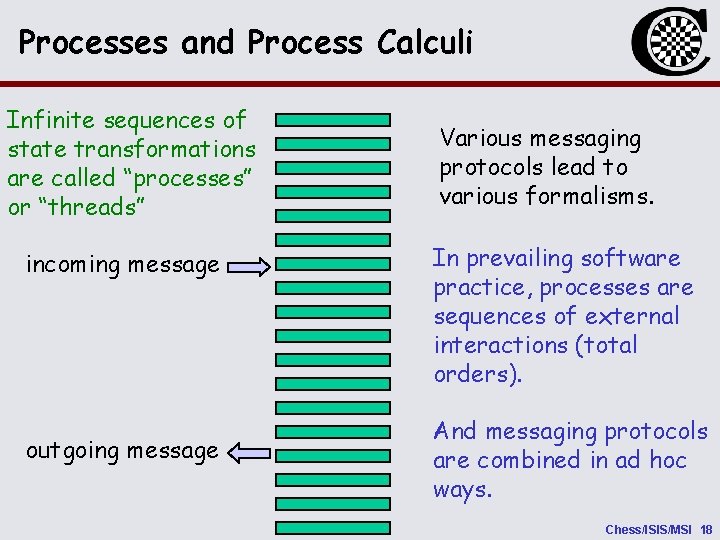
Processes and Process Calculi Infinite sequences of state transformations are called “processes” or “threads” incoming message outgoing message Various messaging protocols lead to various formalisms. In prevailing software practice, processes are sequences of external interactions (total orders). And messaging protocols are combined in ad hoc ways. Chess/ISIS/MSI 18
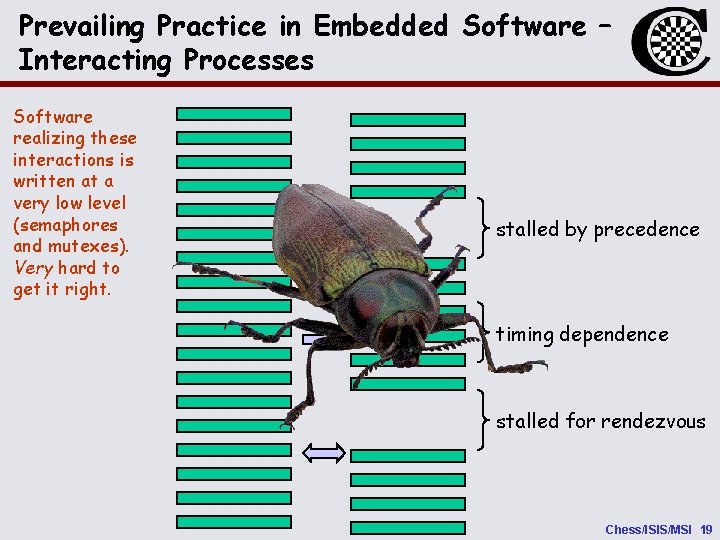
Prevailing Practice in Embedded Software – Interacting Processes Software realizing these interactions is written at a very low level (semaphores and mutexes). Very hard to get it right. stalled by precedence timing dependence stalled for rendezvous Chess/ISIS/MSI 19
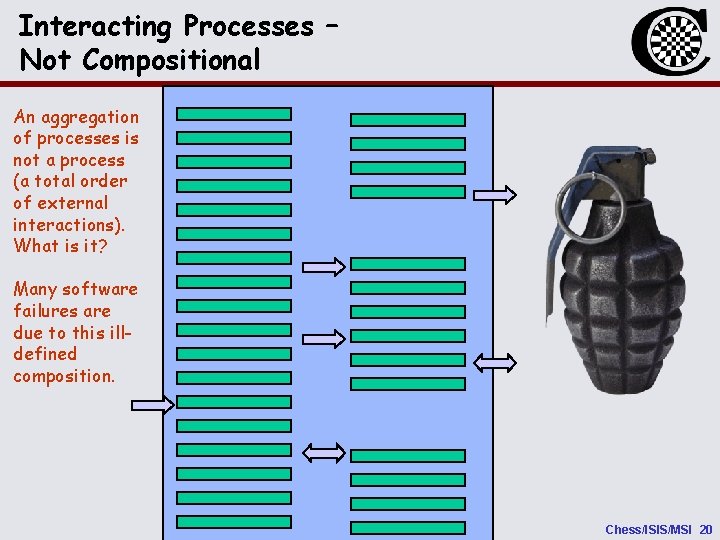
Interacting Processes – Not Compositional An aggregation of processes is not a process (a total order of external interactions). What is it? Many software failures are due to this illdefined composition. Chess/ISIS/MSI 20
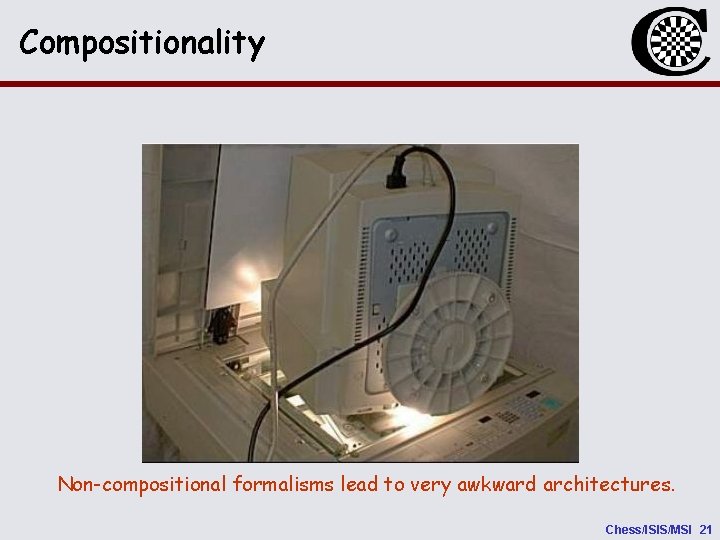
Compositionality Non-compositional formalisms lead to very awkward architectures. Chess/ISIS/MSI 21
Real-Time Multitasking? Prioritize and Pray! Chess/ISIS/MSI 22
Promising Alternatives • • • Synchronous languages (e. g. Esterel) Time-driven languages (e. g. Giotto) Hybrid systems Timed process networks Discrete-event formalisms Timed CSP We are working on interface theories and meta models that express dynamic properties of components, including timing. Chess/ISIS/MSI 23
Current Research Focus Areas • • • Interfaces theories for component-based design Meta-modeling (models of modeling strategies) Principles of actor-oriented design Software architectures for actor-oriented design Automotive systems design Avionics systems design Virtual machines for embedded software Semantic models for time and concurrency Design transformation technology (code generation) Visual syntaxes for design • Mobies • Ptolemy • SEC • Mescal Application-specific processors • ISIS • Metropolis • Giotto • Bear Chess/ISIS/MSI 24
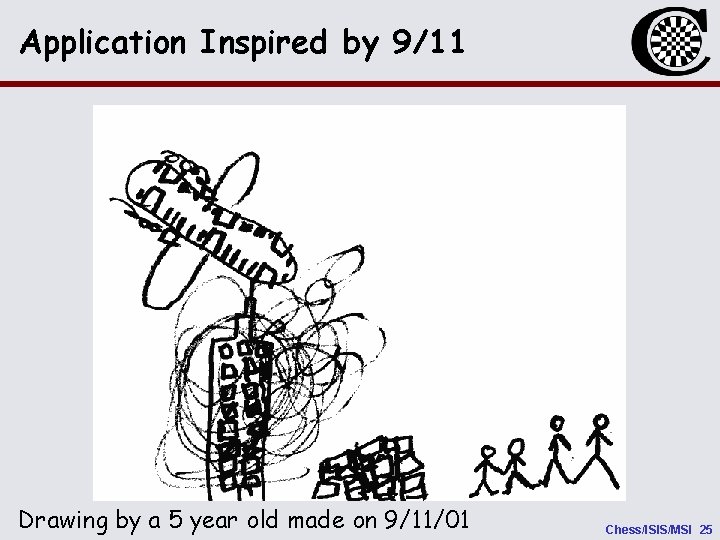
Application Inspired by 9/11 Drawing by a 5 year old made on 9/11/01 Chess/ISIS/MSI 25
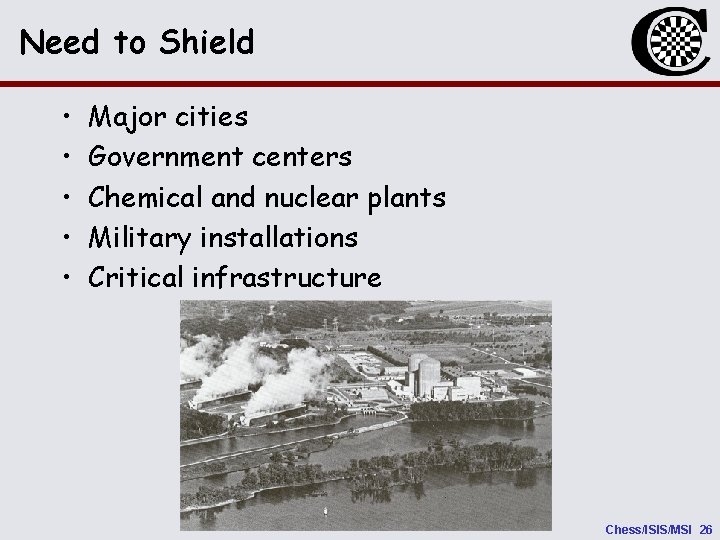
Need to Shield • • • Major cities Government centers Chemical and nuclear plants Military installations Critical infrastructure Chess/ISIS/MSI 26
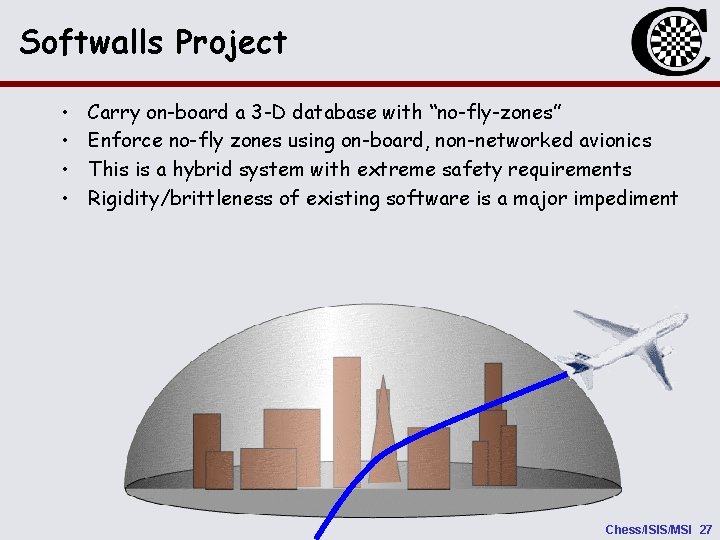
Softwalls Project • • Carry on-board a 3 -D database with “no-fly-zones” Enforce no-fly zones using on-board, non-networked avionics This is a hybrid system with extreme safety requirements Rigidity/brittleness of existing software is a major impediment Chess/ISIS/MSI 27
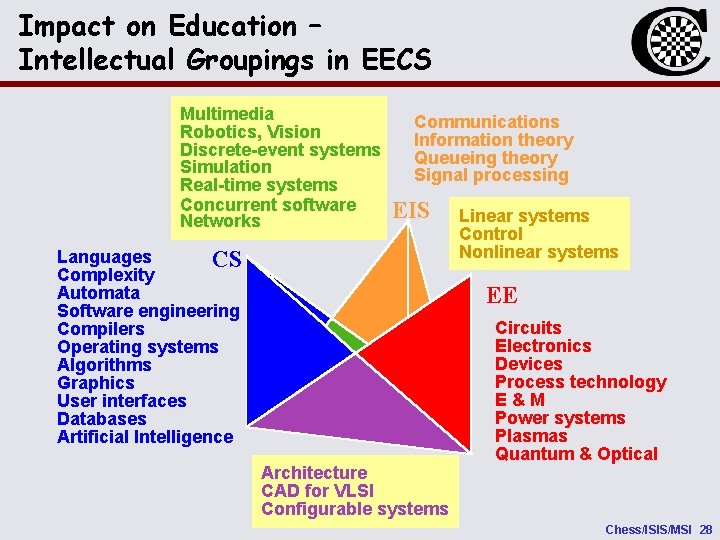
Impact on Education – Intellectual Groupings in EECS Multimedia Robotics, Vision Discrete-event systems Simulation Real-time systems Concurrent software Networks Communications Information theory Queueing theory Signal processing EIS Languages CS Complexity Automata Software engineering Compilers Operating systems Algorithms Graphics User interfaces Databases Artificial Intelligence Linear systems Control Nonlinear systems EE Architecture CAD for VLSI Configurable systems Circuits Electronics Devices Process technology E&M Power systems Plasmas Quantum & Optical Chess/ISIS/MSI 28
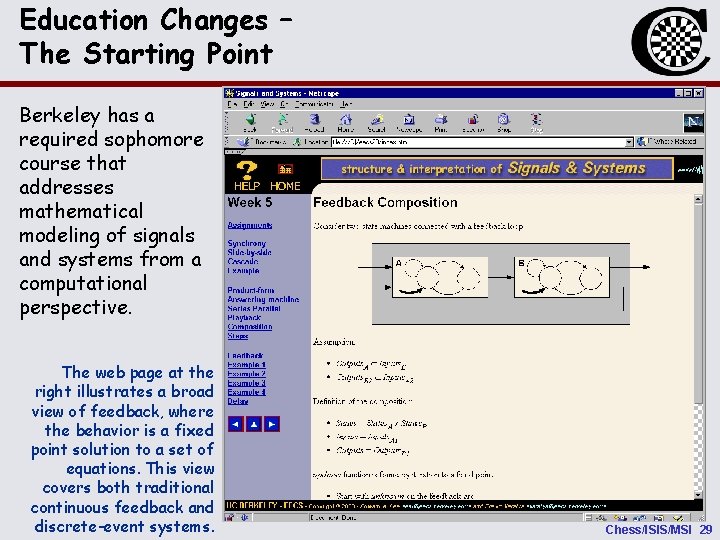
Education Changes – The Starting Point Berkeley has a required sophomore course that addresses mathematical modeling of signals and systems from a computational perspective. The web page at the right illustrates a broad view of feedback, where the behavior is a fixed point solution to a set of equations. This view covers both traditional continuous feedback and discrete-event systems. Chess/ISIS/MSI 29
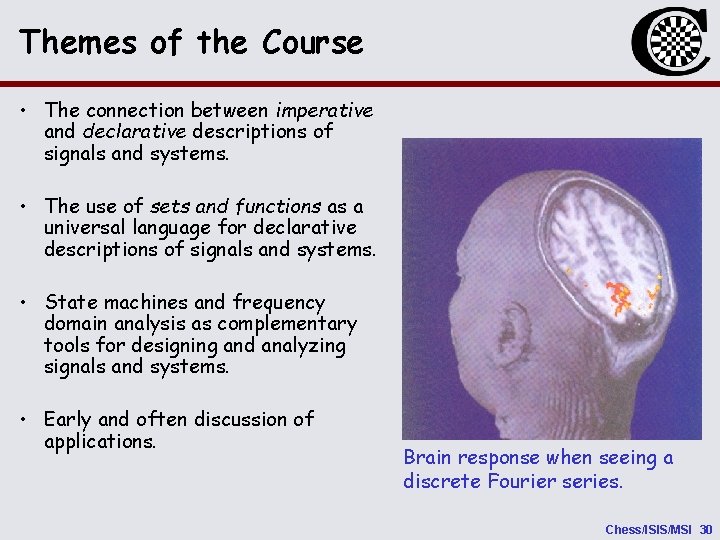
Themes of the Course • The connection between imperative and declarative descriptions of signals and systems. • The use of sets and functions as a universal language for declarative descriptions of signals and systems. • State machines and frequency domain analysis as complementary tools for designing and analyzing signals and systems. • Early and often discussion of applications. Brain response when seeing a discrete Fourier series. Chess/ISIS/MSI 30
Conclusion We are on the line to build a new system science that is at once physical and computational. It will form the foundation for our understanding of computational systems that engage the physical world. And it will change how we teach, research and engineer systems. Chess/ISIS/MSI 31
- Slides: 31