
Center for Advanced Automotive Technology CAAT Overview MEATA
- Slides: 26
Center for Advanced Automotive Technology (CAAT) Overview MEATA Conference May 13, 2011 1
What is CAAT? Ø Center for Advanced Automotive Technology § A Regional Advanced Technological Education (ATE) Center § At Macomb Community College and Wayne State University § Funded for four years in September, 2010, by the National Science Foundation (NSF) § To advance the preparation of skilled technicians for work with advanced powertrain technologies in the automotive industry 2
About ATE Centers Ø Established by Congress in 1992, now number 40 Ø Focused on two-year colleges: § Cultivate partnerships across academic institutions, between them and employers Ø Support educational improvements for technicians: § Curriculum development and dissemination § Professional development of faculty § Strengthen career pathways - secondary to two- and four-year institutions 3
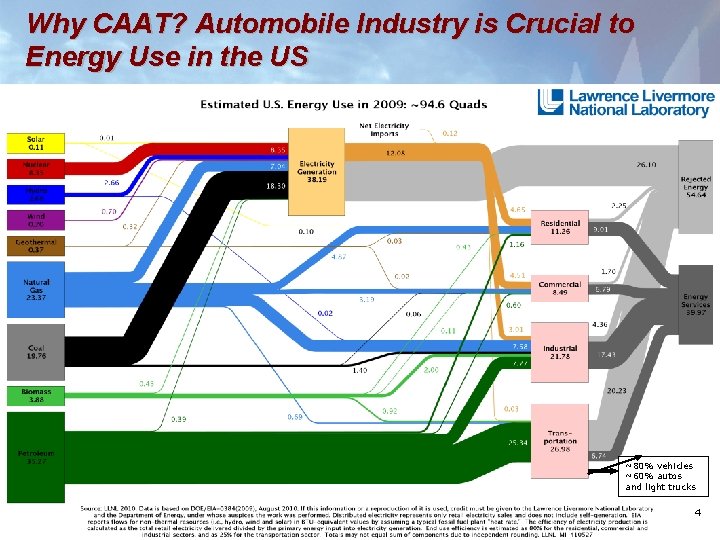
Why CAAT? Automobile Industry is Crucial to Energy Use in the US ~80% vehicles ~60% autos and light trucks 4
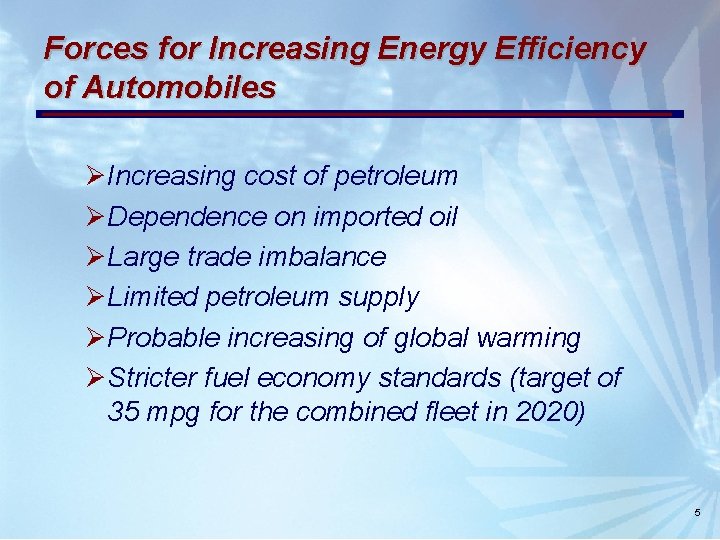
Forces for Increasing Energy Efficiency of Automobiles ØIncreasing cost of petroleum ØDependence on imported oil ØLarge trade imbalance ØLimited petroleum supply ØProbable increasing of global warming ØStricter fuel economy standards (target of 35 mpg for the combined fleet in 2020) 5
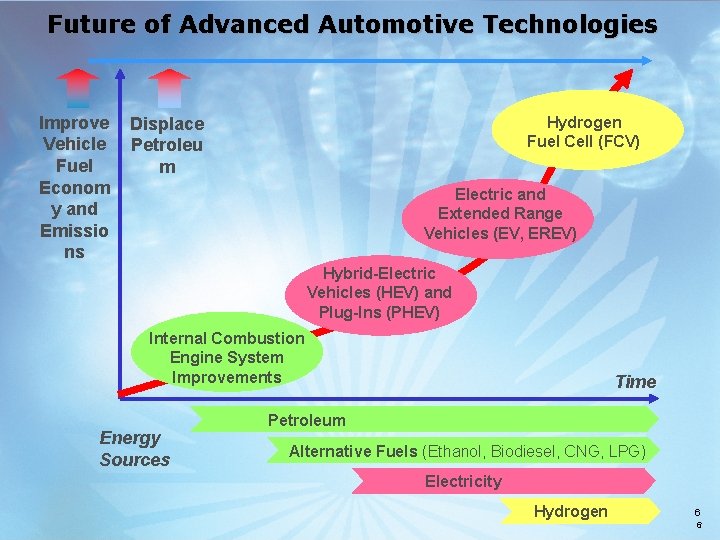
Future of Advanced Automotive Technologies Improve Vehicle Fuel Econom y and Emissio ns Displace Petroleu m Hydrogen Fuel Cell (FCV) Electric and Extended Range Vehicles (EV, EREV) Hybrid-Electric Vehicles (HEV) and Plug-Ins (PHEV) Internal Combustion Engine System Improvements Energy Sources Time Petroleum Alternative Fuels (Ethanol, Biodiesel, CNG, LPG) Electricity Hydrogen 6 6
Why CAAT at Macomb/WSU? Ø Located in the heart of the rejuvenated US auto industry Ø Long history of serving the industry Ø Leaders of advanced automotive curriculum development 7
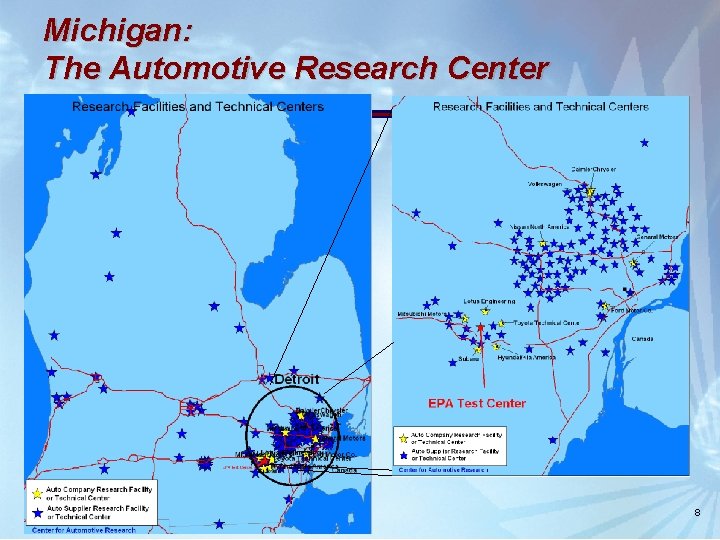
Michigan: The Automotive Research Center 8
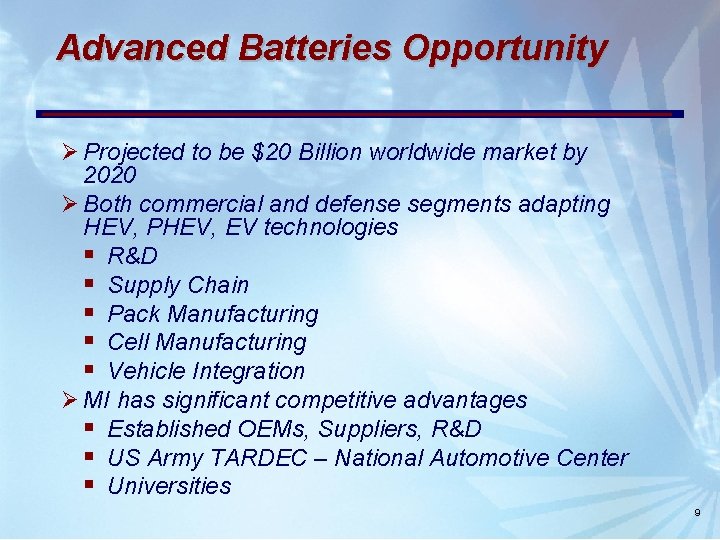
Advanced Batteries Opportunity Ø Projected to be $20 Billion worldwide market by 2020 Ø Both commercial and defense segments adapting HEV, PHEV, EV technologies § R&D § Supply Chain § Pack Manufacturing § Cell Manufacturing § Vehicle Integration Ø MI has significant competitive advantages § Established OEMs, Suppliers, R&D § US Army TARDEC – National Automotive Center § Universities 9
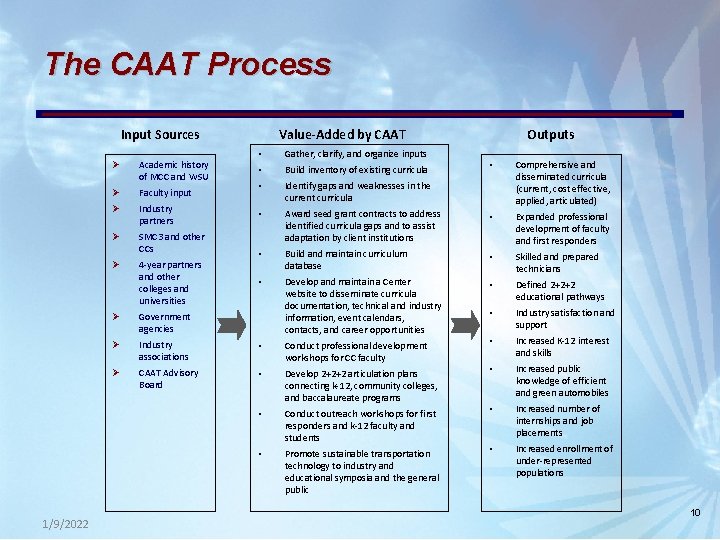
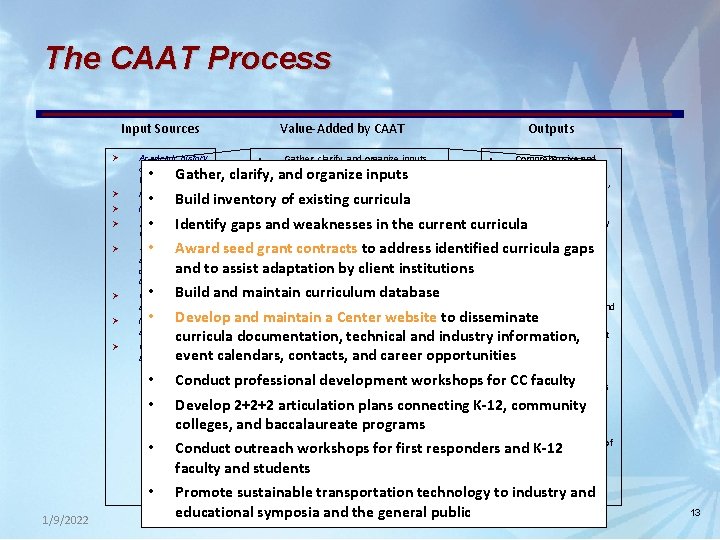
The CAAT Process Input Sources 1/9/2022 Ø Academic history of MCC and WSU Ø Faculty input Ø Industry partners Ø SMC 3 and other CCs Ø 4 -year partners and other colleges and universities Value-Added by CAAT • Gather, clarify, and organize inputs • Build inventory of existing curricula • Identify gaps and weaknesses in the current curricula • Outputs • Comprehensive and disseminated curricula (current, cost effective, applied, articulated) Award seed grant contracts to address identified curricula gaps and to assist adaptation by client institutions • Expanded professional development of faculty and first responders • Build and maintain curriculum database • Skilled and prepared technicians • Develop and maintain a Center website to disseminate curricula documentation, technical and industry information, event calendars, contacts, and career opportunities • Defined 2+2+2 educational pathways • Industry satisfaction and support • Increased K-12 interest and skills • Increased public knowledge of efficient and green automobiles • Increased number of internships and job placements • Increased enrollment of under-represented populations Ø Government agencies Ø Industry associations • Conduct professional development workshops for CC faculty Ø CAAT Advisory Board • Develop 2+2+2 articulation plans connecting k-12, community colleges, and baccalaureate programs • Conduct outreach workshops for first responders and k-12 faculty and students • Promote sustainable transportation technology to industry and educational symposia and the general public 10
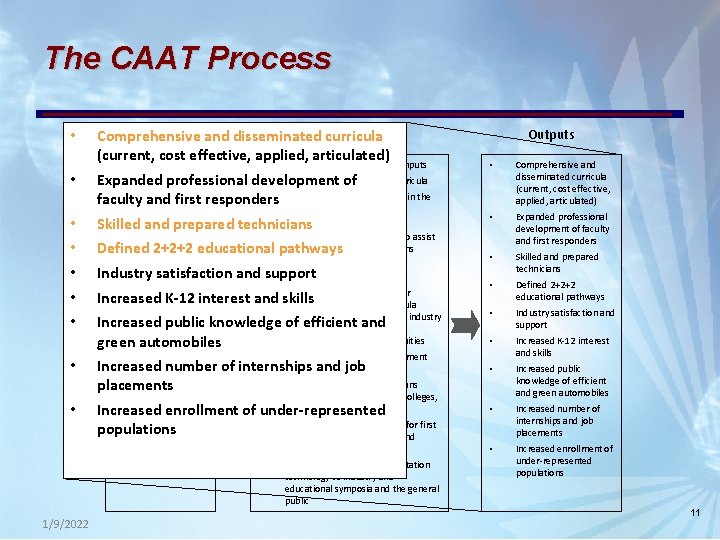
The CAAT Process • • Input Sources and disseminated Value-Added by CAAT Comprehensive curricula (current, cost effective, applied, articulated) Ø Academic history • Gather, clarify, and organize inputs • Build inventoryof of existing curricula Expanded professional development • Identify gaps and weaknesses in the Ø Faculty faculty andinput first responders current curricula of MCC and WSU Ø Industry partners • Award seed grants to address Skilled andand prepared technicians Ø SMC 3 other identified curricula gaps and to assist adaptation by client institutions CCs Defined 2+2+2 educational pathways Ø 4 -year partners and other colleges and universities • Build and maintain curriculum database • Develop and maintain a Center website to disseminate curricula documentation, technical and industry information, event calendars, contacts, and career opportunities Industry satisfaction and support Increased K-12 interest and skills Ø Government agencies Increased public knowledge of efficient and Ø Industry associations green automobiles Ø CAAT Advisory Board • Conduct professional development • Increased number of internships and workshops for job CC faculty • Develop 2+2+2 articulation plans placements • and baccalaureate programs Increased enrollment of under-represented • Conduct outreach workshops for first populations responders and k-12 faculty and connecting k-12, community colleges, students • 1/9/2022 Promote sustainable transportation technology to industry and educational symposia and the general public Outputs • Comprehensive and disseminated curricula (current, cost effective, applied, articulated) • Expanded professional development of faculty and first responders • Skilled and prepared technicians • Defined 2+2+2 educational pathways • Industry satisfaction and support • Increased K-12 interest and skills • Increased public knowledge of efficient and green automobiles • Increased number of internships and job placements • Increased enrollment of under-represented populations 11
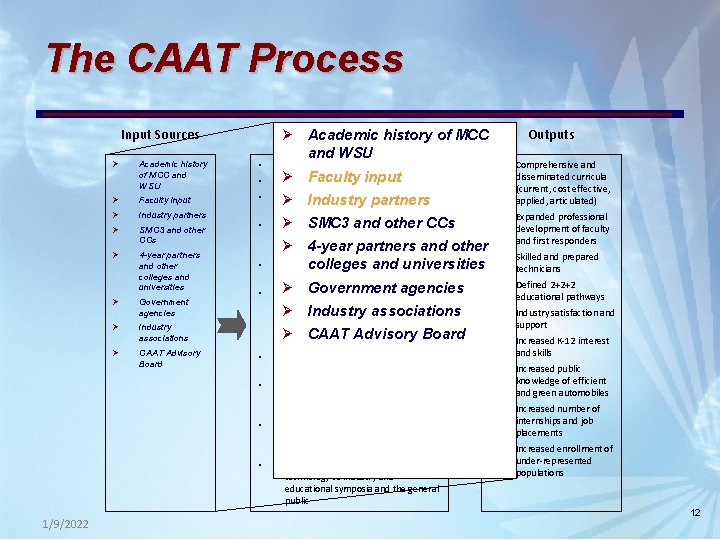
The CAAT Process Input Sources Ø Academic history of MCC and WSU Ø Faculty input Ø Industry partners Ø SMC 3 and other CCs Ø 4 -year partners and other colleges and universities Ø Government agencies Ø Industry associations Ø CAAT Advisory Board Value-Added by CAAT Ø Academic history of MCC • • • ØBuild Faculty input inventory of existing curricula gaps and weaknesses in the ØIdentify Industry partners current curricula • Comprehensive and disseminated curricula (current, cost effective, applied, articulated) • Expanded professional development of faculty and first responders • seed grants to address ØAward. SMC 3 and other CCs • Øadaptation 4 -year partners by client institutions and other • Build colleges and maintain curriculum and universities identified curricula gaps and to assist database • • Ødocumentation, Industry associations technical and industry Defined 2+2+2 educational pathways • Industry satisfaction and support • Conduct professional development workshops for CC faculty Increased K-12 interest and skills • Develop 2+2+2 articulation plans connecting k-12, community colleges, and baccalaureate programs Increased public knowledge of efficient and green automobiles • Conduct outreach workshops for first responders and k-12 faculty and students Increased number of internships and job placements • Increased enrollment of under-represented populations event calendars, Øinformation, CAAT Advisory contacts, and career opportunities. Board • • • Skilled and prepared technicians ØDevelop Government agencies and maintain a Center website to disseminate curricula • 1/9/2022 and WSU Gather, clarify, and organize inputs Outputs Promote sustainable transportation technology to industry and educational symposia and the general public 12
The CAAT Process Input Sources Ø Ø Ø Ø 1/9/2022 Academic history of MCC and WSU Value-Added by CAAT • Gather, clarify, and organize inputs Outputs • Comprehensive and disseminated curricula (current, cost effective, applied, articulated) • Build organize inventory of existing curricula • Gather, clarify, and inputs • Identify gaps and weaknesses in the Faculty input • Build inventory of existing current curricula Industry partners • Expanded professional • Award seed grants to address development of faculty SMC 3 and other • Identify gaps andidentified weaknesses in the current curricula gaps and to assist CCs and first responders adaptation by client institutions 4 -year partners • Award seed grant contracts to address identified gaps • curricula Skilled and prepared • Build and maintain curriculum and other technicians and to assist adaptation by client institutions colleges and database • Defined 2+2+2 universities • Develop and maintain a Center educational pathways • Build and maintain curriculum Government website to disseminate database curricula agencies • Industry satisfaction and documentation, technical and industry • Develop and maintain a Center website to disseminate support Industry information, event calendars, associations contacts, and career opportunities Increased K-12 interest curricula documentation, technical and industry • information, CAAT Advisory and skills • Conduct professional development Board event calendars, contacts, and career opportunities workshops for CC faculty • Increased public knowledge of efficient • Develop development 2+2+2 articulation plans • Conduct professional workshops for CC faculty and green automobiles connecting k-12, community colleges, and baccalaureateplans programsconnecting K-12, • Increased number of • Develop 2+2+2 articulation community internships and job Conduct outreach workshops for first colleges, and • baccalaureate programs placements responders and k-12 faculty and students • Increased enrollment of • Conduct outreach workshops for first responders and K-12 under-represented • Promote sustainable transportation populations faculty and students technology to industry and educational symposia and the general • Promote sustainable public transportation technology to industry and educational symposia and the general public 13
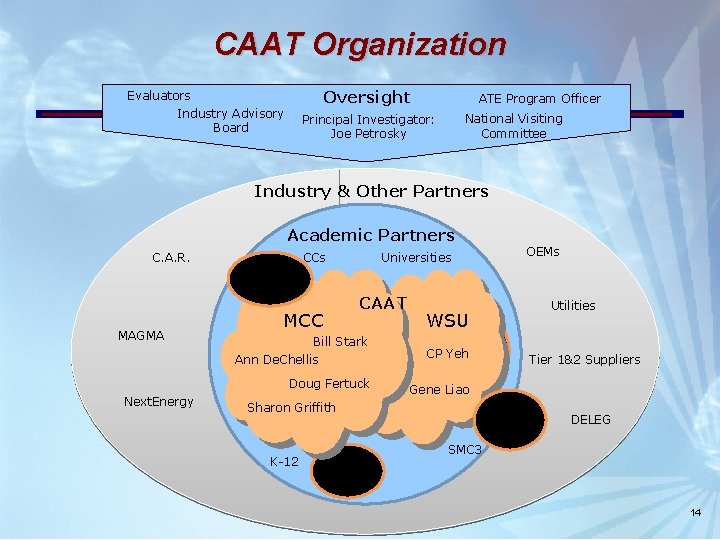
CAAT Organization Oversight Evaluators Industry Advisory Board ATE Program Officer National Visiting Committee Principal Investigator: Joe Petrosky Industry & Other Partners Academic Partners C. A. R. MAGMA CCs Seed Grant Contract Universities CAAT MCC Bill Stark Ann De. Chellis Doug Fertuck Next. Energy Seed Grant Contract s Utilities WSU Seed Grant CP Yeh 6 Tier 1&2 Suppliers Gene Liao Sharon Griffith K-12 OEMs Seed Grant Contract DELEG SMC 3 14
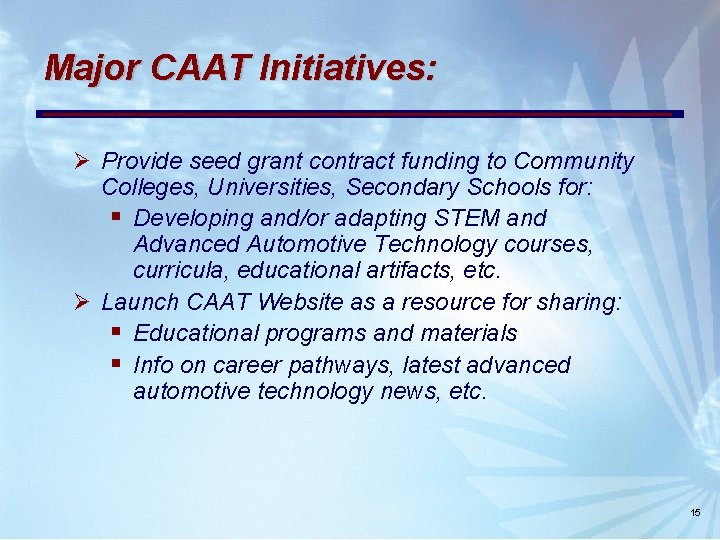
Major CAAT Initiatives: Ø Provide seed grant contract funding to Community Colleges, Universities, Secondary Schools for: § Developing and/or adapting STEM and Advanced Automotive Technology courses, curricula, educational artifacts, etc. Ø Launch CAAT Website as a resource for sharing: § Educational programs and materials § Info on career pathways, latest advanced automotive technology news, etc. 15
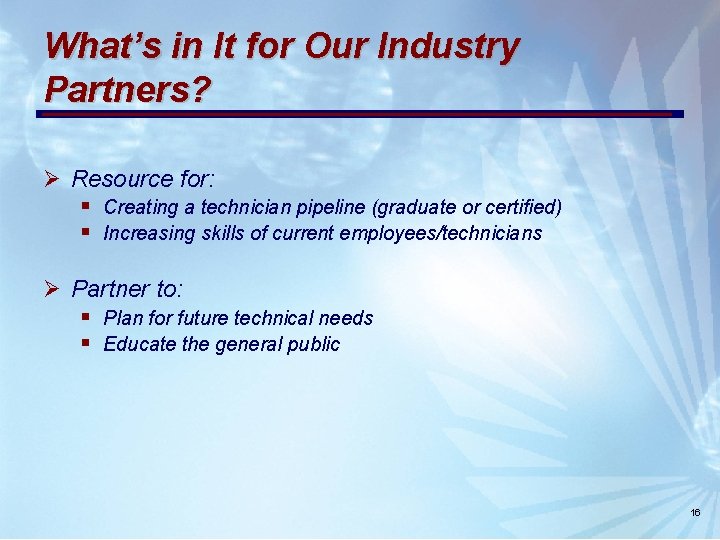
What’s in It for Our Industry Partners? Ø Resource for: § Creating a technician pipeline (graduate or certified) § Increasing skills of current employees/technicians Ø Partner to: § Plan for future technical needs § Educate the general public 16
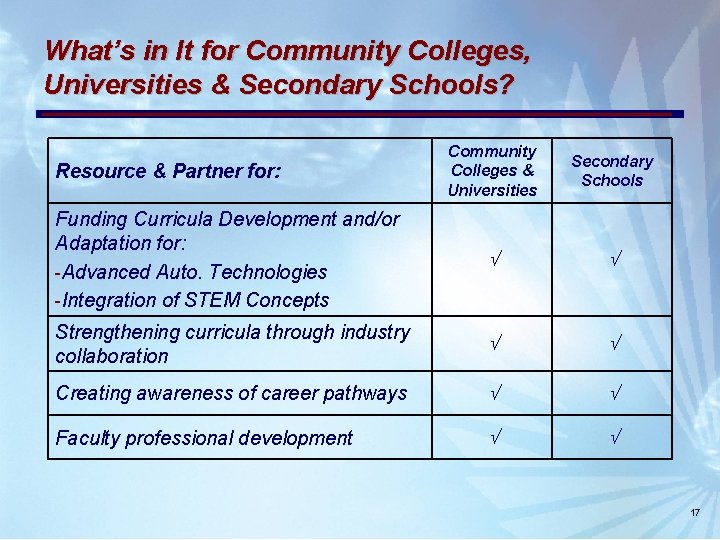
What’s in It for Community Colleges, Universities & Secondary Schools? Community Colleges & Universities Secondary Schools Funding Curricula Development and/or Adaptation for: -Advanced Auto. Technologies -Integration of STEM Concepts Ö Ö Strengthening curricula through industry collaboration Ö Ö Creating awareness of career pathways Ö Ö Faculty professional development Ö Ö Resource & Partner for: 17
Philosophy for Curriculum Reform Ø Student access to excellent STEM education § Foundation for technician education begins in K -12 schools Ø All education sectors (K-12 through university) working together for sound learning Ø Technical curricula: § Driven by industry needs § Closely aligned with workplace practices § Address employability, as well as technical and core academic skills 18
Curriculum Reform Goals for Automotive Technician Programs Ø Integration of scientific concepts into mainstream high school curriculum Ø Seamless 2+2+2 process for integrated knowledge and experience along the education continuum Ø A single source for curricula and artifacts to support and enable: § Faculty at all educational levels to deliver STEM education § Preparation of capable technicians and technologists 19
CAAT Seed Grant Contract Funding Ø Funding available on a first come, first serve basis for educational institutions to develop and/or adapt materials: From modules and artifacts to courses and complete curricula q Equipment not to exceed 20% of grant request q Ø CAAT and its partners will identify priority development needs 20
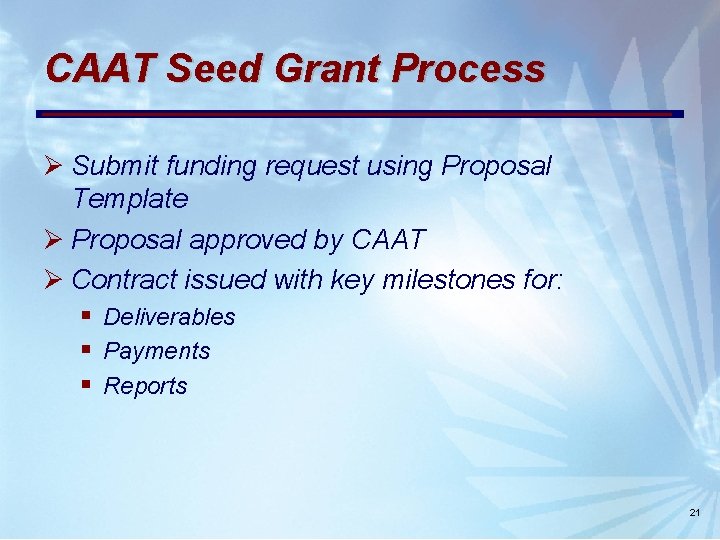
CAAT Seed Grant Process Ø Submit funding request using Proposal Template Ø Proposal approved by CAAT Ø Contract issued with key milestones for: § Deliverables § Payments § Reports 21
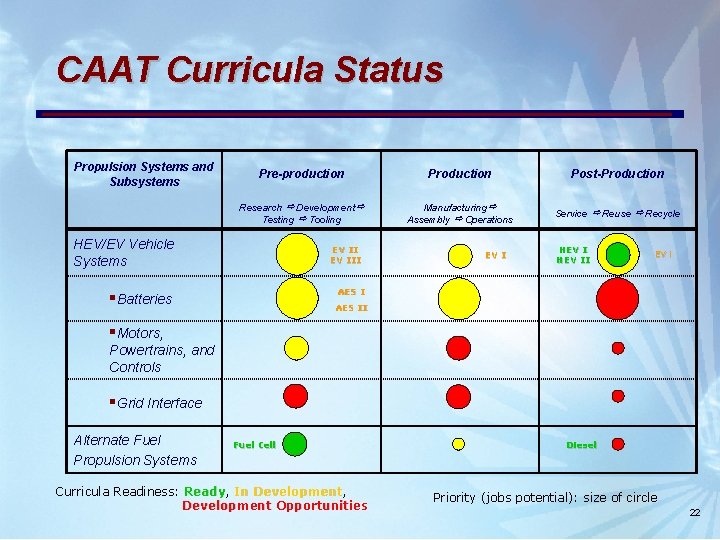
CAAT Curricula Status Propulsion Systems and Subsystems Pre-production Post-Production Research Development Testing Tooling Manufacturing Assembly Operations Service Reuse Recycle HEV/EV Vehicle Systems EV III EV I HEV II EV I AES I §Batteries AES II §Motors, Powertrains, and Controls §Grid Interface Alternate Fuel Propulsion Systems Fuel Cell Curricula Readiness: Ready, Ready In Development, Development Opportunities Diesel Priority (jobs potential): size of circle 22
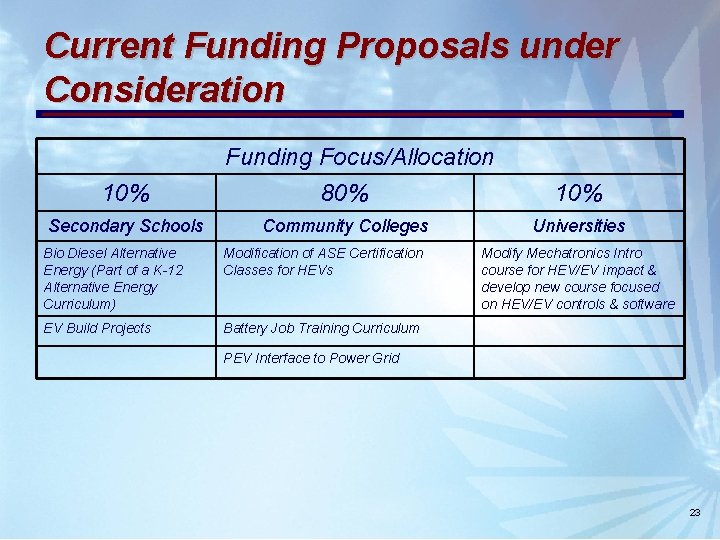
Current Funding Proposals under Consideration 10% Secondary Schools Funding Focus/Allocation 80% Community Colleges Bio Diesel Alternative Energy (Part of a K-12 Alternative Energy Curriculum) Modification of ASE Certification Classes for HEVs EV Build Projects Battery Job Training Curriculum 10% Universities Modify Mechatronics Intro course for HEV/EV impact & develop new course focused on HEV/EV controls & software PEV Interface to Power Grid 23
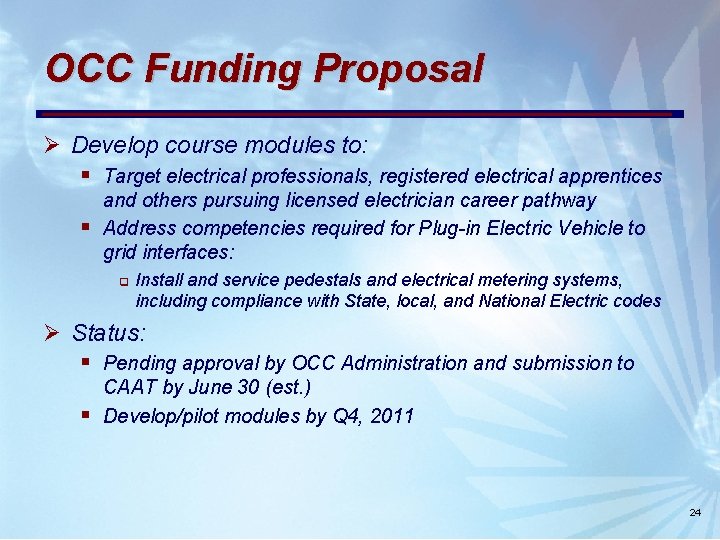
OCC Funding Proposal Ø Develop course modules to: § Target electrical professionals, registered electrical apprentices and others pursuing licensed electrician career pathway § Address competencies required for Plug-in Electric Vehicle to grid interfaces: q Install and service pedestals and electrical metering systems, including compliance with State, local, and National Electric codes Ø Status: § Pending approval by OCC Administration and submission to CAAT by June 30 (est. ) § Develop/pilot modules by Q 4, 2011 24
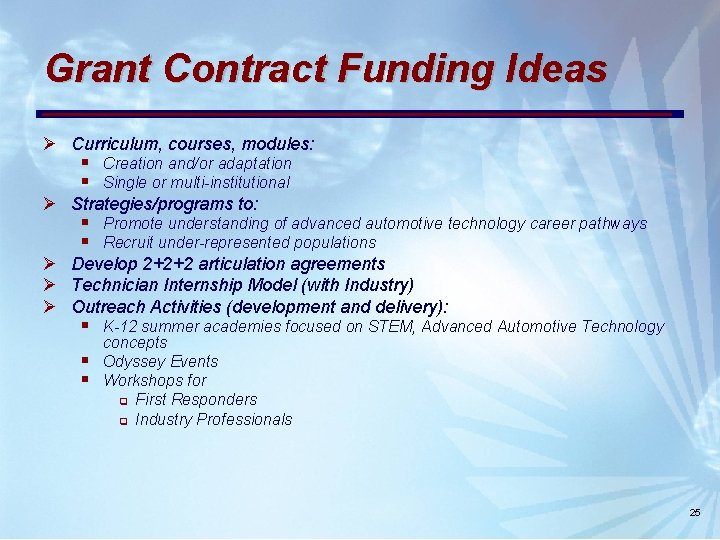
Grant Contract Funding Ideas Ø Curriculum, courses, modules: Ø Ø § Creation and/or adaptation § Single or multi-institutional Strategies/programs to: § Promote understanding of advanced automotive technology career pathways § Recruit under-represented populations Develop 2+2+2 articulation agreements Technician Internship Model (with Industry) Outreach Activities (development and delivery): § K-12 summer academies focused on STEM, Advanced Automotive Technology concepts § Odyssey Events § Workshops for q First Responders q Industry Professionals 25
CAAT Contacts: MCC: Bill Stark starkw@macomb. edu 586 -445 -7905 Doug Fertuck fertuckd@macomb. edu 586 -447 -8619 Ann Marie De. Chellis dechellisa@macomb. edu 586 -447 -8618 Sharon Griffith griffiths@macomb. edu 586 -447 -8656 Chih-Ping (CP) Yeh yeh@eng. wayne. edu 313 -577 -0800 Y. Gene Liao liao@eng. wayne. edu 313 -577 -1781 WSU: 26