
CEN 3722 Human Computer Interaction Interface Metaphors and


- Slides: 18
CEN 3722 Human Computer Interaction Interface Metaphors and Conceptual Models Dr. Ron Eaglin
Objectives • Define and describe how metaphors are used in design • Verbal metaphor • Virtual metaphor • Composite metaphor • Define and provide examples of Conceptual Models • Design model • User’s model • System image
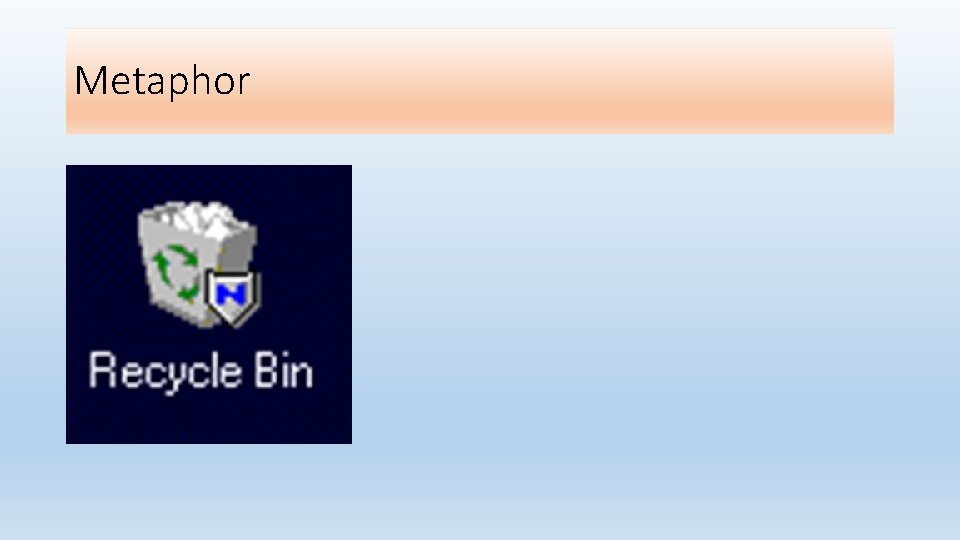
Metaphor
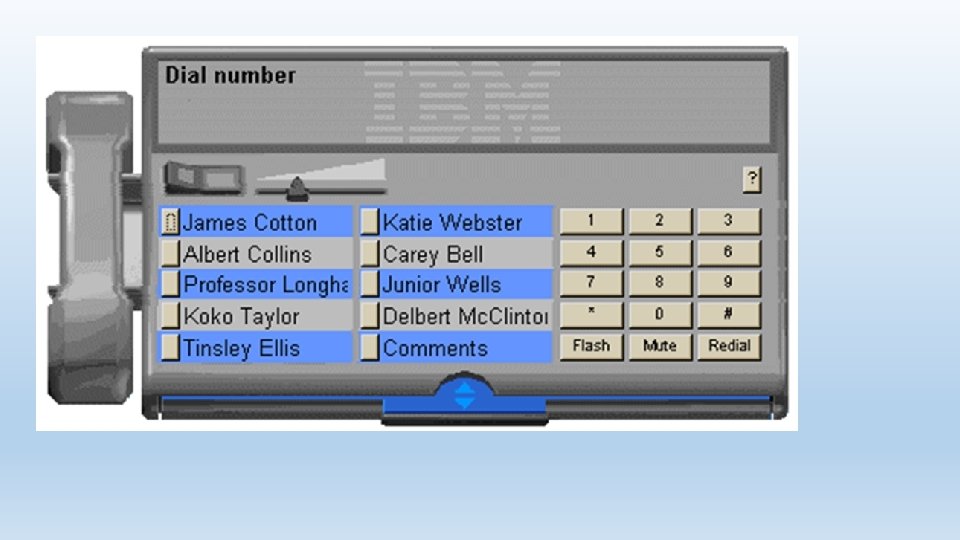
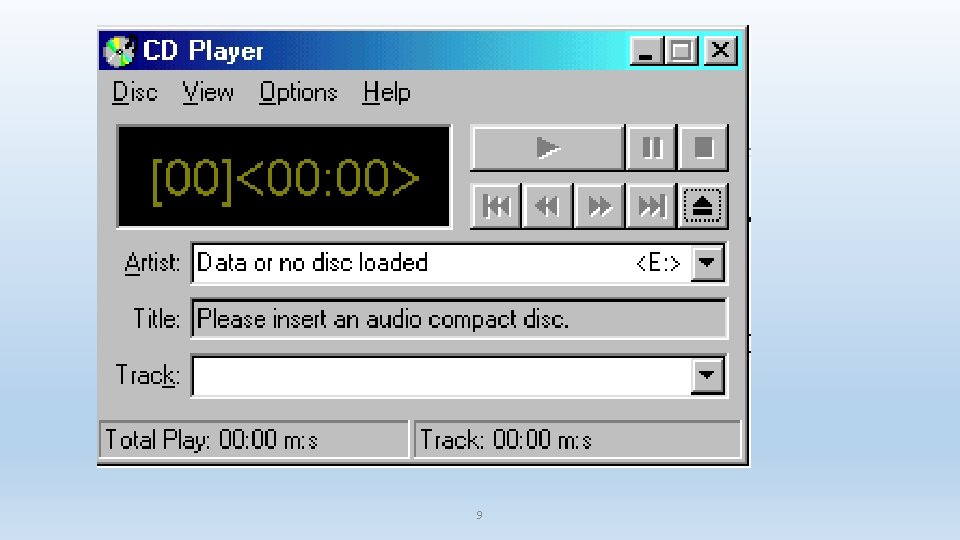
Metaphors • Used to control complexity • Interface actions or tasks mapped to already understood concepts • User prior experience and knowledge to help with the novel or unfamiliar • Establish user expectations • Allow predictions of system behavior
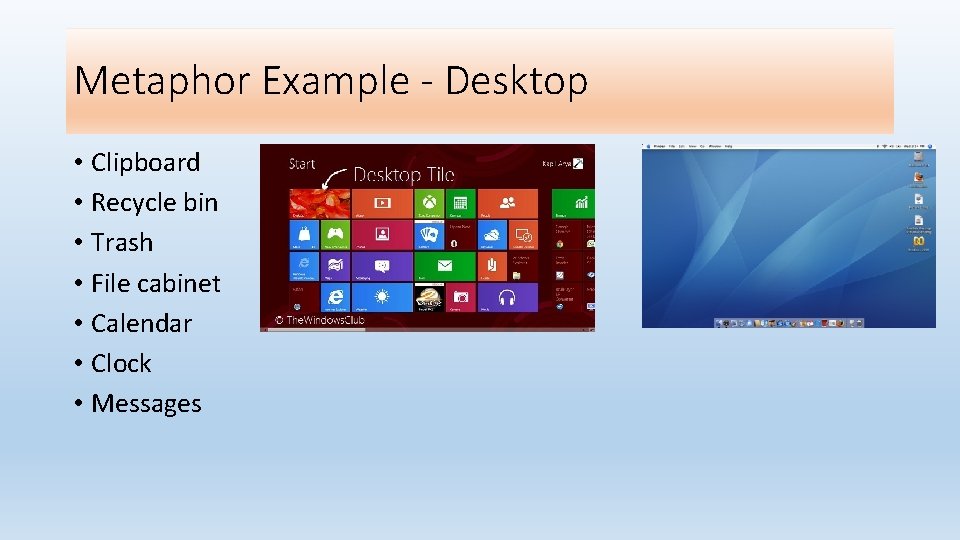
Metaphor Example - Desktop • Clipboard • Recycle bin • Trash • File cabinet • Calendar • Clock • Messages
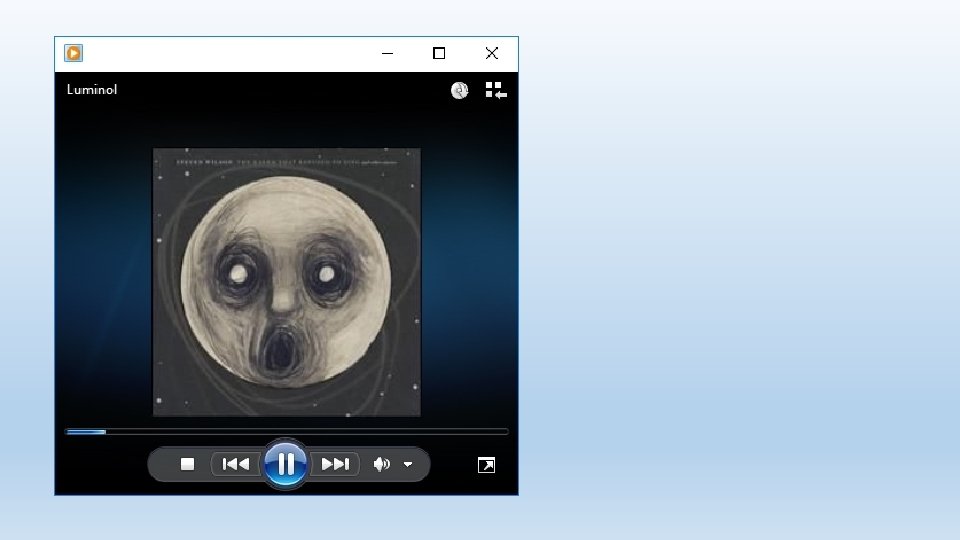
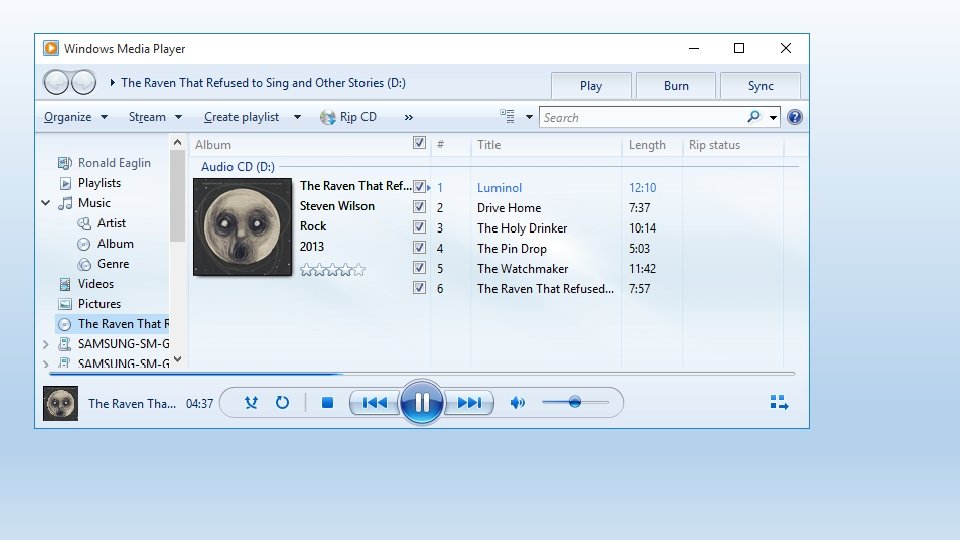
Types of Metaphors • Verbal metaphor – comparing previous (old) to new technology. • Example: Word processor vs. typewriter • Virtual metaphor – interface elements with metaphor • Example: Desktop adds mouse clicks= selection, drag/drop = move • Composite metaphor – add new features to metaphor • Example: Add menus to desktop metaphor (new feature)
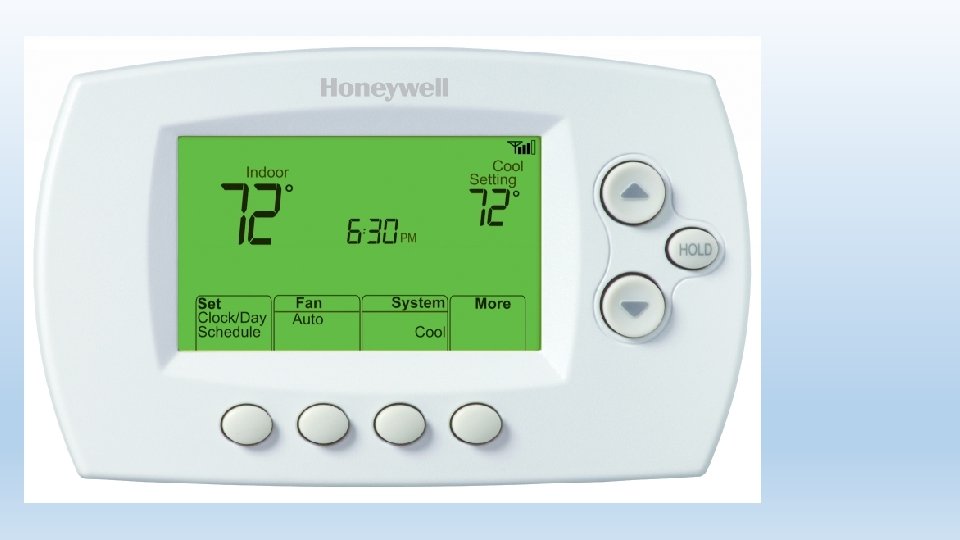
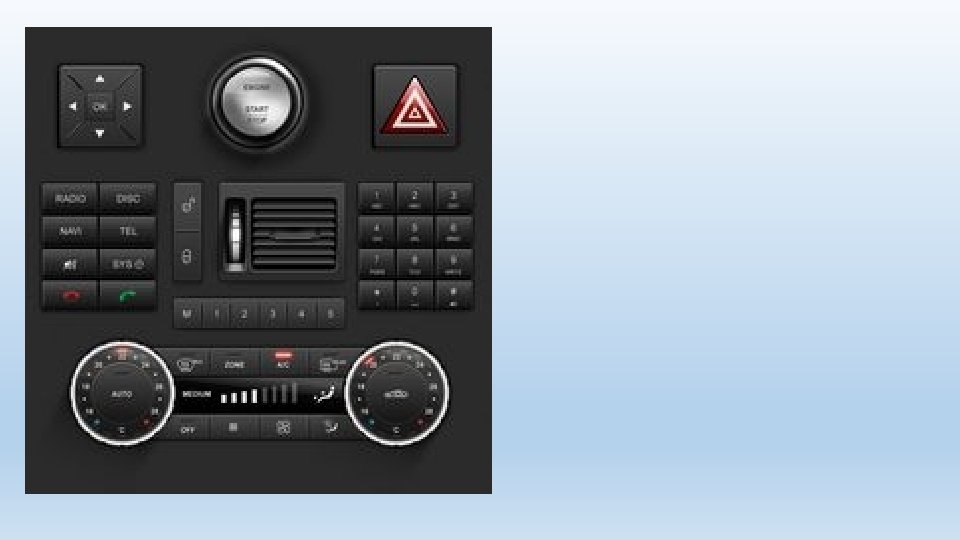
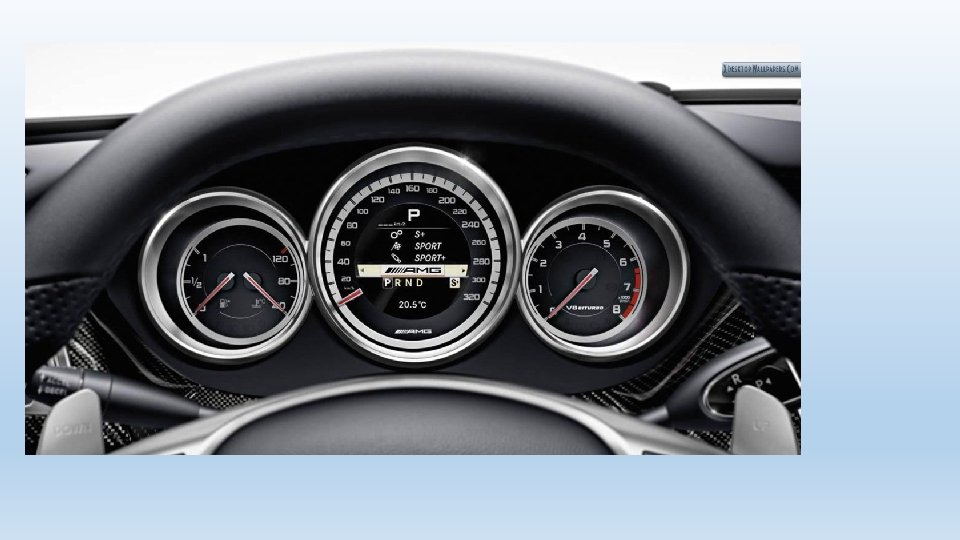
Conceptual Models • How systems are understood by different people • User conceptualize the system • Designers conceptualize the system • These should be consistent • Interfaces communicate the conceptual model • Should not need documentation • Things should be visible
9
Design Model • User gets model from experience and usage • If the models match – ease of use • If not user makes mistakes – rejects UI User Model
Summary • Define and describe metaphors and use in design • Verbal metaphor, virtual interface metaphor, composite metaphor • Define and give examples of conceptual models • Design model, user model, system image