
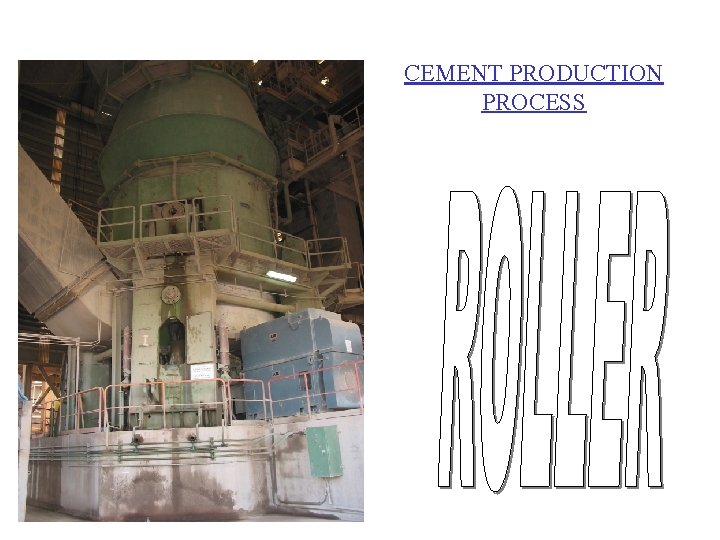
CEMENT PRODUCTION PROCESS ROLLER MILL Vertical Roller Mill
![Wear rate monitoring 2’ 500 [h] = 50 [mm] 40 [mm] = ~ 2’](https://slidetodoc.com/presentation_image_h/a9e5811d062d3366c442a74e5cc8fda3/image-21.jpg "Wear rate monitoring 2’ 500 [h] = 50 [mm] 40 [mm] = ~ 2’")
- Slides: 23
CEMENT PRODUCTION PROCESS
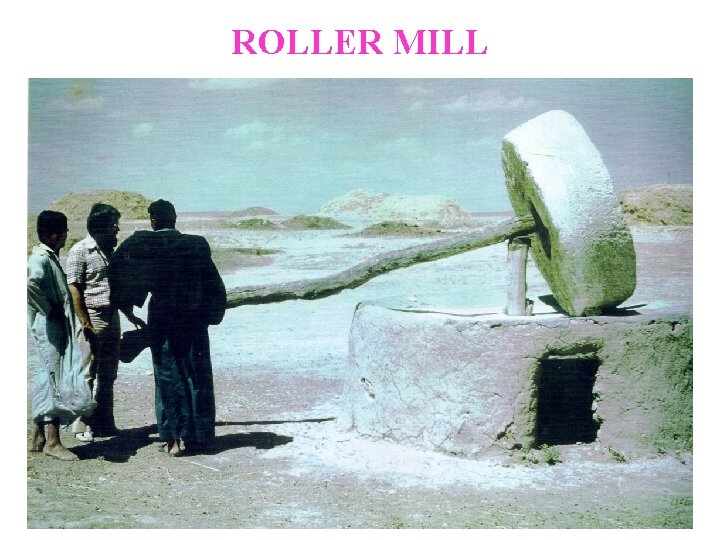
ROLLER MILL
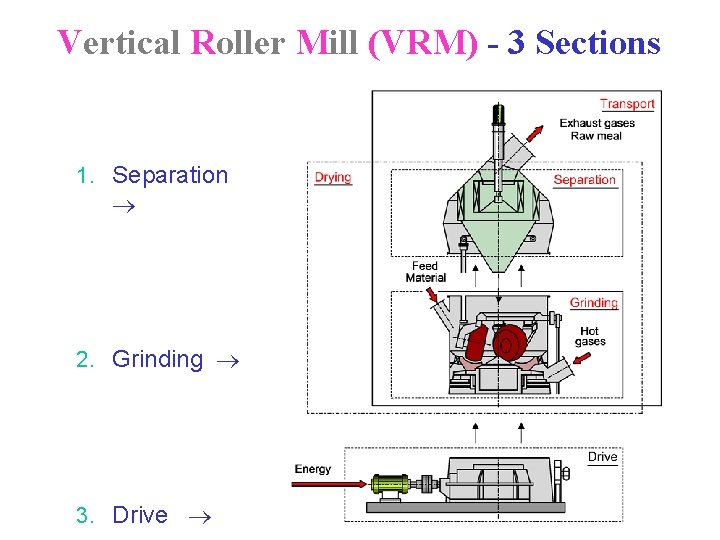
Vertical Roller Mill (VRM) - 3 Sections 1. Separation 2. Grinding 3. Drive
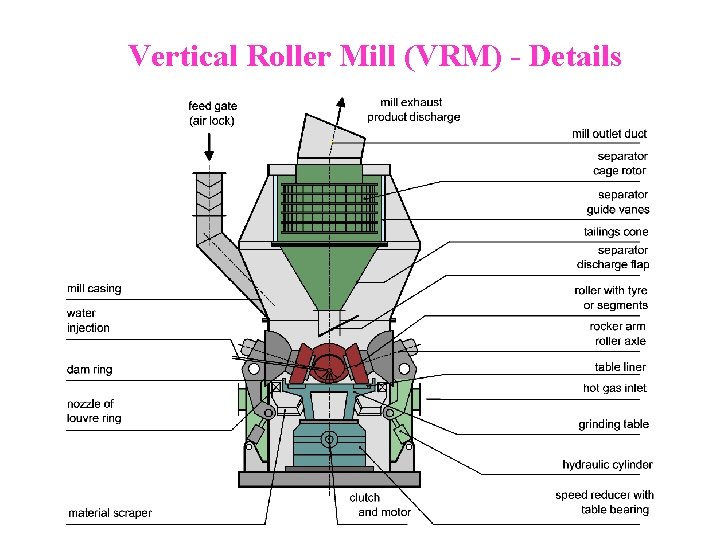
Vertical Roller Mill (VRM) - Details
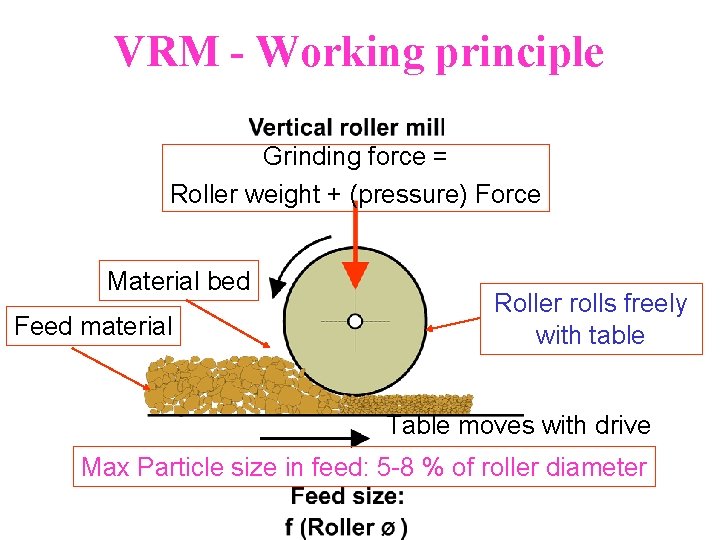
VRM - Working principle Grinding force = Roller weight + (pressure) Force Material bed Feed material Roller rolls freely with table Table moves with drive Max Particle size in feed: 5 -8 % of roller diameter
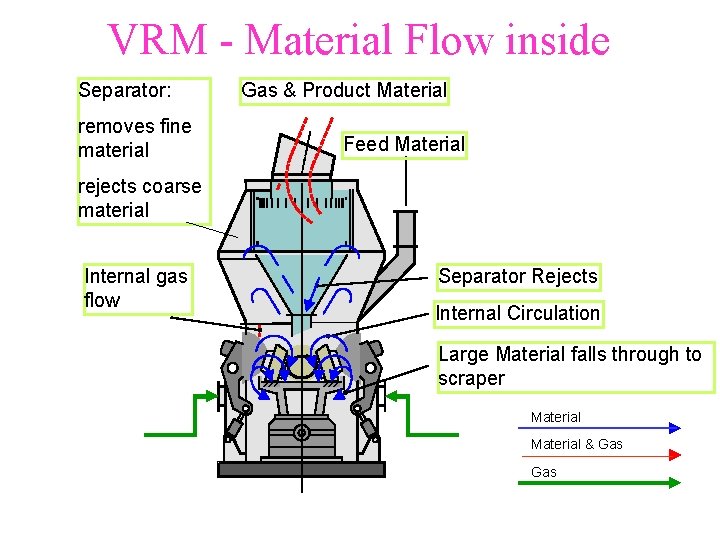
VRM - Material Flow inside Separator: removes fine material Gas & Product Material Feed Material rejects coarse material Internal gas flow Separator Rejects Internal Circulation Large Material falls through to scraper Material & Gas
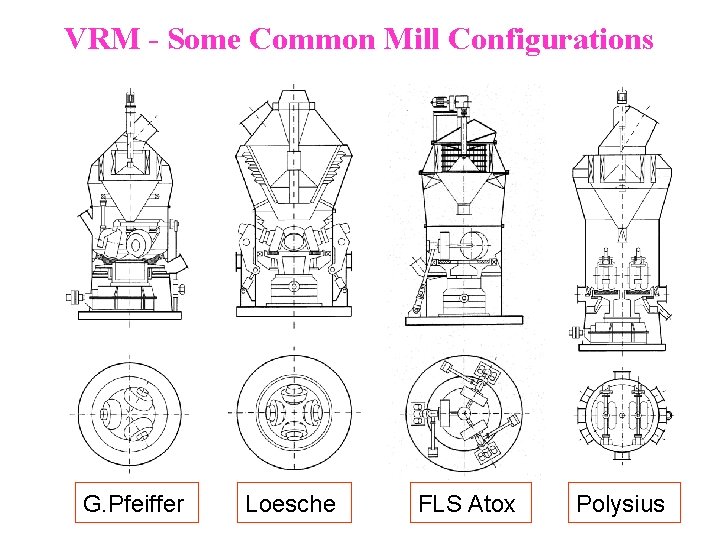
VRM - Some Common Mill Configurations G. Pfeiffer Loesche FLS Atox Polysius
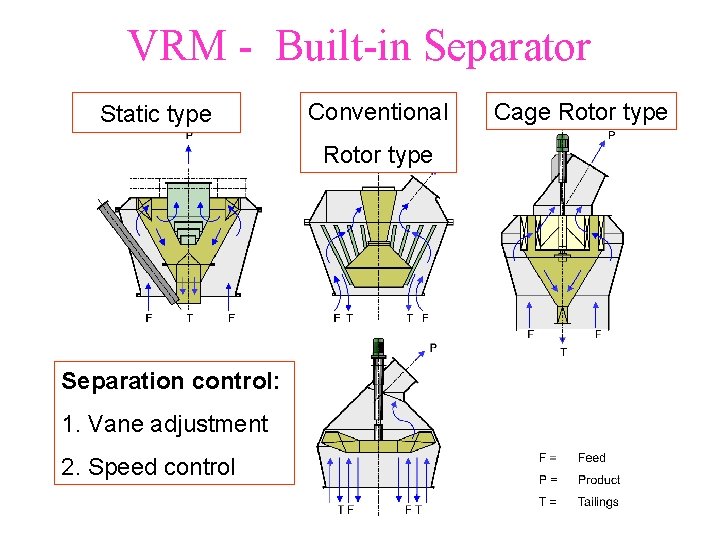
VRM - Built-in Separator Static type Conventional Rotor type Separation control: 1. Vane adjustment 2. Speed control Cage Rotor type
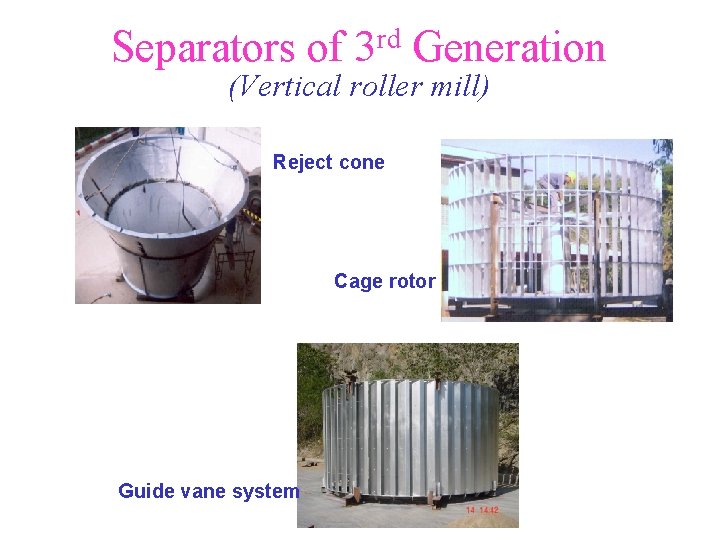
Separators of rd 3 Generation (Vertical roller mill) Reject cone Cage rotor Guide vane system
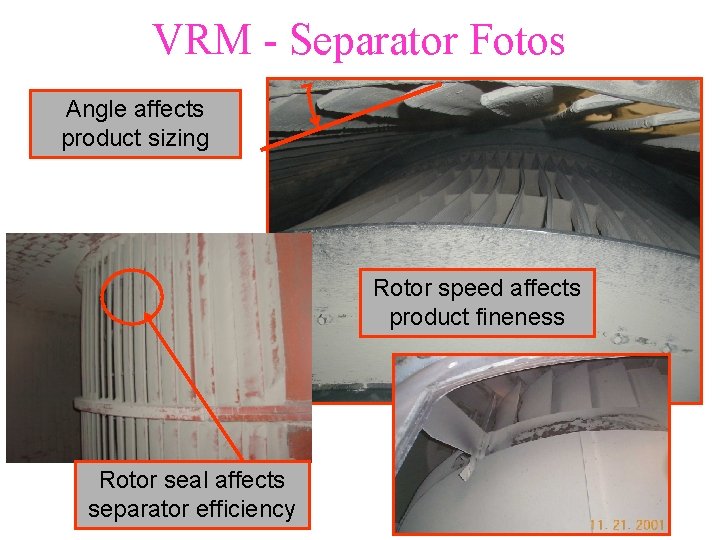
VRM - Separator Fotos Angle affects product sizing Rotor speed affects product fineness Rotor seal affects separator efficiency
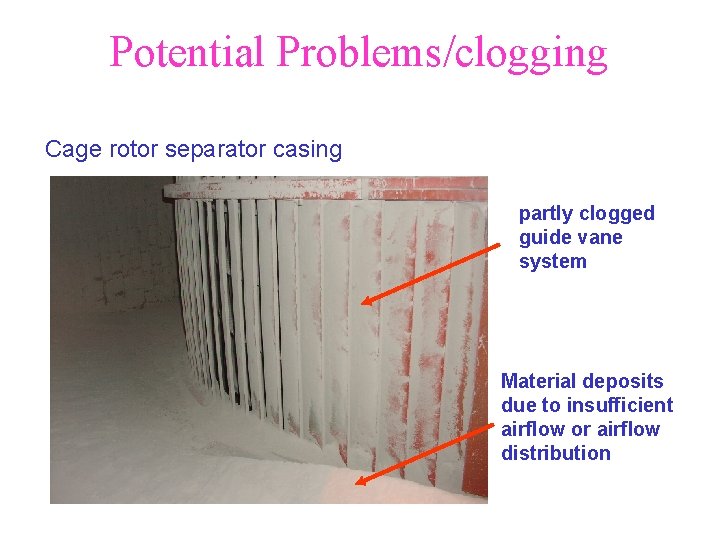
Potential Problems/clogging Cage rotor separator casing partly clogged guide vane system Material deposits due to insufficient airflow or airflow distribution
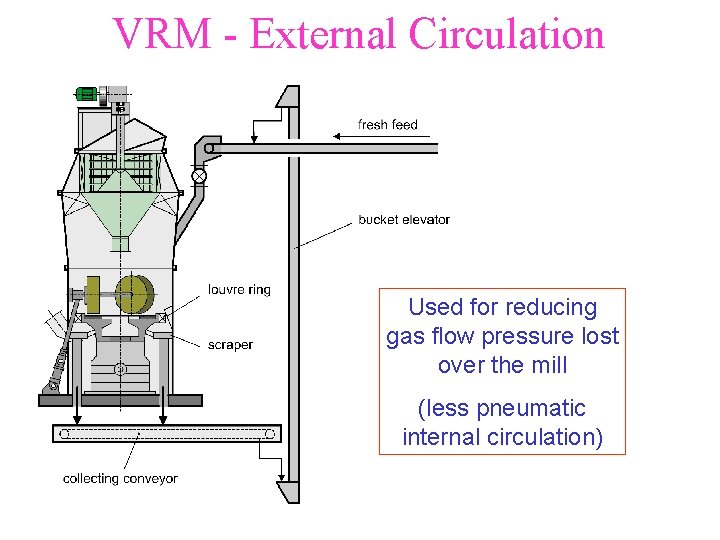
VRM - External Circulation Used for reducing gas flow pressure lost over the mill (less pneumatic internal circulation)
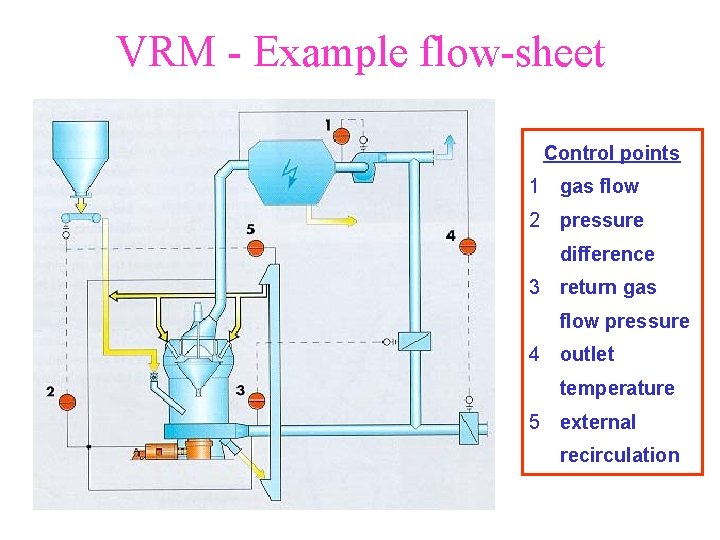
VRM - Example flow-sheet Control points 1 gas flow 2 pressure difference 3 return gas flow pressure 4 outlet temperature 5 external recirculation
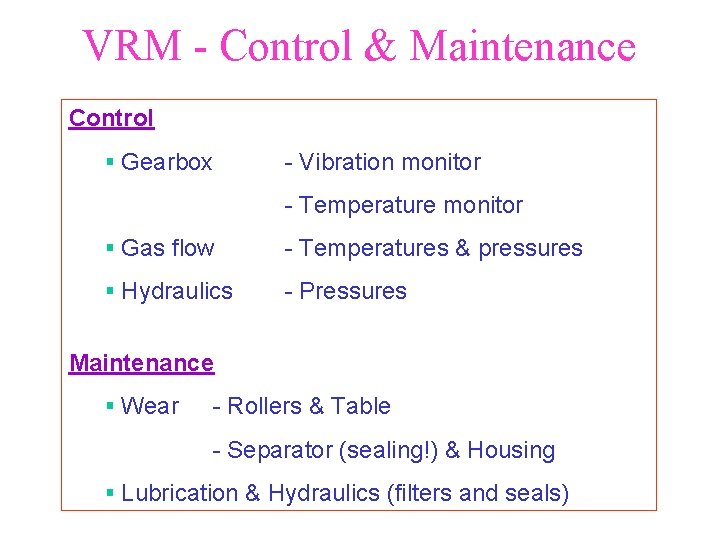
VRM - Control & Maintenance Control § Gearbox - Vibration monitor - Temperature monitor § Gas flow - Temperatures & pressures § Hydraulics - Pressures Maintenance § Wear - Rollers & Table - Separator (sealing!) & Housing § Lubrication & Hydraulics (filters and seals)
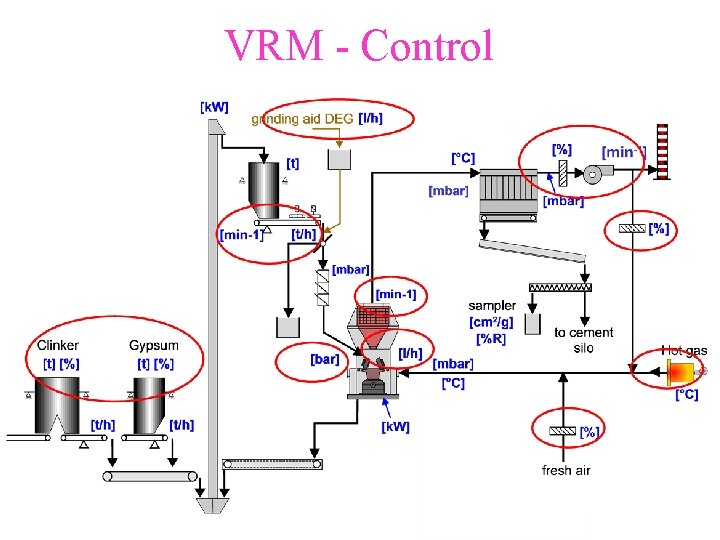
VRM - Control
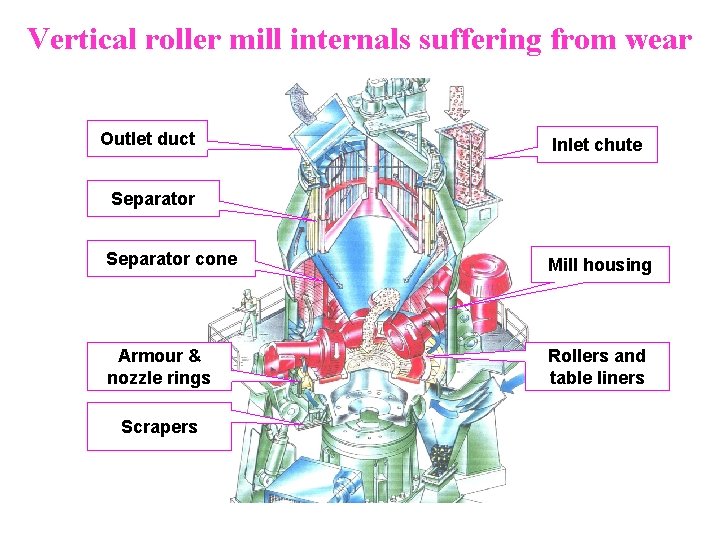
Vertical roller mill internals suffering from wear Outlet duct Inlet chute Separator cone Mill housing Armour & nozzle rings Rollers and table liners Scrapers
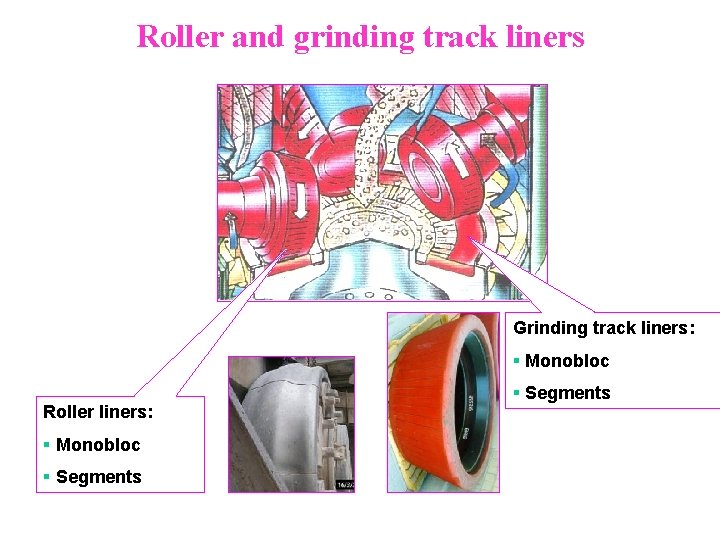
Roller and grinding track liners Grinding track liners: § Monobloc Roller liners: § Monobloc § Segments
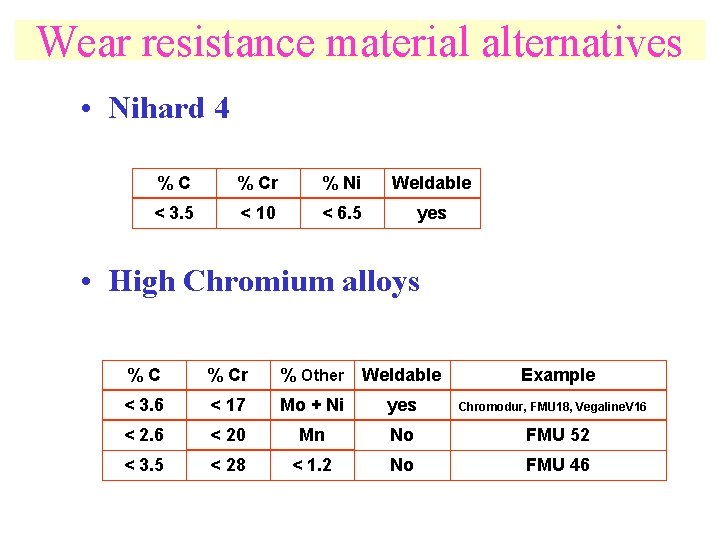
Wear resistance material alternatives • Nihard 4 %C % Cr % Ni Weldable < 3. 5 < 10 < 6. 5 yes • High Chromium alloys %C % Cr % Other Weldable Example < 3. 6 < 17 Mo + Ni yes Chromodur, FMU 18, Vegaline. V 16 s < 2. 6 < 20 Mn No FMU 52 < 3. 5 < 28 < 1. 2 No FMU 46
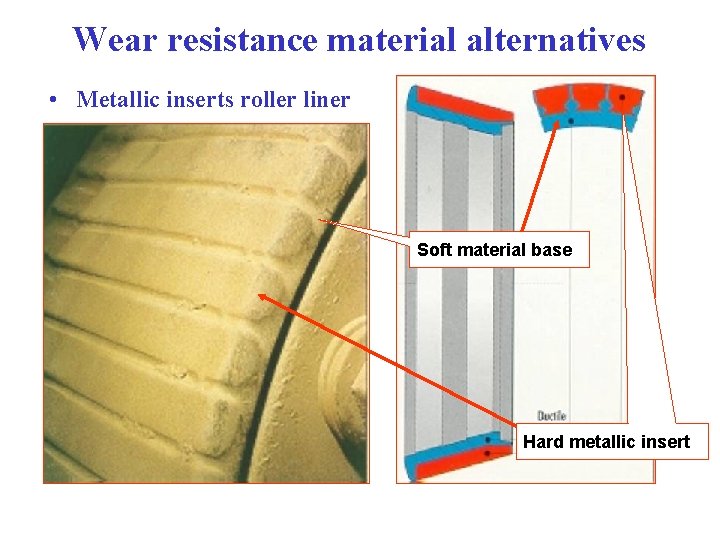
Wear resistance material alternatives • Metallic inserts roller liner Soft material base Hard metallic insert
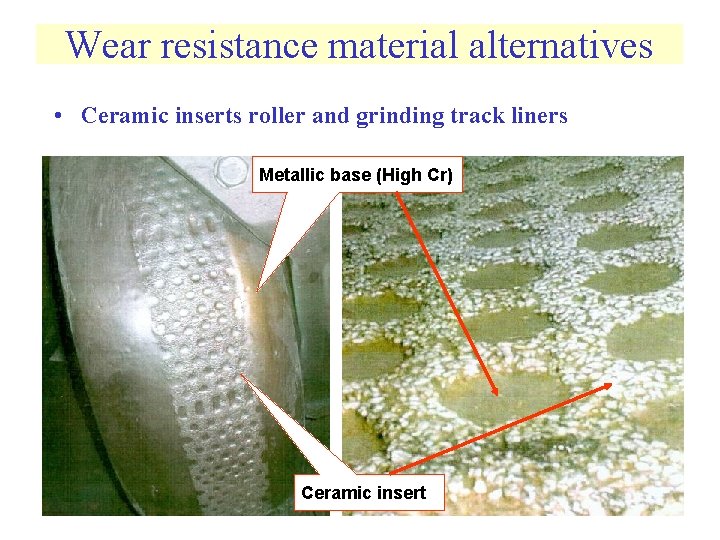
Wear resistance material alternatives • Ceramic inserts roller and grinding track liners Metallic base (High Cr) Ceramic insert
Wear rate monitoring 2’ 500 [h] = 50 [mm] 40 [mm] = ~ 2’ 000 [h] Minimum allowed thickness
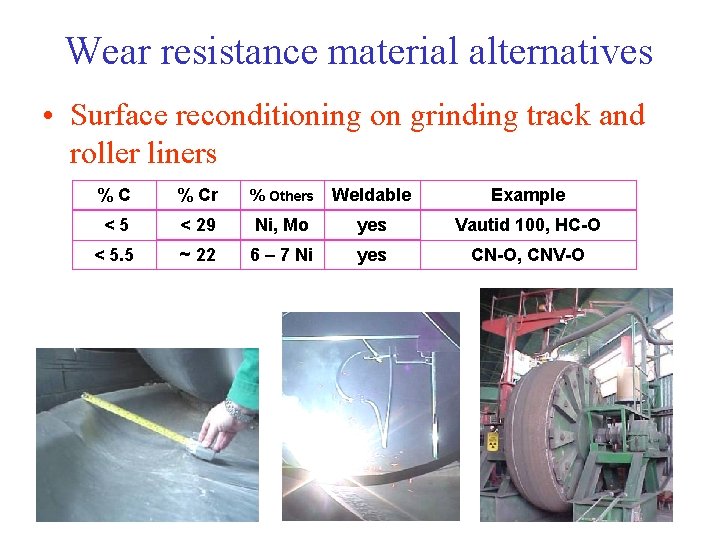
Wear resistance material alternatives • Surface reconditioning on grinding track and roller liners %C % Cr % Others Weldable Example <5 < 29 Ni, Mo yes Vautid 100, HC-O < 5. 5 ~ 22 6 – 7 Ni yes CN-O, CNV-O
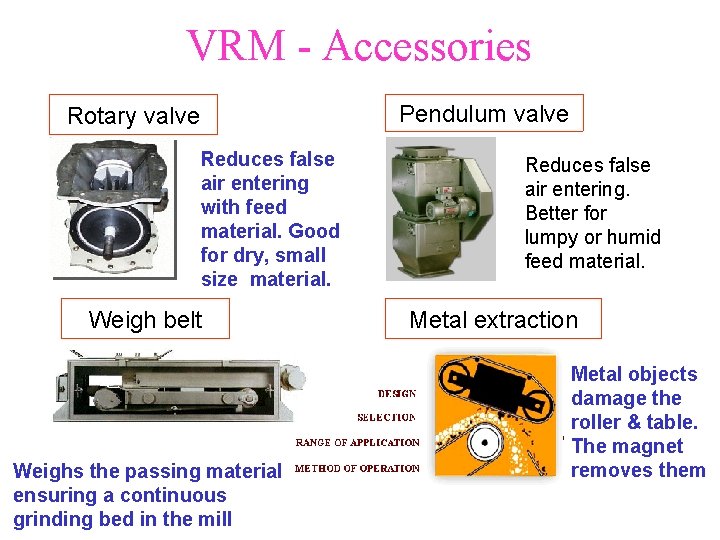
VRM - Accessories Pendulum valve Rotary valve Reduces false air entering with feed material. Good for dry, small size material. Weigh belt Weighs the passing material ensuring a continuous grinding bed in the mill Reduces false air entering. Better for lumpy or humid feed material. Metal extraction Metal objects damage the roller & table. The magnet removes them