
Celtic Europe 1000 50 B C E Spread
Celtic Europe 1000 -50 B. C. E.
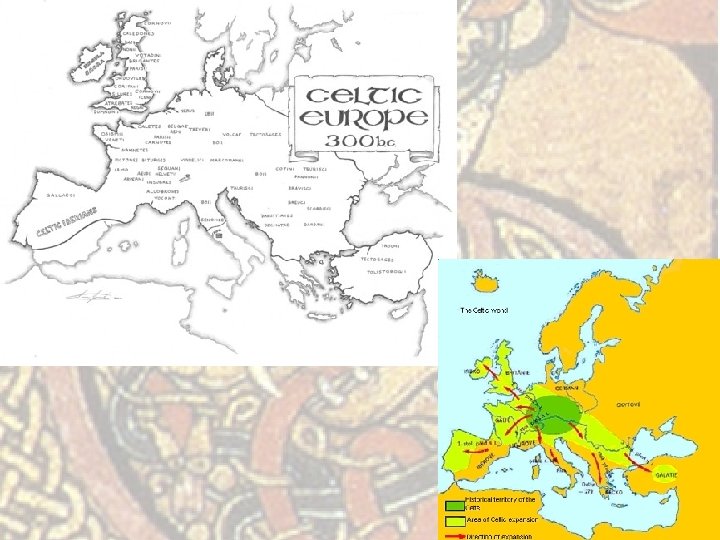
Spread of the Celts • Celtic civilization originated in Central Europe in the first millennium B. C. E. • Around 500 B. C. E. , the Celtic groups began a rapid expansion in several directions. • The Celts shared cultural traits, but there was no Celtic state.
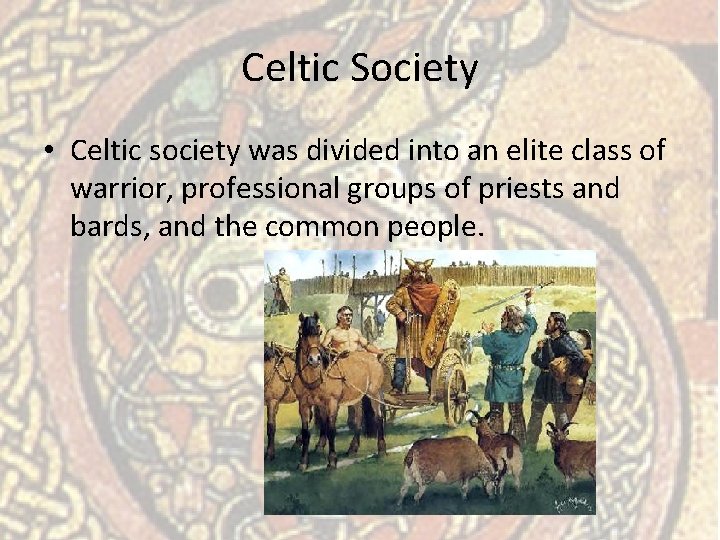
Celtic Society • Celtic society was divided into an elite class of warrior, professional groups of priests and bards, and the common people.
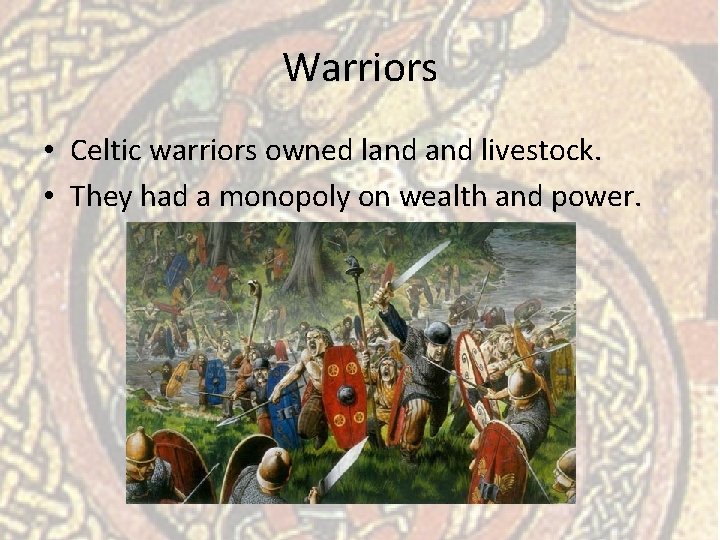
Warriors • Celtic warriors owned land livestock. • They had a monopoly on wealth and power.
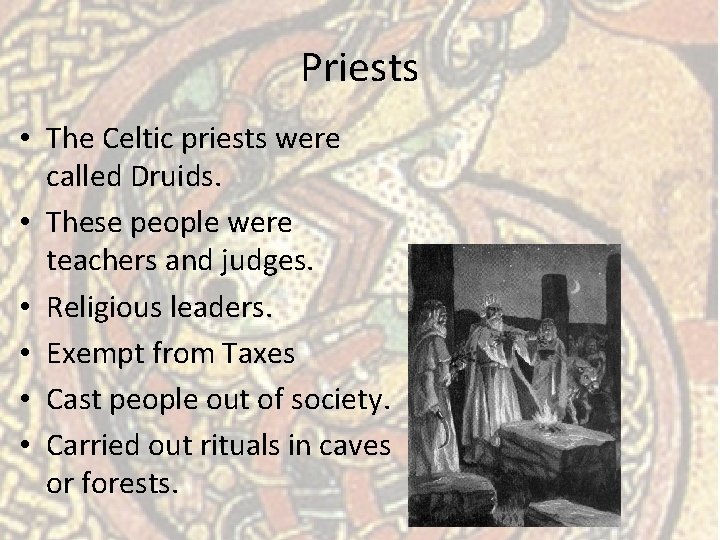
Priests • The Celtic priests were called Druids. • These people were teachers and judges. • Religious leaders. • Exempt from Taxes • Cast people out of society. • Carried out rituals in caves or forests.
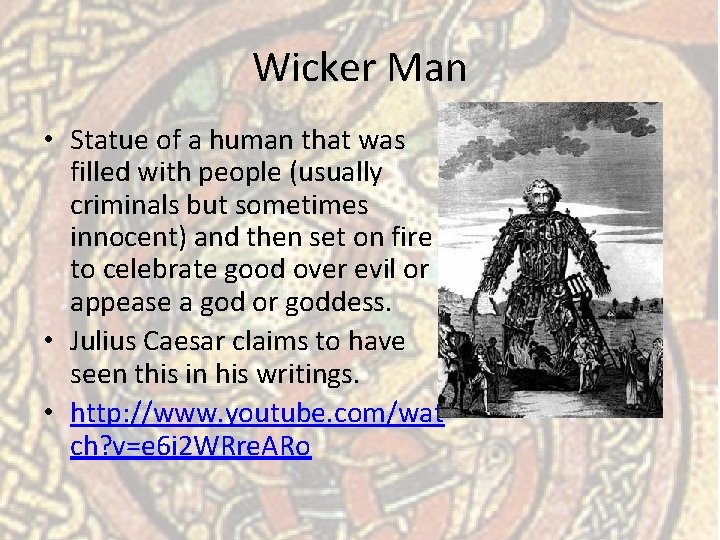
Wicker Man • Statue of a human that was filled with people (usually criminals but sometimes innocent) and then set on fire to celebrate good over evil or appease a god or goddess. • Julius Caesar claims to have seen this in his writings. • http: //www. youtube. com/wat ch? v=e 6 i 2 WRre. ARo
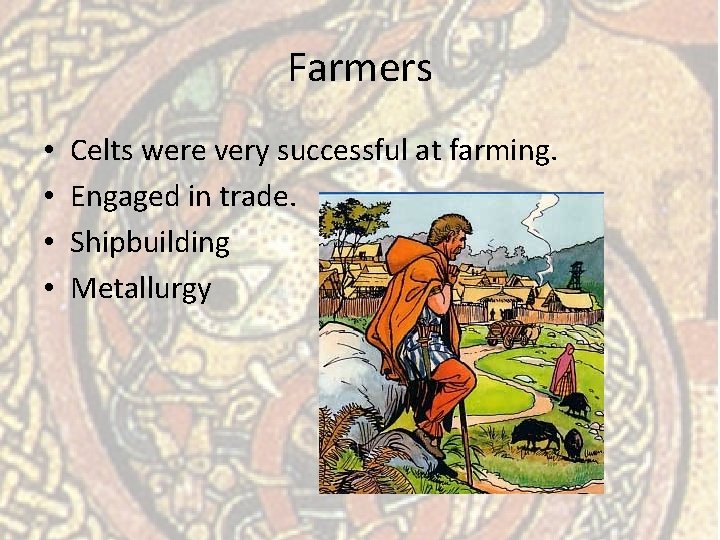
Farmers • • Celts were very successful at farming. Engaged in trade. Shipbuilding Metallurgy
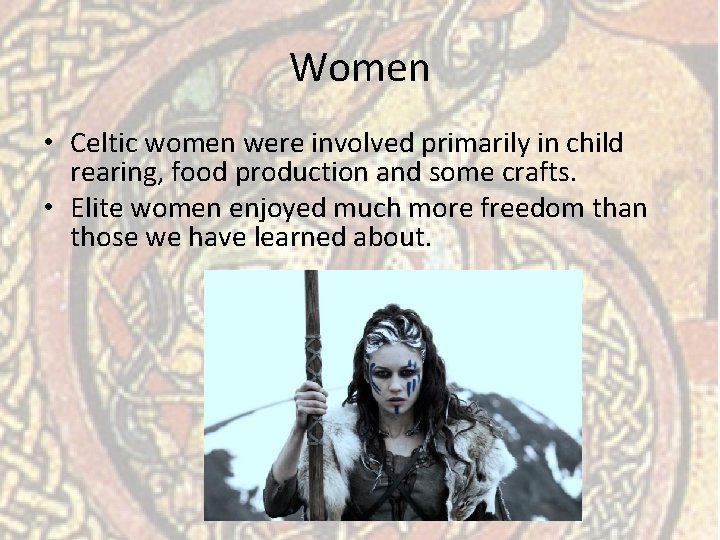
Women • Celtic women were involved primarily in child rearing, food production and some crafts. • Elite women enjoyed much more freedom than those we have learned about.
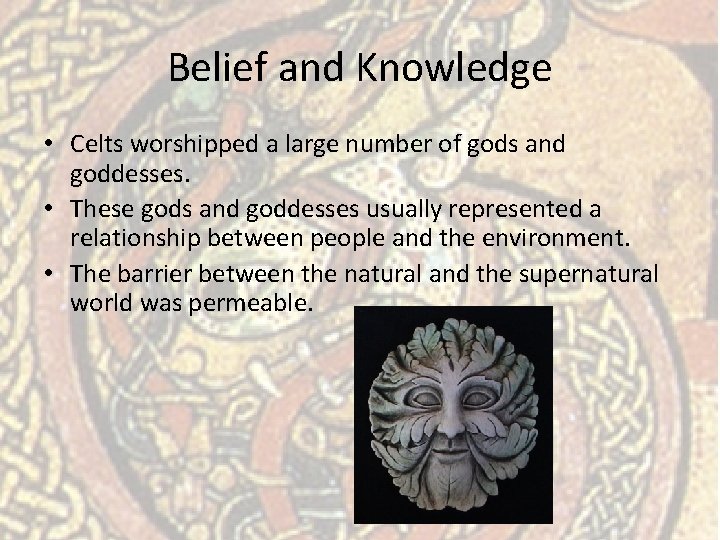
Belief and Knowledge • Celts worshipped a large number of gods and goddesses. • These gods and goddesses usually represented a relationship between people and the environment. • The barrier between the natural and the supernatural world was permeable.
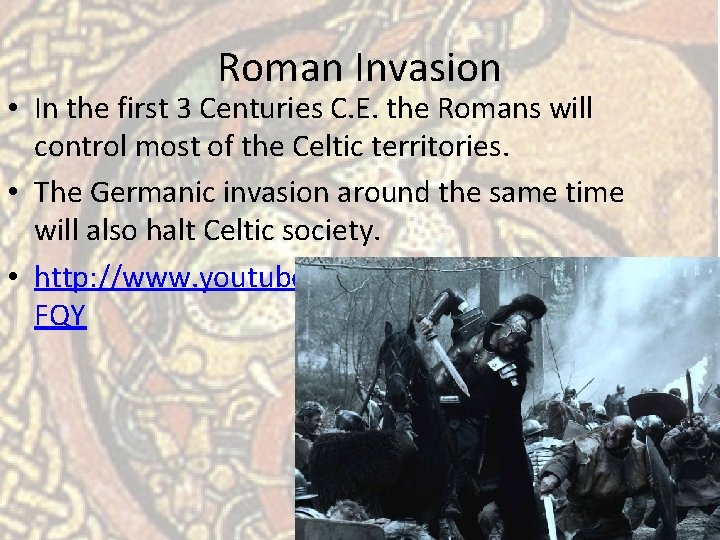
Roman Invasion • In the first 3 Centuries C. E. the Romans will control most of the Celtic territories. • The Germanic invasion around the same time will also halt Celtic society. • http: //www. youtube. com/watch? v=NDIwfg. De FQY
- Slides: 11