
Celluloid Film By Laura Memea Photography 1 st
Celluloid Film By Laura Memea Photography 1 st period
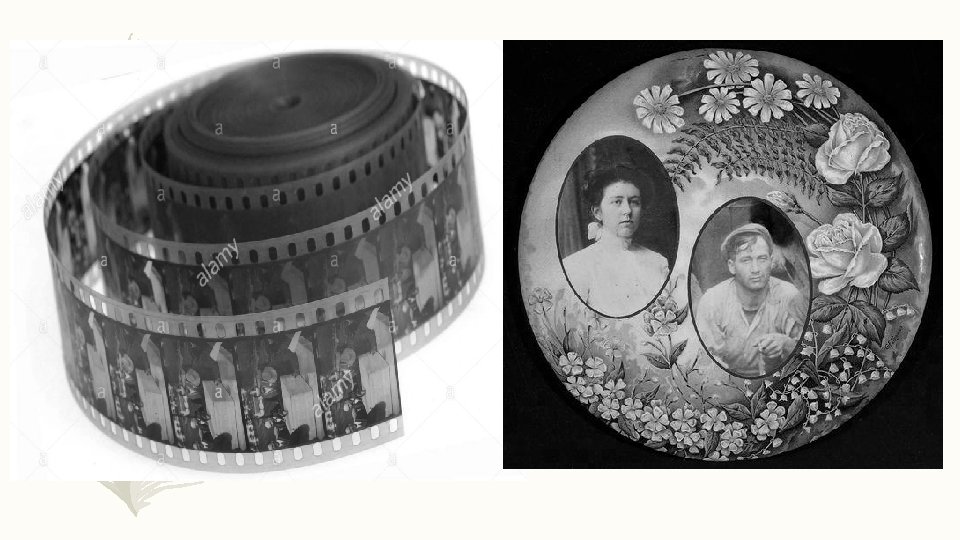
What is Celluloid Film? – Celluloid Film is made up of cellulose nitrate and camphor. – It is highly a flammable substance. – This substance is used for Motion pictures and X-Ray machines. – Mostly known for making movies. – In today’s society it is no longer used, because of digital film.

Who Created it?
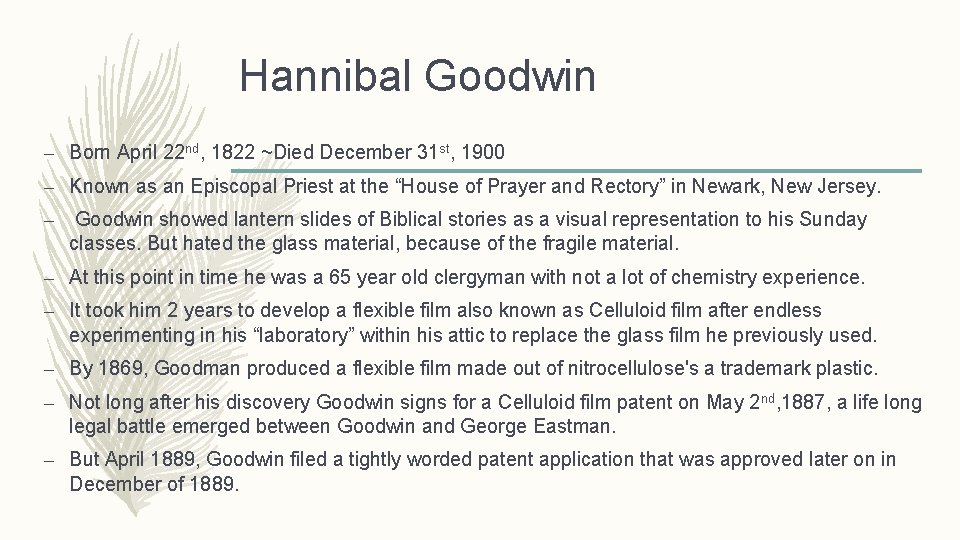
Hannibal Goodwin – Born April 22 nd, 1822 ~Died December 31 st, 1900 – Known as an Episcopal Priest at the “House of Prayer and Rectory” in Newark, New Jersey. – Goodwin showed lantern slides of Biblical stories as a visual representation to his Sunday classes. But hated the glass material, because of the fragile material. – At this point in time he was a 65 year old clergyman with not a lot of chemistry experience. – It took him 2 years to develop a flexible film also known as Celluloid film after endless experimenting in his “laboratory” within his attic to replace the glass film he previously used. – By 1869, Goodman produced a flexible film made out of nitrocellulose's a trademark plastic. – Not long after his discovery Goodwin signs for a Celluloid film patent on May 2 nd, 1887, a life long legal battle emerged between Goodwin and George Eastman. – But April 1889, Goodwin filed a tightly worded patent application that was approved later on in December of 1889.

Who used it?
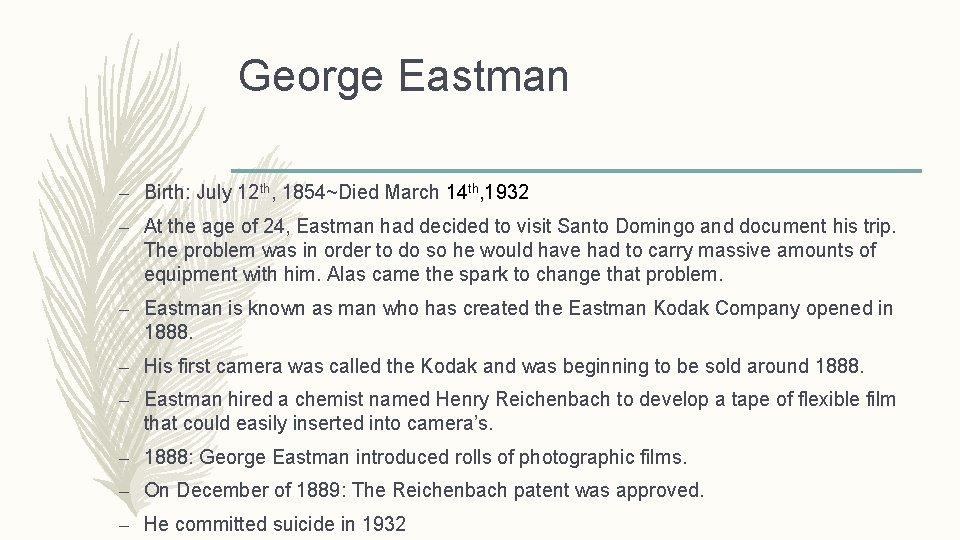
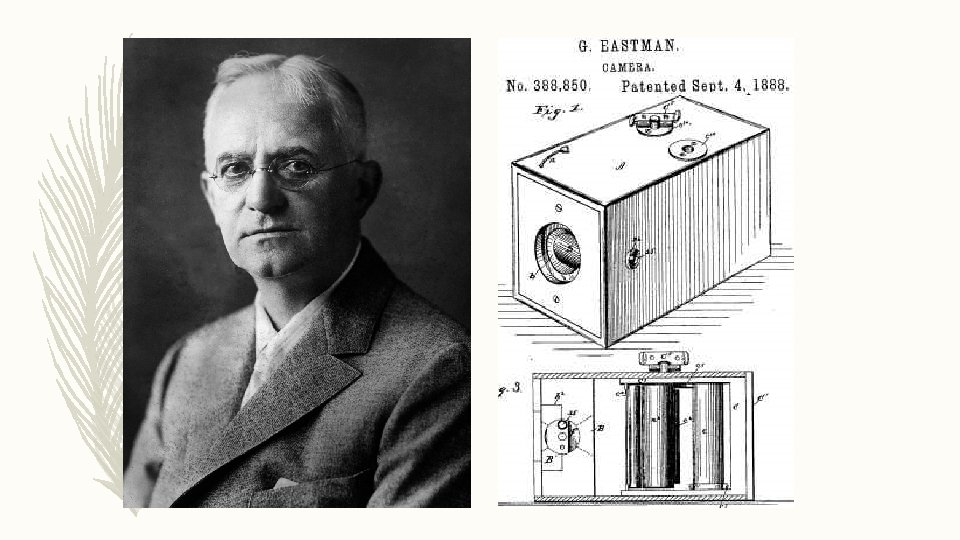
George Eastman – Birth: July 12 th, 1854~Died March 14 th, 1932 – At the age of 24, Eastman had decided to visit Santo Domingo and document his trip. The problem was in order to do so he would have had to carry massive amounts of equipment with him. Alas came the spark to change that problem. – Eastman is known as man who has created the Eastman Kodak Company opened in 1888. – His first camera was called the Kodak and was beginning to be sold around 1888. – Eastman hired a chemist named Henry Reichenbach to develop a tape of flexible film that could easily inserted into camera’s. – 1888: George Eastman introduced rolls of photographic films. – On December of 1889: The Reichenbach patent was approved. – He committed suicide in 1932

What is Celluloid made of?
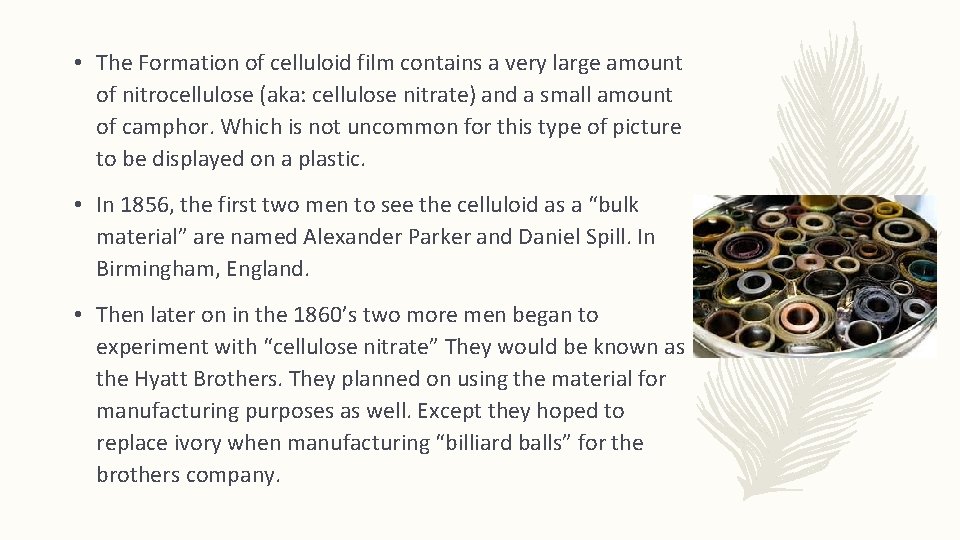
• The Formation of celluloid film contains a very large amount of nitrocellulose (aka: cellulose nitrate) and a small amount of camphor. Which is not uncommon for this type of picture to be displayed on a plastic. • In 1856, the first two men to see the celluloid as a “bulk material” are named Alexander Parker and Daniel Spill. In Birmingham, England. • Then later on in the 1860’s two more men began to experiment with “cellulose nitrate” They would be known as the Hyatt Brothers. They planned on using the material for manufacturing purposes as well. Except they hoped to replace ivory when manufacturing “billiard balls” for the brothers company.
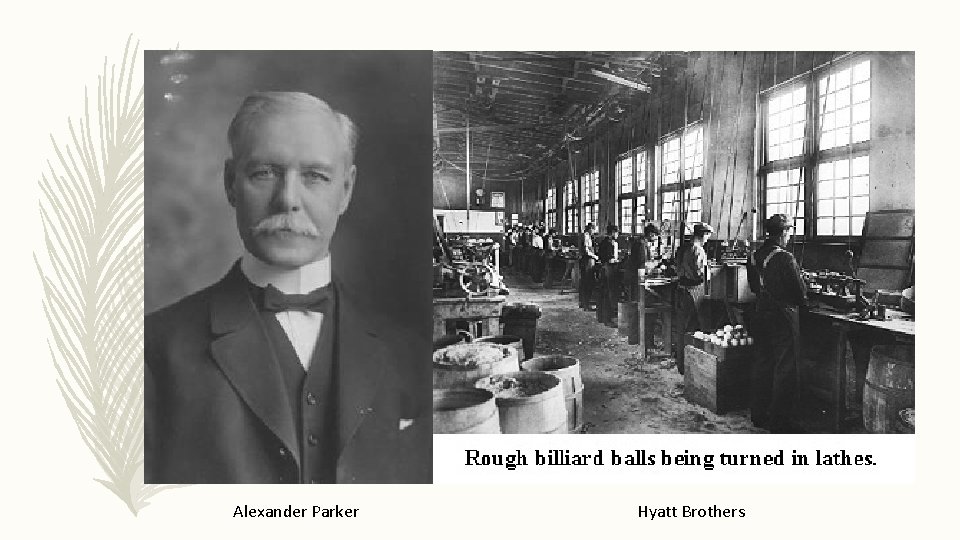
Alexander Parker Hyatt Brothers
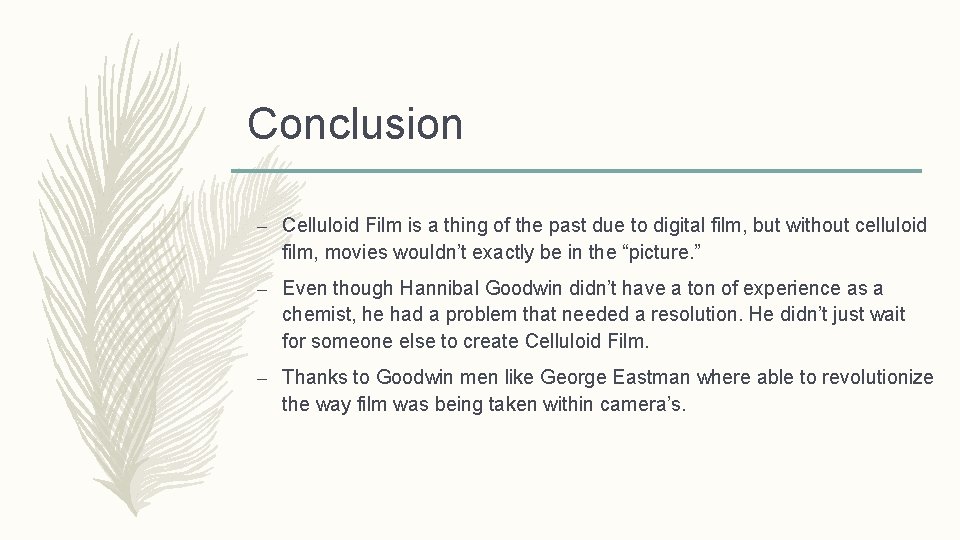
How it Revolutionized Photography – The invention of celluloid film has ignited how film photography is being produced. It has made a revolutionary change by flexible film taking place in glass slides, which makes it more durable. – Therefore Companies like George Eastman's could use this flexible technology to advance to usage of motion pictures. – Celluloid had many uses past the great movie screen, such as jewelry, dolls, buttons and hair accessories for cheaper prices. This drastically changed the manufacturing game.
Conclusion – Celluloid Film is a thing of the past due to digital film, but without celluloid film, movies wouldn’t exactly be in the “picture. ” – Even though Hannibal Goodwin didn’t have a ton of experience as a chemist, he had a problem that needed a resolution. He didn’t just wait for someone else to create Celluloid Film. – Thanks to Goodwin men like George Eastman where able to revolutionize the way film was being taken within camera’s.
Work Cited – http: //www. nj. com/business/index. ssf/2013/12/made_in_jersey_flexible_film_. html#incart_river_default#incart_hbx#incart_best-of – http: //query. nytimes. com/gst/abstract. html? res=990 DE 0 D 9173 DE 633 A 25754 C 2 A 9659 C 946596 D 6 CF&lega cy=true – http: //www. pbs. org/wgbh/amex/eastman/timeline/index_2. html – http: //www. thefreedictionary. com/Celluloid+film – http: //www. historiccamera. com/cgibin/librarium 2/pm. cgi? action=app_display&app=datasheet&app_id=2151 – http: //blog. nationalmediamuseum. org. uk/a-z-photography-collection-c-is-for-celluloid/ – http: //www. biography. com/people/george-eastman-9283428 – http: //www. juliantrubin. com/bigten/eastmancamera. html – http: //www. newworldencyclopedia. org/entry/Celluloid
- Slides: 15