
Cellular Transportation Respiration Passive Transport A cell membrane
Cellular Transportation & Respiration
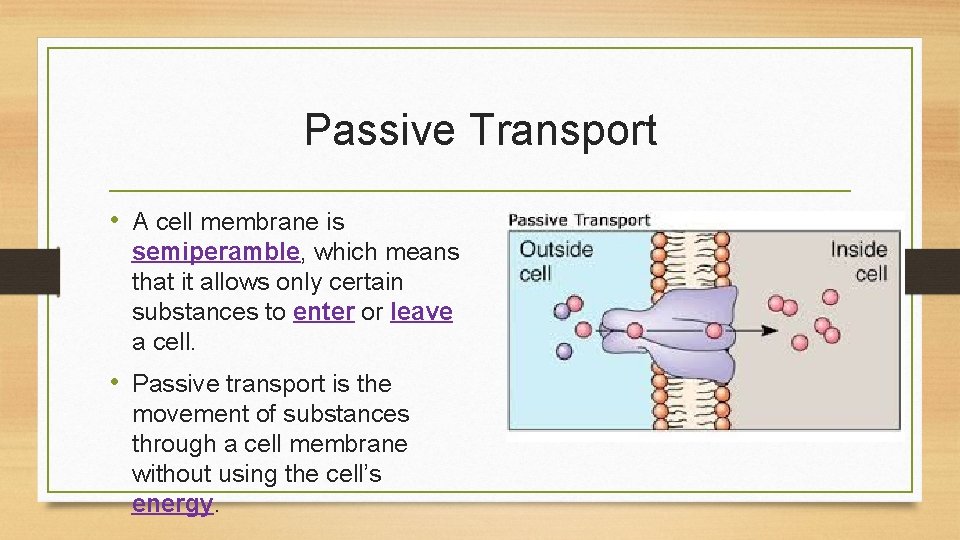
Passive Transport • A cell membrane is semiperamble, which means that it allows only certain substances to enter or leave a cell. • Passive transport is the movement of substances through a cell membrane without using the cell’s energy.
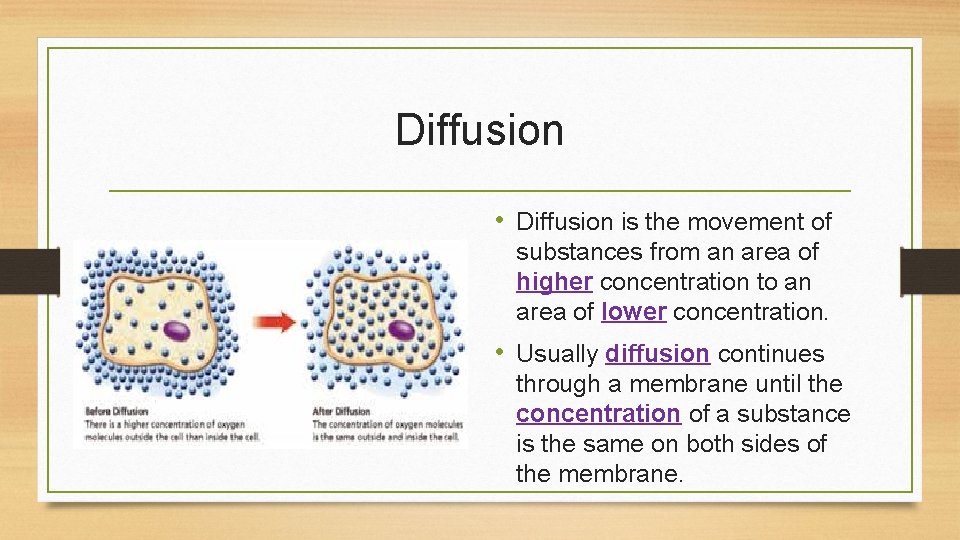
Diffusion • Diffusion is the movement of substances from an area of higher concentration to an area of lower concentration. • Usually diffusion continues through a membrane until the concentration of a substance is the same on both sides of the membrane.
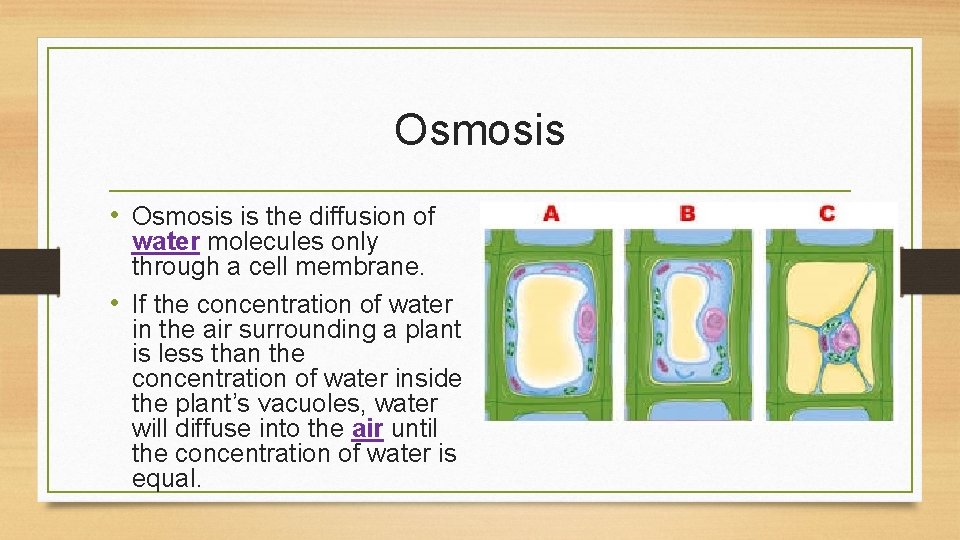
Osmosis • Osmosis is the diffusion of water molecules only through a cell membrane. • If the concentration of water in the air surrounding a plant is less than the concentration of water inside the plant’s vacuoles, water will diffuse into the air until the concentration of water is equal.
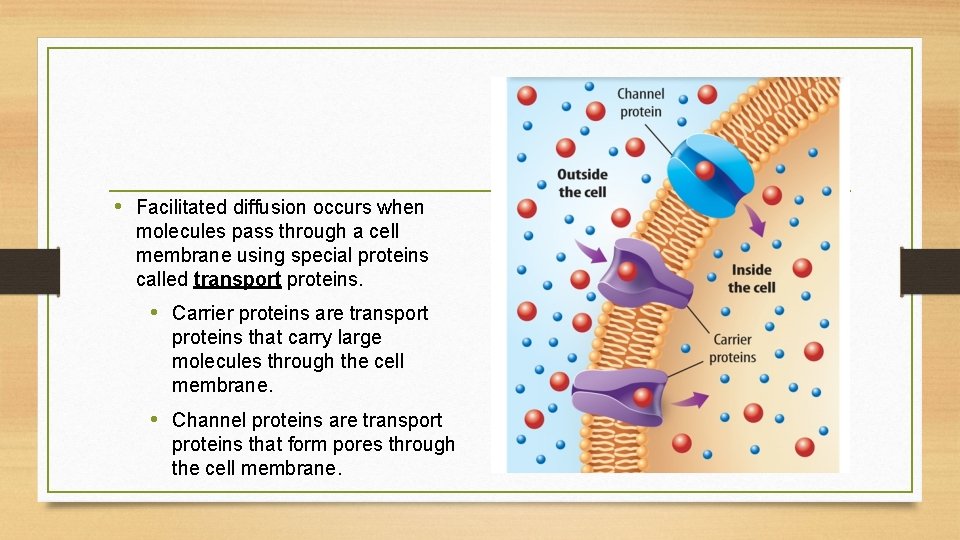
• Facilitated diffusion occurs when molecules pass through a cell membrane using special proteins called transport proteins. • Carrier proteins are transport proteins that carry large molecules through the cell membrane. • Channel proteins are transport proteins that form pores through the cell membrane.
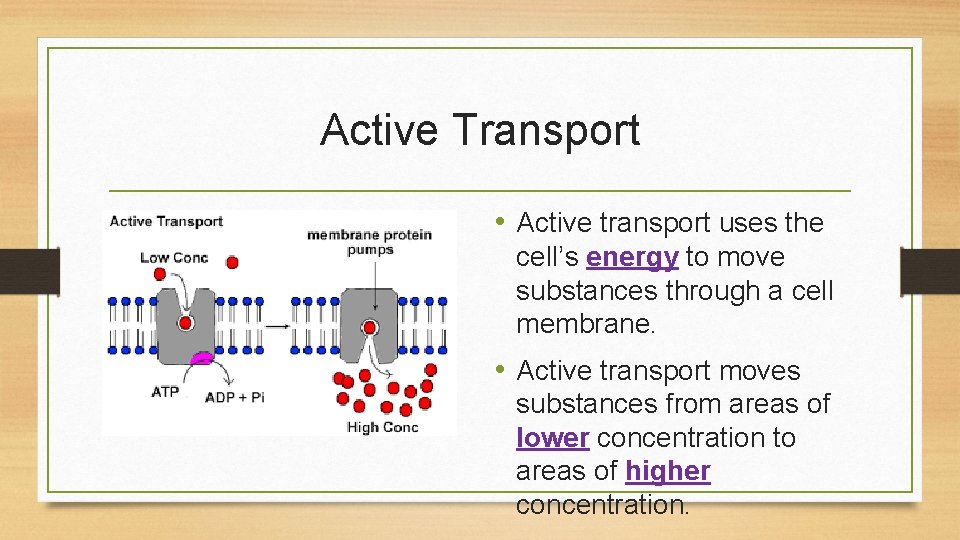
Active Transport • Active transport uses the cell’s energy to move substances through a cell membrane. • Active transport moves substances from areas of lower concentration to areas of higher concentration.
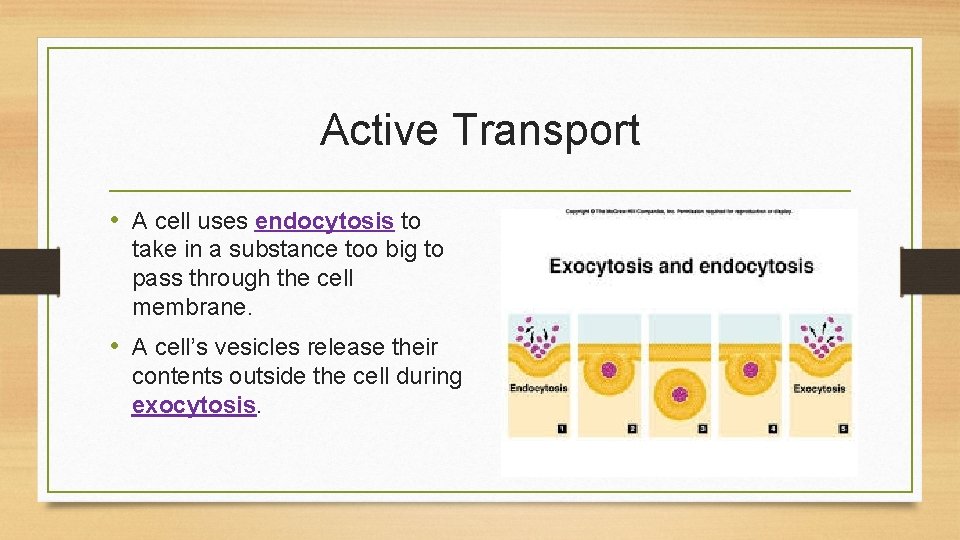
Active Transport • A cell uses endocytosis to take in a substance too big to pass through the cell membrane. • A cell’s vesicles release their contents outside the cell during exocytosis.
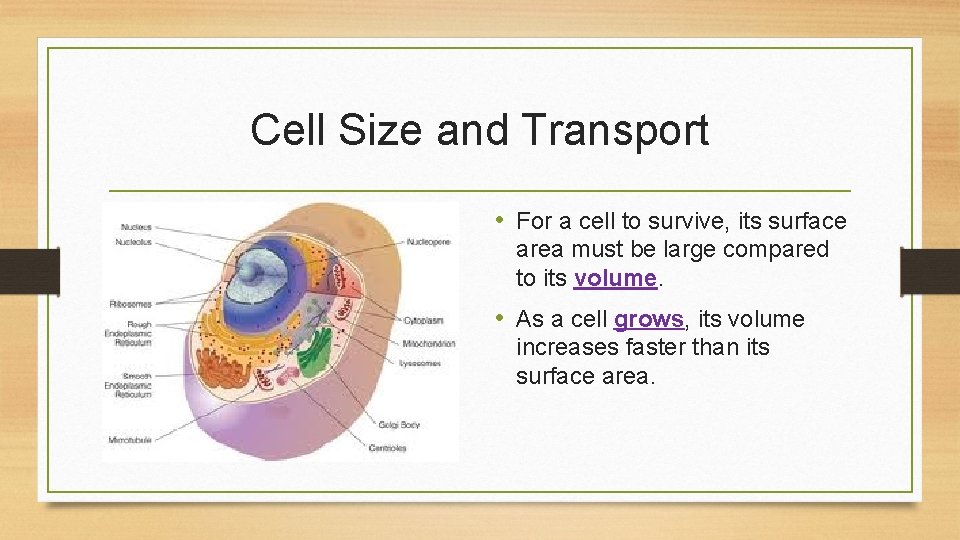
Cell Size and Transport • For a cell to survive, its surface area must be large compared to its volume. • As a cell grows, its volume increases faster than its surface area.
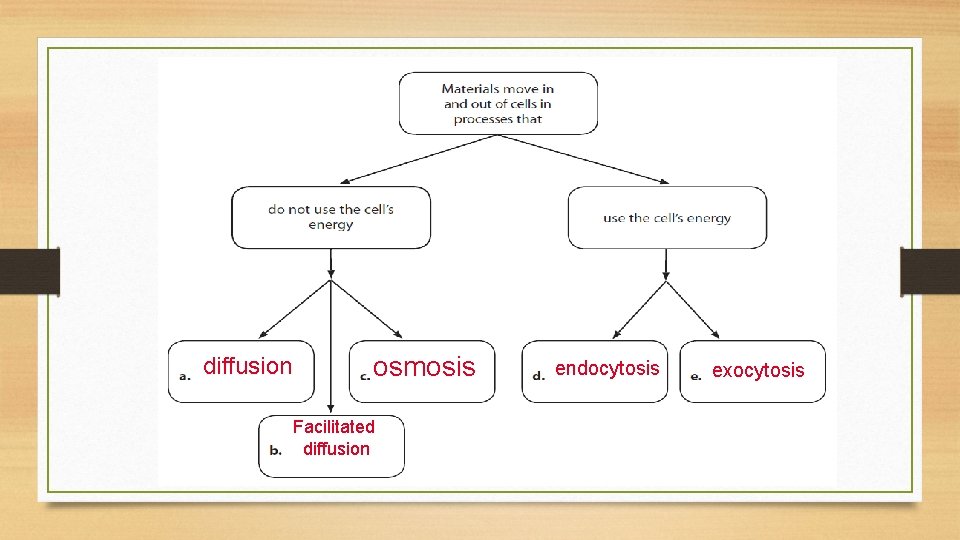
diffusion osmosis Facilitated diffusion endocytosis exocytosis
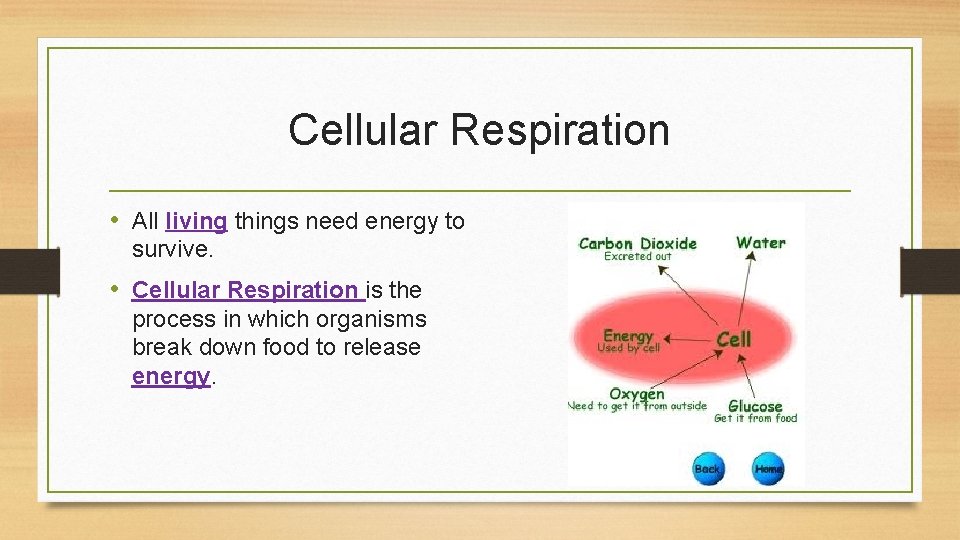
Cellular Respiration • All living things need energy to survive. • Cellular Respiration is the process in which organisms break down food to release energy.
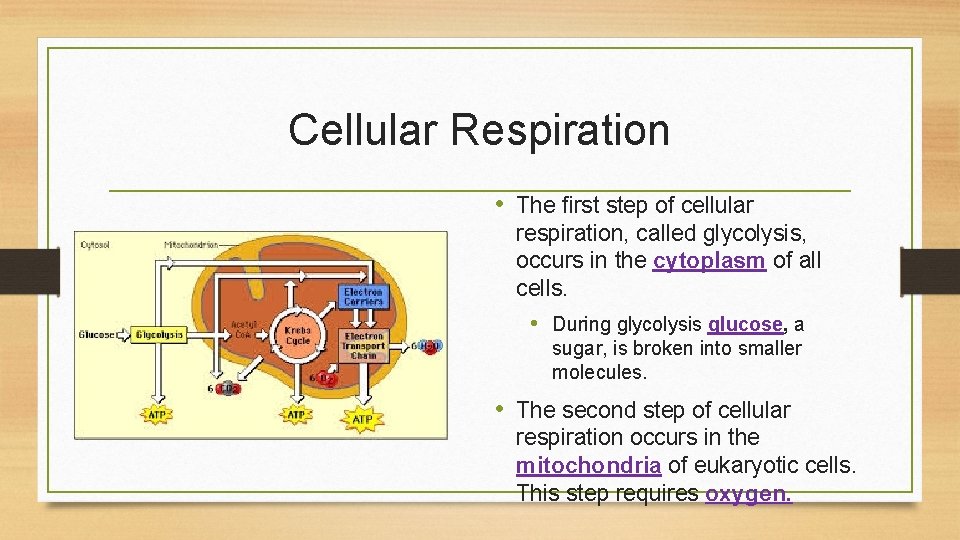
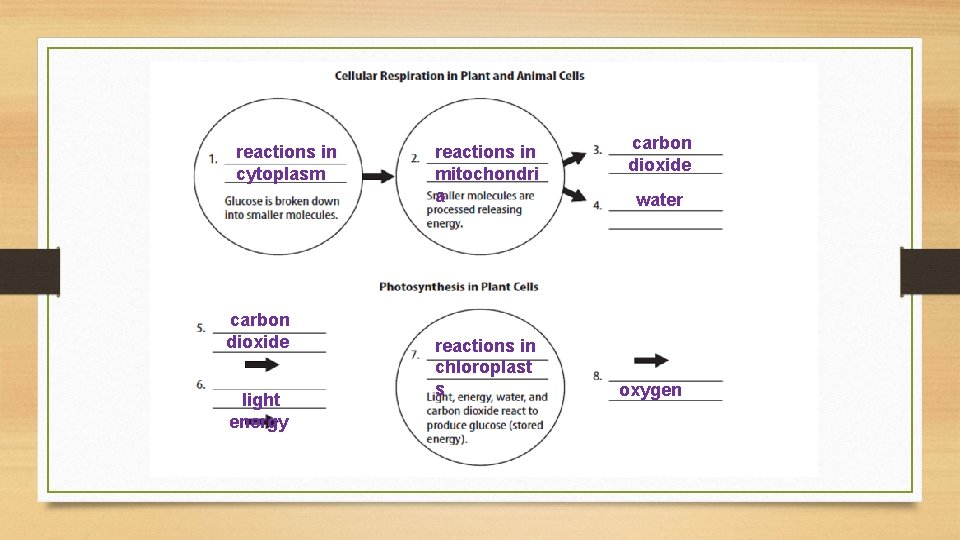
Cellular Respiration • The first step of cellular respiration, called glycolysis, occurs in the cytoplasm of all cells. • During glycolysis glucose, a sugar, is broken into smaller molecules. • The second step of cellular respiration occurs in the mitochondria of eukaryotic cells. This step requires oxygen.
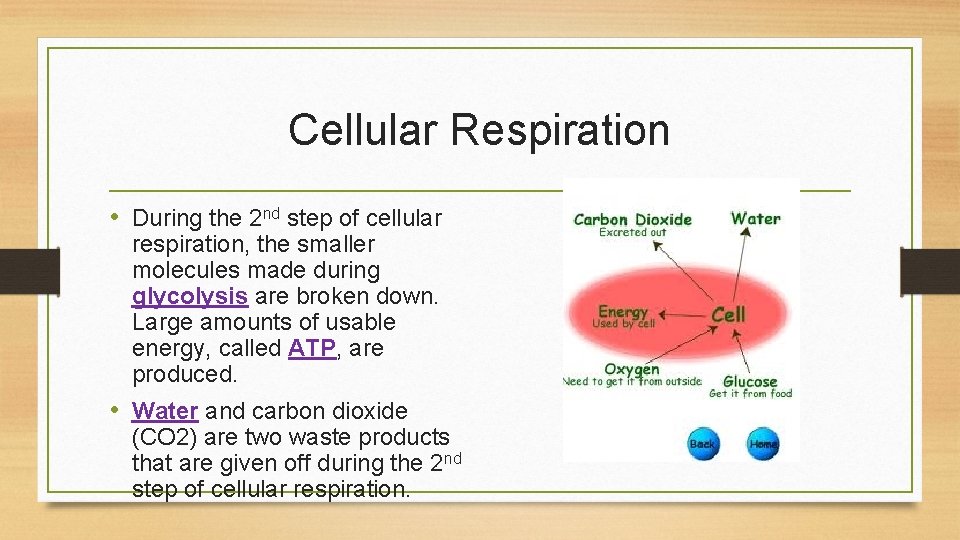
Cellular Respiration • During the 2 nd step of cellular respiration, the smaller molecules made during glycolysis are broken down. Large amounts of usable energy, called ATP, are produced. • Water and carbon dioxide (CO 2) are two waste products that are given off during the 2 nd step of cellular respiration.
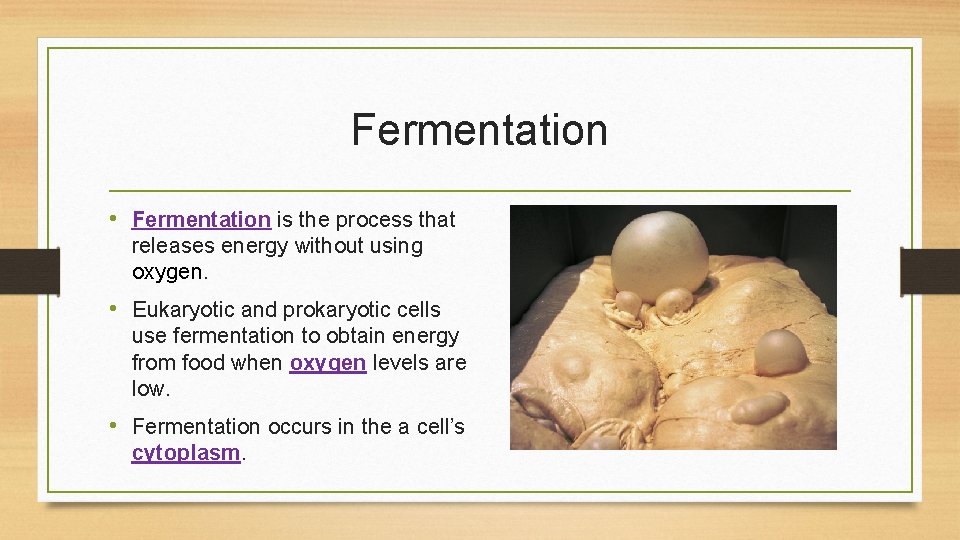
Fermentation • Fermentation is the process that releases energy without using oxygen. • Eukaryotic and prokaryotic cells use fermentation to obtain energy from food when oxygen levels are low. • Fermentation occurs in the a cell’s cytoplasm.
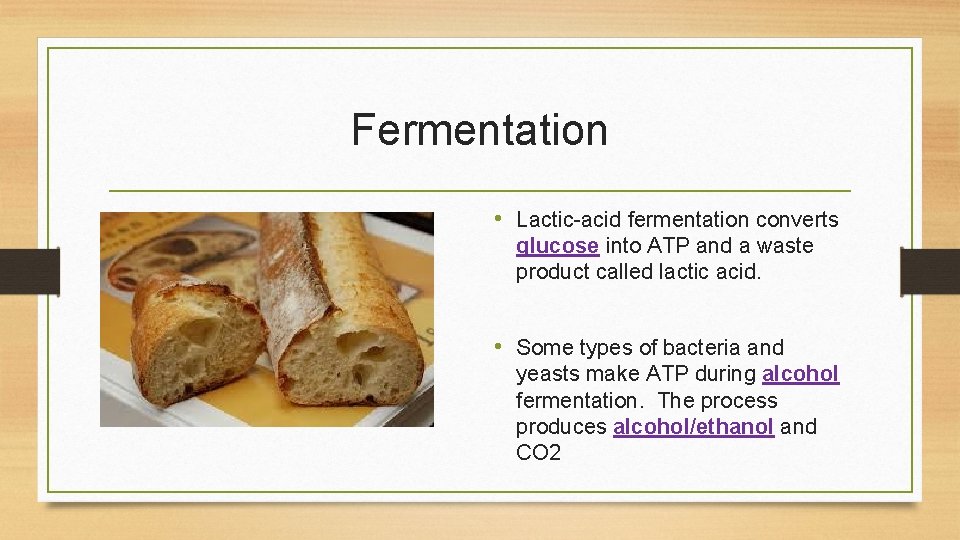
Fermentation • Lactic-acid fermentation converts glucose into ATP and a waste product called lactic acid. • Some types of bacteria and yeasts make ATP during alcohol fermentation. The process produces alcohol/ethanol and CO 2
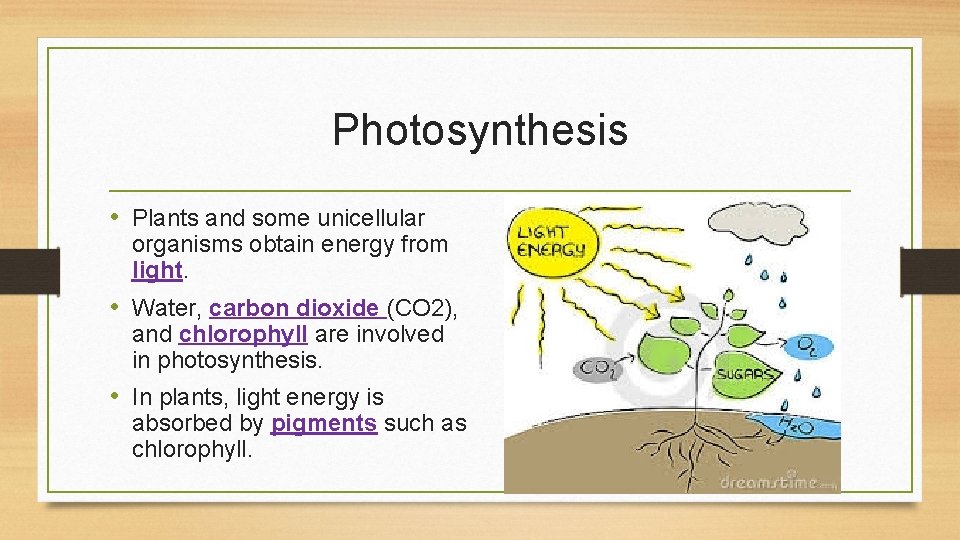
Photosynthesis • Plants and some unicellular organisms obtain energy from light. • Water, carbon dioxide (CO 2), and chlorophyll are involved in photosynthesis. • In plants, light energy is absorbed by pigments such as chlorophyll.
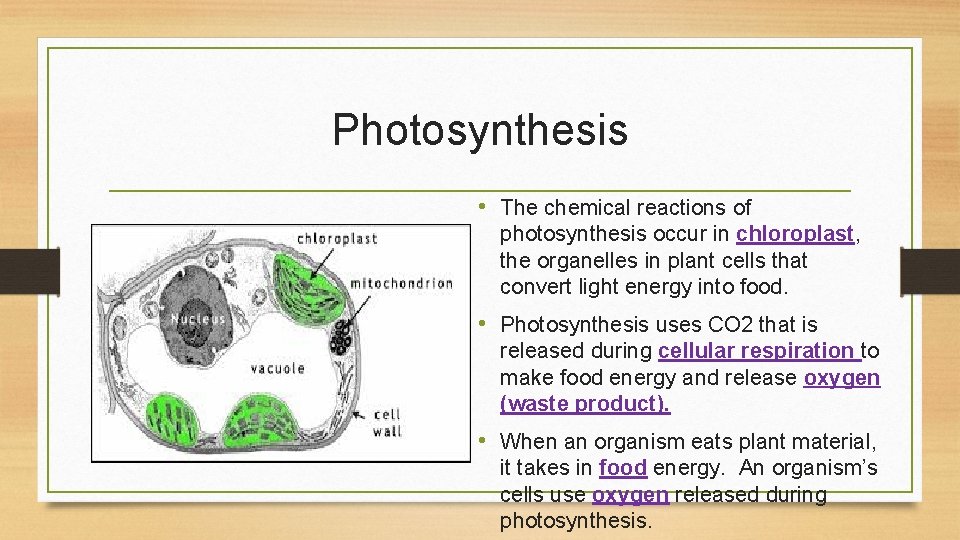
Photosynthesis • The chemical reactions of photosynthesis occur in chloroplast, the organelles in plant cells that convert light energy into food. • Photosynthesis uses CO 2 that is released during cellular respiration to make food energy and release oxygen (waste product). • When an organism eats plant material, it takes in food energy. An organism’s cells use oxygen released during photosynthesis.
reactions in cytoplasm carbon dioxide light energy reactions in mitochondri a reactions in chloroplast s carbon dioxide water oxygen
- Slides: 17