
Cellular Transport Types of Cellular Transport Passive Transport

- Slides: 16
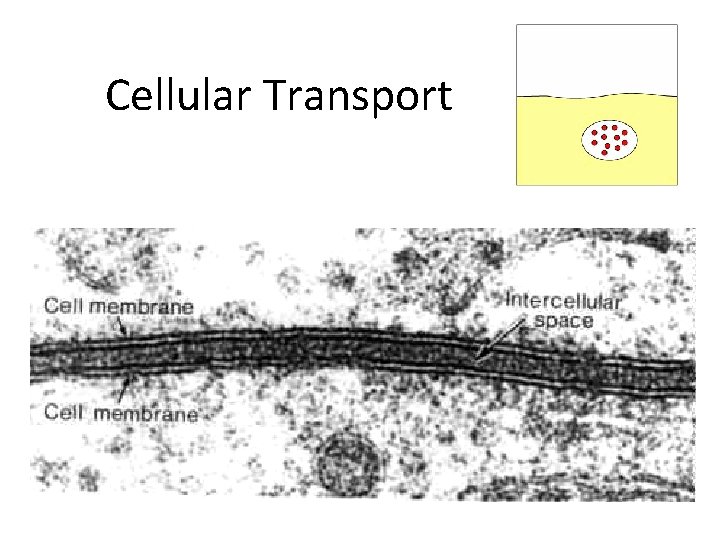
Cellular Transport
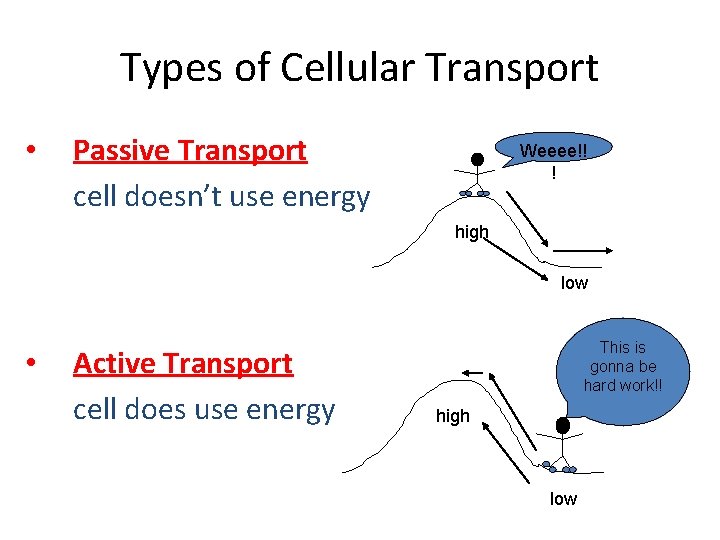
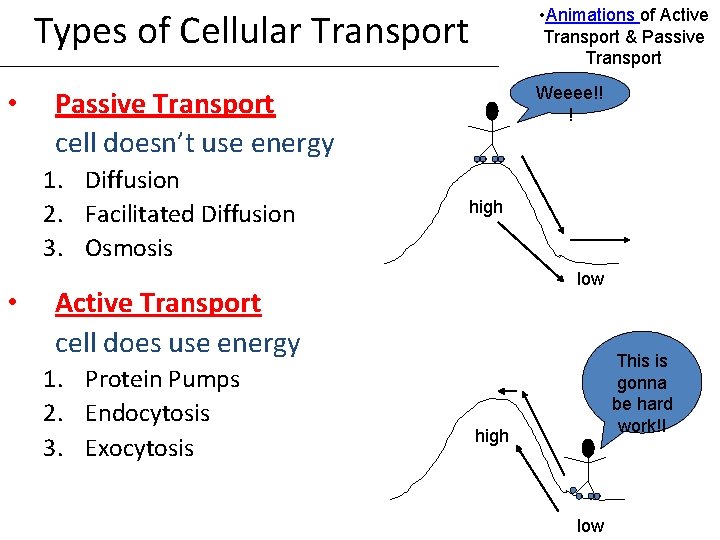
Types of Cellular Transport • Passive Transport cell doesn’t use energy Weeee!! ! high low • Active Transport cell does use energy This is gonna be hard work!! high low
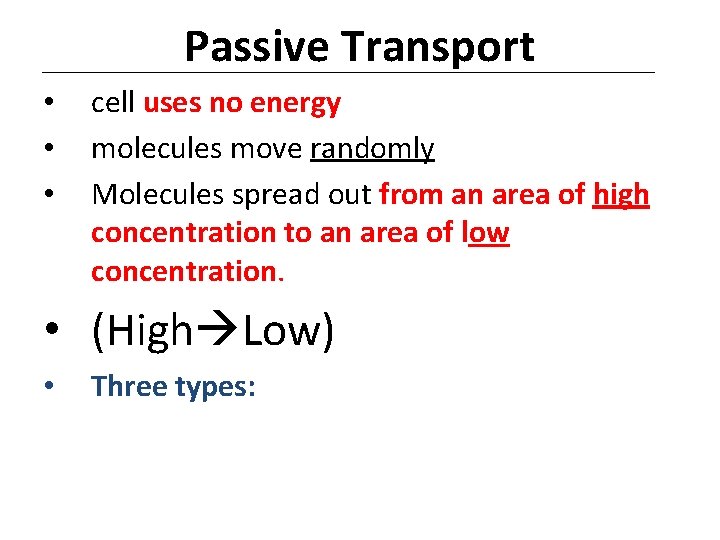
Passive Transport • • • cell uses no energy molecules move randomly Molecules spread out from an area of high concentration to an area of low concentration. • (High Low) • Three types:
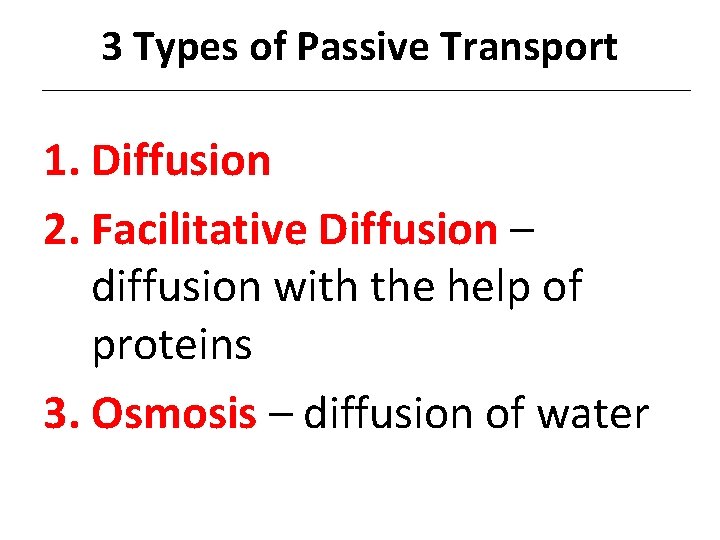
3 Types of Passive Transport 1. Diffusion 2. Facilitative Diffusion – diffusion with the help of proteins 3. Osmosis – diffusion of water
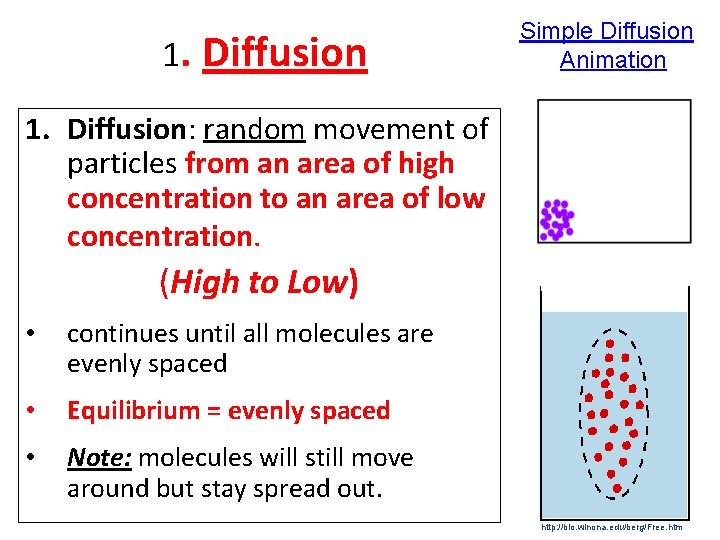
1. Diffusion Simple Diffusion Animation 1. Diffusion: random movement of particles from an area of high concentration to an area of low concentration. (High to Low) • continues until all molecules are evenly spaced • Equilibrium = evenly spaced • Note: molecules will still move around but stay spread out. http: //bio. winona. edu/berg/Free. htm
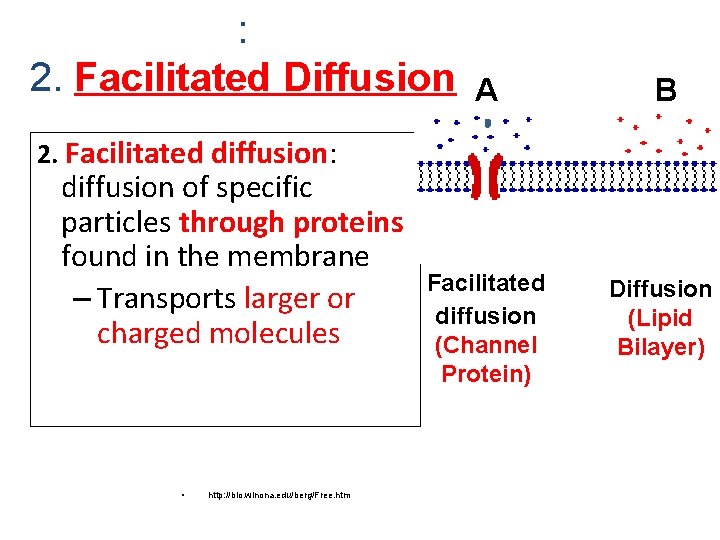
: 2. Facilitated Diffusion A B Facilitated diffusion (Channel Protein) Diffusion (Lipid Bilayer) 2. Facilitated diffusion: diffusion of specific particles through proteins found in the membrane – Transports larger or charged molecules • http: //bio. winona. edu/berg/Free. htm
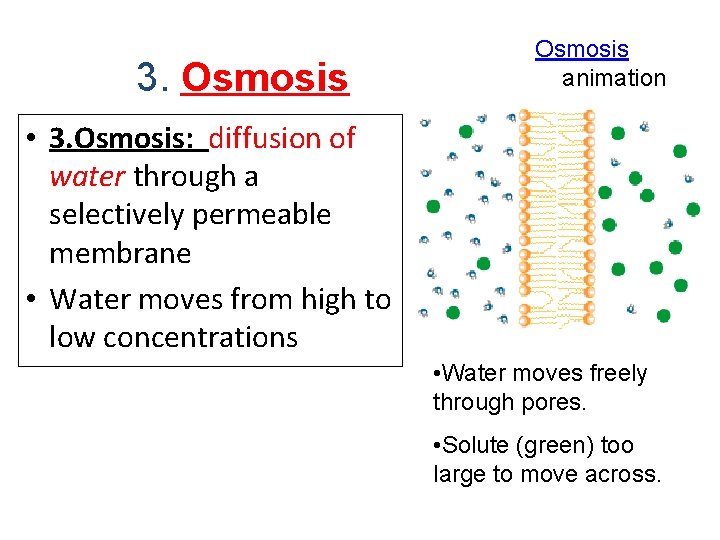
3. Osmosis animation • 3. Osmosis: diffusion of water through a selectively permeable membrane • Water moves from high to low concentrations • Water moves freely through pores. • Solute (green) too large to move across.
Effects of Osmosis on Life • Water is called the "universal solvent" because it dissolves more substances than any other liquid. • This means that wherever water goes, either through the ground or through our bodies, it takes along valuable chemicals, minerals, and nutrients. • The substances that are dissolved are called solutes.
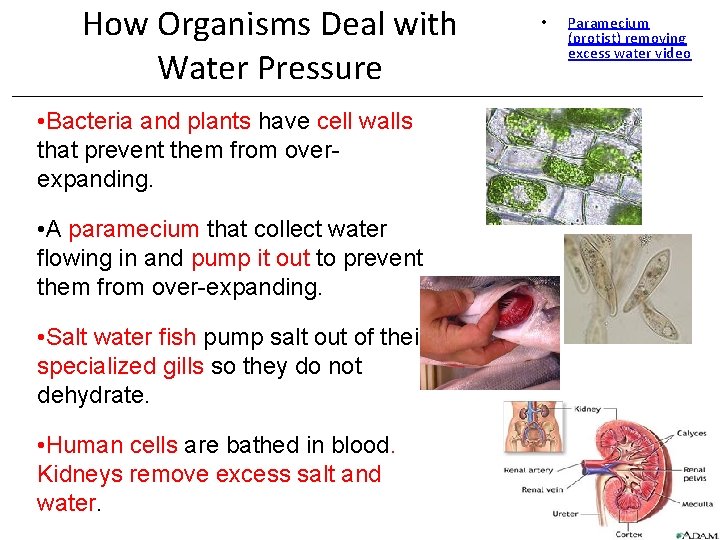
How Organisms Deal with Water Pressure • Bacteria and plants have cell walls that prevent them from overexpanding. • A paramecium that collect water flowing in and pump it out to prevent them from over-expanding. • Salt water fish pump salt out of their specialized gills so they do not dehydrate. • Human cells are bathed in blood. Kidneys remove excess salt and water. • Paramecium (protist) removing excess water video
Active Transport • cell uses energy • actively moves molecules to where they are needed • Movement from an area of low concentration to an area of high concentration • (Low High) • Three Types:
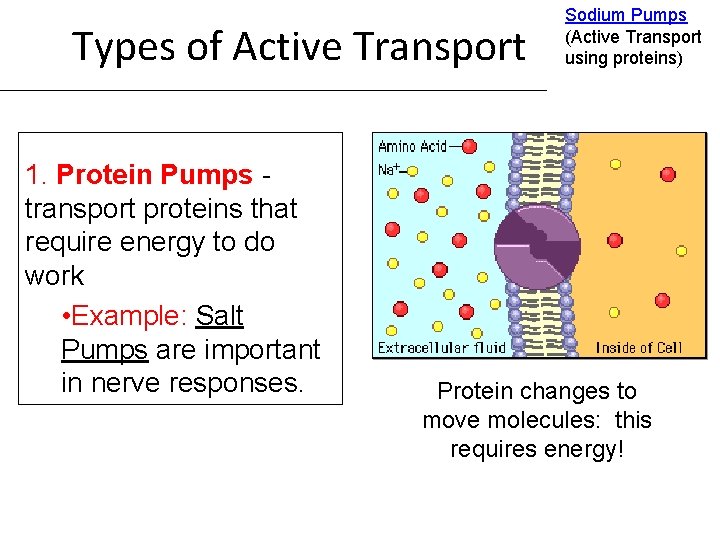
Types of Active Transport 1. Protein Pumps transport proteins that require energy to do work • Example: Salt Pumps are important in nerve responses. Sodium Pumps (Active Transport using proteins) Protein changes to move molecules: this requires energy!
• What happens when the material that a cell needs to move into or out of the cell is too big to fit through the cell membrane or a protein?
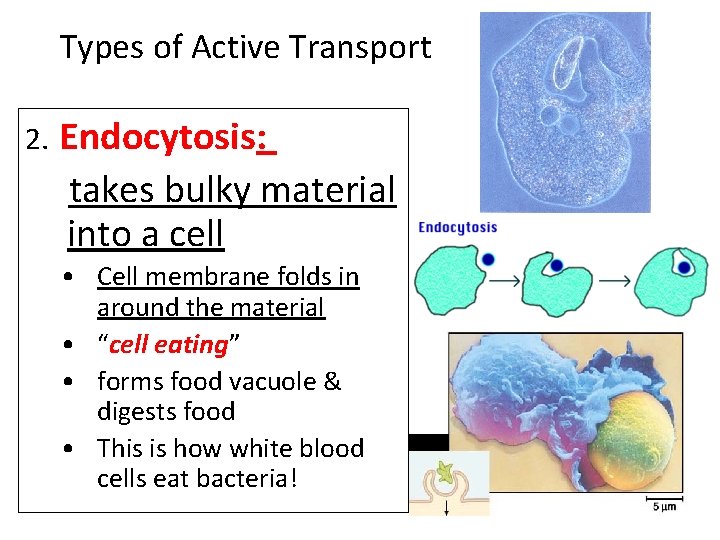
Types of Active Transport 2. Endocytosis: takes bulky material into a cell • Cell membrane folds in around the material • “cell eating” • forms food vacuole & digests food • This is how white blood cells eat bacteria!
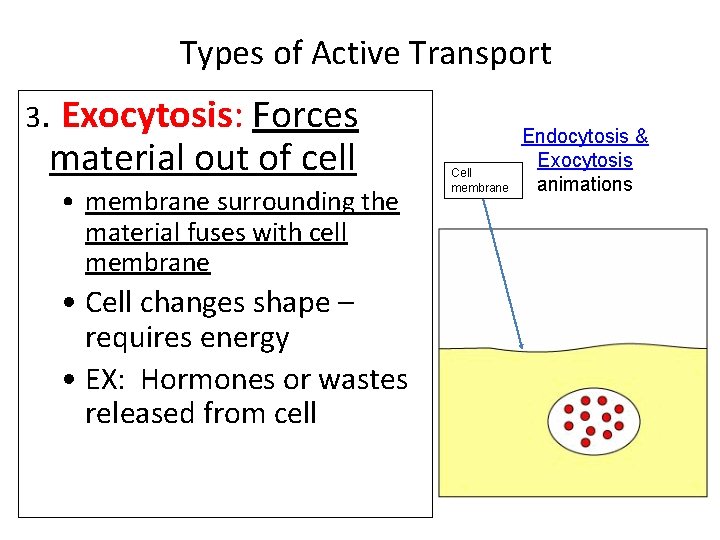
Types of Active Transport 3. Exocytosis: Forces material out of cell • membrane surrounding the material fuses with cell membrane • Cell changes shape – requires energy • EX: Hormones or wastes released from cell Cell membrane Endocytosis & Exocytosis animations
• Animations of Active Transport & Passive Transport Types of Cellular Transport • Passive Transport cell doesn’t use energy 1. Diffusion 2. Facilitated Diffusion 3. Osmosis • Weeee!! ! high low Active Transport cell does use energy 1. Protein Pumps 2. Endocytosis 3. Exocytosis This is gonna be hard work!! high low
This powerpoint was kindly donated to www. worldofteaching. com Modified by Robin O’Connor October 2010