
CELLULAR TRANSPORT PASSIVE AND ACTIVE TRANSPORT REVIEW Passive



- Slides: 28
CELLULAR TRANSPORT
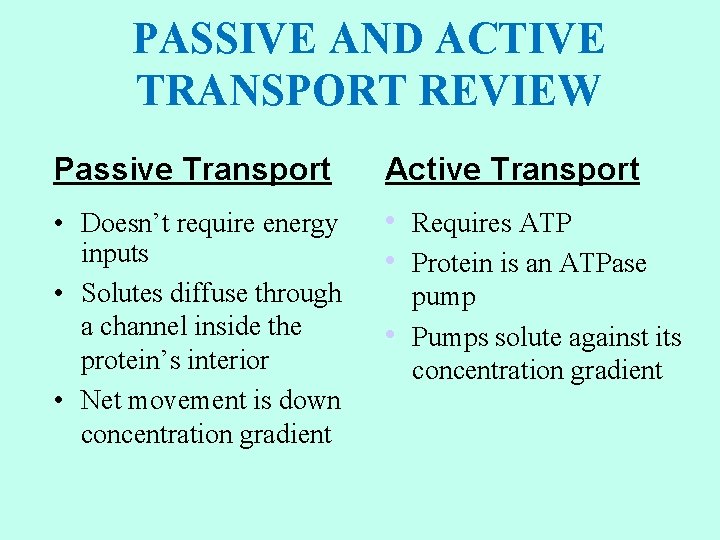
PASSIVE AND ACTIVE TRANSPORT REVIEW Passive Transport Active Transport • Doesn’t require energy inputs • Solutes diffuse through a channel inside the protein’s interior • Net movement is down concentration gradient • Requires ATP • Protein is an ATPase • pump Pumps solute against its concentration gradient
TONICITY • Tonicity is the measure of osmotic pressure of two solutions separated by a semipermeable membrane. • Solutions are composed of the solute and solvent.
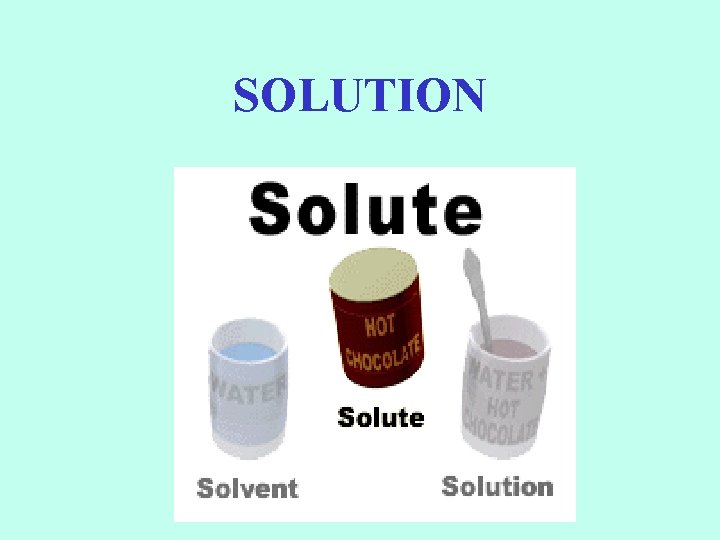
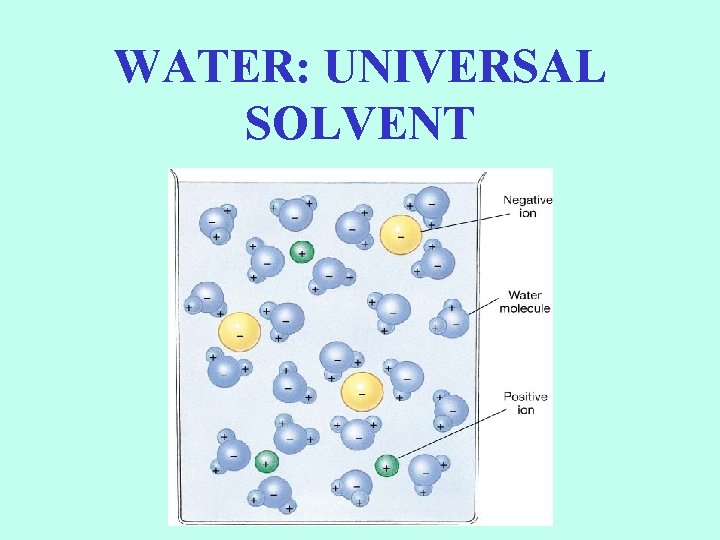
SOLUTION REVIEW • Solution: A mixture in which the molecules of one substance are evenly dispersed in another substance. Ex: sugar-water solution. • Solvent: The greater part; dissolves the other substance. Ex: water. • Solute: The substance being dissolved in the solvent. Ex: sugar. • Aqueous Solution: Water solutions. Water is the solvent in most solutions in the cell. For example, plasma, is the liquid part of the blood.
SOLUTION
WATER: UNIVERSAL SOLVENT
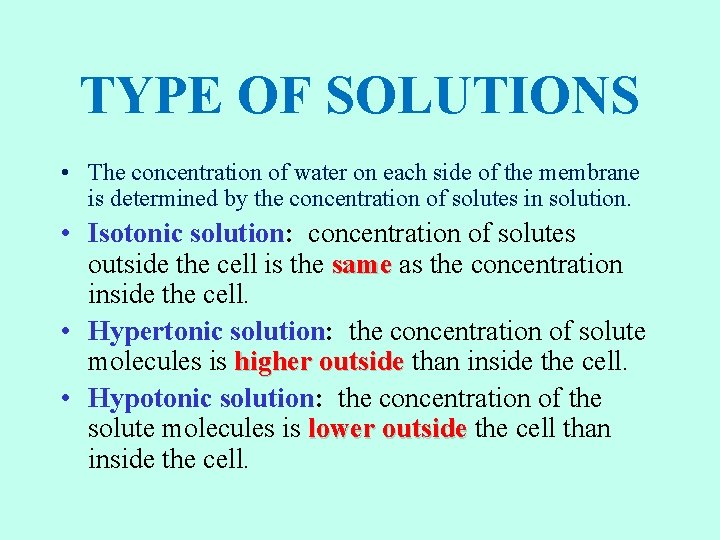
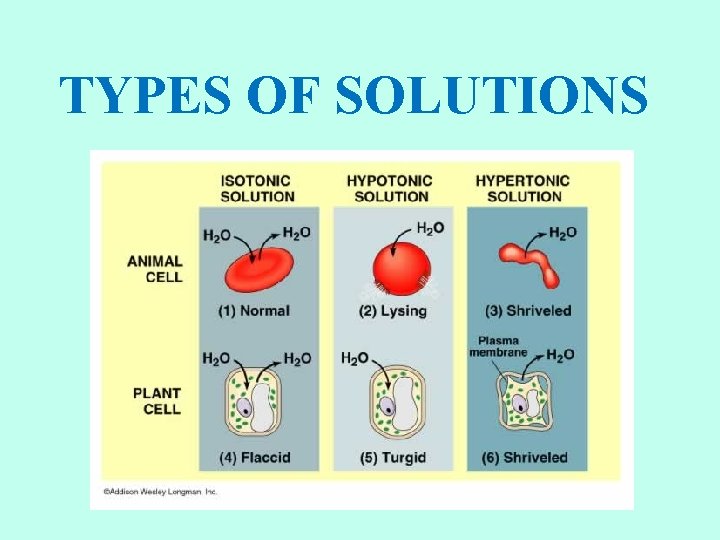
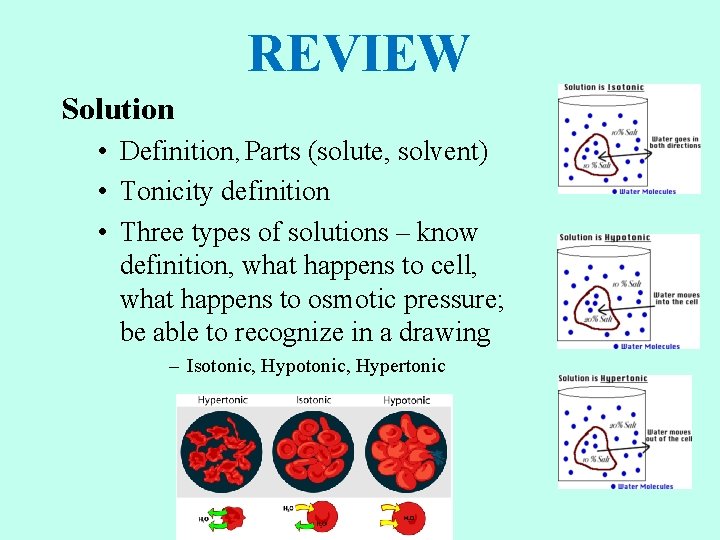
TYPE OF SOLUTIONS • The concentration of water on each side of the membrane is determined by the concentration of solutes in solution. • Isotonic solution: concentration of solutes outside the cell is the same as the concentration inside the cell. • Hypertonic solution: the concentration of solute molecules is higher outside than inside the cell. • Hypotonic solution: the concentration of the solute molecules is lower outside the cell than inside the cell.
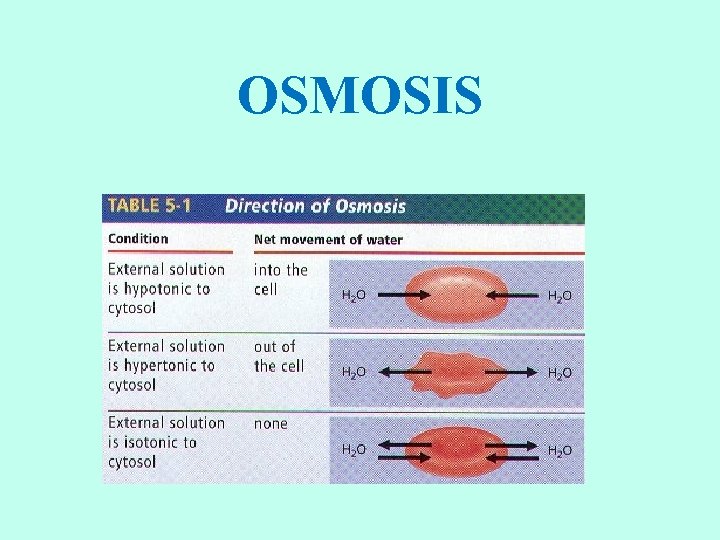
OSMOSIS
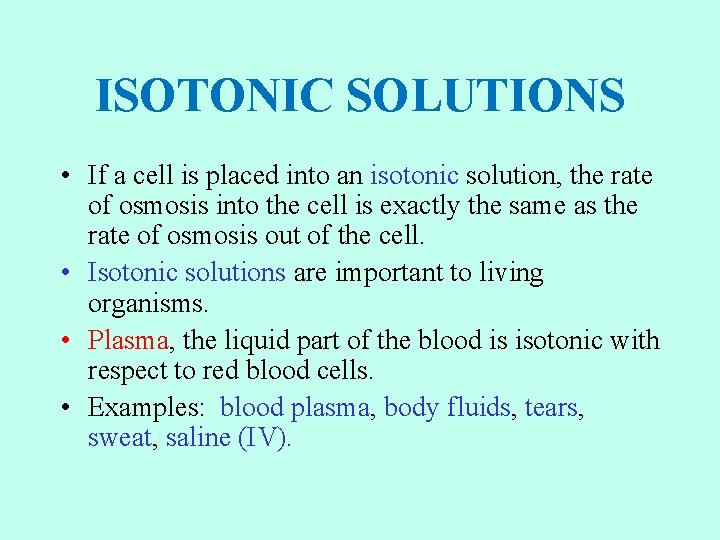
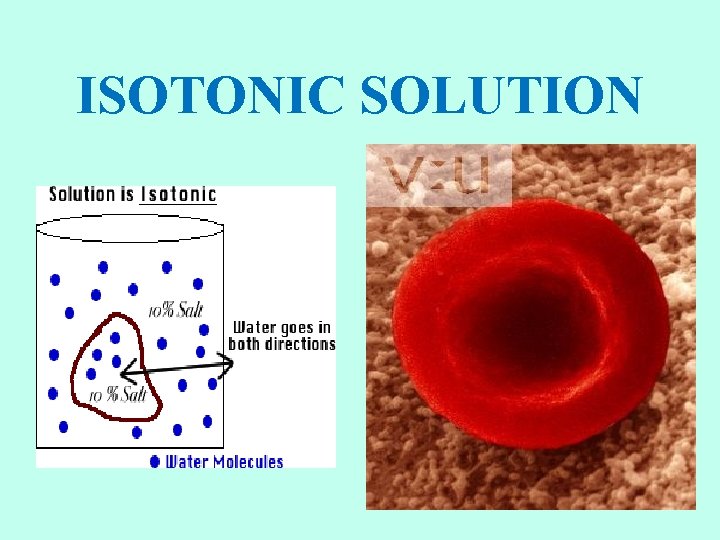
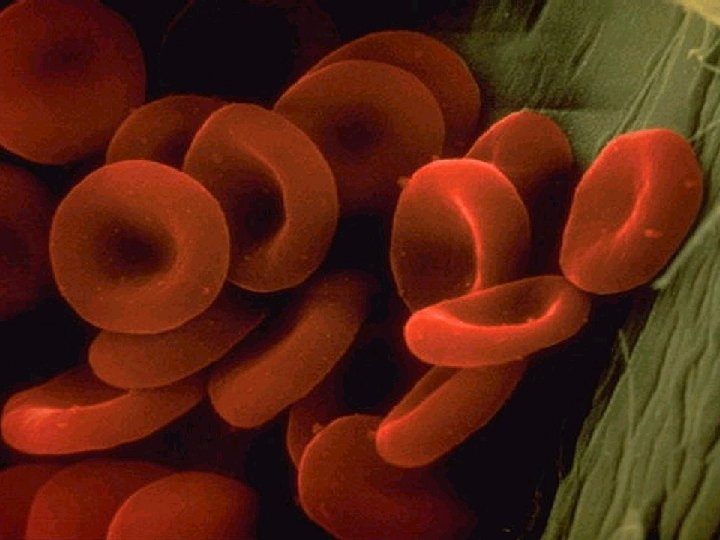
ISOTONIC SOLUTIONS • If a cell is placed into an isotonic solution, the rate of osmosis into the cell is exactly the same as the rate of osmosis out of the cell. • Isotonic solutions are important to living organisms. • Plasma, the liquid part of the blood is isotonic with respect to red blood cells. • Examples: blood plasma, body fluids, tears, sweat, saline (IV).
ISOTONIC SOLUTION
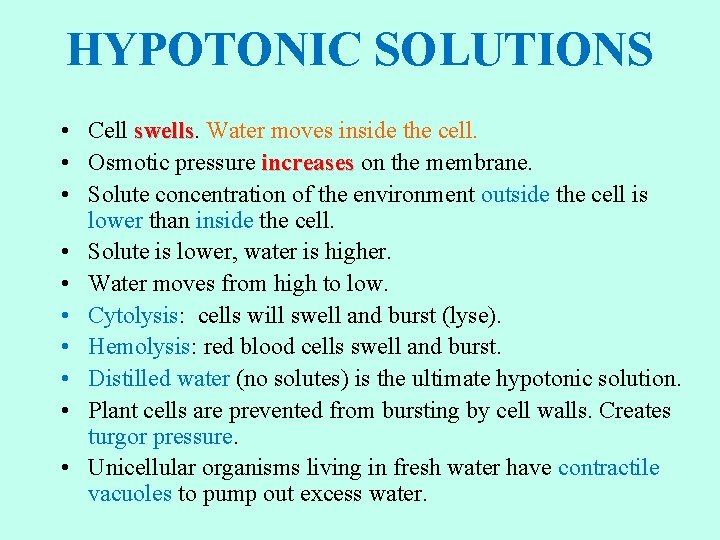
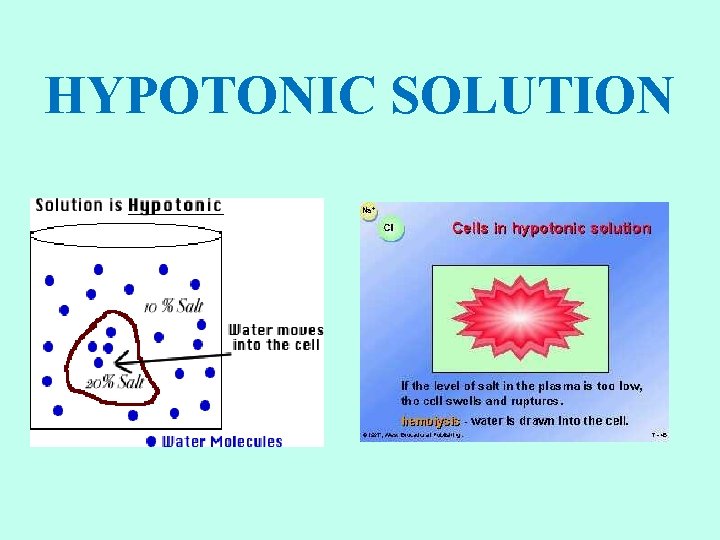
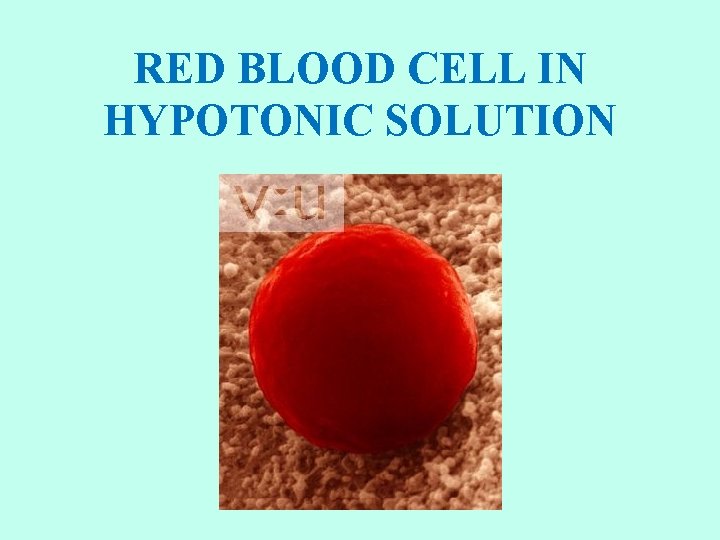
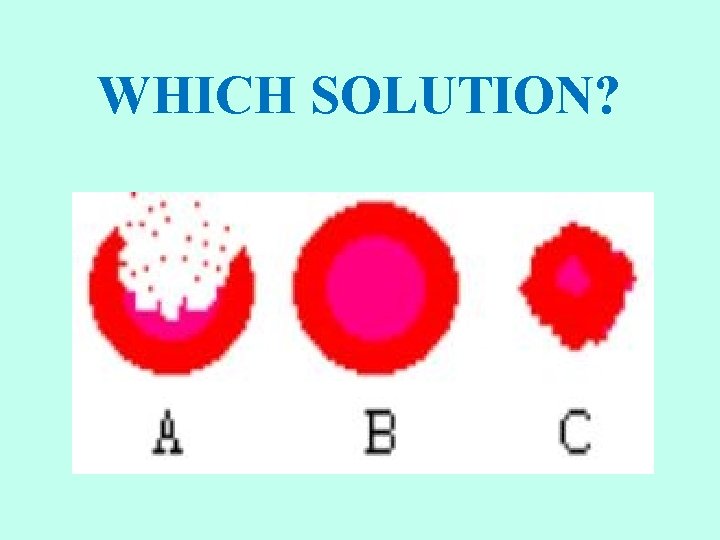
HYPOTONIC SOLUTIONS • Cell swells Water moves inside the cell. • Osmotic pressure increases on the membrane. • Solute concentration of the environment outside the cell is lower than inside the cell. • Solute is lower, water is higher. • Water moves from high to low. • Cytolysis: cells will swell and burst (lyse). • Hemolysis: red blood cells swell and burst. • Distilled water (no solutes) is the ultimate hypotonic solution. • Plant cells are prevented from bursting by cell walls. Creates turgor pressure. • Unicellular organisms living in fresh water have contractile vacuoles to pump out excess water.
HYPOTONIC SOLUTION
RED BLOOD CELL IN HYPOTONIC SOLUTION
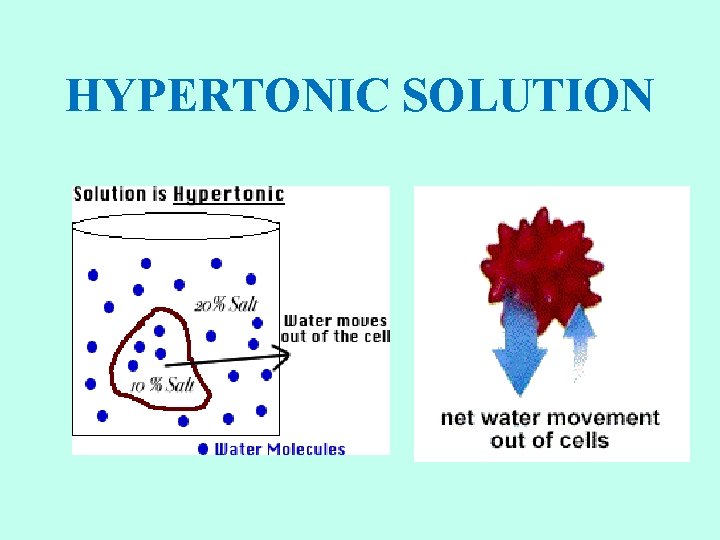
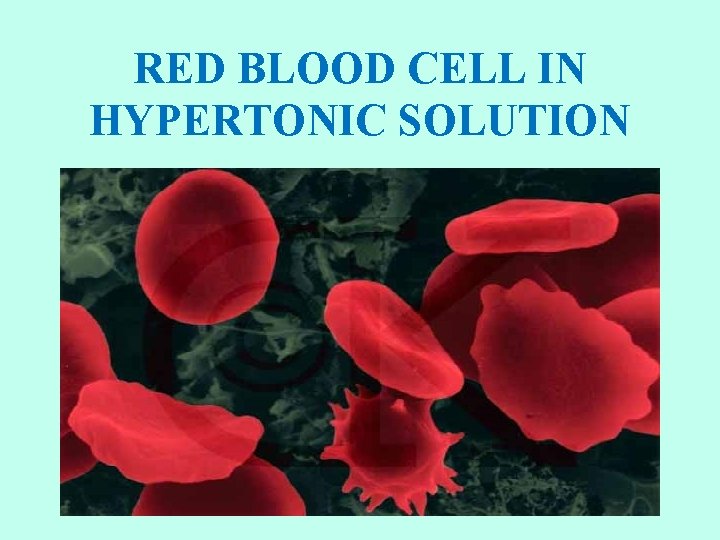
HYPERTONIC SOLUTIONS • Cell shrinks. Water moves out of the cell. • Osmotic pressure decreases on the membrane. • Solute concentration of the environment outside the cell is greater than inside cell. • Solute is higher, water is lower. • Water moves from high to low. • Plasmolysis: as a result, cells placed in hypertonic solutions shrivel and lose their shape. • Plant cells lose turgor pressure and wilt. • Humans should not drink salt water. It is hypertonic relative to our body tissue.
HYPERTONIC SOLUTION
RED BLOOD CELL IN HYPERTONIC SOLUTION
TYPES OF SOLUTIONS
WHICH SOLUTION?
WATCH • Tonicity • Osmosis and Tonicity
GET OUT YOUR PHONES
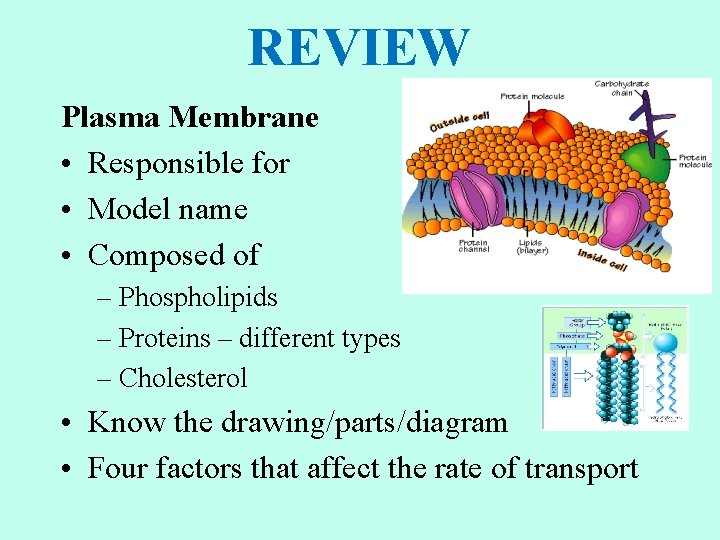
REVIEW Plasma Membrane • Responsible for • Model name • Composed of – Phospholipids – Proteins – different types – Cholesterol • Know the drawing/parts/diagram • Four factors that affect the rate of transport
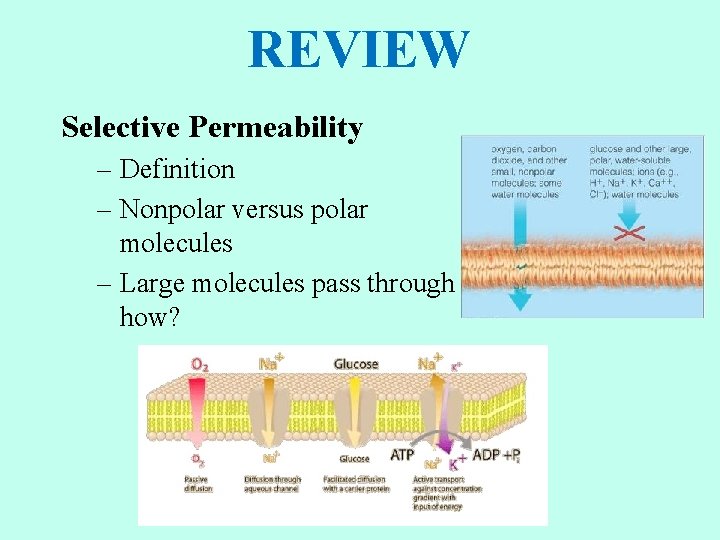
REVIEW Selective Permeability – Definition – Nonpolar versus polar molecules – Large molecules pass through how?
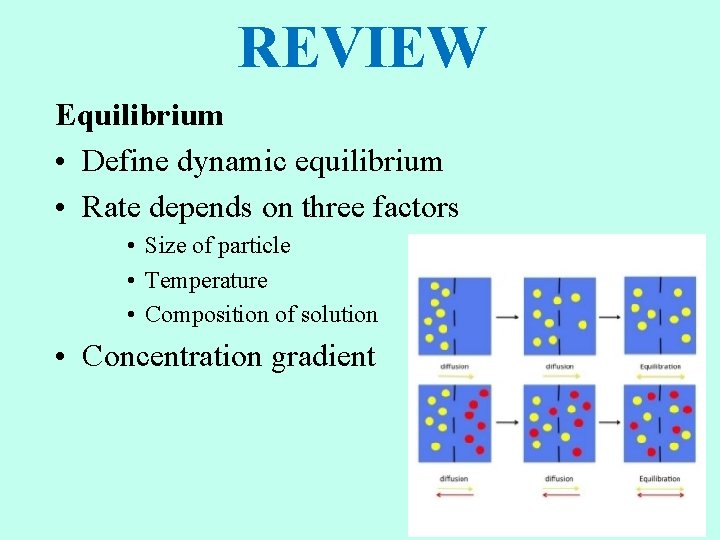
REVIEW Equilibrium • Define dynamic equilibrium • Rate depends on three factors • Size of particle • Temperature • Composition of solution • Concentration gradient
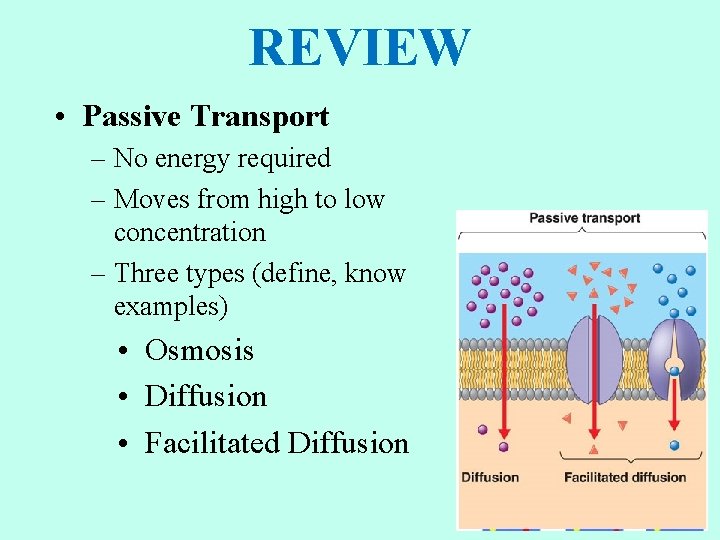
REVIEW • Passive Transport – No energy required – Moves from high to low concentration – Three types (define, know examples) • Osmosis • Diffusion • Facilitated Diffusion
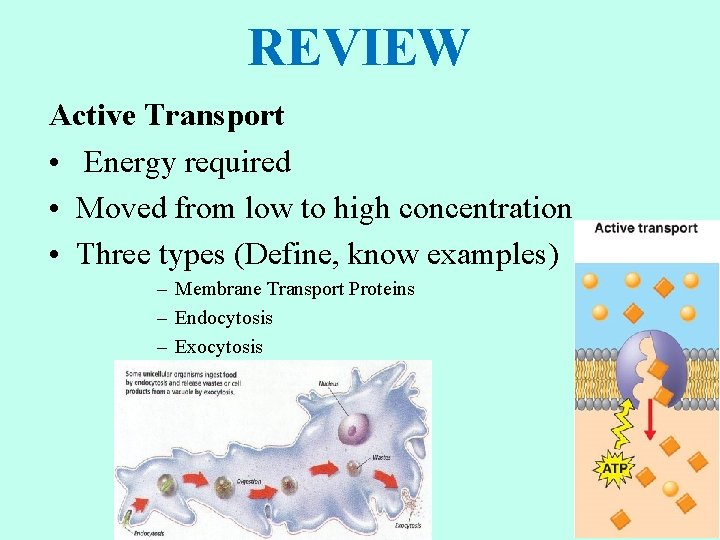
REVIEW Active Transport • Energy required • Moved from low to high concentration • Three types (Define, know examples) – Membrane Transport Proteins – Endocytosis – Exocytosis
REVIEW Solution • Definition, Parts (solute, solvent) • Tonicity definition • Three types of solutions – know definition, what happens to cell, what happens to osmotic pressure; be able to recognize in a drawing – Isotonic, Hypertonic
REVIEW • ** Practice Quizzes** • http: //www. sciencegeek. net/Biology/review /U 1 Membranes. htm • http: //edhsgreensea. net/Biology/taters/cell_ membrane_vocab_mc. htm • http: //edhsgreensea. net/Biology/taters/cell_ membrane_mc. htm