
CELLULAR TRANSPORT Molecules are in constant motion Diffusion
- Slides: 19
CELLULAR TRANSPORT
• Molecules are in constant motion • Diffusion - Movement of particles from an area of high concentration to an area of low concentration
• Diffusion is a slow process • Diffusion is used by cells to transport materials into and out of cells • ex. Oxygen diffuses into the capillaries (small blood vessels) in the lungs
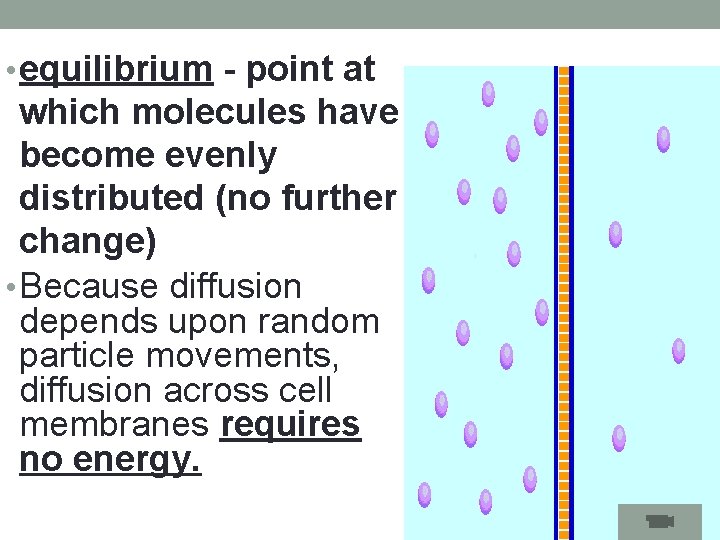
• equilibrium - point at which molecules have become evenly distributed (no further change) • Because diffusion depends upon random particle movements, diffusion across cell membranes requires no energy.
• Passive transport - Cell transport that does not require energy • Materials move from high conc. to low conc.
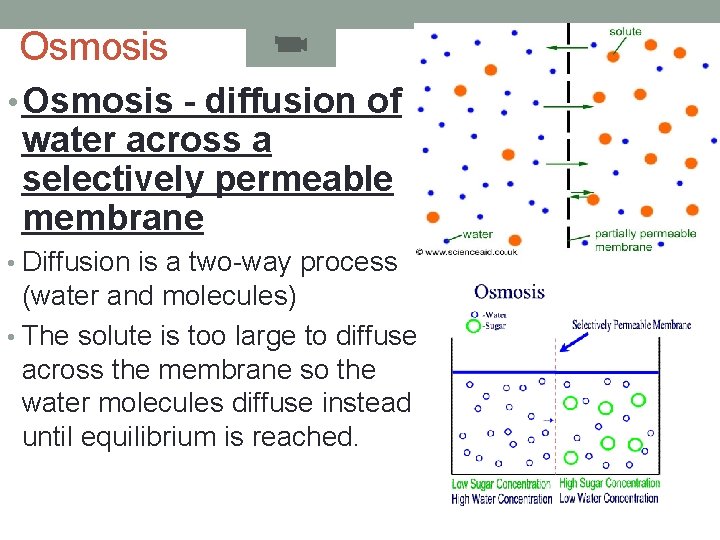
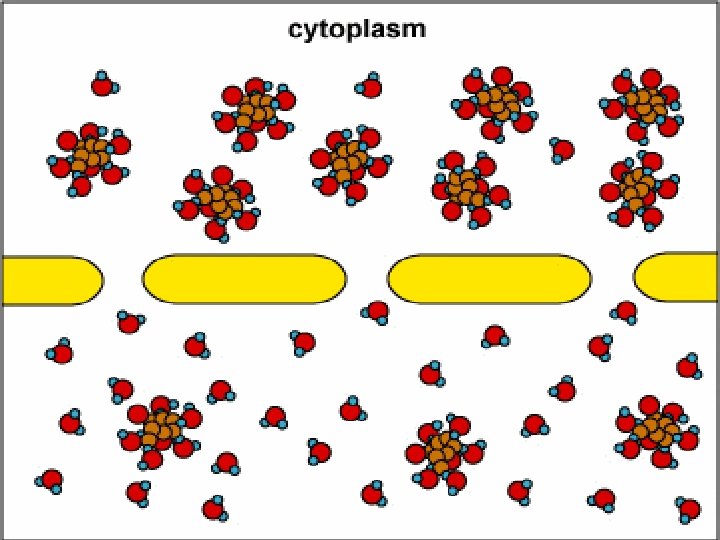
Osmosis • Osmosis - diffusion of water across a selectively permeable membrane • Diffusion is a two-way process (water and molecules) • The solute is too large to diffuse across the membrane so the water molecules diffuse instead until equilibrium is reached.
Concentration Gradient • Unequal distribution of particles • a factor that controls osmosis • Molecules will move from high conc. to low
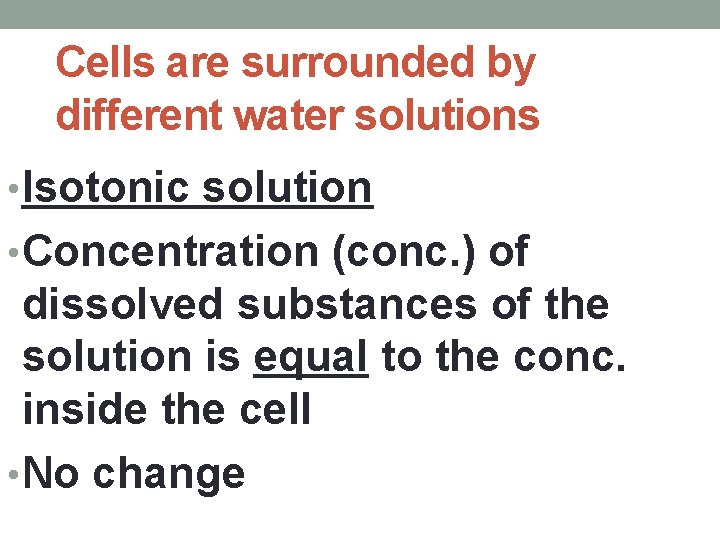
Cells are surrounded by different water solutions • Isotonic solution • Concentration (conc. ) of dissolved substances of the solution is equal to the conc. inside the cell • No change
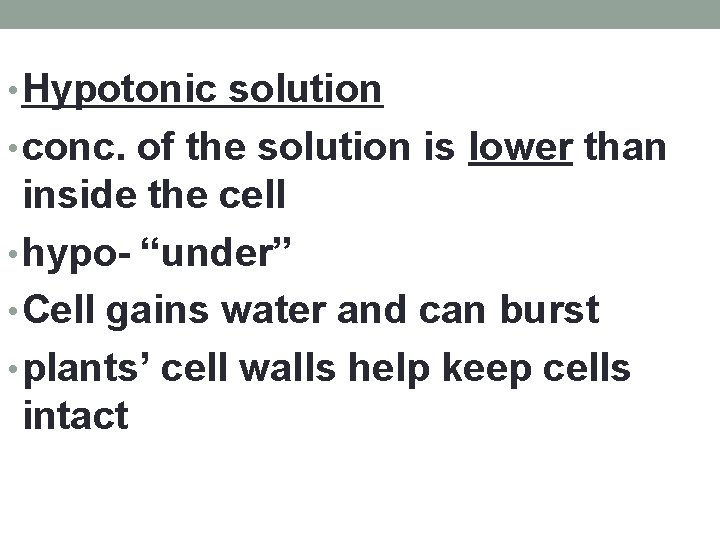
• Hypotonic solution • conc. of the solution is lower than inside the cell • hypo- “under” • Cell gains water and can burst • plants’ cell walls help keep cells intact
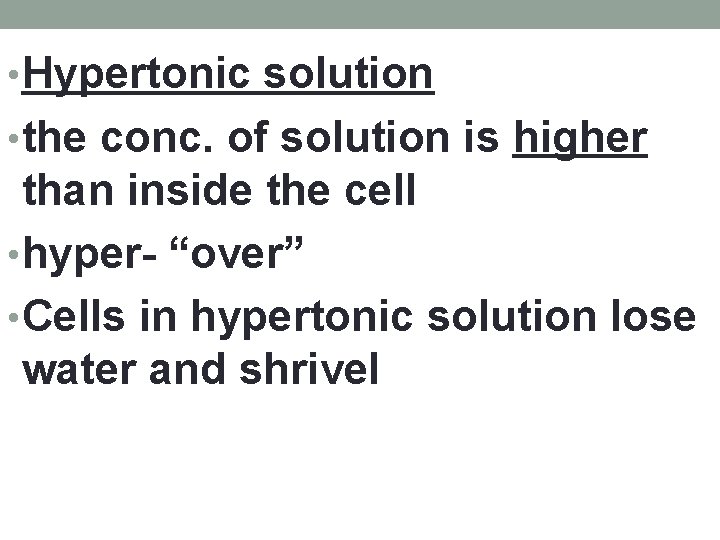
• Hypertonic solution • the conc. of solution is higher than inside the cell • hyper- “over” • Cells in hypertonic solution lose water and shrivel
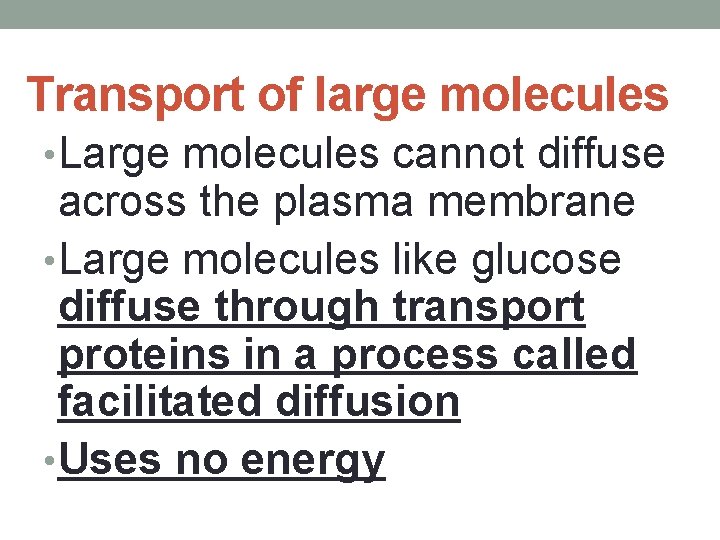
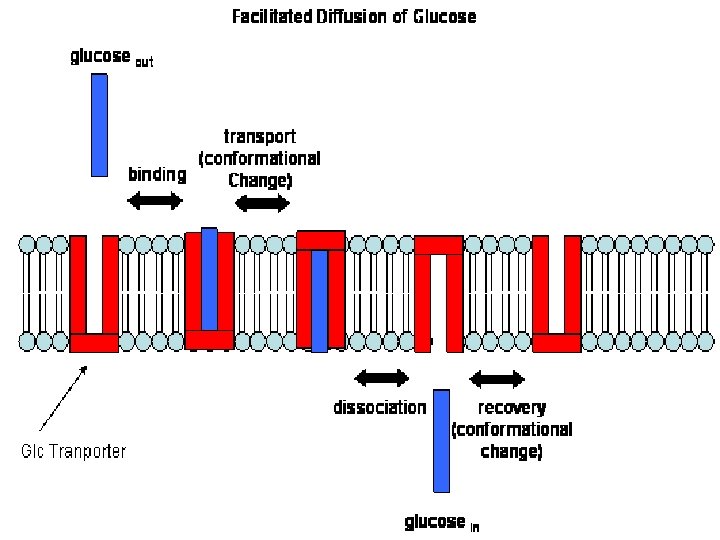
Transport of large molecules • Large molecules cannot diffuse across the plasma membrane • Large molecules like glucose diffuse through transport proteins in a process called facilitated diffusion • Uses no energy
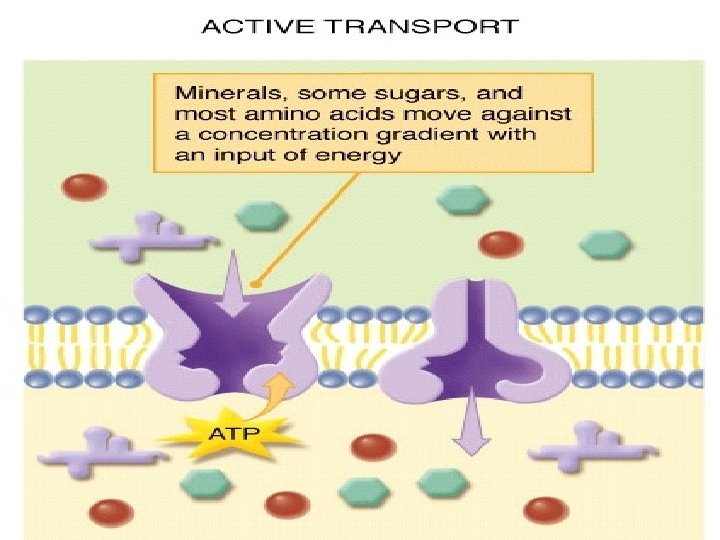
Active Transport • Cells must sometimes move materials against a concentration gradient. • Active transport is the movement of particles from areas of low concentration to areas of high. • This requires the cell to use energy. • The active transport of small molecules is done by protein “pumps” which are imbedded in the membrane.
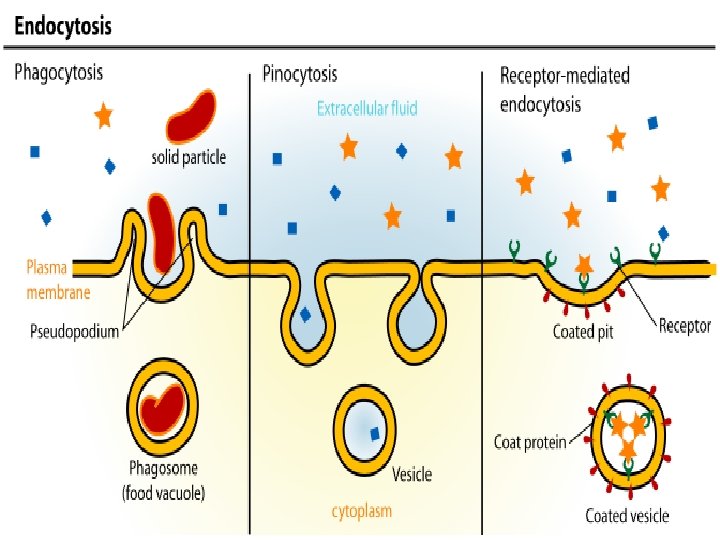
Endocytosis • Active transport of large molecules INTO the cell. • The membrane folds around the molecule and forms a vacuole within the cell.
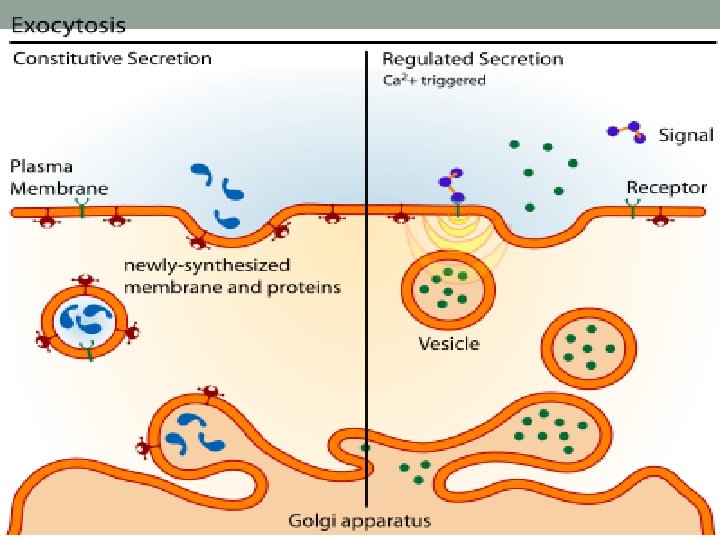
Exocytosis • Active transport of large molecules OUT of the cell. • During exocytosis, a vacuole surrounding the material fuses with the cell membrane. • Then it forces the material out of the cell