
Cellular Transport Essential Question How do organisms use

- Slides: 54
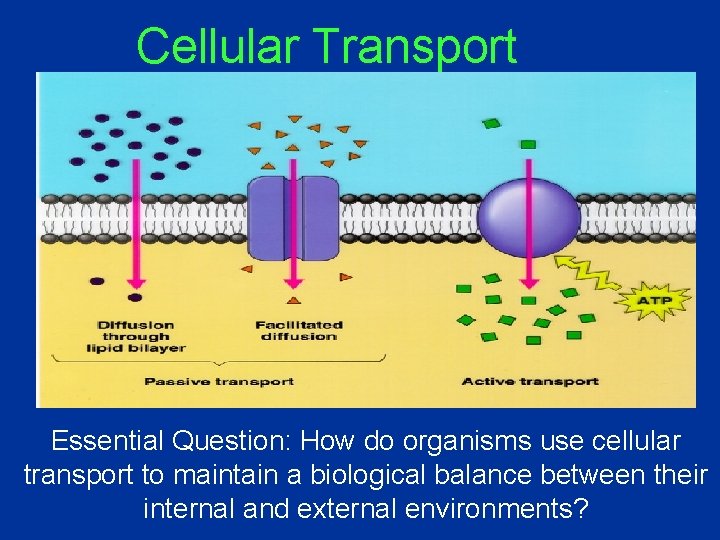
Cellular Transport Essential Question: How do organisms use cellular transport to maintain a biological balance between their internal and external environments?
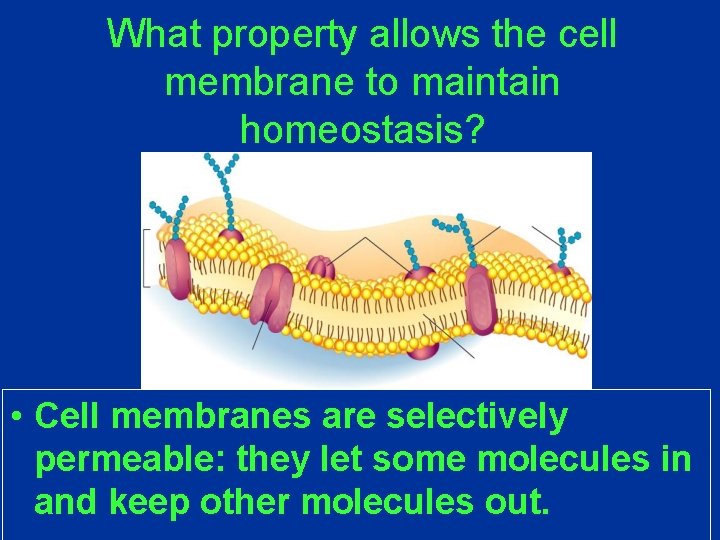
What property allows the cell membrane to maintain homeostasis? • Cell membranes are selectively permeable: they let some molecules in and keep other molecules out.
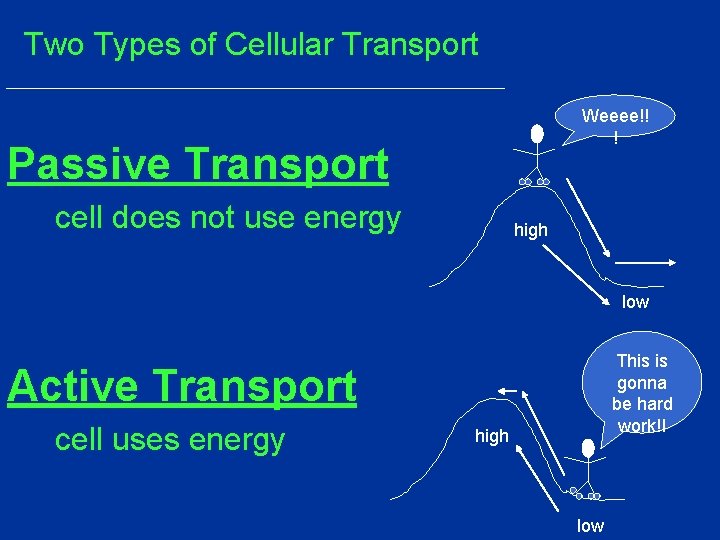
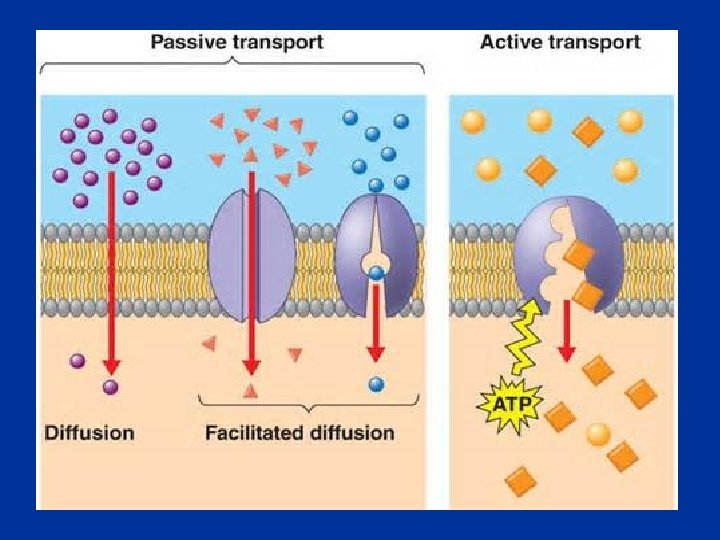
Two Types of Cellular Transport Weeee!! ! Passive Transport cell does not use energy high low This is gonna be hard work!! Active Transport cell uses energy high low
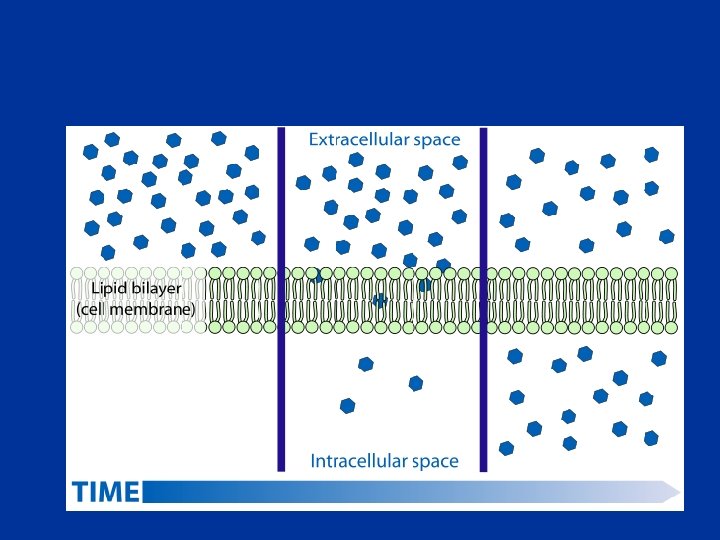
Passive transport characterisitics • Molecules move randomly • Molecules move from an area of HIGH concentration to an area of LOW concentration. • The cell spends NO ENERGY for the particles to move
3 Types of Passive Transport • Simple Diffusion • Facilitated Diffusion • Osmosis
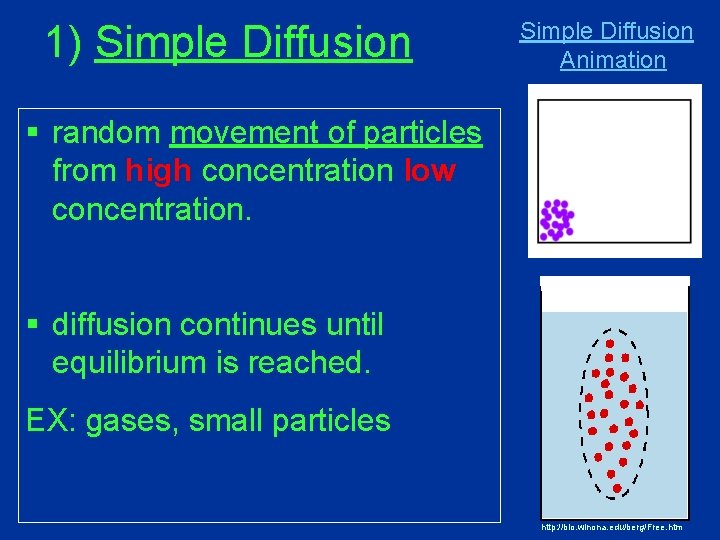
1) Simple Diffusion Animation § random movement of particles from high concentration low concentration. § diffusion continues until equilibrium is reached. EX: gases, small particles http: //bio. winona. edu/berg/Free. htm
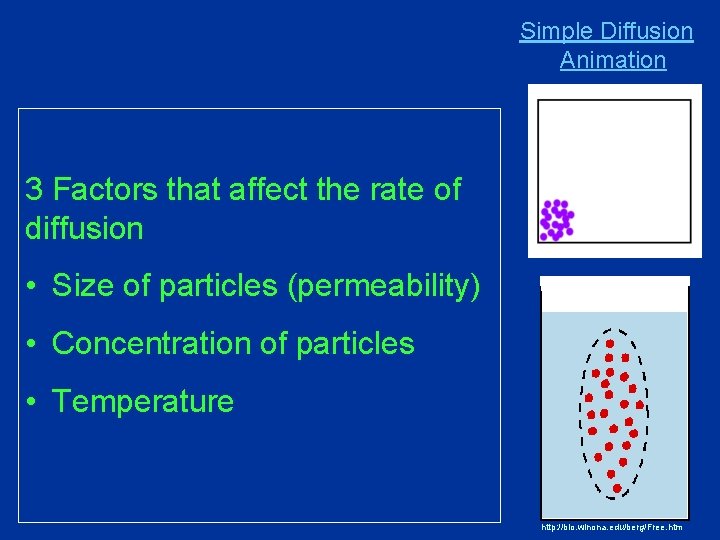
Simple Diffusion Animation 3 Factors that affect the rate of diffusion • Size of particles (permeability) • Concentration of particles • Temperature http: //bio. winona. edu/berg/Free. htm
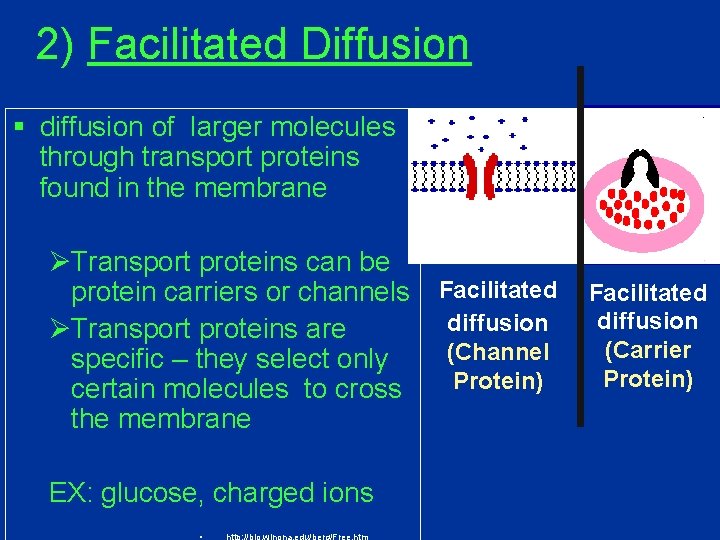
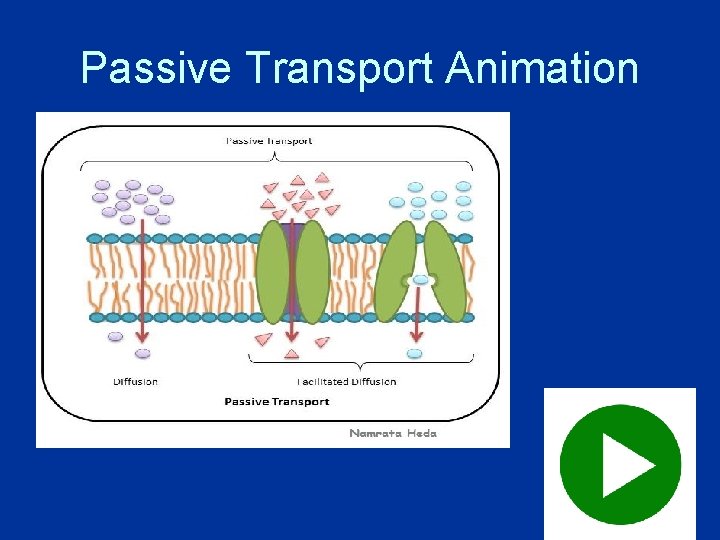
2) Facilitated Diffusion § diffusion of larger molecules through transport proteins found in the membrane ØTransport proteins can be protein carriers or channels Facilitated diffusion ØTransport proteins are (Channel specific – they select only Protein) certain molecules to cross the membrane EX: glucose, charged ions Facilitated diffusion (Carrier Protein)
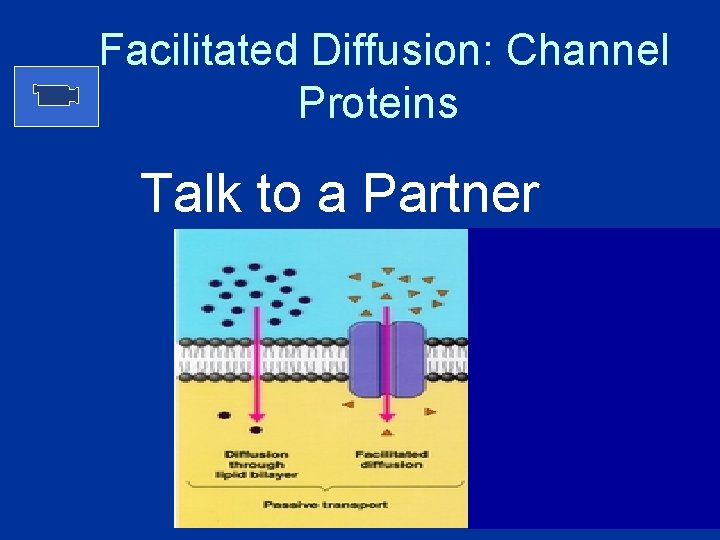
Facilitated Diffusion: Channel Proteins Talk to a Partner
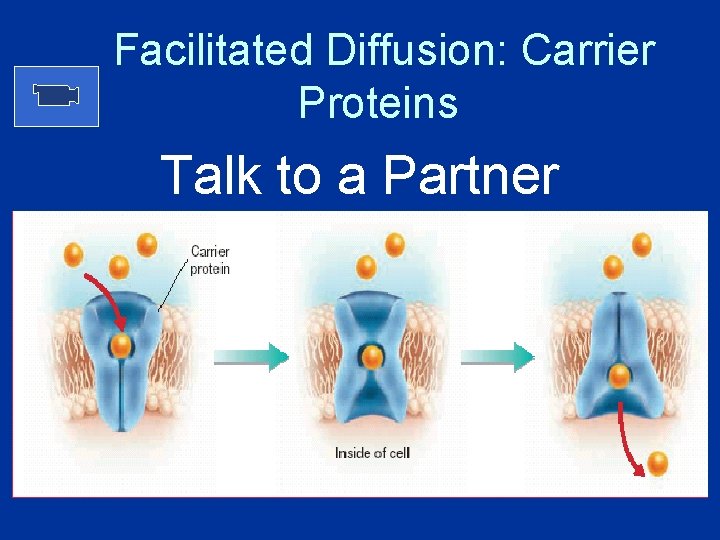
Facilitated Diffusion: Carrier Proteins Talk to a Partner
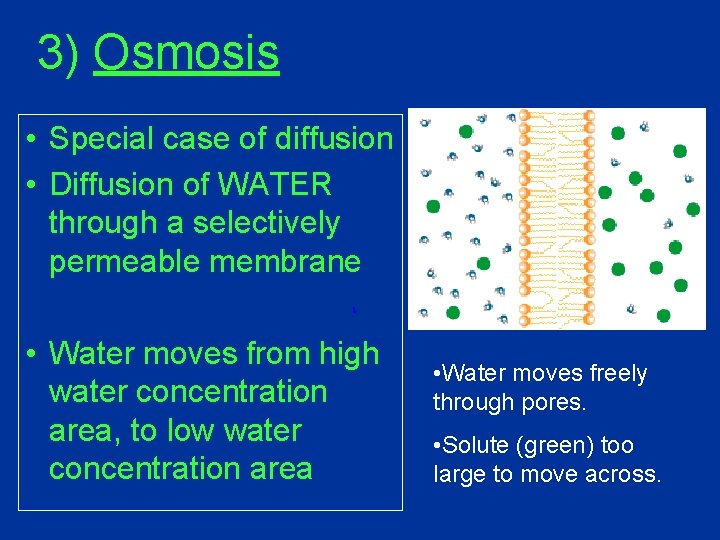
3) Osmosis • Special case of diffusion • Diffusion of WATER through a selectively permeable membrane • Water moves from high water concentration area, to low water concentration area • Water moves freely through pores. • Solute (green) too large to move across.
Turn to a Partner • Explain 3 characteristics of passive transport & • Describe each of the 3 types of passive transport
Questions? ?
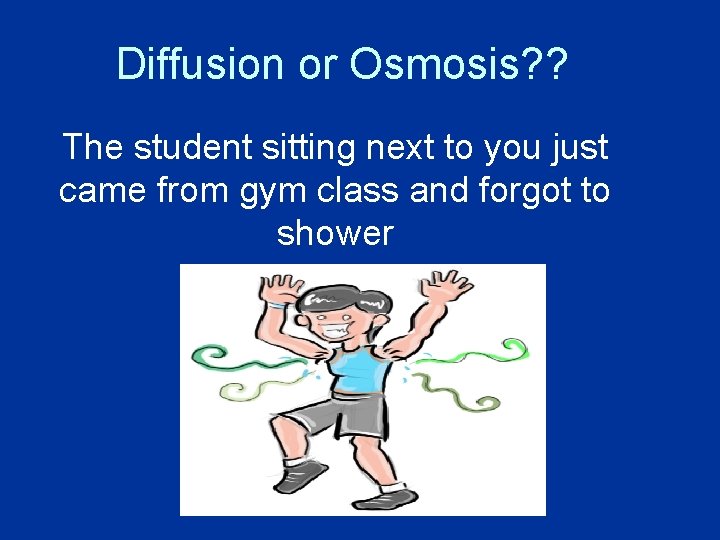
Diffusion or Osmosis? ? The student sitting next to you just came from gym class and forgot to shower
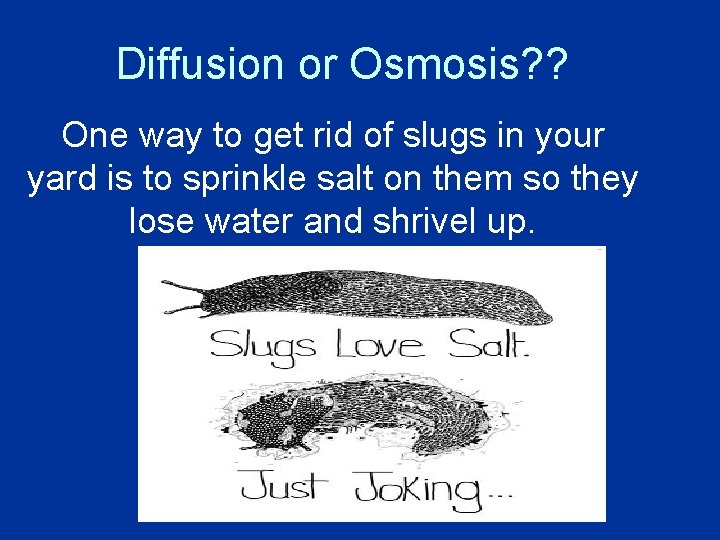
Diffusion or Osmosis? ? One way to get rid of slugs in your yard is to sprinkle salt on them so they lose water and shrivel up.
Diffusion or Osmosis? ? It’s the end of class, and the girl sitting in front of you just sprayed perfume so she could impress the guy in her next class
Diffusion or Osmosis? ? Anthony sprays water on the veggies in the produce section to “plump them up”
Now we’ll talk about 3 situations in which osmosis occurs What type of transport is osmosis?
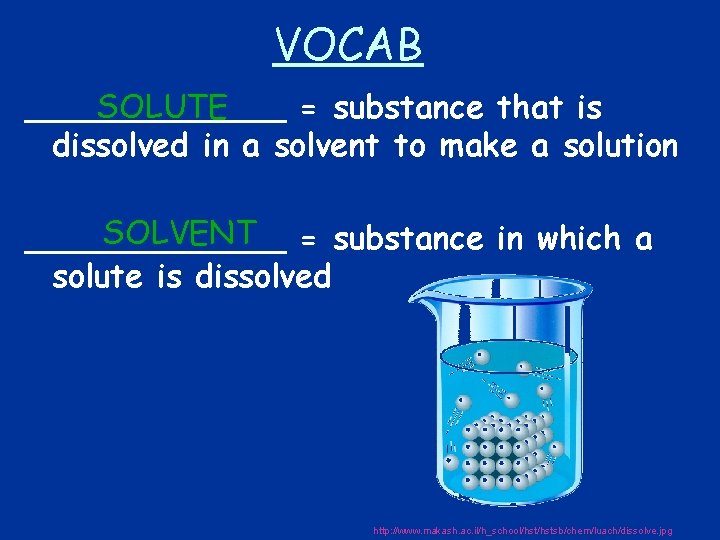
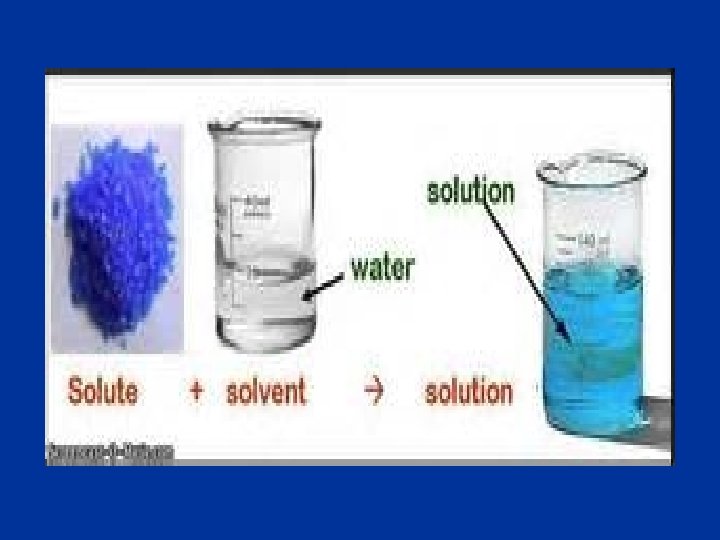
VOCAB SOLUTE _______ = substance that is dissolved in a solvent to make a solution SOLVENT = substance in which a _______ solute is dissolved http: //www. makash. ac. il/h_school/hstsb/chem/luach/dissolve. jpg
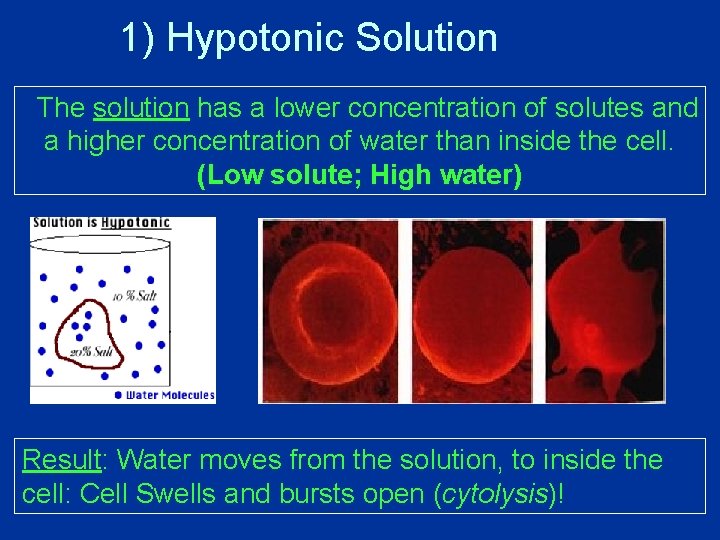
1) Hypotonic Solution The solution has a lower concentration of solutes and a higher concentration of water than inside the cell. (Low solute; High water) Result: Water moves from the solution, to inside the cell: Cell Swells and bursts open (cytolysis)!
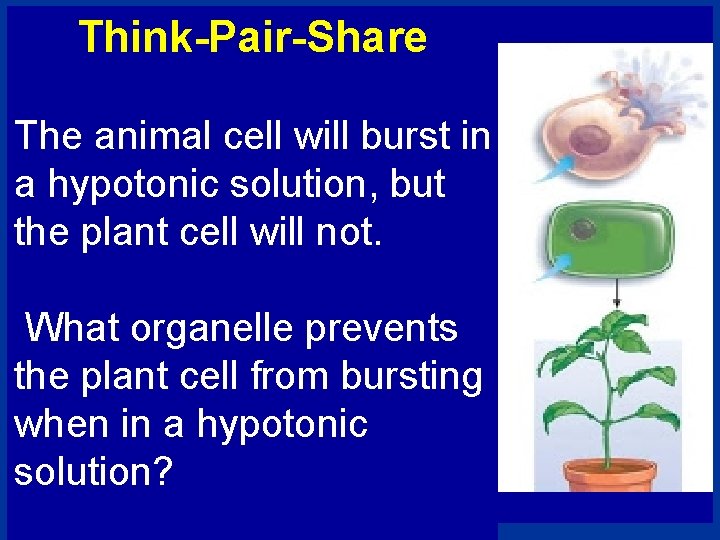
Think-Pair-Share The animal cell will burst in a hypotonic solution, but the plant cell will not. What organelle prevents the plant cell from bursting when in a hypotonic solution?
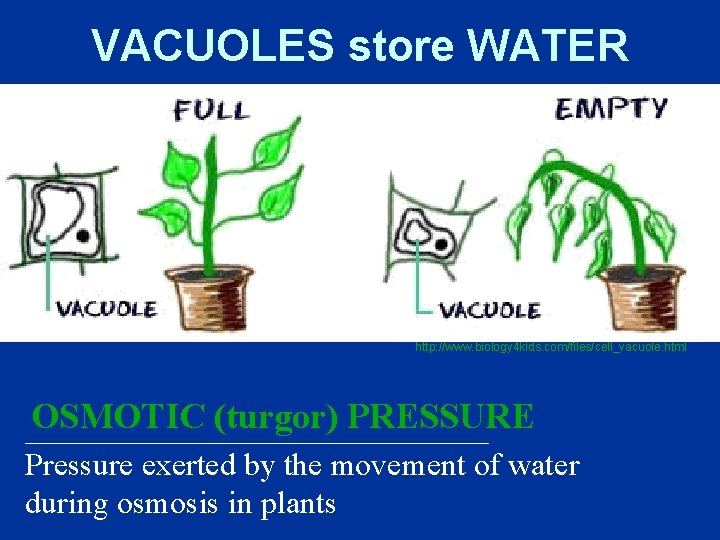
VACUOLES store WATER http: //www. biology 4 kids. com/files/cell_vacuole. html OSMOTIC (turgor) PRESSURE _______________ Pressure exerted by the movement of water during osmosis in plants
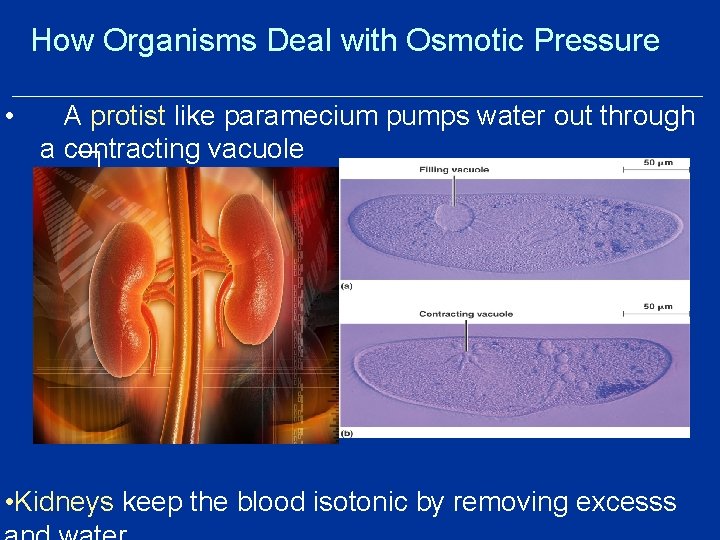
How Organisms Deal with Osmotic Pressure • A protist like paramecium pumps water out through a contracting vacuole • Paramecium (protist) removing excess water video • Kidneys keep the blood isotonic by removing excesss
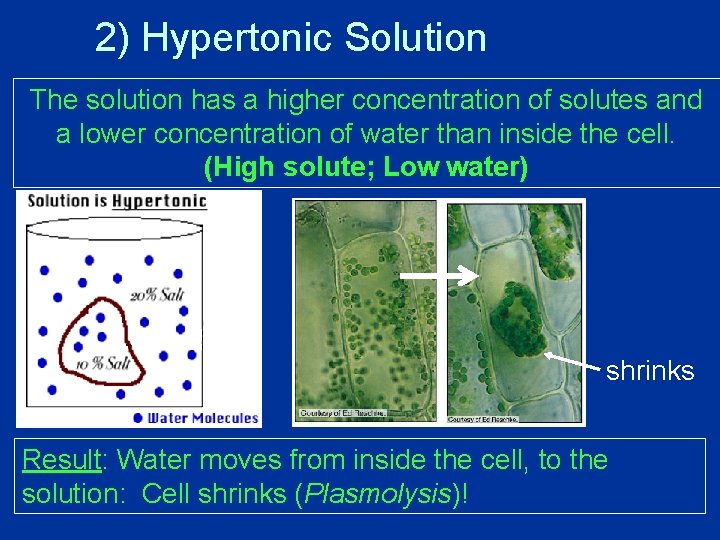
2) Hypertonic Solution The solution has a higher concentration of solutes and a lower concentration of water than inside the cell. (High solute; Low water) shrinks Result: Water moves from inside the cell, to the solution: Cell shrinks (Plasmolysis)!
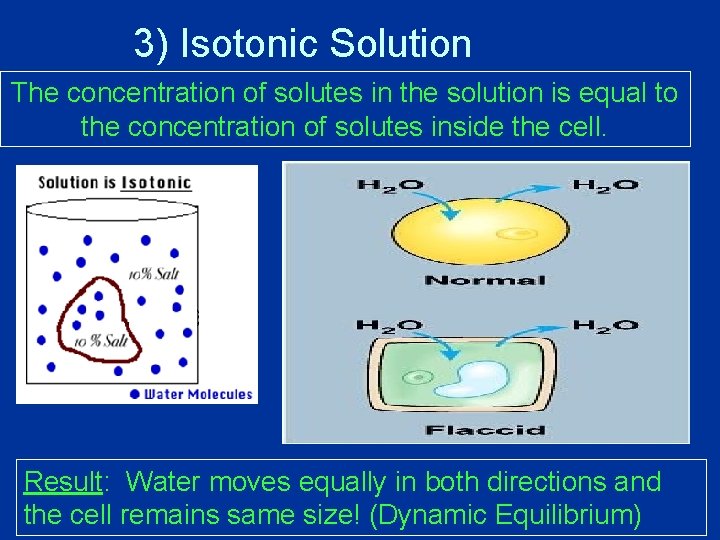
3) Isotonic Solution The concentration of solutes in the solution is equal to the concentration of solutes inside the cell. Result: Water moves equally in both directions and the cell remains same size! (Dynamic Equilibrium)
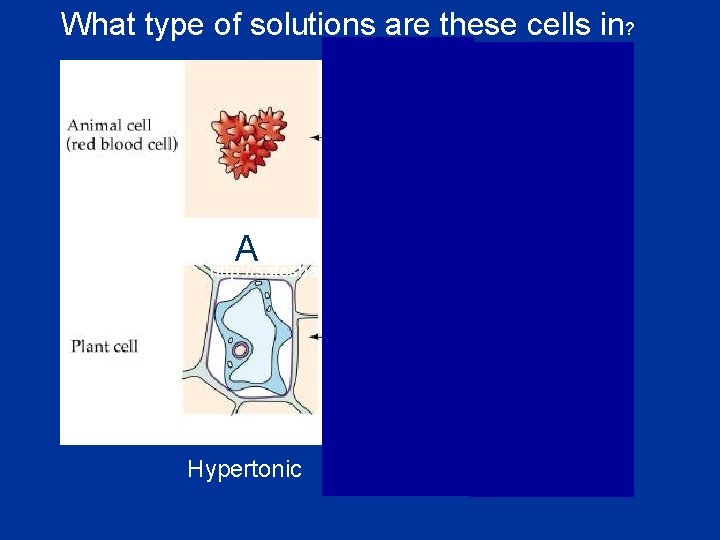
What type of solutions are these cells in? B C A http: //safeshare. tv/x/JShw. XBWGMy. Y Hypertonic Isotonic Hypotonic
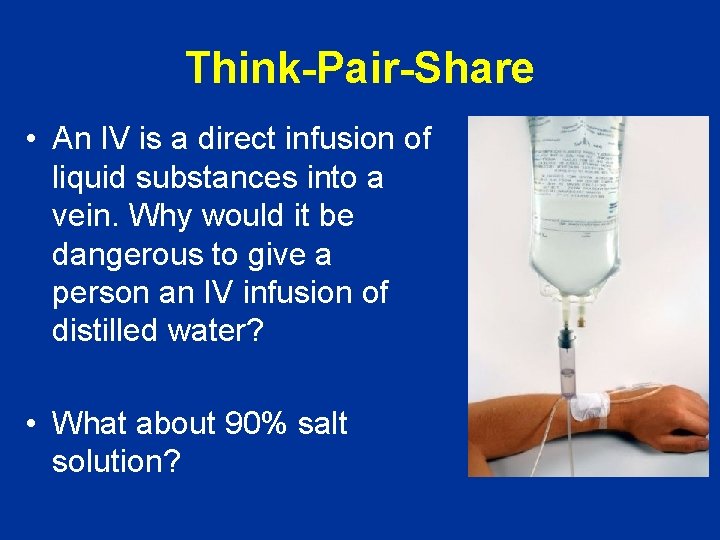
Think-Pair-Share • An IV is a direct infusion of liquid substances into a vein. Why would it be dangerous to give a person an IV infusion of distilled water? • What about 90% salt solution?
Passive Transport Animation
Active Transport • cell uses energy • actively moves molecules to where they are needed • Movement from an area of low concentration to an area of high concentration • (Low High) • Three Types:
Active Transport Protein Pumps Endocytosis Exocytosis
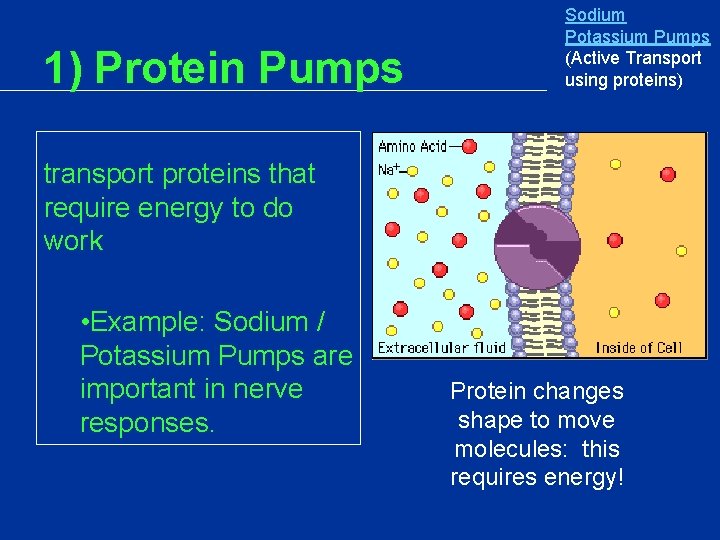
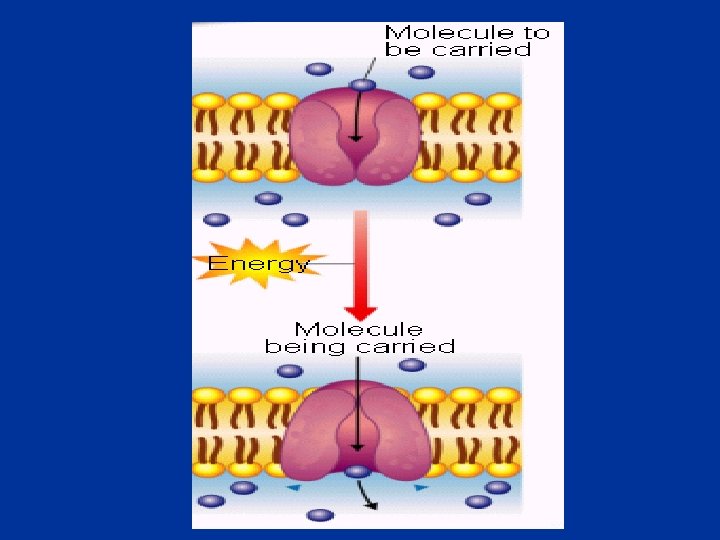
1) Protein Pumps Sodium Potassium Pumps (Active Transport using proteins) transport proteins that require energy to do work • Example: Sodium / Potassium Pumps are important in nerve responses. Protein changes shape to move molecules: this requires energy!
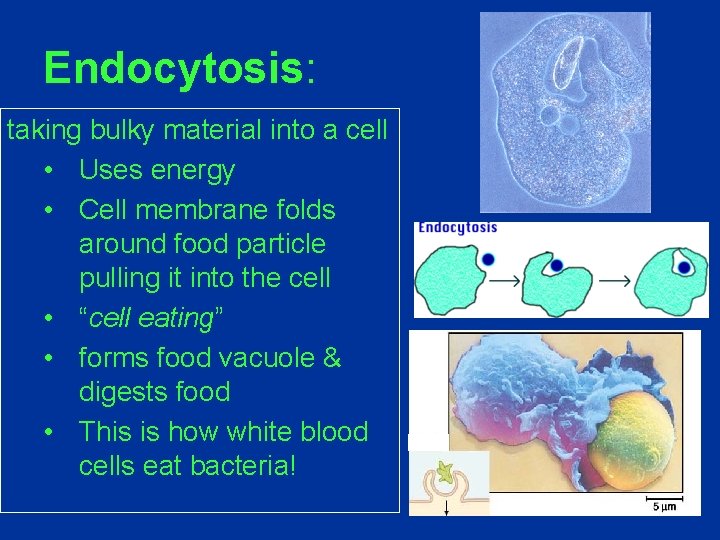
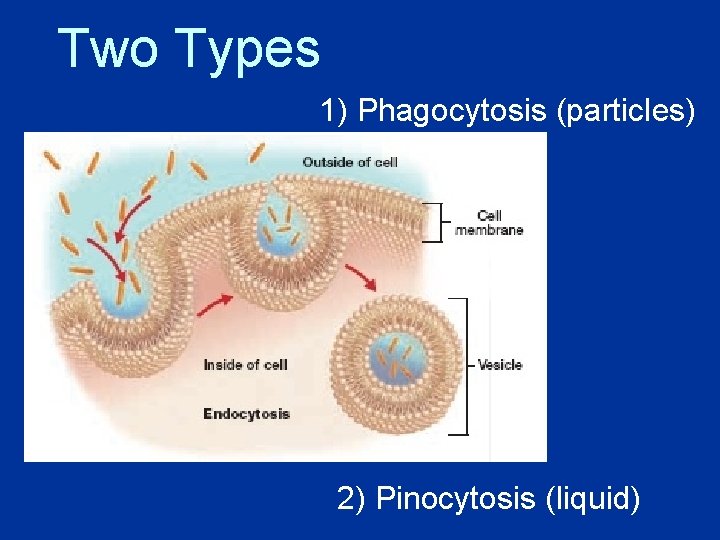
Endocytosis: taking bulky material into a cell • Uses energy • Cell membrane folds around food particle pulling it into the cell • “cell eating” • forms food vacuole & digests food • This is how white blood cells eat bacteria!
Two Types 1) Phagocytosis (particles) 2) Pinocytosis (liquid)
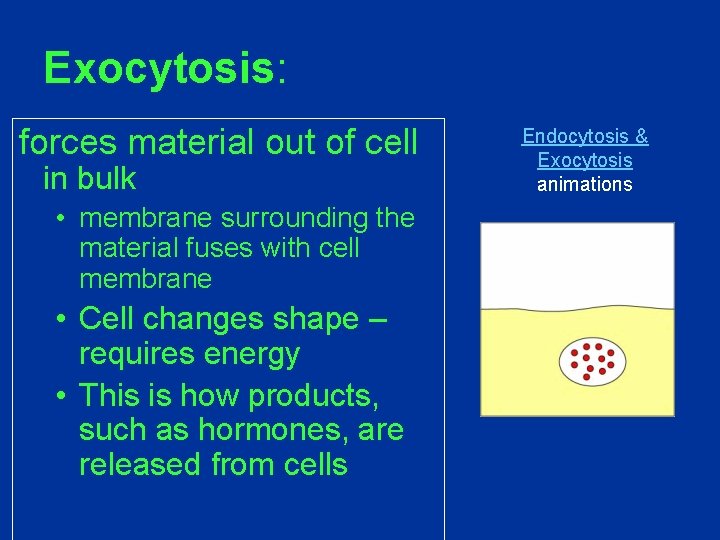
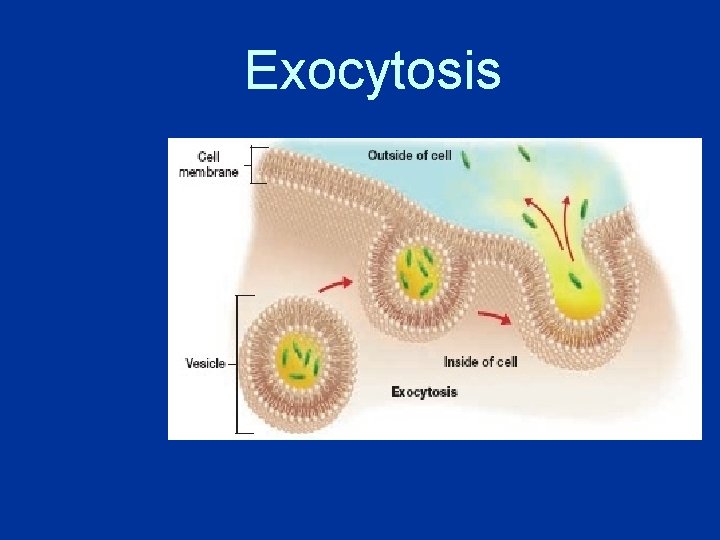
Exocytosis: forces material out of cell in bulk • membrane surrounding the material fuses with cell membrane • Cell changes shape – requires energy • This is how products, such as hormones, are released from cells Endocytosis & Exocytosis animations
Exocytosis
Active Transport Review • Sodium-Potassium Pump • Endocytosis & Exocytosis
Turn to a Partner • Explain 3 characteristics of active transport is & • Describe each of the 3 types of active transport
How Would You Answer?
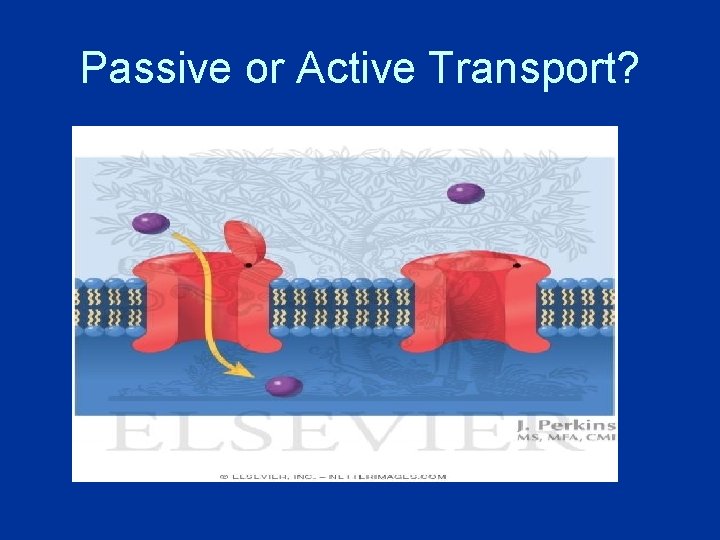
Passive or Active Transport?
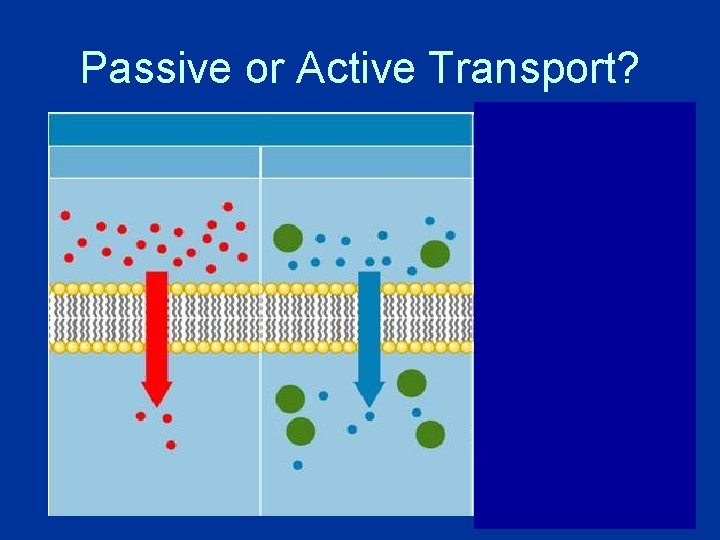
Passive or Active Transport?
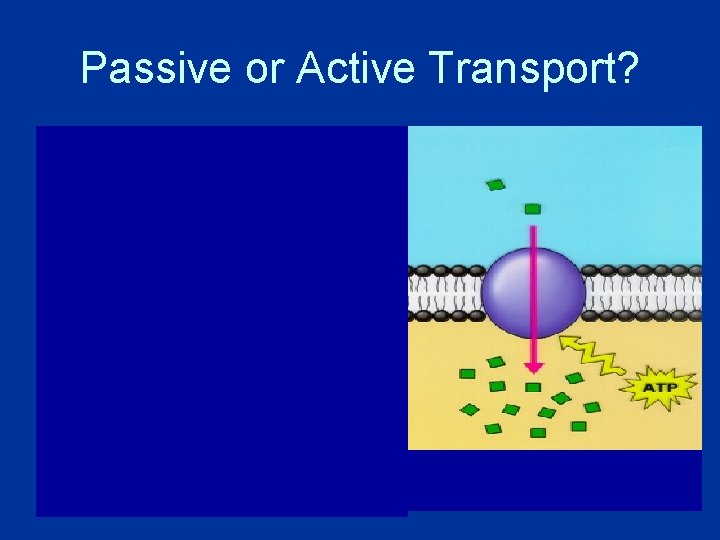
Passive or Active Transport?
Which of the following is NOT a type of passive transport? A. diffusion B. osmosis C. endocytosis D. facilitated diffusion
The movement of chloride ions from an area where chloride is concentrated to an area where chloride is less concentrated is which of these? a. diffusion b. active transport c. osmosis d. exocytosis
In an isotonic solution there would be: a. no net movement of water b. net movement of water into the cell c. net movement of water out of the cell d. bursting of the cell
When a cell bursts due to osmosis, it is in a solution that is: a. hypertonic b. isotonic c. hypotonic d. either A or C
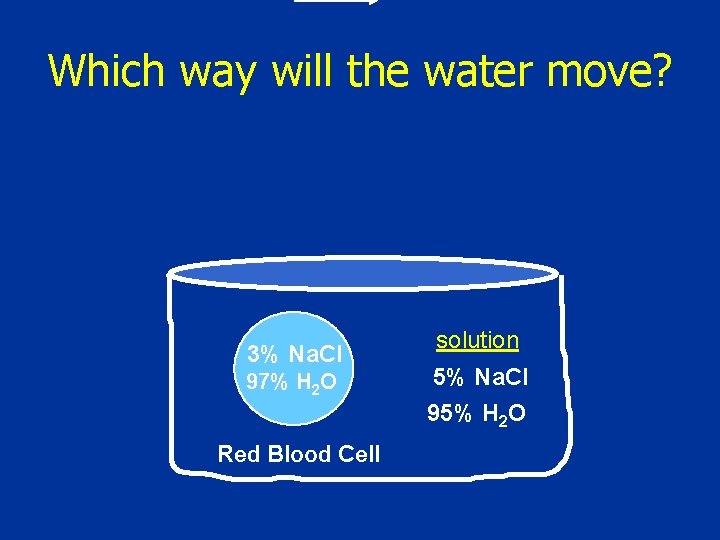
Which way will the water move? 3% Na. Cl 97% H 2 O Red Blood Cell solution 5% Na. Cl 95% H 2 O
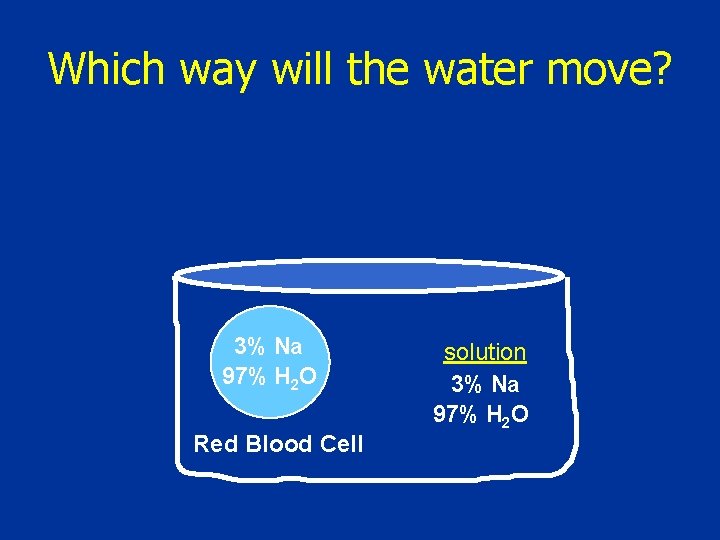
Which way will the water move? 3% Na 97% H 2 O Red Blood Cell solution 3% Na 97% H 2 O
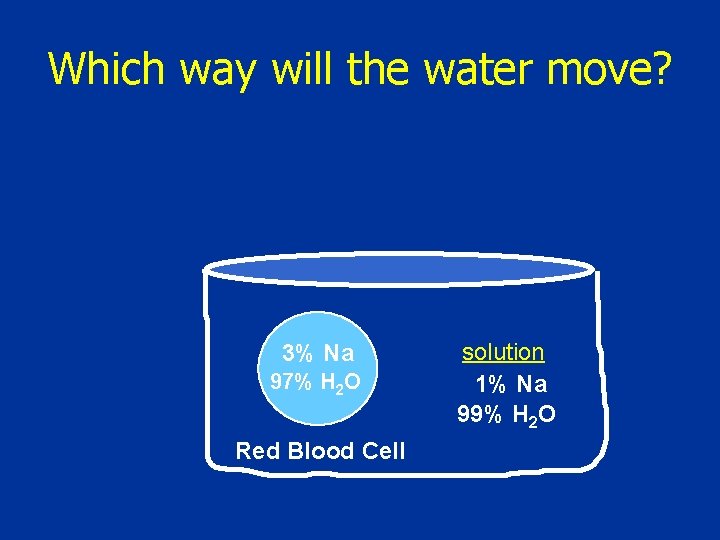
Which way will the water move? 3% Na 97% H 2 O Red Blood Cell solution 1% Na 99% H 2 O
Cornell Summary for Cellular Transport Passive Transport • Three characteristics • Three examples Active Transport • Three characteristics • Three examples