
Cellular Structure and Function Chapter 7 Cell 1665



- Slides: 76
Cellular Structure and Function Chapter 7
Cell 1665 Robert Hooke Microscope “a little room”
Cell The basic structural and functional unit of all living organisms
Cell 1838 Matthias Schleiden All plants are composed of cells
Cell 1839 Theodor Schwann Animal tissue made up of cells
Cell 1855 Rudolph Virchow Cells come from cells Through division
Cell The cell theory
Cell Theory 1. All living organisms are composed of one or more cells.
Cell Theory 1. All living organisms are composed of one or more cells. 2. Cells are the basic unit of structure and organization of all living organisms.
Cell Theory 1. All living organisms are composed of one or more cells. 2. Cells are the basic unit of structure and organization of all living organisms. 3. Cells arise only from previously existing cells, with cells passing copies of their genetic material on to their daughter cells.
microscopes Compound light microscopes Electron microscopes
Compound Glass lenses Visible light 10 X 10 = 1000 X
electron Magnets to aim a beam of electrons at thin slices 500, 000 X Specimen must be dead, sliced thin and stained
Cell types
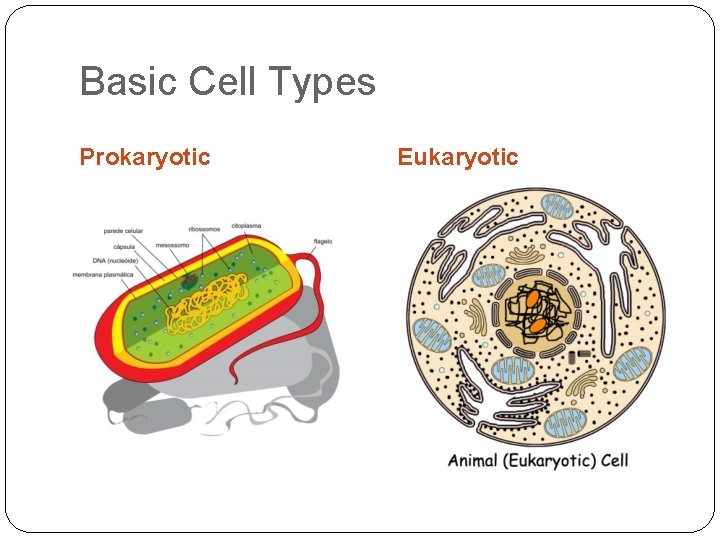
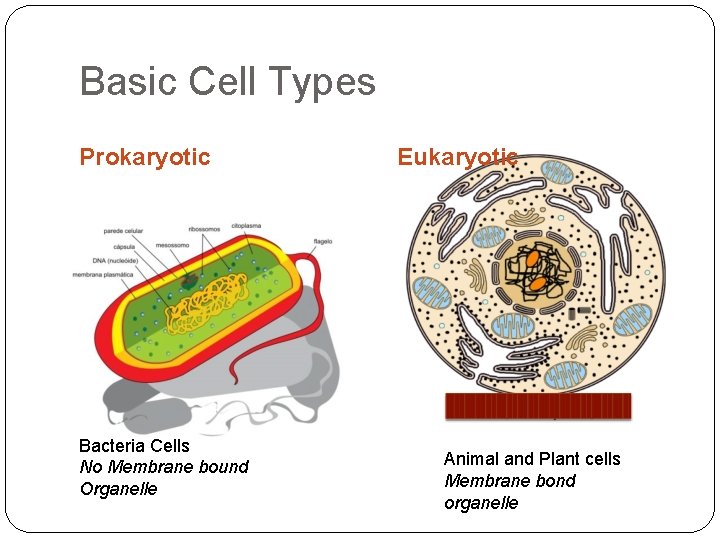
Basic Cell Types Prokaryotic Eukaryotic
Basic Cell Types Prokaryotic Eukaryotic No nucleus No membrane bound Membrane bound organelles Organelles
Plasma membrane Special boundary One physical trait shared by all
Opener Complete the following sentence The plasma membrane is composed of a _______
Quiz Define the following Osmosis Hypertonic Hypotonic
7. 2
The Plasma Membrane Selective permeability
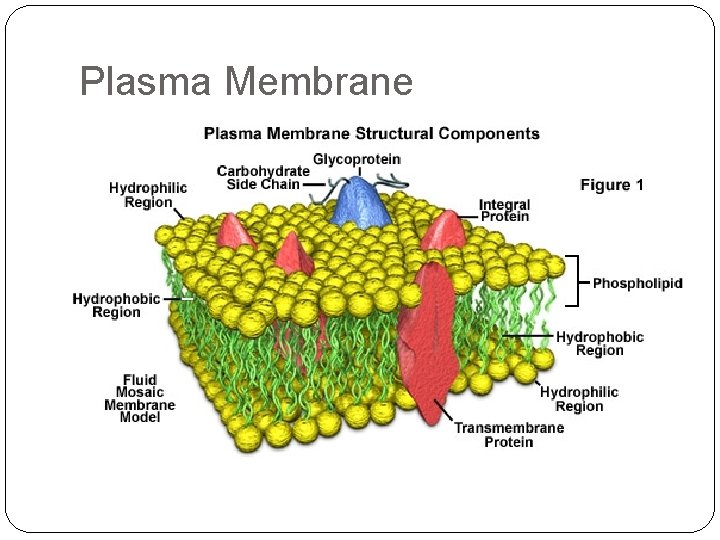
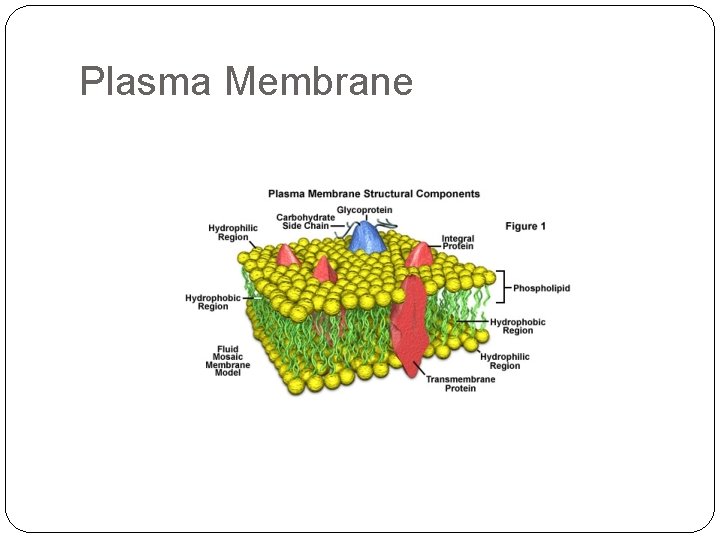
Plasma Membrane
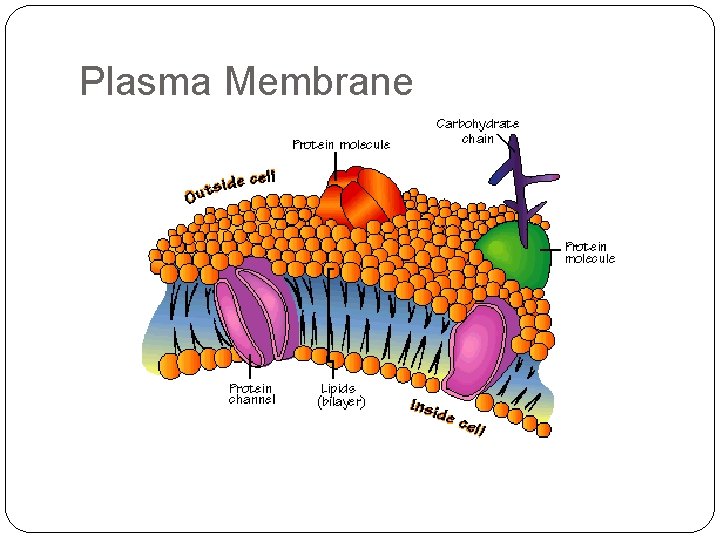
Plasma Membrane
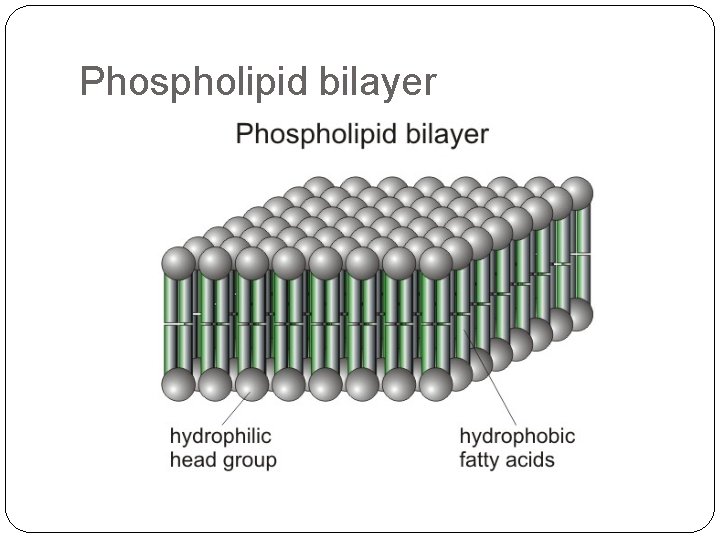
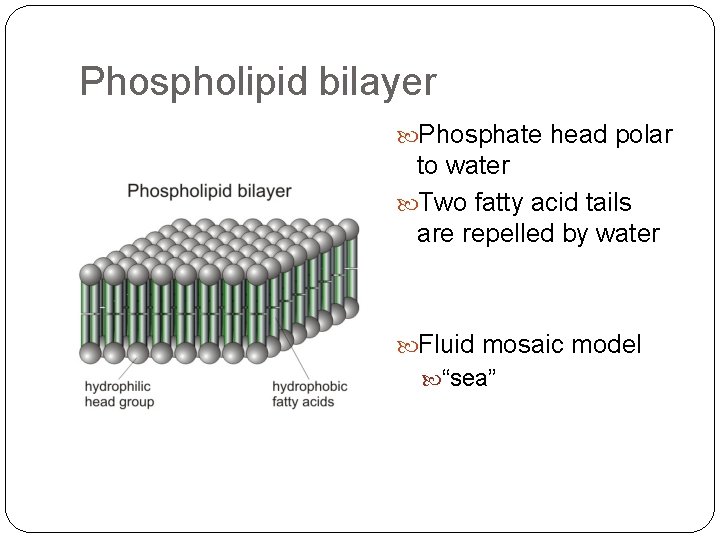
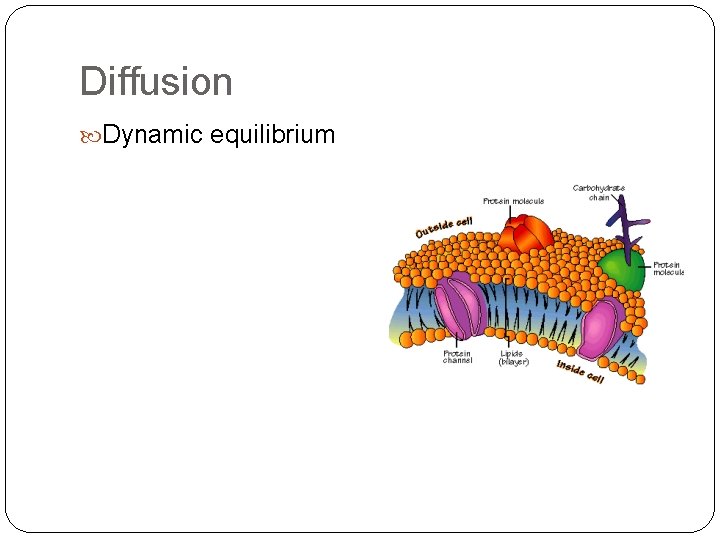
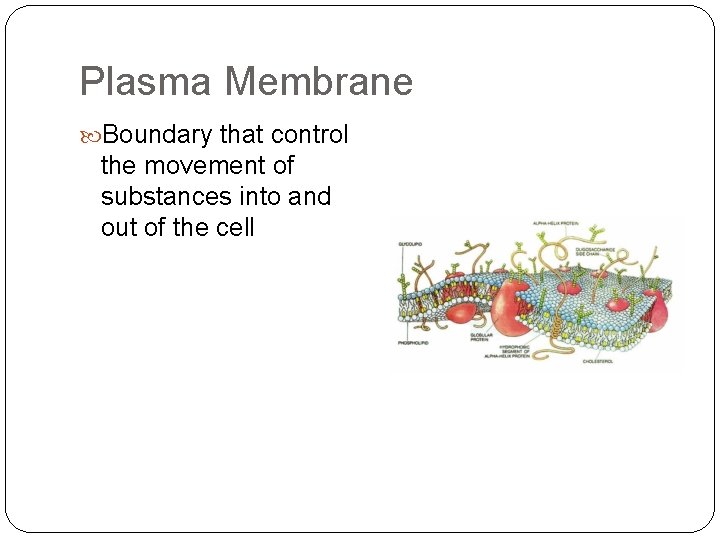
Phospholipid bilayer
Phospholipid bilayer Phosphate head polar to water Two fatty acid tails are repelled by water Fluid mosaic model “sea”
Other components Carbohydrates Cholesterol Proteins
Plasma Membrane
proteins Receptors – outside Anchors – inside Transport between
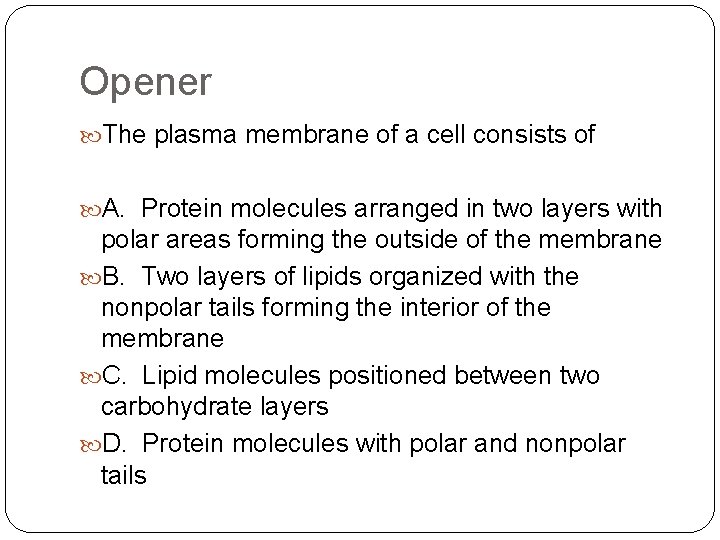
Opener The plasma membrane of a cell consists of A. Protein molecules arranged in two layers with polar areas forming the outside of the membrane B. Two layers of lipids organized with the nonpolar tails forming the interior of the membrane C. Lipid molecules positioned between two carbohydrate layers D. Protein molecules with polar and nonpolar tails
Quiz List three cell organelles and their functions
7. 3
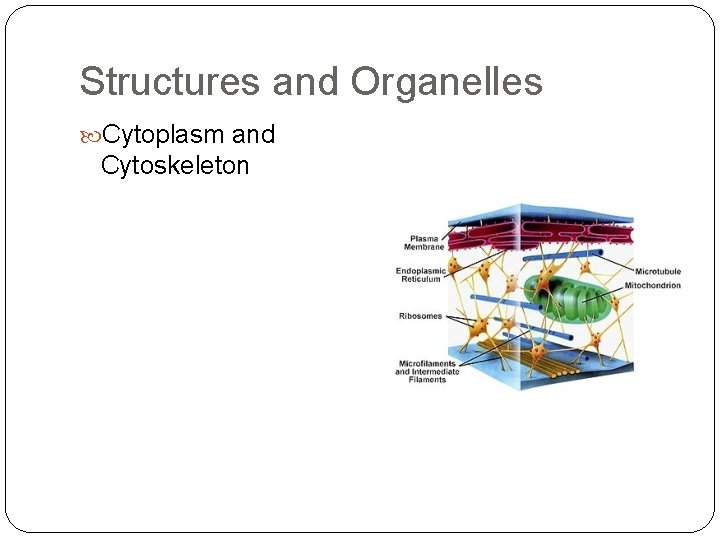
Structures and Organelles Cytoplasm and Cytoskeleton
Cytoplasm – Cytoskeleton - semifluid material Network of fibers break down sugar Protein (prokaryotic) provide anchor
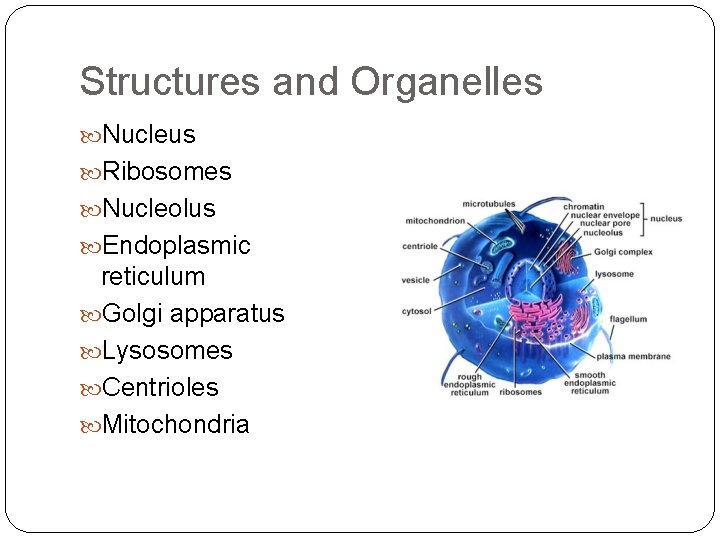
Structures and Organelles Nucleus Ribosomes Nucleolus Endoplasmic reticulum Golgi apparatus Lysosomes Centrioles Mitochondria
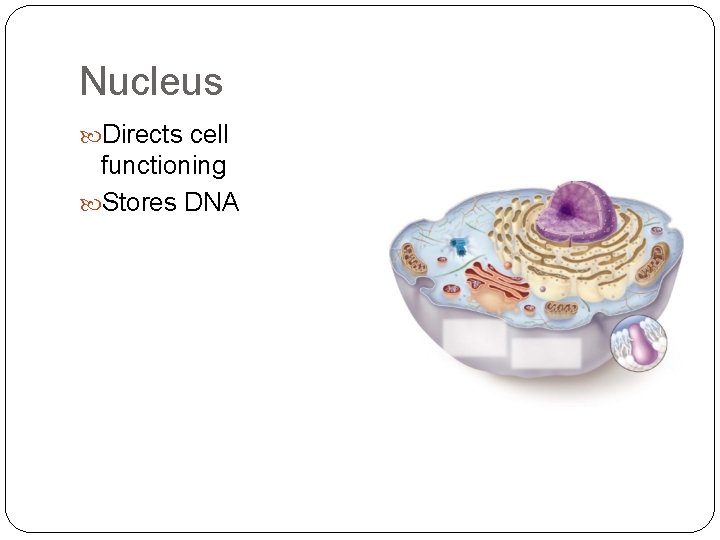
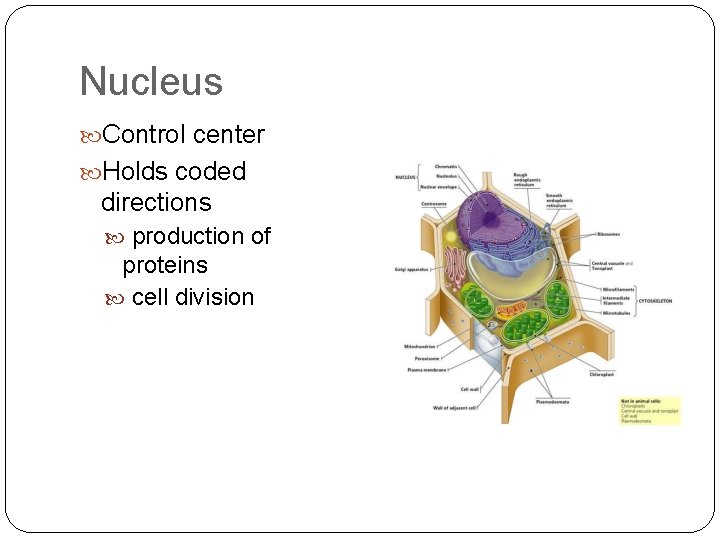
Nucleus Directs cell functioning Stores DNA
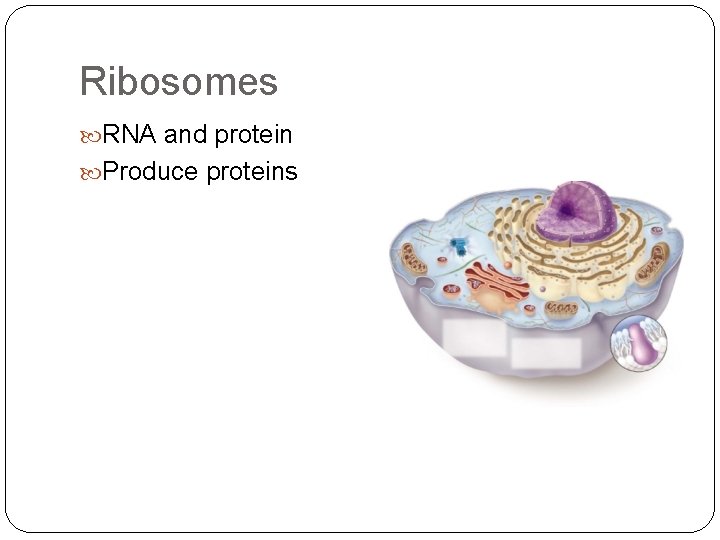
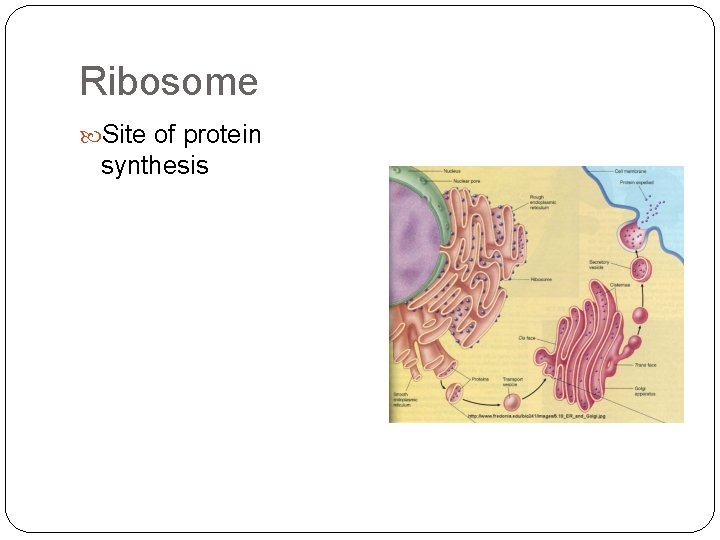
Ribosomes RNA and protein Produce proteins
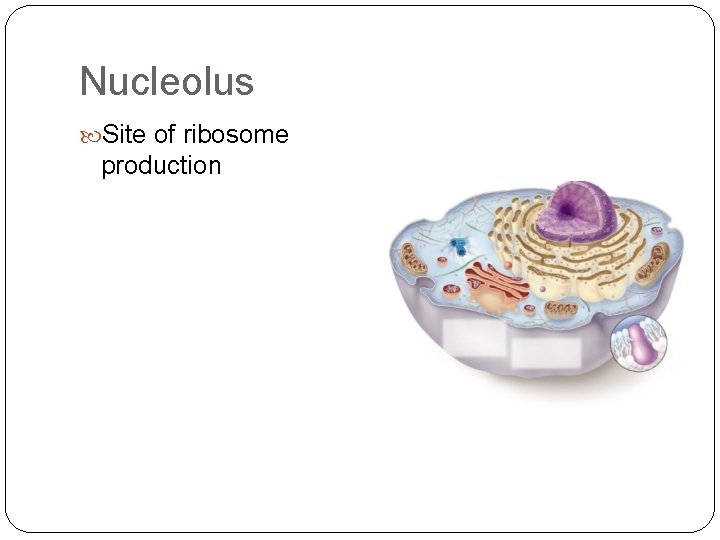
Nucleolus Site of ribosome production
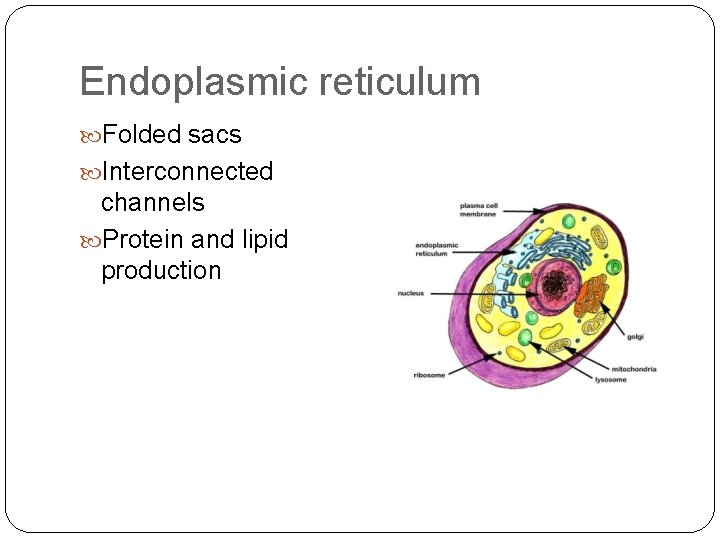
Endoplasmic reticulum Folded sacs Interconnected channels Protein and lipid production
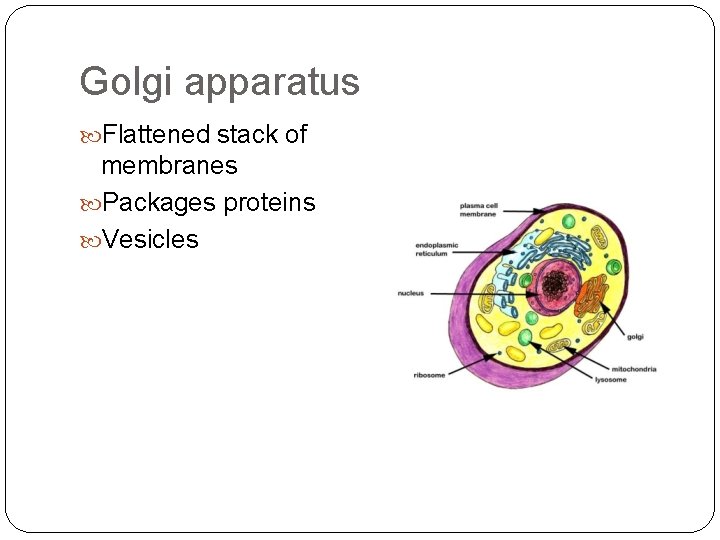
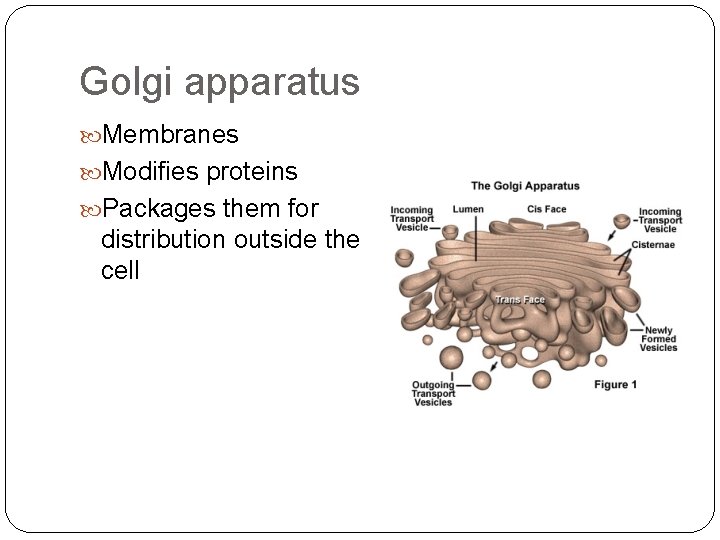
Golgi apparatus Flattened stack of membranes Packages proteins Vesicles
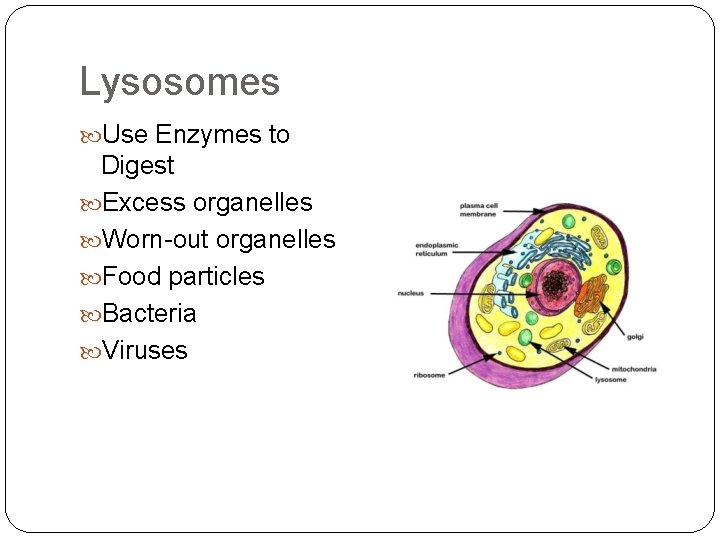
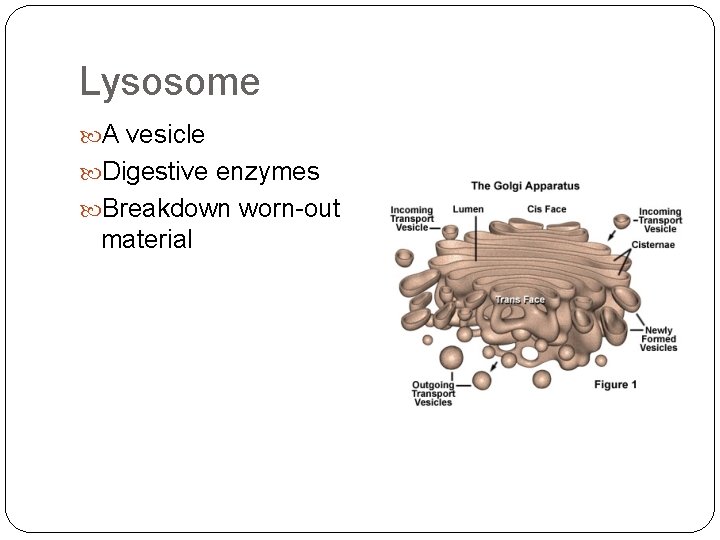
Lysosomes Use Enzymes to Digest Excess organelles Worn-out organelles Food particles Bacteria Viruses
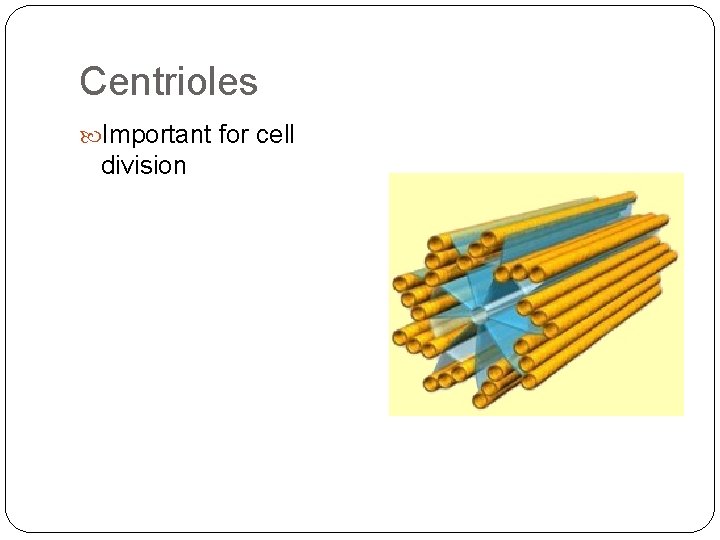
Centrioles Microtubles Play a part of cell division
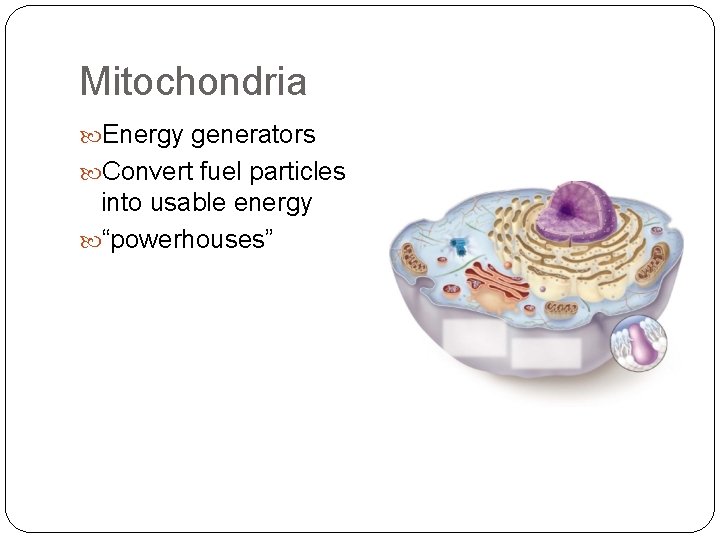
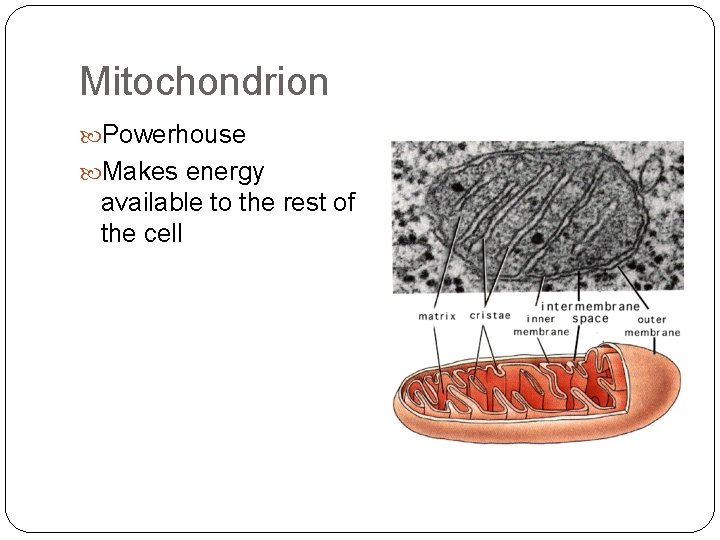
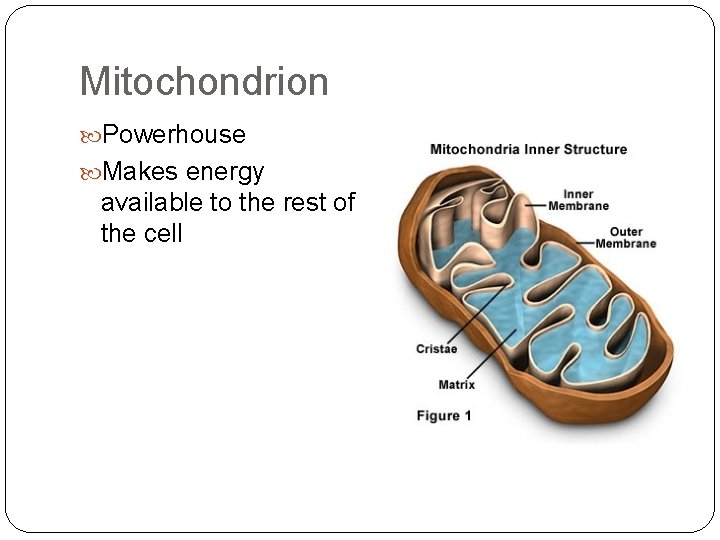
Mitochondria Energy generators Convert fuel particles into usable energy “powerhouses”
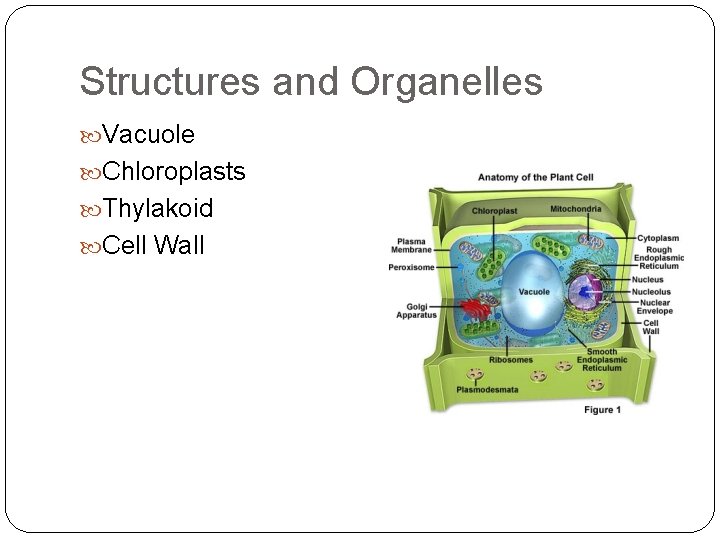
Structures and Organelles Vacuole Chloroplasts Thylakoid Cell Wall
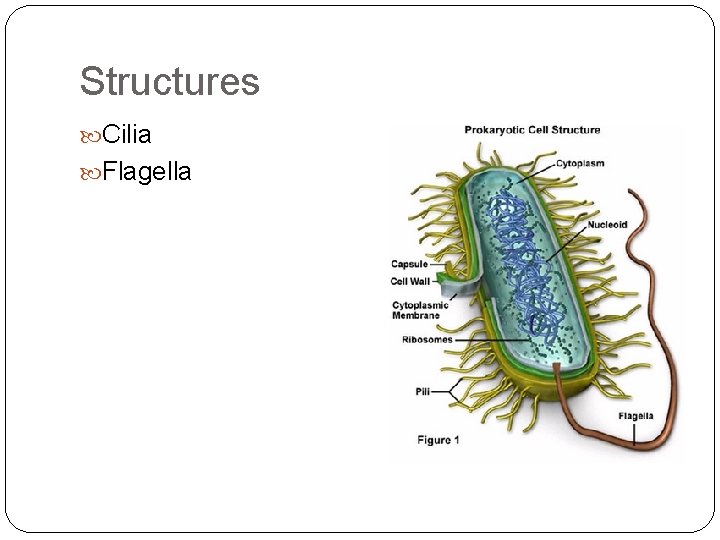
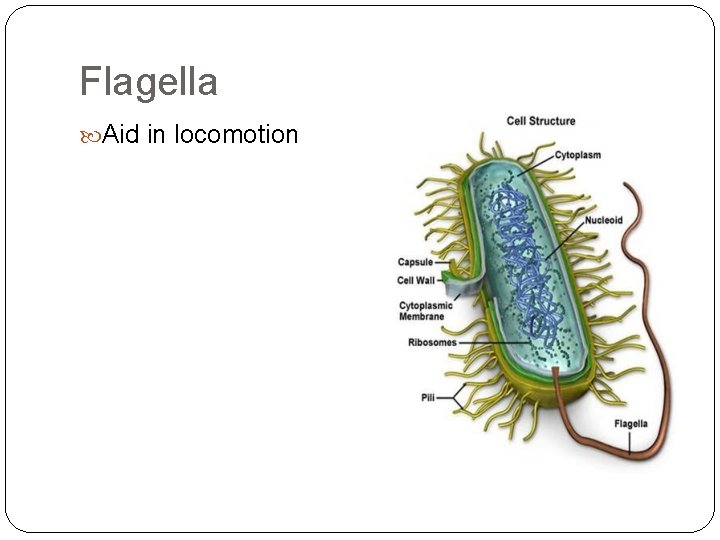
Structures Cilia Flagella
7. 4
Cellular Transport
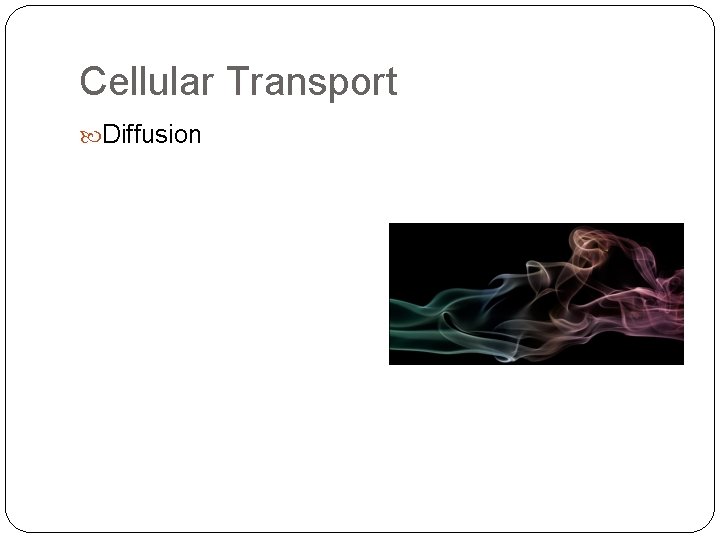
Cellular Transport Diffusion
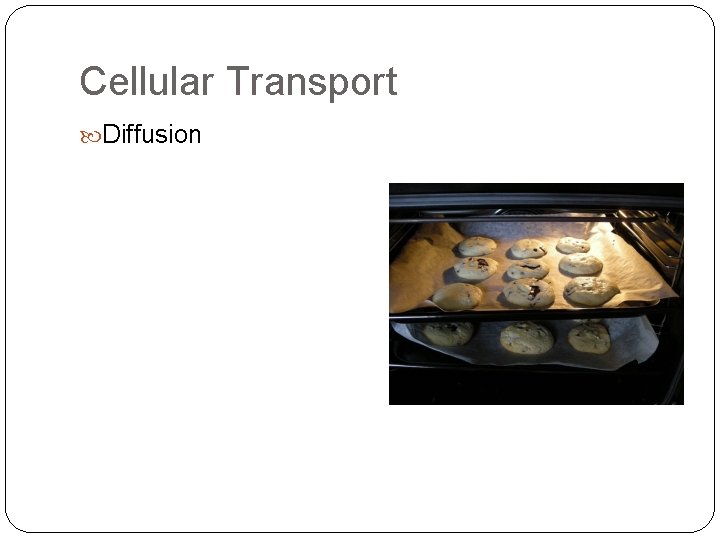
Cellular Transport Diffusion
Diffusion Dynamic equilibrium
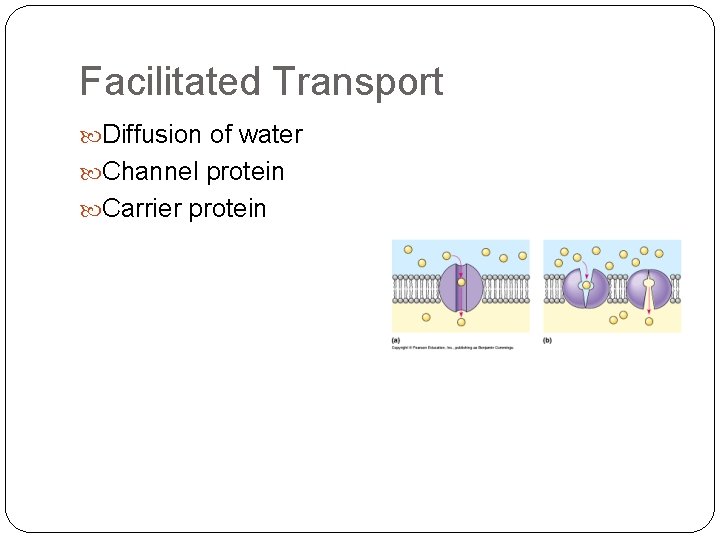
Facilitated Transport Diffusion of water Channel protein Carrier protein
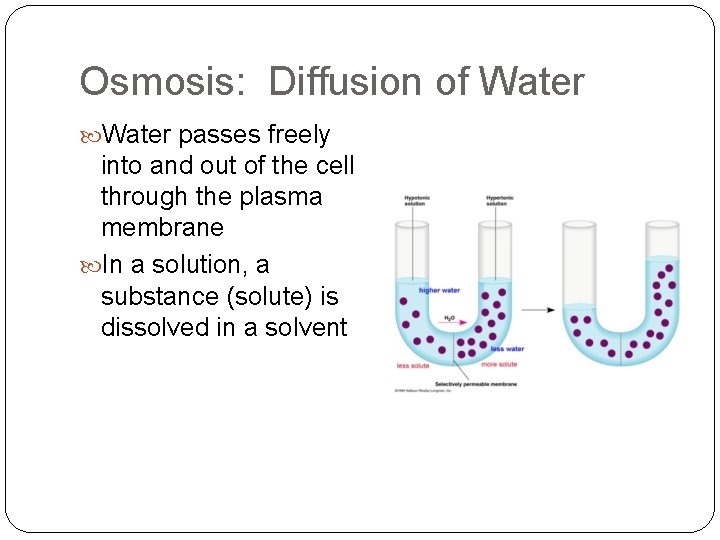
Osmosis: Diffusion of Water passes freely into and out of the cell through the plasma membrane In a solution, a substance (solute) is dissolved in a solvent
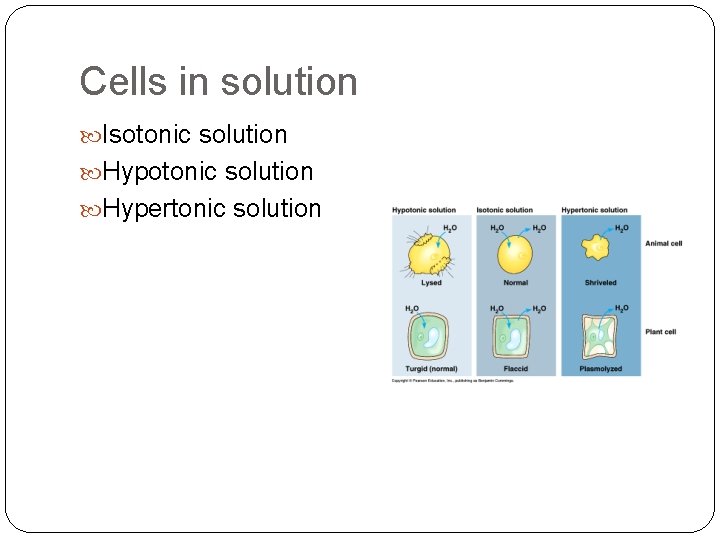
Cells in solution Isotonic solution Hypertonic solution
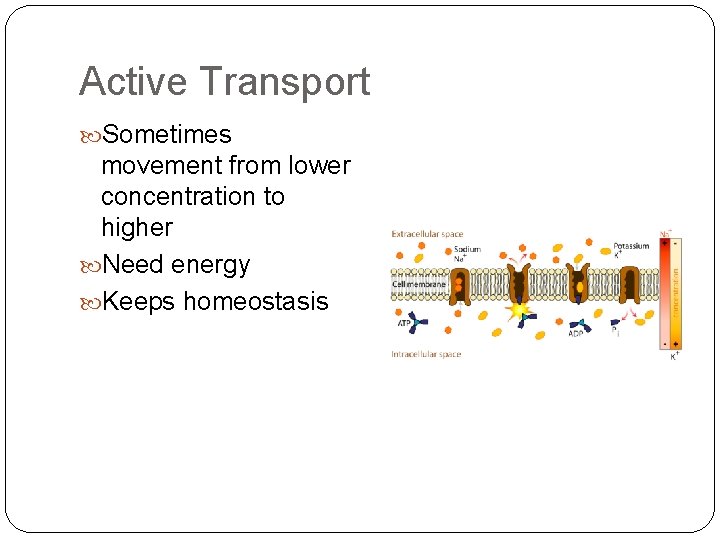
Active Transport Sometimes movement from lower concentration to higher Need energy Keeps homeostasis
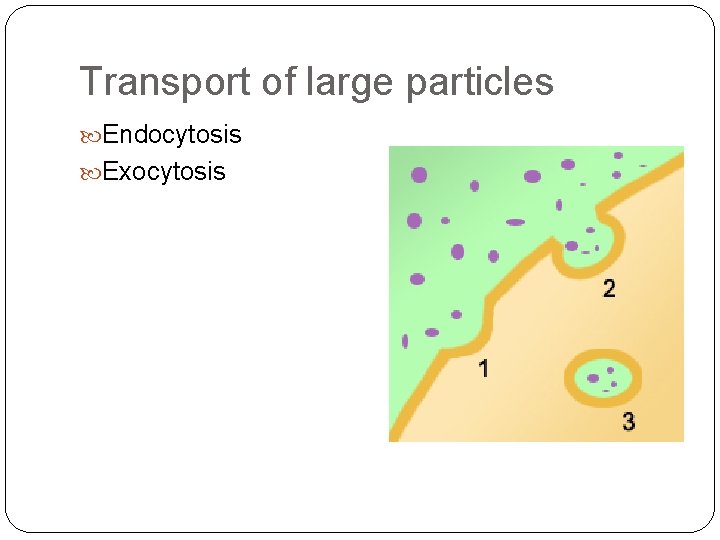
Transport of large particles Endocytosis Exocytosis
Basic Cell Types Prokaryotic Bacteria Cells No Membrane bound Organelle Eukaryotic Animal and Plant cells Membrane bond organelle
Animals, plants, bacterial What about viruses One or more cells Displays organization Grows and develops Reproduces Stimuli Energy Homeostasis Adapts over time
Cell Structure and Organelles
Plasma Membrane Boundary that control the movement of substances into and out of the cell
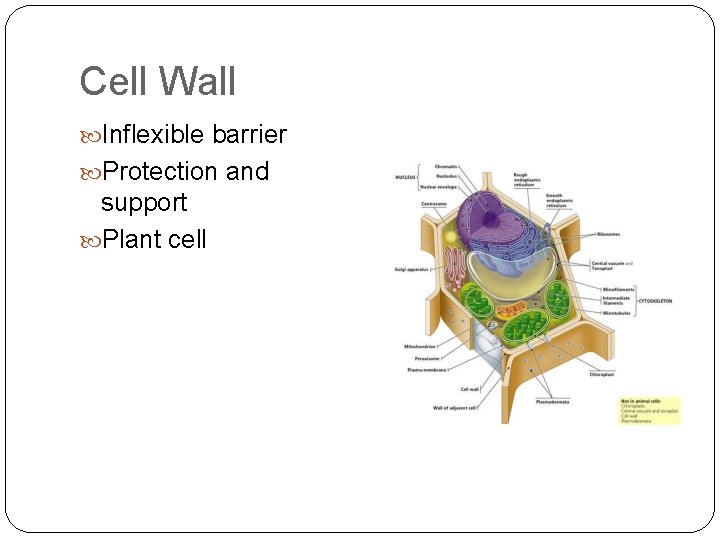
Cell Wall Inflexible barrier Protection and support Plant cell
Centrioles Important for cell division
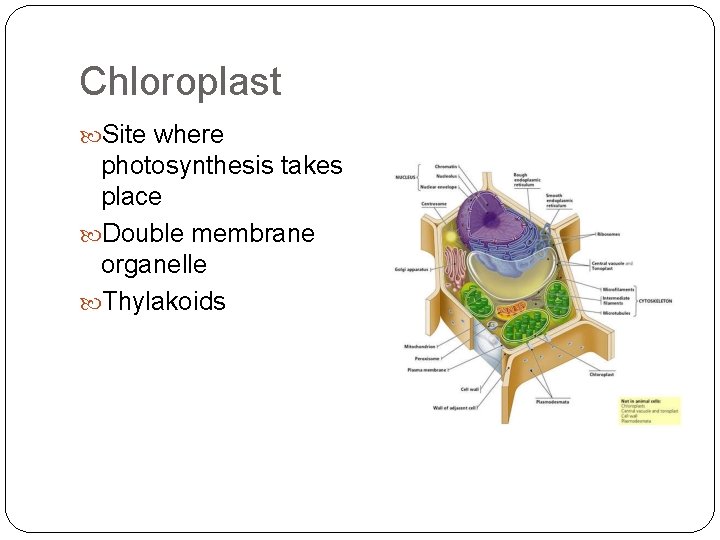
Chloroplast Site where photosynthesis takes place Double membrane organelle Thylakoids
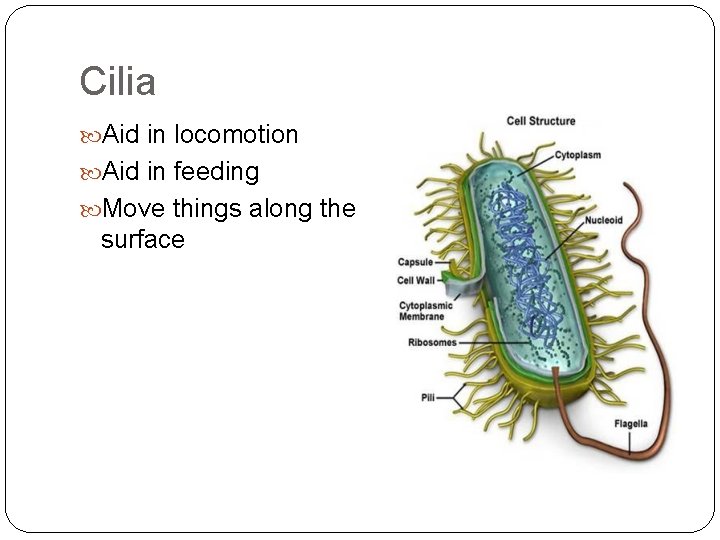
Cilia Aid in locomotion Aid in feeding Move things along the surface
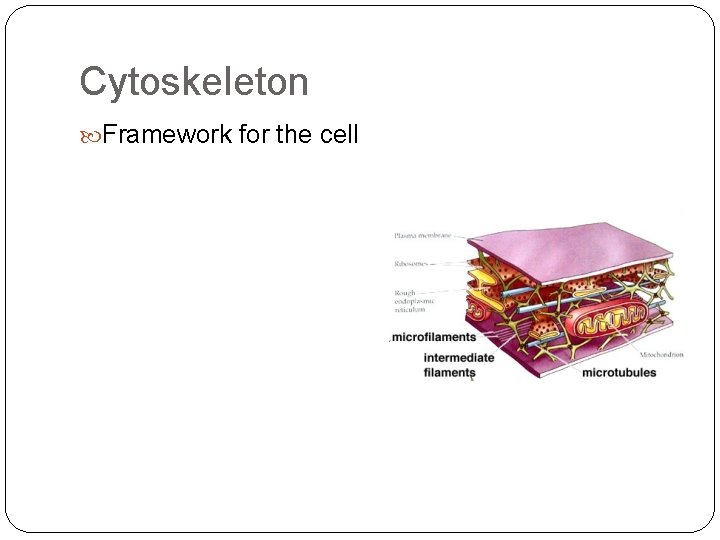
Cytoskeleton Framework for the cell
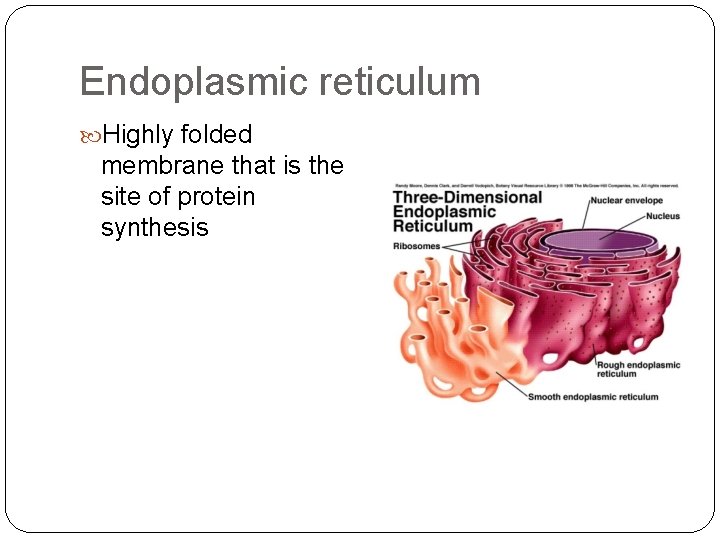
Endoplasmic reticulum Highly folded membrane that is the site of protein synthesis
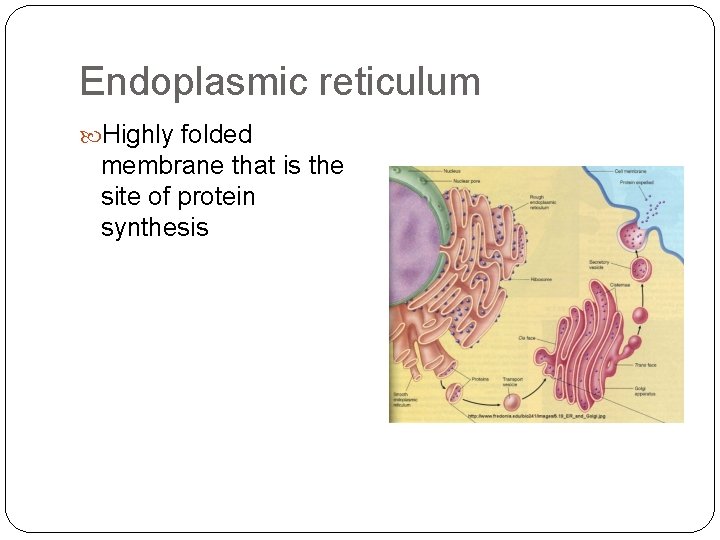
Endoplasmic reticulum Highly folded membrane that is the site of protein synthesis
Flagella Aid in locomotion
Golgi apparatus Membranes Modifies proteins Packages them for distribution outside the cell
Lysosome A vesicle Digestive enzymes Breakdown worn-out material
Mitochondrion Powerhouse Makes energy available to the rest of the cell
Mitochondrion Powerhouse Makes energy available to the rest of the cell
Nucleus Control center Holds coded directions production of proteins cell division
Ribosome Site of protein synthesis
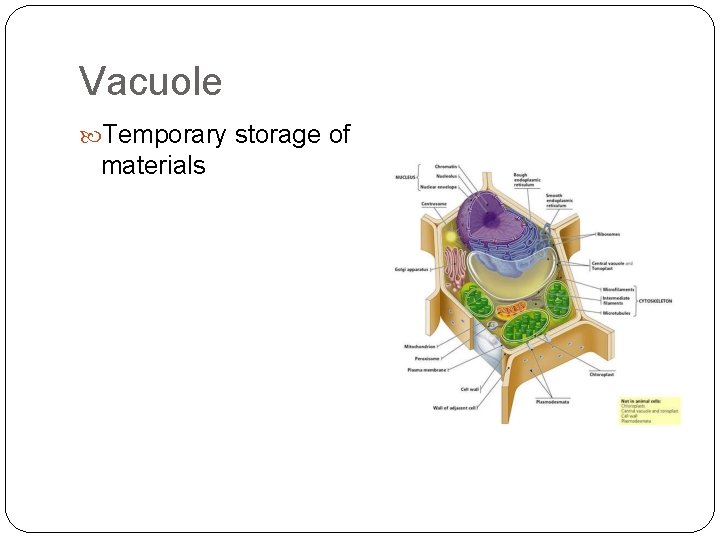
Vacuole Temporary storage of materials
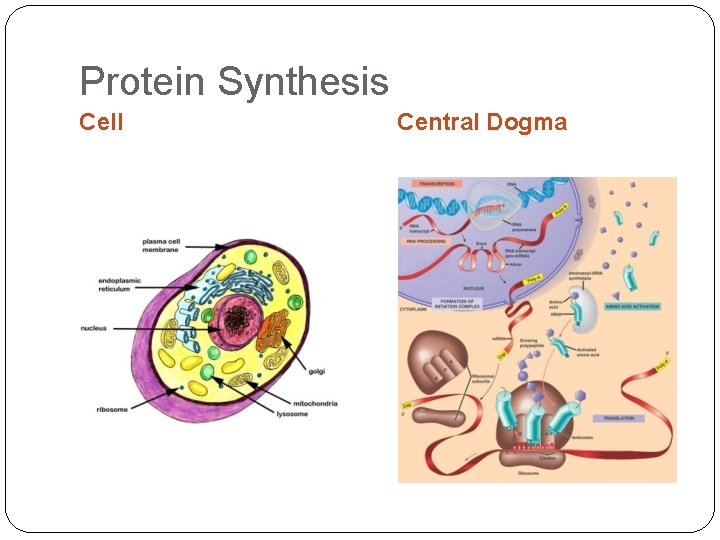
Protein Synthesis Cell Central Dogma