
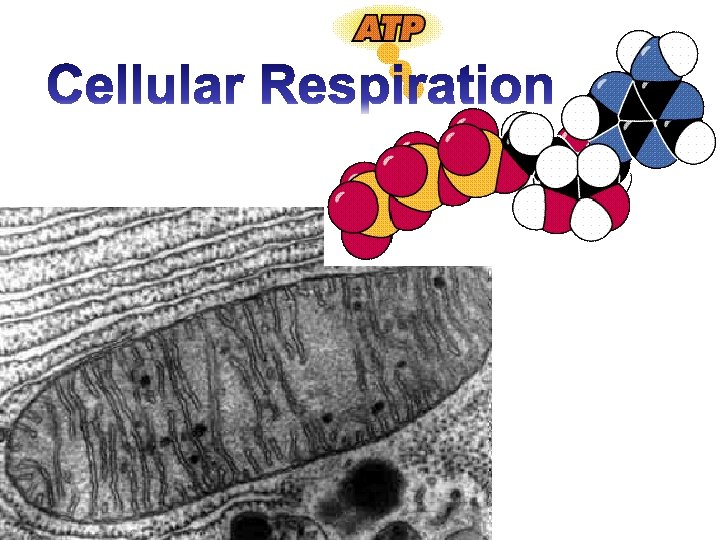
Cellular Respiration Who All eukaryotic cells Purpose Convert
- Slides: 6
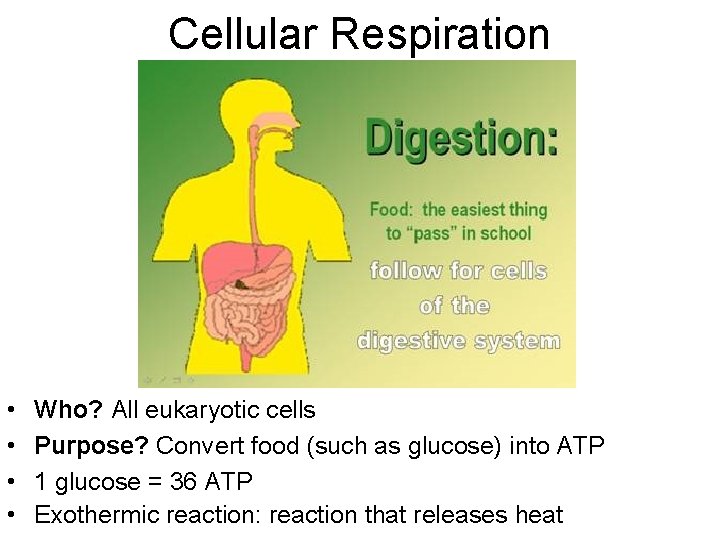
Cellular Respiration • • Who? All eukaryotic cells Purpose? Convert food (such as glucose) into ATP 1 glucose = 36 ATP Exothermic reaction: reaction that releases heat
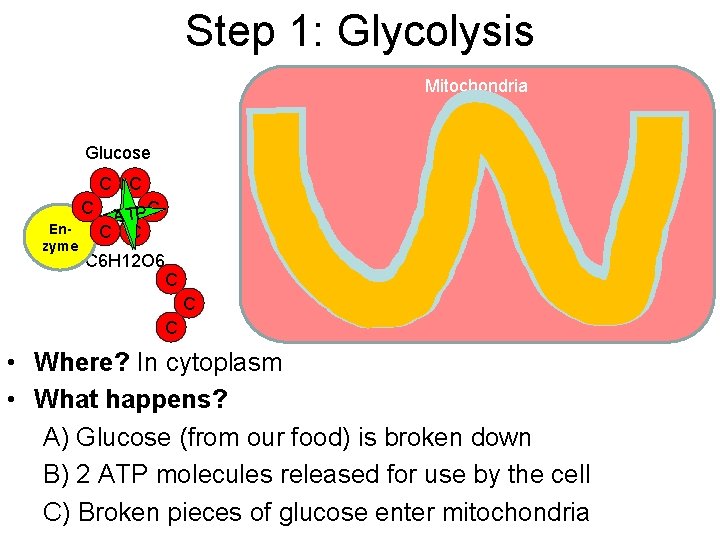
Step 1: Glycolysis Mitochondria Glucose C C C Enzyme PC A ATTP C C C 6 H 12 O 6 C C C • Where? In cytoplasm • What happens? A) Glucose (from our food) is broken down B) 2 ATP molecules released for use by the cell C) Broken pieces of glucose enter mitochondria
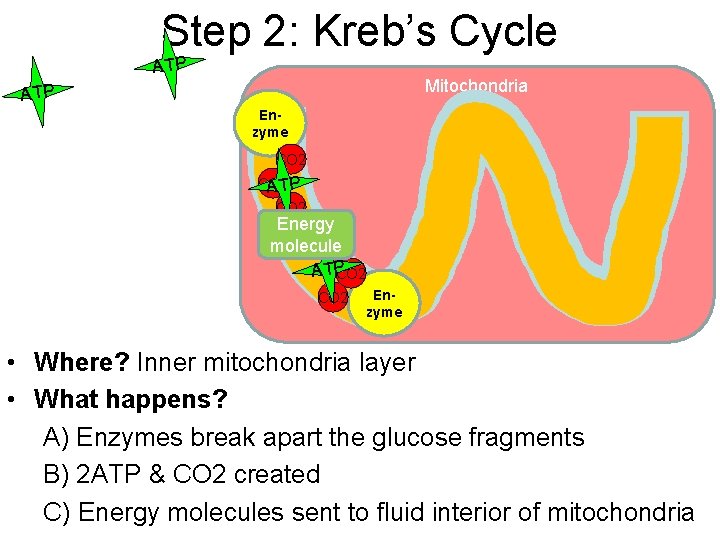
Step 2: Kreb’s Cycle ATP Mitochondria ATP Enzyme CO 2 C ATP CO 2 C Energy molecule CO 2 C ATP CO 2 C Enzyme • Where? Inner mitochondria layer • What happens? A) Enzymes break apart the glucose fragments B) 2 ATP & CO 2 created C) Energy molecules sent to fluid interior of mitochondria
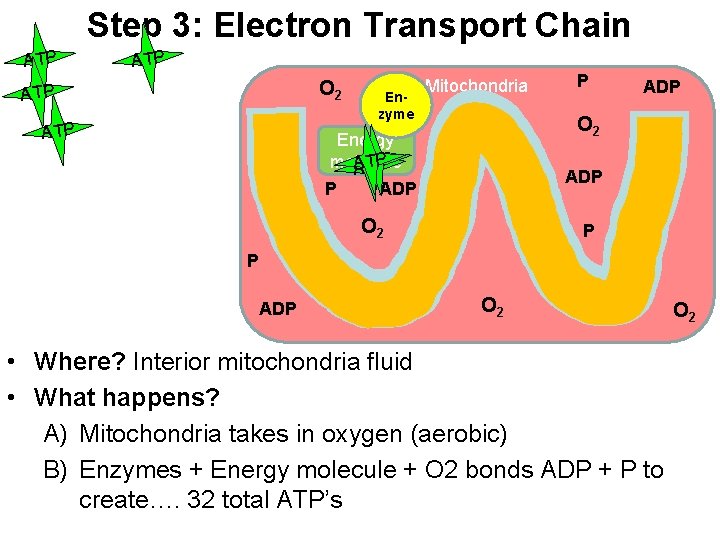
Step 3: Electron Transport Chain ATP O 2 ATP Enzyme Mitochondria P ADP O 2 Energy molecule A PP TTP AAT P ADP O 2 P P ADP O 2 • Where? Interior mitochondria fluid • What happens? A) Mitochondria takes in oxygen (aerobic) B) Enzymes + Energy molecule + O 2 bonds ADP + P to create…. 32 total ATP’s O 2
Kobe Kuiz 1) 2) 3) 4) 5) 6) 7) Which molecule is the energy molecule of cells? Which types of organisms perform cellular respiration? Where does glycolysis occur? What is broken down during glycolysis? What is created as a result of glycolysis? Where is aerobic respiration performed? Name the 2 stages of respiration that take place in the mitochondria. 8) Which waste gas is created by the Kreb’s cycle? 9) How many ATP molecules are made during glycolysis? Kreb’s cycle? Electron transport chain? In total?