
Cellular Respiration Uses chemical E in food to
- Slides: 13
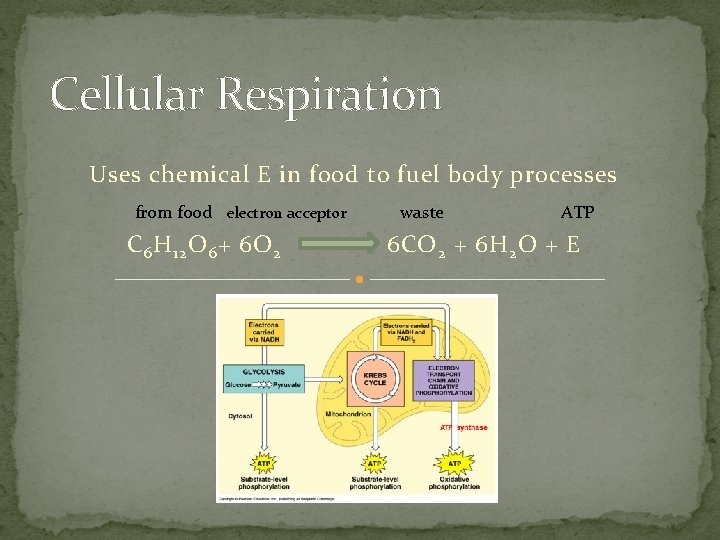
Cellular Respiration Uses chemical E in food to fuel body processes from food electron acceptor C 6 H 12 O 6 + 6 O 2 waste ATP 6 CO 2 + 6 H 2 O + E
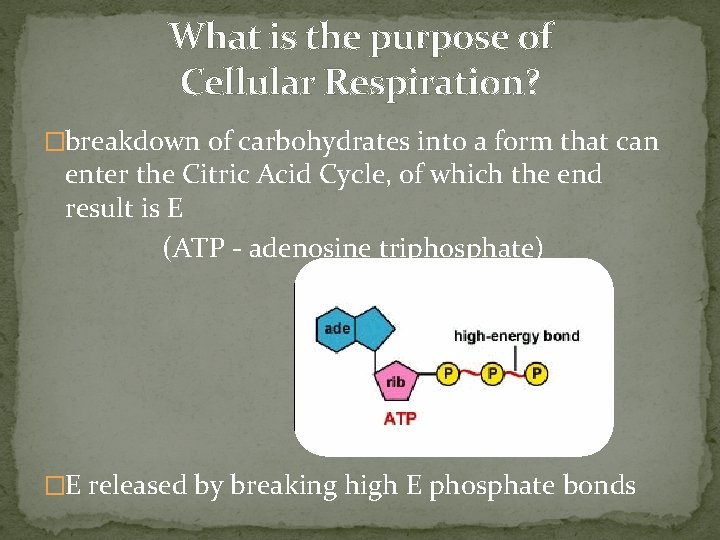
What is the purpose of Cellular Respiration? �breakdown of carbohydrates into a form that can enter the Citric Acid Cycle, of which the end result is E (ATP - adenosine triphosphate) �E released by breaking high E phosphate bonds
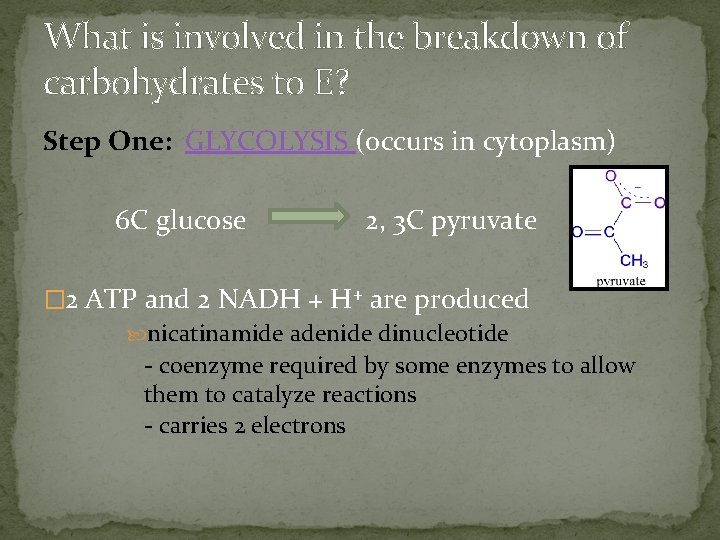
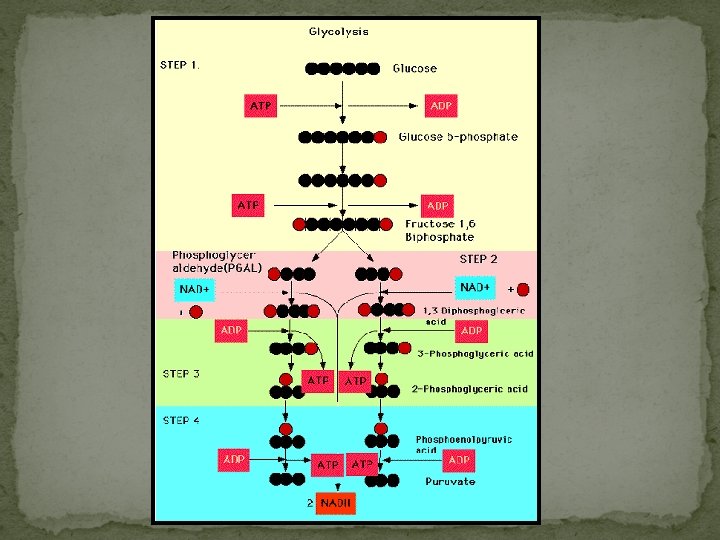
What is involved in the breakdown of carbohydrates to E? Step One: GLYCOLYSIS (occurs in cytoplasm) 6 C glucose 2, 3 C pyruvate � 2 ATP and 2 NADH + H+ are produced nicatinamide adenide dinucleotide - coenzyme required by some enzymes to allow them to catalyze reactions - carries 2 electrons
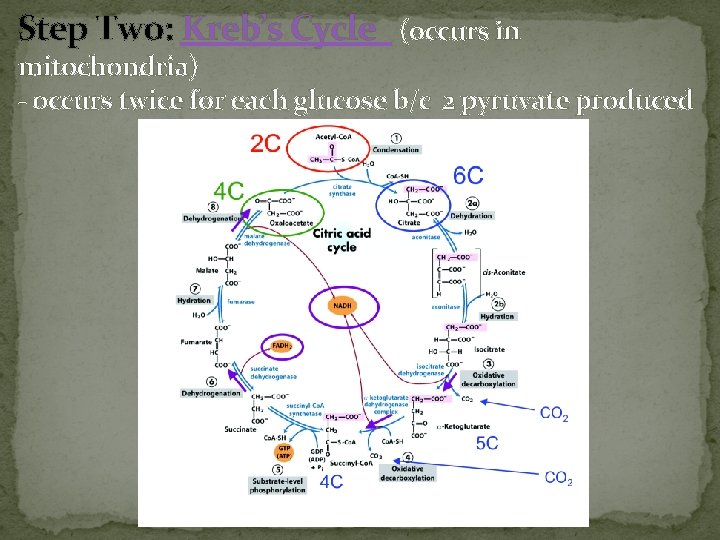
Step Two: Kreb’s Cycle (occurs in mitochondria) - occurs twice for each glucose b/c 2 pyruvate produced
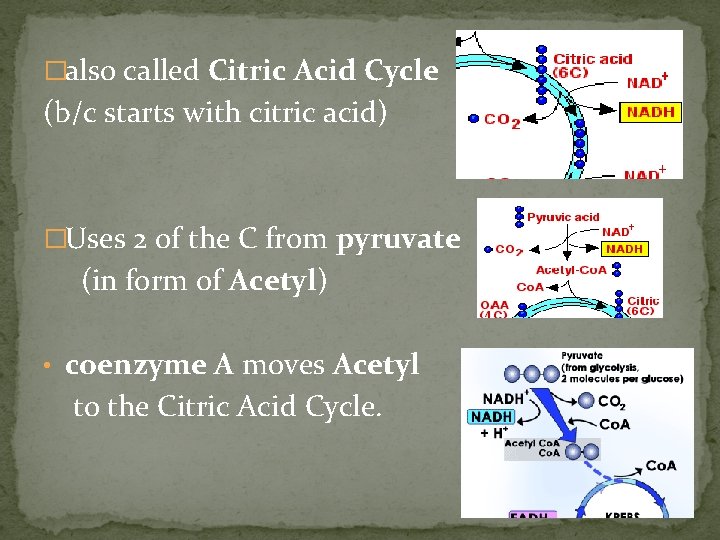
�also called Citric Acid Cycle (b/c starts with citric acid) �Uses 2 of the C from pyruvate (in form of Acetyl) • coenzyme A moves Acetyl to the Citric Acid Cycle.
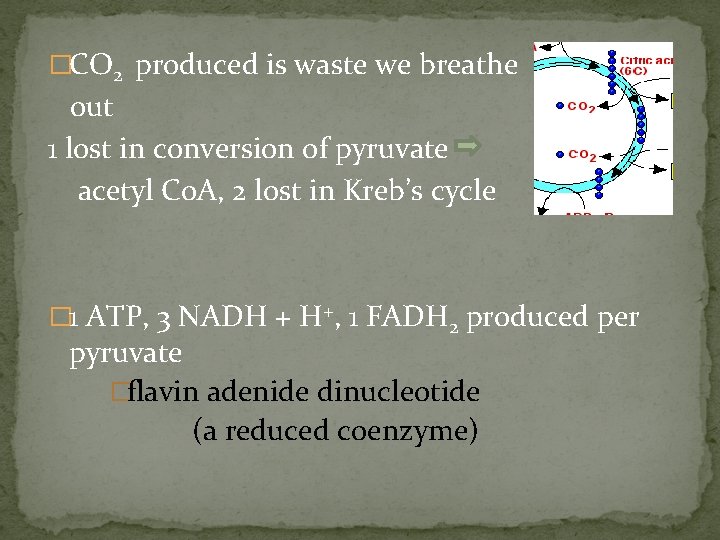
�CO 2 produced is waste we breathe out 1 lost in conversion of pyruvate acetyl Co. A, 2 lost in Kreb’s cycle � 1 ATP, 3 NADH + H+, 1 FADH 2 produced per pyruvate �flavin adenide dinucleotide (a reduced coenzyme)
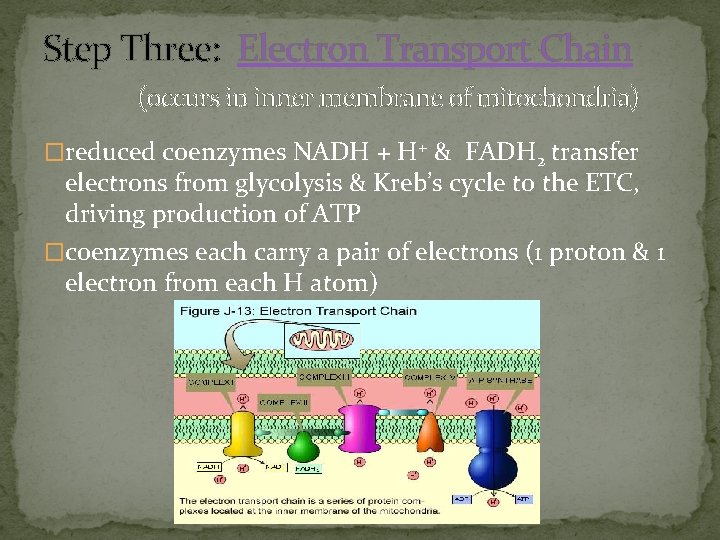
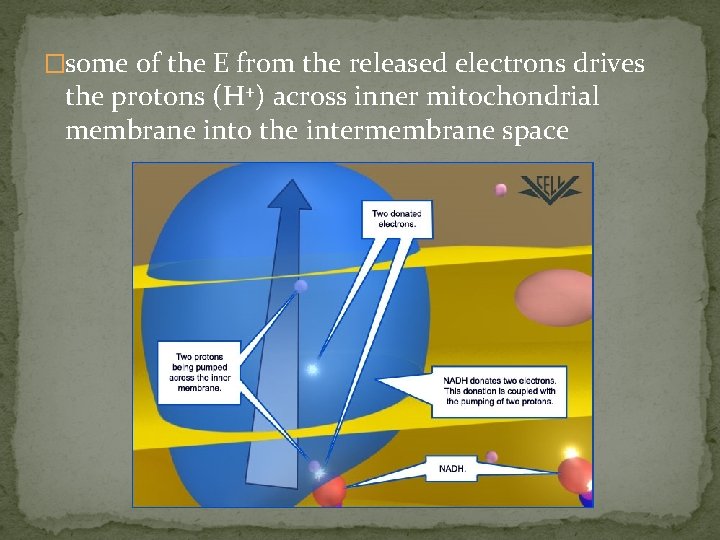
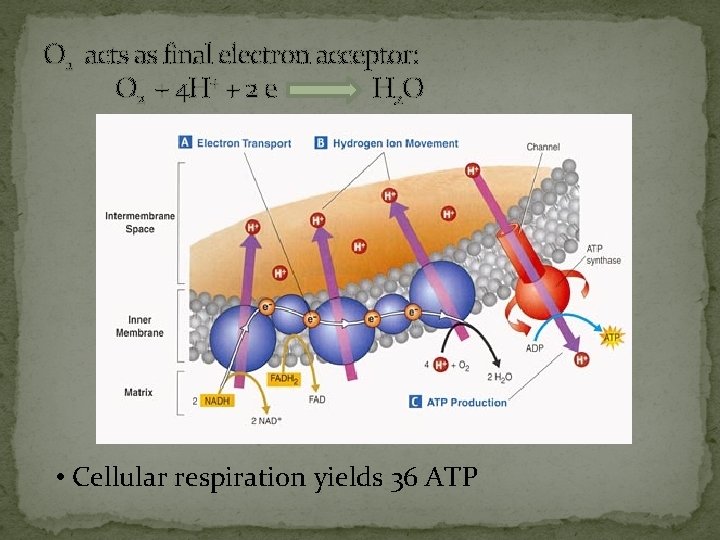
Step Three: Electron Transport Chain (occurs in inner membrane of mitochondria) �reduced coenzymes NADH + H+ & FADH 2 transfer electrons from glycolysis & Kreb’s cycle to the ETC, driving production of ATP �coenzymes each carry a pair of electrons (1 proton & 1 electron from each H atom)
�some of the E from the released electrons drives the protons (H+) across inner mitochondrial membrane into the intermembrane space
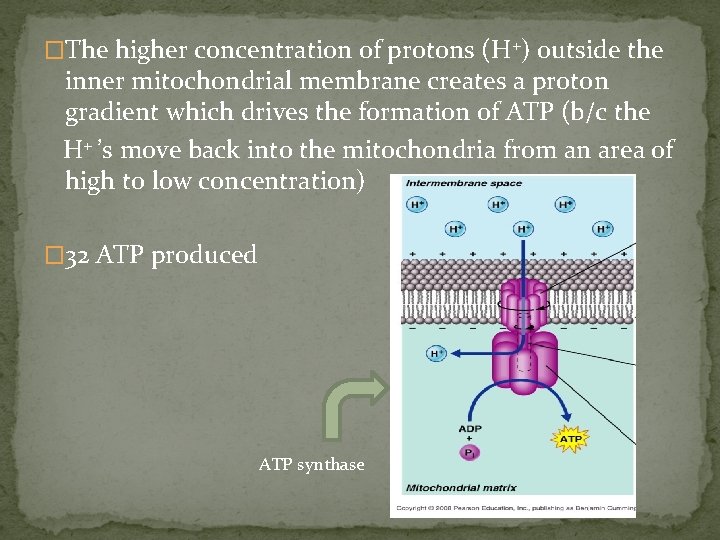
�The higher concentration of protons (H+) outside the inner mitochondrial membrane creates a proton gradient which drives the formation of ATP (b/c the H+ ’s move back into the mitochondria from an area of high to low concentration) � 32 ATP produced ATP synthase
O 2 acts as final electron acceptor: O 2 + 4 H+ + 2 e H 2 O • Cellular respiration yields 36 ATP
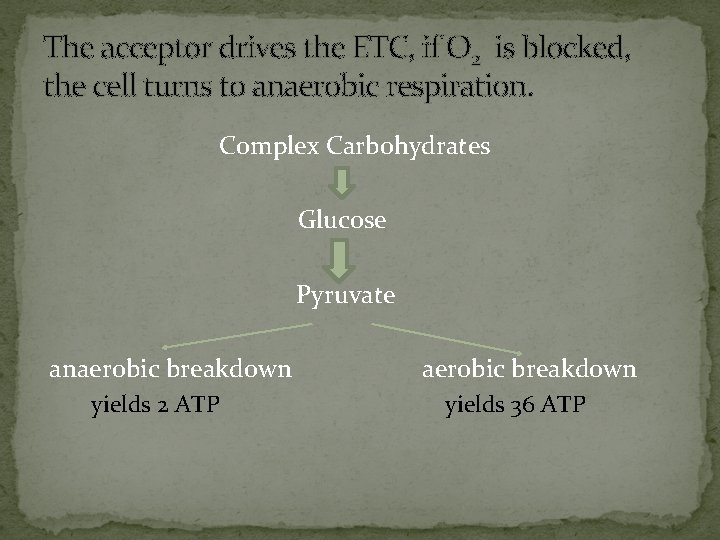
The acceptor drives the ETC, if O 2 is blocked, the cell turns to anaerobic respiration. Complex Carbohydrates Glucose Pyruvate anaerobic breakdown yields 2 ATP aerobic breakdown yields 36 ATP
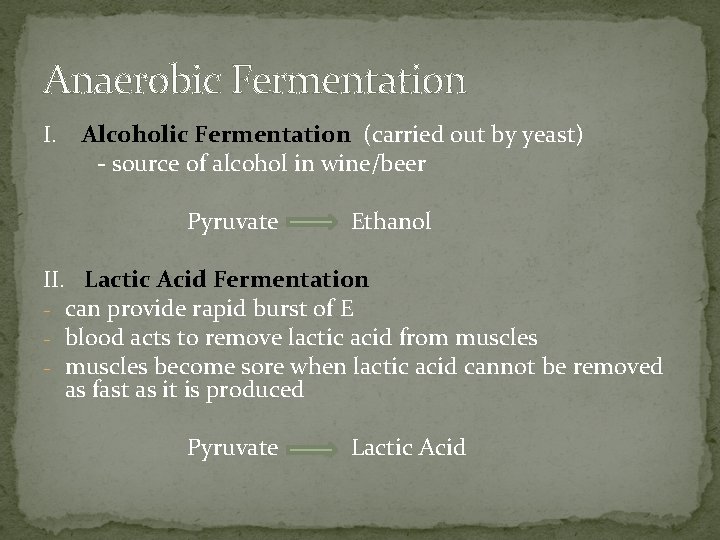
Anaerobic Fermentation I. Alcoholic Fermentation (carried out by yeast) - source of alcohol in wine/beer Pyruvate Ethanol II. Lactic Acid Fermentation - can provide rapid burst 0 f E - blood acts to remove lactic acid from muscles - muscles become sore when lactic acid cannot be removed as fast as it is produced Pyruvate Lactic Acid