
Cellular Respiration Things to Know Where do organisms
- Slides: 8
Cellular Respiration • Things to Know • Where do organisms get there energy? • What is cellular respiration? • What is the relationship b/t photosynthesis & cellular respiration?
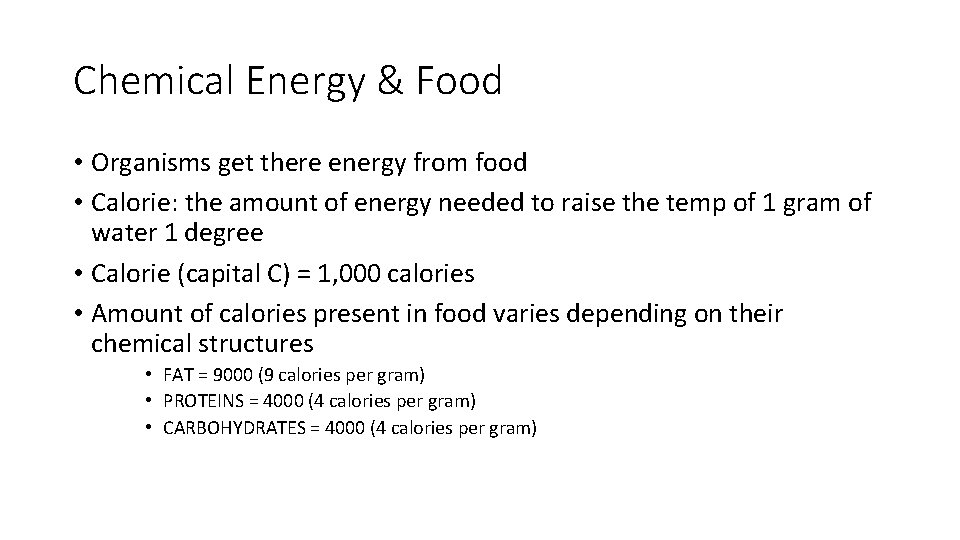
Chemical Energy & Food • Organisms get there energy from food • Calorie: the amount of energy needed to raise the temp of 1 gram of water 1 degree • Calorie (capital C) = 1, 000 calories • Amount of calories present in food varies depending on their chemical structures • FAT = 9000 (9 calories per gram) • PROTEINS = 4000 (4 calories per gram) • CARBOHYDRATES = 4000 (4 calories per gram)
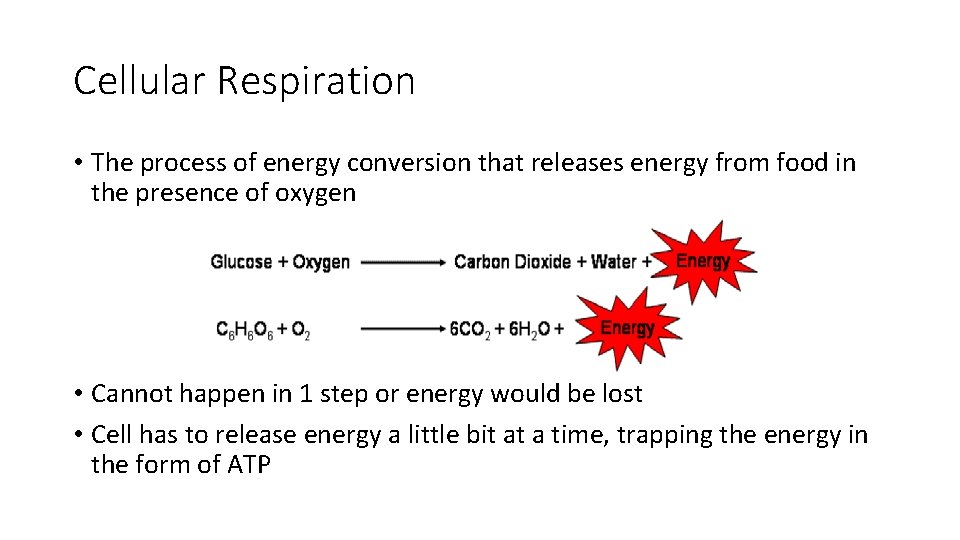
Cellular Respiration • The process of energy conversion that releases energy from food in the presence of oxygen • Cannot happen in 1 step or energy would be lost • Cell has to release energy a little bit at a time, trapping the energy in the form of ATP
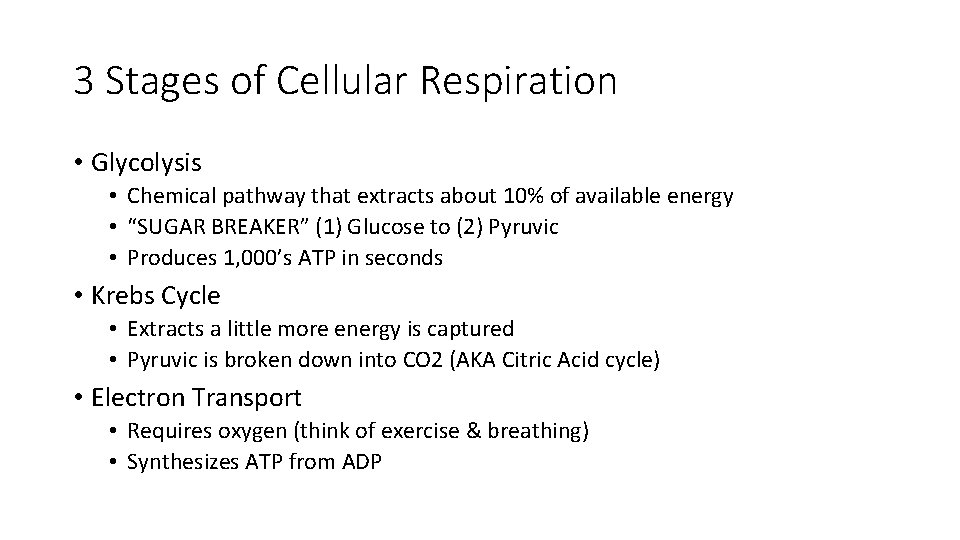
3 Stages of Cellular Respiration • Glycolysis • Chemical pathway that extracts about 10% of available energy • “SUGAR BREAKER” (1) Glucose to (2) Pyruvic • Produces 1, 000’s ATP in seconds • Krebs Cycle • Extracts a little more energy is captured • Pyruvic is broken down into CO 2 (AKA Citric Acid cycle) • Electron Transport • Requires oxygen (think of exercise & breathing) • Synthesizes ATP from ADP
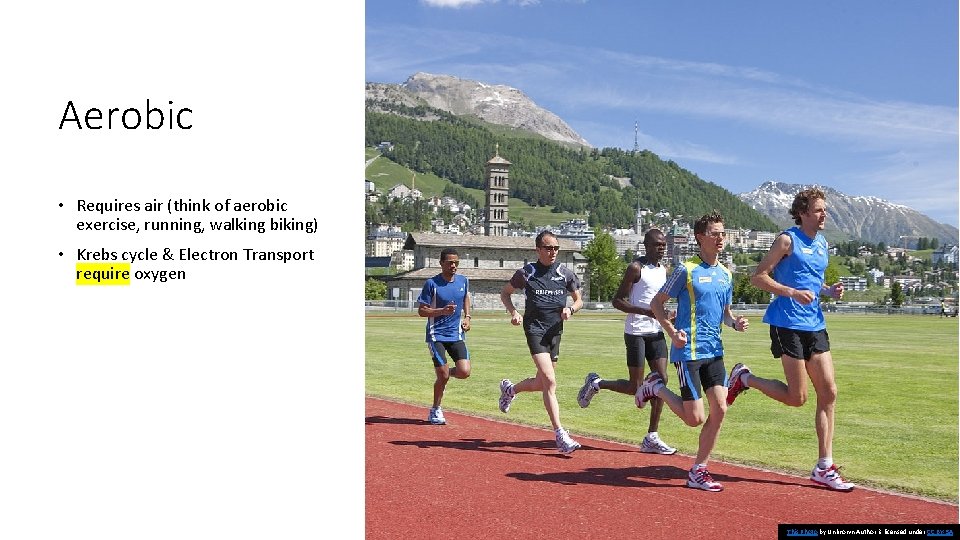
Aerobic • Requires air (think of aerobic exercise, running, walking biking) • Krebs cycle & Electron Transport require oxygen This Photo by Unknown Author is licensed under CC BY-SA
Anaerobic • Does not require oxygen • Glycolysis is ANAEROBIC • Still part of cellular respiration b/c it’s final products are key reactants for the aerobic stages
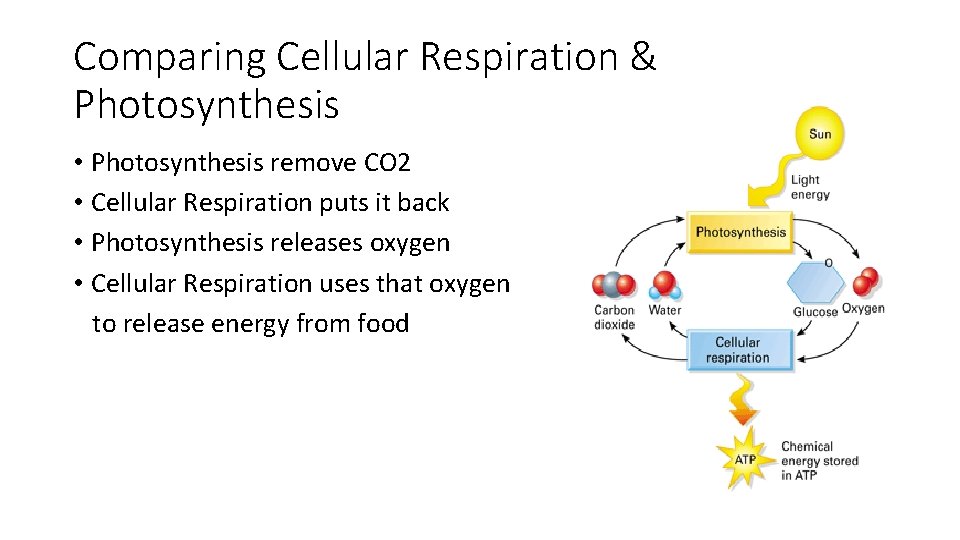
Comparing Cellular Respiration & Photosynthesis • Photosynthesis remove CO 2 • Cellular Respiration puts it back • Photosynthesis releases oxygen • Cellular Respiration uses that oxygen to release energy from food
Key Topics • • • What does a calorie content of food mean? Case study (pg. 311) answer #1, 2 & 3 Which stages of Cellular Respiration are Aerobic? What does that mean? Compare & contrast Cellular Respiration & Photosynthesis Pg. 315, What do the dark balls at the top figure 10 -3 represent? What does it mean to invest a molecule of ATP (figure 10 -3) What are the products of glycolysis? What are the products of the Krebs cycle? What are the products of Electron transport? What is the Matrix?