
Cellular Respiration The big picture A Human Example
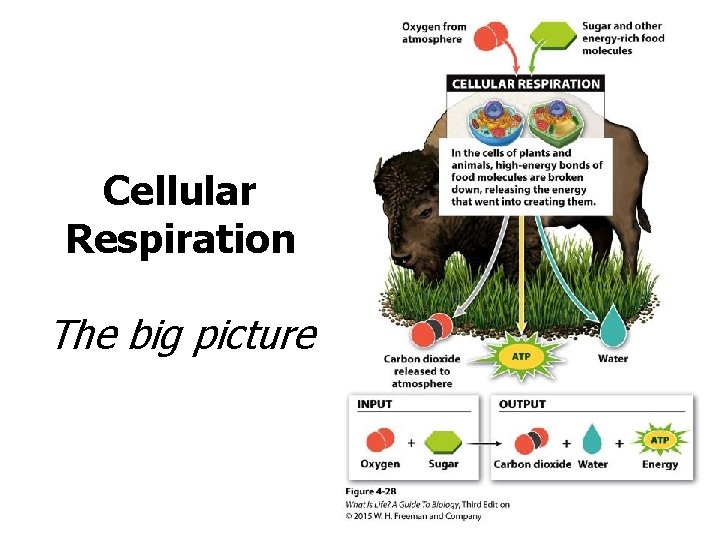
Cellular Respiration The big picture
A Human Example Eat food q Digest it q Absorb nutrient molecules into bloodstream q Deliver nutrient molecules to the cells q q At this point, our cells can begin to extract some of the energy • stored in the bonds of the food molecules
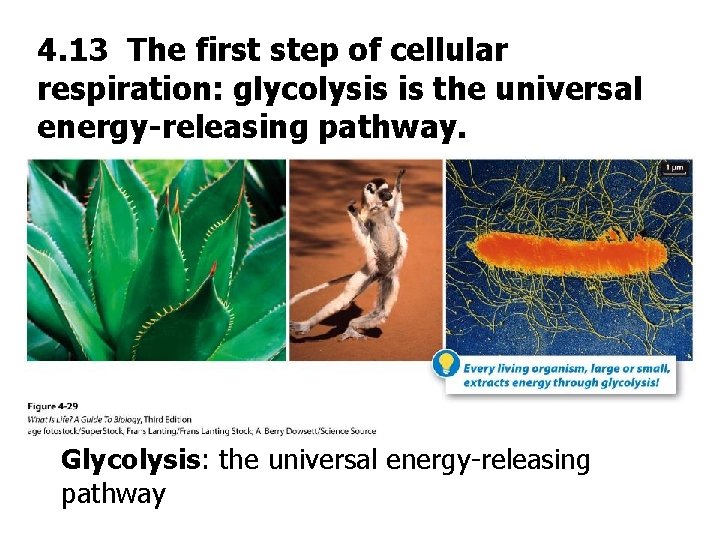
4. 13 The first step of cellular respiration: glycolysis is the universal energy-releasing pathway. Glycolysis: the universal energy-releasing pathway
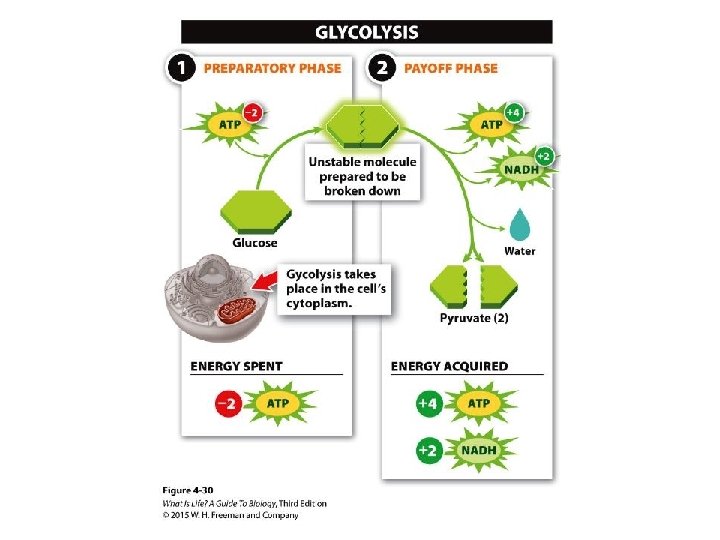
Glycolysis Three of the ten steps yield energy – quickly harnessed to make ATP. High-energy electrons are transferred to NADH. Net result: q each glucose molecule broken down into two molecules of pyruvate q ATP molecules produced q NADH molecules store high-energy electrons
Glycolysis occurs in ___ A. Mitochondria B. The cytoplasm C. Chloroplasts D. Cell membrane
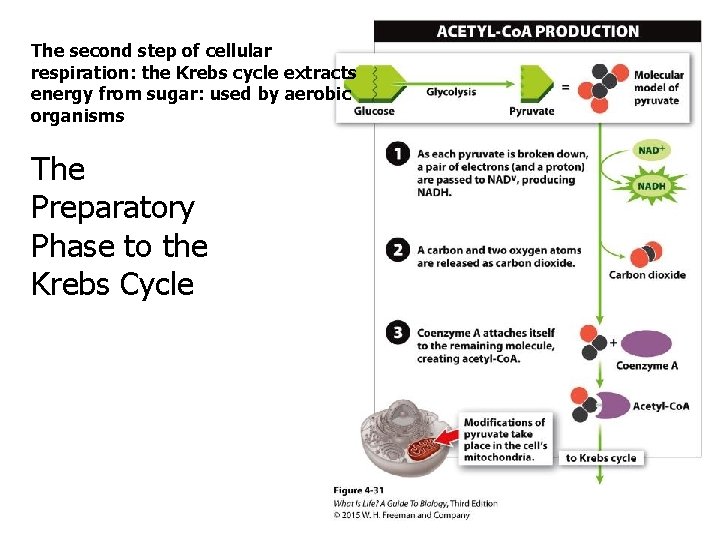
The second step of cellular respiration: the Krebs cycle extracts energy from sugar: used by aerobic organisms The Preparatory Phase to the Krebs Cycle
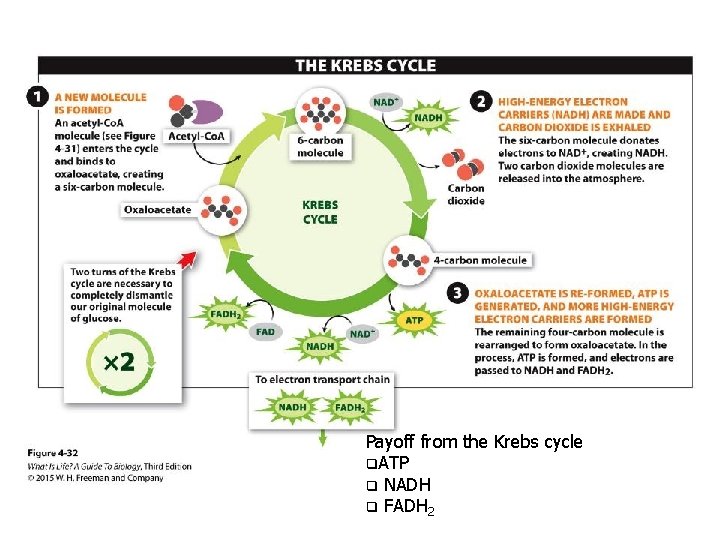
Payoff from the Krebs cycle q. ATP q NADH q FADH 2
The third step in cellular respiration: ATP is built in the electron transport chain q Two key features of mitochondria are essential to their ability to harness energy from molecules: • Feature 1: mitochondrial “bag-within-a-bag” structure • Feature 2: electron carriers organized within the inner “bag”
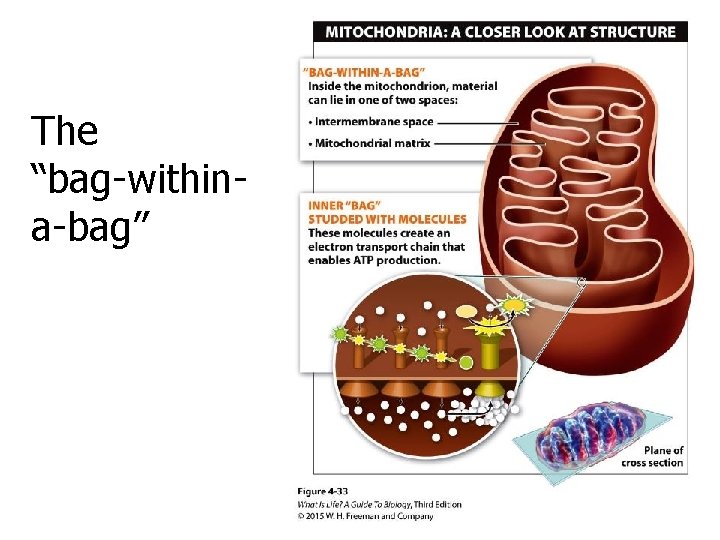
The “bag-withina-bag”
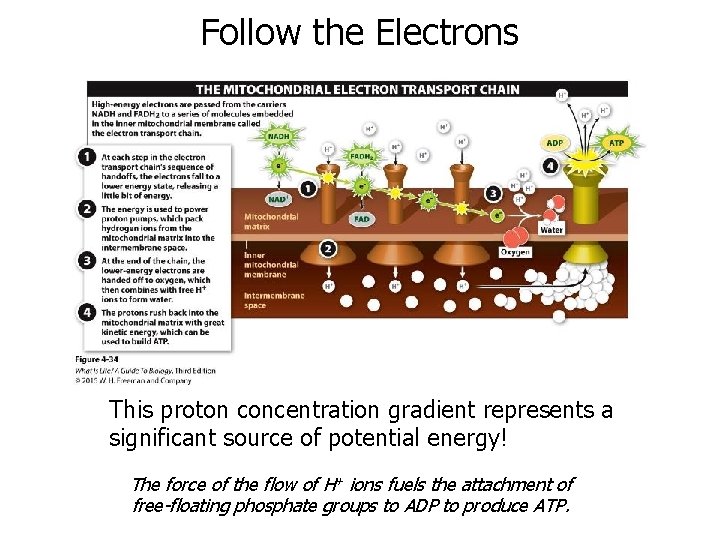
Follow the Electrons This proton concentration gradient represents a significant source of potential energy! The force of the flow of H+ ions fuels the attachment of free-floating phosphate groups to ADP to produce ATP.
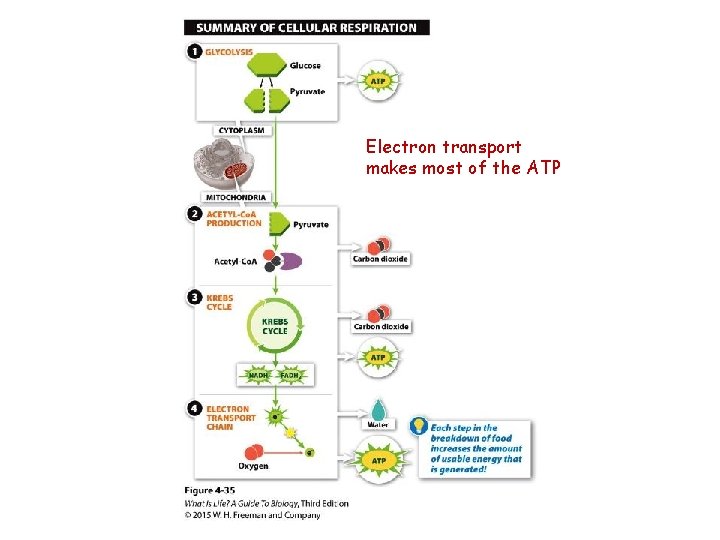
Electron transport makes most of the ATP
Which process is similar between cellular respiration and photosynthesis? 1. Both break down sugar to form ATP and electron carriers 2. Both use light to produce ATP and electron carriers 3. Both produce a proton gradient for ATP production 4. Both use oxygen as a final electron acceptor
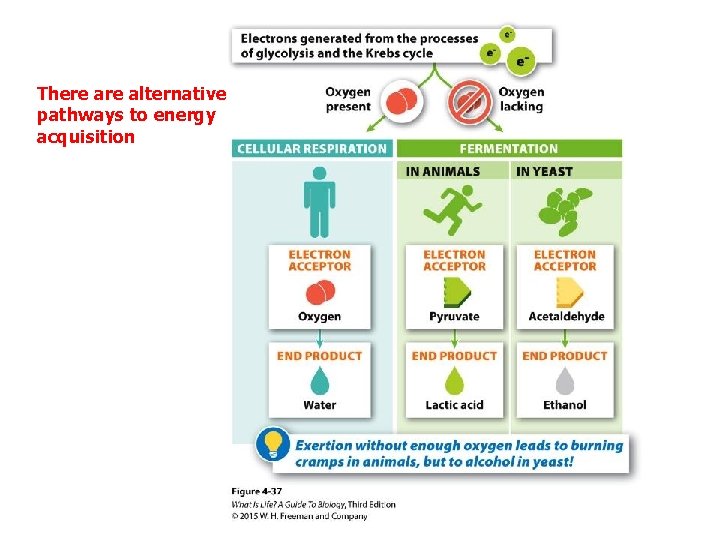
There alternative pathways to energy acquisition
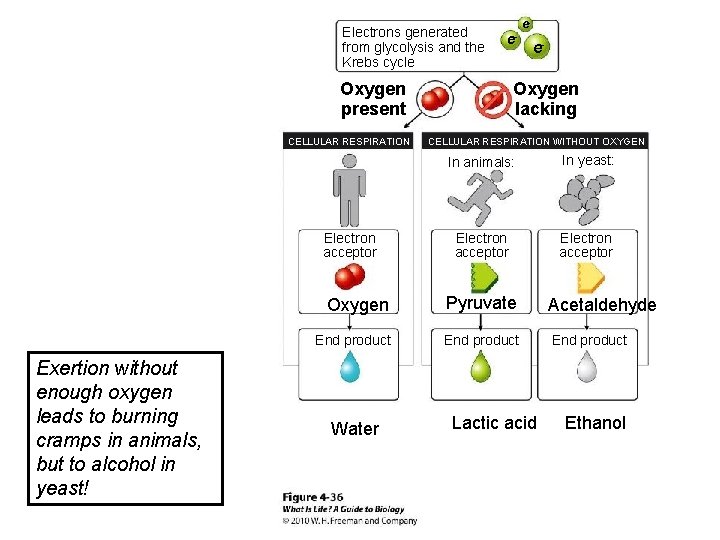
Electrons generated from glycolysis and the Krebs cycle e- e- Oxygen lacking Oxygen present CELLULAR RESPIRATION Electron acceptor Exertion without enough oxygen leads to burning cramps in animals, but to alcohol in yeast! e- CELLULAR RESPIRATION WITHOUT OXYGEN In animals: In yeast: Electron acceptor Oxygen Pyruvate Acetaldehyde End product Water Lactic acid Ethanol
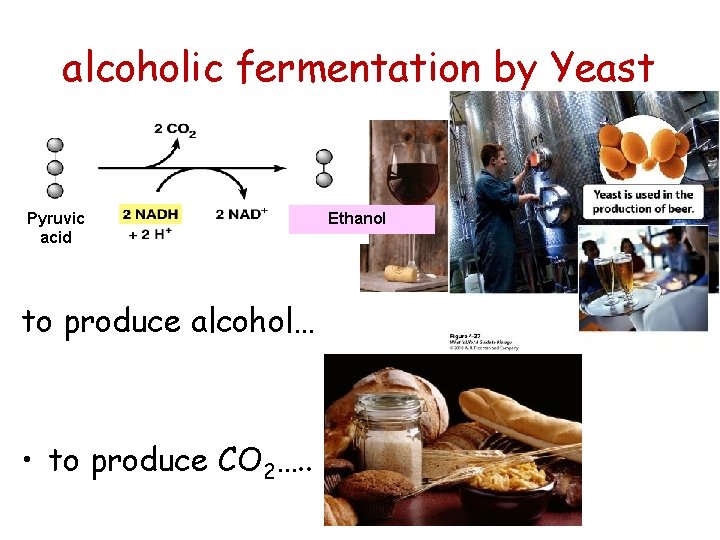
alcoholic fermentation by Yeast Pyruvic acid to produce alcohol… • to produce CO 2…. . Ethanol
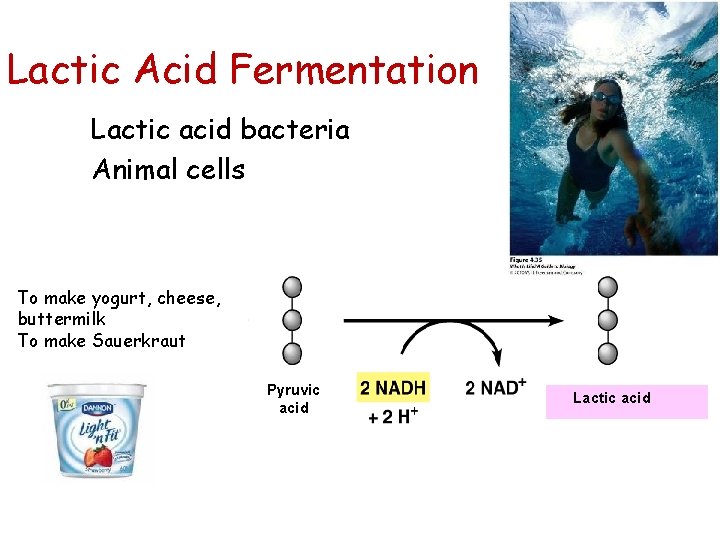
Lactic Acid Fermentation Lactic acid bacteria Animal cells To make yogurt, cheese, buttermilk To make Sauerkraut Pyruvic acid Lactic acid
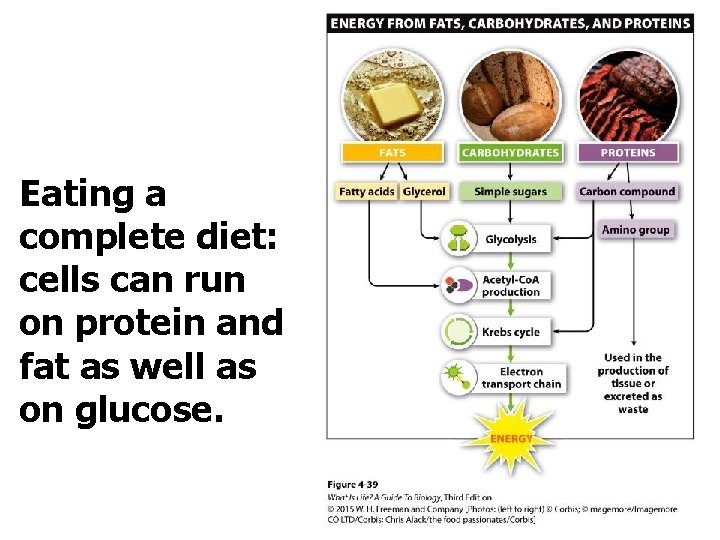
Eating a complete diet: cells can run on protein and fat as well as on glucose.
What makes your muscles sore and stiff the following day after intense exercise? A. Alcoholic fermentation B. Lactic acid fermentation C. Both A and B D. None of the above
- Slides: 19