
CELLULAR RESPIRATION Stages 2 4 Where does is
- Slides: 12
CELLULAR RESPIRATION Stages 2 -4
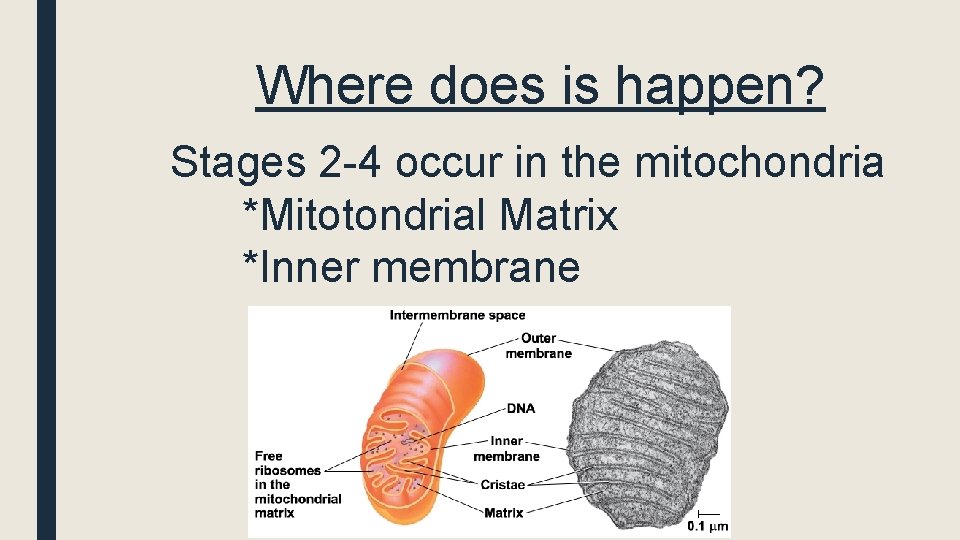
Where does is happen? Stages 2 -4 occur in the mitochondria *Mitotondrial Matrix *Inner membrane
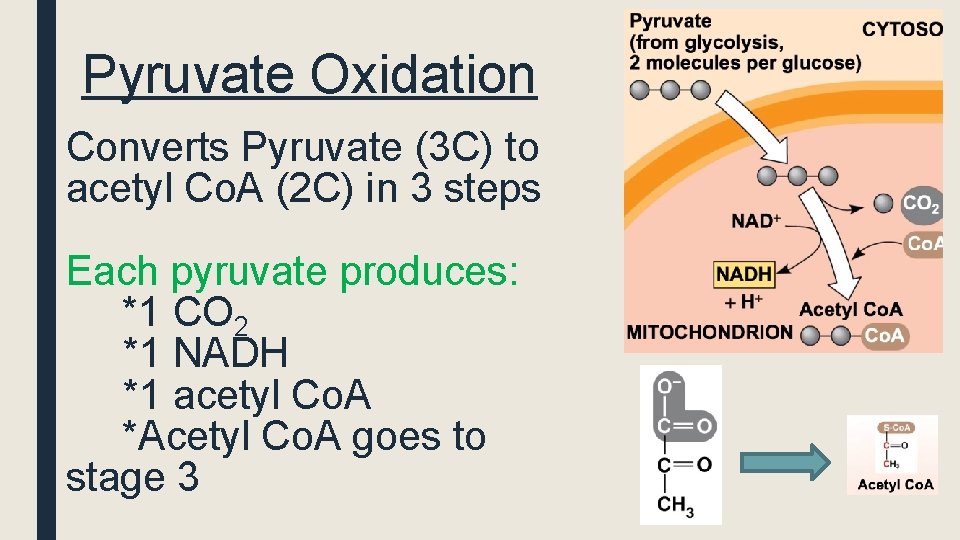
Pyruvate Oxidation Converts Pyruvate (3 C) to acetyl Co. A (2 C) in 3 steps Each pyruvate produces: *1 CO 2 *1 NADH *1 acetyl Co. A *Acetyl Co. A goes to stage 3
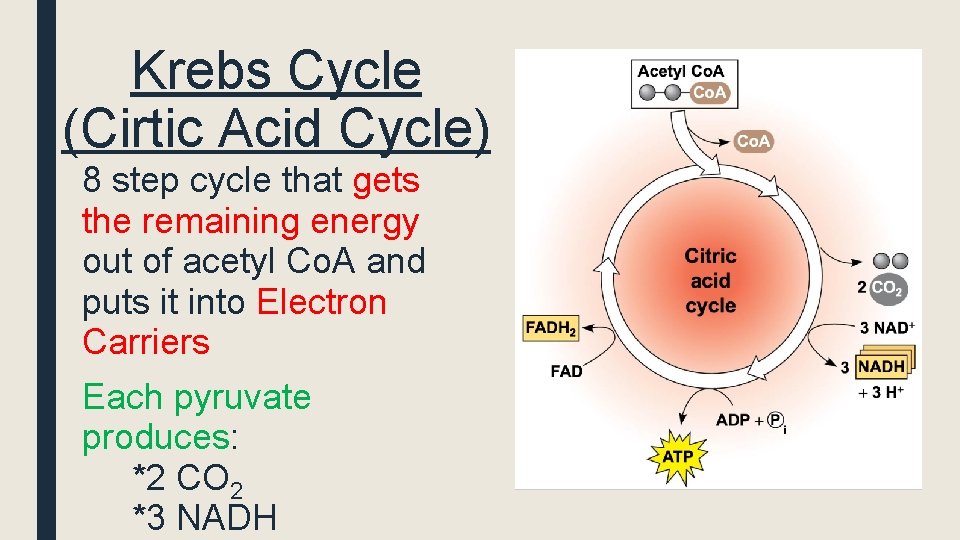
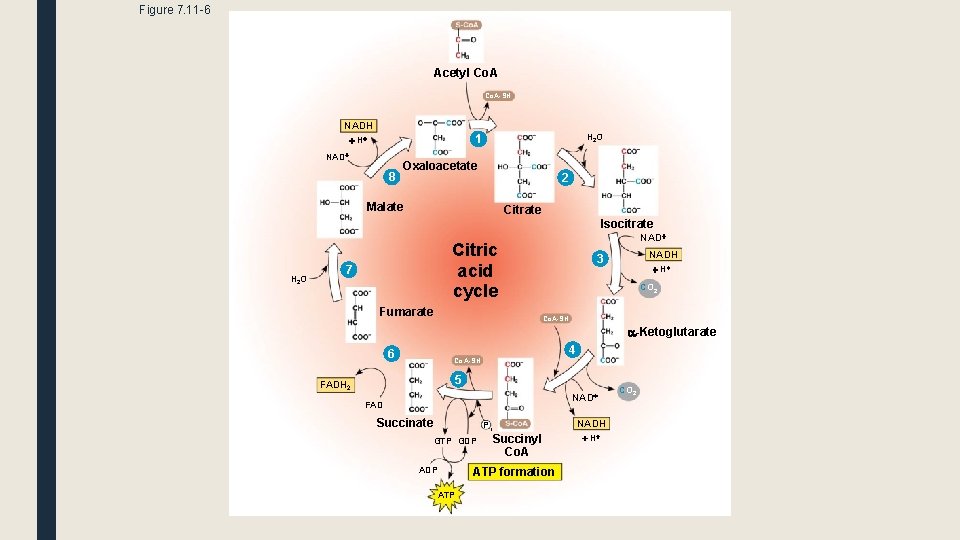
Krebs Cycle (Cirtic Acid Cycle) 8 step cycle that gets the remaining energy out of acetyl Co. A and puts it into Electron Carriers Each pyruvate produces: *2 CO 2 *3 NADH
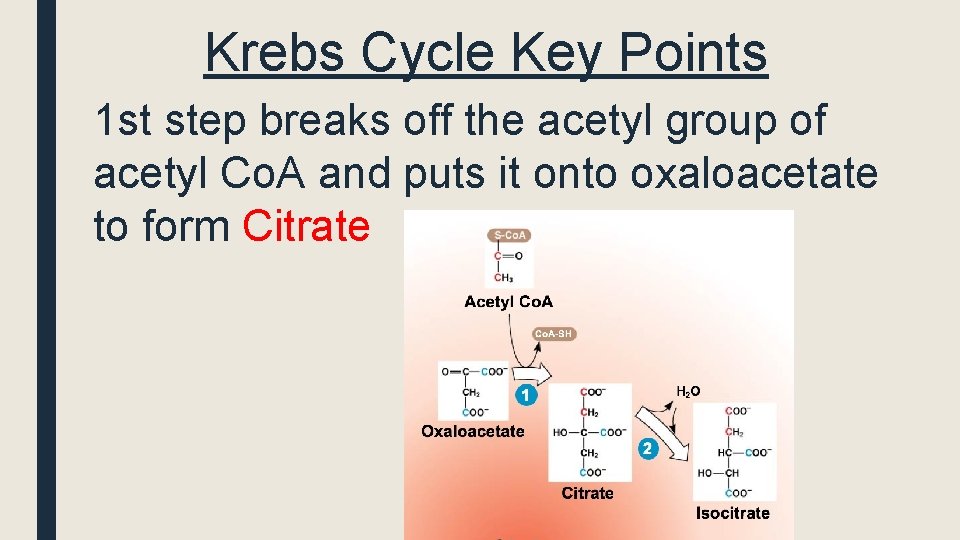
Krebs Cycle Key Points 1 st step breaks off the acetyl group of acetyl Co. A and puts it onto oxaloacetate to form Citrate
Krebs Cycle Key Points Next 7 steps include several Redox reaction that produce 3 NADH, 1 FADH 2 and decompose citrate back to oxaloacetate (for each pyruvate)
Figure 7. 11 -6 Acetyl Co. A-SH NADH H 2 O 1 H NAD 8 Oxaloacetate 2 Malate Citrate Isocitrate H 2 O NAD Citric acid cycle 7 Fumarate NADH 3 H CO 2 Co. A-SH -Ketoglutarate 6 4 Co. A-SH 5 FADH 2 NAD FAD Succinate Pi GTP GDP ATP NADH Succinyl Co. A ATP formation H CO 2
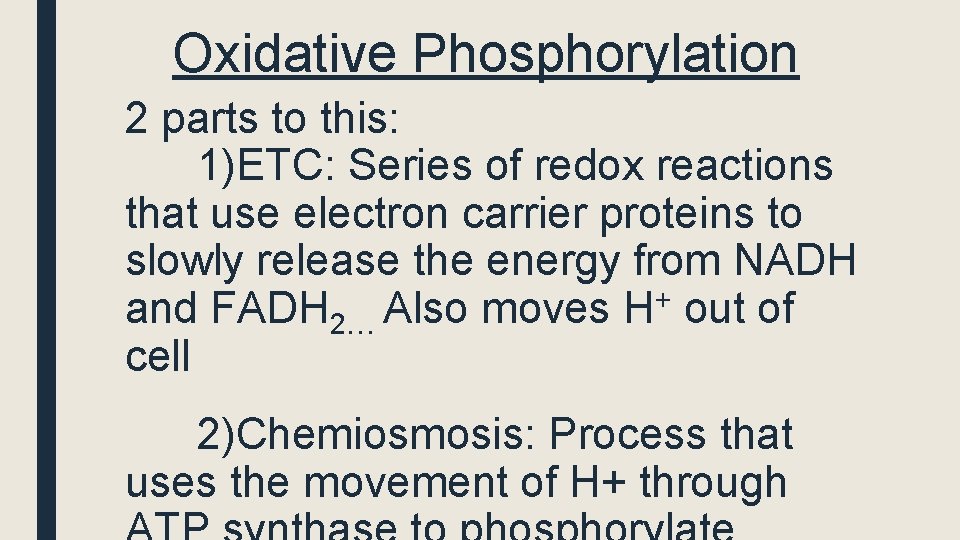
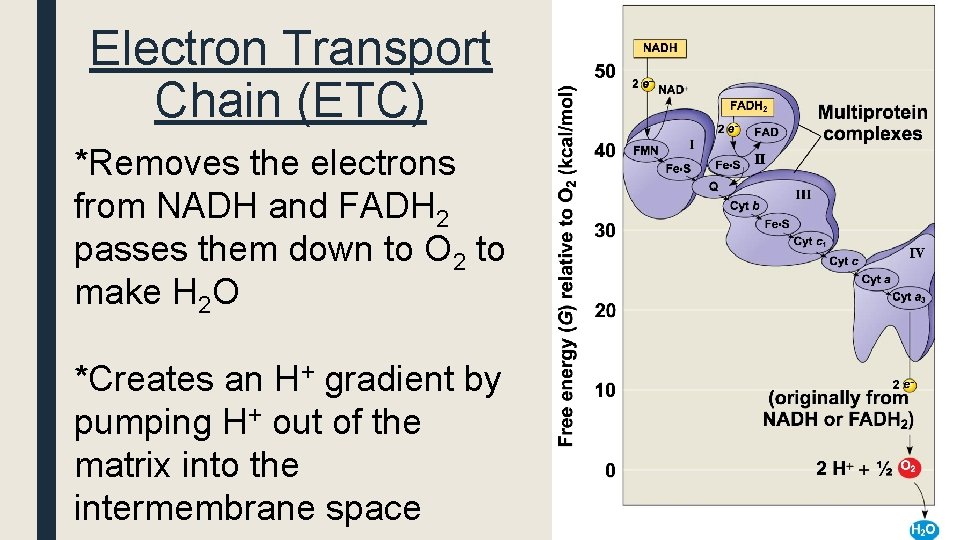
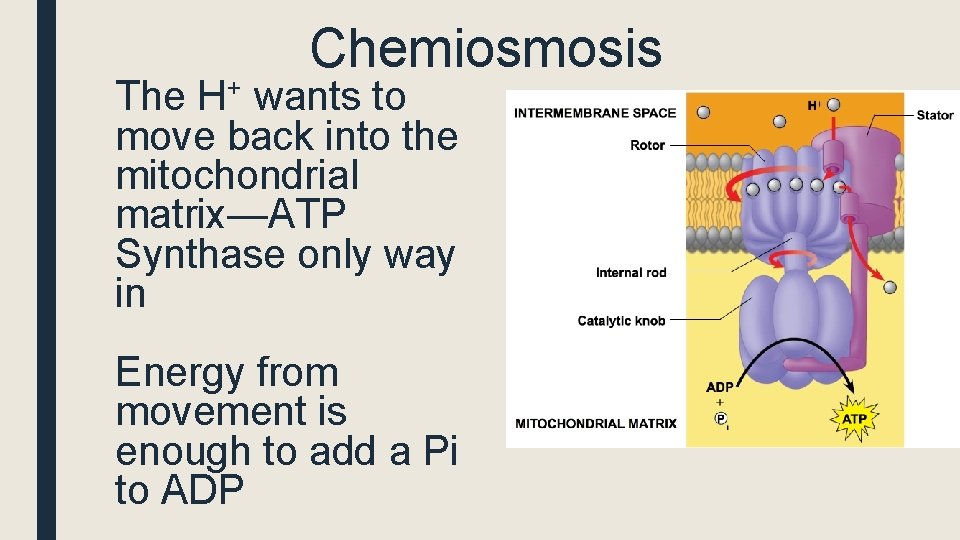
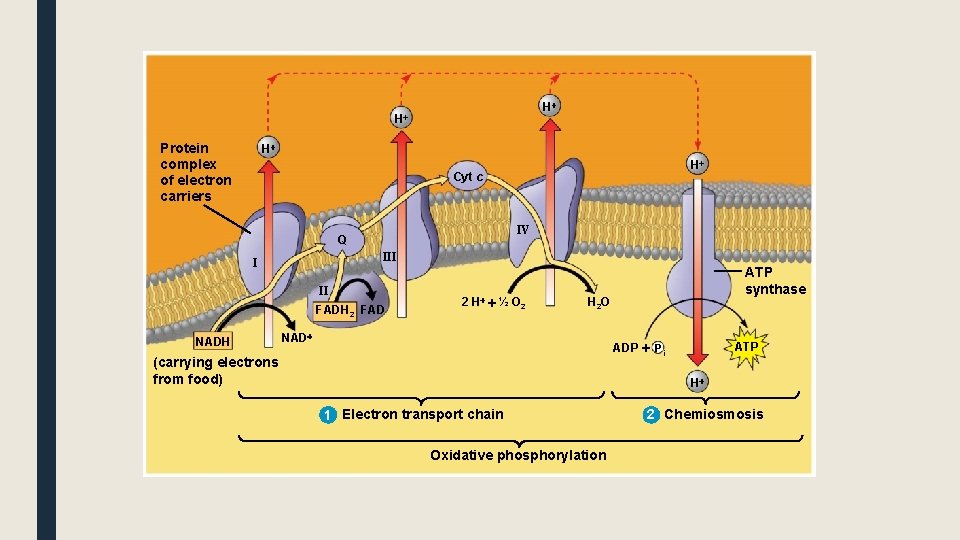
Oxidative Phosphorylation 2 parts to this: 1)ETC: Series of redox reactions that use electron carrier proteins to slowly release the energy from NADH and FADH 2… Also moves H+ out of cell 2)Chemiosmosis: Process that uses the movement of H+ through
Electron Transport Chain (ETC) *Removes the electrons from NADH and FADH 2 passes them down to O 2 to make H 2 O *Creates an H+ gradient by pumping H+ out of the matrix into the intermembrane space
Chemiosmosis The H+ wants to move back into the mitochondrial matrix—ATP Synthase only way in Energy from movement is enough to add a Pi to ADP
H H Protein complex of electron carriers H H Cyt c IV Q III I II FADH 2 FAD NADH 2 H ½ O 2 ATP synthase H 2 O NAD ADP P i (carrying electrons from food) ATP H 1 Electron transport chain Oxidative phosphorylation 2 Chemiosmosis
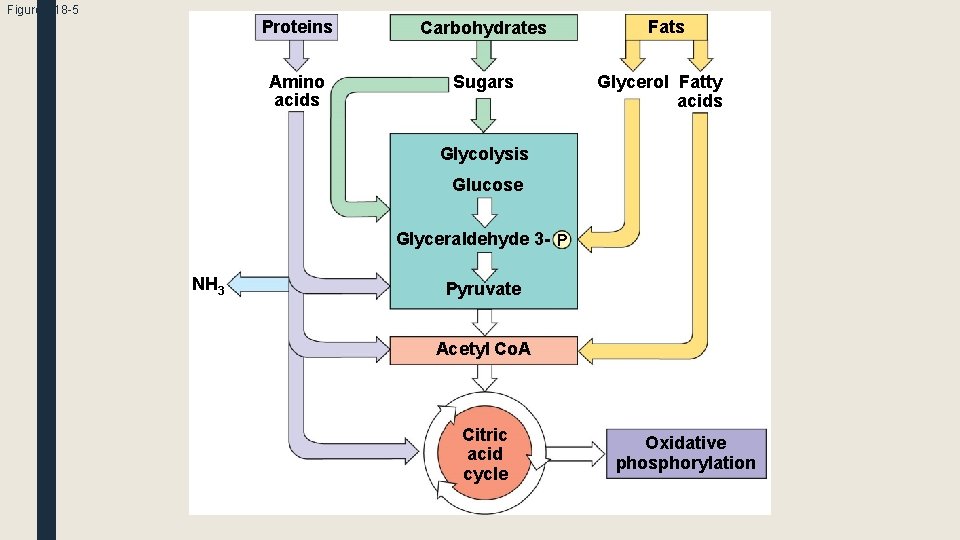
Figure 7. 18 -5 Proteins Carbohydrates Amino acids Sugars Fats Glycerol Fatty acids Glycolysis Glucose Glyceraldehyde 3 - P NH 3 Pyruvate Acetyl Co. A Citric acid cycle Oxidative phosphorylation