
Cellular Respiration Stage 2 3 Oxidation of Pyruvate
- Slides: 17
Cellular Respiration Stage 2 & 3: Oxidation of Pyruvate Krebs Cycle AP Biology 2006 -2007
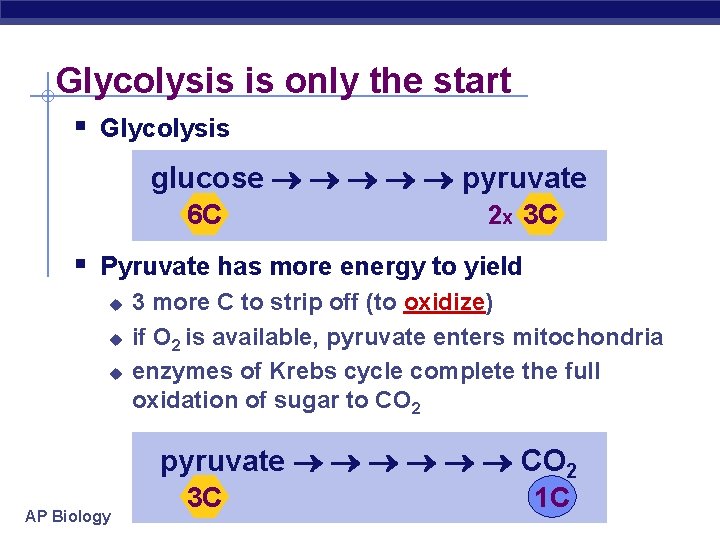
Glycolysis is only the start § Glycolysis glucose pyruvate 6 C 2 x 3 C § Pyruvate has more energy to yield u u u 3 more C to strip off (to oxidize) if O 2 is available, pyruvate enters mitochondria enzymes of Krebs cycle complete the full oxidation of sugar to CO 2 pyruvate CO 2 AP Biology 3 C 1 C
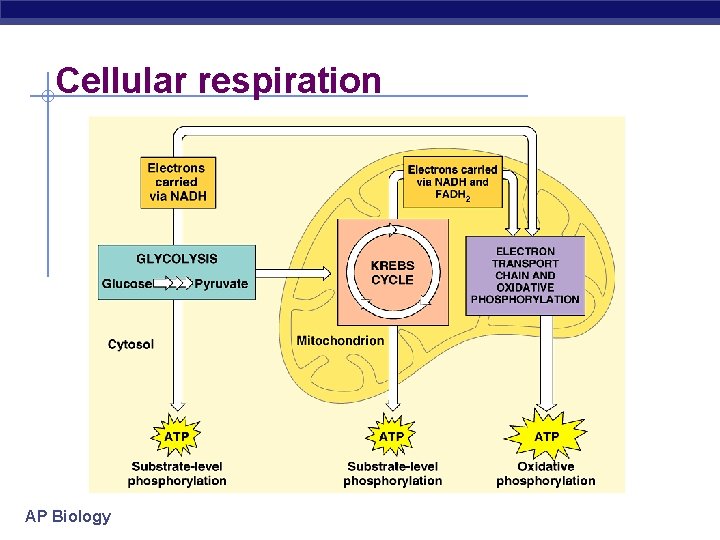
Cellular respiration AP Biology
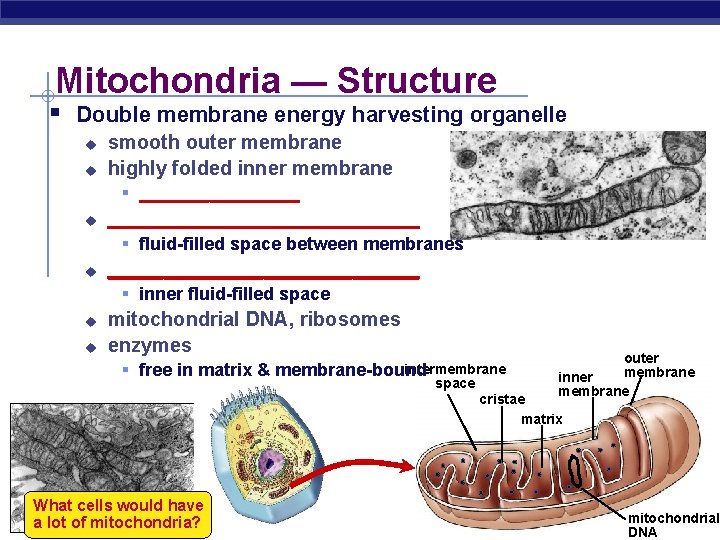
Mitochondria — Structure § Double membrane energy harvesting organelle u u smooth outer membrane highly folded inner membrane § ________ u ______________ § fluid-filled space between membranes u ______________ § inner fluid-filled space u u mitochondrial DNA, ribosomes enzymes § free in matrix & What cells would have AP Biology a lot of mitochondria? outer intermembrane-bound membrane inner space membrane cristae matrix mitochondrial DNA
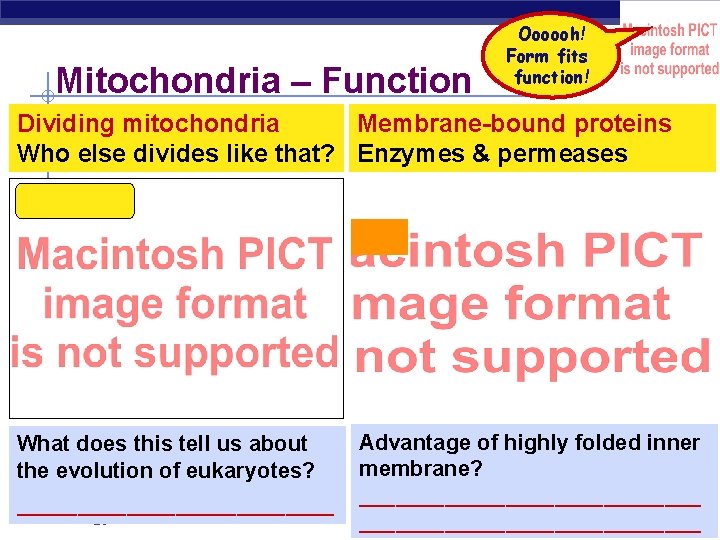
Mitochondria – Function Oooooh! Form fits function! Dividing mitochondria Membrane-bound proteins Who else divides like that? Enzymes & permeases What does this tell us about the evolution of eukaryotes? _____________ AP Biology Advantage of highly folded inner membrane? ____________________________
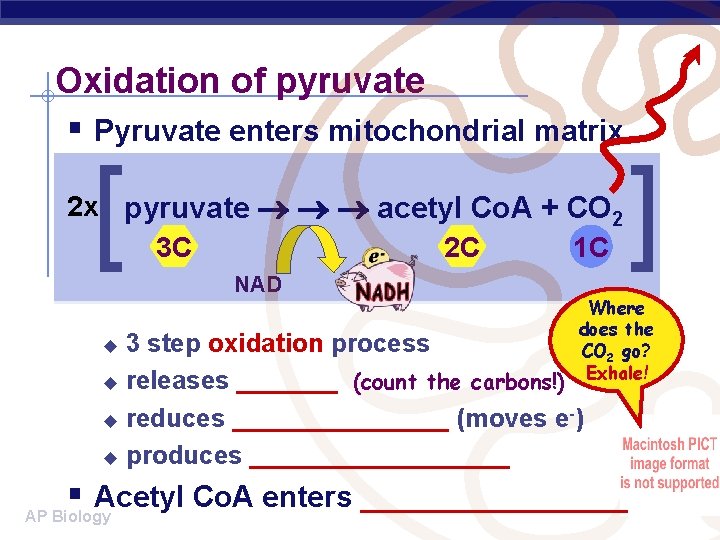
Oxidation of pyruvate § Pyruvate enters mitochondrial matrix [ 2 x pyruvate acetyl Co. A + CO 2 3 C 2 C 1 C NAD ] Where does the CO 2 go? Exhale! 3 step oxidation process u releases _______ (count the carbons!) u reduces ________ (moves e-) u produces _________ u § Acetyl Co. A enters ________ AP Biology
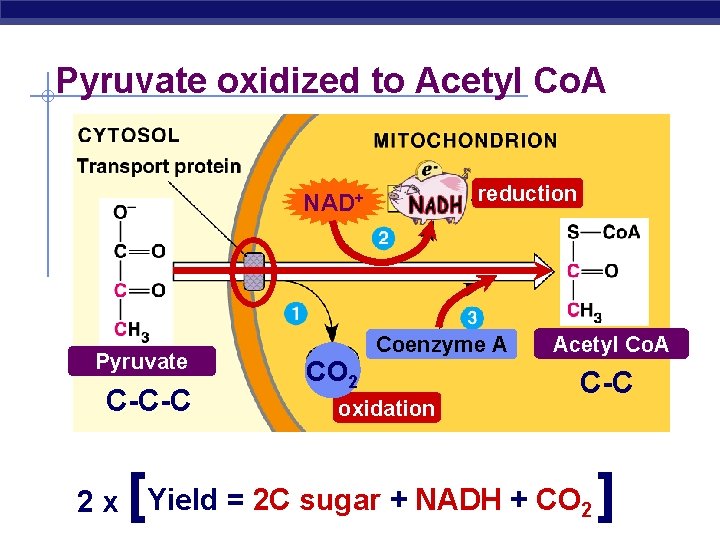
Pyruvate oxidized to Acetyl Co. A reduction NAD+ Pyruvate C-C-C [ CO 2 Coenzyme A oxidation Acetyl Co. A C-C 2 x Yield = 2 C sugar + NADH + CO 2 AP Biology ]
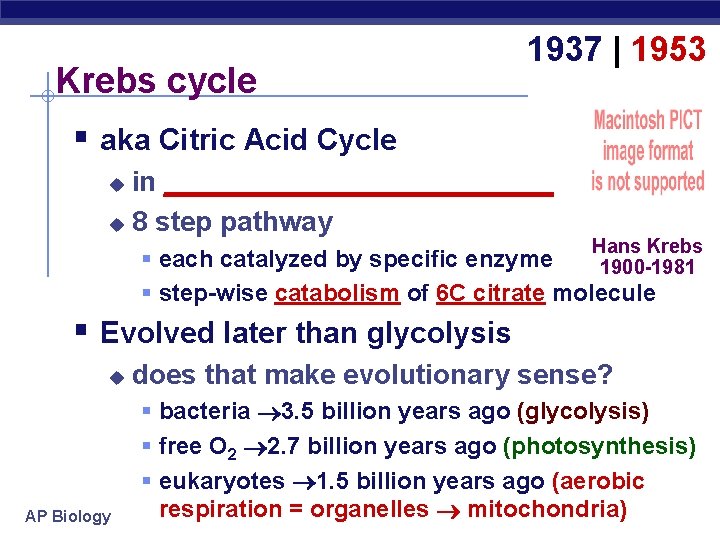
Krebs cycle 1937 | 1953 § aka Citric Acid Cycle in _____________ u 8 step pathway u Hans Krebs § each catalyzed by specific enzyme 1900 -1981 § step-wise catabolism of 6 C citrate molecule § Evolved later than glycolysis u AP Biology does that make evolutionary sense? § bacteria 3. 5 billion years ago (glycolysis) § free O 2 2. 7 billion years ago (photosynthesis) § eukaryotes 1. 5 billion years ago (aerobic respiration = organelles mitochondria)
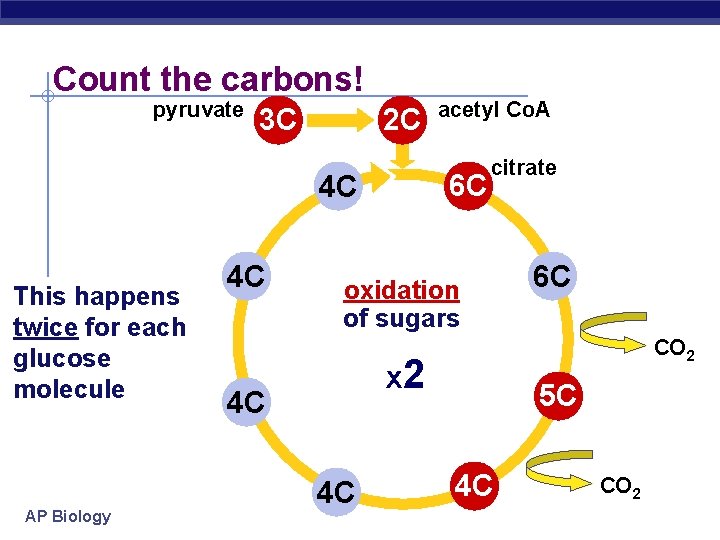
Count the carbons! pyruvate 3 C 2 C 6 C 4 C This happens twice for each glucose molecule AP Biology 4 C acetyl Co. A citrate oxidation of sugars CO 2 x 2 4 C 4 C 6 C 5 C 4 C CO 2
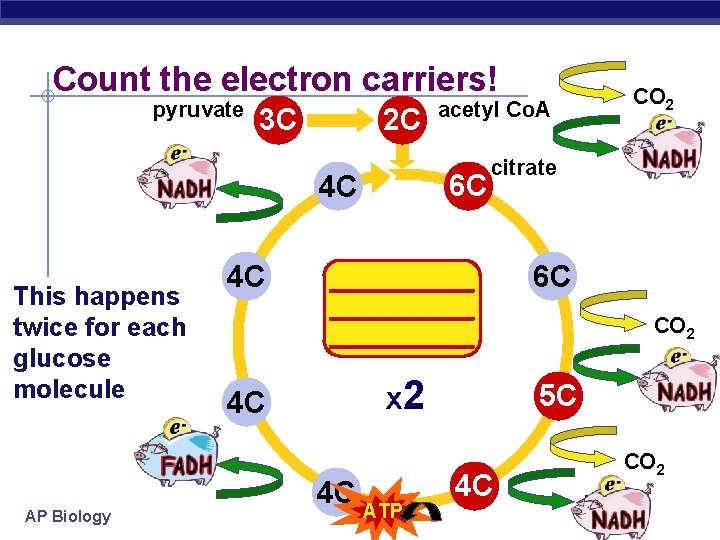
Count the electron carriers! pyruvate 3 C FADH 2 AP Biology 6 C 4 C NADH This happens twice for each glucose molecule 2 C 4 C 4 C acetyl Co. A citrate __________ x 2 4 C ATP CO 2 NADH 6 C CO 2 NADH 5 C 4 C CO 2 NADH
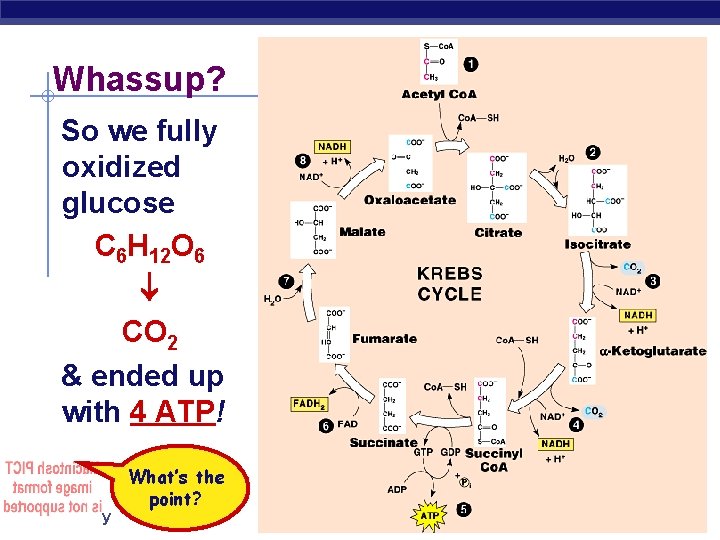
Whassup? So we fully oxidized glucose C 6 H 12 O 6 CO 2 & ended up with 4 ATP! AP Biology What’s the point?
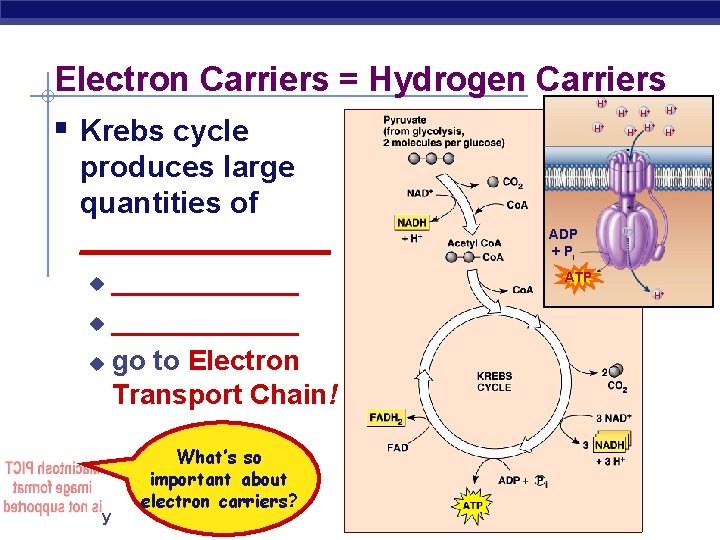
Electron Carriers = Hydrogen Carriers H+ § Krebs cycle produces large quantities of ____________ u go to Electron Transport Chain! u AP Biology What’s so important about electron carriers? H+ H+ H+ H+ ADP + Pi ATP H+
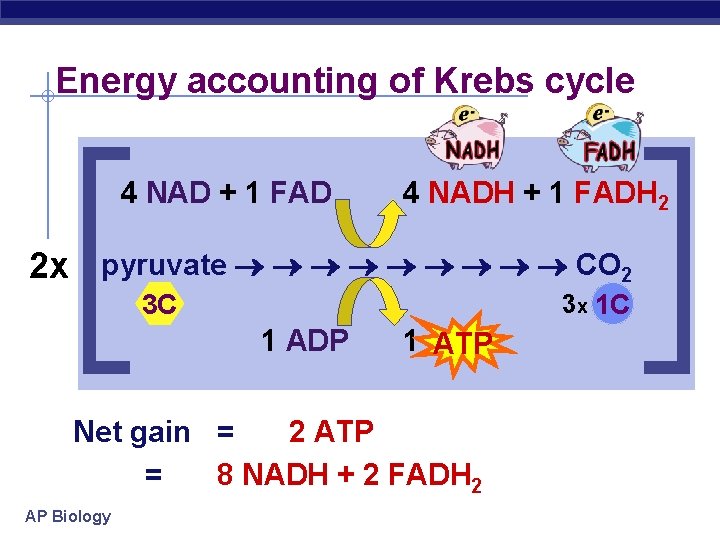
Energy accounting of Krebs cycle 4 NAD + 1 FAD 4 NADH + 1 FADH 2 2 x pyruvate CO 2 3 x 1 C 3 C 1 ADP 1 ATP Net gain = 2 ATP = 8 NADH + 2 FADH 2 AP Biology
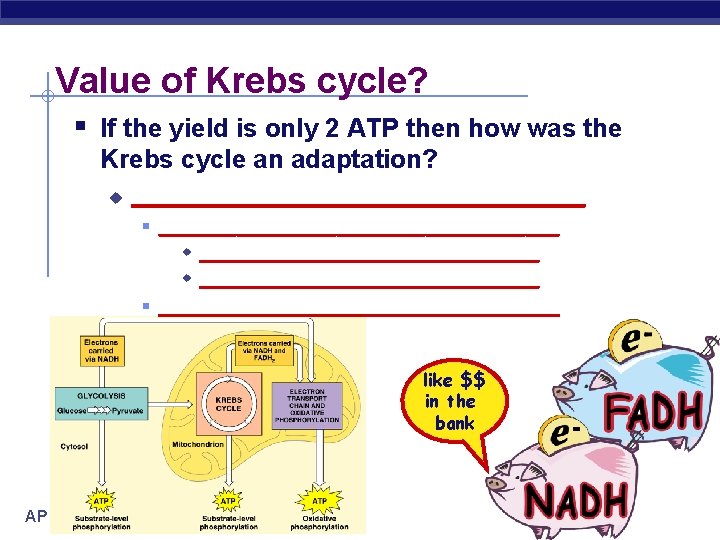
Value of Krebs cycle? § If the yield is only 2 ATP then how was the Krebs cycle an adaptation? u _________________ § __________________ w __________________________________ § __________________ like $$ in the bank AP Biology
What’s the point? The point is to make ATP! ATP AP Biology 2006 -2007
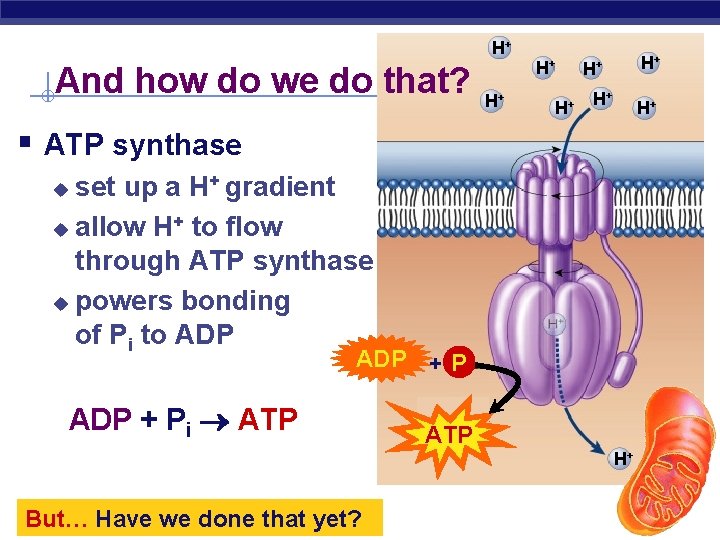
H+ And how do we do that? H+ H+ § ATP synthase set up a H+ gradient u allow H+ to flow through ATP synthase u powers bonding of Pi to ADP u ADP + Pi ATP H+ AP Biology But… Have we done that yet?
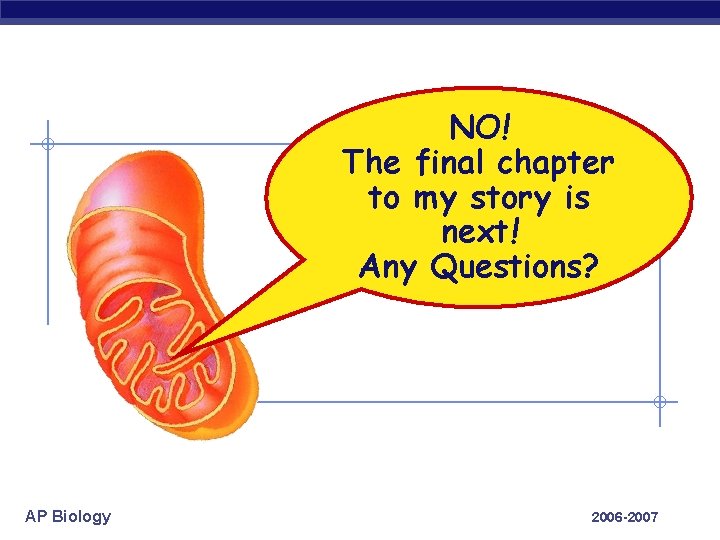
NO! The final chapter to my story is next! Any Questions? AP Biology 2006 -2007