
Cellular Respiration Stage 1 Glycolysis AP Biology 932021
Cellular Respiration Stage 1: Glycolysis AP Biology 9/3/2021
What’s the point? The point is to make ATP! ATP AP Biology 9/3/2021
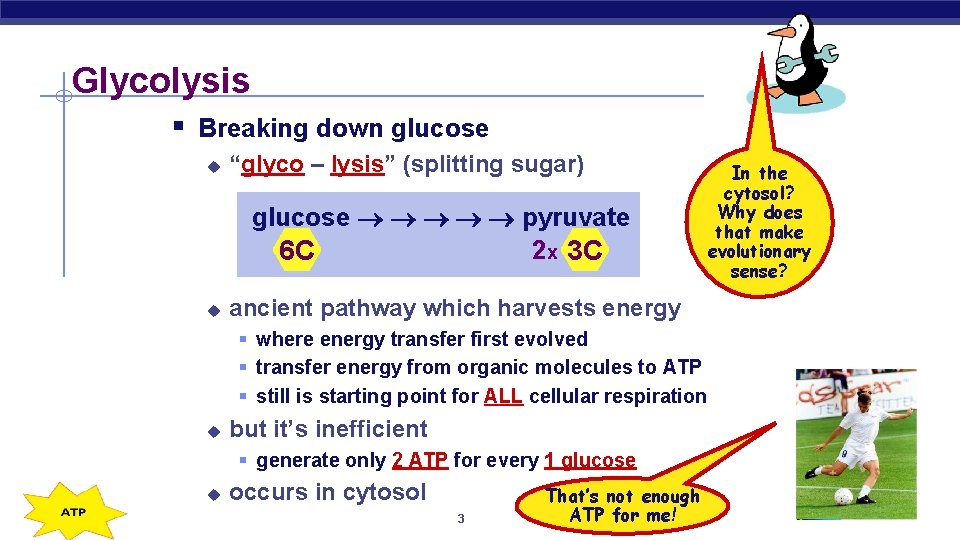
Glycolysis § Breaking down glucose u “glyco – lysis” (splitting sugar) glucose pyruvate 2 x 3 C 6 C u ancient pathway which harvests energy § where energy transfer first evolved § transfer energy from organic molecules to ATP § still is starting point for ALL cellular respiration u but it’s inefficient § generate only 2 ATP for every 1 glucose u AP Biology occurs in cytosol 3 That’s not enough ATP for me! In the cytosol? Why does that make evolutionary sense?
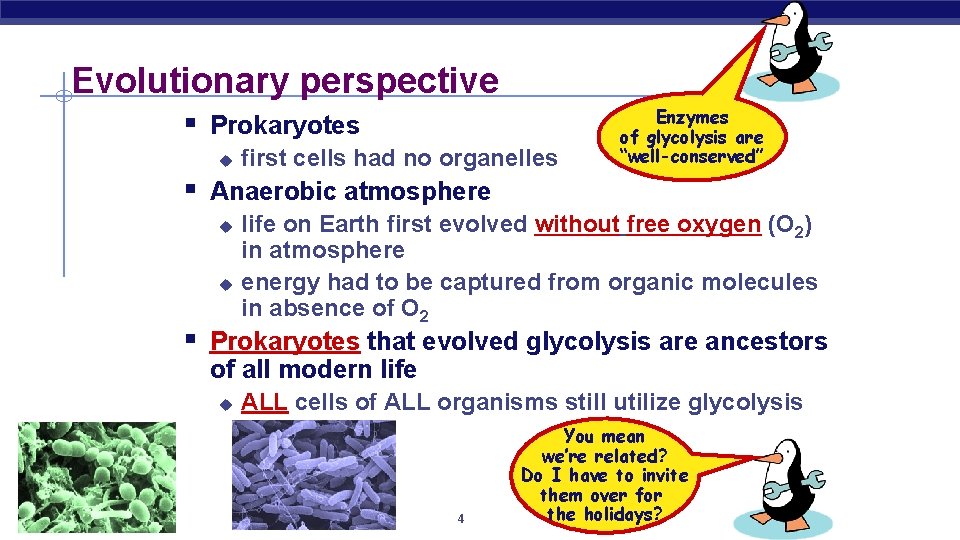
Evolutionary perspective § Prokaryotes u first cells had no organelles Enzymes of glycolysis are “well-conserved” § Anaerobic atmosphere u u life on Earth first evolved without free oxygen (O 2) in atmosphere energy had to be captured from organic molecules in absence of O 2 § Prokaryotes that evolved glycolysis are ancestors of all modern life u AP Biology ALL cells of ALL organisms still utilize glycolysis 4 You mean we’re related? Do I have to invite them over for the holidays?
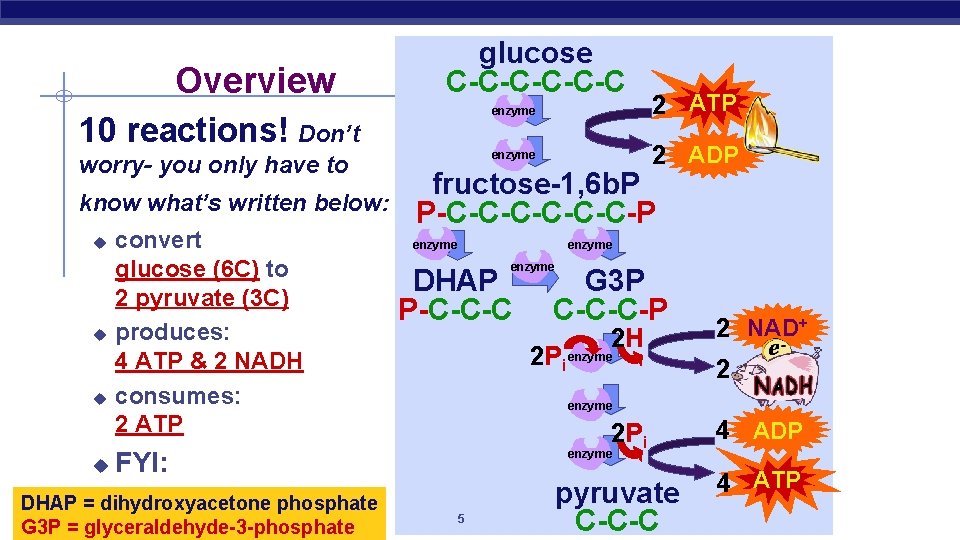
Overview glucose C-C-C-C enzyme 10 reactions! Don’t worry- you only have to know what’s written below: u u u convert glucose (6 C) to 2 pyruvate (3 C) produces: 4 ATP & 2 NADH consumes: 2 ATP FYI: DHAP =udihydroxyacetone net yield: phosphate AP Biology 2 ADP enzyme fructose-1, 6 b. P P-C-C-C-P enzyme DHAP P-C-C-C G 3 P C-C-C-P 2 H 2 Pi enzyme 2 NAD+ 2 enzyme 2 Pi 4 ADP enzyme u G 3 P = glyceraldehyde-3 -phosphate 2 ATP 5 pyruvate C-C-C 4 ATP
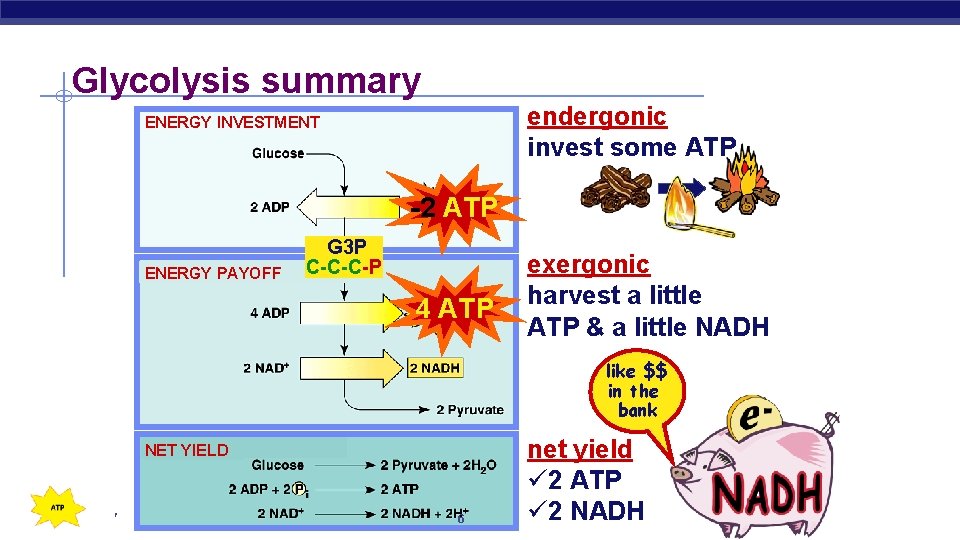
Glycolysis summary endergonic invest some ATP ENERGY INVESTMENT -2 ATP ENERGY PAYOFF G 3 P C-C-C-P 4 ATP exergonic harvest a little ATP & a little NADH like $$ in the bank NET YIELD AP Biology 6 net yield ü 2 ATP ü 2 NADH
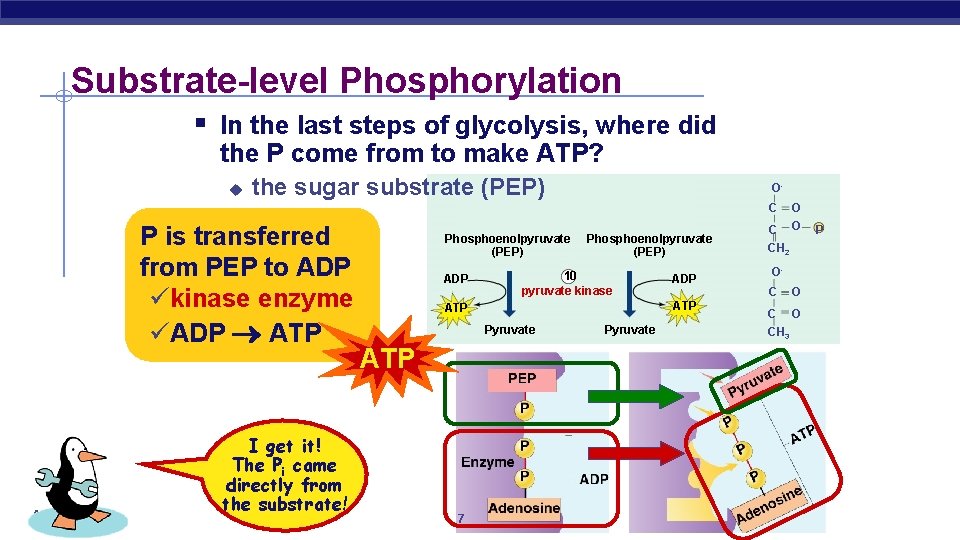
Substrate-level Phosphorylation § In the last steps of glycolysis, where did the P come from to make ATP? u 9 the sugar substrate. H O(PEP) enolase H 2 O 2 P is transferred from PEP to ADP ükinase enzyme üADP ATP AP Biology I get it! The Pi came directly from the substrate! Phosphoenolpyruvate (PEP) ADP Phosphoenolpyruvate (PEP) 10 pyruvate kinase ATP Pyruvate ATP 7 ADP Pyruvate OC O CH 2 OC O CH 3 P
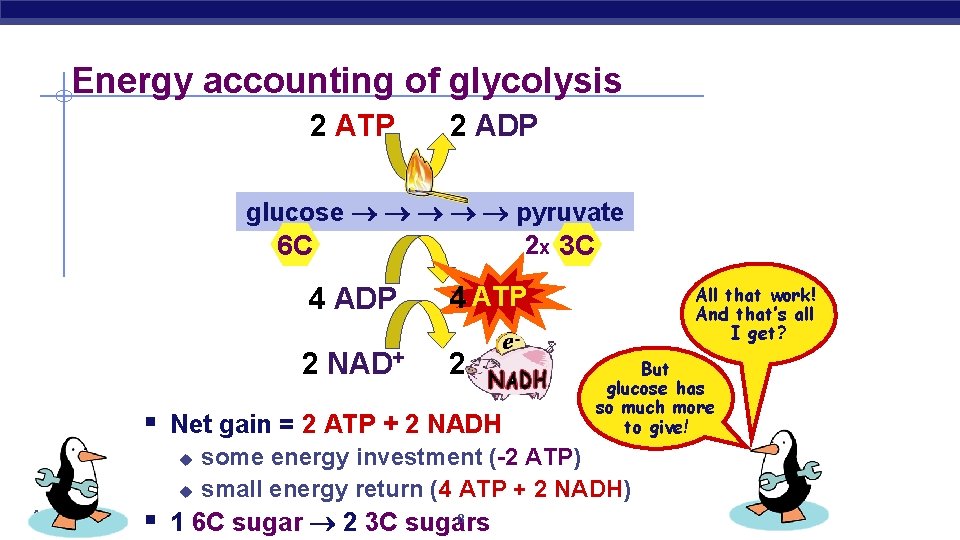
Energy accounting of glycolysis 2 ATP 2 ADP glucose pyruvate 2 x 3 C 6 C 4 ADP 4 ATP 2 NAD+ 2 § Net gain = 2 ATP + 2 NADH u u AP Biology All that work! And that’s all I get? But glucose has so much more to give! some energy investment (-2 ATP) small energy return (4 ATP + 2 NADH) § 1 6 C sugar 2 3 C sugars 8
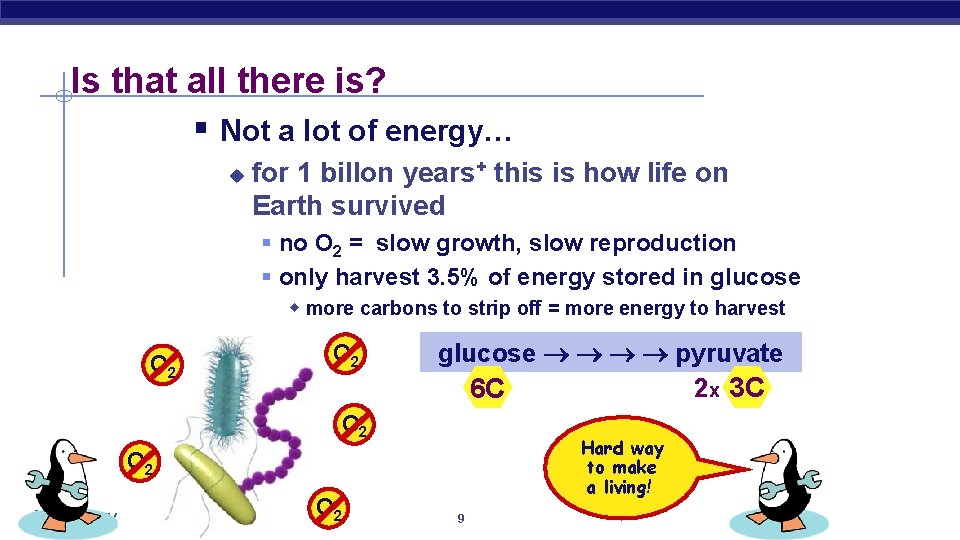
Is that all there is? § Not a lot of energy… u for 1 billon years+ this is how life on Earth survived § no O 2 = slow growth, slow reproduction § only harvest 3. 5% of energy stored in glucose w more carbons to strip off = more energy to harvest O 2 glucose pyruvate 2 x 3 C 6 C O 2 Hard way to make a living! O 2 AP Biology O 2 9
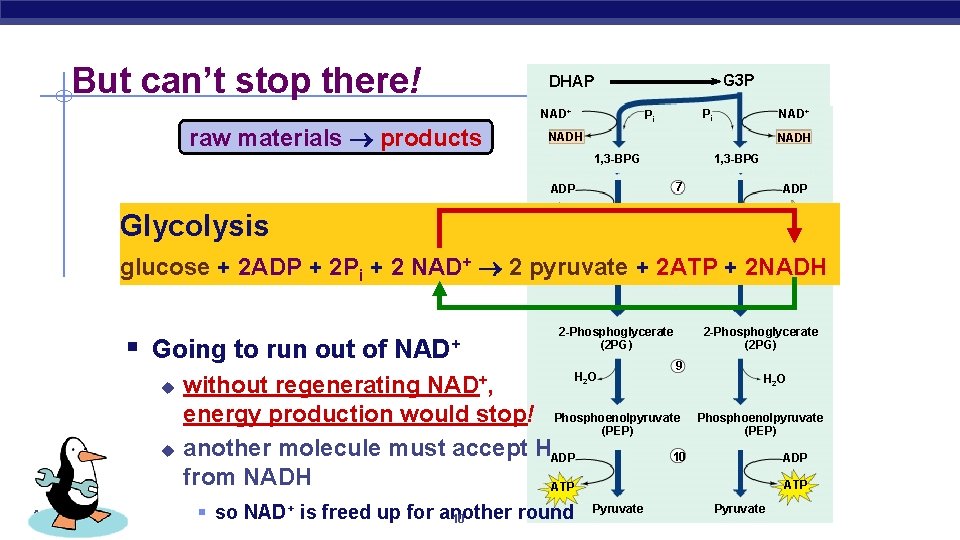
But can’t stop there! G 3 P DHAP NAD+ raw materials products Pi + NADH Pi 1, 3 -BPG NAD+ Pi + NADH NAD 1, 3 -BPG NADH 7 ADP Glycolysis 6 Pi ADP ATP 3 -Phosphoglycerate (3 PG) 2 -Phosphoglycerate (2 PG) glucose + 2 ADP + 2 Pi + 2 NAD+ 2 pyruvate + 2 ATP + 2 NADH 8 § Going to run out of NAD+ u u AP Biology H 2 O 9 without regenerating NAD+, energy production would stop! Phosphoenolpyruvate (PEP) another molecule must accept HADP 10 from NADH ATP § so NAD+ is freed up for another round 10 Pyruvate H 2 O Phosphoenolpyruvate (PEP) ADP ATP Pyruvate
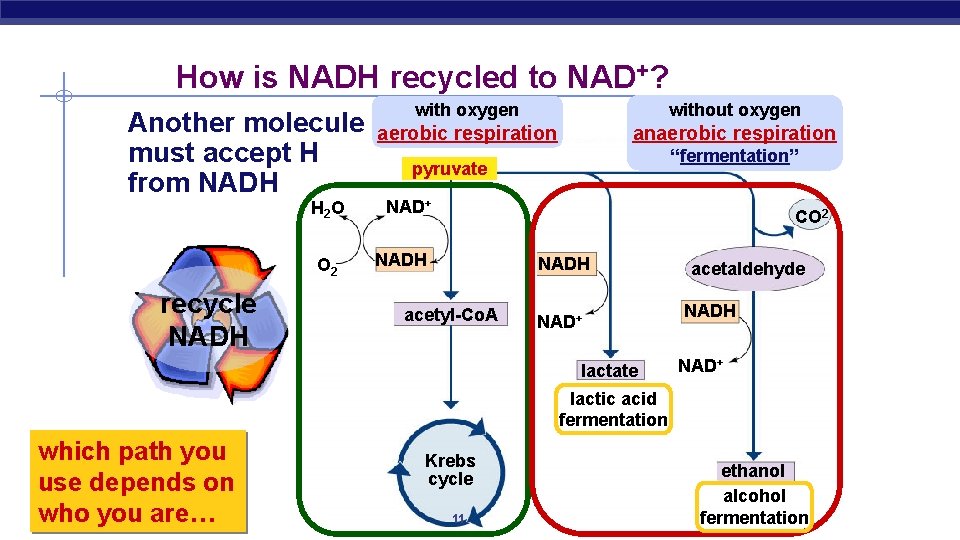
How is NADH recycled to NAD+? Another molecule must accept H from NADH H 2 O O 2 recycle NADH with oxygen without oxygen aerobic respiration anaerobic respiration “fermentation” pyruvate NAD+ CO 2 NADH acetyl-Co. A NAD+ lactate acetaldehyde NADH NAD+ lactic acid fermentation which path you use depends on AP Biology who you are… Krebs cycle 11 ethanol alcohol fermentation
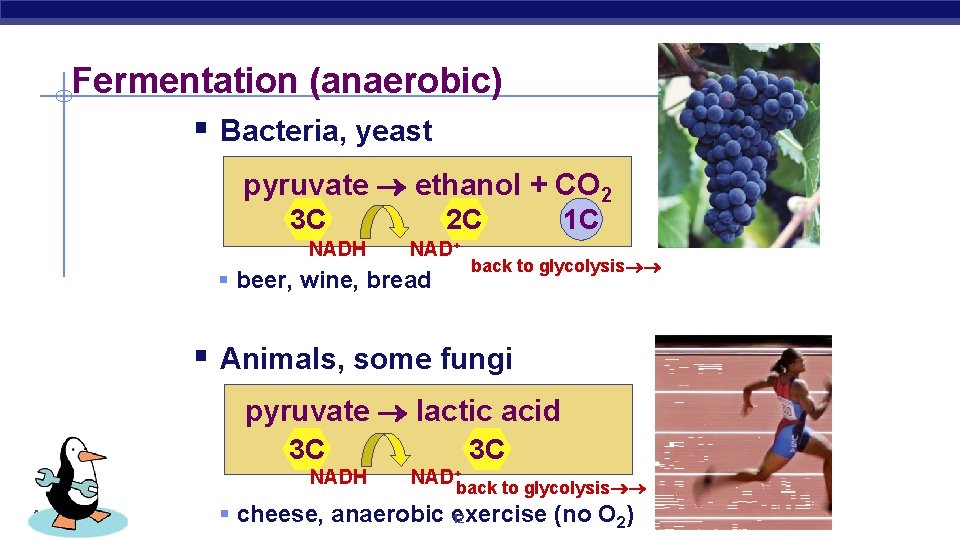
Fermentation (anaerobic) § Bacteria, yeast pyruvate ethanol + CO 2 3 C NADH 2 C NAD+ § beer, wine, bread 1 C back to glycolysis § Animals, some fungi pyruvate lactic acid 3 C NADH AP Biology 3 C NAD+back to glycolysis § cheese, anaerobic exercise (no O 2) 12
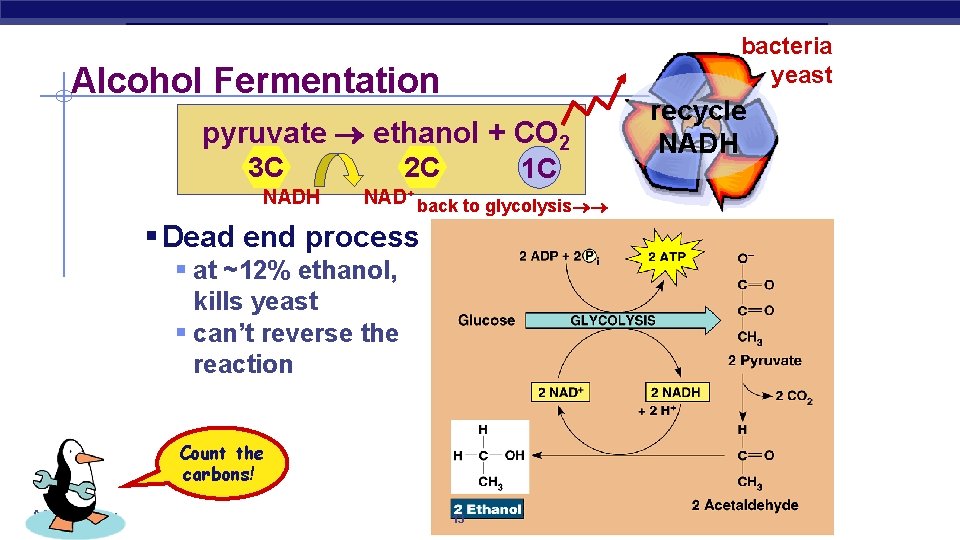
bacteria yeast Alcohol Fermentation pyruvate ethanol + CO 2 3 C NADH 2 C 1 C NAD+ back to glycolysis § Dead end process § at ~12% ethanol, kills yeast § can’t reverse the reaction Count the carbons! AP Biology 13 recycle NADH
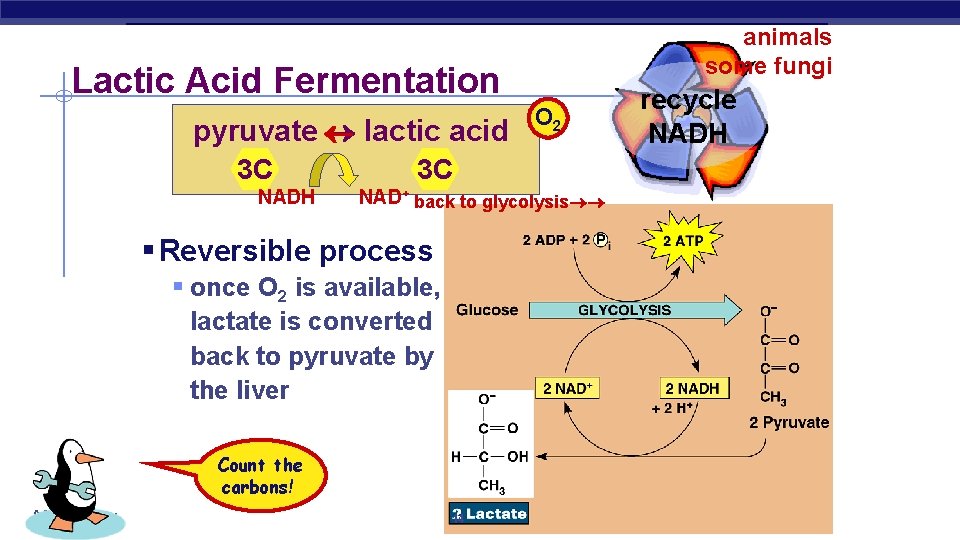
animals some fungi Lactic Acid Fermentation pyruvate lactic acid NADH 3 C 3 C NAD+ back to glycolysis § Reversible process § once O 2 is available, lactate is converted back to pyruvate by the liver Count the carbons! AP Biology O 2 14 recycle NADH
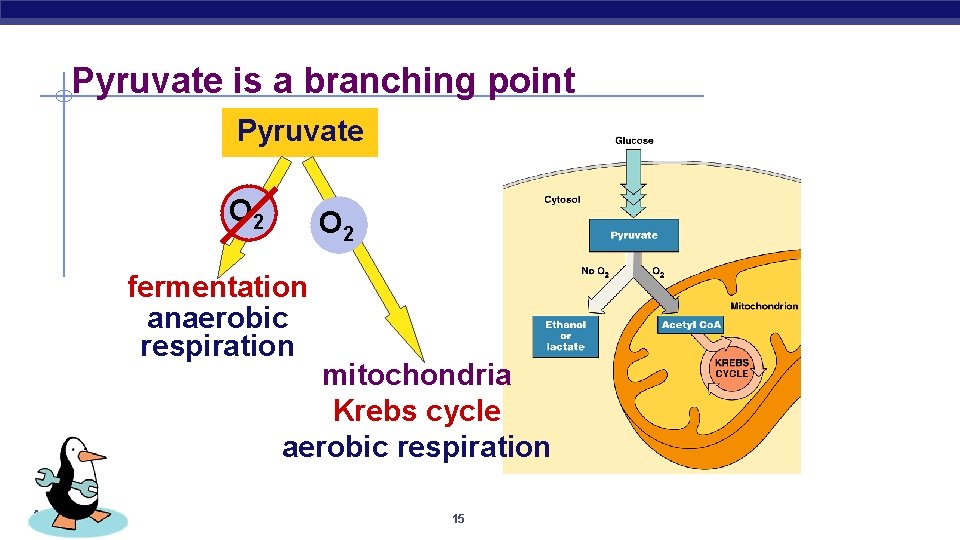
Pyruvate is a branching point Pyruvate O 2 fermentation anaerobic respiration mitochondria Krebs cycle aerobic respiration AP Biology 15
What’s the point? The point is to make ATP! ATP AP Biology 9/3/2021
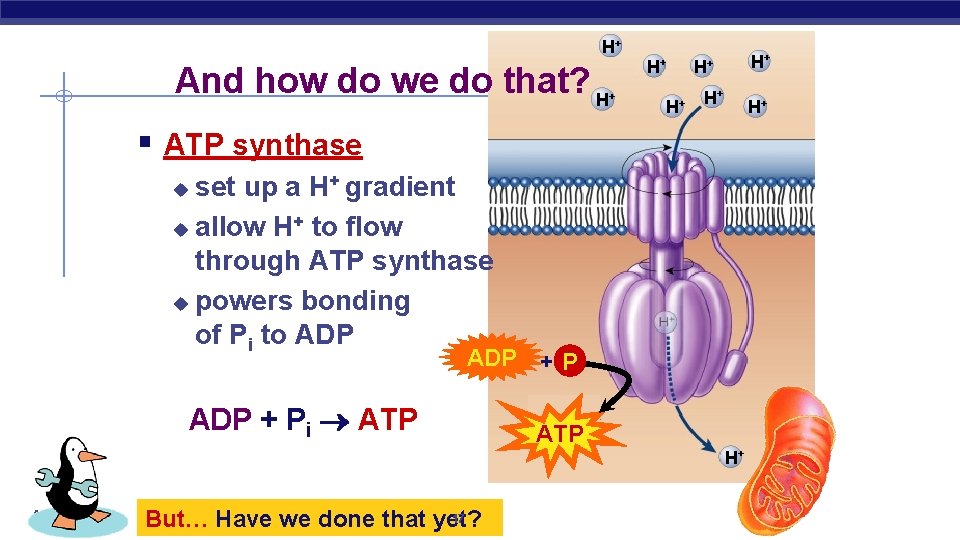
H+ And how do we do that? H + H+ H+ H+ § ATP synthase set up a H+ gradient u allow H+ to flow through ATP synthase u powers bonding of Pi to ADP u ADP + Pi ATP H+ AP Biology 17 But… Have we done that yet?
NO! There’s still more to my story! Any Questions? AP Biology 9/3/2021

Maybe an Amoeba Sisters Video Will Help § http: //www. youtube. com/watch? v=4 Eo 7 Jt. RA 7 lg&list= UUb 2 GCo. LSBXjm. I_Qj 1 vk-44 g AP Biology
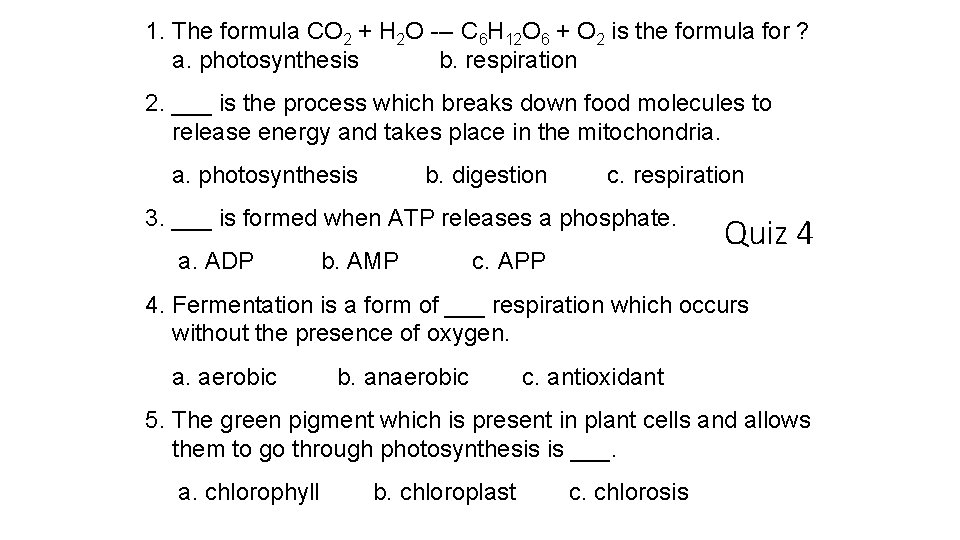
1. The formula CO 2 + H 2 O --- C 6 H 12 O 6 + O 2 is the formula for ? a. photosynthesis b. respiration 2. ___ is the process which breaks down food molecules to release energy and takes place in the mitochondria. a. photosynthesis b. digestion c. respiration 3. ___ is formed when ATP releases a phosphate. a. ADP b. AMP c. APP Quiz 4 4. Fermentation is a form of ___ respiration which occurs without the presence of oxygen. a. aerobic b. anaerobic c. antioxidant 5. The green pigment which is present in plant cells and allows them to go through photosynthesis is ___. a. chlorophyll b. chloroplast c. chlorosis
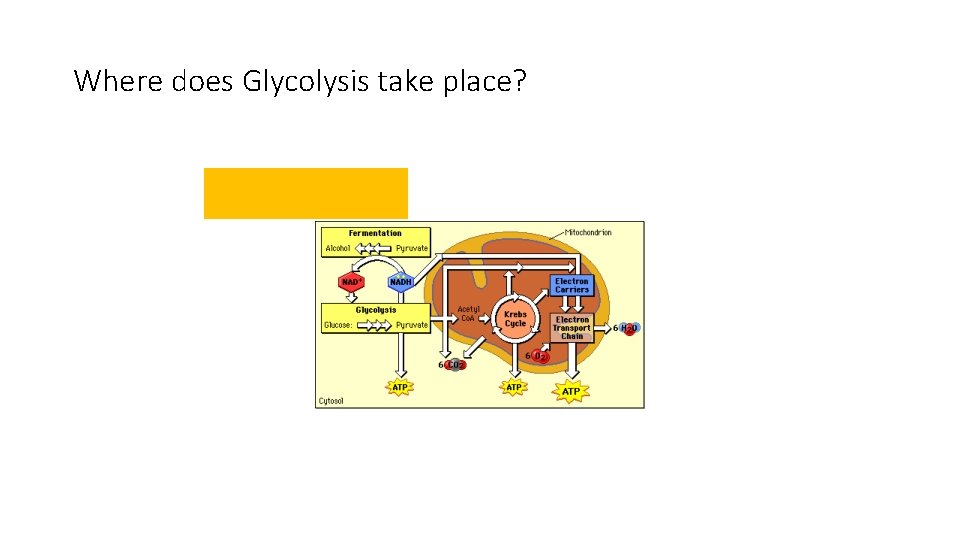
Where does Glycolysis take place? Glycolysis
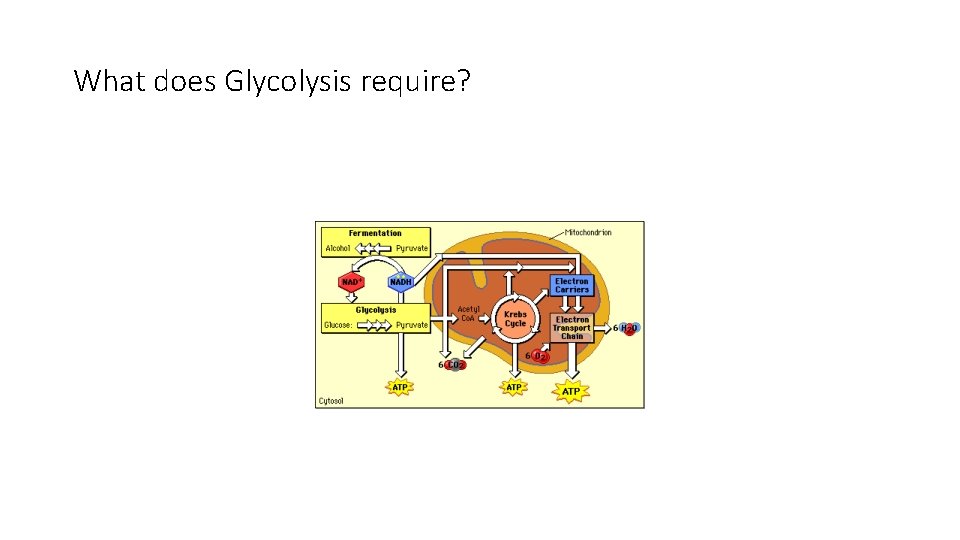
What does Glycolysis require?
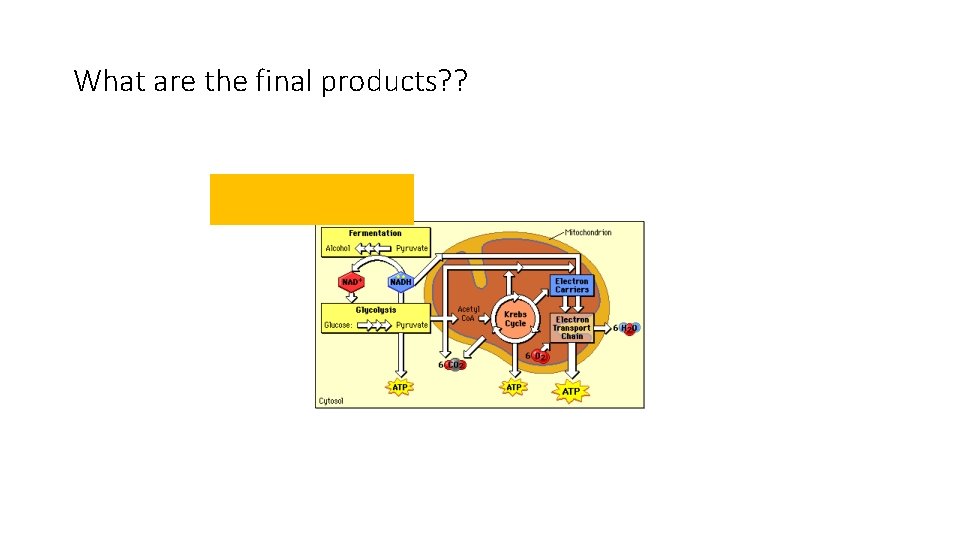
What are the final products? ? Glycolysis
Special Note: ü Glycolysis can produce thousands of ATP molecules in milliseconds. But quickly fills all available NAD+ (electron carriers) with electrons and the process stops, so it’s only good for short-term energy.
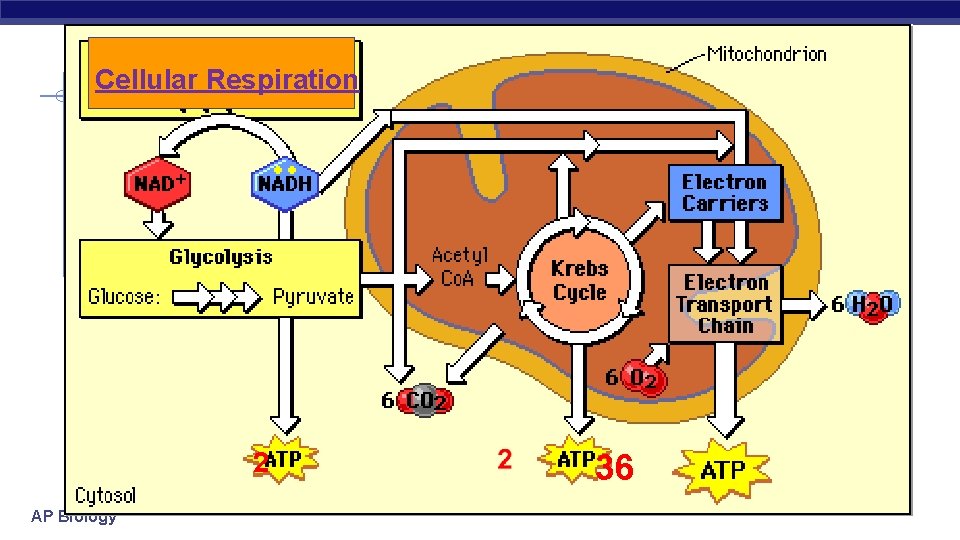
Cellular Respiration 2 AP Biology 36
- Slides: 25