
Cellular Respiration Respiration Respiration the biochemical process that
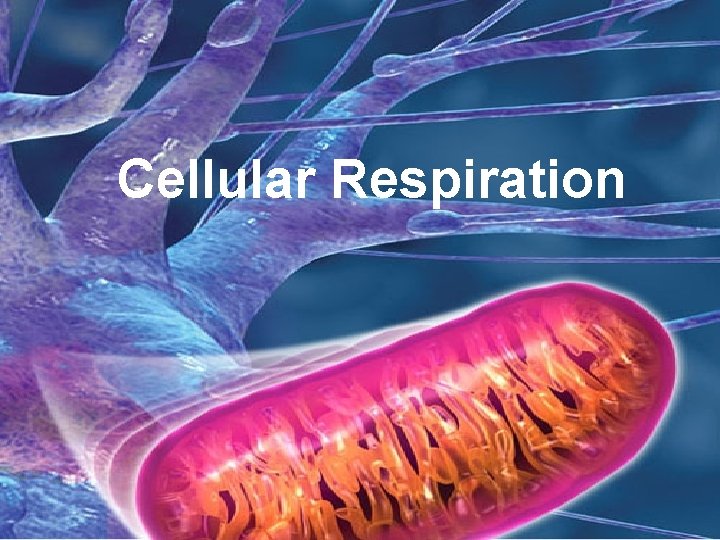
Cellular Respiration
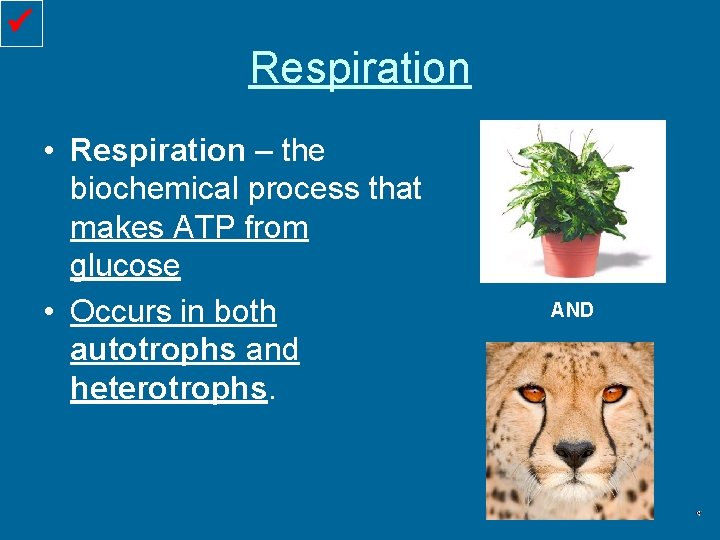
Respiration • Respiration – the biochemical process that makes ATP from glucose • Occurs in both autotrophs and heterotrophs. AND
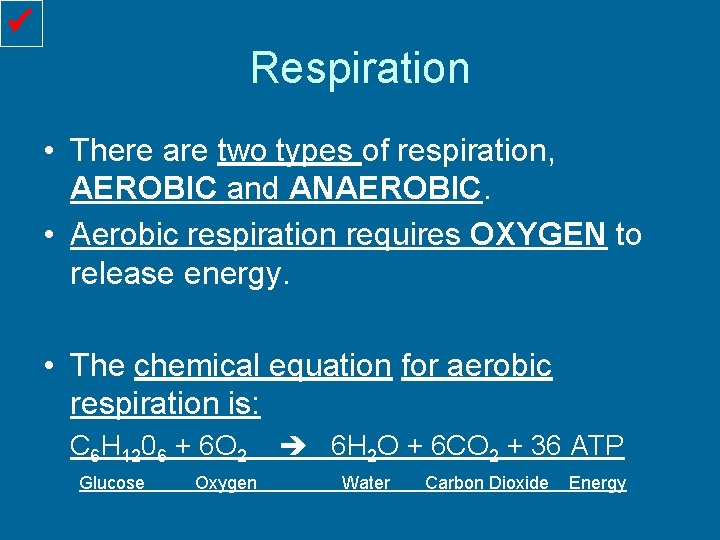
Respiration • There are two types of respiration, AEROBIC and ANAEROBIC. • Aerobic respiration requires OXYGEN to release energy. • The chemical equation for aerobic respiration is: C 6 H 1206 + 6 O 2 Glucose Oxygen 6 H 2 O + 6 CO 2 + 36 ATP Water Carbon Dioxide Energy
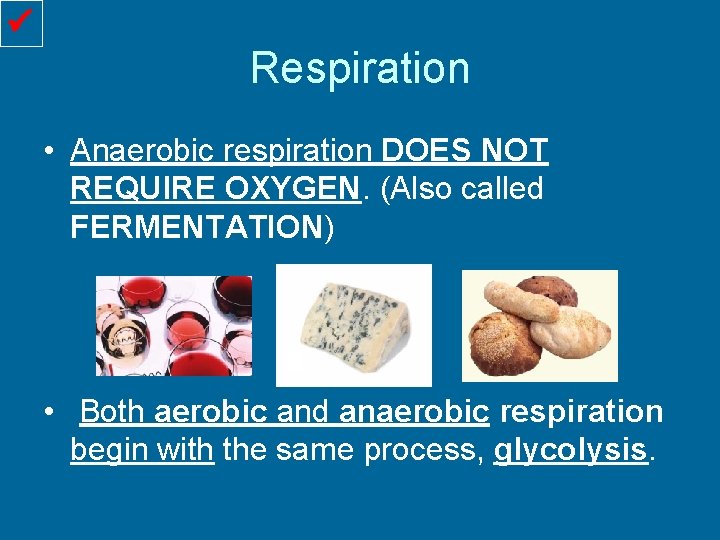
Respiration • Anaerobic respiration DOES NOT REQUIRE OXYGEN. (Also called FERMENTATION) • Both aerobic and anaerobic respiration begin with the same process, glycolysis.
Glycolysis • Occurs in CYTOPLASM • Means “split the sugar, ” • The chemical equation for glycolysis is: C 6 H 12 O 6 + 2 ATP 2 Pyruvic acid + 4 ATP
Glycolysis 1. Glucose molecules are broken down into 2 pyruvic acid (pyruvate) molecules 2. Two ATP molecules are used and four ATP molecules are created resulting in a net gain of two ATP. 3. Following glycolysis, the pyruvic acid molecules can follow two paths: aerobic respiration or anaerobic respiration.
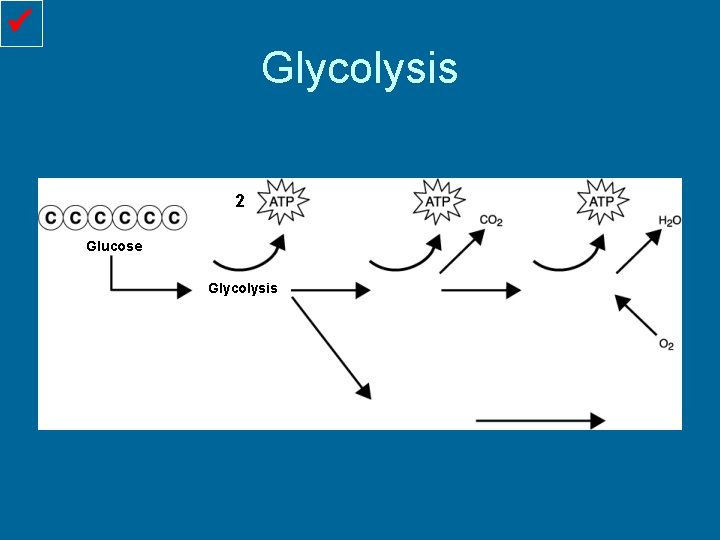
Glycolysis 2 Glucose Glycolysis

Aerobic Respiration • Occurs in the MITOCHONDRIA 1. Pyruvic acid molecules are converted to Acetyl-Co. A molecules. 2. Acetyl-Co. A broken down into H+, CO 2, and ATP • Krebs Cycle 3. The H+ ions bond to carrier molecules, NAD+ and FAD to make NADH and FADH 2.
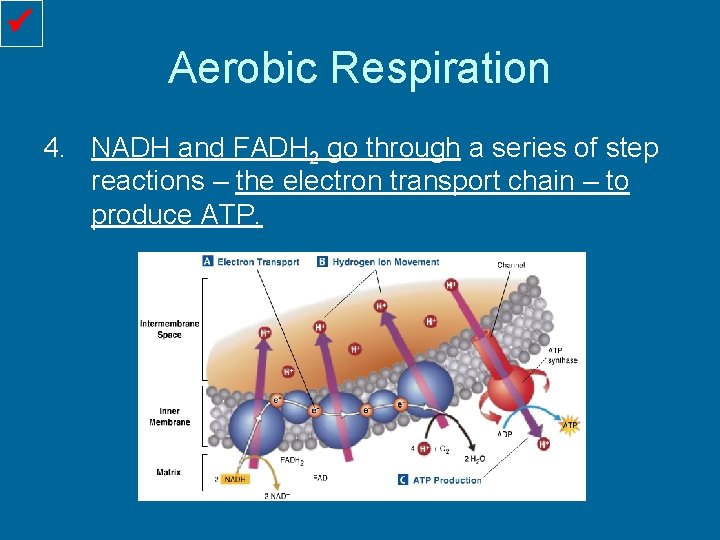
Aerobic Respiration 4. NADH and FADH 2 go through a series of step reactions – the electron transport chain – to produce ATP.
Aerobic Respiration • Each cycle produces 10 NADH molecules, 2 FADH 2 molecules and 2 ATP. 1 NADH = 3 ATP 1 FADH 2 = 2 ATP • The end product of aerobic respiration is the production of 36 ATP MOLECULES.
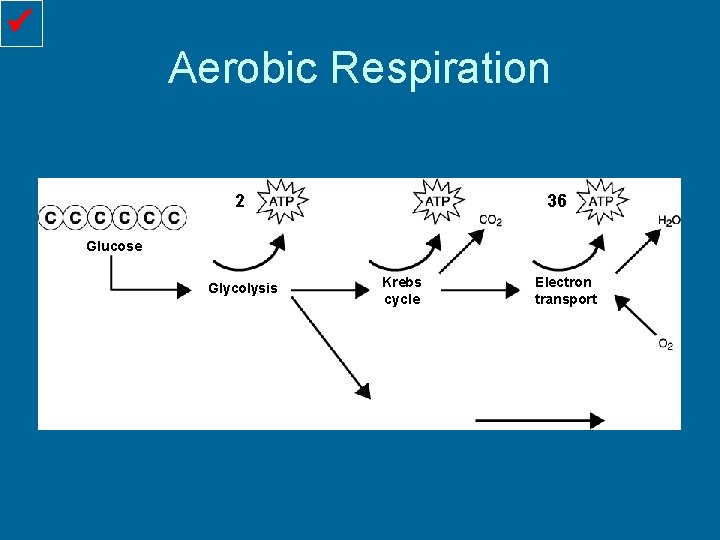
Aerobic Respiration Glucose 2 36 Glycolysis Krebs cycle Electron transport
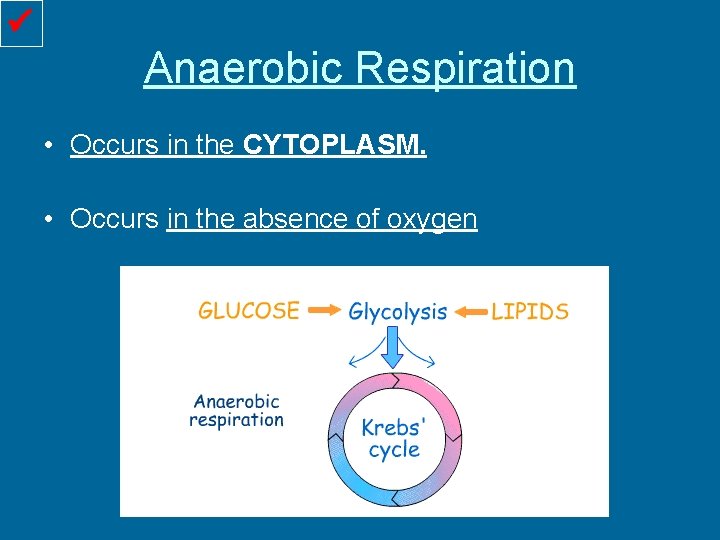
Anaerobic Respiration • Occurs in the CYTOPLASM. • Occurs in the absence of oxygen
Anaerobic Respiration • Lactic acid Fermentation- converts pyruvic acid to lactic acid and CO 2 – Lactic acid can build up in muscles when they run out of oxygen and causes muscle soreness • Alcoholic fermentation- converts pyruvic acid to ethanol and CO 2 – Process used to make wine, beer, cheese, and bread • Both processes result in the production of only 2 ATP MOLECULES.
Factors Affecting Respiration: • ATP concentration - the more ATP molecules available, the slower the rate of respiration.
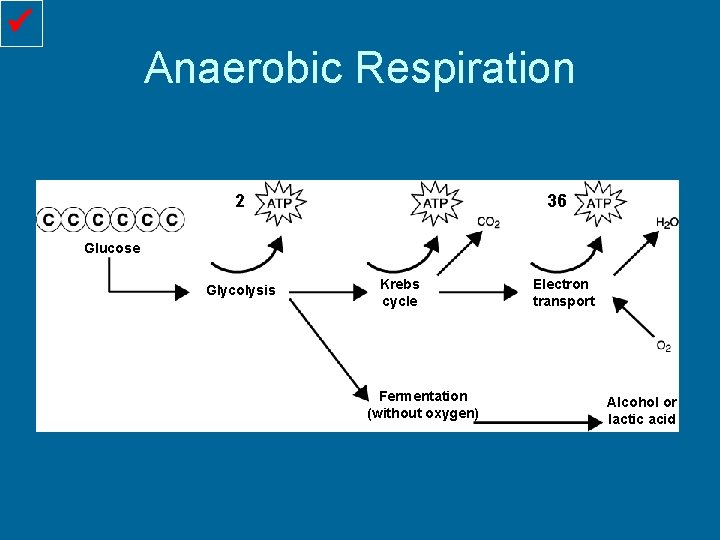
Anaerobic Respiration 2 36 Glucose Glycolysis Krebs cycle Fermentation (without oxygen) Electron transport Alcohol or lactic acid
- Slides: 15